Hensplaining Chicken Idioms

This Mother Hen whose children have flown the coop has been madder than a wet hen latelyWhile I might wish to wring a few necks down at the State House, I’ve opted instead to shake some tail feathers and head on downtown with my birds of a feather mom-friends to ruffle a few feathers  (non-violent protests) and hopefully assuage my feelings of intense grief, anger, and disbelief over the events of the last few weeks here in Nashville.

Chicken Idioms

How have chicken idioms become such a widespread reflection of everyday moments of craziness, hardship, joy, and humor? Although backyard chicken husbandry has been around for centuries, it took a giant leap forward during WWI and WW2 when the Department of Agriculture asked Americans to keep two hens per household member per family as a civic duty.
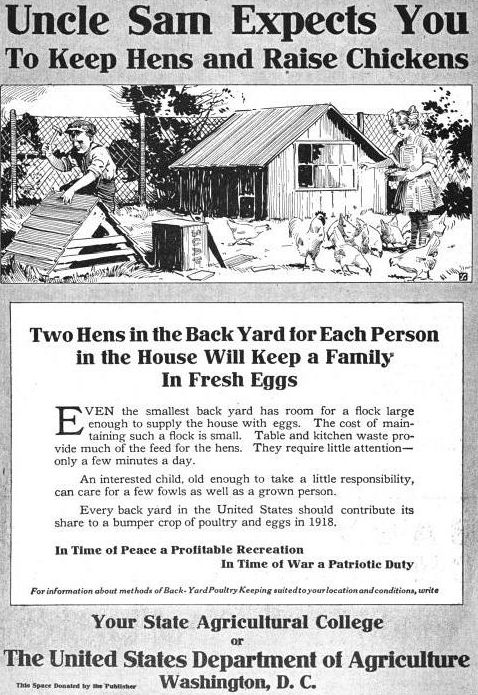
Citizens responded, and suddenly, grandmothers around the country were telling their grandchildren to stop all that cackling and get to sleep or to not count their chickens before they hatch. Chickens are fun to watch and have about ten behaviors they repeat daily. Using chicken idioms became a colorful way to describe human behavior and teach life lessons.

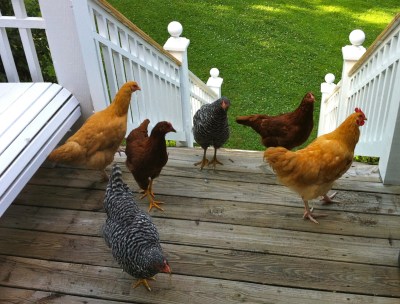
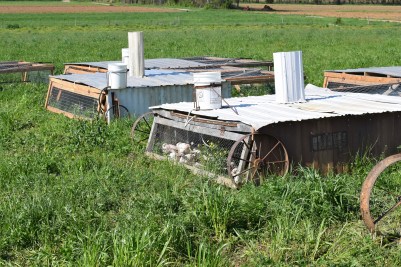
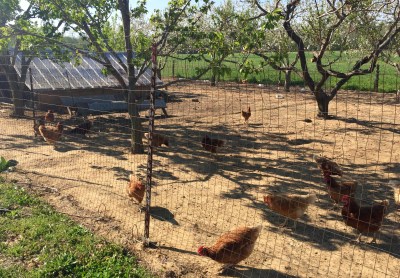
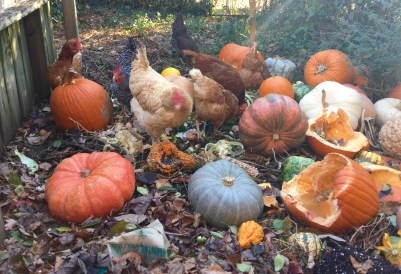
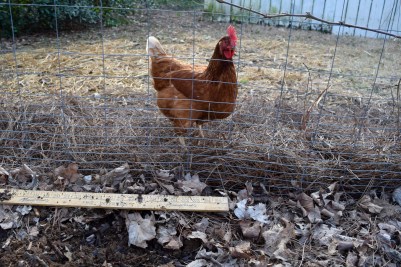
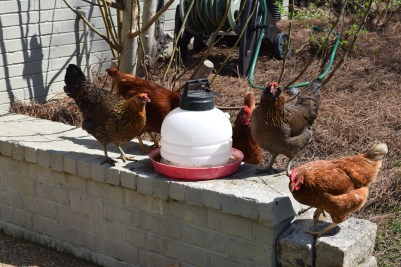
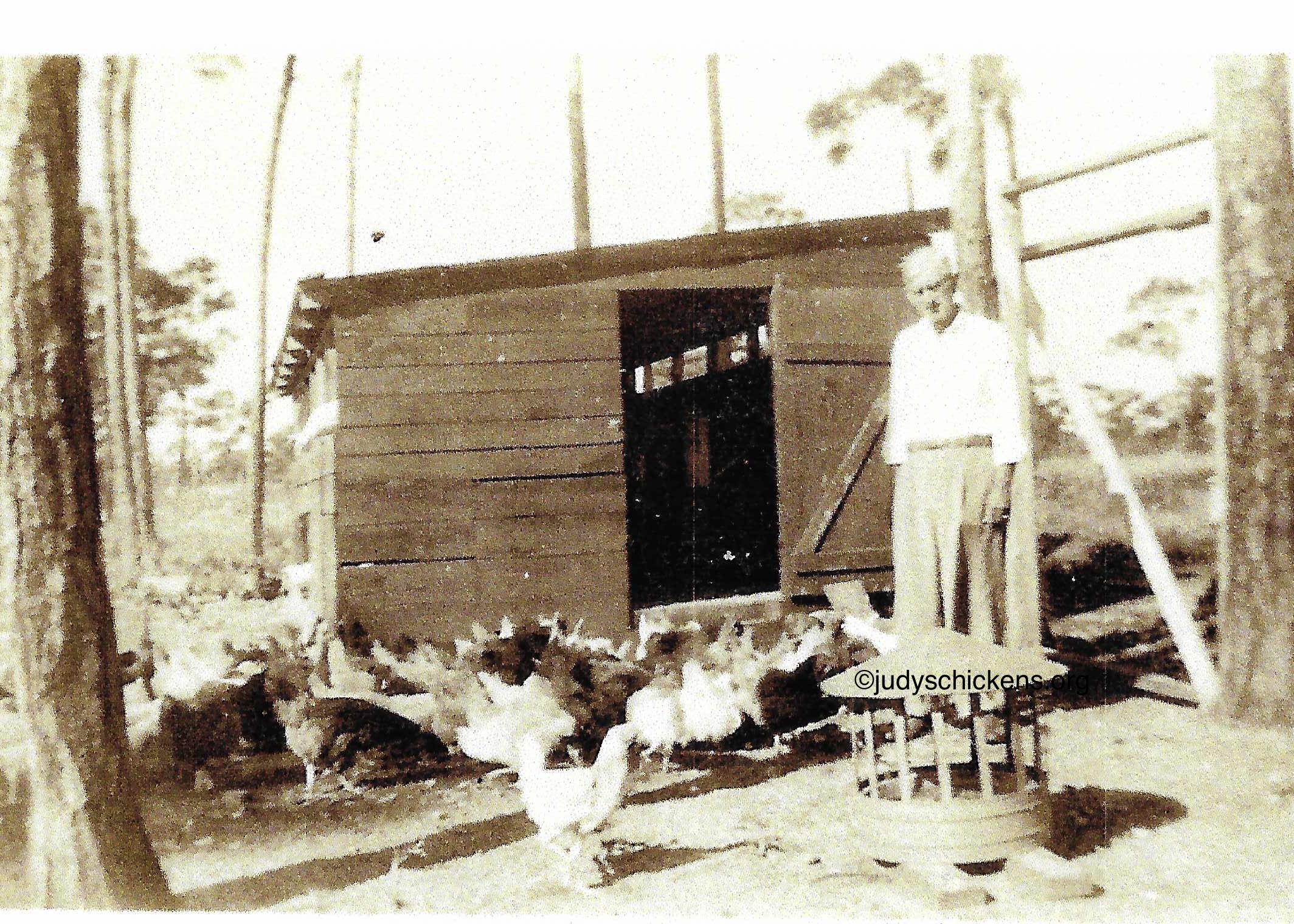
My friend Joanne Knight sent me these photos of her grandparents’ backyard chicken coop and flock during WW2.
About ten years ago, songwriter and mindfulness educator, Ginger Sands, sent me a list of chicken idioms. My husband and I have been adding to it for years. Here is our list. Add to it as you wish!

Chicken Behavior:


Birds of a feather flock together
Pecking order (social hierarchy based on who has access to good things first)
Wring your neck
Ruffle someone’s feathers.
Run around like a chicken with its head cut off
The feathers were flying
Get up with the chickens (get up early)
Madder than a wet hen
Winner winner chicken dinner
Scratching out a living
Shake some tail feathers (get moving)
Chickening out
The early chicken gets the worm
Stop cackling (the raucous noise a hen makes after laying an egg)

Eggs
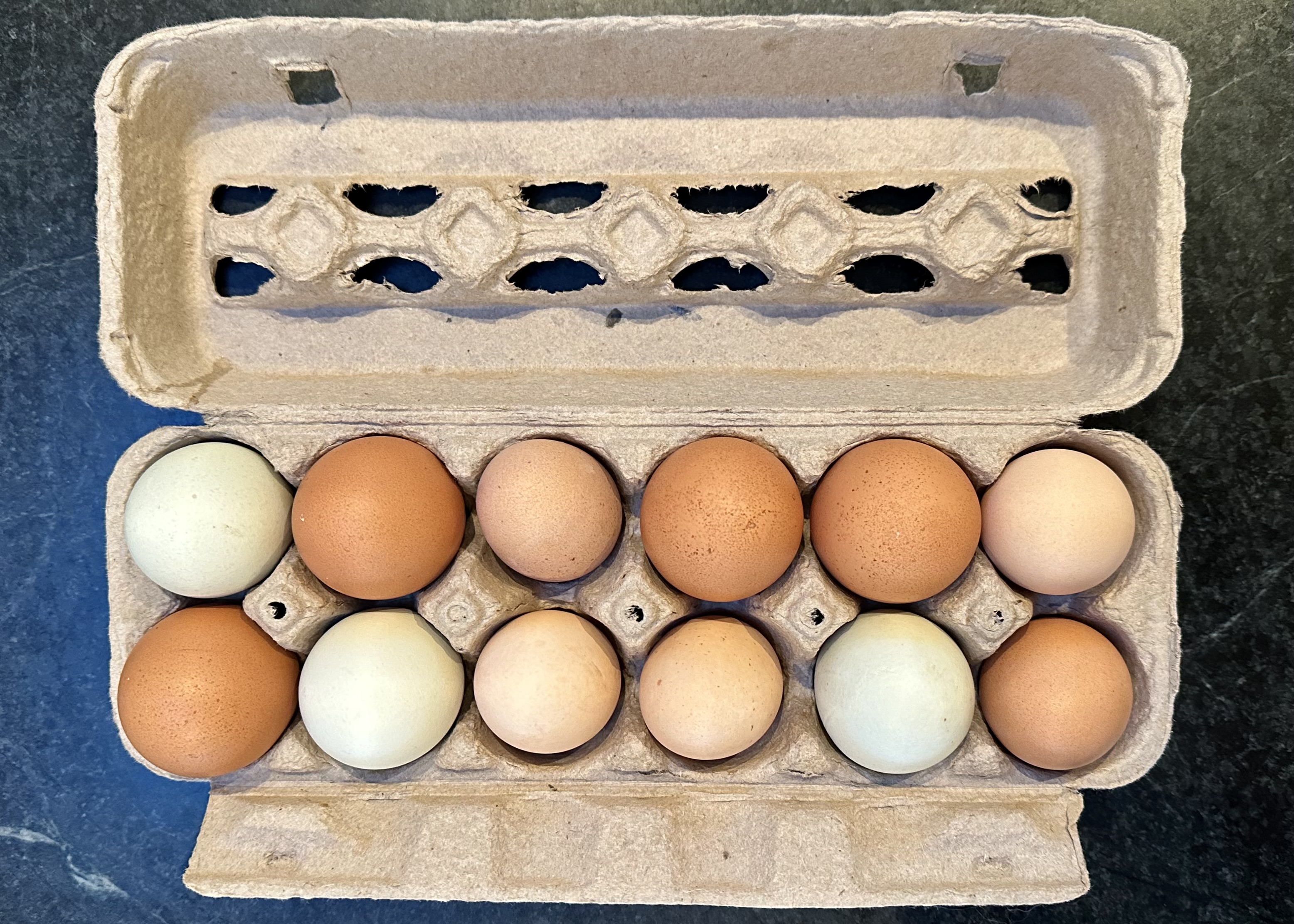

Good egg
Bad or rotten egg (one rotten egg can spoil the batter)
Golden egg
Nest egg
Walking on eggshells
Egg on your face
The yolks on you
Laid an egg (failed miserably)
Egg someone on

Hens


Mother hen
Henpecked
Scarce as hen’s teeth (hens don’t have teeth)
Hen party at the hen house
Chicken chat
Chick flick
Playing chicken (often dangerous, it’s a challenge of who will give in first)
Chicken fight (a wrestling game)
Doing the “Funky Chicken” (a dance)
Nobody here but us chickens
Hen Chicks (Hat tip to writer, Carrington Fox, for our group’s name and the word “Hensplaining!)

Roosters


Cocky
Cock and bull story (improbable)
Cock of the walk (a bossy person)
Cockfight
Something to crow about (to brag)

Nests/Coops/Roosts


Feeling cooped up
Empty nest syndrome
Nesting (making a home)
Leave the nest
Flew the coop
Coming home to roost (come home to deal with the consequences)
Rules the roost (Who’s in charge?)
Broody (when a hen sits on a clutch of eggs and does nothing else for days)
Fox guarding a henhouse (an action that invites disaster)
Feather one’s nest (broody hens pluck their own feathers to soften their nest)
Henhouse syndrome (when predators kill more than they need)

Insults


Being chicken (cowardly)
Chicken-hearted
chicken-livered
Chicken s**t
She’s no spring chicken (baby chicks hatch in spring)
That’s chicken feed (insignificant or cheap)
Can’t boil an egg (can’t cook at all)
Dumb cluck
Fussing like an old hen
Chicken Little (an alarmist)
Rubber chicken circuit (a monotonous round of dinners)

Questionable Behavior


Playing chicken (often dangerous, it’s a challenge of who will give in first)
Chicken fight (a wrestling game)
Doing the “Funky Chicken” (a dance)
Nobody here but us chickens

Philosophy and Proverbs
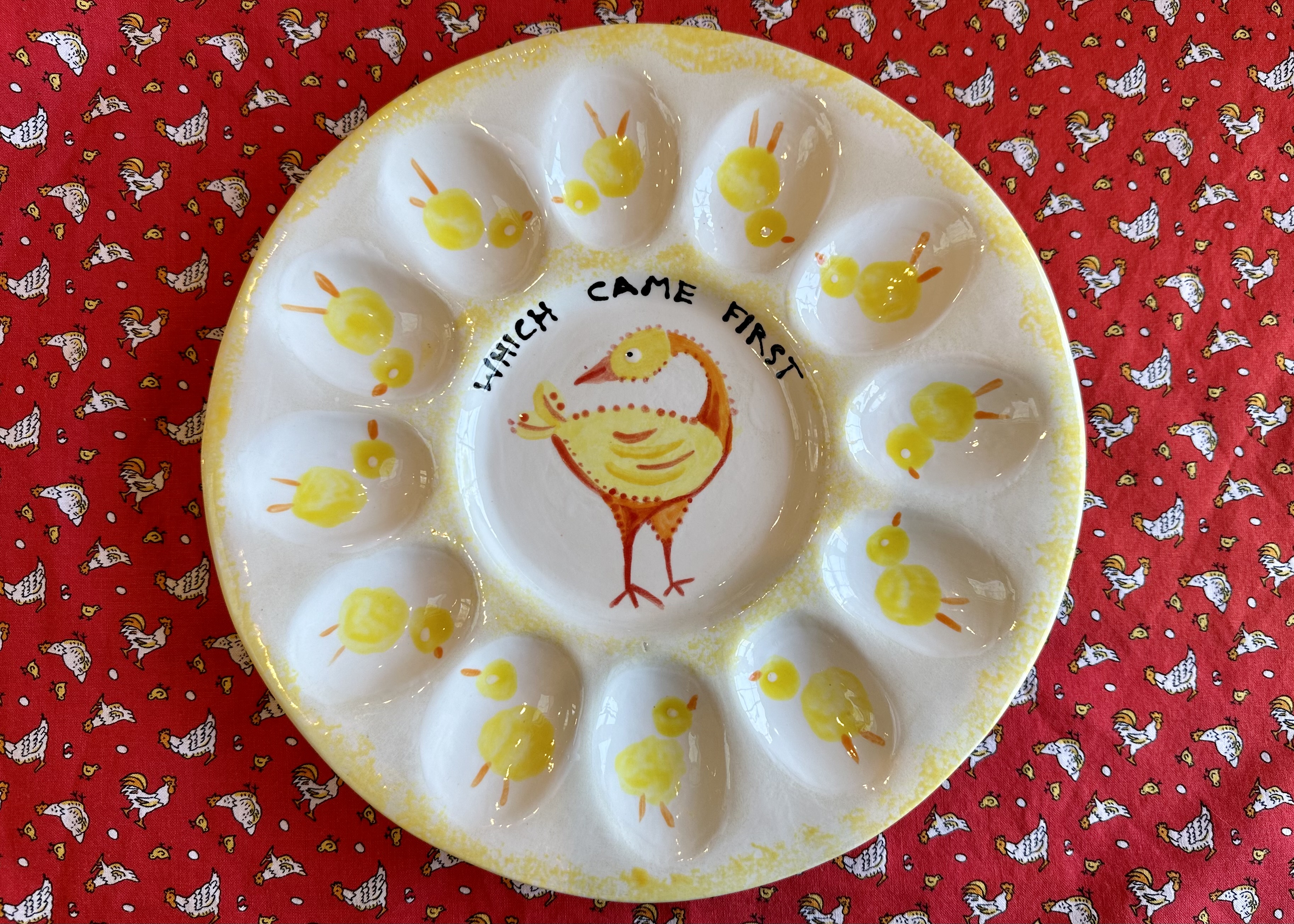

Which came first, the chicken or the egg? (Corabel Shofner created the plate!)
“It’s a chicken and egg problem.”
Don’t put all your eggs in one basket
Don’t count your chickens before they hatch
A chicken in every pot (suggestive of prosperity)
The rooster may crow, but the hen delivers the eggs
You cannot make an omelet without breaking eggs.
He that would have eggs must endure the cackling of hens

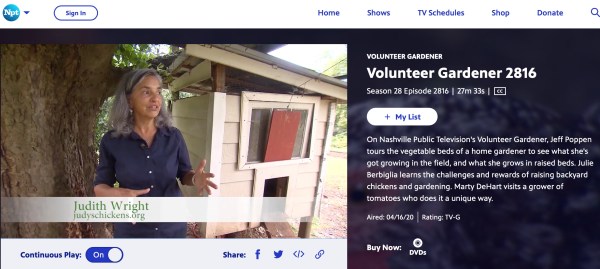
Thinking about keeping chickens in your backyard?
Watch this episode of Nashville Public Television’s Volunteer Gardener:
For Related Chicken Posts:
Eulogy for a Chicken
Chicken Chat on Facebook LIVE!
How to Tell If an Egg Is Fresh or Hard-Boiled
Quiche Lorraine with Bacon and Kale
50 Ways to Make a Frittata

Follow Judy’s Chickens on Instagram and Pinterest @JudysChickens.

If you enjoyed this post, sign up to become a follower. If you do sign-up, press “confirm” on the follow-up letter sent to your email address. And feel free to share!!

© 2014-2023 Judy Wright. All rights reserved. Photos, videos, and text may not be reproduced without the written consent of Judy Wright.

Food and Fabric Fun While Being #SaferAtHome

Have you ever wondered how to tell a hard-boiled egg from an uncooked egg without cracking it open? Watch my hubby explain and then try it at home.

How to Tell If an Egg Is Fresh or Hard-Boiled


Have you ever wondered why you can’t smell when your nose is stuffed up, yet your tongue can still taste, sweet, salty, bitter, sour, and umami (savory)? Check out this fun food activity to learn more.

Test Your Sense of Smell


Yellow onion skins help give chicken broth a beautiful golden color. I figured that out when making these naturally dyed eggs using an assortment of foods to make the dyes. Give it a try.

To Dye For: Making Naturally Dyed Easter Eggs

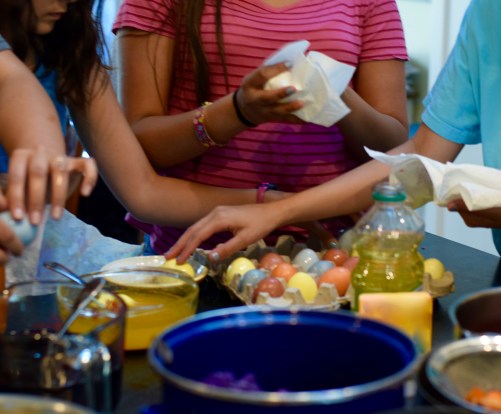
The next year, I invited a few young friends over and we figured out how to add more colors to our repertoire.

The next year,  I took a DEEP DIVE into the fridge, my backyard, and my imagination, and my kitchen became a color laboratory.

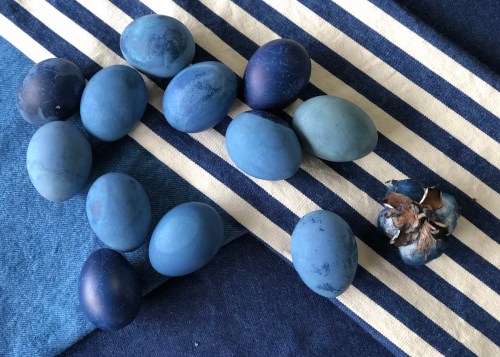
Some of the eggs did not take up the color. I redipped those eggs into an indigo dye bath. Wow! These shades of blue were delightful.

The cotton boll on the right did not take up color as well as the eggs. That led to the deepest dive of all: growing a crop of indigo and traveling to a Kentucky farm to learn how to get the indigo dye to stick to cotton. That took a little chemistry. It was a colorful adventure.

How to Make Indigo Blue Dye

There was one more project to try with natural dyes — learn how to tie and dye fabric squares and make a quilt. This post is one of the most popular of all at Judy’s Chickens.

Group Project: A Shibori Dyed Quilt

This cake from My Name is Yeh, made with natural food dyes, is one I will try in the near future.

naturally colored rainbow cake

This cake is definitely in my future.

Old-Timey Vanilla Bunny Cake

Christians, Jews, and Muslims will be contemplating Easter, Passover, and Ramadan this month. Most of us will be acknowledging these holiest of times differently this year. Whether you are alone or with whoever makes up your family group, may you experience peace, love, recovery if sick, and continued health if well.

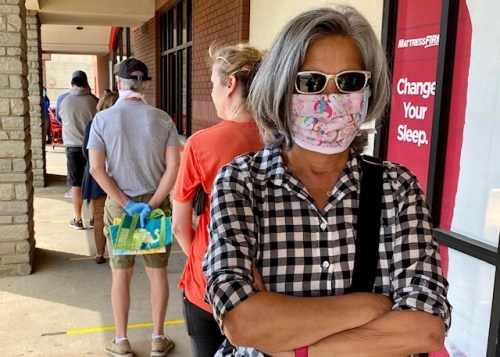
I was blessed to have my friend, Mary Carter, of Award-Winning Chocolate Chip Cookies fame, gift me with a handmade face mask with unicorns on the fabric “for magical powers.”

My plan this week is to pay it forward and make a few more.

Take care,
xoJudy

P.S. Check out my list of movies to watch while #SaferAtHome:

Upbeat Movies to Watch While Social-Distancing

Follow Judy’s Chickens on Instagram and Pinterest @JudysChickens.

Always check my blog for the latest version of a recipe.

If you enjoyed this post, please comment, share, or become a follower. Be sure to press “confirm” on the follow-up letter that will be sent to your email if you subscribe.

© 2014-2020 Judy Wright. All rights reserved. Photos, videos, and text may only be reproduced with the written consent of Judy Wright.

How to Make Plant-Based Dyes

This is a story about how one thing led to another.

In April 2015, I wrote a post about using vegetables to make homemade dyes for Easter eggs. It seemed like everyone on Instagram was doing it and I wanted in on the action. You can read about it here. It was exciting to produce gorgeous colorful dyes from “scratch.”

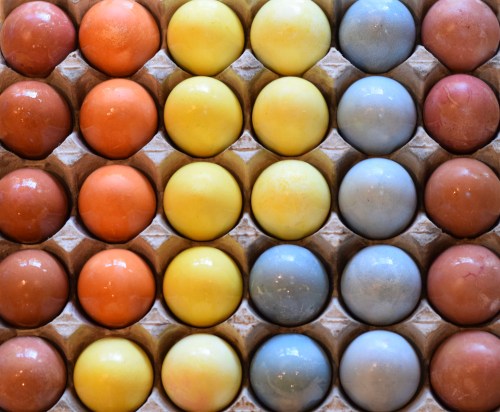
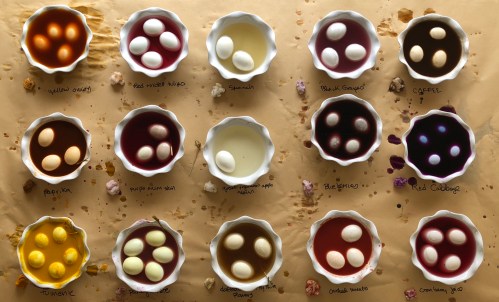
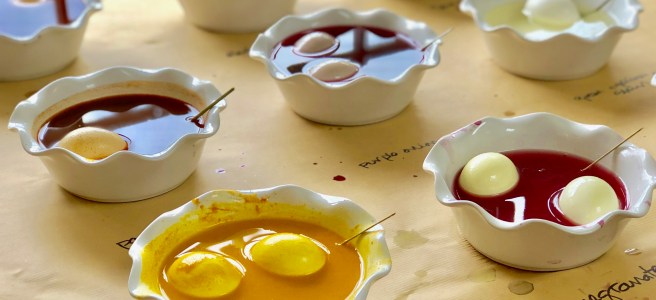
These are the colors I made by boiling vegetables in water.
Red/Purple cabbage produced the blue color. That was a nice surprise!
Yellow onion skins made the orange.
Red onion skins made the brownish-red color.
Red beets made the deep fuschia.

One analogous cooking tip I was able to learn from this egg-dyeing project was that yellow-skinned onions impart a nicer golden color to a pot of chicken stock than red onions.

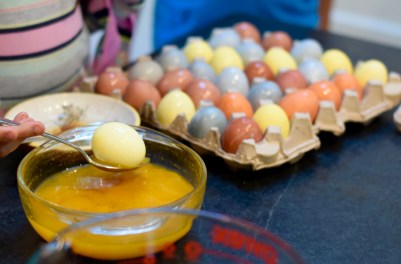
Over the years, I invited my nieces over to dye eggs and we added ground turmeric to the mix. It produced yellow eggs.

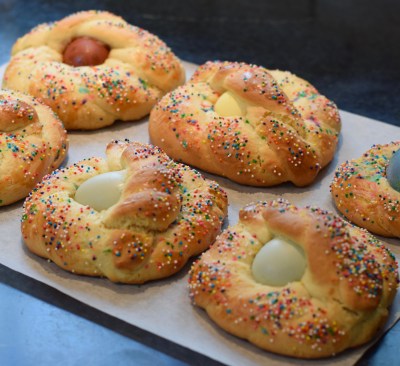
I used some of the eggs in these Italian Easter bread baskets, a recipe I need to post!

One year, I didn’t make vegetable dyes and instead used powdered indigo I had purchased for another project to over-dye already colored eggs. I loved the different shades of blue that resulted. The commercial dye was lightfast, too, meaning the colors didn’t fade the way many of the eggs did.

This past February, while touring a block-printing factory in Jaipur, India, I learned from a young man named Ali, that their factory printed with natural dyes made from plants like tomatoes, pomegranates, turmeric, sugar cane, and indigo.

My takeaway was that you could pretty much make fabric dyes from anything that ever stained your clothes, aprons, or dish towels while you cooked.

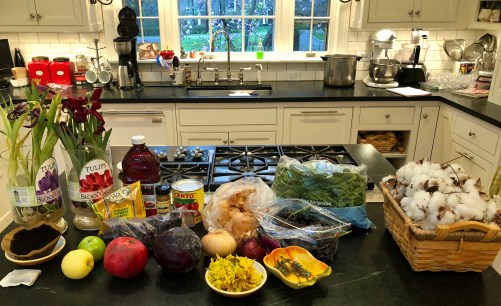
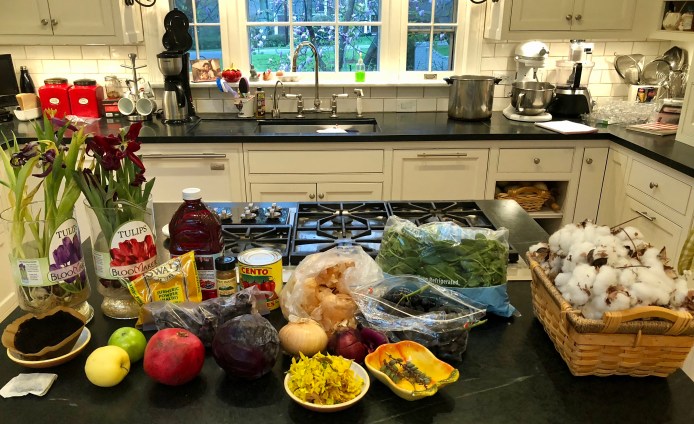
Two months later, Easter 2018, was the year I went a little cuckoo with the egg dyes. I poked through my kitchen spices, vegetable bins, backyard garden (found daffodils and forsythia), and the grocery store, looking for foods and flowers I could potentially use to make dyes. In the end, I chose pomegranates, dark grapes, blueberries, tomatoes, cranberry juice, red cabbage, spinach, turmeric, yellow and red onion skins, paprika, apple skins, used coffee grounds, daffodils, forsythia, and tulips.

I was all in.

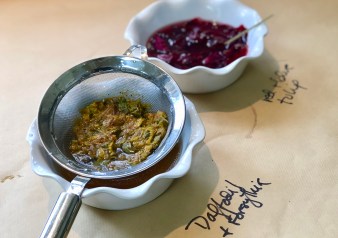
Crazy as this all seems, I got into the zone on this project. I laid down a long sheet of brown paper and filled fifteen bowls with food and flower samples, some of which I had pre-cooked. I couldn’t cook them all because I didn’t have enough pots or time.

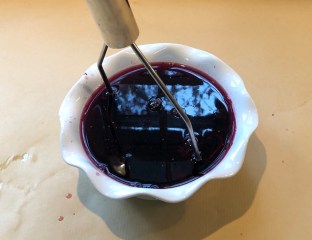
I filled each bowl with boiling water and let the materials meld for a few hours. Afterward, I mashed the plant materials in each bowl, heated them in the microwave, and strained out the pulp.
 

I added hot, medium-sized, hard-boiled, white eggs into the strained warm liquid and let them sit for a while longer.

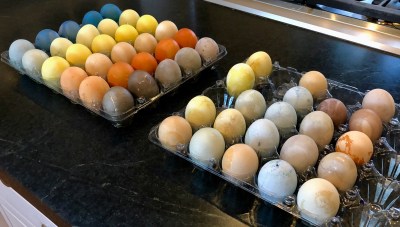
The results were mixed. Some of the dyes produced rich dark colors, some were pale, some were lightfast, some were not. My favorite new colors were a lovely chartreuse from the pomegranate, a golden yellow-brown from the daffodils and forsythia, a pretty mocha-brown from the coffee grounds, and a light orange from the paprika.

While I used the dyes for eggs, in my head I was thinking about how they might dye fabric. I could see how some of the colors in the swatch below could be created from the colorful dyes I had made over the years.


Making Dye from Indigo Plants

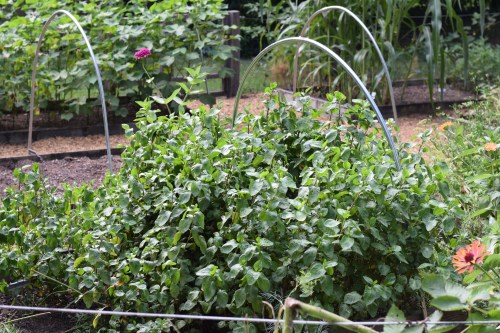
In my garden, I am growing a patch of indigo and hoping that this will be the year I finally try my hand at making dye. There are many complicated steps involved, including the addition of chemicals in calculated amounts and resting periods, all of which have kept me from taking the time to focus and learn how to do it.

Today, I signed up for a class at Hill & Hollow Farm in Breeding, KY, to learn how; how to harvest indigo leaves and create dye. When I went to sign up for the class, I realized I had bought my first indigo plants from Hill and Hollow at their booth at the Nashville Farmers Market. I started with four plants and those plants have self-seeded to create the plot I have now. It was an omen. Stay tuned for that post.

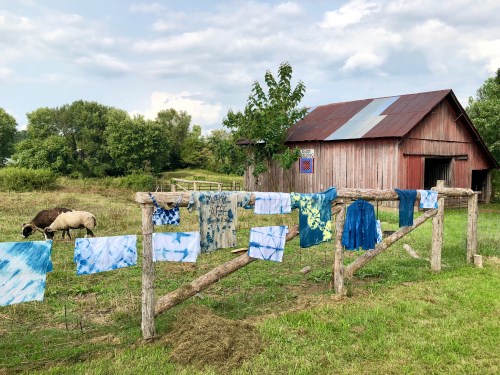
Coincidently, in May, my artist friend, Tallu Quinn, showed me how to make patterned blue and white fabric squares using an ancient dyeing technique known as Shibori. That process will be described in another story, too. As a teaser, here is a photo of the still wet squares we dyed.

Working on this Shibori project with Tallu sealed the learning-how-to-make-indigo-dye deal for me. Once the fabric squares are sewn together for a quilt, a group wedding gift, I will write a post.

Like I wrote in the beginning, one thing led to another.

Related Posts
Learning How to Block Print in Jaipur (India, Part 2)
To Dye For: Making Naturally Dyed Easter Eggs
Morning Rounds in the Garden, July
How to Tell If an Egg Is Fresh or Hard-Boiled

Don’t miss a recipe! Become a subscriber and have every post delivered to your Inbox.

Follow Judy’s Chickens on Instagram and Pinterest @JudysChickens.

Remember to always check this website for updated versions of a recipe.  

© 2014-2018 Judy Wright. All rights reserved. Photos, videos, and text may only be reproduced with the written consent of Judy Wright.

Eulogy for a Chicken

Treating our baby chicks like pets and naming them seemed like a good idea. At first. They were cute and cuddly like pets, and they kept us entertained with their constant chirping and the adorable way in which they climbed over one another to get to their food. We had fun choosing names for that first flock, too: the two brunette Plymouth Barred Rocks were named for my Sicilian grandmothers, Marion and Concetta, the blonde Buff Orpingtons for Hubby’s grandmothers, Alice and Mildred, and the Rhode Island Reds for my zany red-headed great aunts, Bridget and Josephine. Neighborhood children and adults visited every day. Life was good.

The chicks grew up to be a beautiful and sociable flock. They loved to climb the stairs to our back porch and hang outside the screen door while we humans visited inside. This was back in the Spring of 2012 when the Metropolitan Government of Nashville first passed the Domesticated Hen Ordinance allowing urban residents to keep up to six chickens in their fenced-in backyards.

Chickens at the Backdoor

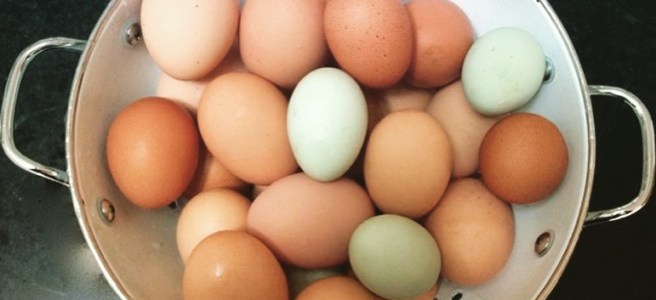
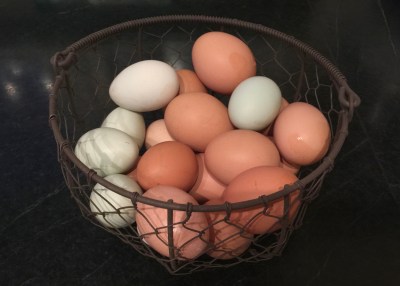
In the beginning of our poultry husbandry, it was all cartoonish chickens running across the grass in their funky lopsided way, and chicken idioms come to life. After about five months, eggs started appearing in the nest box, and it seemed like a happy bonus rather than the original intent. A few years later, with the addition of blue-egger Ameracaunas to the flock, the variety of eggs became downright gorgeous.

img_3711

Eventually, the Circle of Life, Survival of the Fittest, Mother Nature, whatever, showed its hungry head and there was some attrition in the happy flock.

dsc_0311

I didn’t grow up on a circle of life farm, so when the hawk picked off the first few chickens, it took me a while to adjust. The chickens adapted to this menace better than I; they learned to run for cover whenever they heard the hawk’s whistling call or saw his shadow overhead. They also learned to make a beeline for the bushes when I let them out in the morning to avoid being out in the open where a hawk could easily spy them. They were smart chickens.

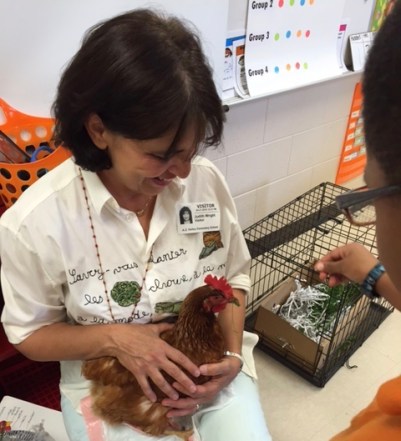
As there was more attrition to come, at some point, I had to stop naming the replacement chickens. Instead, I referred to them by their breed. That is, until last Spring, when I brought my newly acquired Golden Comet chicken to visit Glendale Elementary School in Nashville. There, a young girl in Ms. Meadors’ kindergarten class raised her hand and asked me the chicken’s name.  I hemmed and I hawed. How could I tell this darling child I didn’t name my chickens anymore because Mother Nature could be ruthless? “Comet,” I replied with a motherly smile. The name stuck.

img_7563

Last week, Comet, the only chicken in the flock who liked to be held, died. This is a tribute to her.

One Chicken’s Life

Comet was born on a rural farm in Kentucky that raised Golden Comets, a breed known for being good layers. Once the baby chicks were hatched, they were placed in an open field in movable cages known as “chicken tractors.” The chickens fed on the grass beneath their feet until it was all consumed and then the cages, with their big supporting wheels, were rolled to another area of the field.

dsc_0326

Once the chickens outgrew the tractors, they were moved to a fenced-in apple orchard for grazing. The canopy of apple tree branches helped protect the flock from hawks.

img_6937

I asked the farmer, whom I knew from previous visits to the farm to buy eggs, if he would sell me two of his young layers. He did so with some reluctance — I don’t think anyone had ever asked him that question before. He sent his son to fetch two chickens. The young boy, obviously adept at this task, snuck up on the chickens and grabbed them by the ankles.

dsc_0341

We brought the chickens home and waited until nightfall to introduce them to the established flock. This is a time-honored technique used to decrease the likelihood of new birds being hen-pecked by older girls in their society. The idea is that the birds all wake up together and are not as startled by the presence of the newbies among them. We’ve learned from experience this method doesn’t always work, so for added insurance, we bought a “flock block” and placed it in the enclosed run with them. We hoped it would give the birds something enjoyable to peck on rather than each other.

product_poultry_purina_flock-block

It worked; the older ladies left the new girls alone. We have since discovered that as long as we keep a second food source in the run, the chickens have less reason to be territorial. There is now peace in our small chicken kingdom.

dsc_0874

Comet’s life gets interesting.

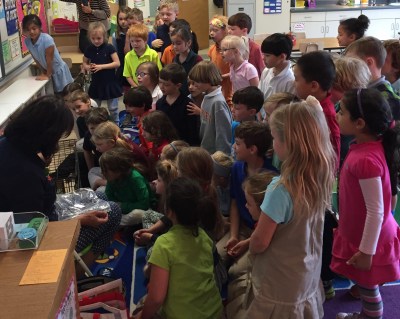
As I mentioned earlier, last spring, I started bringing Comet to visit children in elementary school classrooms.

img_5639 img_6842 img_7573

img_6501 img_7164 img_7840

Comet got to visit many schools. There is no telling how many children stroked her golden-red feathers or touched her rubbery red comb.

img_7181

Here is Comet in Ms. Benson’s kindergarten classroom where children got to feed Comet leafy greens and pea shoots with their soft leaves and curly-cue tendrils.

image2

The Boy Scouts came to visit her.

img_7905

And, the Girl Scouts.

13217252_1804130223149390_7814533329477965568_o

The scouts all learned How to Tell If an Egg Is Fresh or Hard-Boiled. You can learn how, too, in the video located in that post.  

img_5869

Comet and I were featured in a photo shoot for a nationally known online knitting magazine called Mason Dixon Knitting. I adore this photo of Comet taken by my dear friend and neighbor, Ann Shayne. Ann later gifted me with the beautiful purple and raspberry colored handknit cowl.

img_2964

A few more remembrances of Comet.

Here she is eating her leafy greens and peas.

Tilling and munching in the compost pile.

img_3543

Visiting while I planted an asparagus bed.

dsc_0445

Taking in the scuttlebutt at the watercooler.

dsc_0453

Leading the charge as the flock followed me around the yard.

dsc_0477

Comet was one fantastic chicken.

img_7778

In Memory of Comet:
50 Ways to Make a Frittata
Quiche Lorraine with Bacon and Kale
Freshly Cooked Tortillas

Related Stories:
Family Dirt
Spring Planting Guide for Your Kitchen Garden
Fall Planting Guide for Your Kitchen Garden
How Canola Oil is Made (from plants grown locally)

LET’S STAY CONNECTED!

Follow my photos of vegetables growing, backyard chickens hanging out, and dinner preparations on Instagram at JudysChickens.

Never miss a post: sign up to become a follower of the Blog.

© 2014-2017 Judy Wright. All rights reserved. Photos and text may only be used with written consent.