How to Make Catfish Traps: AKA Noodle or Jug Fishing

The first time I went to Lake Barkley, I sat on the edge of the lake in the quiet of the morning and watched an energetic family motorboat from one buoy to another, pulling in fish and laughing as they did so. I had never seen this way of catching fish, but I was hopeful this Rockwellian moment could one day be a part of my future. Indeed, being who I am, I went ahead and imagined my husband driving a boat full of grandchildren …

Later in the day, we met the family who had been out in the boat, our new neighbors, Pat and Dave Malone. They explained how to “jug” fish and showed us their morning catch. We were hooked. My recent enthusiasm for catfishing ensured a trip later in the day to Walmart to buy supplies. My husband’s curiosity and DIY nature ensured he would have the noodle lines rigged and set that evening. Luck secured a catch the following day.
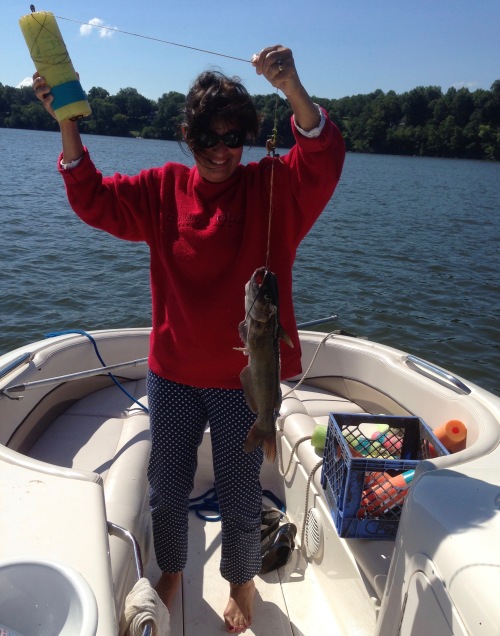
lake barkley, ky july 4th week

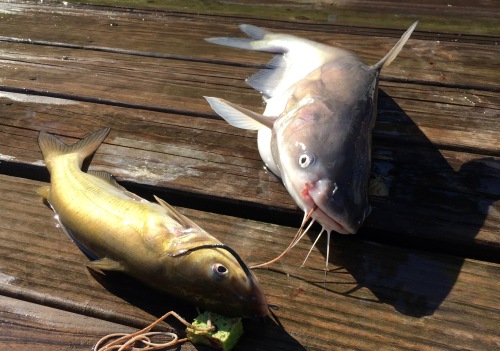
The most common types of catfish in Lake Barkley are the scaleless Channel Catfish and the Blue Catfish. When the Channel catfish are young, their skin is greenish-gray with black spots. The spots go away as they age, and their skin turns gray. The fish on the right with a white belly is called a Blue catfish. The one on the left is a Channel catfish (thanks, Bruce!).
IMG_7720

Here are some facts about catfish that might help should you decide to go noodle fishing:

  • Catfish are nocturnal bottom feeders.
  • Their peak activity and eating time is from dusk to midnight.
  • They have cat-like whiskers called barbels (that do not sting).
  • Their barbels are receptors for taste, smell, touch, and wake-tracking prey.
  • Their razor-sharp dorsal and side fins can prick you.
  • Their flat heads make it easier to skim the lake floor for food.
  • They’ll attempt to eat anything, dead or alive, so this, the most foul-smelling bait on earth, is an excellent choice to lure them in.

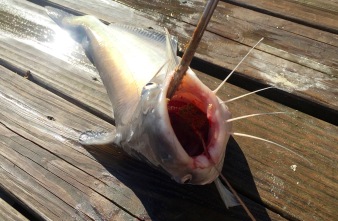
Catfish do not have teeth. Instead, they use suction to pull food into their mouths as they swim.
IMG_7728 (1)

I’ve seen people catch catfish in two ways:.One method is to use a long trotline weighted down with evenly spaced weights and large hooks. This one had about 100 weights and hooks.
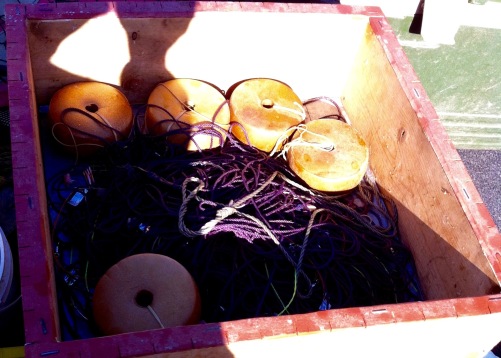
catfish

The other method is known as noodle fishing.

Here is how to noodlefish: In the late afternoon, place your premade collection of baited noodles in shallow water. The following day, go out and pull each noodle in. We usually catch two or three fish out of the twelve noodles we set. Sometimes, we have to search for the noodles if the wind, or a strong fish, has dragged one away. The hunt for a noodle that has drifted across the lake is part of the adventure.

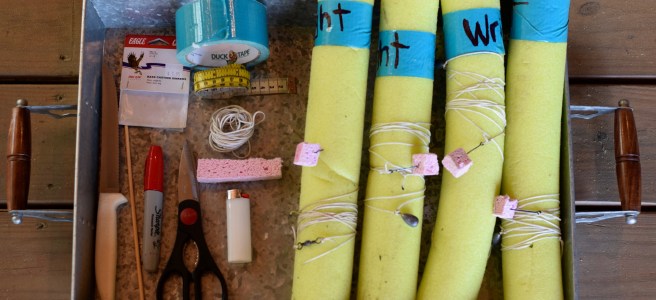
How to rig a catfish noodle (makes 4):

Supplies:
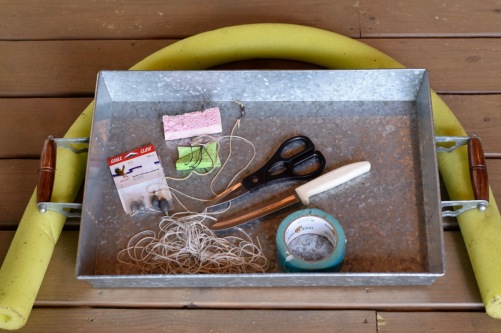
DSC_0085

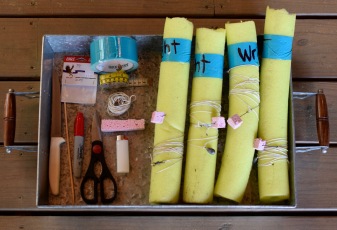
1 four-foot long yellow or orange swim noodle and a knife to cut it into twelve-inch segments.
duct tape, scissors, and a Sharpie marker
40 feet of thin, braided, polyester string and a lighter to burn and seal the ends
1 tape measure to measure the lengths of string
4 large fishing hooks
4 half-ounce casting sinkers (weights)
1 dry sponge
1 skewer to make holes in the noodle
1 jar of stinky catfish bait (we use Sonny’s Super Sticky Channel Cat Bait)

Instructions:
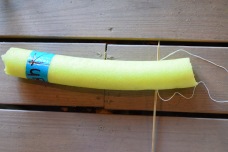
Cut a swimming noodle into four or five equal parts. Use bright yellow or orange noodles to spot them bobbing in the water from afar. Use colorful duct tape to make a stripe on one end to better distinguish your noodle stash from others. Or, just write on the noodle!
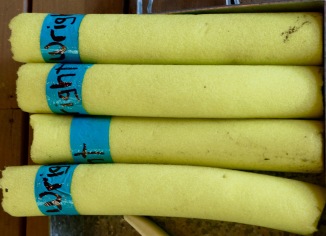
DSC_0092

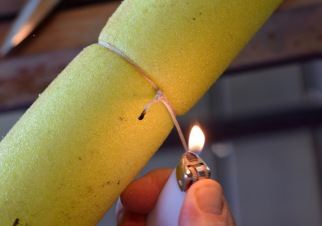
Cut ten-foot-long lengths of string, one for each noodle. Use a lighter to melt and seal each end of string so it won’t unravel.
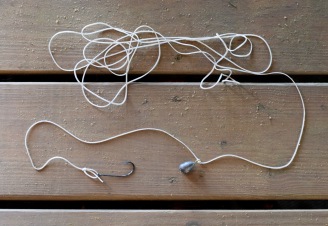
DSC_0104 DSC_0117

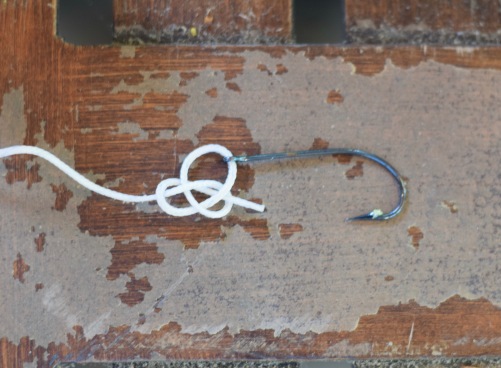
On one end, attach a giant fish hook. Use a bowline knot to secure the attachment.
DSC_0098

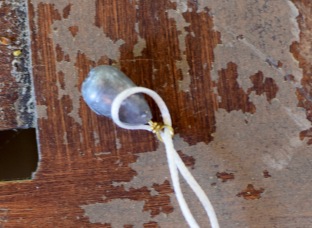
About 12 inches from the hook, attach a weight by making a loop with the string, running the loop through the weight’s clasp hole, and then pulling the weight through the loop of string. Next, tie a knot to secure the weight in place.
DSC_0101 DSC_0103

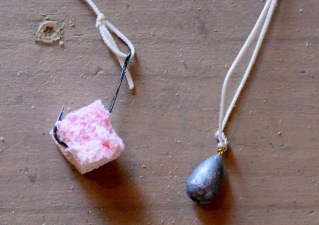
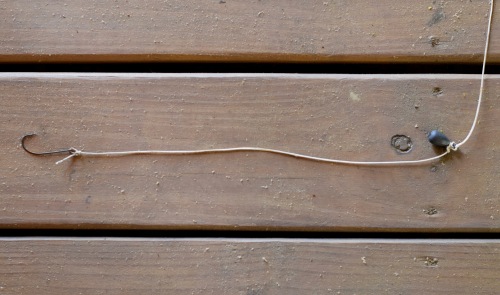
The finished hook and sinker should look like this:
DSC_0094

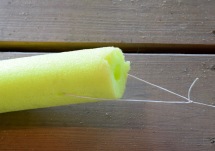
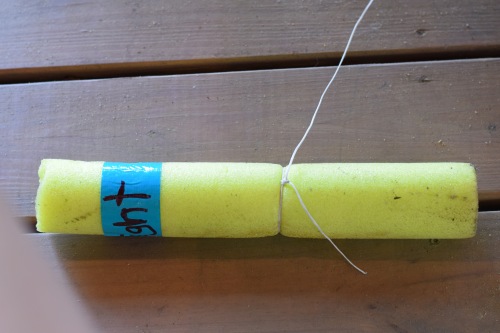
Now, for the other end of the string: Using the pointy end of a skewer, make a hole through the noodle as shown. Make a little slit on the skewer’s flat end with the edge of a scissor. Slide the string through the slit, thus creating a guide so you can run the string through the small hole. Knot the string around the noodle, as shown.
DSC_0126 DSC_0107 DSC_0110

Alternatively, you could just attach the string to the tube this way:
DSC_0116

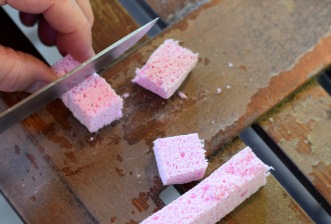
Cut a sponge into little squares. Make extra squares to store in your tackle box. Secure one sponge on each hook.
DSC_0119 DSC_0124

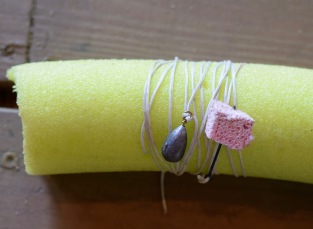
With the hook and sinker attached, wind the string around the noodle, tuck the hook into the styrofoam for safety, and store until ready to fish.
DSC_0125 DSC_0132 (1)

How to noodle fish:

Before setting your noodles in the water, dip the hook with its dry sponge into the gooey catfish bait. Throw the baited noodle line into the water. Repeat until all the noodles are baited and tossed into the water. Invite others (such as guests) to do this stinky baiting job whenever possible. Thanks, Rex!

Throw each baited noodle into shallow water that is about eight feet deep. Since catfish are bottom feeders, you want the weighted hook to sink to their level.

The next day, get up early and check your noodles for fish. We use a mooring hook to grab the noodles. The noodles sometimes drift.,
:IMG_7683 IMG_7685 IMG_7689

Ta Da!
IMG_7735 (1)

How the pros do it

Compare our single hook method to how the pros do it … Early one summer morning, while we were out pulling in our scrappy noodle lines, we saw a husband and wife team hauling in one fish after another from a “trotline.” Mouths agape, we took our boat over to watch and visit.

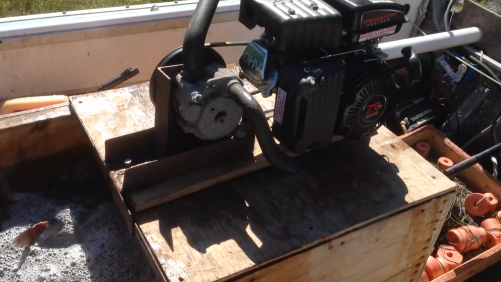
The couple, experienced fishermen, had an interesting way of keeping their fish fresh. They had a long, thin, wooden tub in the center of their boat with a gasoline-powered engine that kept the water churning.
Screen Shot 2016-05-11 at 8.18.11 AM

We noticed the couple throwing the small fish (which looked huge to us) back into the water. They must have seen how impressed we were with what they called small because ten minutes later, they waved us over and gave us a bucketful of their “rejects.” We gushed with thanks.
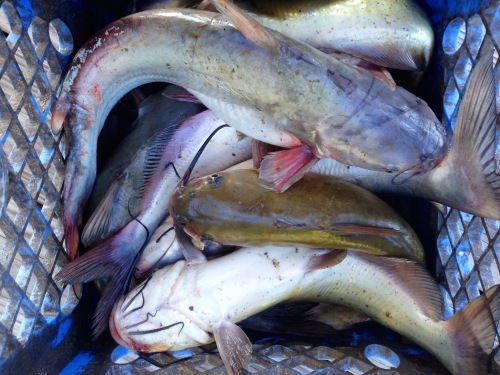
catfish lake barkley

How We Cook Catfish

One weekend, my husband and visiting friends, Mary and Ed Carter, showed us how they prepare catfish. It’s become our traditional way of cooking it now. This recipe makes enough for four people when used as an appetizer. The fish was light, flaky, and delicious.

4  6-ounce catfish fillets (approximately)
1 cup garlic croutons, crushed
1 tablespoon Tony Chachere’s Creole Original Seasoning or seasoned salt
1 teaspoon lemon garlic pepper
canola oil
lemon slices for garnish

In a ziplock bag, crush the croutons into large crumbs. Add the fish and remaining seasonings. Gently toss until fillets are well coated.

Meanwhile, heat canola oil in a cast iron skillet (about 1 inch deep). When a drop of water sizzles in the oil, it is ready for the fish. Gently lay the fillets in the hot oil. When lightly browned and flakey, flip over and cook the other side. Serve hot.
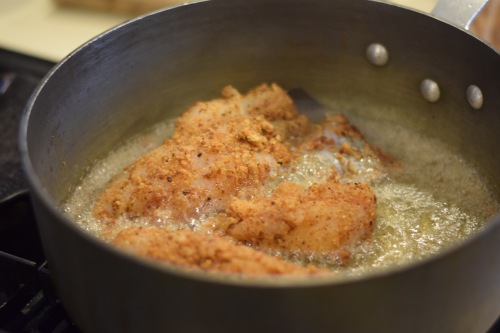
DSC_0964

Squeeze with lemon juice before serving.
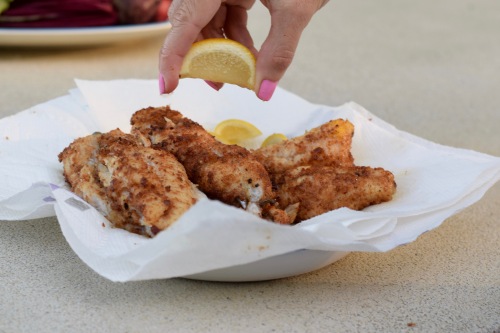
DSC_0007

Enjoy! Here is our Southern Living magazine-style photo moment.
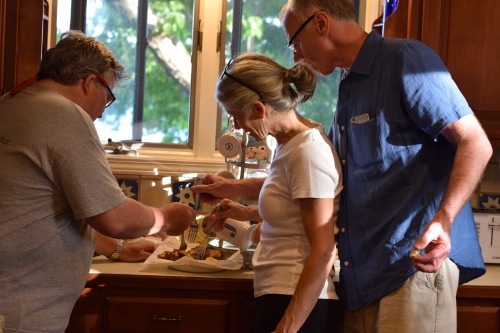
DSC_0024

The Lake Barkley State Park and Marina has room and boat rentals and is ninety miles from Nashville.

Unknown

LET’S STAY CONNECTED!

Follow my photos of vegetables growing, backyard chickens hanging out, and dinner preparations on Instagram at JudysChickens.

Never miss a post: sign up to become a follower of the Blog.

© 2014-2023 Judy Wright. All rights reserved. Photos and text may only be used with written consent.

How Canola Oil is Made (from plants grown locally)

Last April, I wrote a story about the gorgeous yellow fields of canola that were growing along I-24 in Cadiz, Kentucky. You can read all about it and see the photos here.
DSC_0637

This is Part 2 of that story. The part where after seeing a dramatic increase in the number of yellow fields from the year before, I called the plant manager at the local AgStrong Canola and Sunflower Seed Processing Plant that I had read about in the paper and asked, What gives? Why are we suddenly seeing so much yellow? When he started to explain, I realized I had a lot to learn and asked if I could drive over to meet him and get a tour of the plant. An hour later Mark Dallas was giving my husband and me a tour. Not exactly the way I thought my day would turn out, but I do love a good backroads detour.

As background information, can-o-l-a oil, or “Canada-oil-low-acid,” is made from crushed canola seeds. These seeds are about the size of poppy seeds. Even having seen how canola oil is extracted from these seeds, I still shake my head in disbelief that anything that small, even in huge numbers, could produce something as useful as cooking oil.

A very short botany lesson about plant reproduction:
Flowers have one job, and one job only: to induce reproduction. To that end, flowers that are fertilized will make seeds. Those seeds will make new plants. That the plants grow and produce tasty fruits and vegetables that we like to eat, is bonus. Botanically speaking, those fruits of the plants are actually ripened ovaries full of seeds waiting to be planted. The flesh of fruit is sweet so animals will eat it and disperse the seeds in their travels. Tree nuts work in the same way; Mother Nature is counting on squirrels to bury nuts and thereby assure they will sprout and there will be more trees in the future.

Back to canola flowers and seeds. Like winter wheat, canola is planted in the fall, sprouts, goes dormant in the winter,​ and perks up again in early spring. It flowers in mid-April, and the seed pods are harvested in mid-June. Farmers like to grow winter wheat and canola because then they can double-crop their fields, meaning there is time left in the warm summer months to raise another crop, such as soybeans, in that same field. By comparison, in most northern climates, there’s only time to grow one crop like wheat or canola.

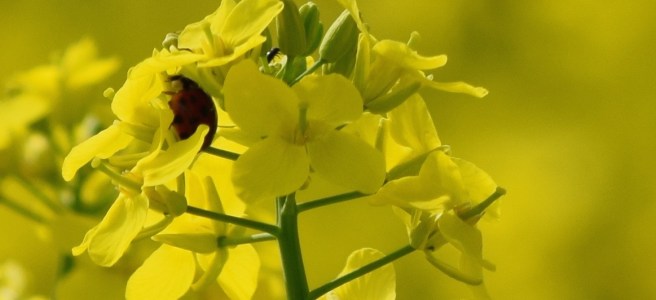
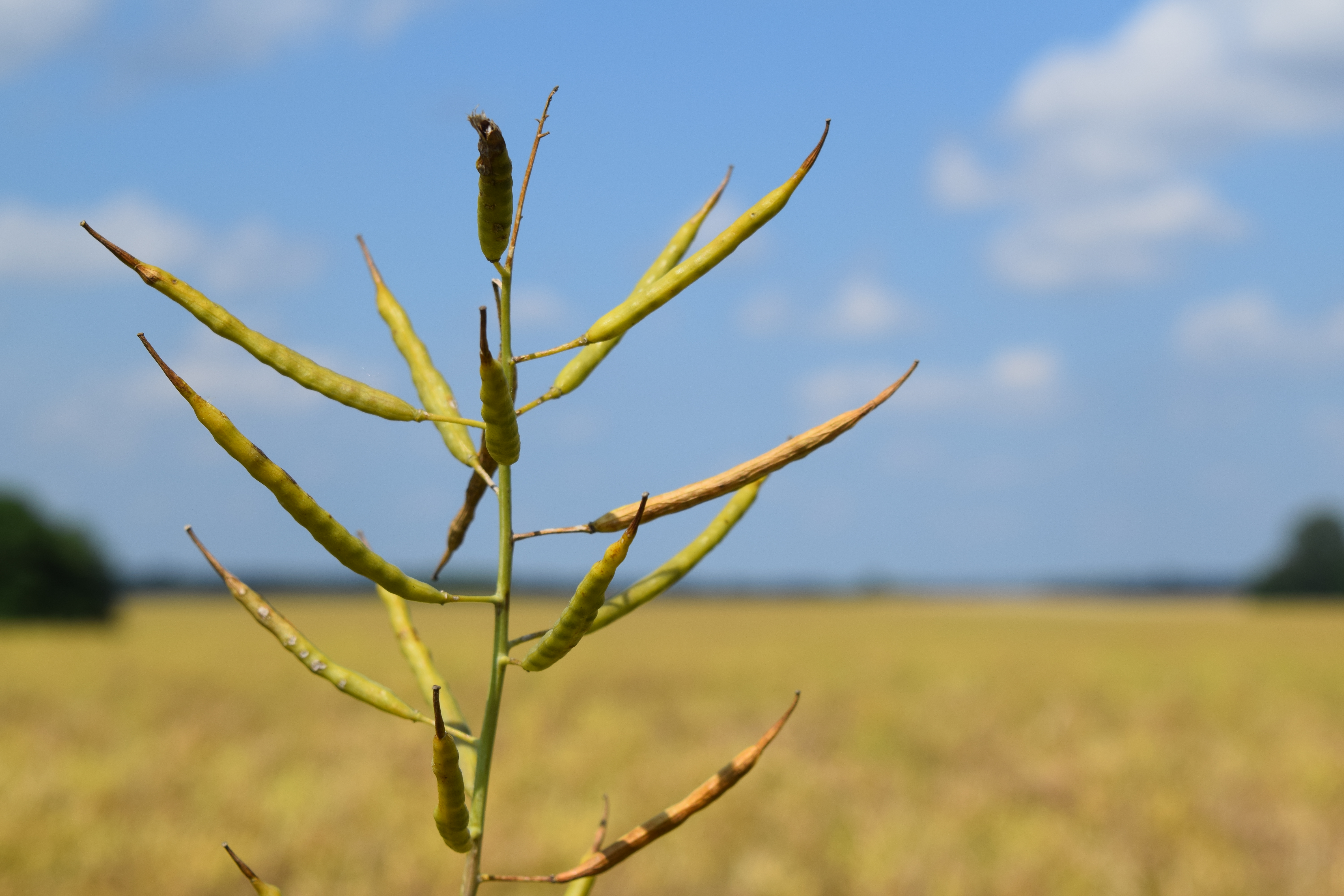
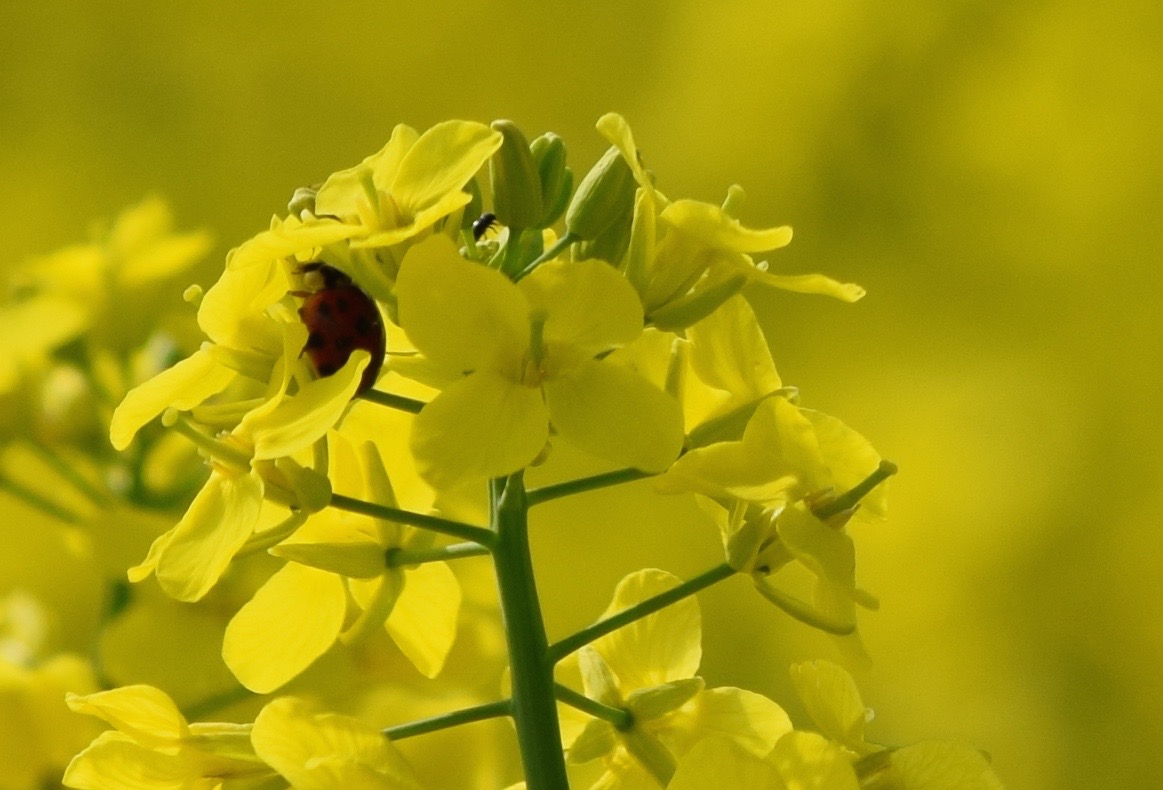
The photo on the left was taken from a stem of canola flowers on April 17th. The photo on the right was taken on June 12th, just a few days before the pods were harvested by the combines I wrote about in this article.
Version 3 DSC_0495

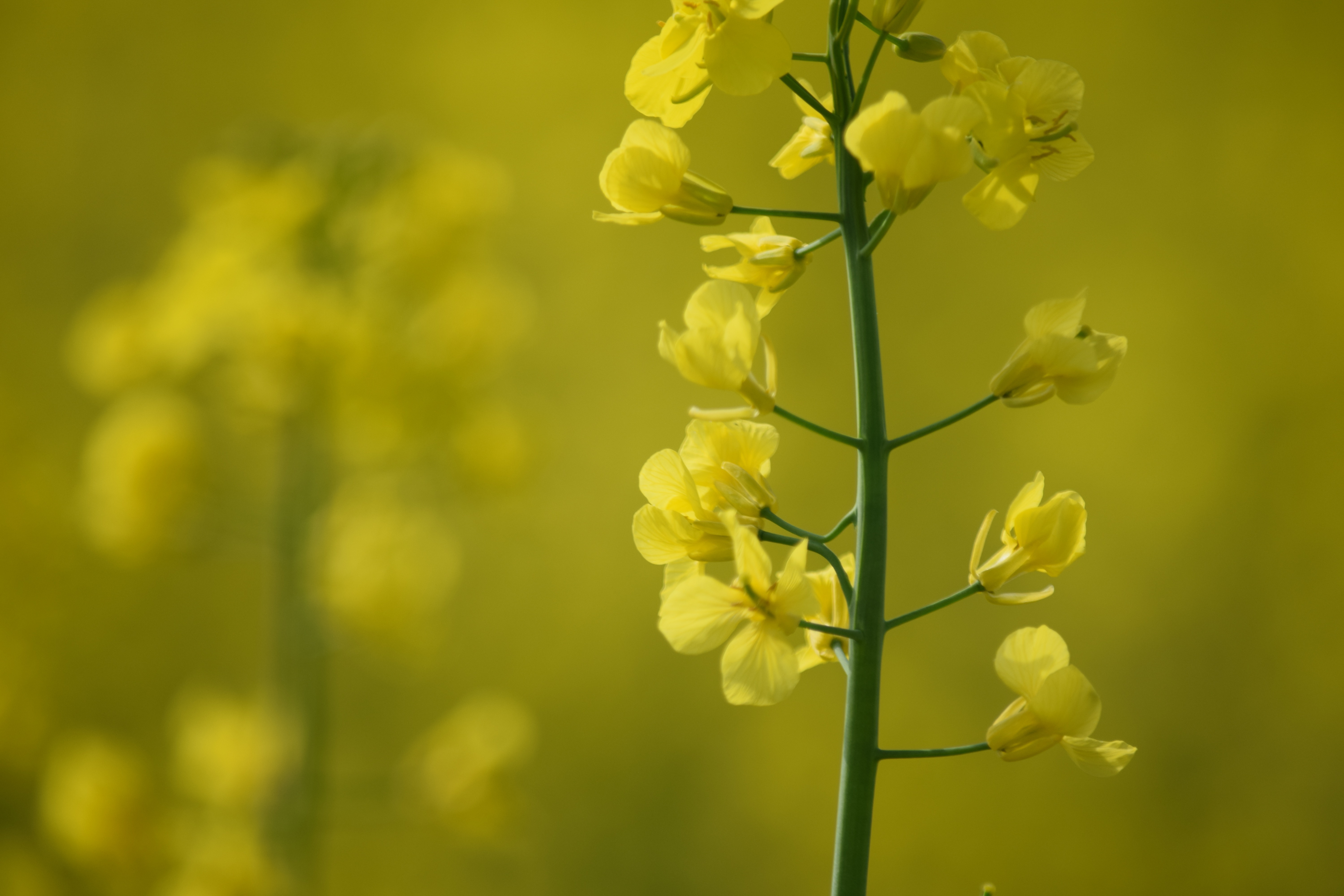
You may have seen similar seed pods develop in your own gardens if you ever let broccoli or bok choi plants flower and “go to seed.” If you look closely at the flowers below, you can see the early development of seed pods. They look like little spikes. Canola is in the same Brassica family as bok choi and broccoli.

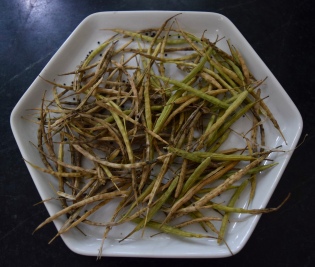
The next photos are of fully mature canola seed pods that I dissected at home to release the seeds within. You can see how small these seeds are. It’s amazing to think cooking oil is extracted from them.
DSC_0141 DSC_0147

AgStrong contracts with local, family-owned, farms to plant nonGMO canola seeds in their fields. NonGMO means the seed’s genetic material has not been manipulated in a laboratory through genetic engineering to make it more disease or insect resistant. A few other tidbits I learned about growing canola: canola has a 5-6 inch tap route which acts as a natural tiller in the soil, and canola brings in $8.10/bushel compared to wheat’s $5.25/bushel.

IMG_7716 a53cfd_4562ef1f791a498283dc60749c982789.jpg_srz_p_371_272_75_22_0.50_1.20_0.00_jpg_srz

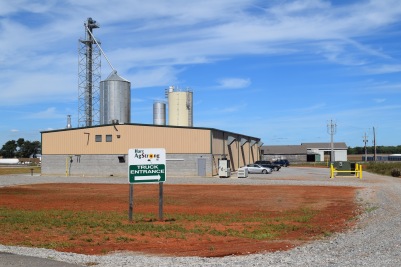
Here is a photo of the canola oil processing plant in Trenton, KY.
DSC_0307

It takes a lot of seeds to make canola oil and these fifty-foot silos are full of them.
DSC_0289

This is what the inside of one of those silos looks like.
DSC_0290

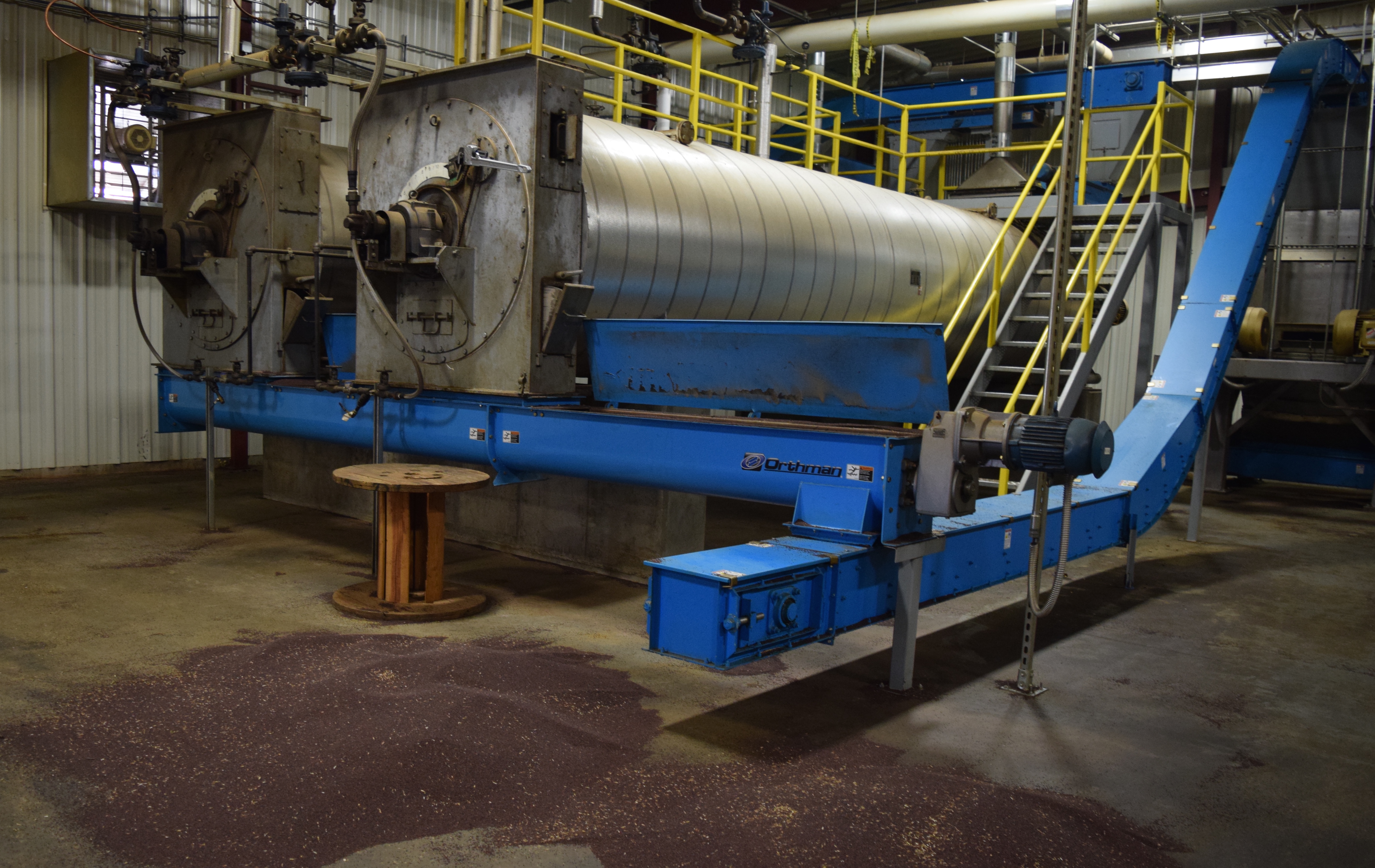
The first stop on the tour was the long silver cylindrical oven used to warm the seeds to no more than 120º. Warming the seeds made them easier to press. The low oven temperature kept the process in the category of cold-pressed. The blue conveyor belt brought the warmed seeds to a machine that cracked the hard outer shells.
DSC_0257

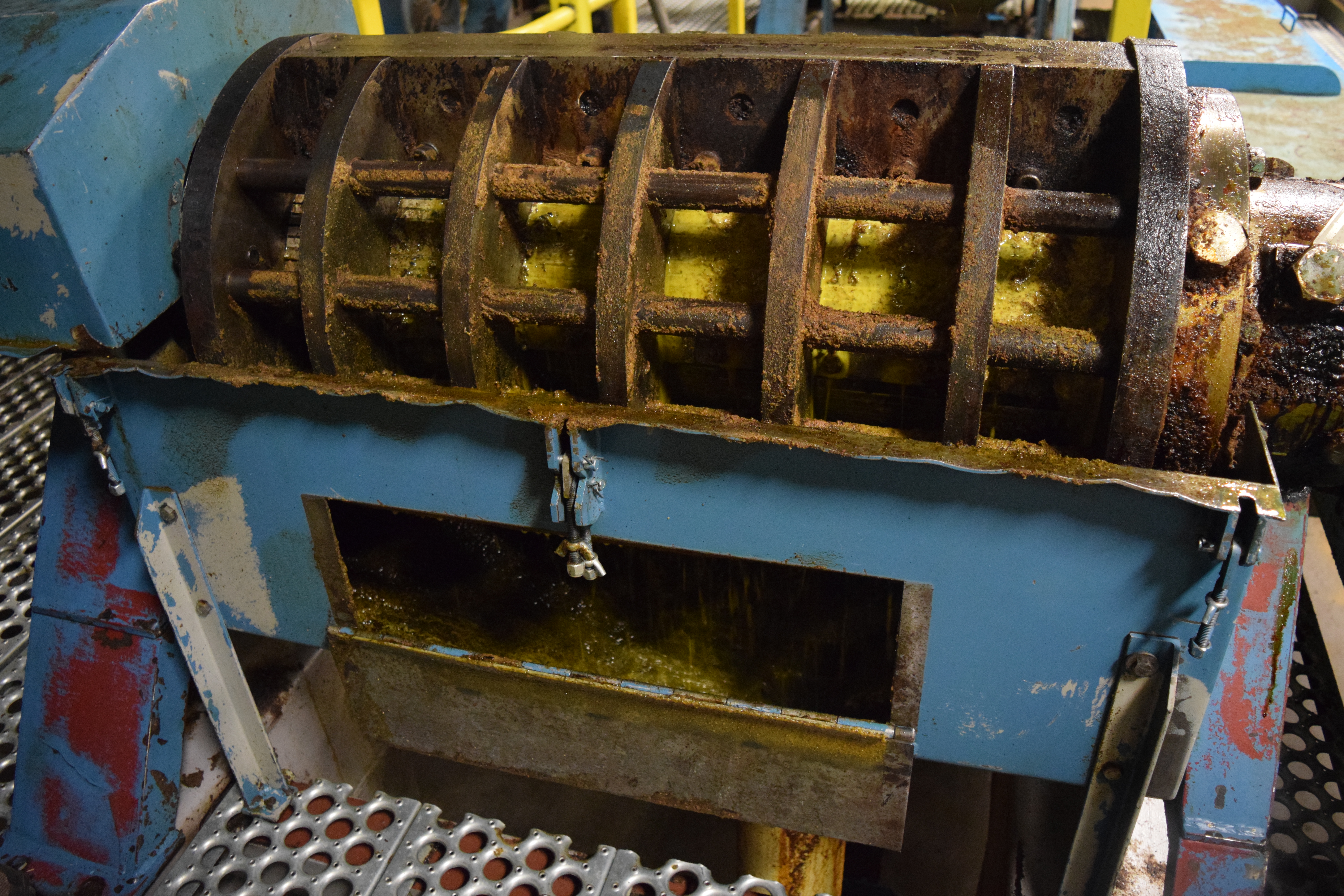
Next stop was the seed crusher. This was where the magic happened. This machine crushed the seeds and expelled the golden canola oil into the blue well. The oil will still need to go to an offsite refinery before it can be bottled.
DSC_0266

Here’s a video of the mechanical magic happening:

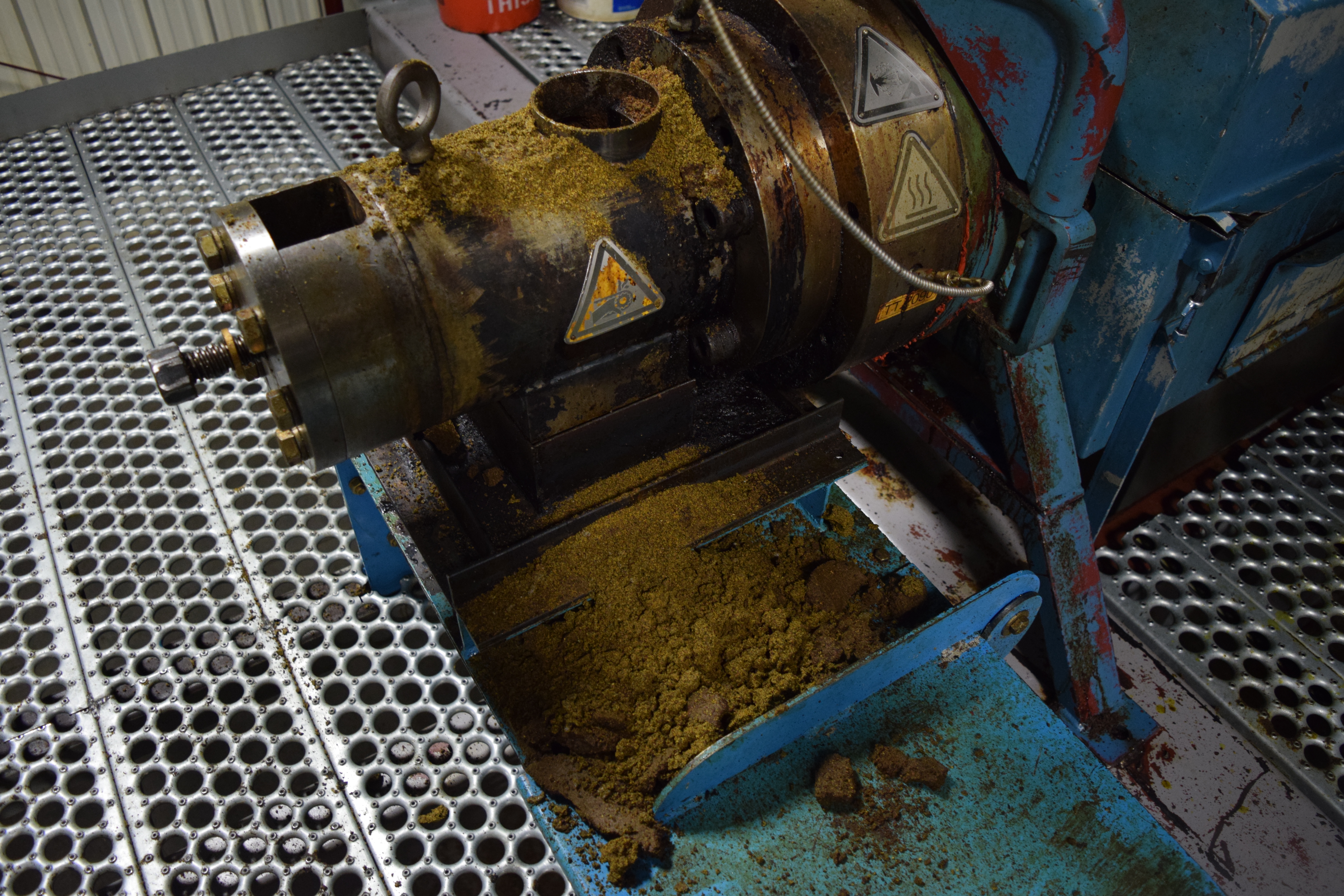
Here was the residual seed meal as it dropped onto a conveyor belt.
DSC_0274

This meal was delivered to the green machine for a second pressing to remove the last traces of oil. At this plant, there are no chemical solvents, like hexane, used to extract these last drops of oil. That’s where the expression “all natural expeller press” comes from.
DSC_0283

Here’s the residual meal as it came off the conveyor belt after the last of the oil had been pressed from it. The meal is used to feed livestock.
DSC_0277

This is the transport room. It’s where the seeds, collected from farmers, are gathered and delivered to the silos for storage. And later, after pressing, where the extracted oil is weighed and distributed, via trucks, to be delivered to Georgia for the final refining process and …
DSC_0286

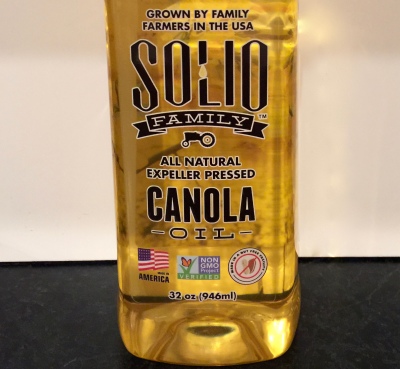
bottling. You can find Agstrong’s Solio Canola Oil at Whole Foods stores.
IMG_3031

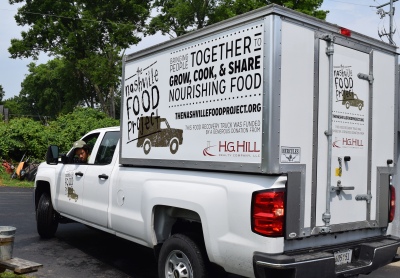
But the story doesn’t end there. As a volunteer chef and Board member of The Nashville Food Project my antennae is always up for opportunities for food donation and food recovery. Canola and olive oil are two expensive staples we use in abundance at TNFP. I asked if Agstrong would consider partnering with us and donating their locally grown and manufactured Solio oil to TNFP, which they have graciously done. Here was the Plant Manger, Mark Dallas, donating a 35-pound container of oil to TNFP, on the spot.
Version 2
And that’s how this one little detour ended up providing cooking oil for TNFP whose mission is “Bringing people together to grow, cook, and share nourishing food with the goals of cultivating community and alleviating hunger in our city.”
DSC_0447
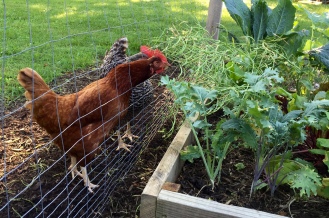
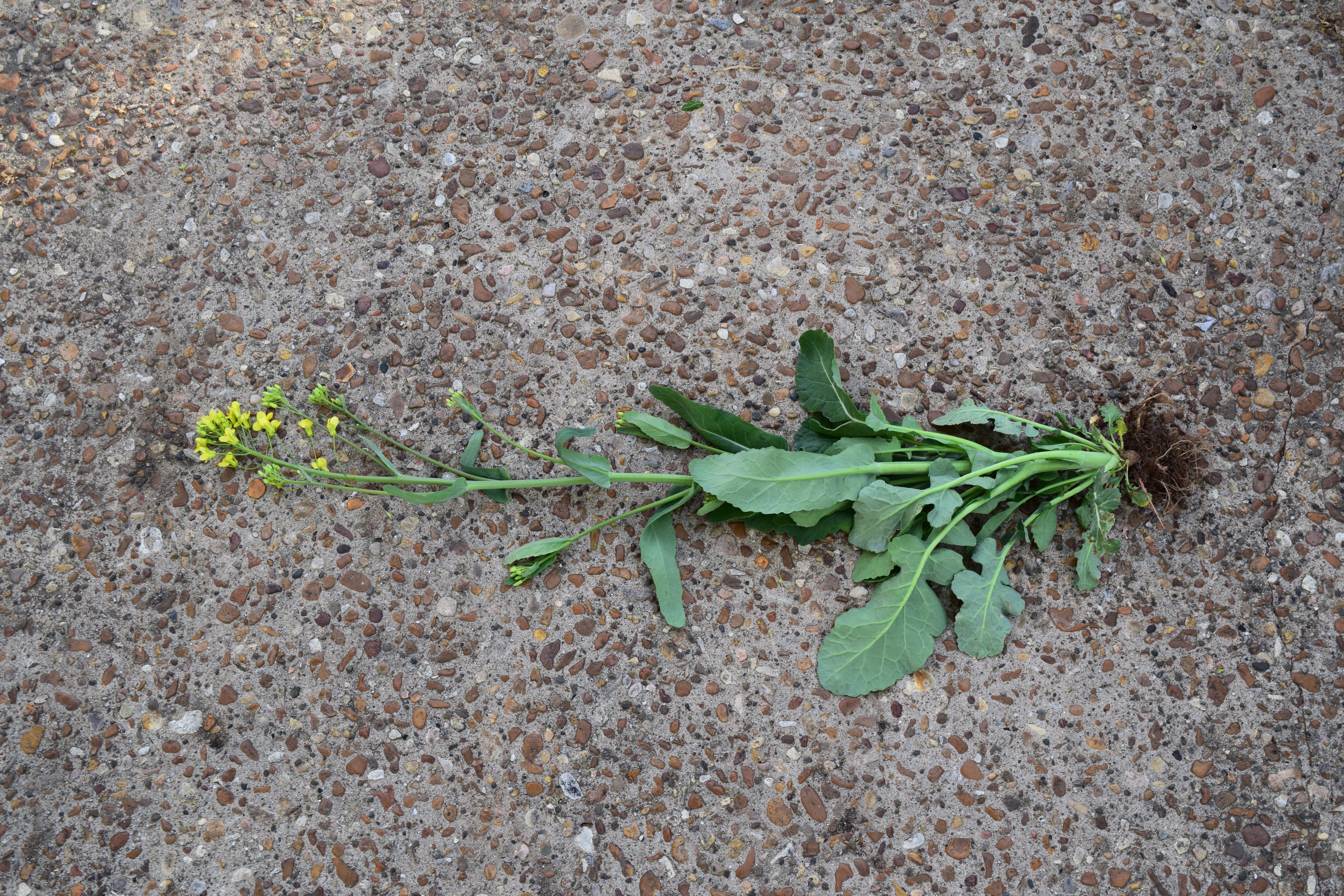
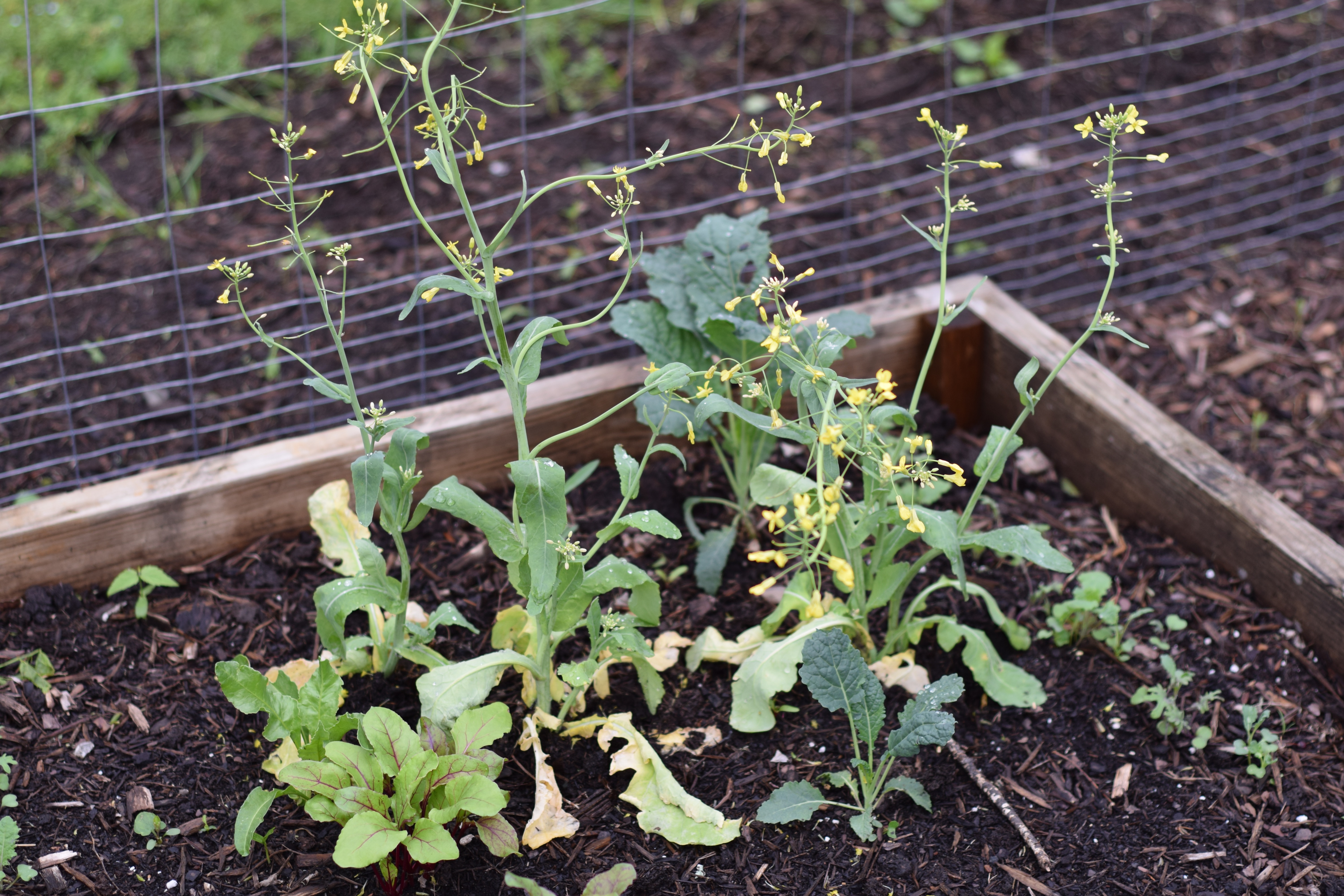
The story, however, didn’t end there, either. I happened to “pull” a few young canola plants from the side of the road last April to plant in my vegetable garden, so I could watch and learn how these plants matured to the seed stage. Once the plants produced seed pods and dried out, I was pleasantly surprised to walk out to my garden one day and see my chickens poking their heads through the chicken wire and eating the canola seeds.
IMG_0787
It looks like Agstrong’s byproduct of meal for livestock was a winner.
I’ll leave you with a video of my chickens enjoying canola seed pods:

Related Posts on Commercial Farming:

LET’S STAY CONNECTED!

Follow my photos of vegetables growing, backyard chickens hanging out, and dinner preparations on Instagram at JudysChickens.

Never miss a post: sign up to become a follower of the Blog.

© 2014-2017 Judy Wright. All rights reserved. Photos and text may only be used with written consent.
Farming Equipment 101: Harvesting Winter Wheat

It’s hard to explain my fascination with farming and farm equipment, but I am smitten. I’ve noticed my husband now automatically slows down when we drive by a farm with interesting agricultural activity going on: tractors crisscrossing fields, barn smokestacks billowing smoke during tobacco drying season, a team of horses pulling a cart driven by Mennonite farmers, or even something as mesmerizing as the swaying of “amber waves of grain.”  DSC_0905 He knows me well, and by slowing down he is giving me ample opportunity to ask him to pull over. Better than turning back later, a few miles down the road, Right? We are well beyond just “pulling over.” He is now, with coaxing, all about driving down these long, beckoning gravel roads. The views and the farmers we meet are the rewards.

DSC_0205

I am awestruck by all that I see.

DSC_0189

I fully appreciate that the crops from these commercial farms are feeding people across the nation and doing it in such a beautiful and orderly fashion that it transcends art and science. It is a miracle of nature, at least to a neophyte like me.

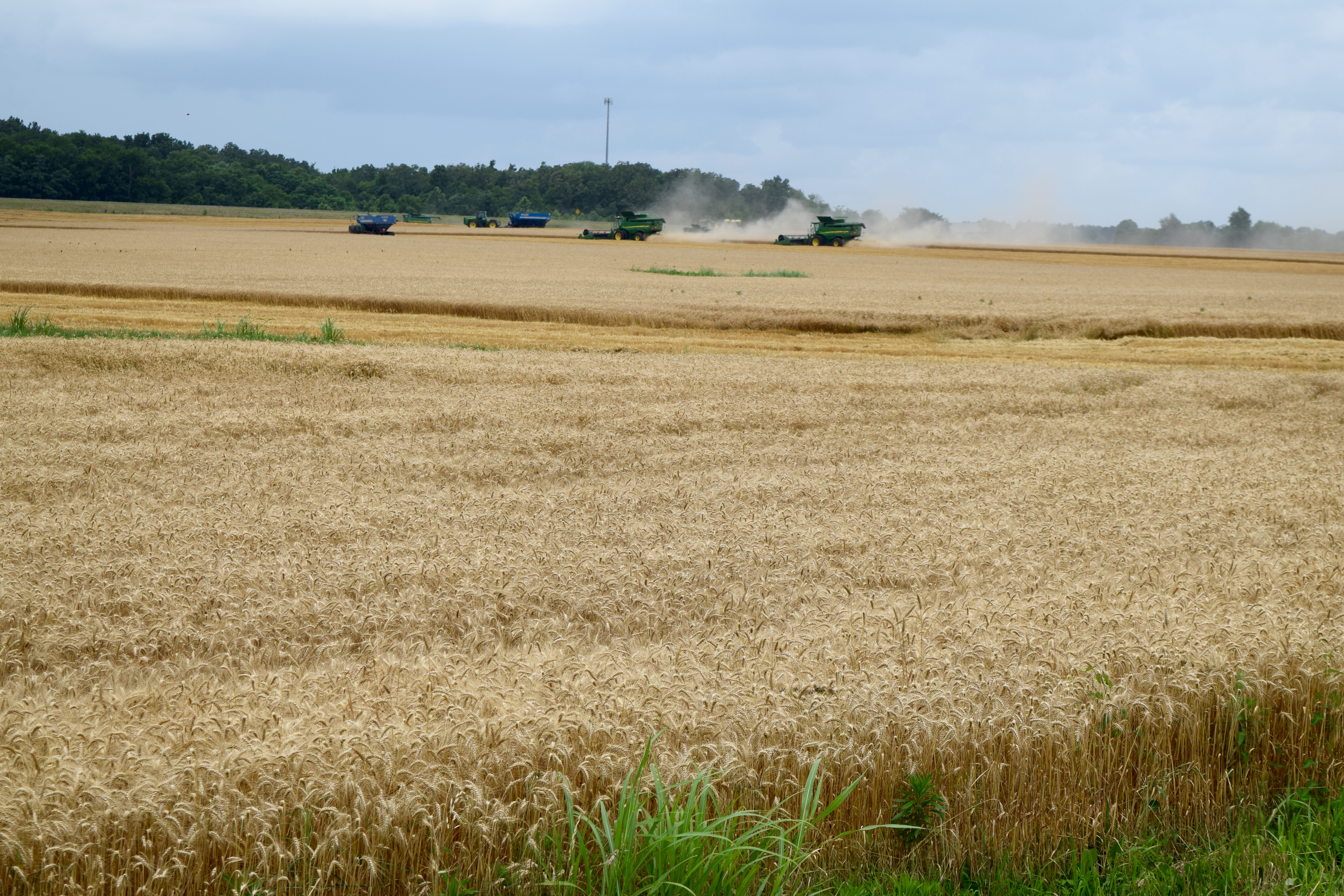
Recently, while driving down Route 68 in Cadiz, Kentucky, on our way to Hopkinsville (aka Hoptown), I spied this mash-up of amber and John Deere green.

DSC_0902

I had been following the growth of this field of winter wheat since the seeds were first planted back in mid-October, then through their winter dormancy period, and finally to their full maturation, the seed production stage in late spring.

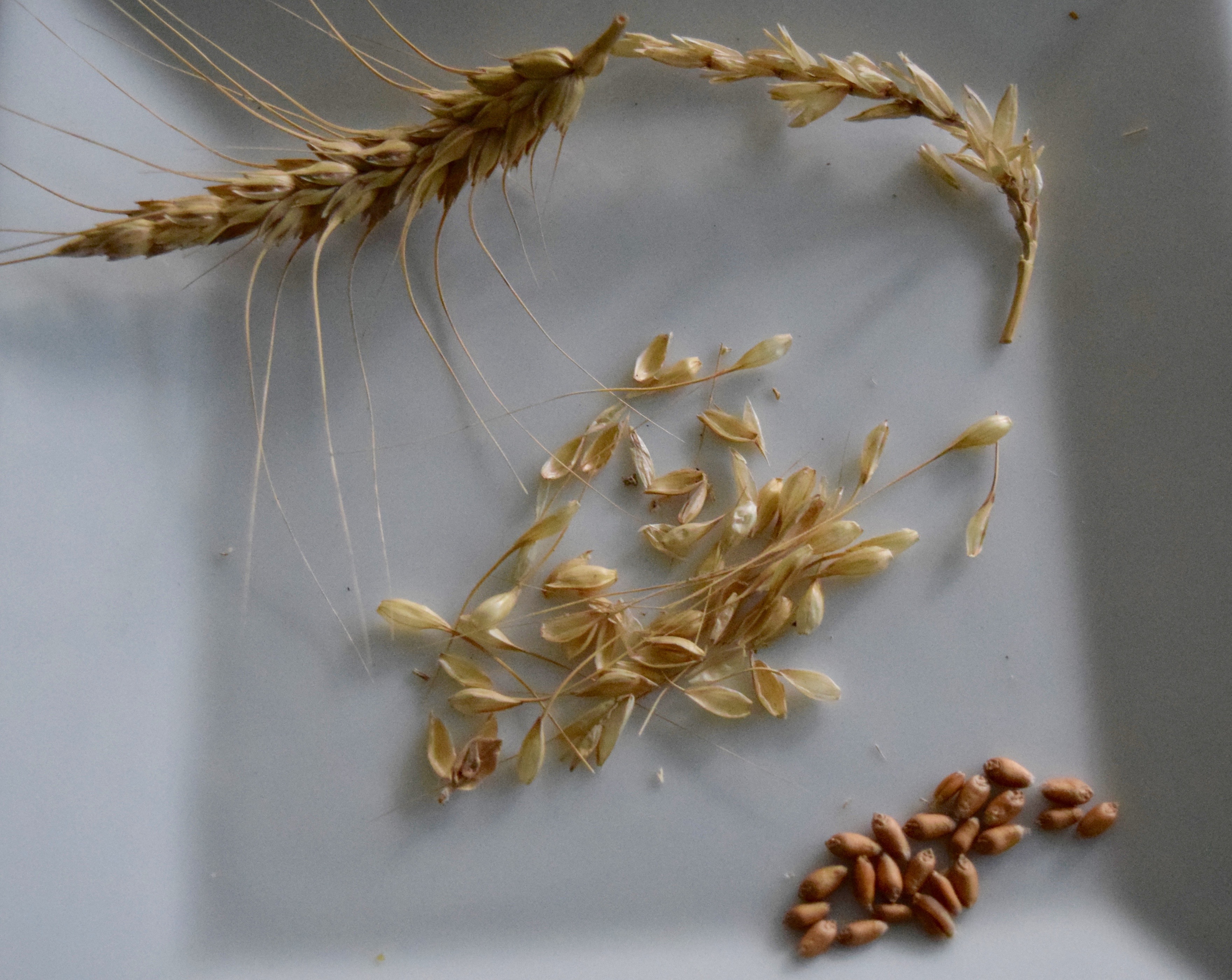
The photo on the right shows the wheat seeds/grains harvested from one “ear” of wheat. The flecks in the dish are the husks that had surrounded the seeds and are known as chaff.

DSC_0036  DSC_0305

Farming Equipment 101

The Combine

DSC_0961
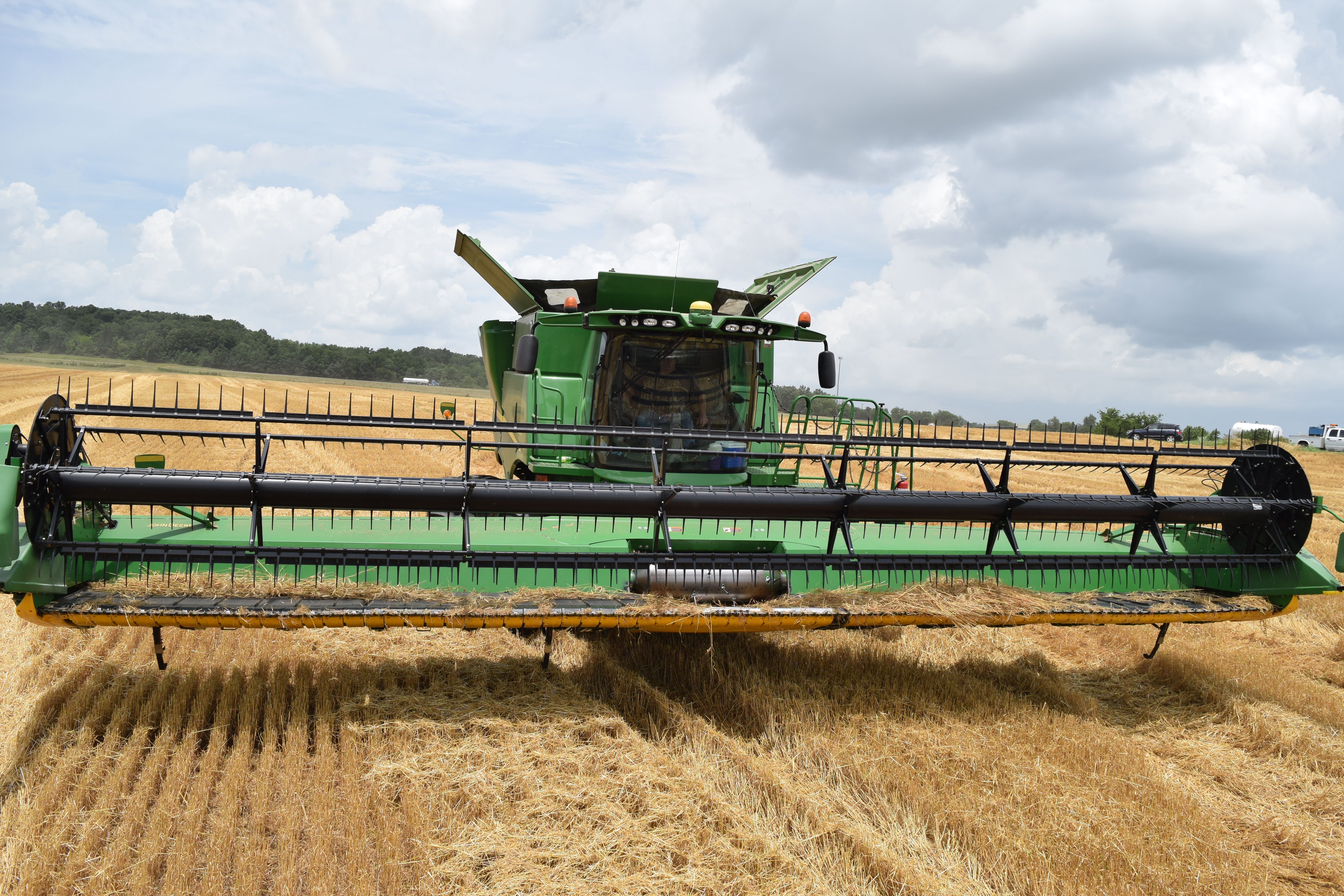
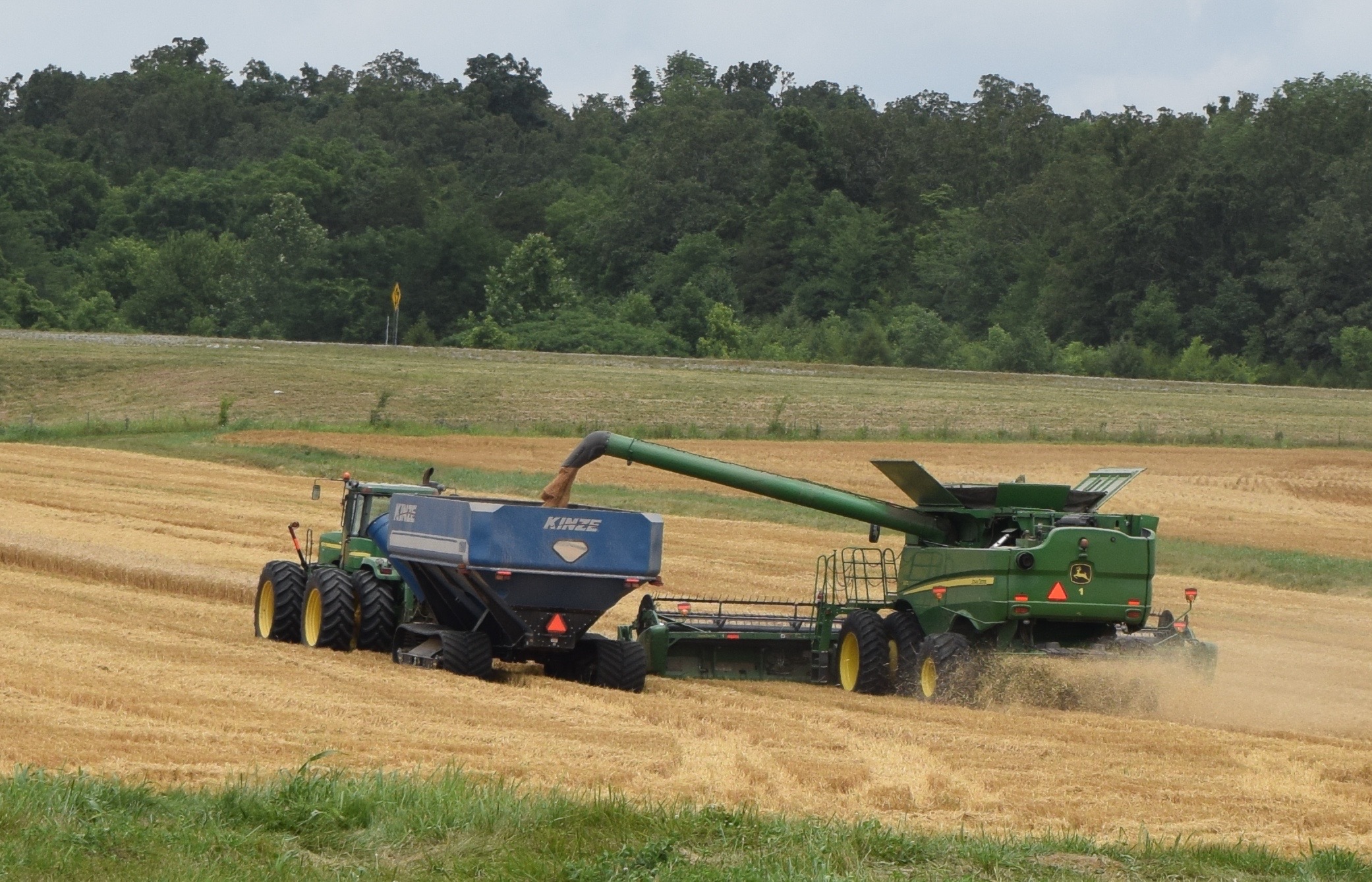
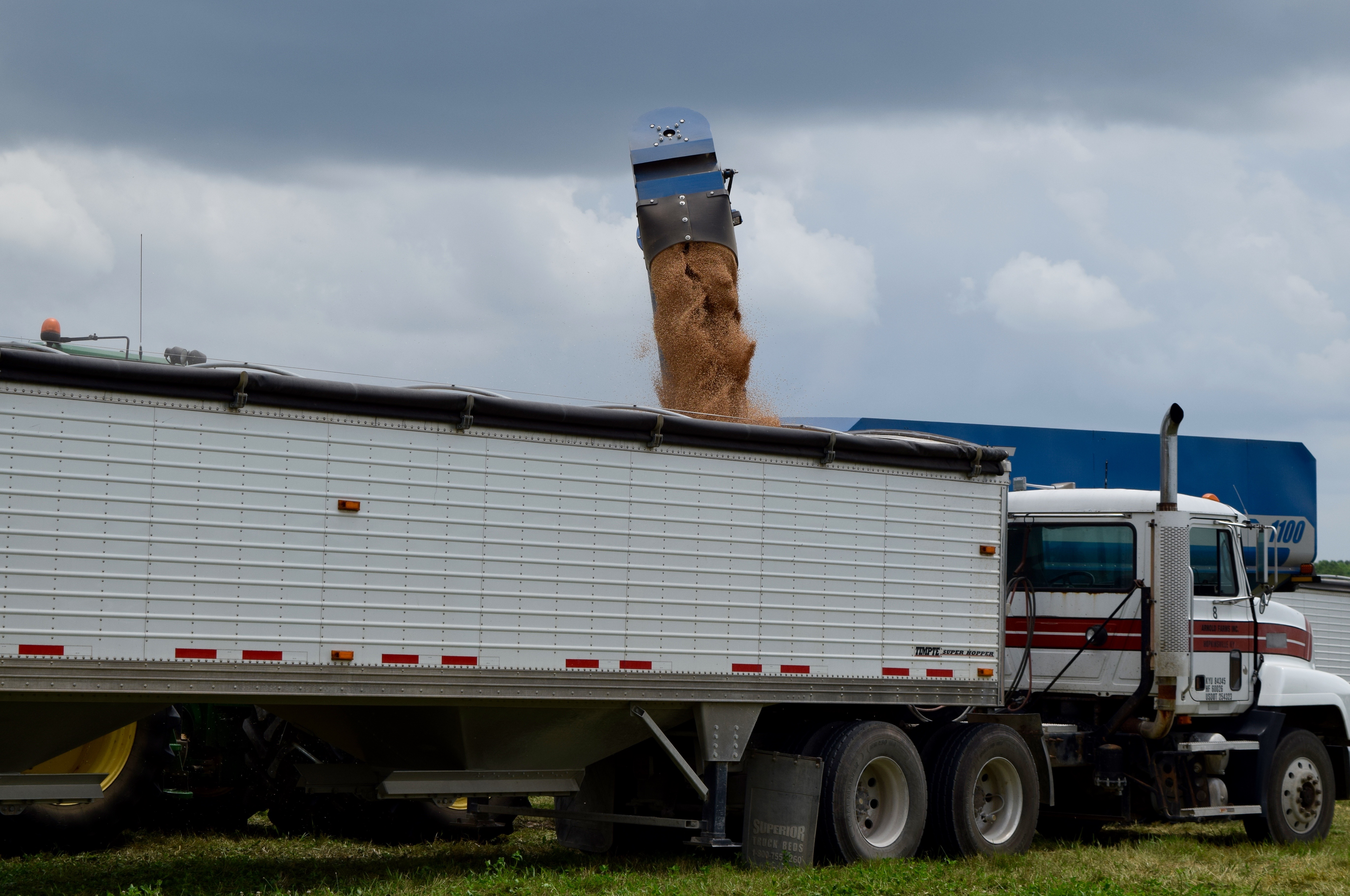
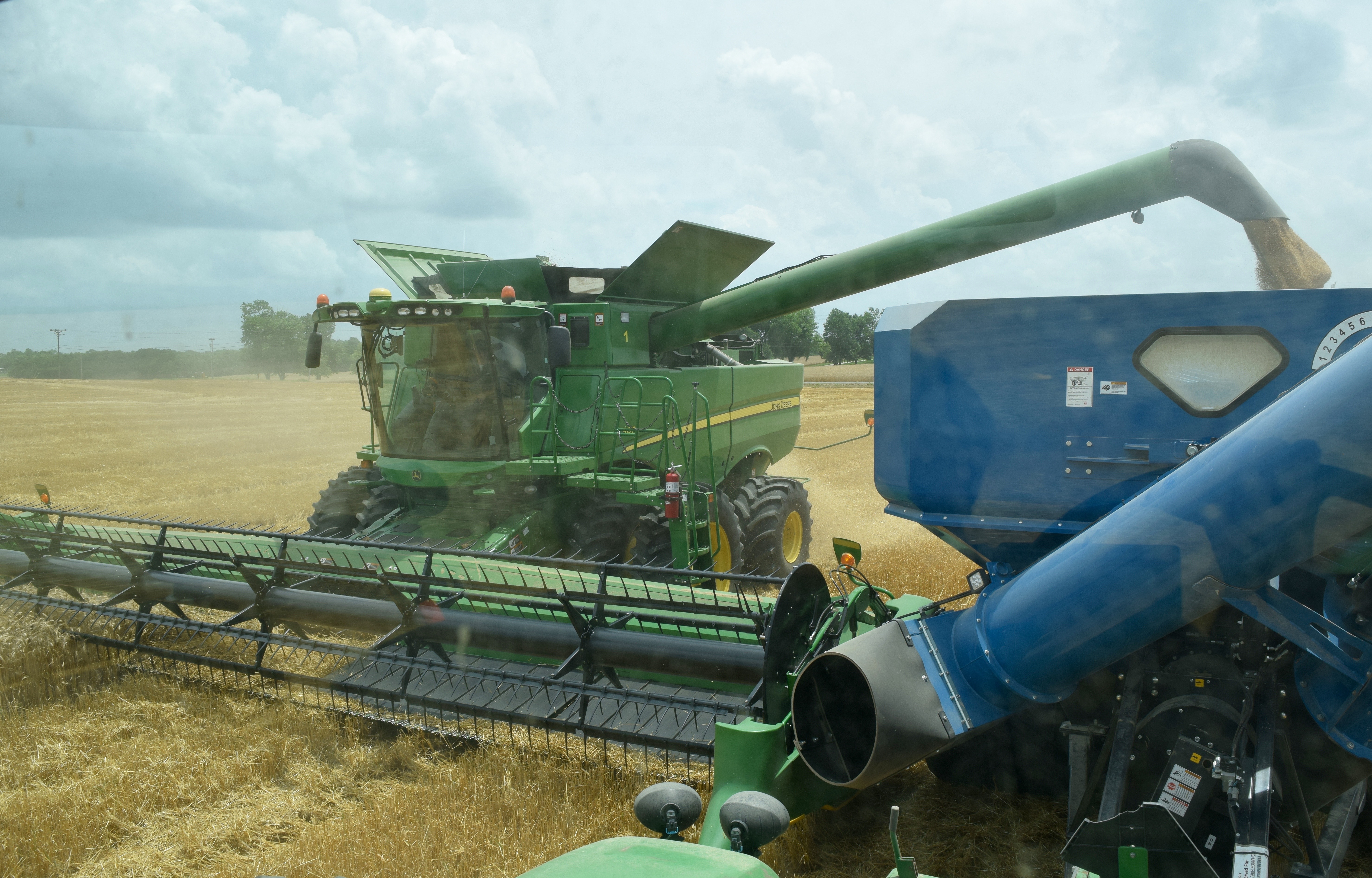
The green machine is a “combine harvester,” a machine that harvests grain crops. The combine works by combining three labor intensive farm jobs: reaping, threshing, and winnowing crops. The blue machine is a grain cart that hauls the grain to a grain trailer which will then transport it to a mill either by truck or rail.

DSC_0914

The combine never has to stop working as there is commonly a grain cart traveling alongside it collecting the kernels as the vehicles roll across the fields. The grain is transferred via a 26-foot auger attached to the combine.  The efficiency of this system is brilliant. There is even a diesel fuel truck nearby ready to refuel the tractors, so they never have to leave the field. So, to refresh: green combine, to blue grain truck, to white grain trailer.

DSC_0946  DSC_0931

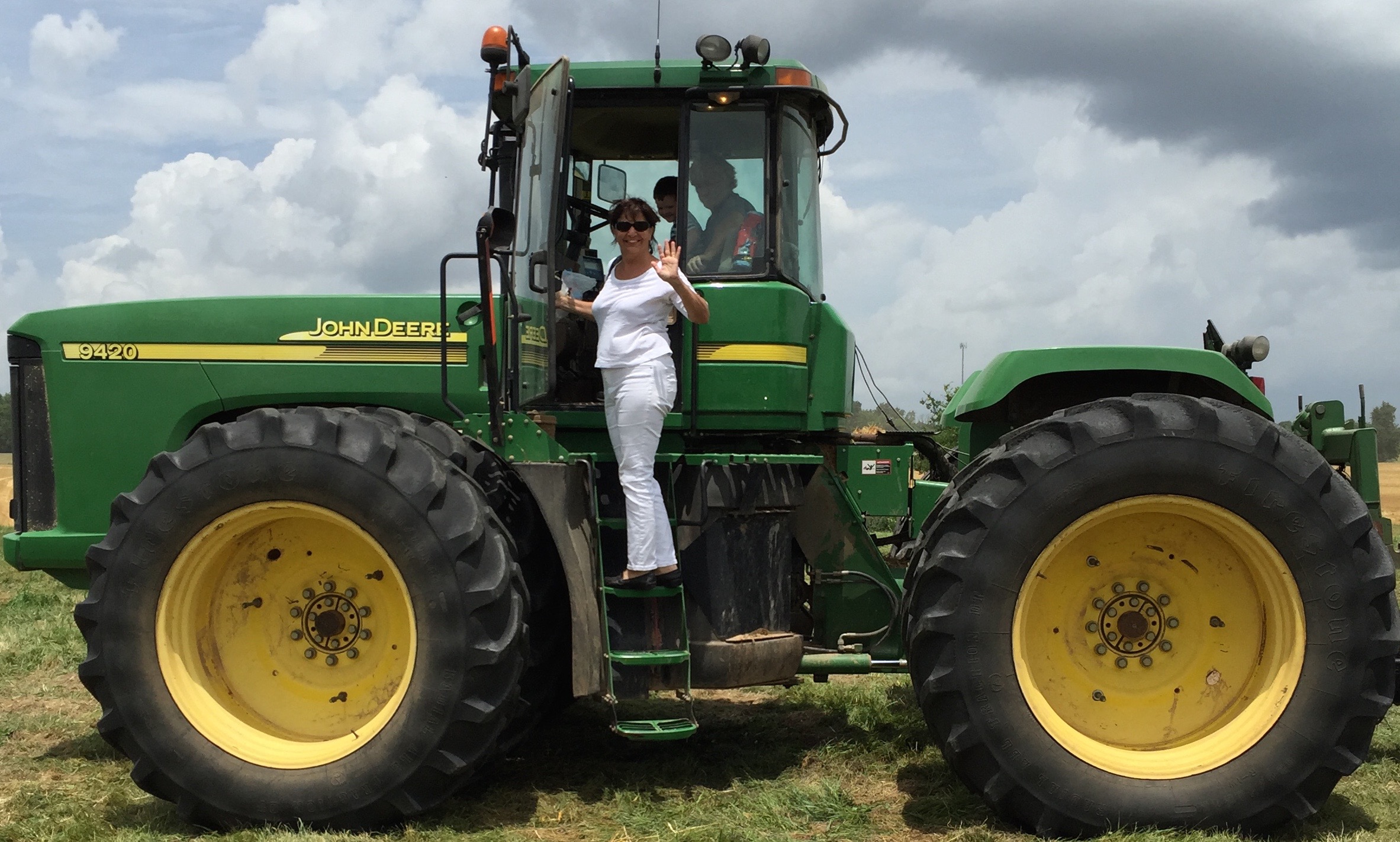
These next few photos were taken from the window of the tractor cab pulling the grain cart. Paul, the tractor driver, kindly invited me to ride with him so I could see up close how the combine worked.

IMG_0998

Paul was ably assisted by his young grandson, Jordan, whom he was babysitting for the afternoon. Jordan was in his glory sitting beside his grandfather. Who needs Tonka trucks when you have the real thing?!

DSC_0959

Here is the combine reaping, or cutting down, the wheat (as seen through the window of the tractor).

DSC_0951

The reaper feeds the wheat into a feeder head which transports it to an internal thresher. The thresher beats the seed “ears” to separate the grains from their stems, and the chaff from the seeds. In other words, the thresher “separates the wheat from the chaff” an idiom which means to separate what is useful or valuable from what is worthless. Thank goodness for Wikipedia!

1320px-Maehdrescher_schema_nummeriert.svg

Winnowing is the process of blowing air into the grain to blow off the chaff and other debris such as dirt before the grain enters the storage tank. As the combine moves along the field, you’ll notice a small dust storm flowing behind it. That is the chaff and stems being discarded back onto the field by the combine.

DSC_0941

The Planter
Another large and important farm machine is the planter. On this day, as soon as the combine finished harvesting the wheat, the planter, pulled by a tractor, came through to plant soybean seeds between the stalks and roots that remained from the harvested wheat. This is a no-till process; the farmer doesn’t remove the wheat stalks, or till them in. Leaving them in place to compost helps with weed control, soil erosion, saves on fuel costs, and helps with the bio-diversity of the land. The method of planting two crops in one field within one year is known as “double-cropping.”

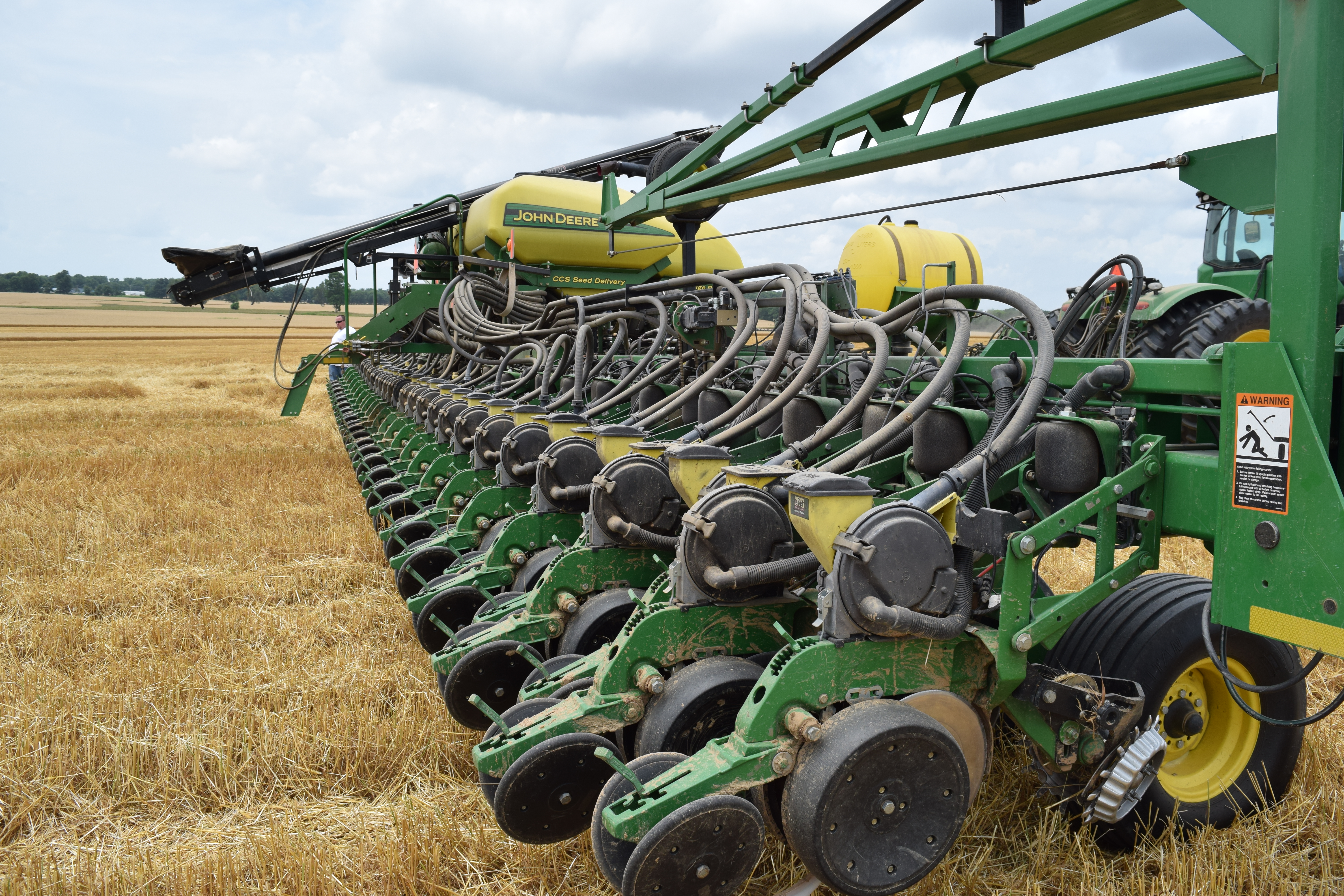
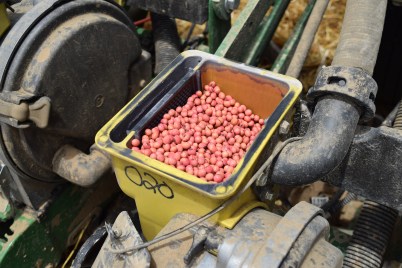
This is a 16-row planter with individual seed hoppers (the yellow boxes).

DSC_0919 DSC_0925

Each row planter unit uses compressed air, delivered via the black hoses, to drill the seed into the dirt. You can see the seed drill hanging between the two slanted black discs.

DSC_0923

There was an “aha” moment for me here: I immediately recognized the two slanted discs on the 16-row seed planter as similar to the two discs on the 2-row planter used by the farmers at Delvin Farms in College Grove, TN. I knew what they were for! You can read about how that planter works here.

DSC_0920  DSC_0389

Another view of the planter: see the folded up wheels on the far right?  That’s a guide arm. When the farmer drives down a field with the guide arm unfolded, the small wheel makes a groove in the soil and lets the driver know where he needs to line up the center of his tractor when he turns to plant the next 16 rows.

DSC_0927

The Sprayer
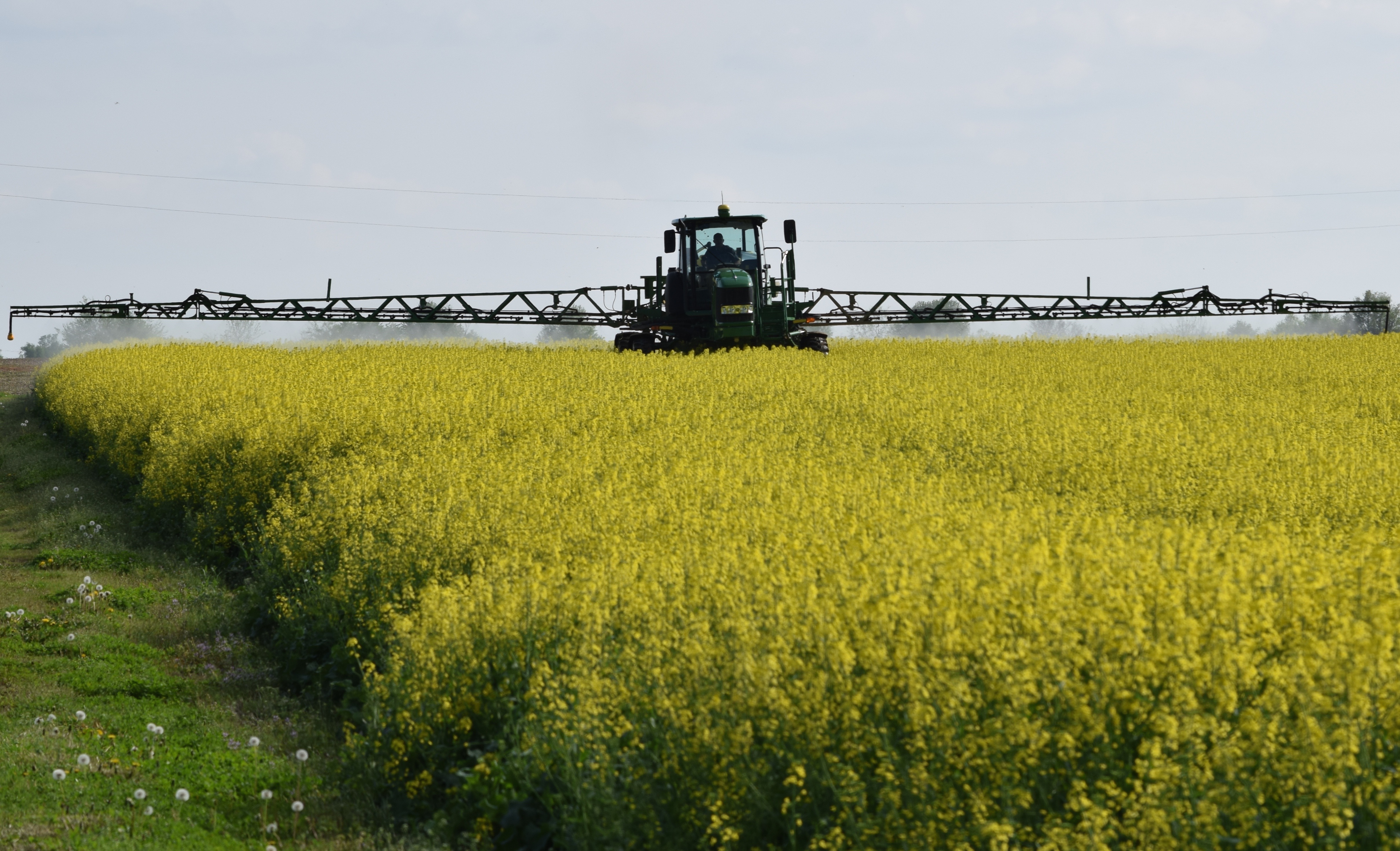
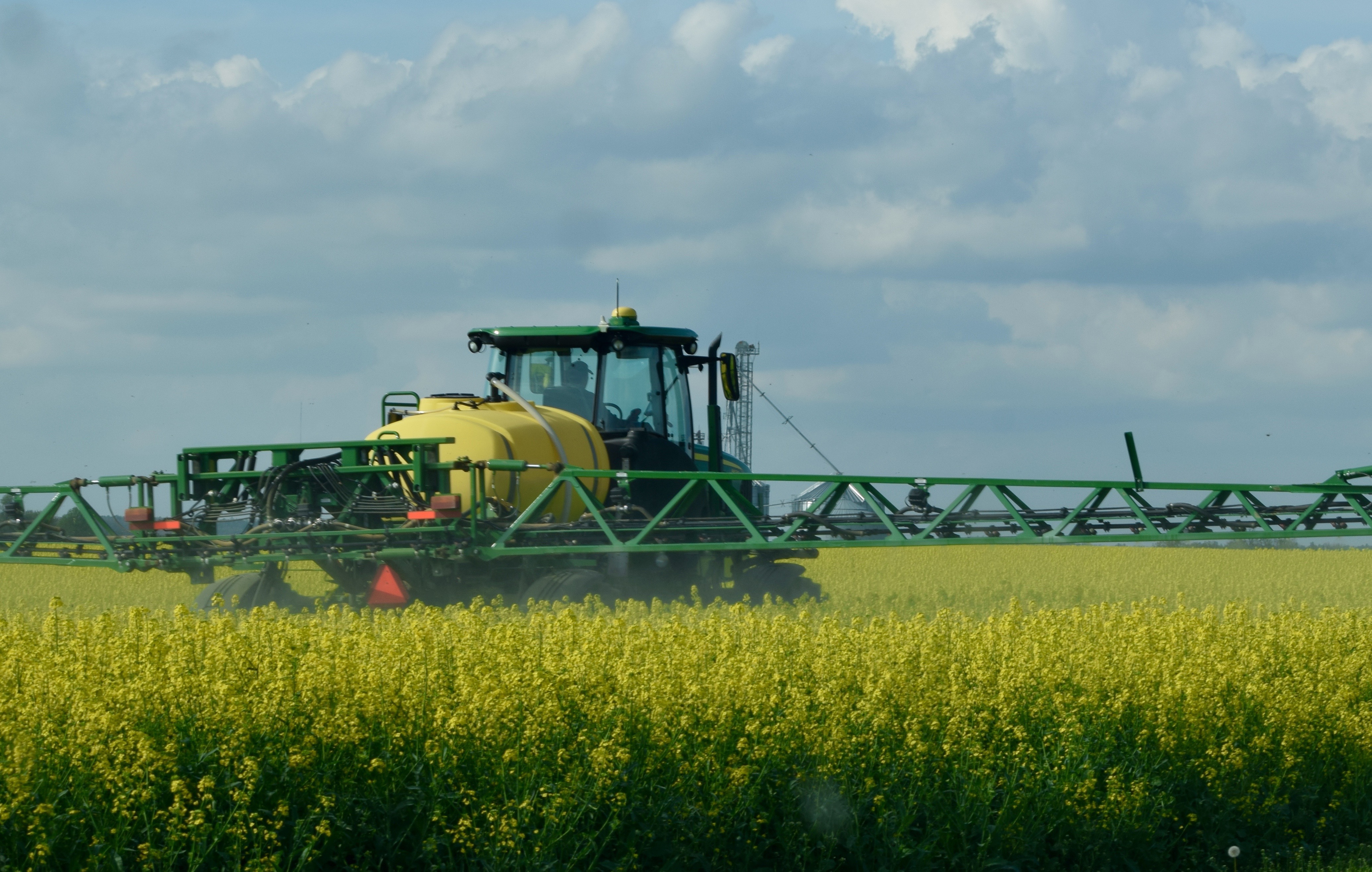
There’s one more industrial-sized machine I have seen out on these commercial farms — the sprayer. The sprayer is used for fertilizing and applying pesticides.

Canola

From the backside of the sprayer, you can see the storage tank for the chemicals.

Canola

The bountiful grain harvest!

Version 2

Special thanks to the employees of Arnold Family Farms for their hospitality and patience with my endless questions.

Related Posts on Commercial Farming:

LET’S STAY CONNECTED!

Follow my photos of vegetables growing, backyard chickens hanging out, and dinner preparations on Instagram at JudysChickens.

Never miss a post: sign up to become a follower of the Blog.

© 2014-2017 Judy Wright. All rights reserved. Photos and text may only be used with written consent.

How Local Canola Crops are Grown

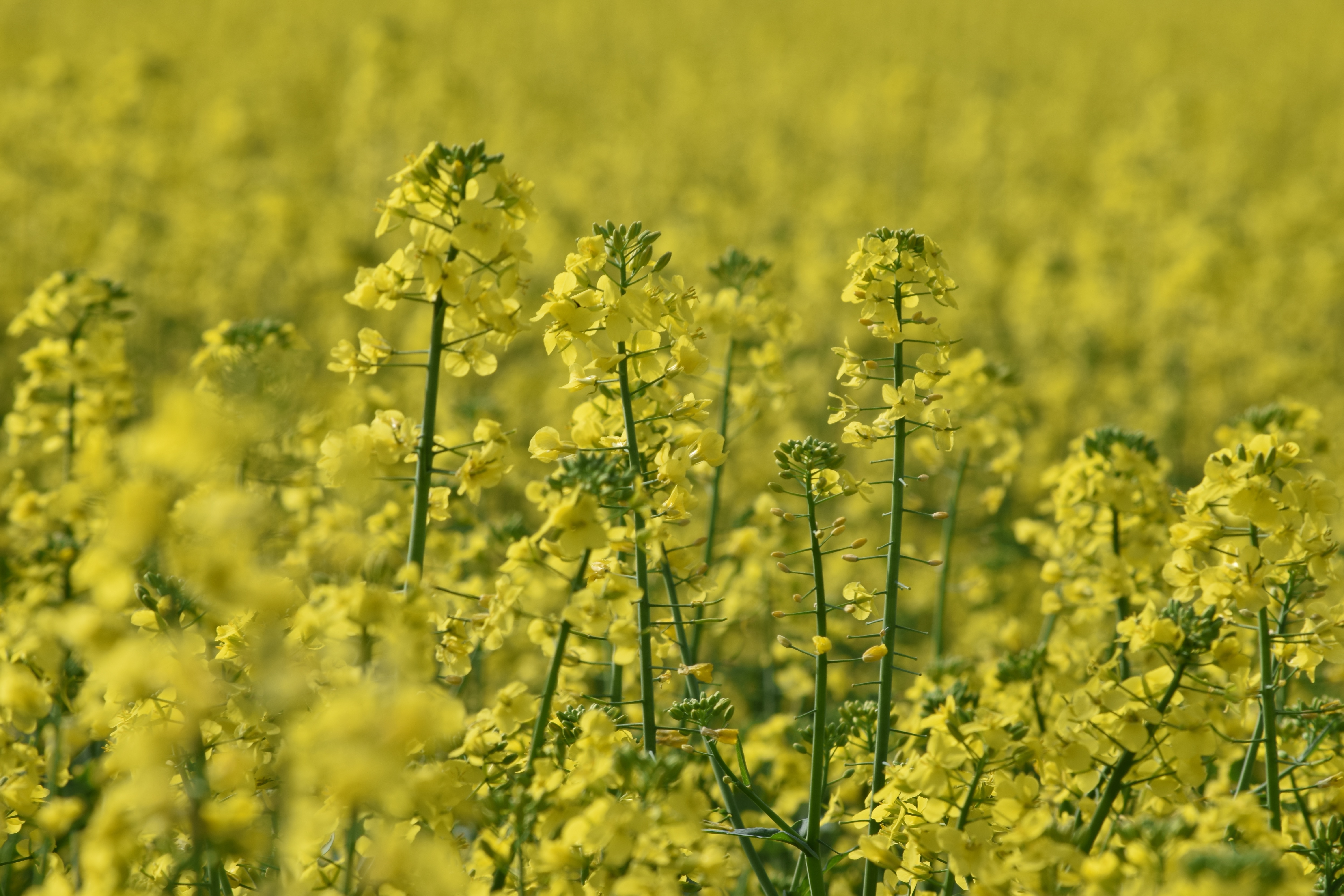
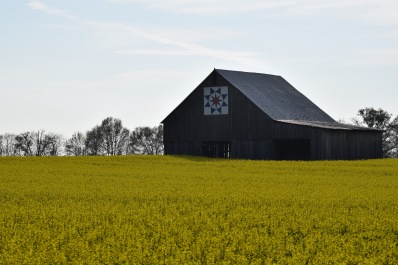
We were driving down the highway and saw this beautiful view.DSC_0631 We pulled off the road and Googled “What are the yellow flowers growing in the fields?” Wikipedia knew exactly what we were talking about; its first response was, It’s a field of rapeseed (Brassica napus — in the same plant family as mustard, cabbage, and kale). The seeds produced by these plants are crushed to make rapeseed oil.

We had seen this yellow field and barn the week before on the road between Hopkinsville and Cadiz, KY and had pulled over to photograph it.

DSC_0221

We had no idea how yellow it was to become. Here it is a week later.
DSC_0637

Spectacular as this barn on the side of the highway was, we saw more and bigger yellow fields on the horizon and got back into the car to explore them.

DSC_0574

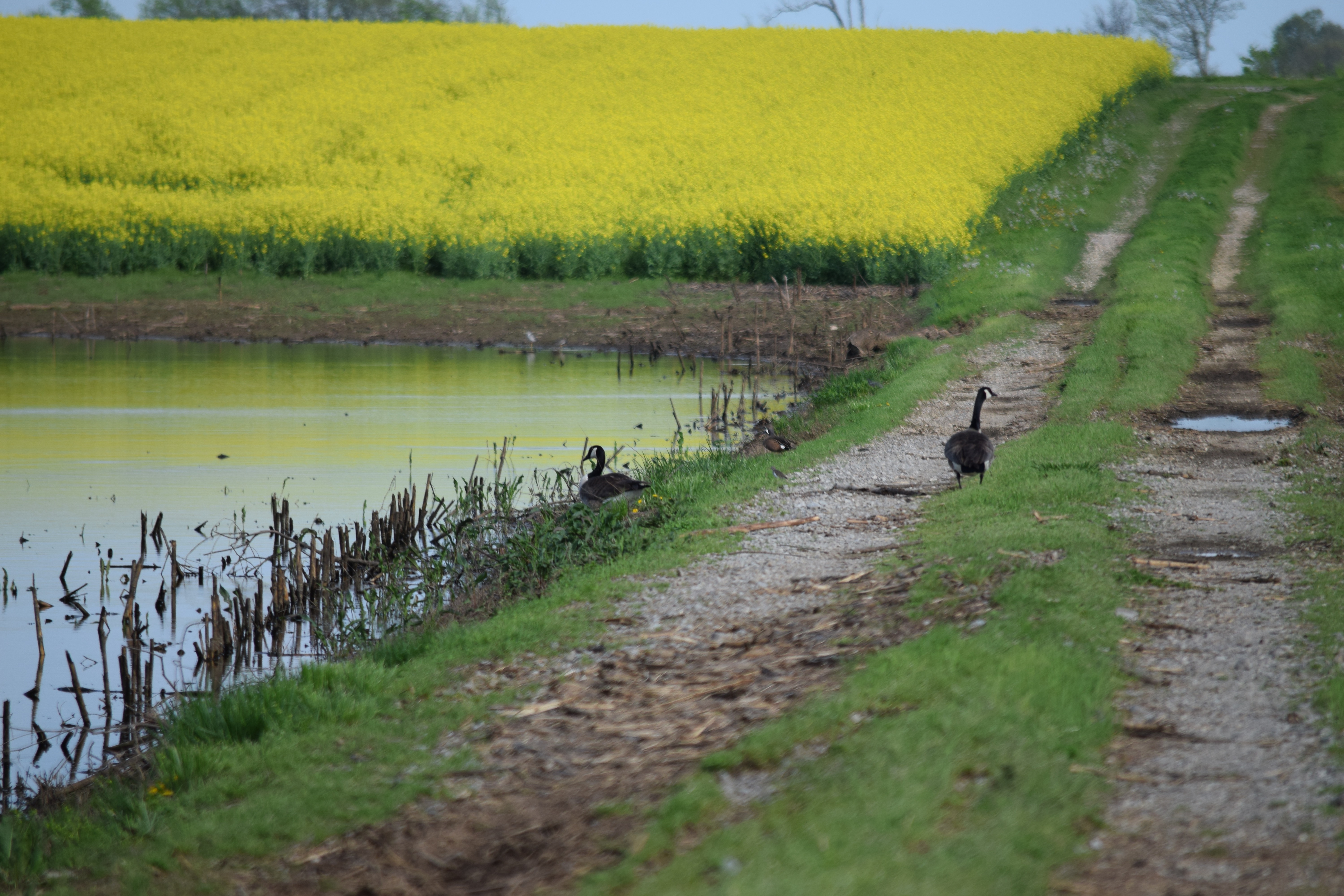
We saw a road with geese strutting across it.

DSC_0562

I egged my husband on, “Go down the road. We have four wheel drive. Don’t we?”

He’s curious, too. That’s why I married him. I knew he’d take the road. We drove a little further and what we saw was unbelievable.

DSC_0520

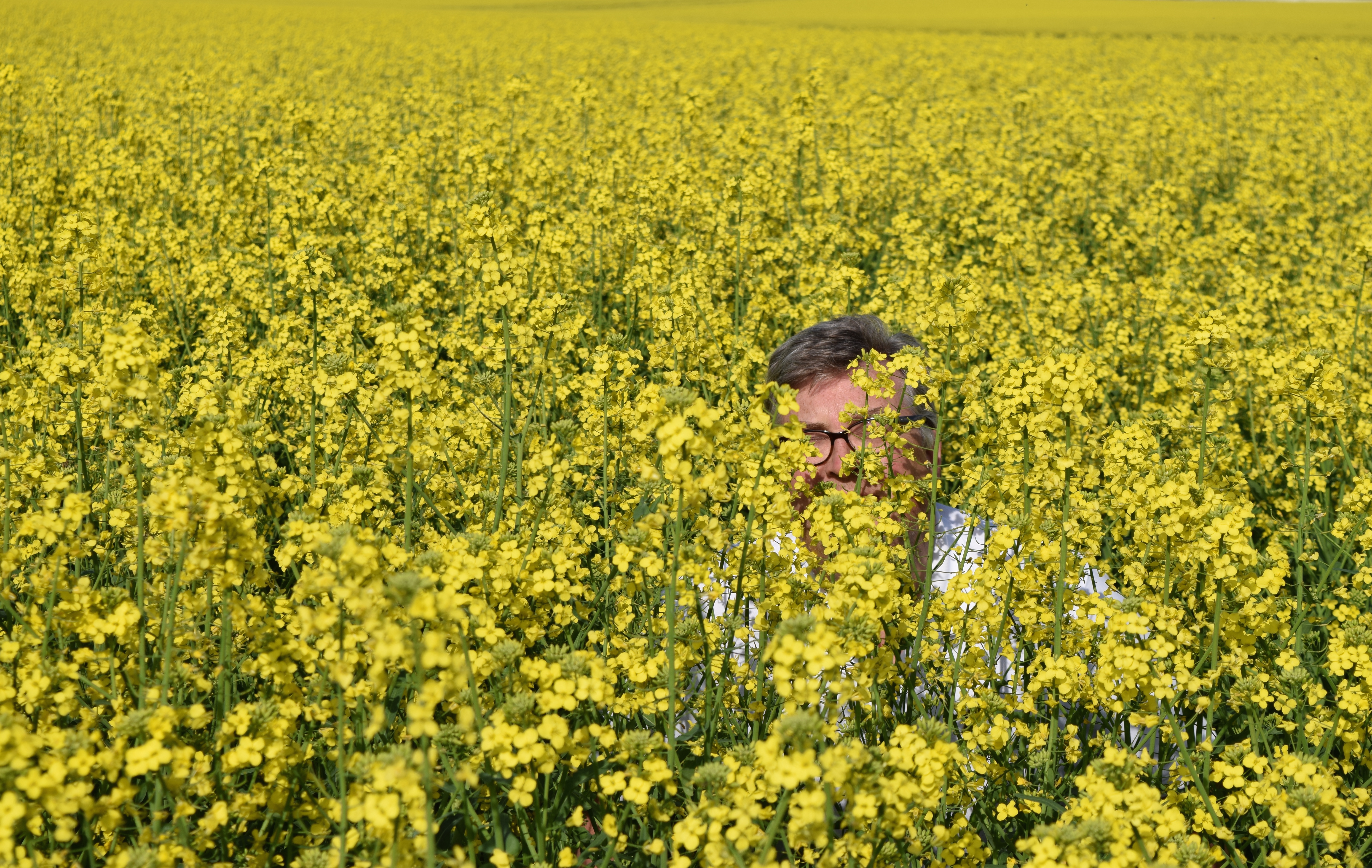
In our entire lives, we’d never seen a yellow as yellow as this yellow. We both jumped out of the car to marvel at the fields and then he did something I would never think to do because I am wise and I always consider the snakes, creepy crawlers, and axe-murderers of the world — he waded into the sea of yellow just to see how tall the plants were.

DSC_0545

He was kidding, but still.

DSC_0548

I told him to move out of the way. A sprayer was coming.

DSC_0624

By now I’ve taken a hundred pictures, but the color and light are tantalizing, and I want more. I can’t help myself; I want to capture it all. So I say, “Just a few more pictures and I’ll be done. I promise.” This field was a photographer’s playground; I could have shot in it all day.

DSC_0617 DSC_0602

I read a more about rapeseed. I learned that in the 1970s, a group of Canadian plant breeders sought to develop an edible, nutritious oil that would grow well in the prairies. They succeeded — the seeds they developed from the rapeseed plant are 44% oil, more than double the oil content of soybeans, and only 7% saturated fat, the lowest of any vegetable oil. The other 56% of the seed is milled to make a high-protein meal used to feed livestock.

The Canadians needed a new, more respectable name for their cultivar. They came up with can-o-l-a, Canada-oil-low-acid. Canola is the most profitable crop grown in Canada, and Canada remains the global center for research on their “Made in Canada” crop.

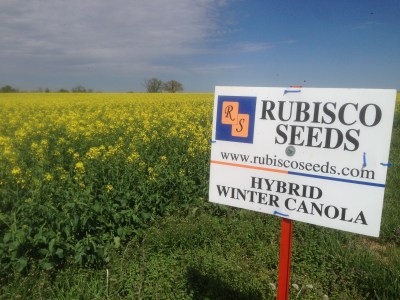
I saw this sign on the side of the road of a canola fields in Cadiz.

IMG_7716

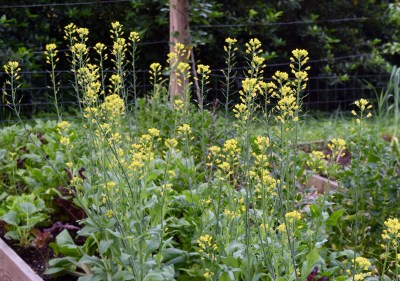
This looks like the flowering heads of kale and broccoli growing in my garden.

IMG_7707

I like to see how plants grow and seeds form, so I uprooted a few plants from the side of the road (roadsideya, as I call it) and planted them in my garden.

DSC_0250 DSC_0125

A follow-up:

This is a photo of canola seed pods taken on June 12. The seeds start to grow inside the pods once the flowers are pollinated and the blooms drop.

DSC_0495  DSC_0602

Here are the canola seeds from inside the seed pods I grew in my back yard.

DSC_0150

This photo from the Internet shows a combine harvesting desiccated canola. Crop desiccation means to apply an herbicide shortly before harvest to aid in uniform crop dry down. Herbicides reduce the green material on a plant so it won’t clog up the combine when it comes time to harvest the seeds and grains.

winter-canola-in-oklahoma-by-brian-caldbeck-msc-64-728 

All of the photos used for this post are untouched (no color enhancements added) except for cropping. In other words, Isn’t the yellow awesome?!

Version 3

There is now a follow-up to this story: How Canola Oil is Made (from plants grown locally)

Related Posts on Commercial Farming:

LET’S STAY CONNECTED!

Follow my photos of vegetables growing, backyard chickens hanging out, and dinner preparations on Instagram at JudysChickens.

Never miss a post: sign up to become a follower of the Blog.

© 2014-2017 Judy Wright. All rights reserved. Photos and text may only be used with written consent.