Lemony Grilled Chicken Breasts

When I wake up in the morning a little panic-stricken thinking about what I’m going to prepare for a large crowd coming in for a holiday weekend, I approach the menu by considering my entrée options first. My go-to’s are grilled Premio Sweet Italian Sausage from Costco, Brooks’s Marinated Pork Tenderloin, and marinated chicken breasts.

DSC_1143.jpg

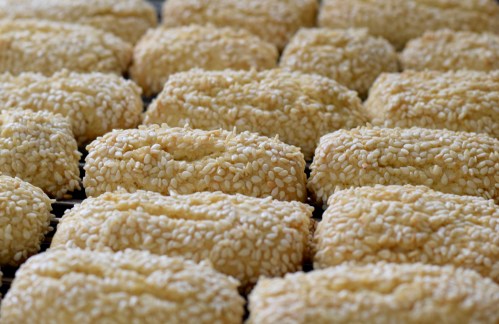
Next, I consider my sides, which I prepare depending on what is in season. Often, though, I delegate the sides to guests. The beauty of this approach is you get to try other people’s specialties, and that is always a fun and tasty option. Desserts are my favorite food to cook, and for a large crowd, I like to make a hotel-sized pan of the ever crowd-pleasing Pumpkin Bread Pudding only made with seasonal fruit instead of pumpkin, and either Italian Sesame Seed Cookies.

DSC_0444

or Ricotta and Lemon Cookies.

dsc_0344

I was never a fan of grilled chicken breasts until I saw my friend from Tiverton, R.I., Sheila, a master at feeding huge crowds, carry Ziploc bags full of pounded-flat marinated chicken breasts out to the grill. By pounding the breasts flat Sheila could ensure the chicken would cook quickly and evenly throughout. I’ve been pounding chicken breasts ever since.

Ingredients:

DSC_1077.jpg

Whole chicken breasts (for these photos, I made 24 breasts equalling 8 pounds)
@JudysChickens Everyday Salad Dressing
1-2 lemons, sliced thinly (depends on how much chicken you are preparing)
10 stems of thyme, rough chopped
a couple shakes of white balsamic vinegar, if you have it.

Instructions:

Rinse chicken breasts and trim fat.

IMG_2178.jpg

Pat dry with paper towels.

IMG_2180.jpg

Place each chicken breast in a thick bag and pound flat with the smooth side of a meat mallet.

DSC_1093.jpg

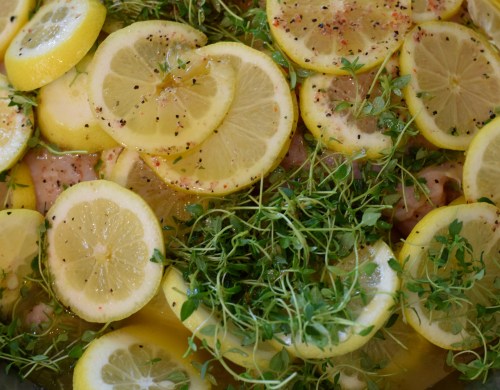
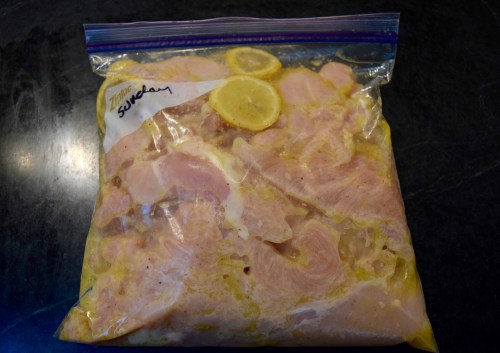
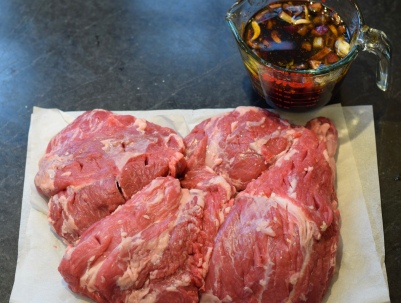
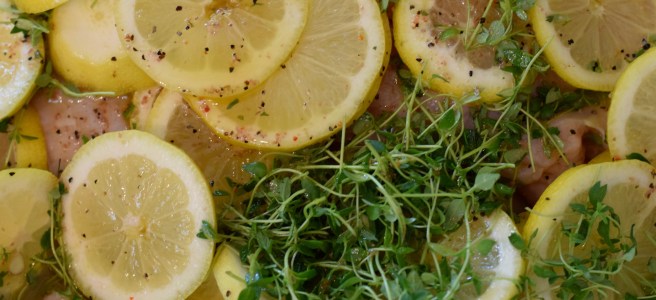
Marinate pounded breasts in @JudysChickens Salad Dressing along with lots of sliced lemons and sprigs of thyme. You could add a little white balsamic vinegar and Grey Poupon for even more flavor if desired. Allow to marinate for a few hours to up to two days.

Grill for no longer than ten minutes.

Favorite Flavor-Enhancers: The Acids!

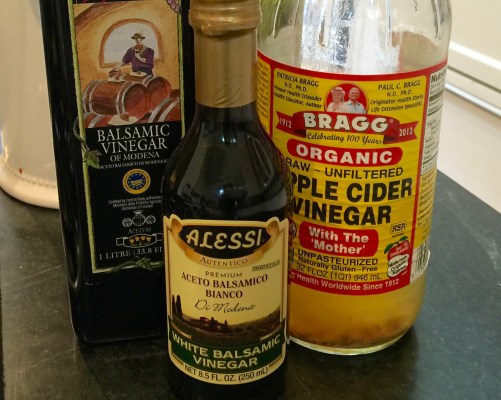
My mother always kept a bottle each of white and red balsamic vinegar in the fridge. She especially loved the white. Add a few shakes of white to the marinade for an extra burst of flavor.
IMG_1184

Other Foods That Are Good To Serve At A Cookout
Sliced Beet Salad
String Bean Salad
Amazingly Delicious Sautéed Carrots
Marlin’s Black-Eyed Pea Salad
Grandma’s Italian Fried Cauliflower
“Croatian Cheese” a Flavorful and Exotic Appetizer Made with Feta and Goat Cheese
The Classic Pimiento Cheese Sandwich

LET’S STAY CONNECTED!

Don’t miss a recipe! Become a follower and have every post delivered to your Inbox.

Follow Judy’s Chickens on Instagram and Pinterest @JudysChickens.

© 2014-2018 Judy Wright. All rights reserved. Photos, videos, and text may only be reproduced with the written consent of Judy Wright.

Mom’s Marinated and Grilled Lamb

Mom had two ways of cooking roasted lamb, the Easter Sunday wayor marinated and grilled, the everyday and sometimes Easter Sunday way. The marinade recipe she used was from a cousin, Lynn Alpert.
DSC_0221

We all know how you get a good recipe, “Mom, this lamb is soo good. How did you make it?” you say as you look for a piece of paper and a pen. Being the recipe keeper for the family, I usually traveled with my Recipe Collector’s Notebook published by Workman Publishing in the early 1980s. If there was ever a book filled with Dirty Pages, it is this one.
DSC_0252

I used it to record recipes Mom cooked during summer and holiday trips. Cooking fresh vegetables in beautiful ways was Mom’s thing; I learned from the master.
Boca

Please refer to the post Mom’s Roasted Lamb with Herb and Goat Cheese Topping for detailed instructions for another way to cook lamb.

Ingredients:
DSC_0185

1  3 to 5-pound boned leg of lamb
¼ cup onion, diced
½ cup Major Grey’s Chutney
⅓ cup extra virgin olive oil
3 tablespoons balsamic vinegar
6 cloves garlic, smashed
1 teaspoon garlic pepper

Mise en Place:
DSC_0182

Instructions:

Trim fat from lamb per instructions from the previous post.
DSC_0157 DSC_0176

Pierce meat with a sharp knife to allow marinade to seep into the tough leg muscles.
DSC_0195

Mix marinade ingredients together in a small measuring cup.
DSC_0191

Put lamb and marinade in a gallon-sized plastic bag and turn bag all around until the meat is well-coated. Refrigerate for 24 hours, turning regularly.
DSC_0199

Grilling Meat

This is not my domain. My stepfather is the master griller in our family. My husband, brothers, and sons have all learned from him. Because he IS so good, wherever he goes, he gets tasked with the job of grilling.
joel

While my experienced stepfather doesn’t need a meat thermometer to know when meat is cooked, those in training might want to start with one. The key to grilling meat is to remember that food continues to cook and reabsorb juices for a good fifteen minutes after it comes off the grill. You can read about allowing meat to rest here.

Back in Nashville, my husband turned the meat many times as it cooked. When the meat thermometer read 140º in the thickest piece, he removed it from the grill, covered it with foil, and let it rest for 15 minutes before slicing. The results were amazing.
DSC_0227

For a list of recipes to make for Easter and Passover, check out this link.

For a list of fun activities to do over the Easter holiday, check out this link:

How about a bunny cake?!

LET’S STAY CONNECTED!

Follow my photos of vegetables growing, backyard chickens hanging out, and dinner preparations on Instagram at JudysChickens.

Never miss a post: sign up to become a follower of the Blog.

© 2014-2020 Judy Wright. All rights reserved. Photos and text may only be used with written consent.

Mom’s Roasted Lamb with Herb and Goat Cheese Topping

My mother had two ways of cooking lamb: roasted, over a bed of vegetables with a herb and goat cheese topping, or marinated and grilled. On Easter, we often had the roasted version because it was more complex and, therefore, more special for a holiday meal.

DSC_0830

The first time I made this recipe, on my own, I felt like such an accomplished cook as I had never made anything with so many layers of flavor. My success inspired me to experiment with new ingredients, especially with a variety of herbs and vegetables. Even today, as I taste one last spoonful of the creamy broth leftover in the bottom of the storage container that held this lamb meal, I am reminded of one of the reasons I love to cook — when it works, when what you have cooked is delicious, it is thrilling.

My mother’s cardinal rule for cooking lamb was that I had to trim off as much fat and connective tissue as possible. I never thought to ask her why. Serendipitously, as I was writing this post, my friend and fabulous cook, Lou Ann Brown, suggested I listen to a podcast from Sunday’s The Splendid Table titled “Why does lamb taste like lamb?” It was perfect timing for this post and helped me understand why Mom insisted on trimming off the fat. The quick answer to the question, according to Molly Birnbaum of America’s Test Kitchen, was “it all comes down to [lamb’s] fat and a particular type of fatty acid that lamb has that beef doesn’t have. It’s called branched-chain fatty acids, which humans can detect at tiny levels. It’s what gives lamb this gamy, and more earthy taste than beef.” If you ever needed the motivation to spend a little more time trimming fat, this is it.

There are three layers of ingredients in Mom’s recipe for roasted lamb: the bottom layer which consists of a bed of vegetables and herbs, the middle layer which is the lamb meat, and the top layer which is an herbed goat cheese topping. This top layer helps keep the meat moist while it cooks since most of the fat has been trimmed.

The first step is to prep the lamb and get it started marinating. You can do this step up to one day before. I’ll walk you through trimming the fat in the Instructions section.

Ingredients:

Lamb Marinade:
DSC_0712
1  3 to 5 pound boned leg of lamb
⅓ cup extra virgin olive oil
1 teaspoon salt
20 twists of cracked pepper

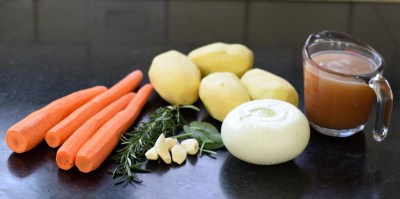
Bed of Vegetables:
DSC_0731
4 potatoes (1½ pounds), sliced
4 carrots (½ pound), sliced
6 cloves garlic (½ oz), smashed
1 medium onion (½ pound), diced
5 fresh sage leaves
1 stem fresh rosemary leaves
1 cup beef stock
salt and pepper

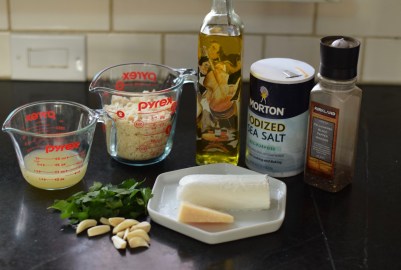
Herb and Cheese Topping:
DSC_0773
⅓ cup freshly squeezed lemon juice
1½ cup plain homemade breadcrumbs
¼ cup extra virgin olive oil
the leaves of 8 stems of parsley
6 garlic cloves (½ ounce)
5 ounces goat cheese
½  cup grated Reggiano Parmesan
½ teaspoon salt
¼ teaspoon pepper

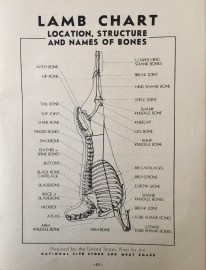
FYI: Lamb Cuts 101 (from my 1942 manual — I like the graphics):

IMG_6024 IMG_6025 IMG_6027

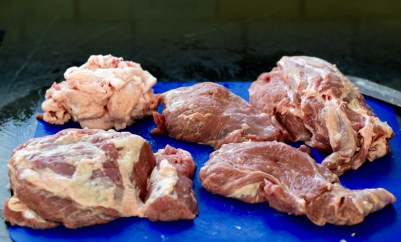
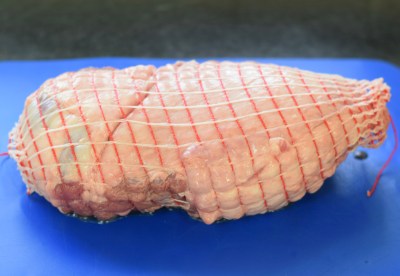
This is a 4½ pound boned leg of lamb. After trimming it of fat, it weighed 3¾ pounds. The netting is used to keep the meat together once the bone has been removed.
DSC_0703

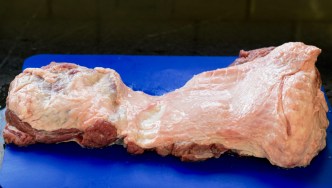
Once you remove the netting and unroll the meat, you’ll have two sides of meat to trim of fat and connective tissue.
DSC_0705 DSC_0707

Trimming off fat is a little time consuming and a bit of a pain, but as I described earlier, it is necessary if you don’t want that gamy taste that tends to be a turn-off for many when it comes to eating lamb.

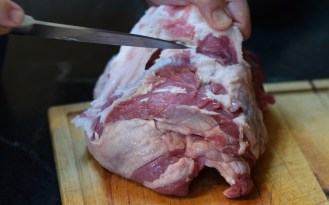
DSC_0166 DSC_0164

I removed 11 ounces of fat.

DSC_0714 DSC_0716

My husband trimmed a leg of lamb, too, and did a much better job!

DSC_0157 DSC_0176

How to Prepare Each Layer:

In a medium-sized bowl, mix the marinade ingredients: oil, salt, and pepper, with the lamb. Stir and make sure every chunk of meat is well-coated with oil. Set aside for an hour, or up to 24 hours.

DSC_0719

Prep the vegetables and herbs for the bottom layer and set aside.

DSC_0745

Using a food processor, prep the topping layer: first, add the garlic, Parmesan, and parsley and pulse.
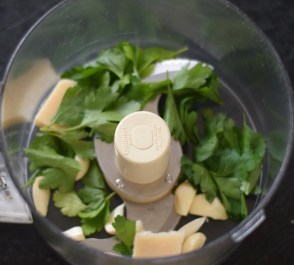
DSC_0779 DSC_0782

Next, add the breadcrumbs, goat cheese, lemon juice, oil, salt, and pepper and pulse until the mixture is well blended, but still has lots of texture. Set aside.

DSC_0787 DSC_0791

Putting It All Together

Layer 1: The bed of veggies moistened with a cup of beef broth and a few shakes of salt and pepper.
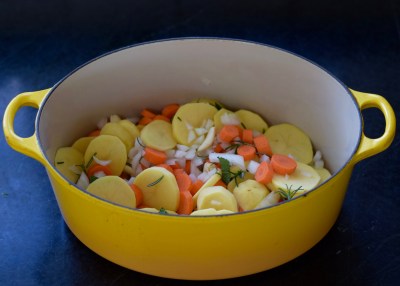
DSC_0754

Layer 2: The marinated lamb is spread out over the veggies.

DSC_0762

Layer 3: The herb and cheese topping is spread out over the meat with a spatula.

DSC_0796

Bake in a 5-quart roasting pan in a preheated 400º oven for approximately one hour and 15 minutes, or until a meat thermometer inserted into the thickest chunk of the meat reads 140º. Take the roasting pan out of the oven, cover, and let the meat rest for 20 minutes before serving. *The lamb will continue to cook to 145º (for medium).

If the topping isn’t lightly browned enough, you may want to leave the roast in the oven for five more minutes until it browns. If you are worried about overcooking the meat, put the roast under the broiler for a few minutes. One of the nice things about roasting a leg of lamb is there will automatically be some pieces of meat that will be well done, some that will be medium-well, and some that will be medium, due to the varying degrees of thickness of the meat.

DSC_0798

*If you need a little refresher course on the concept of heat transfer when cooking meats, look no further than here.

Here’s how the roast looked when served for dinner. The potatoes were amazing, per my family. The goat cheese infused broth is delicious!

DSC_0848

Related Posts for Easter Day

Fun to do with Children:
To Dye For: Making Naturally Dyed Easter Eggs
How to Tell If an Egg Is Fresh or Hard-Boiled
Test Your Sense of Smell with Jellybeans

Brunch:
50 Ways to Make a Frittata
Quiche Lorraine with Bacon and Kale
Mom’s Monkey Bread, circa 1970
Fruit and Nut Bread

Sides:
Grandma’s Italian Fried Cauliflower
Amazingly Delicious Sautéed Carrots
Cauliflower: Roasted, Blanched, and Mashed
Roasted Butternut Squash, Brussels Sprouts, and Cranberries

Desserts:
Italian Ricotta and Lemon Cookies
Strawberry Rhubarb Pie

LET’S STAY CONNECTED!

Follow my photos of vegetables growing, backyard chickens hanging out, and dinner preparations on Instagram at JudysChickens.

Never miss a post: sign up to become a follower of the Blog.

© 2014-2017 Judy Wright. All rights reserved. Photos and text may only be used with written consent.

Chicken Cacciatore

What’s in a name? In common parlance, this dish is known as chicken cacciatore. Isn’t that a little odd: half the name in English, and the other in Italian? I’m guessing the name was conjured up by Italian-American restaurateurs hoping to entice Americans into their doors. In Italy, the dish is known as pollo alla cacciatora and translates in English to chicken, hunter’s style. Cacciare is the verb to hunt in Italian.

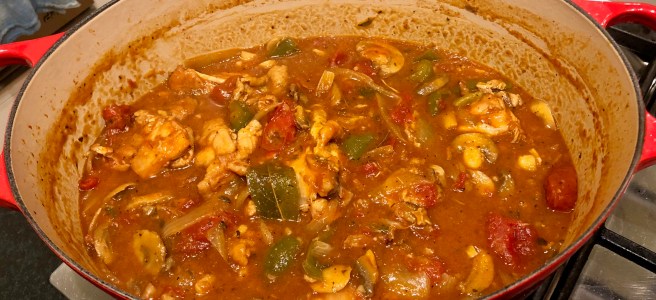
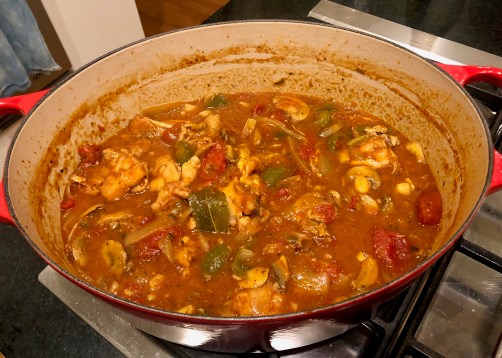
This dish is traditionally made with tomato sauce

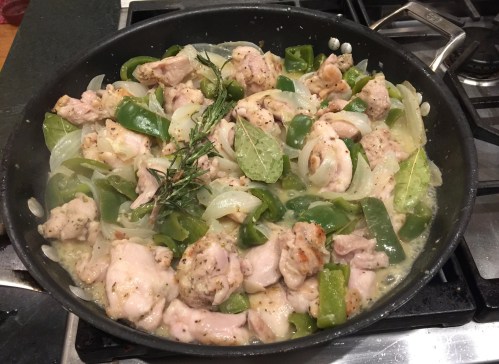
but sometimes, I leave the tomatoes out.
img_3922

Cooking “alla cacciatora” includes the step of sautéing wild game in an acidic liquid such as wine, vinegar, or lemon juice to tame the gamey-ness of the meat. If the cook is sautéing rabbit, the dish is called coniglio alla cacciatora, and if wild duck, it’s anatra selvatica alla cacciatora.
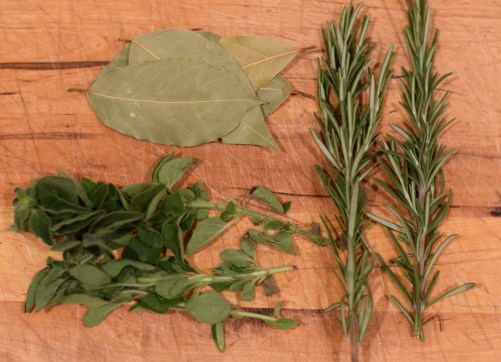
A few words about ingredients: Make sure the bay leaves are fresh. They should have a woodsy, fragrant smell when you open the package — every time you open it. If they are no longer fragrant, it’s time to get a new package.

Chicken cacciatore is typically served over polenta, wide flat noodles, or rice.

Ingredients:
DSC_0592

2-3 bell peppers (1 pound), cut into bite-sized chunks
1-2 sweet onions  (1 pound), sliced
1-ounce garlic cloves (about 1 small head of garlic), smashed and peeled
½ cup olive oil
1 teaspoon sea salt
¼ teaspoon cayenne pepper
cracked pepper

3 pounds boneless, skinless, chicken thighs, cut into 2-inch pieces
½ teaspoon sea salt
1 teaspoon black pepper
½ cup all-purpose flour

3 stems rosemary leaves
3 stems oregano leaves
4 bay leaves
1 cup white wine

3 cans “Italian Style” stewed tomatoes
1 cup chicken broth
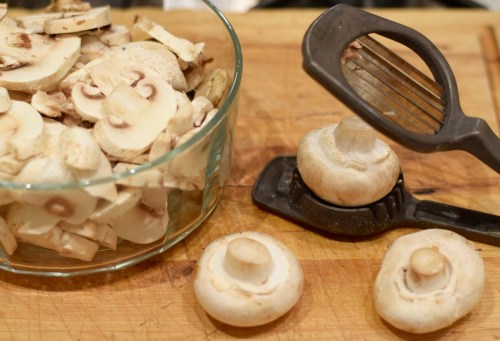
1 pound mushroom, sliced

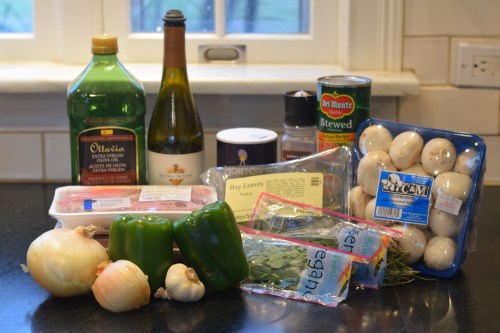
Mise en Place:
DSC_0661

Mise en Place Instructions:
Prep peppers and onions: Remove the core, stem, and seeds, slice mushrooms.
DSC_0657

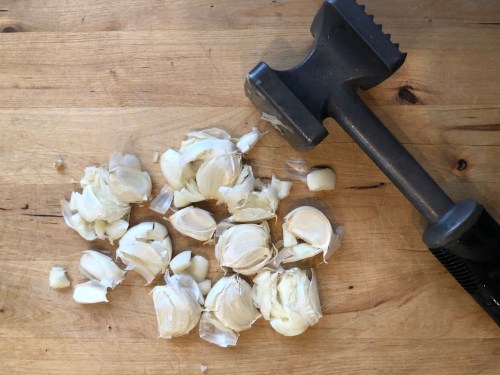
Prep garlic: Smash garlic cloves and peel.

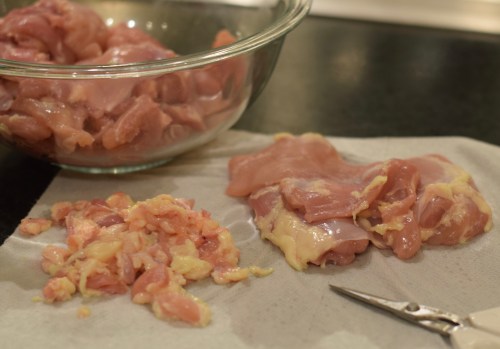
Prep chicken thighs: Rinse, pat dry, trim fat and cut into 2-inch chunks DSC_0410

Prep herbs: Separate leaves from stems, use a scissor or knife to mince leaves. Never chop a bay leaf!
DSC_0643

Prep mushrooms: I like to use an egg slicer.
DSC_0623

Cooking Instructions:

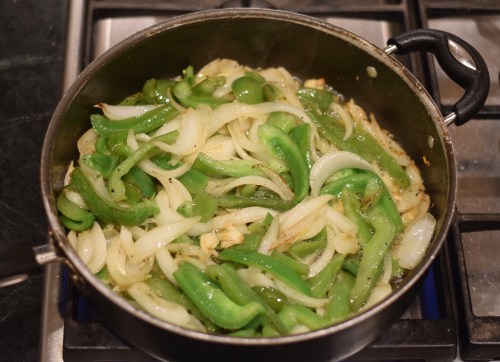
Coat bottom of a 12-inch heavy-bottomed deep pan with olive oil. Warm the olive oil over high heat until it is hot, but not smoking. Add peppers, onions, garlic, salt, and cracked pepper to the oil and sauté for 5-7 minutes, stirring regularly. Turn heat off and set aside.
DSC_0683

If I am making this in the summer when fresh tomatoes are abundant, I add chopped tomatoes to the peppers and onions and omit the canned tomatoes.

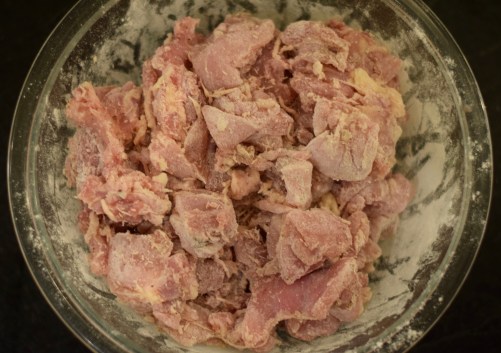
In a separate bowl, season the chicken pieces with salt and ground pepper. Add flour and mix well. Do not do the step ahead of time because the chicken pieces will absorb the flour and clump together.
DSC_0685

Brown chicken evenly on all sides for about 5-10 minutes on medium-high heat. Stir often, so the chicken does not stick to the pan.
DSC_0698

Add the herbs and wine to the browned chicken and stir. Bring to a boil and simmer for 2 minutes.
DSC_0700

Add the bowl of sautéed vegetables and tomatoes to the chicken. Bring to a boil. Cover and simmer for 10 minutes.

Add mushrooms and broth (to thin liquid), cover and simmer for 30 minutes.

Let rest for at least 15 minutes before serving. This dish tastes even better the next day making it a great make-ahead dish.

LET’S STAY CONNECTED!

Follow my photos of vegetables growing, backyard chickens hanging out, and dinner preparations on Instagram at JudysChickens.

Never miss a post: sign up to become a follower of the Blog.

© 2014-2019 Judy Wright. All rights reserved. Photos and text may only be used with written consent.