Mom’s Marinated and Grilled Lamb

Mom had two ways of cooking roasted lamb, the Easter Sunday wayor marinated and grilled, the everyday and sometimes Easter Sunday way. The marinade recipe she used was from a cousin, Lynn Alpert.
DSC_0221

We all know how you get a good recipe, “Mom, this lamb is soo good. How did you make it?” you say as you look for a piece of paper and a pen. Being the recipe keeper for the family, I usually traveled with my Recipe Collector’s Notebook published by Workman Publishing in the early 1980s. If there was ever a book filled with Dirty Pages, it is this one.
DSC_0252

I used it to record recipes Mom cooked during summer and holiday trips. Cooking fresh vegetables in beautiful ways was Mom’s thing; I learned from the master.
Boca

Please refer to the post Mom’s Roasted Lamb with Herb and Goat Cheese Topping for detailed instructions for another way to cook lamb.

Ingredients:
DSC_0185

1  3 to 5-pound boned leg of lamb
¼ cup onion, diced
½ cup Major Grey’s Chutney
⅓ cup extra virgin olive oil
3 tablespoons balsamic vinegar
6 cloves garlic, smashed
1 teaspoon garlic pepper

Mise en Place:
DSC_0182

Instructions:

Trim fat from lamb per instructions from the previous post.
DSC_0157 DSC_0176

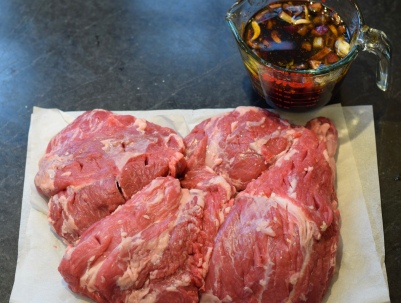
Pierce meat with a sharp knife to allow marinade to seep into the tough leg muscles.
DSC_0195

Mix marinade ingredients together in a small measuring cup.
DSC_0191

Put lamb and marinade in a gallon-sized plastic bag and turn bag all around until the meat is well-coated. Refrigerate for 24 hours, turning regularly.
DSC_0199

Grilling Meat

This is not my domain. My stepfather is the master griller in our family. My husband, brothers, and sons have all learned from him. Because he IS so good, wherever he goes, he gets tasked with the job of grilling.
joel

While my experienced stepfather doesn’t need a meat thermometer to know when meat is cooked, those in training might want to start with one. The key to grilling meat is to remember that food continues to cook and reabsorb juices for a good fifteen minutes after it comes off the grill. You can read about allowing meat to rest here.

Back in Nashville, my husband turned the meat many times as it cooked. When the meat thermometer read 140º in the thickest piece, he removed it from the grill, covered it with foil, and let it rest for 15 minutes before slicing. The results were amazing.
DSC_0227

For a list of recipes to make for Easter and Passover, check out this link.

For a list of fun activities to do over the Easter holiday, check out this link:

How about a bunny cake?!

LET’S STAY CONNECTED!

Follow my photos of vegetables growing, backyard chickens hanging out, and dinner preparations on Instagram at JudysChickens.

Never miss a post: sign up to become a follower of the Blog.

© 2014-2020 Judy Wright. All rights reserved. Photos and text may only be used with written consent.

Marlin’s Black-Eyed Pea Salad

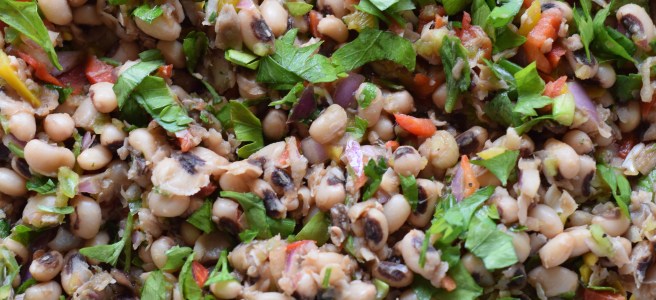
Soon after we moved to Nashville from Boston, Marlin, our beloved next-door neighbor, brought over a bowl of black-eyed peas as a New Year’s Day treat. They weren’t your typical, colorless, cooked peas. Marlin, a talented floral designer, is an artist; her peas looked like a beautiful bowl of confetti! She called it “Southern Caviar.” She explained that Southerners eat black-eyed peas on New Year’s Day for good luck.

I’ve been making this bowl of goodness every year since!

The only change I have made to her recipe is to the vinaigrette. You might say I Italianized it a bit.

This is so good. I promise!

Yield: 8 cups

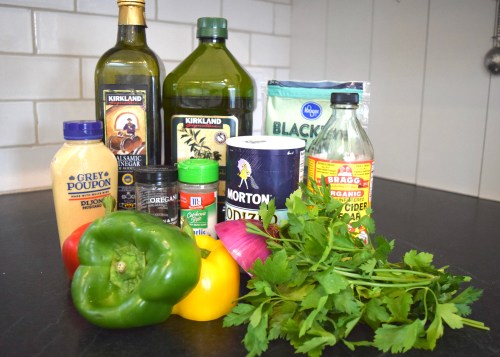
Ingredients:

1 pound uncooked black-eyed peas (3 cups dried)
½ cup extra virgin olive oil
⅓ cup apple cider vinegar
2 tablespoons balsamic vinegar
2 teaspoons salt, more to taste
1 teaspoon pepper
1 teaspoon dried oregano
½ teaspoon Dijon mustard
1 clove garlic, minced
1½ cups sweet bell peppers: red, yellow & green (½ cup of each color), chopped
¾ cup red onions, chopped finely
2 green onions, including stems, sliced thinly
1 cup Italian flat-leafed parsley, chopped, plus more for garnish

Instructions:

How to Wash, Sort, and Soften Dried Black-Eyed Peas:
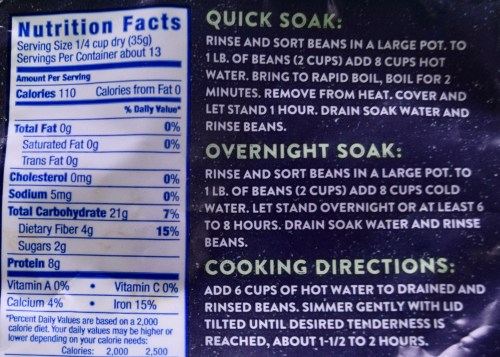
Before you cook dried peas, you need to soften them using either the overnight soak method or the quick soak method. I usually decide which method to use based on how much time I have to prepare the recipe.

Either way, the first thing you need to do is rinse and inspect the peas to look for small stones.  I happened to find a tooth-breaking pebble in this batch.

1) The Overnight Soak Method: put the washed peas in a pot, cover with 8 cups of cold water, and soak overnight for 6-8 hours. The peas expand to about three times their size while soaking. Drain and rinse in a colander.

2) The Quick Soak Method: Fill a pot with washed beans, add 8 cups of hot water, bring to a boil for two minutes. Cover, turn off heat, and soak for one hour. Drain and rinse in a colander.

Fortunately, you do not have to memorize these soaking methods because most bags of dry beans and peas include the instructions on the package.

To Cook Peas: 
Put the softened peas in a pot and add 8 cups of water. Do not salt the water. Bring to a boil and simmer for about an hour. Set your timer. Peas are done when they are tender to eat. If they start to break apart, they are overdone but still usable (the final product will be more hummus-like, which tastes good, too!). When done, drain peas in a colander.

While beans are simmering, make the salad dressing and prep the herbs and vegetables. You will want to add the salad dressing while the peas are still warm so the peas can soak up the flavor as they cool.

To Make Salad Dressing:
Measure olive oil in a liquid measure. To this, add the cider and balsamic vinegars, salt, pepper, oregano, mustard, and garlic. Whisk together and set aside.

To Prep Vegetables:
Wash and seed peppers. I like the confetti look, so I use half of each color of peppers. When chopped, that amounts to about 1½ cups of peppers. I used half an onion or about ¾ of a cup.

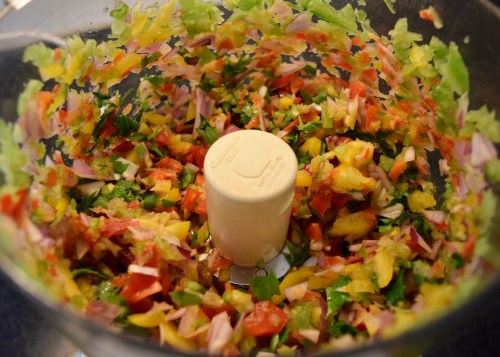
To prep peppers and onions for chopping in a food processor, cut into two to three-inch chunks.

Pulse until minced; do not purée!

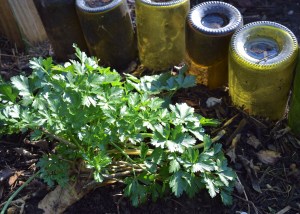
After I was finished making the salad, I went out to the garden to get more parsley for the garnish. There, I noticed I had a few green onions, so I picked two, sliced them, and used them in the garnish, as well.

I used both the white and green parts of the onion.

To Assemble the Salad:
Place the cooked, drained, and still warm peas in a mixing bowl.

Add the salad dressing and the chopped vegetables. Mix well and refrigerate overnight. Toss once or twice while in the refrigerator. Serve chilled.

Happy New Year!

Other New Year’s Day foods you might want to consider:
New Year’s Day Fare: Collards, Pine Nuts, and Cranberries
Brooks’ Pork Tenderloin with her Amazing Marinade
Cheese Ball Pops!
Award-Winning Buffalo Chicken Chili
My Favorite Silver Palate Chili
Mary’s Award-Winning Chocolate Chip Cookies

Follow Judy’s Chickens on Instagram and Pinterest @JudysChickens.

If you enjoyed this post, consider becoming a follower. Be sure to press “confirm” on the follow-up letter sent to your email address.

© 2014-2020 Judy Wright. All rights reserved. Photos, videos, and text may not be reproduced without the written consent of Judy Wright.

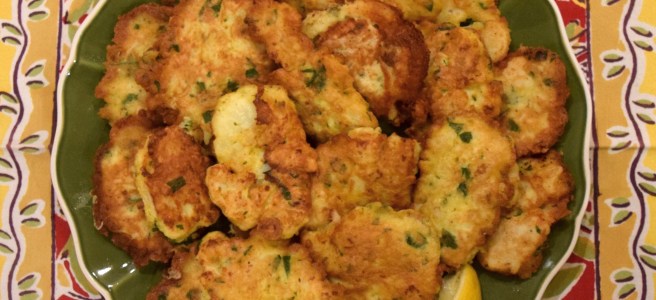
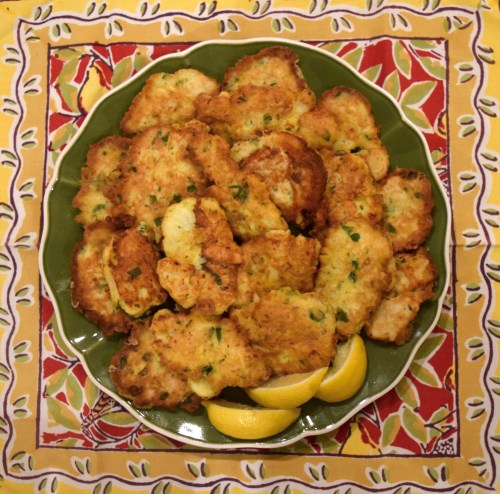
Auntie Terry’s Italian Fried Cauliflower

“Granddaddy ate them by the bucketful,” said his daughter, Rachelle.  I know for a fact that my Mom’s cousins, Mary Lou, Angela, Phil, Jeannie, and Paula, will be making them on Christmas Eve. I have wonderful memories of going to my Auntie Terry’s house on holidays and eating them. I’m talking about fried cauliflower. We are a family that loves fried cauliflower and fried celery, broccoli, and carduna if we are lucky enough to find it.

This is a family favorite. When my children gush over something I’ve made and then ask how to make it, I know it is time to blog it. I want the next generation to learn how to make the family favorites.

Here is my grandmother’s recipe given to me by Mom’s sister, Auntie Terry.

Yield: 18 Fried Cauliflower Patties

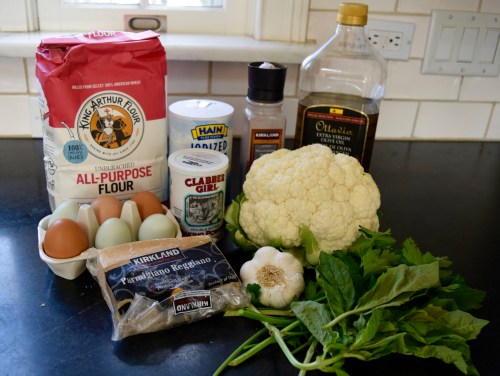
Ingredients:
DSC_0385
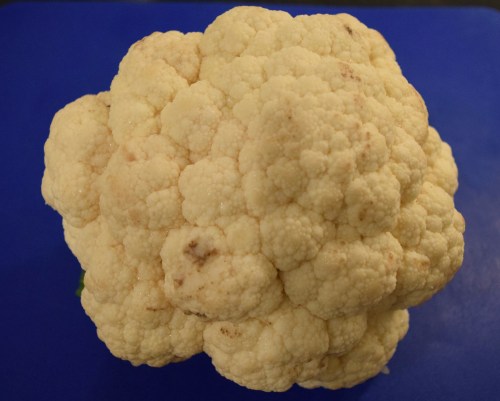
1 head cauliflower
6 large eggs
1 teaspoon sea salt
½ teaspoon ground pepper
1 teaspoon baking powder
2 teaspoons minced garlic
¼ cup chopped parsley (or 2 tablespoons each, parsley and basil)
3/4 cup (3½ ounces) grated Parmigiano-Reggiano or Romano
¾ cup all-purpose flour
½ olive oil mixed with ½ canola oil for frying
Lemon slices (optional)

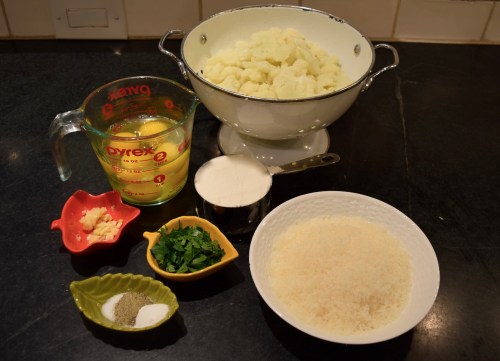
Mise en Place:
DSC_0431

Prep the Cauliflower for Cooking:
DSC_0337

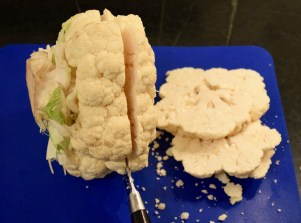
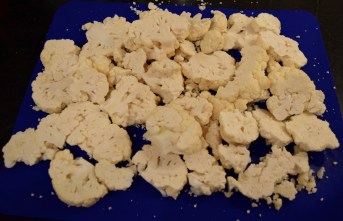
Cut cauliflower into half-inch slices. Cut out the center stem. This will leave you with many small, sliced florets.
DSC_0338 DSC_0339

Blanch Cauliflower:
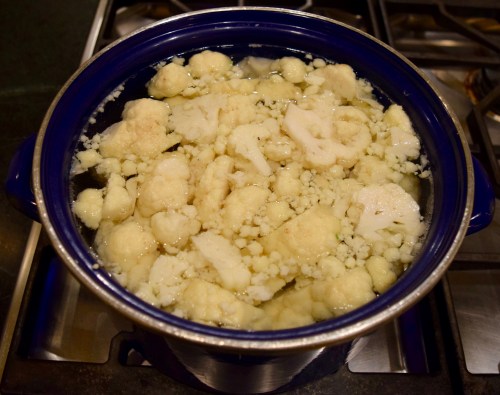
Fill a medium-large pot with 3 quarts of hot water. Add 2 tablespoons of salt. Bring to a boil. Add florets and bring to a rolling boil. Allow to boil vigorously for 1½ minutes.
DSC_0340

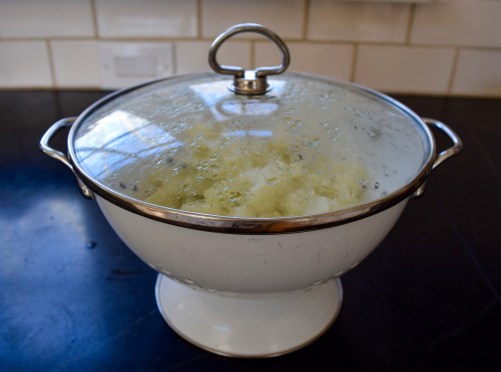
Remove florets from heat and drain through a colander. Leave florets in the colander and cover. Allow to steam, covered, for at least five minutes. The beauty of this method of cooking the florets is they will be uniformly cooked and not mushy or waterlogged.
DSC_0393

Prepare the Egg Batter:
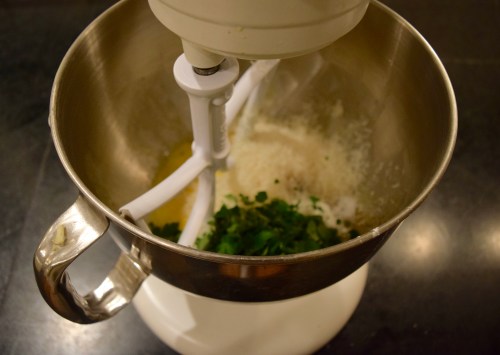
First, add eggs to a mixing bowl and beat. Add everything else but the flour and mix for about 30 seconds.
DSC_0432

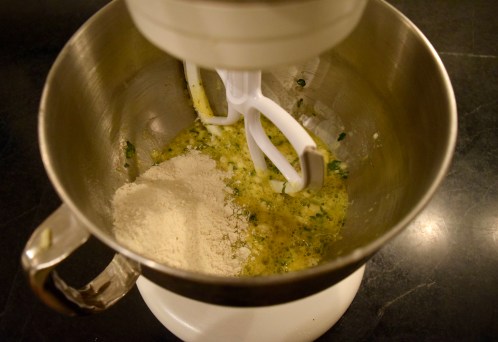
Add flour and mix for about 15 seconds more. The reason to add the flour last is you don’t want to “awaken” the flour’s gluten by mixing it too much.
DSC_0435

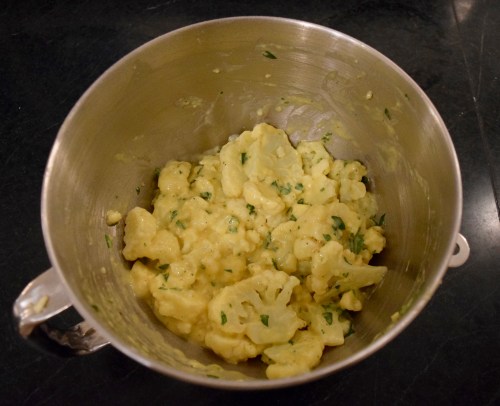
Add cooked and cooled cauliflower to the egg mixture and gently stir with a spatula until the cauliflower is well coated.
DSC_0440

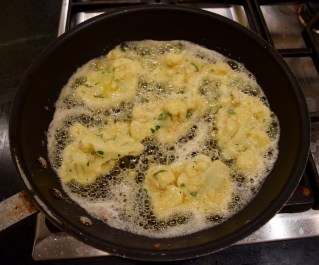
Fill a 12-inch sauté pan with about one cup of olive oil. You will be sautéing the vegetables, not deep-frying them. Set the heating temperature to medium. Let oil heat for a few minutes. Do not let the oil get smoking hot.

How to Test for Correct Oil Temperature
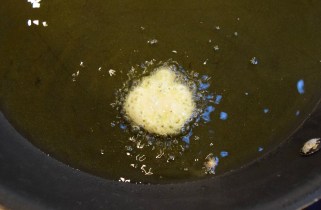
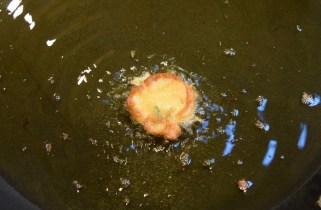
The best way to test if the oil is hot enough is to dribble batter into it. If the batter sizzles, the oil is hot enough. If the batter immediately turns brown, it is too hot. In that case, remove the pan from heat and let the oil cool down some.
DSC_0415 DSC_0416

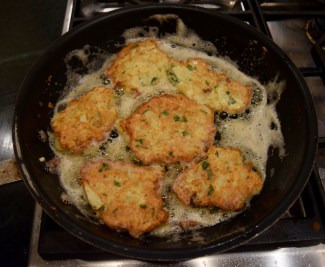
If the oil is too hot, the patties’ interior will remain doughy while the exterior turns crisp. If the temperature isn’t hot enough, the batter will become like a sponge, sop up the oil, and the patties will taste bland. Plan on the patties cooking for a total of four to five minutes.
DSC_0444 DSC_0447

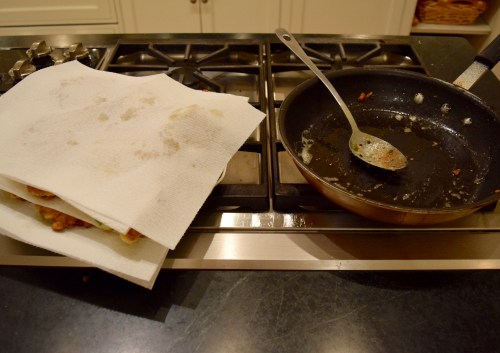
Remove cauliflower from pan with a slotted spoon. I tap the spoon against the inside edge of the pan to release as much oil as possible. Drain cauliflower on paper towels. This recipe makes three batches of six cauliflower patties.
DSC_0367

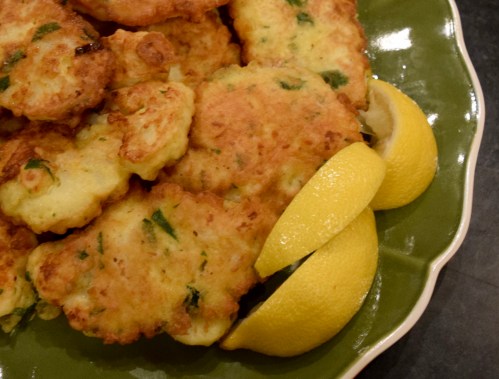
Serve hot, warm, or cold. They are amazing at any temperature. When they are still warm, I like to squeeze lemon juice on each one before I eat it. I think it catapults the flavor to another level of deliciousness!
DSC_0505

My relatives, who have made these for a lifetime, have assured me there will come a time when I will be able to make the batter without measuring it, as they do. Paula gave me the best advice about the consistency of the batter: “the batter should be thick enough to coat the cauliflower and still allow it to run off slowly like pancake batter would.” She also starts off each batch by frying a little of the batter (without cauliflower) to taste test if she’s gotten the batter’s seasonings correct since she makes her batter with Bisquick and without measuring the ingredients.

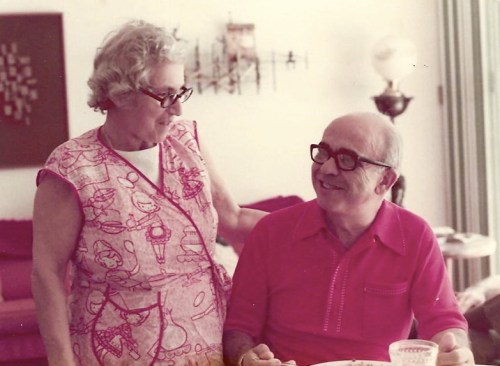
A photo of my grandparents. Grandma made all of her aprons.

Hollywood fl ? date

Other yummy veggies:
Roasted Ratatouille
Cauliflower Three Ways: Roasted, Blanched and Mashed
Roasted Butternut Squash, Brussels Sprouts, and Cranberries
Amazingly Delicious Sautéed Carrots
Roasted Spaghetti Squash with Asparagus and Chicken

LET’S STAY CONNECTED!

Follow my photos of vegetables growing, backyard chickens hanging out, and dinner preparations on Instagram at JudysChickens.

Never miss a post: sign up to become a follower of the Blog.

© 2014-2020 Judy Wright. All rights reserved. Photos and text may only be used with written consent.
Mrs. Walker’s Cranberry Nut Pie

Sometimes it happens this way: you’re perusing Facebook and see a picture of a pie that looks just like what you and your mom used to make for dessert on Thanksgiving morning!
DSC_0224

You read a little further and realize the person who posted the pie photo is an old childhood neighbor, Erin McHugh, whom you haven’t seen in forty years. Erin calls her pie Cranberry Surprise. You call yours Mrs.Walker’s Cranberry Pie.
DSC_0160

I messaged Erin, “Hey, it’s Judy Culotta from Bay View! Mom and I used to make a cranberry pie that looked just like yours. Is that Mrs. Walker’s recipe?” Erin sent me a link to her pie recipe. At first glance, the ingredients looked quite different, and then I realized Erin’s recipe, written for a 9-inch pie plate, was simply a doubled version of Mrs. Walker’s recipe written for a shallow 8-inch pie pan.

Mrs. Walker’s recipe called for a combination of oleo and shortening, while Erin’s recipe called for butter. Whenever you see old recipes that call for “oleo,” know it was a shortened name for “oleomargarine,” a solid form of vegetable oil (oleic acid). Originally, oleo was sold as a white-colored fat. Home cooks were instructed to mix in a yellow food coloring capsule to make it look like butter. Please write a comment if you remember doing that. Consumers had to mix in the dye because dairy lobbyists worked to keep margarine white and butter yellow. Yellow margarine finally became available in 1969.

Hearing from Erin and making this recipe again was delightful! It sent me down Memory Lane. I found these old photos of our home taken in 1964 before my grandfather renovated the house and turned it into a year-round dwelling. The cottage was known as “The Eye of Bay View” because an eye-shaped window faced the entrance to this small and magical Monteagle-like summer community.

The farmhouse was built in 1894 by Ida Tripp, mother of Hazel Atkinson. Hazel lived there with her daughters, Ruth and Hope. It turns out, Erin’s family and the Atkinsons were dear friends. Erin wrote a tender story about them and Surprise Pie in her recently published book, One Good Deed. Here is an excerpt.

Here are photos of the farmhouse from the early 1900s.
IMG_4307

Before 1980, recipes calling for “a bag of cranberries” meant a 16-ounce bag, not the 12-ounce bags sold now. In 1980, there was a shortage of cranberries and the cranberry growers’ consortium changed to smaller-sized packaging to keep up with demand. They never went back to the 16-ounce bag. A 12-ounce bag has 3½ cups of berries.

Ingredients:
DSC_0132

Cranberry Filling:
12-ounce bag fresh cranberries (about 3½ cups),
½ cup chopped pecans or walnuts
½ cup granulated sugar

Cake Batter:
2 large eggs, beaten
1 cup granulated sugar
1 teaspoon vanilla extract
3/4 cup butter, melted (1½ sticks)
1 cup all-purpose flour

Instructions:
Preheat oven to 350º. Grease a 9-inch pie plate with butter.

Spread cranberries over the bottom of the pan and sprinkle with nuts.
DSC_0144

Add the ½ cup portion of sugar.
DSC_0145

Add eggs to the mixing bowl and beat well. Add the 1 cup portion of sugar, the vanilla, butter, and flour and beat for another 30 seconds. Use a spatula to scrape the sides and base of the bowl.
DSC_0148

Spoon batter over the cranberry mixture. Use an icing knife to spread it across the top.
DSC_0152

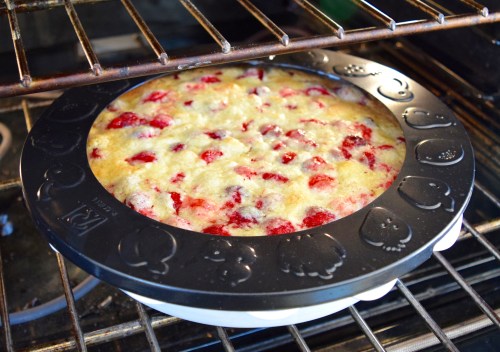
Bake for 45 minutes on the center oven rack. Test center of pie with a knife for doneness. If there is still batter on the knife, set the timer for five more minutes and check again. Continue in this way until knife comes out clean.

Use an “edge protector” if needed to keep the crust’s rim from burning.
DSC_0157

Serve warm with freshly made whipped cream or vanilla ice cream.

Triple this recipe for a Crowd-Pleasing Dessert (24 people)

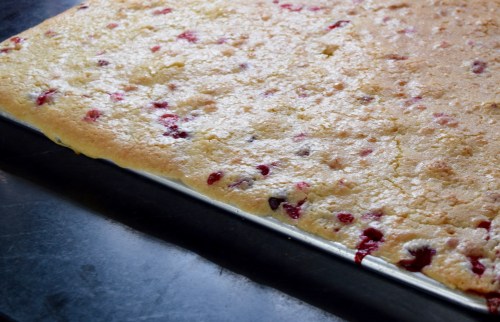
Filling: 9 cups fresh cranberries, 1½ cups chopped nuts, 1½ cups sugar. Spread cranberries and nuts over a greased half baking sheet (13″ by 18″ by 1″). Sprinkle with sugar.
DSC_0553

Topping: Mix together 4½ sticks of melted butter, 3 cups sugar, 1 tablespoon vanilla extract, and 6 eggs. Add 3 cups of flour. Mix for 30 seconds until smooth. Use a stainless icing spatula to spread the batter over the cranberries, starting in the pan’s center and moving outward. Don’t bring the batter all the way to the edges. Don’t want the batter to spill over the side of the pan as it cooks.
DSC_0555

Bake in a 350º oven for 45 minutes. Just made it — no batter dripped over the edge of the pan!
DSC_0563

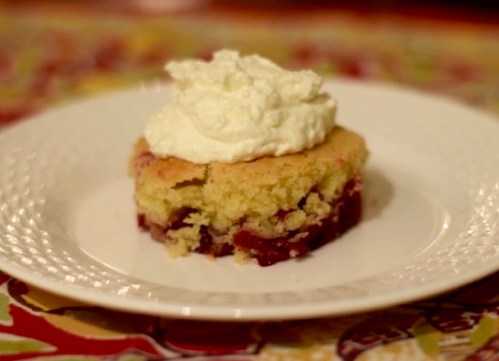
While the cake is warm, use a 3-inch biscuit cutter to cut disks to plate individual servings.
DSC_0594

Place each warm disk in the center of a plate and top with freshly made whipped cream or ice cream.
IMG_4690

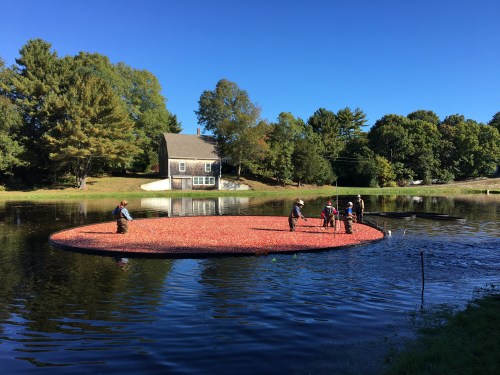
Wondering how cranberries are grown and harvested? I wrote a fun story about it here.
img_6101

Favorite Thanksgiving Desserts
Pumpkin Bread Pudding (with caramel sauce and whipped cream on top!)
Mom’s Pumpkin Pie
Mom’s Apple Pie with a Cheddar Streusel Topping
Pumpkin Cheesecake Pie
Marion’s Crazy Good Pumpkin Bread with Chocolate Chips

Thanksgiving Day Side Dishes We Love
Melissa’s Sweet Potato Casserole
Grandma’s Cranberry Chutney
Auntie Martha’s Spicy Spinach (aka Spinach Madeleine)
Roasted Butternut Squash, Brussels Sprouts, and Cranberries
Amazingly Delicious Sautéed Carrots

LET’S STAY CONNECTED!

Follow my photos of vegetables growing, backyard chickens hanging out, and dinner preparations on Instagram at JudysChickens.

Never miss a post: sign up to become a follower of the Blog.

© 2014-2020 Judy Wright. All rights reserved. Photos and text may only be used with written consent.