Hensplaining Chicken Idioms

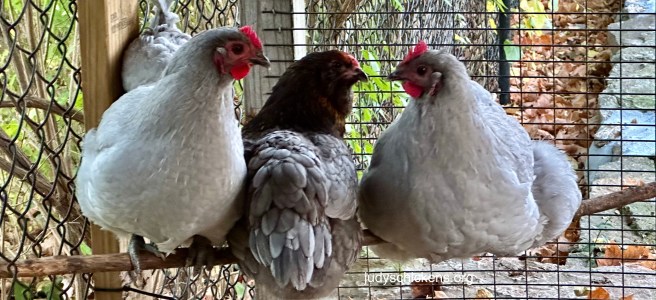
This Mother Hen whose children have flown the coop has been madder than a wet hen latelyWhile I might wish to wring a few necks down at the State House, I’ve opted instead to shake some tail feathers and head on downtown with my birds of a feather mom-friends to ruffle a few feathers  (non-violent protests) and hopefully assuage my feelings of intense grief, anger, and disbelief over the events of the last few weeks here in Nashville.

Chicken Idioms

How have chicken idioms become such a widespread reflection of everyday moments of craziness, hardship, joy, and humor? Although backyard chicken husbandry has been around for centuries, it took a giant leap forward during WWI and WW2 when the Department of Agriculture asked Americans to keep two hens per household member per family as a civic duty.
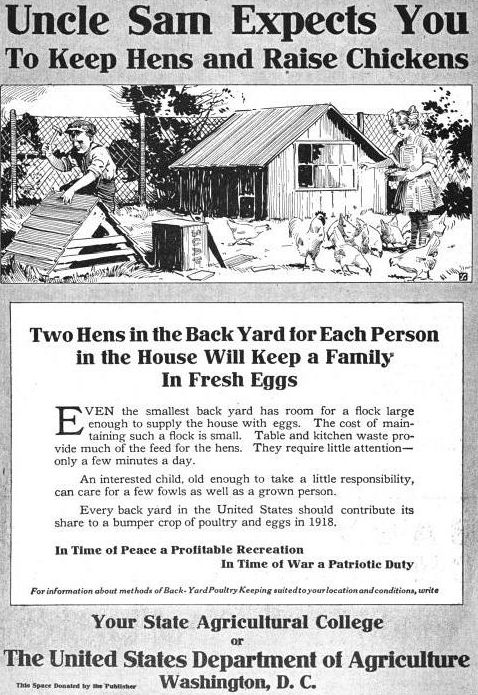
Citizens responded, and suddenly, grandmothers around the country were telling their grandchildren to stop all that cackling and get to sleep or to not count their chickens before they hatch. Chickens are fun to watch and have about ten behaviors they repeat daily. Using chicken idioms became a colorful way to describe human behavior and teach life lessons.

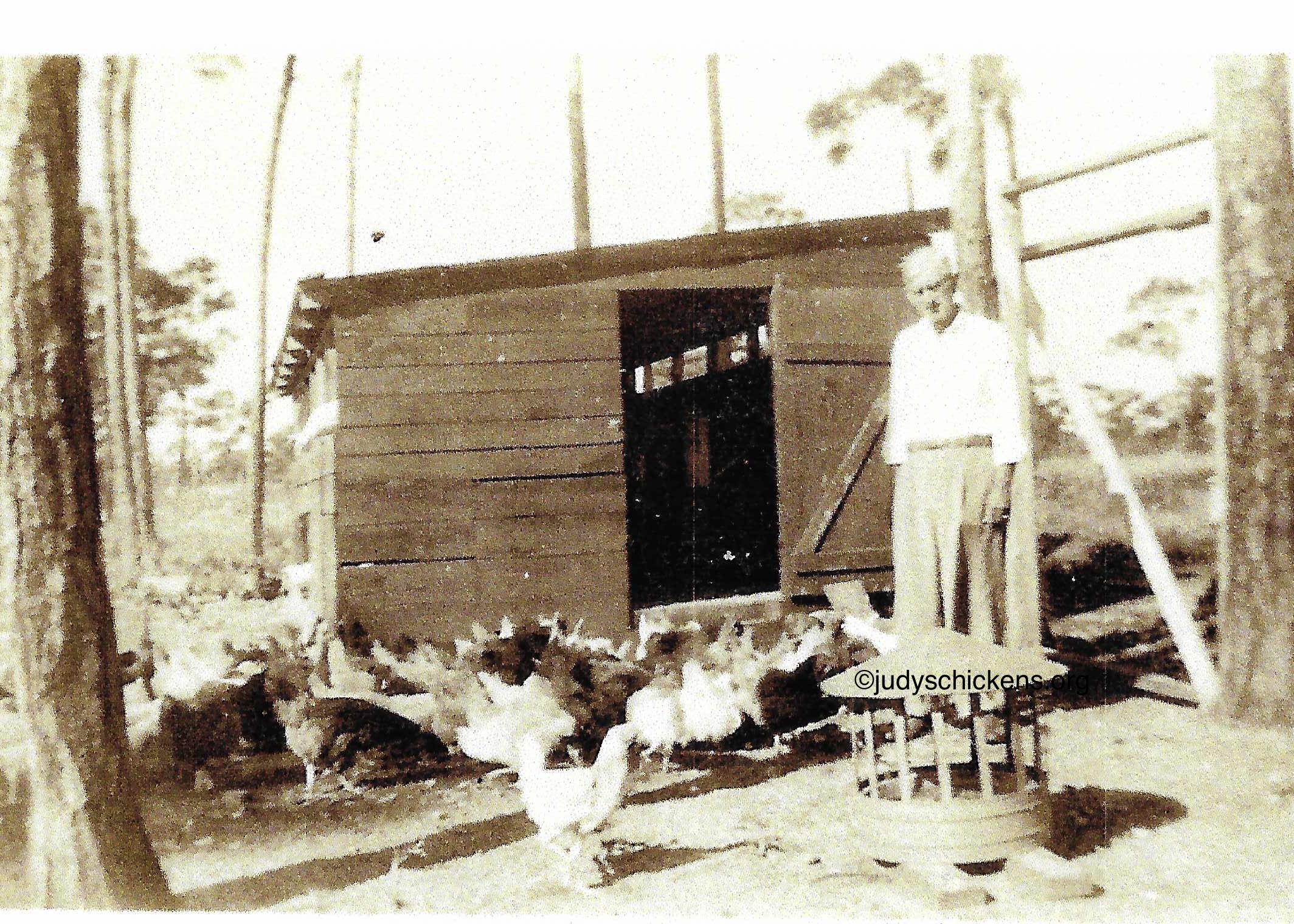
My friend Joanne Knight sent me these photos of her grandparents’ backyard chicken coop and flock during WW2.
About ten years ago, songwriter and mindfulness educator, Ginger Sands, sent me a list of chicken idioms. My husband and I have been adding to it for years. Here is our list. Add to it as you wish!

Chicken Behavior:


Birds of a feather flock together
Pecking order (social hierarchy based on who has access to good things first)
Wring your neck
Ruffle someone’s feathers.
Run around like a chicken with its head cut off
The feathers were flying
Get up with the chickens (get up early)
Madder than a wet hen
Winner winner chicken dinner
Scratching out a living
Shake some tail feathers (get moving)
Chickening out
The early chicken gets the worm
Stop cackling (the raucous noise a hen makes after laying an egg)

Eggs
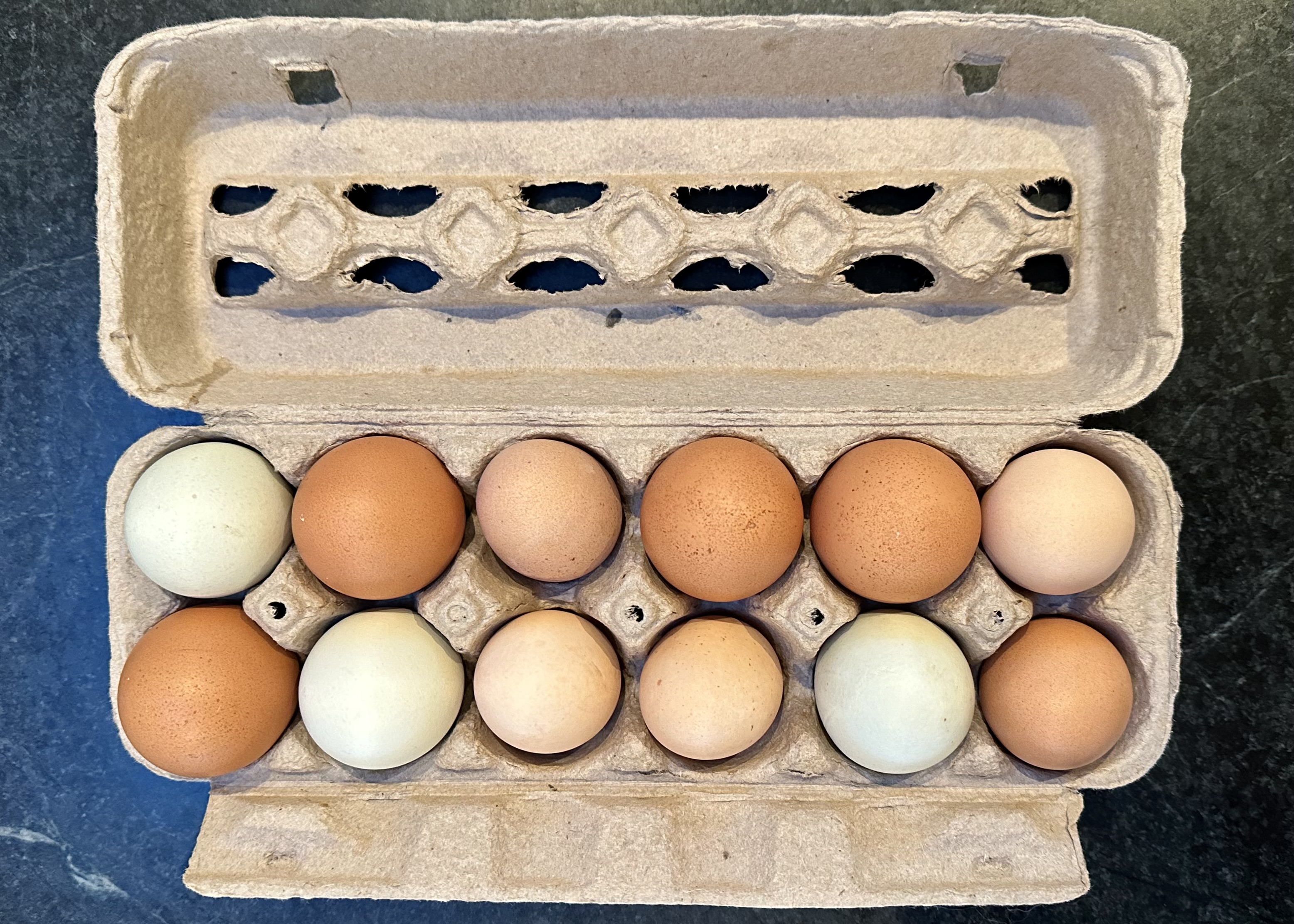

Good egg
Bad or rotten egg (one rotten egg can spoil the batter)
Golden egg
Nest egg
Walking on eggshells
Egg on your face
The yolks on you
Laid an egg (failed miserably)
Egg someone on

Hens


Mother hen
Henpecked
Scarce as hen’s teeth (hens don’t have teeth)
Hen party at the hen house
Chicken chat
Chick flick
Playing chicken (often dangerous, it’s a challenge of who will give in first)
Chicken fight (a wrestling game)
Doing the “Funky Chicken” (a dance)
Nobody here but us chickens
Hen Chicks (Hat tip to writer, Carrington Fox, for our group’s name and the word “Hensplaining!)

Roosters


Cocky
Cock and bull story (improbable)
Cock of the walk (a bossy person)
Cockfight
Something to crow about (to brag)

Nests/Coops/Roosts


Feeling cooped up
Empty nest syndrome
Nesting (making a home)
Leave the nest
Flew the coop
Coming home to roost (come home to deal with the consequences)
Rules the roost (Who’s in charge?)
Broody (when a hen sits on a clutch of eggs and does nothing else for days)
Fox guarding a henhouse (an action that invites disaster)
Feather one’s nest (broody hens pluck their own feathers to soften their nest)
Henhouse syndrome (when predators kill more than they need)

Insults


Being chicken (cowardly)
Chicken-hearted
chicken-livered
Chicken s**t
She’s no spring chicken (baby chicks hatch in spring)
That’s chicken feed (insignificant or cheap)
Can’t boil an egg (can’t cook at all)
Dumb cluck
Fussing like an old hen
Chicken Little (an alarmist)
Rubber chicken circuit (a monotonous round of dinners)

Questionable Behavior


Playing chicken (often dangerous, it’s a challenge of who will give in first)
Chicken fight (a wrestling game)
Doing the “Funky Chicken” (a dance)
Nobody here but us chickens

Philosophy and Proverbs
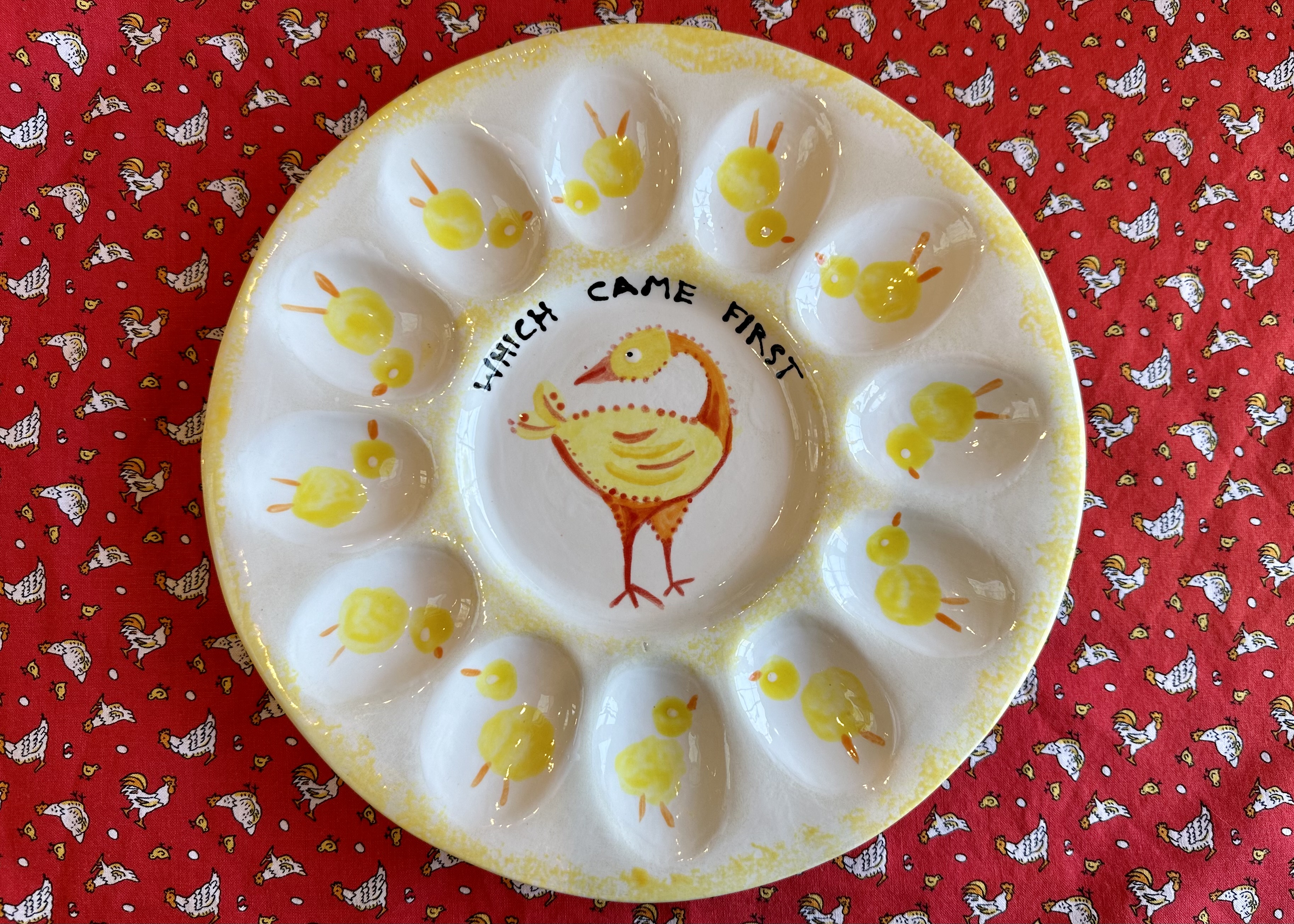

Which came first, the chicken or the egg? (Corabel Shofner created the plate!)
“It’s a chicken and egg problem.”
Don’t put all your eggs in one basket
Don’t count your chickens before they hatch
A chicken in every pot (suggestive of prosperity)
The rooster may crow, but the hen delivers the eggs
You cannot make an omelet without breaking eggs.
He that would have eggs must endure the cackling of hens

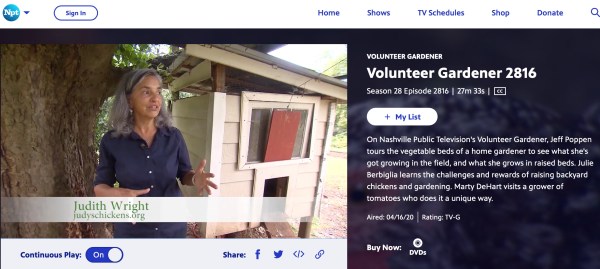
Thinking about keeping chickens in your backyard?
Watch this episode of Nashville Public Television’s Volunteer Gardener:
For Related Chicken Posts:
Eulogy for a Chicken
Chicken Chat on Facebook LIVE!
How to Tell If an Egg Is Fresh or Hard-Boiled
Quiche Lorraine with Bacon and Kale
50 Ways to Make a Frittata

Follow Judy’s Chickens on Instagram and Pinterest @JudysChickens.

If you enjoyed this post, sign up to become a follower. If you do sign-up, press “confirm” on the follow-up letter sent to your email address. And feel free to share!!

© 2014-2023 Judy Wright. All rights reserved. Photos, videos, and text may not be reproduced without the written consent of Judy Wright.

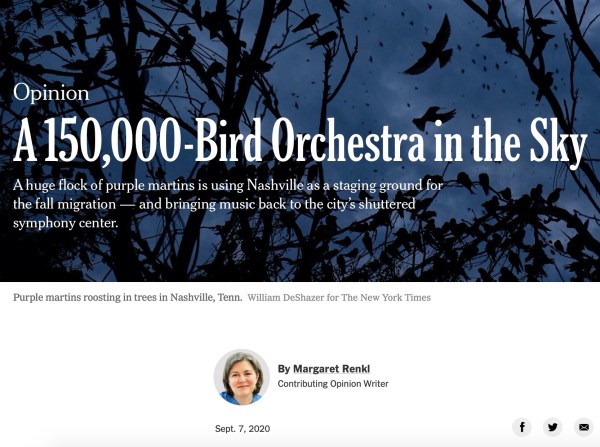
Migrating Purple Martins Pass through Nashville

Here in Nashville, Mother Nature has given us a brief diversion from COVID, #SaferAtHome, Zoom meetings, FaceTiming, home-schooling, cooking, cleaning, weeding, and searching for a good movie on Netflix.

She has given us reason to “ooh” and “aah,” followed by a peaceful, easy feelin’.

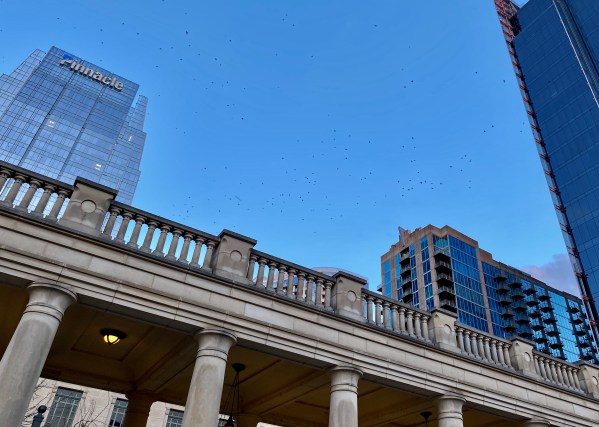
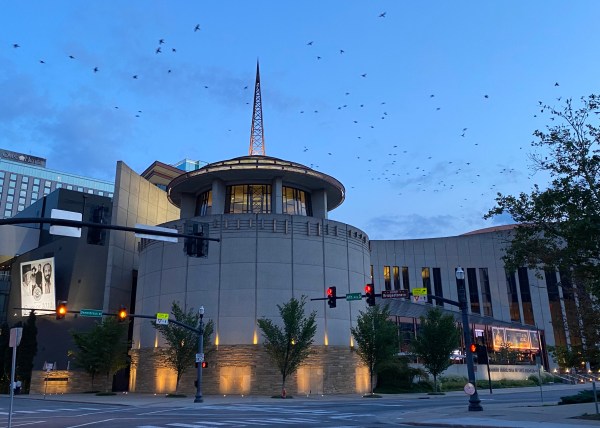
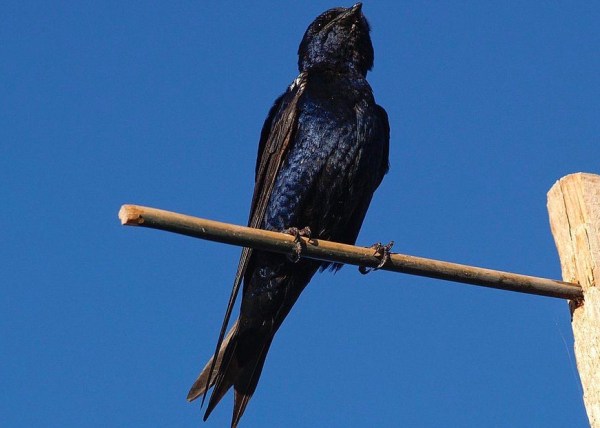
She has done it all by sending us waves and swirls of Purple Martins coming in to roost after a day spent foraging for insects along the Cumberland River. The birds come to fatten up for their 4000-mile flight to Brazil and other areas of the Amazon Rainforest. I’d call this swarming a murmuration, but I’m not sure if that term is reserved for starlings only.

My niece, Elizabeth, was with my husband and me and captured the sky dance of the Purple Martins in this video shot at 7:00. Like I said, lots of “oohs” and “aahs” and even a “Holy S#$%” in there.


I learned about the Purple Martins roosting in Nashville yesterday in a New York Times column written by my friend, Margaret Renkl. Her article is definitely worth reading, as are all of her weekly Monday opinion pieces in the Times. Click here for a link to the story, A 150,000-Bird Orchestra in the Sky.

I am not sure how long the birds will be in Nashville. We drove downtown and parked in front of the Schermerhorn around 6:40 p.m. At first, we didn’t see any birds and figured we had missed them. Then, suddenly, they started to show up by the hundreds. It was exciting! We were glad we had made an effort to go downtown.

The trees were full of roosting birds.

The sky dance was extraordinary and just what I needed to get re-energized during a blah COVID-fighting week.

Take care and in the words of Dr. James Hildreth and Dr. Alex Jahangir, Nashvillians docs who have been leading our city in its fight against COVID, along with our Mayor, John Cooper, “We’ve got this Nashville.”

COVID Projects
How to Build a 4 x 4 Raised Bed Starter Garden
Upbeat Movies to Watch While Social-Distancing
How to Make Gorgeous Birdhouse Gourds
How to Make Artisan Bread the Easy Way
How to Make Greek Yogurt at Home
Marion’s Crazy Good Pumpkin Bread with Chocolate Chips
Fall Planting Guide for Your Kitchen Garden
Putting Your Garden to Bed with a Blanket of Cover Crops

Follow Judy’s Chickens on Instagram and Pinterest @JudysChickens.

Always check my blog for the latest version of a recipe.

If you enjoyed this post to become a follower, please be sure to press “confirm” on the follow-up letter that will be sent to your email address.

© 2014-2020 Judy Wright. All rights reserved. Photos, videos, and text may only be reproduced with the written consent of Judy Wright.

Chicken Chat LIVE!

Here, chick, chick, chick.

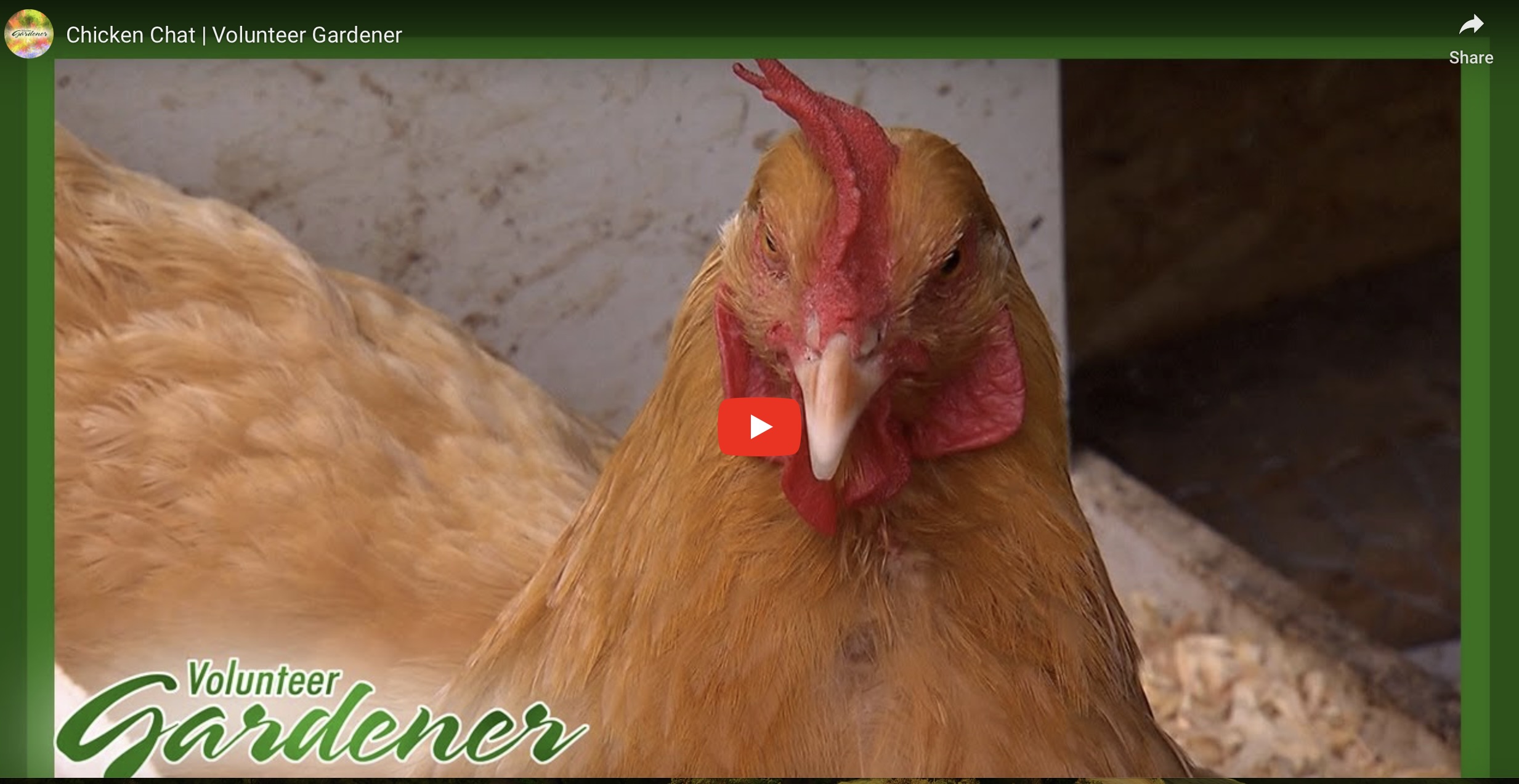
A few days ago, the production crew of Nashville Public Television’s weekly program, Volunteer Gardener, came over to film an episode on urban hen-keeping. After the team finished filming the TV program, they stayed and broadcast a Facebook LIVE segment. I didn’t even know there was such a thing as Facebook LIVE.

The white arrow doesn’t always work, so if it doesn’t, try this link.

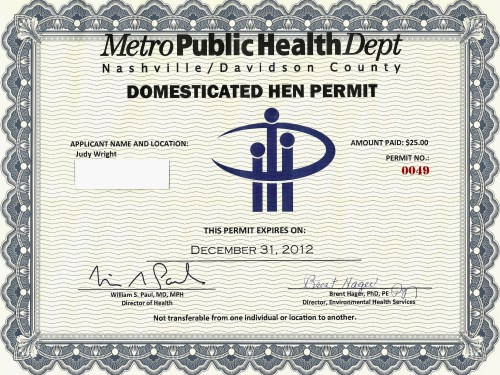
Watch the live program and learn things you didn’t know to wonder about, like chicken egg production (No, they don’t need a rooster), what chickens do all day, what they eat, their most unusual eyesight, and the requirements for getting a Domestic Hen Permit.

Special thanks to the ever-creative producer of Volunteer Gardener, Greta Requierme, for allowing me to teach about keeping a flock of urban hens. She searches the state to develop unique and exciting stories for the program, making it the number one watched show on NPT. Much thanks to the hilarious host, Julie Berbiglia, Public Education Specialist for Metro Water Services. She was delightful and put me at ease throughout the two interviews.

The end of the LIVE broadcast got a little crazy with the chicken humor, but they couldn’t didn’t edit it out.

Here is a link to the Volunteer Gardener episode about hen-keeping that came out a few months later: Chicken Chat.

Related Posts
Hensplaining Chicken Idioms
Eulogy for a Chicken
Putting Your Garden to Bed with a Blanket of Cover Crops
Family Dirt
Edible Landscaping with Nashville Foodscapes
Roasted Fig Preserves with Lemon and Thyme

If you enjoyed this post, please share and become a subscriber! Be sure to confirm the subscription on the follow-up letter sent to your email address.

Follow Judy’s Chickens on Instagram and Pinterest @JudysChickens.

Always check my blog for the latest version of a recipe.

© 2014-2023Judy Wright. All rights reserved. Photos, videos, and text may only be reproduced with the written consent of Judy Wright.

Roasted Fig Preserves with Lemon and Thyme

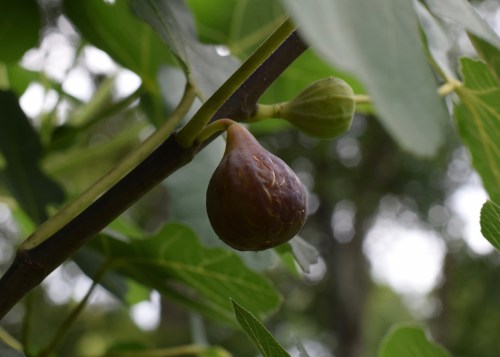
This is what a lush, ripe Brown Turkey fig looks like. Notice the stretch marks. That means it is bursting with flavor.

During fig season, I can see these dark, plump jewels sunning themselves on the tree from every vantage point in my backyard. First, they tempt and then they taunt me until I finally find myself risking life and limb to get to them. Often, I  have to climb a ladder and use a long garden tool like a bow rake to grab and pull down a limb, and then reach even further to pluck one from a branch. This all happens first thing in the morning while the outside temperatures are still tolerable. My friend Linda calls it #pajamagardening.

There are others who desire the same figs. I am in constant competition with small birds, the squirrels in the neighborhood, and my chickens. They know they can eat figs to their heart’s content without fear of being seen by predatory hawks when under the canopy of the broad, palmate-shaped fig leaves.

Here’s a video of one of my chickens reaching for a fig. It is best watched in full screen mode. My friend Carrington calls it #rubberchicken.


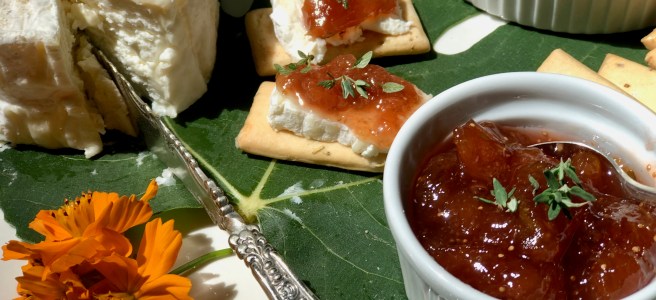
Ina would use the big leaves to line a cheese platter. Just sayin’.

Growing Figs

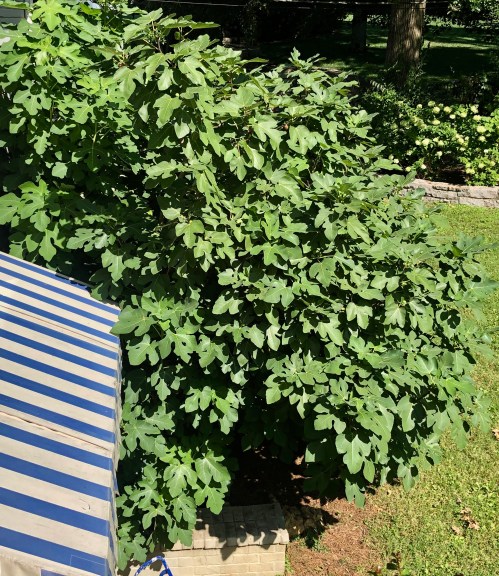
Fig trees are native to tropical climates, but a few varieties, such as Brown Turkey and Chicago Hardy, have been cultivated to grow in cooler climes (zones 6-11). We planted our tree in front of a southern-facing brick wall so the heat stored in the bricks could warm the tree during winter. Additionally, and this was purely happenstance, our air-conditioner’s condensate pipe drips over the roots all summer long keeping the tree well-hydrated.

Our fig production and access capabilities quadrupled after I pruned the tallest limbs by almost half last March. Later, in April, my husband fertilized the roots with chicken manure. Now the tree is shaped like a sprawling ball and is loaded with figs.

Everything you wanted to know about fig reproduction, but were afraid to ask.

One of my hobbies is studying plant reproduction. All fruits and vegetables start with a flower that once pollinated starts to grow a pod with either one seed in it, like a peach, or many seeds, such as apples and tomatoes. Botanically, the seed pod is known as an ovary. Aggravating as it may feel when a squirrel or chipmunk runs off with a peach or a tomato you have patiently watched ripen, they are doing what nature intended — they are dispersing seeds. Mother Nature doesn’t care if we like our fruits and vegetables. She cares about plant reproduction and species survival.

With that in mind, the first thing I noticed when my tree started producing fruit was the absence of flowers. This photo was taken on April 7th as fig pods and leaves appeared. The pods emerged from the branches but were never preceded by a flower.

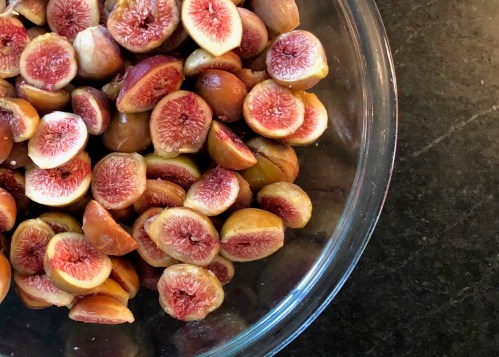
This begged the question, How does the fig reproduce without flowers? It turns out the flowers are inside the fig. Hundreds of them! The color inside a fig comes from its flowers.

Last summer, the producer and host of Nashville Public Television’s The Volunteer Gardener came to my garden to film a segment featuring Jeremy Lekich, an expert on edible landscapes and owner of Nashville Foodscapes.   In the show, Jeremy takes viewers around my yard and introduces them to many unusual edibles and explains fig pollination. You can watch the segment here.

By virtue of where the flowers are located, pollination needs to take place inside the fig. To move pollen from a male fig to a female requires the presence of specialized fig wasps who enjoy a symbiotic relationship with figs. The wasps get a place to reproduce and the figs get access to highly specific pollinators. I found this awesome video that shows how microscopic wasps crawl into figs. This other video from PBS’s Gross Science takes it from there describing what happens next in reproduction.

New varieties of common figs, like my Brown Turkey, have been cultivated to not need a wasp for pollination. The female trees are asexual, and the seeds produced are not viable — they are empty seeds. You will see lots of them when we finally get around to cooking the figs!

Every Christmas I make my grandmother’s Sicilian fig cookies. The recipe calls for dried Calimyrna figs. Calimyrnas are a Californian cultivar of the Turkish Smyrna fig (Calimyrna = California + Smyrna) that does require a wasp for pollination. They produce “true seeds” — seeds that are viable for reproduction. Fertile seeds are thick and crunchy, and have a nutty flavor preferred by bakers. They are the figs used to make Fig Newtons.

How to Make Fig Preserves

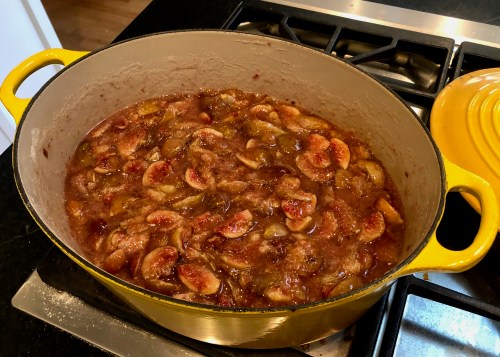
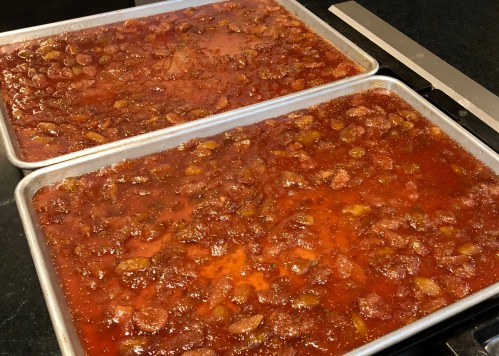
I cooked many not-so-delicious batches of fig preserves  on the stove before it occurred to me to try roasting them with herbs as I do my strawberry jam. The results were amazing. Roasting intensified the depth of flavor exponentially. They were so good, I took all my reject batches, mixed them together, and roasted two trays for about an hour. Suddenly, they were all tastier, too.

Ingredients:

4-5 pounds fresh figs (12 cups, once stemmed and quartered)*
5 cups granulated sugar
⅓ cup freshly squeezed lemon juice
1 tablespoon balsamic vinegar
one bunch of thyme sprigs (⅓ ounce) or 3-4 long stems of fresh rosemary

*Today, I saw four varieties of figs for sale at Trader Joe’s!

Instructions:

Remove stems and quarter figs.

Place in a lightly-greased heavy-bottomed pot.

Add sugar and acids and stir. The amount of sugar sounds like a lot, but you need sugar to preserve fruit. Acids help fruit release its naturally occurring pectin. Once mixed, place in refrigerator and allow to macerate for a minimum of two hours or overnight.

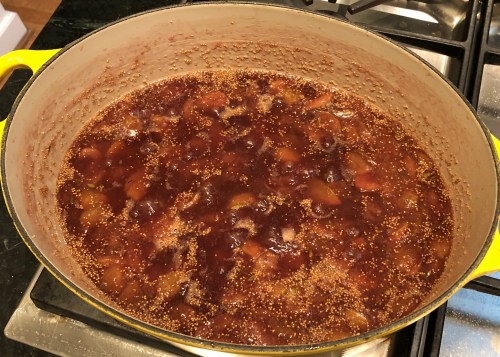
When ready to cook, preheat oven to 175º. Add thyme or rosemary and simmer on low heat for about twenty minutes. If using thyme, strip leaves before stirring in. If using rosemary, do not strip leaves; leave stems intact and remove before bottling.

Pour hot figs into two rimmed sheet pans and roast for about 4-5 hours.

One way to tell if they have cooked long enough to gel once cooled is to draw a path through the figs and see if the two sides stay separated. If they do, they are ready. You should be able to smell them if they are sufficiently roasted. If you overcook them, they will become thick and gummy when cool. Better to undercook than to overcook.

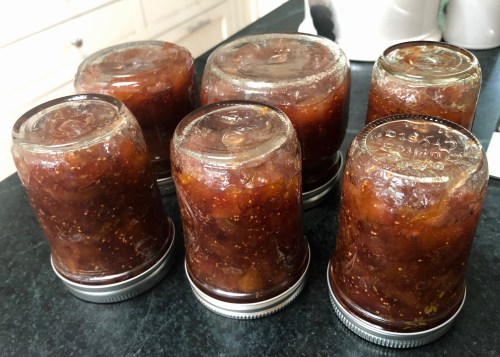
Pour hot preserves into clean jars, wipe the rims, cover with screw top lids, and turn upside down while they cool. I store them in the fridge, where they should be good for two months.,

I’ll end this story with one last video of my chickens eating figs in the early morning hours.


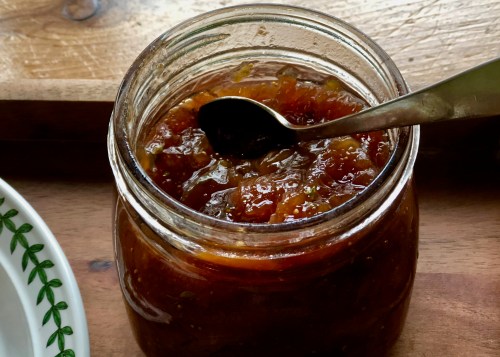
What are my favorite ways to enjoy fig preserves?

By the spoonful — just out of the oven.

My cousin, Marion, served the fig preserves over a delicious blend of cow, sheep, and goat milk cheeses called Rochetta. It was delish. As soon as I got home, I bought a similar cheese called La Tur at Whole Foods.

I often have fig preserves spread over Homemade Ricotta on toast for breakfast, or I’ll make an almond butter and fig sandwich for lunch.

I love brie and fig paninis. Hard to get a photo of the finished product with these crazy-good sandwiches, though.

Please let me know if you make the preserves!

Related Posts:
How to Make Homemade Whole Milk Ricotta
Oven-Roasted Strawberry and Rosemary Jam
Homemade Grape Jelly
Crab Apple Jelly

LET’S STAY CONNECTED!

Don’t miss a recipe! Become a subscriber and have every post delivered to your Inbox.

Follow my stories about how to grow vegetables in your backyard, raise a small flock of chickens, or come up with healthy ideas for dinner on Instagram and Pinterest at JudysChickens

Always check this website for the most up-to-date version of a recipe.

© 2014-2019 Judy Wright. All rights reserved. Photos, videos, and text may only be reproduced with the written consent of Judy Wright.