I raised my hand and said to the chef, “I’m just not getting this. What is a roux? What does it DO?” I was sitting in a class at The New Orleans School of Cooking while my husband attended a meeting. The chef was big and hilarious, so when he suddenly got serious and answered, “A roux is the difference between bread and toast,” I felt like Confucius had just spoken. I smiled. I nodded. I had not a clue what he was talking about. But some mystical voodoo thing was happening in his kitchen, and I didn’t get it. I sat in my seat and continued to take notes, but I knew a roux was not in my future, so neither would gumbo or étouffée ever be either.
Fifteen years later, I found myself cooking regularly with Bruce Dobie and Ann Shayne in The Nashville Food Project kitchen, where we were volunteer chefs. Bruce is from Lafayette, Louisiana, also known as South Louisiana. Every fall, Bruce started talking about the gumbo he would make with the turkey carcass as it got closer to Thanksgiving. When Bruce was growing up, it was a South Louisiana tradition to have turkey dinner on Thursday and gumbo several days later. Bruce said his brother would say to the turkey at the end of the Thanksgiving meal, “Bye. See you Saturday.” Fridays were reserved for making stock and pulling meat from the bones.
Ann and I asked Bruce if he would show us how to make gumbo. He was happy to oblige. We were told to save our T-day turkey carcasses in the freezer until we could figure out a time to cook. He would start by teaching us how to make a roux.
Bruce arrived in my kitchen one Sunday afternoon with three boxes of groceries and cooking utensils. Ann and I were instructed to make turkey stock and pick out meat from the strained stock. Noted. We arrived with our part of the gumbo. Bruce is an enthusiastic guy by nature, and his enthusiasm is contagious; thus, he was pumped and we were pumped. He started waxing eloquently about the mystery that was about to unfold. I thought he was discussing the mystery of making a roux, but he said the roux was just the “foundation of something miraculous.” Bruce’s miracle had to do with what happened in the stockpot once we put all the ingredients together and let them simmer for the day. He repeatedly used three M words: miraculous, magical, and mysterious. Ann and I were in for a good ride.
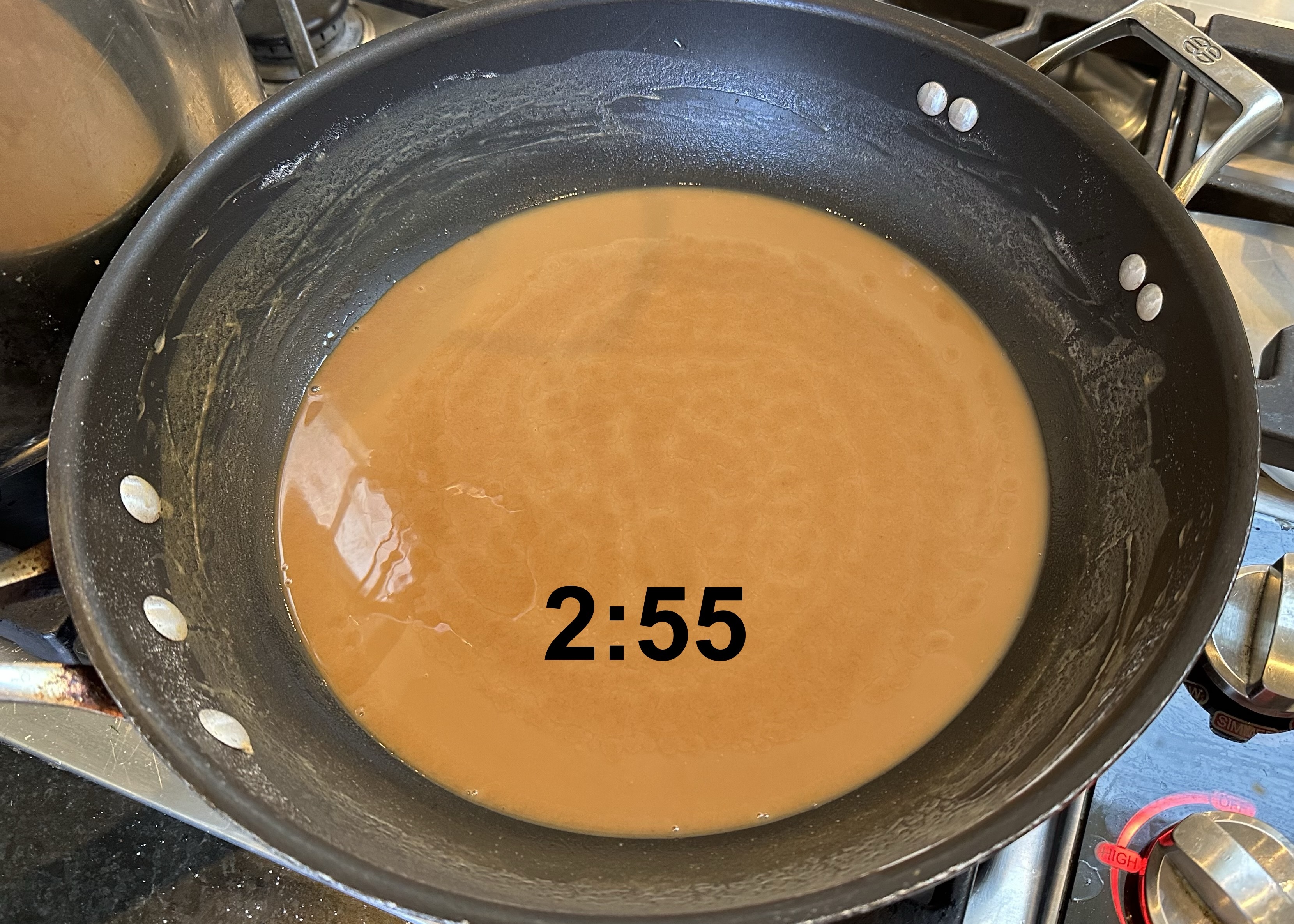
Just so we are all on the same page, a roux (pronounced “roo”) is a thickening agent for soups and sauces. It is made by cooking equal parts of flour and fat in a thick-bottomed pan until the flour is brown and toasted. A properly cooked roux is silky-smooth and adds an intense nutty flavor while doing its core job of thickening soups, sauces, and gravy. The longer you cook it, the darker it becomes and the more intense the flavor; you might cook it until light in color for gravy, darker for an étouffée, or to chocolate brown for gumbo. Bruce is a newspaperman, so he would say, “Cook until it’s the color of Ronald Reagan’s brown suit.”
You don’t want to burn it, so you must constantly watch it and whisk it. I remember our instructor in New Orleans telling us that when his mother was making her roux, that was the time children would get into mischief by doing things like jumping on beds. They knew their mother would never leave the roux.
Yield: Four gallons. Divide the ingredient list in half for the amount you would prepare if using one large turkey carcass.
Ingredients:
2 turkey carcasses should yield 8 quarts of gelatinous broth and about 2 pounds of turkey meat.
8 quarts turkey stock
2 large onions, chopped
2 sweet bell peppers, chopped
6 stalks celery, chopped
1 head of garlic, minced
¼ cup olive oil
40 okra pods, sliced
2 bunches of parsley, chopped
2 bunches of green onion tops, sliced
2 15-ounce cans of whole tomatoes, diced, save juices
2 pounds Veron Andouille Sausage
1 pound Conecuh Original Smoked Sausage “Spicy & Hot”
1 pound Conecuh Hickory Smoked Sausage
5 pounds turkey breast, cooked and cut into bite-sized pieces
2 pounds turkey meat pulled from the carcasses (1 pound per carcass)
1⅓ cups all-purpose flour, sifted to get rid of lumps
1⅓ cups canola oil
50 drops Tabasco Sauce
2 tablespoons Louisiana Hot Sauce
2 teaspoons red pepper powder (cayenne)
1 teaspoon crushed red pepper
1 tablespoon gumbo file (a sassafras thickener)
2 tablespoons ground black pepper
Salt to taste, to be added after it has cooked. I added 1½ tablespoons
Prep the Stock:
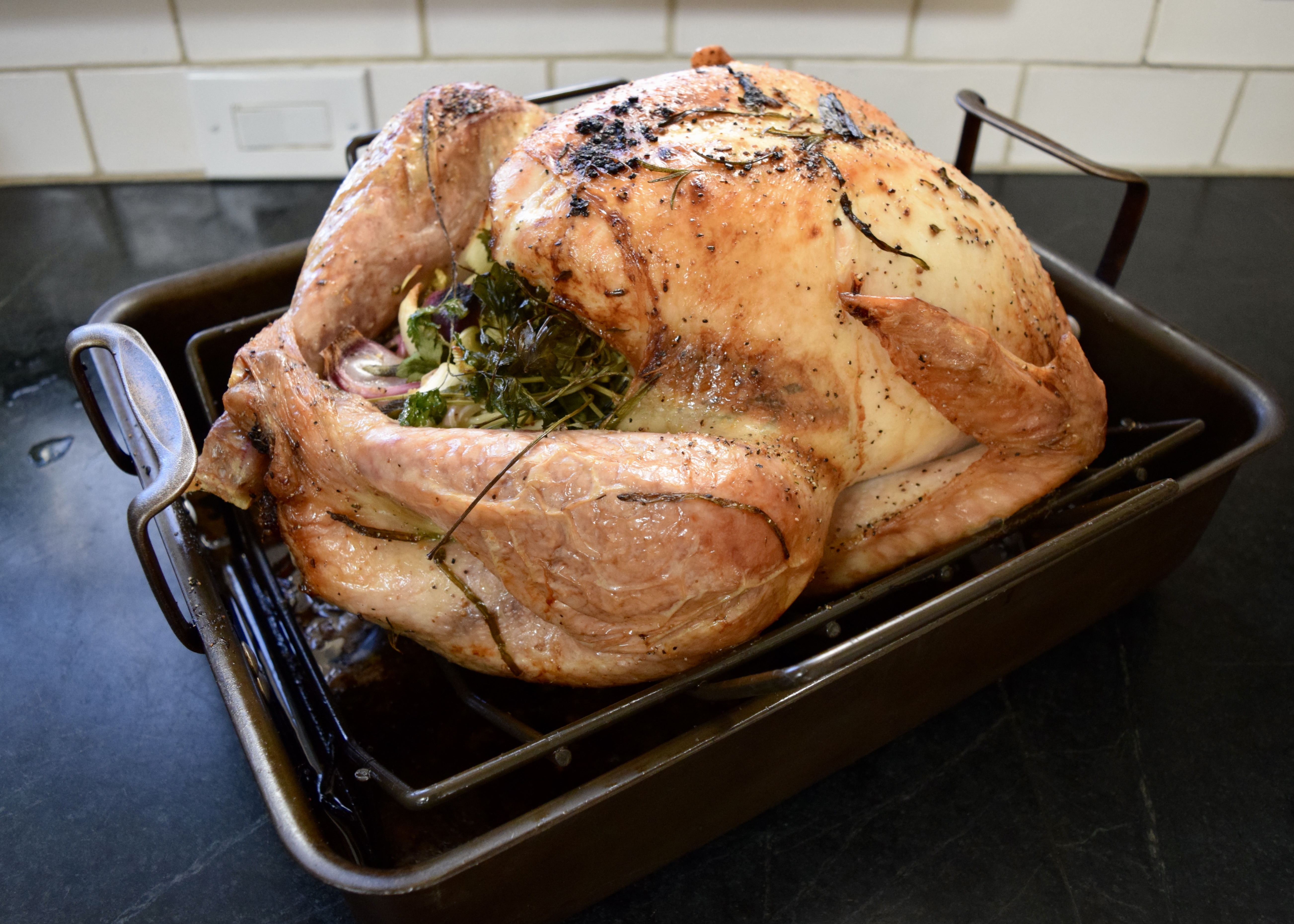
It all starts with a roasted turkey. Throwing an uncooked turkey in boiling water will not yield the same richly-flavored results. Roasting the turkey first will. It is okay to freeze the carcass until you are ready to use it.
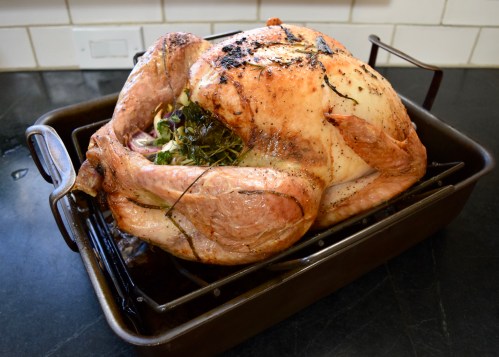
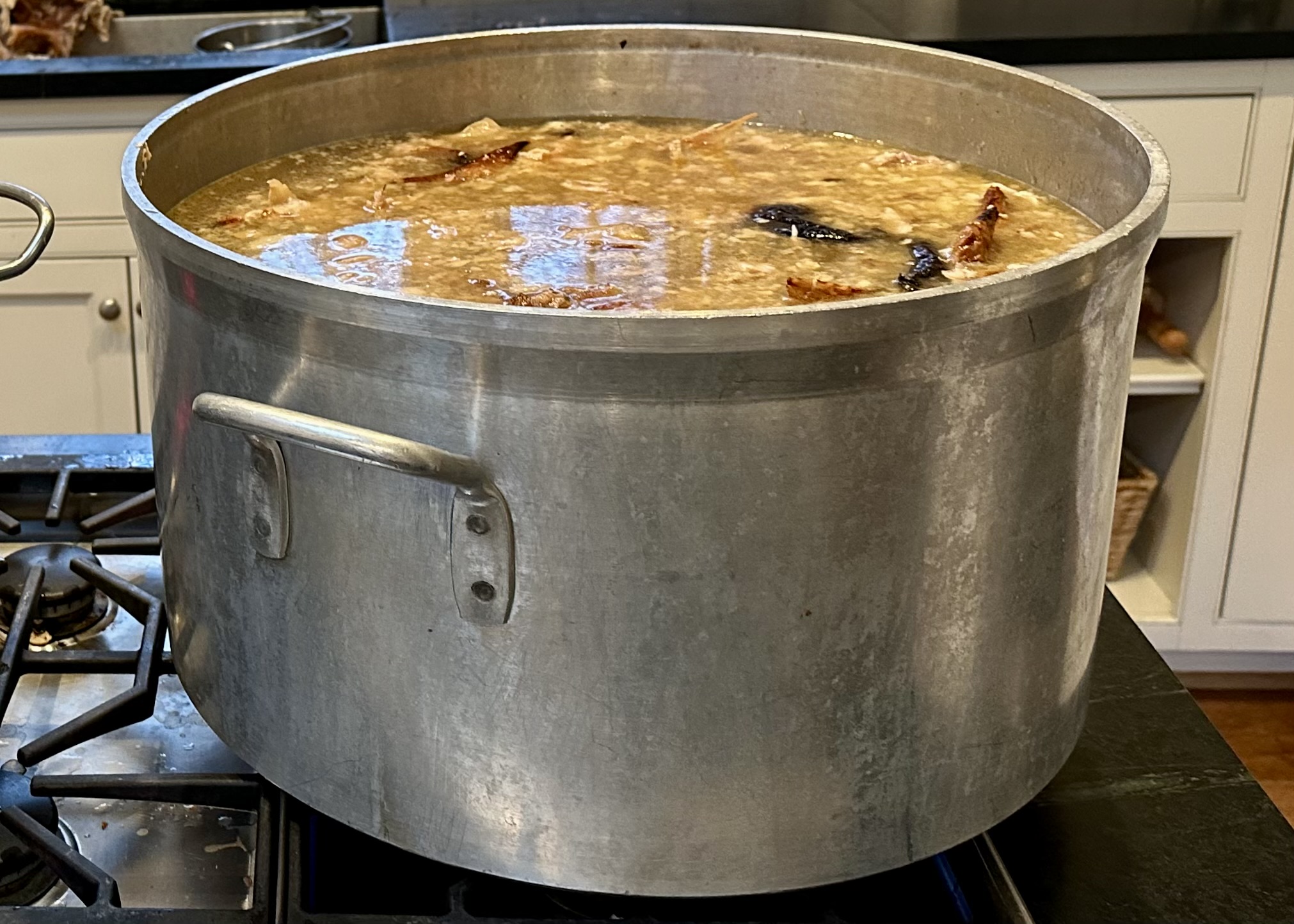
Simmer the turkey carcasses, complete with skin, innards, and any leftover meat, in a large stockpot of water for a minimum of five hours. There is no need to add any seasonings as the turkeys were well-seasoned when roasted.

Strain stock. Set bones and meat aside and refrigerate liquid until fat rises and hardens. Remove fat. The stock should have the consistency of Jell-O.
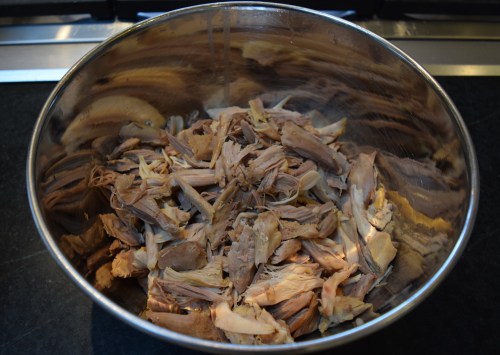
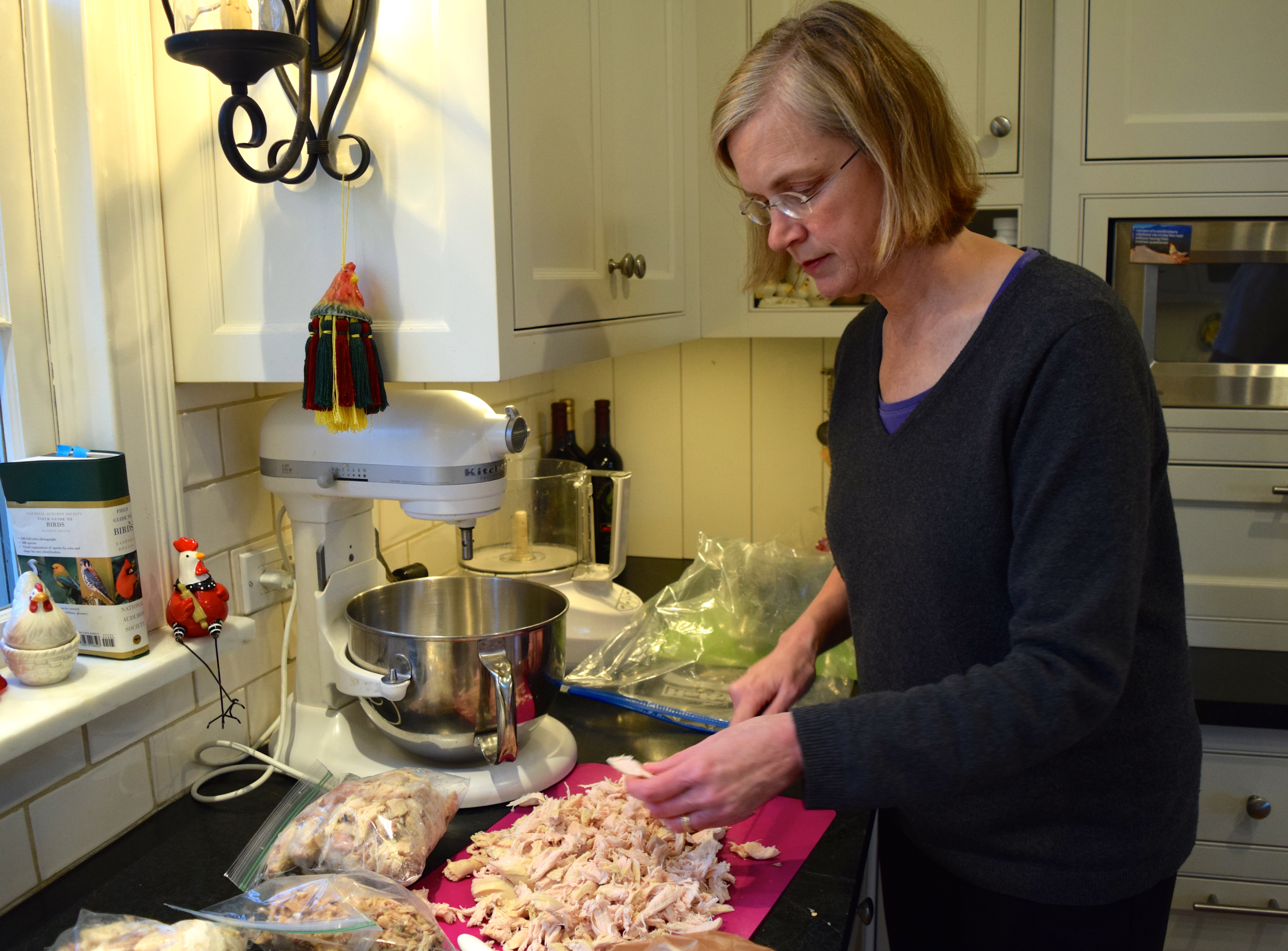
Spread meat and bones on a baking sheet and allow to cool. Once cool, pull meat off, including little pieces. Discard bones and skin. Below is a picture of Ann’s two pots of broth with the hardened yellow fat on top.

This photo is of the meat we picked, about one pound per carcass.
Game Day:
We’ve got all our ingredients out and are discussing our game plan.

Prep the Vegetables and Meat:
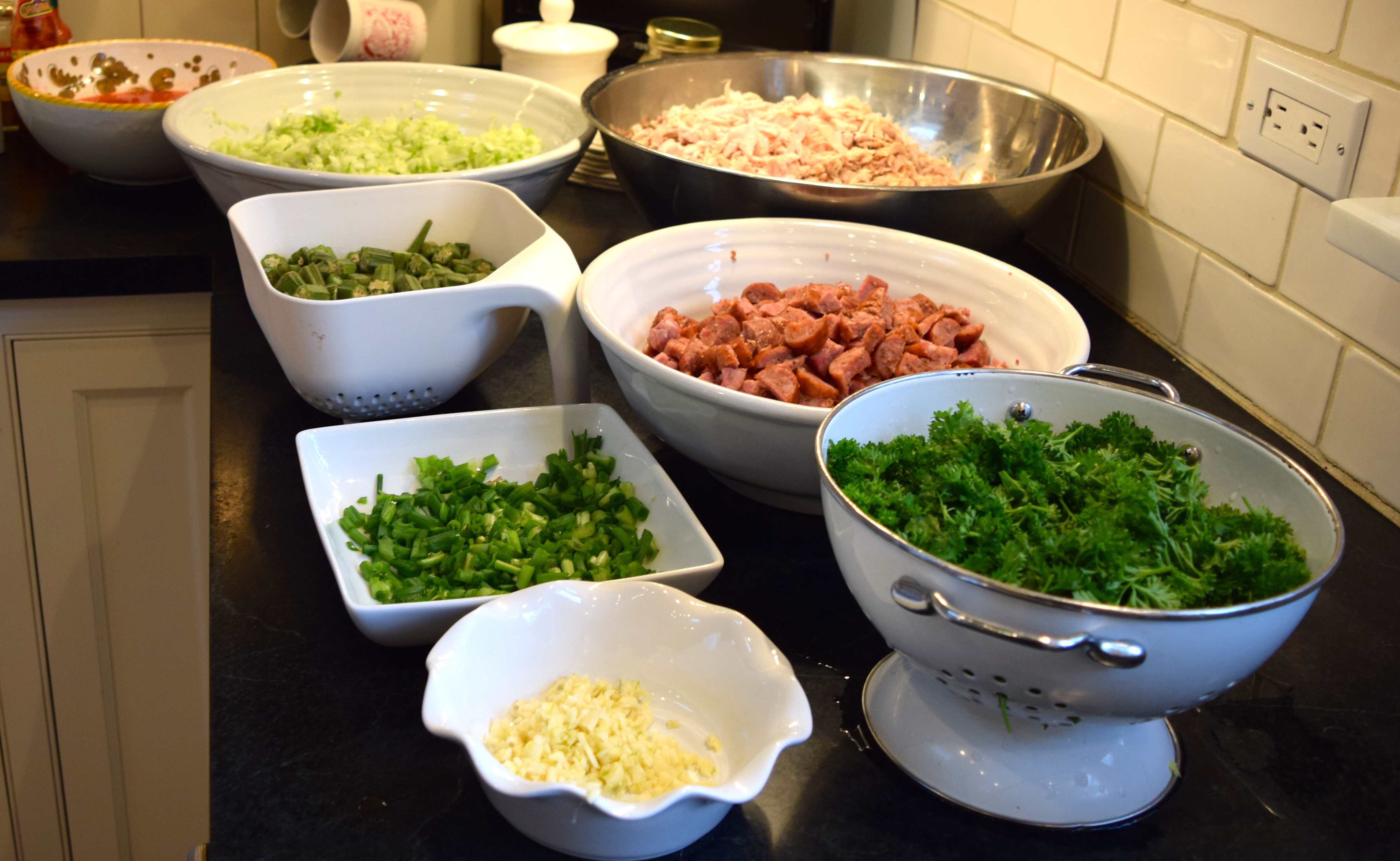
Our mise en place: Turkey, sausage, parsley, garlic, green onion tops, okra, bowl of the trinity (onion, sweet bell pepper, celery), and, turning the corner, chopped tomatoes.

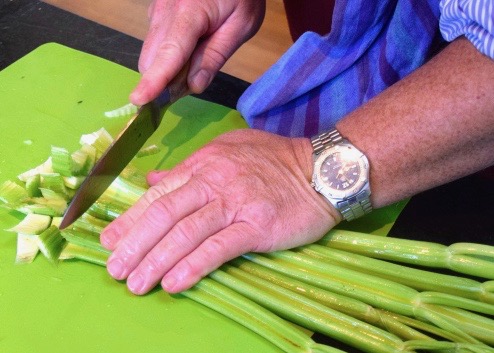
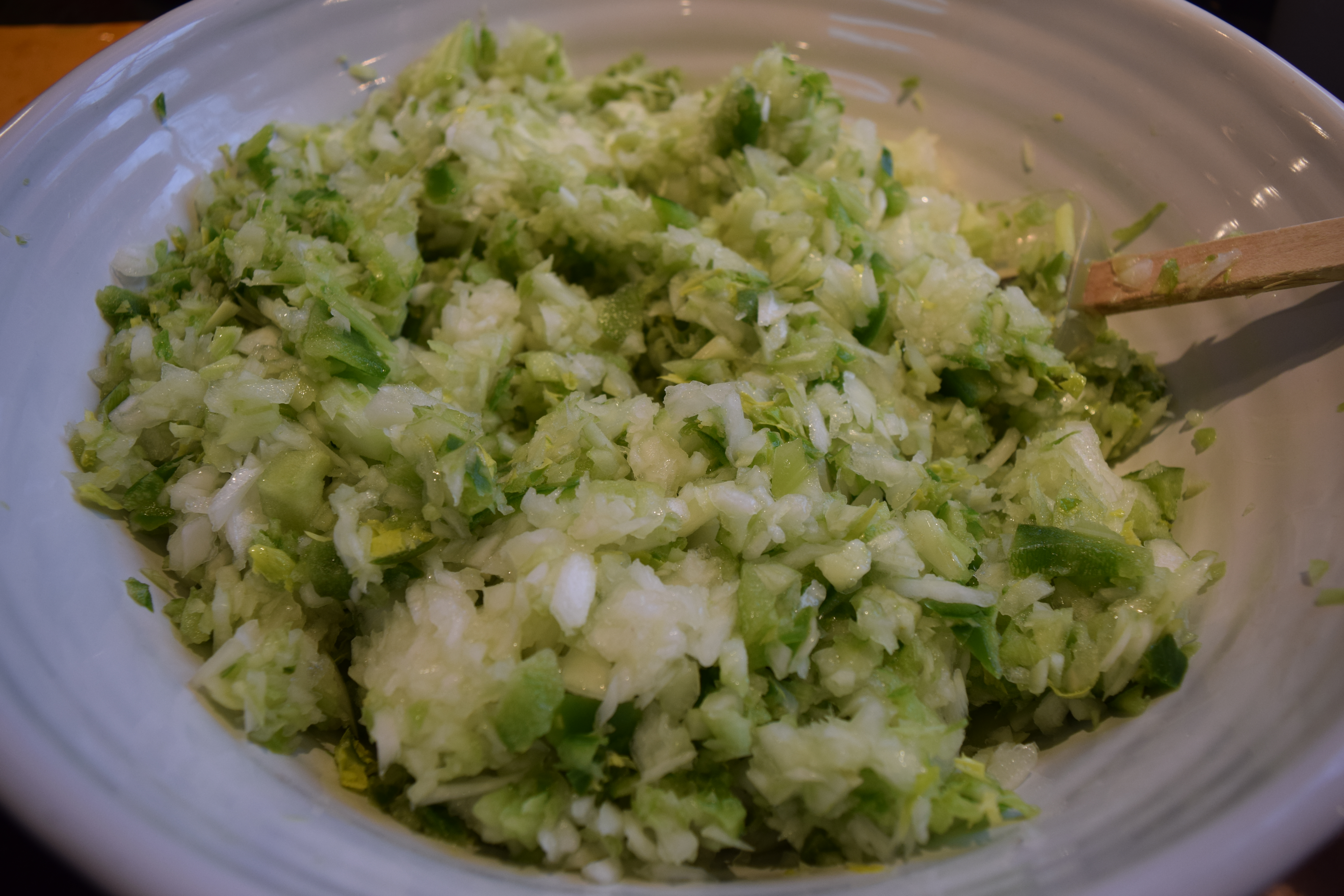
Chop the onions, celery, and green peppers. This is known as the trinity. Add minced garlic, and you have added “the pope.” Add the pope.

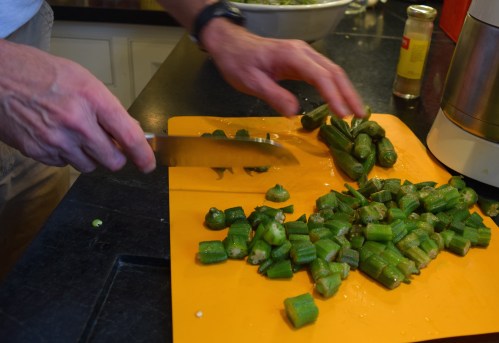
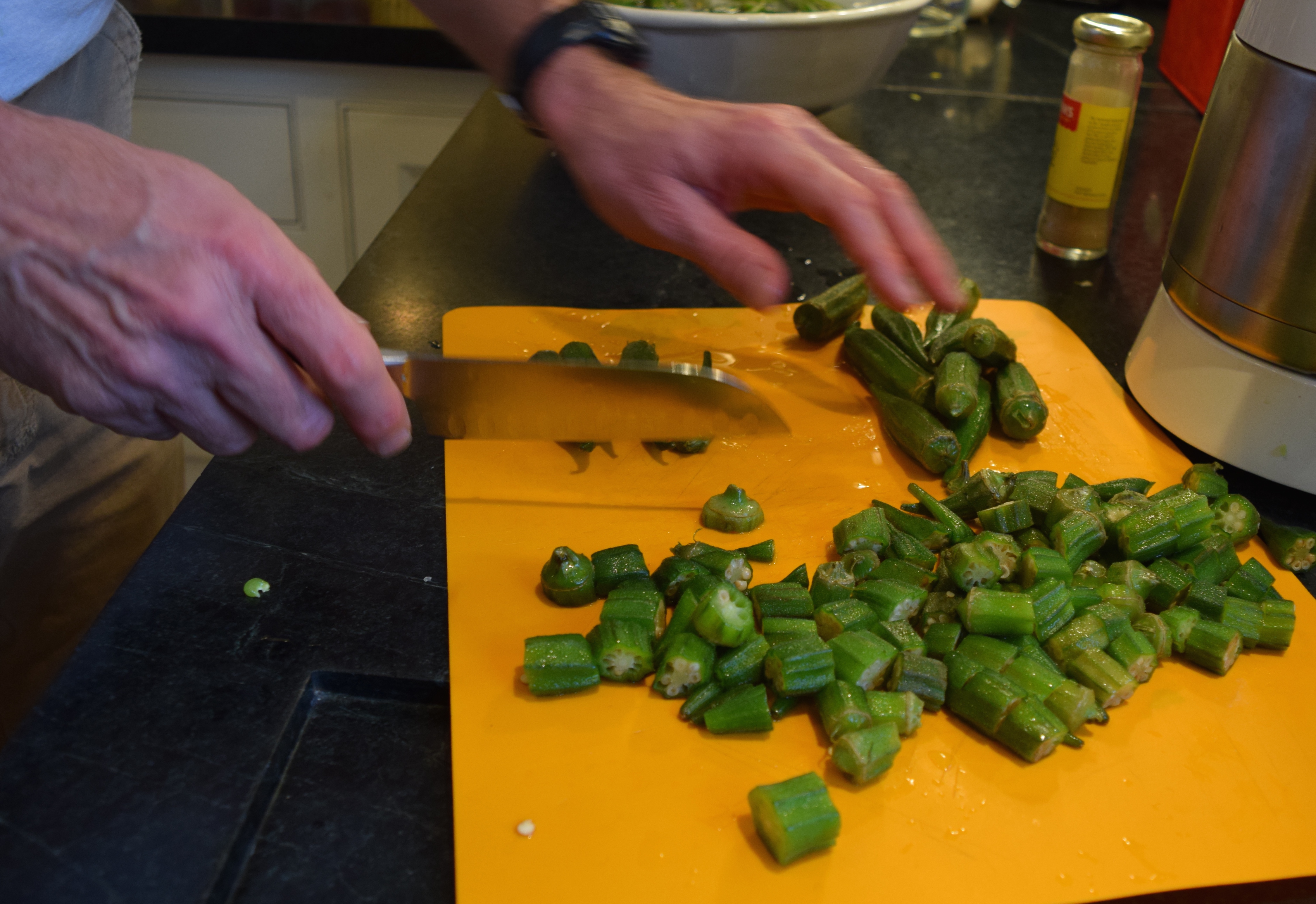
Slice the okra, including the short stem. Bring a pot of water to a boil and blanch okra for 5 minutes. Drain. This helps keep okra from becoming too gooey in the gumbo. Set aside.
Pierce sausage in multiple spots with a fork and place in a shallow pan with boiling water for 5 minutes to release fat. Alternatively, Bruce grills the pierced sausage. Cut into bite-sized slices. Set aside.
Chop turkey into bite-sized pieces. Set aside.

Chop parsley, green onion tops, and tomatoes. Set aside.

Make the Soup:
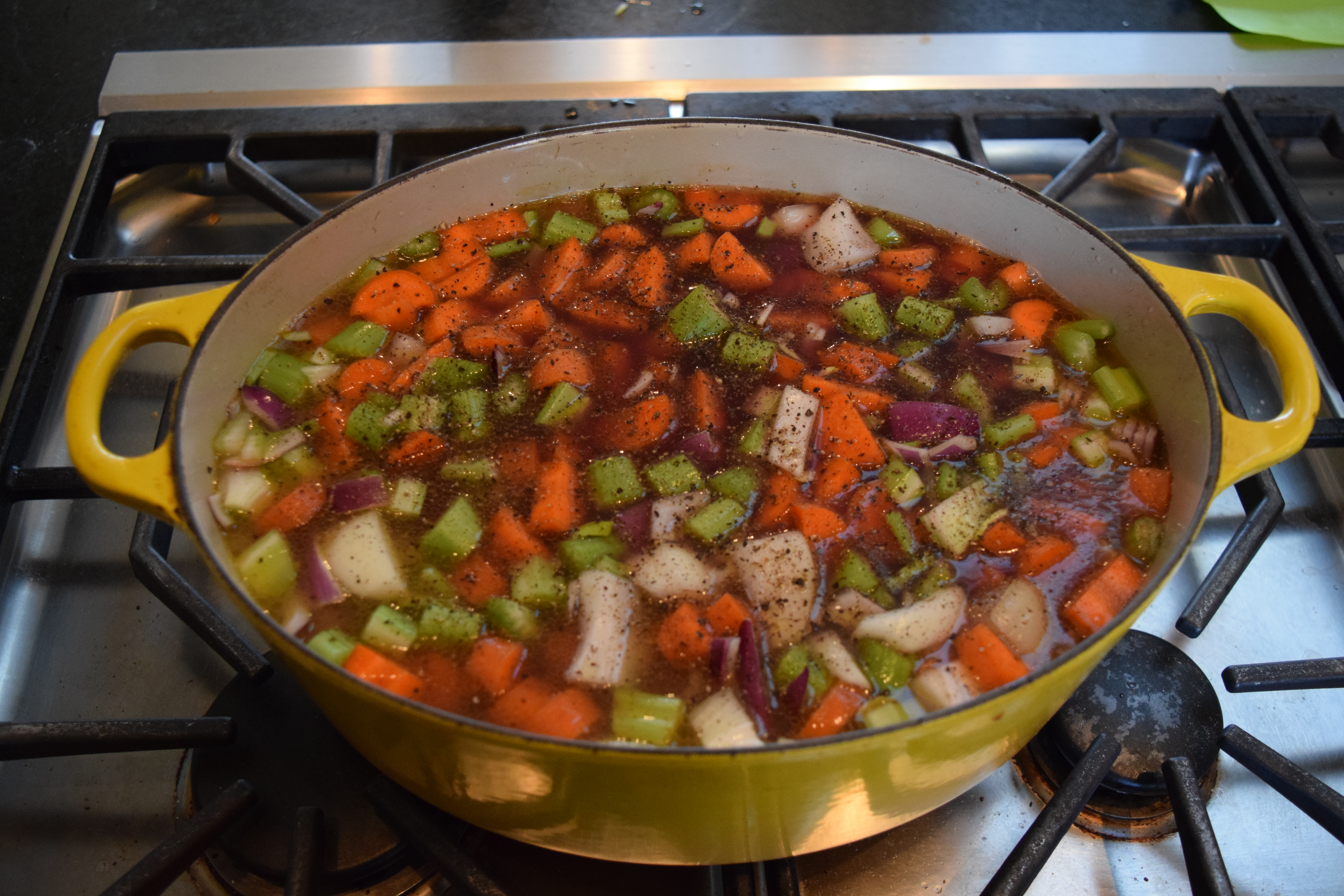
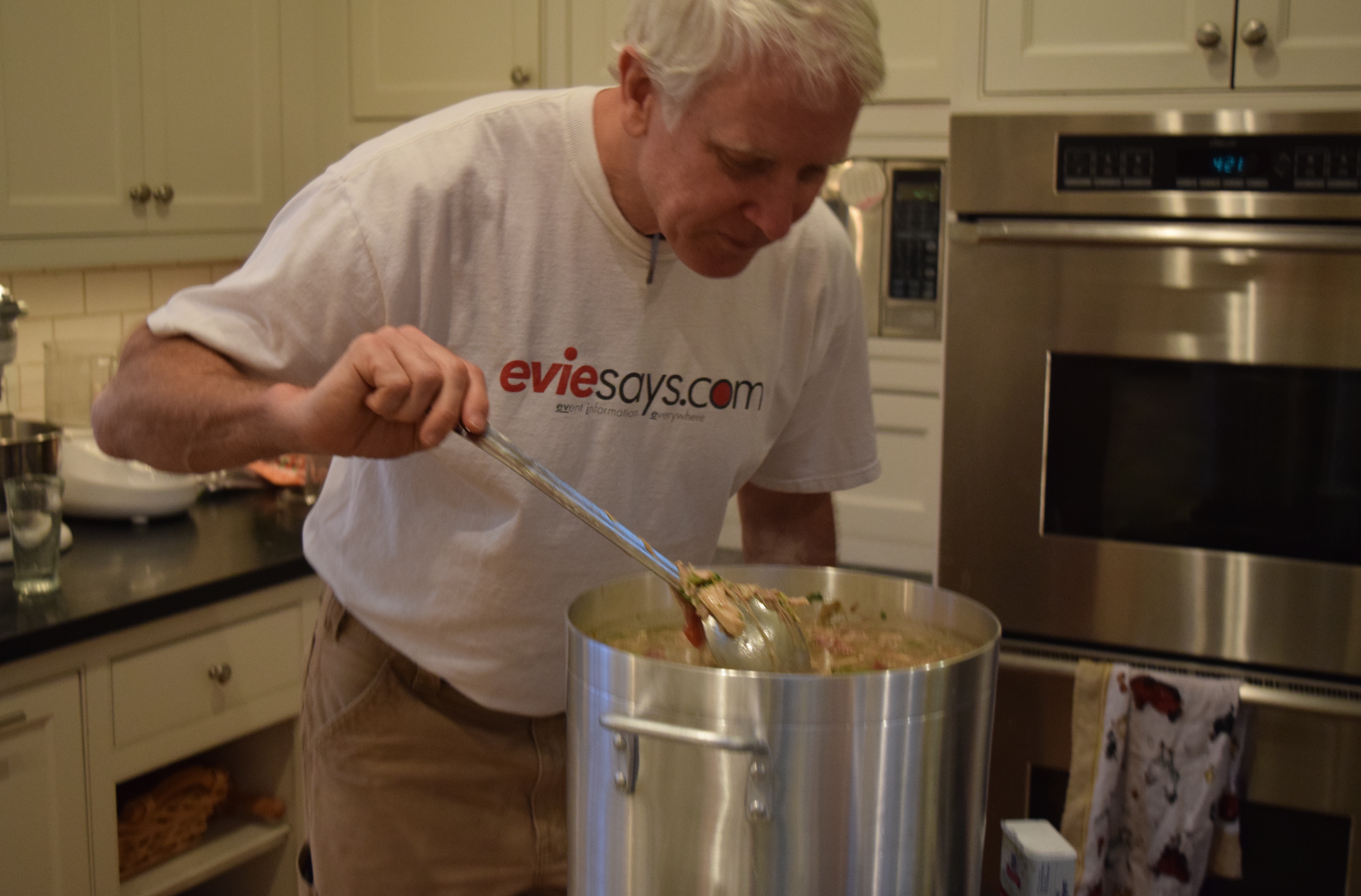
Into a 20-quart stockpot, add olive oil and the chopped onions, celery, sweet peppers, and garlic mixture. Sauté on low heat for 15″ until vegetables are softened. Add the turkey stock, chicken, sausage, okra, parsley, green onion tops, and tomatoes. Turn the heat to medium and let it cook while making the roux.

Making the Roux
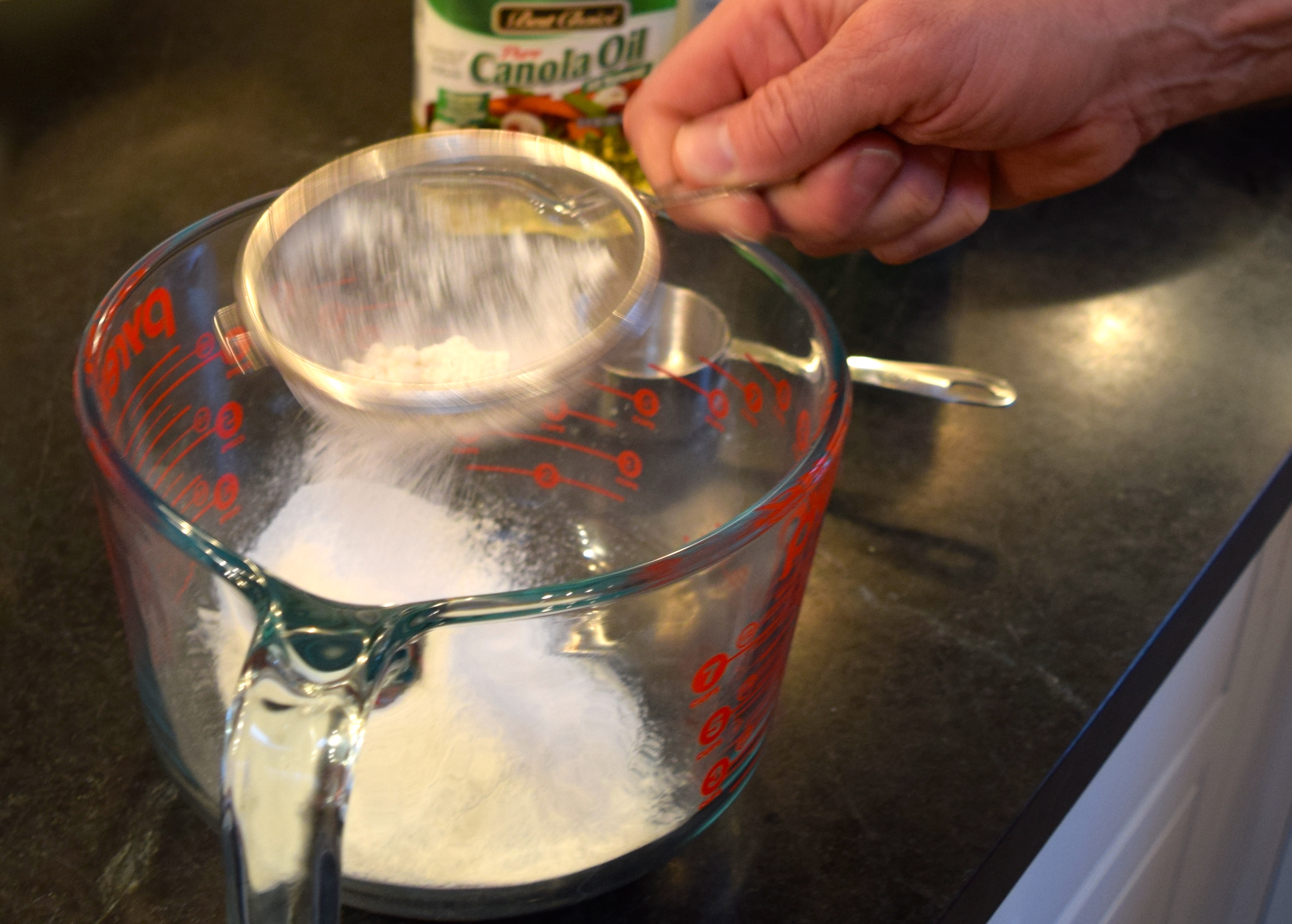
A roux is made with flour and a fat (cooking oil or butter). Use equal parts of fat to flour. There can’t be any lumps, so run the flour through a sieve.
 You cannot rush making a roux; it will take at least 30 minutes on medium-low heat. You cannot leave it; you will need to whisk it for the whole time it cooks. Finally, it is ready when as Bruce says, “It becomes the color of Ronald Reagan’s brown suit,” a nice chocolatey brown.
***Be careful; the mixture is boiling and can cause severe bubbling-type burns on your skin should it spill on you. I never cook it when children are in the vicinity.

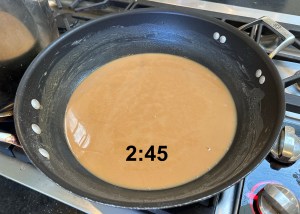
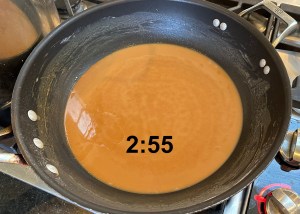



Pour the roux into the gumbo pot. It will sizzle when it touches the soup.
The Seasonings:
Cajun seasonings, take a bow! We used every heat spice except Tony’s Chachere’s Creole Seasoning. I’m not sure how that got in the photo.
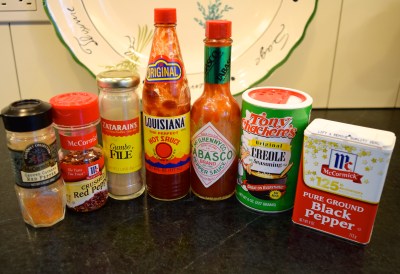
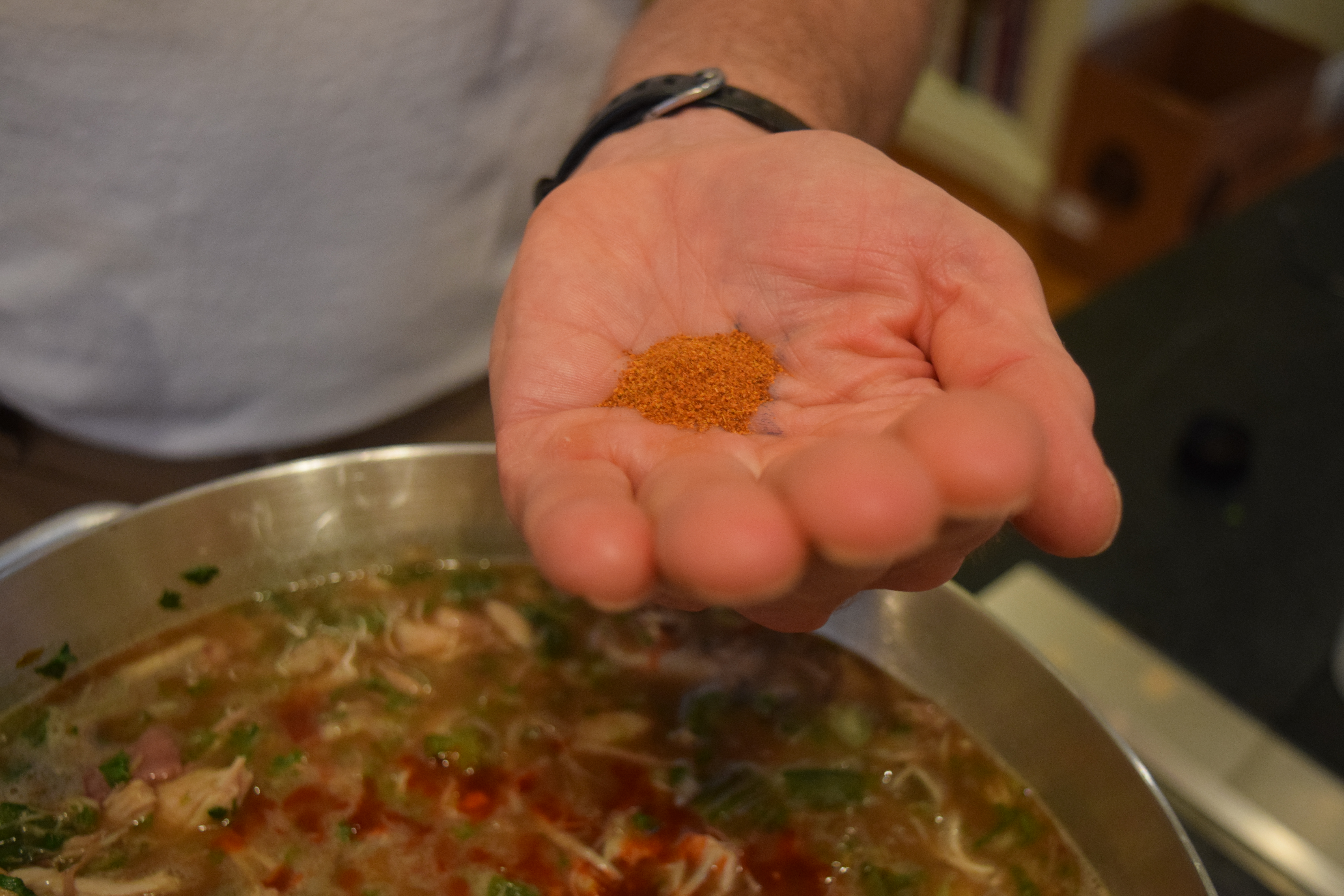
Realizing that adding spices to a dish when unfamiliar with them is daunting, I will show you how much of each seasoning Bruce said.
50 drops of Tabasco sauce and 2 tablespoons of Louisiana Hot Sauce.

1 teaspoon each of cayenne red pepper and crushed red pepper flakes, and 2 tablespoons ground black pepper!

1 tablespoon of gumbo file (ground sassafras used as a thickener)
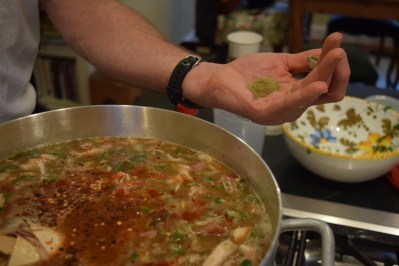
Stir it all together, simmer until bedtime, and wait for the magic to happen.

Here’s Ann cheering the magic on.

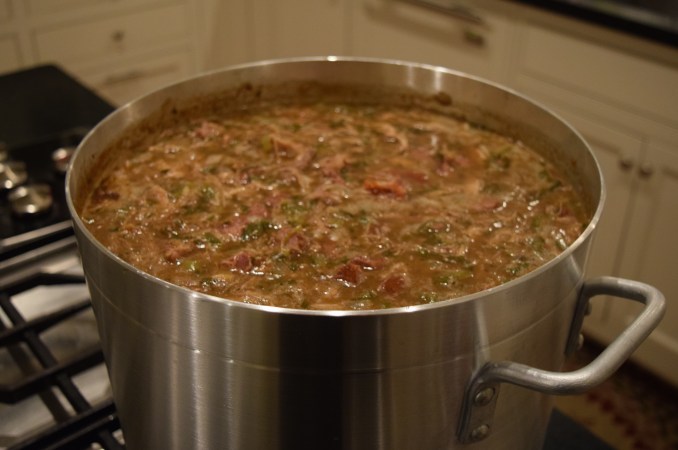
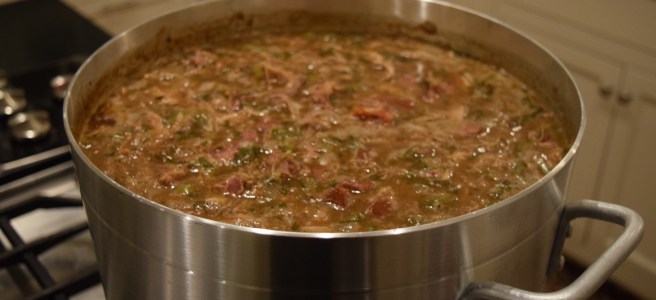
About 5 hours later. After giving all the flavors time to meld, add salt to taste.
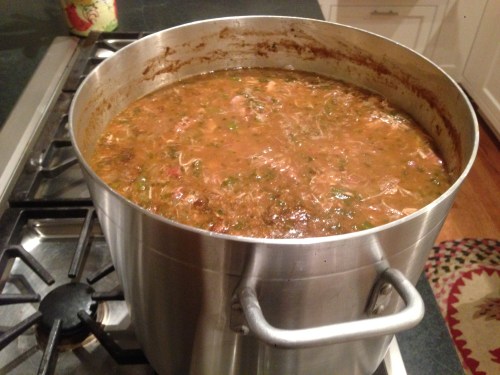
I turned the stove off, put the lid on, and put the gumbo to bed. First thing in the morning, I put the gumbo into containers and stored some in the refrigerator and some in the freezer.
To Serve:
-Serve over rice (not too much– should still be soupy).
-Add fresh chopped green onion or parsley on top.
-Bruce likes to heat it up and add shrimp just before serving.
-Have these three seasonings available for people to season their gumbo per their personal taste: Tabasco (for heat), Louisiana Hot Sauce (for flavor), and red pepper (more heat).
-Gumbo freezes well.
Thanks, Bruce and Ann! It was epic!
P.S. “And I helped!”

















 @judyschickens