Growing Cranberries in Cape Cod

What is not to love about the cranberry?

dsc_0645

The berry’s gorgeous, soothing, deep red color screams, “Hello, holiday cooking, I’m back!”. The raw fruit is acidic and bitter but is easily tamed by simmering in sugar, water, and a few other goodies to make cranberry sauce,

or by baking them in a delicious nutty pie,

or by sugaring the fruit to make a cheery holiday cake.
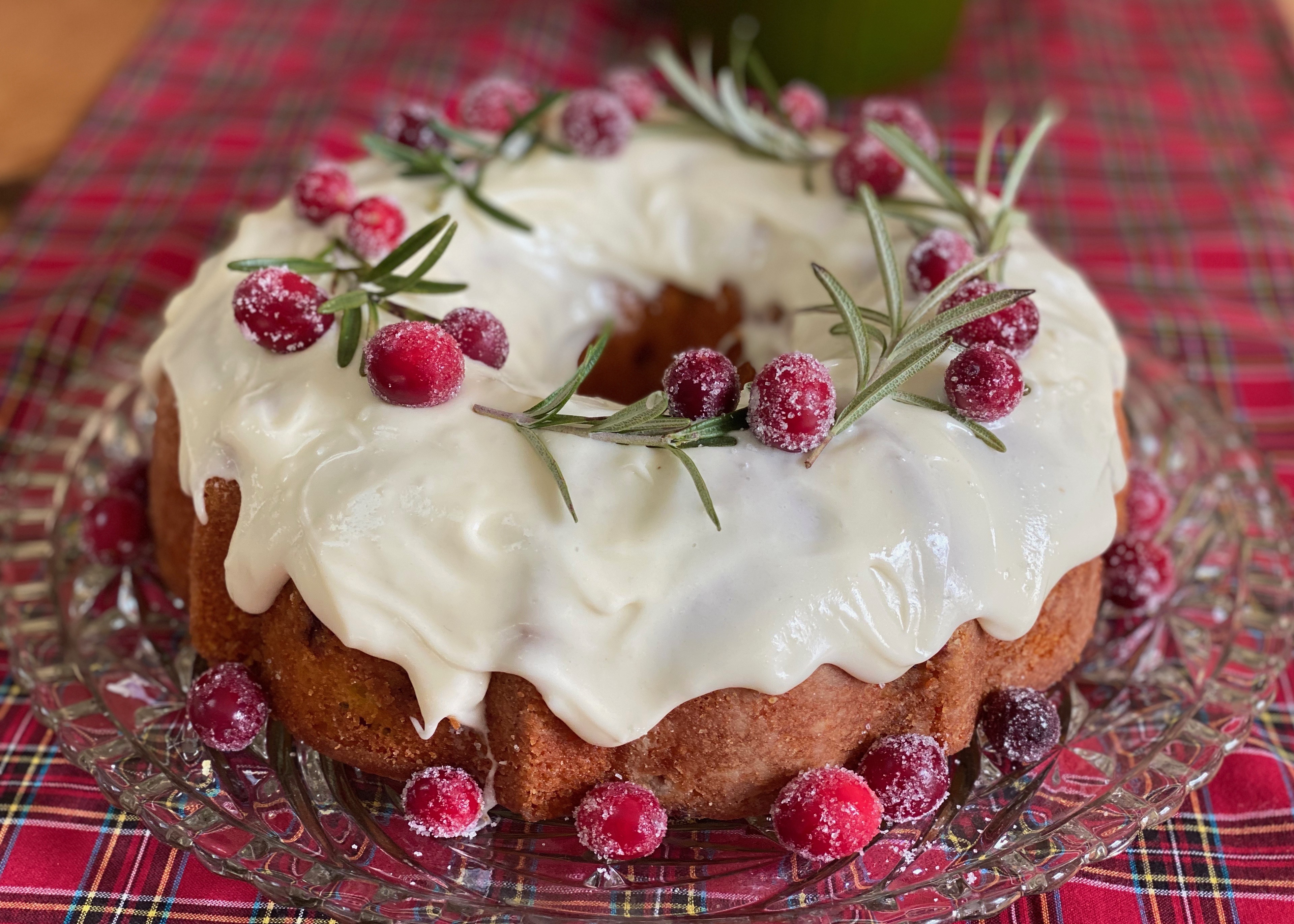
Cranberries always add a distinct zing that makes them an excellent addition to sweet and savory culinary dishes and, many, a pretty cocktail.

My fascination with cranberries began as a child growing up in Southeastern Massachusetts, thirty miles from the Ocean Spray Cranberry House restaurant. My mother and stepdad could not pass that restaurant without stopping for the cranberry and cheese Danish pastries. It must have been the sourness of the cranberries that made my mother crave those pastries while pregnant. She would sweetly ask one of us to drive to Wareham to pick up a few. As teens, we were happy to get in her car and go wherever she asked.

139047dd4f34c79e1

Flowers, Berries, and Bogs

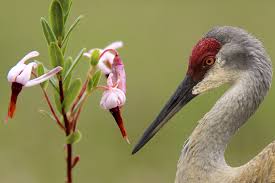
Early New England settlers called the cranberry a crane berry because the fruit’s pink blossom resembled the head and bill of a Sandhill Crane. Thanks to Johnston’s Cranberry Marsh  for letting me use this striking image:
images

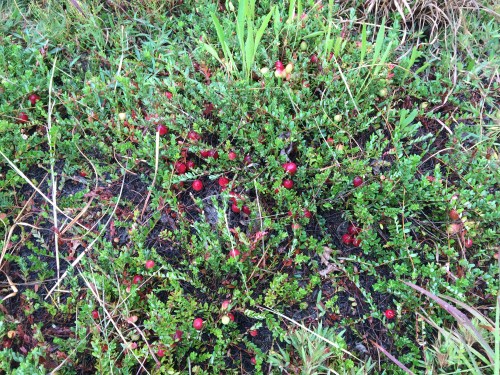
Cranberry fields look like other farmlands along the roadside

img_1629

until late summer when, if you look closely, you will see red berries among the green vines that carpet the ground.
img_1664

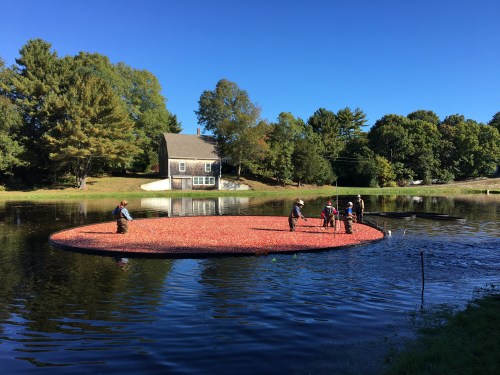
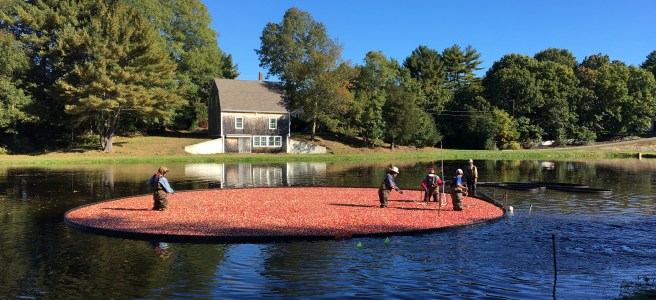
In October, the bogs are flooded, the fields are raked to dislodge the fruit, and the berries float to the surface.
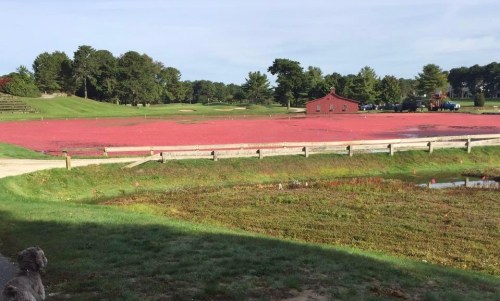
If you dissect a cranberry, you will see four interior chambers filled with seeds and air. These air pockets allow berries to float.

dsc_0071

The same air pockets cause berries to bounce when dropped and to pop when cooked as the air expands. As a middle-schooler taking Home Ec, we were taught to rinse berries in a bowl of water and to discard those that didn’t float.

Horticulturally, cranberry vines are perennials, some of which have been growing for over a hundred years. Cranberry bogs consist of different layers of soil. The first layer is a naturally occurring clay base. It keeps the ground watertight. Next is a layer of gravel for drainage, followed by a layer of spongy, acidic soil called peat, and topped off with sand.

The Harvest

Originally, cranberries were picked by hand. In the 1890s, wooden scoops with built-in screens were invented and replaced hand-picking. My friend Kendra has a marvelous collection of these harvest implements.

img_3714

In the 1920s, a “walk behind” mechanical harvester was invented, which is still used today for the ten percent of cranberries that are “dry-harvested.” These carefully handled cranberries are packaged in bags and sold for baking. By the way, if you are making a recipe written before 1980 that calls for “one bag of cranberries,” they mean a 16-ounce bag. In 1980, Ocean Spray switched to 12-ounce bags after a cranberry shortage. Regarding weights and measurements, a 12-ounce bag has 3½ cups of berries.

In 1960, a “wet harvesting” machine was invented. It required a foot of water to be piped into a bog to flood it.
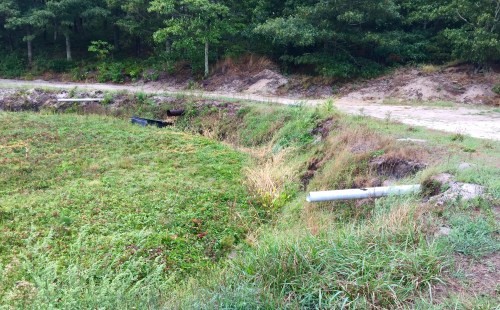
img_1654

Once flooded, a wet harvesting machine crawls over the field and dislodges berries from their vines, allowing them to float to the surface

img_5120

where they can be corralled.

img_6101

Next, they are “vacuumed” by growers.
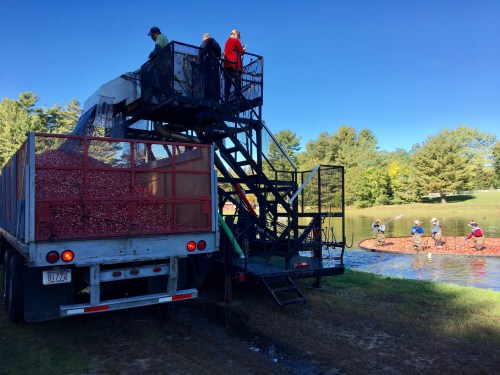
img_1533

Ninety percent of cranberries used for juices, dried cranberries, and canned sauces are harvested in this manner.
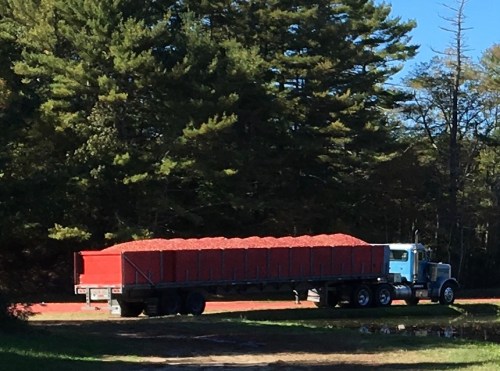
img_4213

I am indebted to Minda Bradley for photos of her family harvesting cranberries in Kingston, MA.

Sometimes, water is piped in before a winter freeze to protect vines from the cold. As the warm weather arrives, growers drain the fields to allow vines to come out of dormancy and begin their next growing season.

Cranberry plants were traded by early colonists in exchange for goods from Europe. Sailors ate the high in vitamin C berries while crossing the sea to prevent scurvy. The plants were eventually transplanted to Europe, but soil conditions were not the same, resulting in a different acid level and flavor. Lingonberry or English moss berries are examples of the European version of cranberries.

Ocean Spray Cranberries

Grower-owned Ocean Spray is a cooperative of over 700 farming families across North America who grow over 60% of the world’s cranberries. The cooperative was started in the 1930s in Wareham, MA. It is a treat to stumble on one of these old weathered Ocean Spray signs nestled on the side of the road in Cape Cod.

img_1657

I tried to root a cranberry vine. but I wasn’t successful. Still, I was able to admire it on my windowsill for a few weeks.
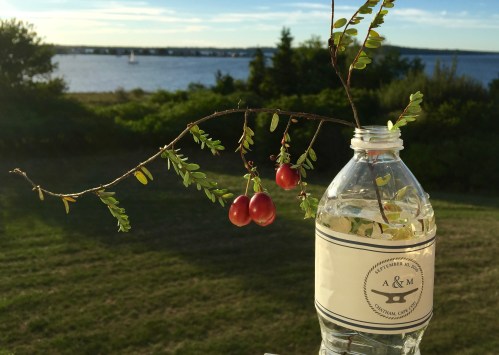
img_1710

 Cranberry Recipes from Judy’s Chickens Blog!

A Cake for All Seasons


DSC_0224Mrs. Walker’s Cranberry Nut Pie

textSorghum Oatmeal Cookies with Ginger and Cranberries


DSC_0421

Sorghum, Oats, and Cranberry Granola


Meera’s Arugula, Feta, Dried Cherry (or Cranberry) Salad with Toasted Almonds


Roasted Butternut Squash, Brussels Sprouts, and Cranberries


Special thanks to my New England friends, Donna and Charlie Gibson, and Beth Hayes, for help with this story.

LET’S STAY CONNECTED!

Follow my photos of vegetables growing, backyard chickens hanging out, and dinner preparations on Instagram at JudysChickens.

Never miss a post: sign up to become a blog follower.

© 2014-2022 Judy Wright. All rights reserved. Photos and text may only be used with written consent.

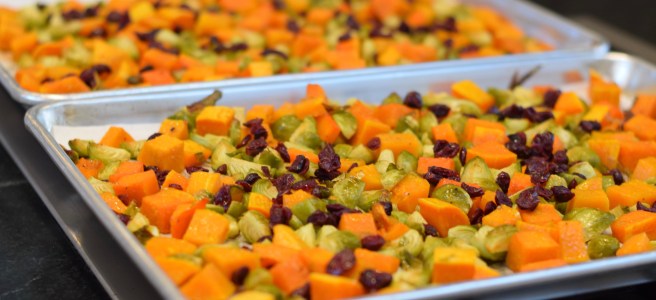
Roasted Butternut Squash, Brussels Sprouts, and Cranberries

I can not get enough of sweet, roasted chunks of butternut squash in the fall. I like to keep a whole cooked squash in the fridge to use in salads where the bright orange squash chunks take the place of tomatoes, or for use in warm, hearty grain salads made with onions, peppers, kale, and farro. Recently, I picked up a few butternut squashes and Brussels sprouts at a farmstand and roasted them with olive oil, salt, and garlic pepper.  When they came out of the oven, I sprinkled them with dried cranberries and a drizzle of sorghum syrup. The result was as colorful as it was yummy.
dsc_0481

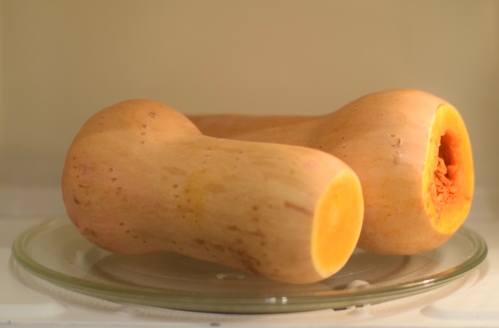
Prepping butternut squash can be a challenge. The shell is hard to peel, and it feels like you are risking life and limb when you try to cut into one. I make a shudder/squirm movement everytime I make that first cut as I try to shake off the image of me lopping off one of my fingers. Here is a cooking tip, so none of us will ever have to face that scenario, microwave the squash for a few minutes to soften the shell and then peel and slice it. To do this, cut the tips off of each end of the squash, scoop out the seeds with a spoon, pierce the squash up and down its length with a fork, and microwave for three to five minutes depending on whether the squash is cold or at room temperature.
dsc_0689

The Recipe
Yield: makes 8-9 cups

Ingredients:
dsc_0396

2 pounds Brussels sprouts, stem trimmed and quartered
4 pounds butternut squash, peeled, seeded, and cubed
⅓ cup extra virgin olive oil
1 teaspoon sea salt
1 teaspoon McCormick’s Garlic Pepper
⅔ cup dried cranberries
2 heaping tablespoons sorghum syrup or honey

Instructions:
Preheat oven to 400º

Prep Brussels sprouts: wash, dry, trim the stem, and quarter lengthwise.
dsc_0414

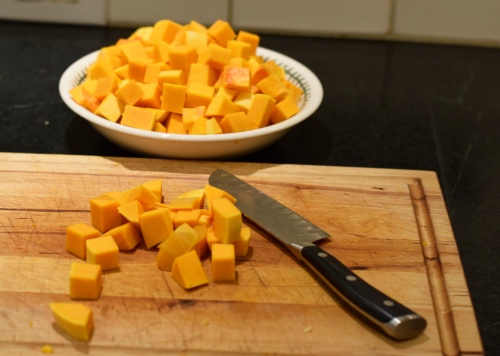
Prep butternut squash. Microwave to soften shell and then peel, slice into discs, and dice into bite-sized pieces.
dsc_0432

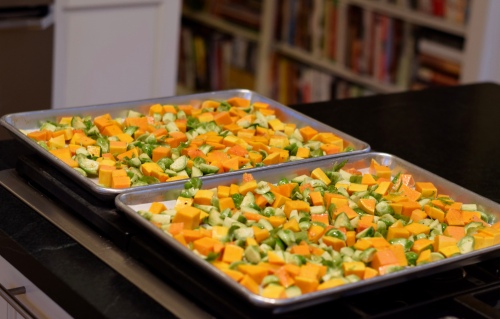
Toss butternut squash, Brussels sprouts, olive oil, salt, and garlic pepper in a bowl. Spread into two parchment-lined, rimmed baking sheets.
dsc_0707

Roast for 20 minutes and then rotate pans on oven racks. Cook until done, about 20 minutes more. Remove pans from oven and immediately add about a third of a cup of cranberries and a heaping tablespoon of sorghum (or honey) to each pan. Stir together in a bowl and serve.
dsc_0722

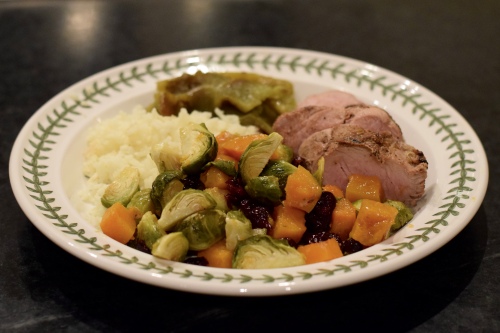
Here it is served with Brooks’s recipe for Pork Tenderloin and Perfect Rice Every Time!

dsc_0494

Favorite Fall Desserts
Marion’s Crazy Good Pumpkin Bread with Chocolate Chips
Mom’s Pumpkin Pie
Mom’s Apple Pie with a Cheddar Streusel Topping
Mrs. Walker’s Cranberry Nut Pie
Pumpkin Cheesecake Pie
Pumpkin Bread Pudding with Caramel Sauce and Whipped Cream

Always check the website for the most current version of a recipe.

© 2014-2018 Judy Wright. All rights reserved. Photos and text may only be used with written consent.

Grandma’s Cranberry Chutney

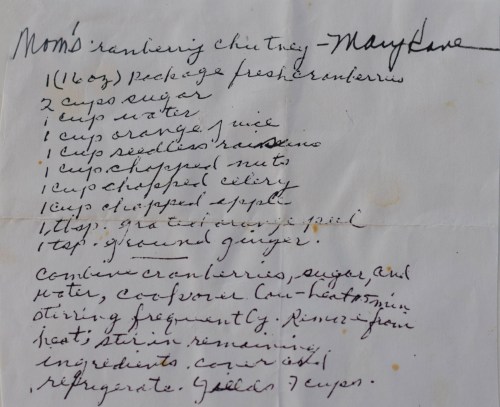
My mother’s mother, Marion, was one of my heroes. She was beautiful, loving, a fabulous seamstress and knitter, a talented cook, and she called me Darling. When I spent the night at her house, I awoke to her sound in the kitchen fixing breakfast and emptying the dishwasher, sounds that indicated all was well in the world. She would set the breakfast table with pink and white china, and in a matching shallow bowl, there would always be a sectioned grapefruit from my grandparents’ grove. It was one of the many ways she used food to express her love for us.

Holidays were her favorite time of the year to cook. Many of the traditional recipes our family shares come from her recipe stash, especially if cranberries or mangoes are involved. Her recipe for cranberry chutney is my all-time favorite.
DSC_0424

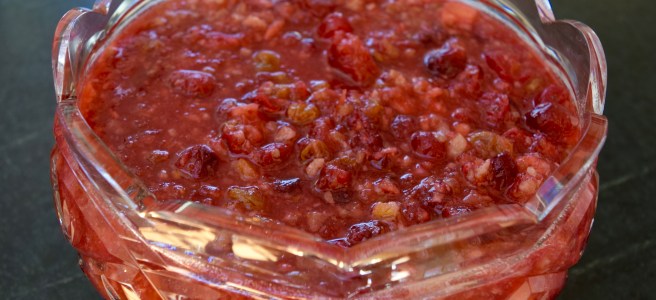
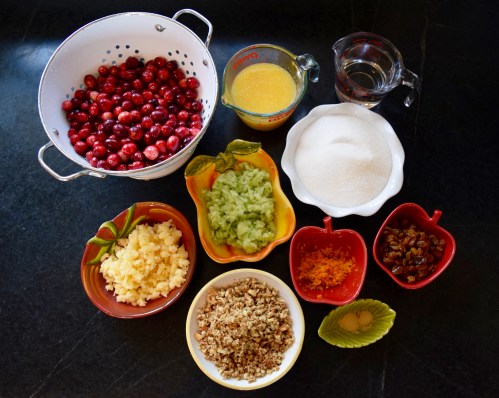
It is not Thanksgiving until I have prepared this layered-with-flavor cranberry chutney made with cranberries, apples, pecans, celery, oranges, raisins, and ground ginger.
DSC_0567

Back when Grandma made it, a bag of cranberries weighed 16 ounces, not the 12 ounces you get today. A representative at Ocean Spray told me they went to 12 ounces in 1980 when there was a shortage of cranberries. This is good info to know if you are using a pre-1980 recipe that says to “add a bag of cranberries.”

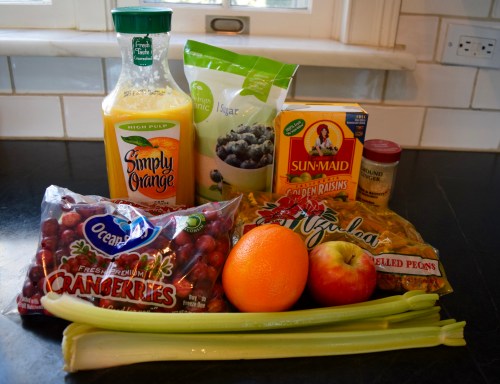
Ingredients:
DSC_0544
1 pound fresh cranberries (4½-5 cups), discard any that are shriveled
2 cups granulated sugar
1 cup water
1 cup orange juice
1 cup golden seedless raisins
1 cup chopped celery (4½ ounces or 2 stalks)
1 cup chopped apple, peeled (4 ounces or 1 medium)
1 tablespoon freshly grated orange peel
1 teaspoon ground ginger
1 cup chopped pecans

Instructions:
Prep all the ingredients.
DSC_0557

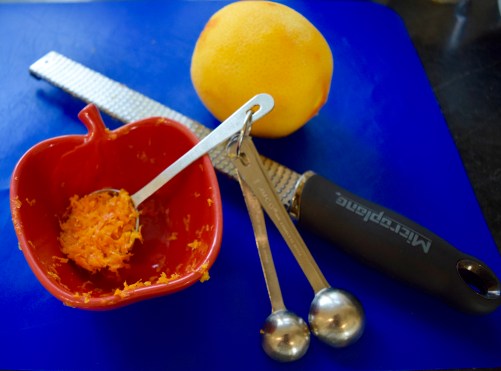
Use a box grater or a Microplane to grate the orange. Be sure to wash the orange well first.
DSC_0008

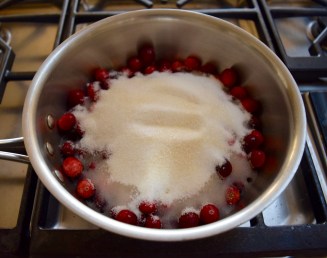
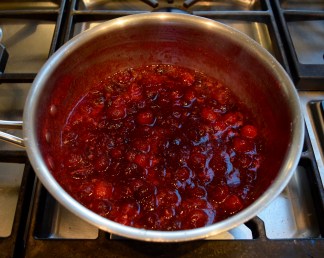
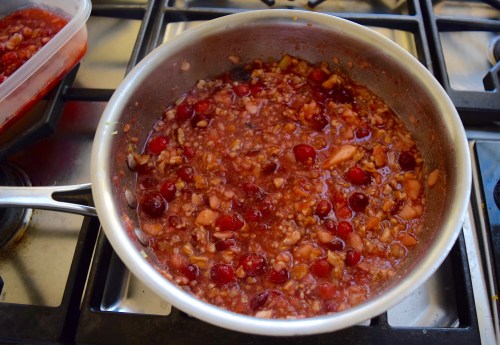
Combine cranberries, sugar, water and orange juice. Listen for the sound of cranberries popping as they heat up and expand in the water. Stir occasionally to help dissolve the sugar. Once cranberries come to a boil, set a timer for 15 minutes and simmer over low heat.
DSC_0589 DSC_0601

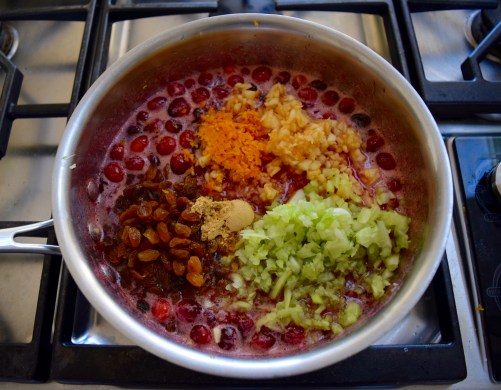
Remove the pot from heat. Stir in remaining ingredients and let sit until thickened.
DSC_0570

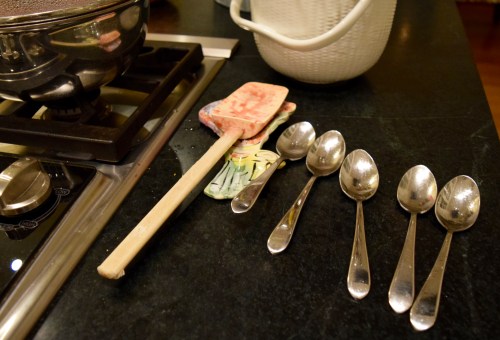
I can’t express how much I love the sweet and tart tastes in this recipe. Instead, I will show you all the tasting spoons I used to try the chutney while it was cooling down!
DSC_0095

Chill until ready to serve. This will last one week in the refrigerator.

I wrote a story about how cranberries are grown and harvested, here.
img_6101

Other Thanksgiving Day Side Dishes We Love:
Melissa’s Sweet Potato Casserole
Roasted Butternut Squash, Brussels Sprouts, and Cranberries
Amazingly Delicious Sautéed Carrots
Auntie Martha’s Spicy Spinach (aka Spinach Madeleine)

Don’t miss a recipe! Become a subscriber and have every post delivered to your Inbox.

Follow Judy’s Chickens on Instagram and Pinterest @JudysChickens.

Remember to always check this website for updated versions of a recipe.  

© 2014-2020 Judy Wright. All rights reserved. Photos, videos, and text may only be reproduced with the written consent of Judy Wright.

Follow my blog with Bloglovin