The Kennedy Bunker, a Cold War Monument in Palm Beach

As I write this, I am sitting in an airport in Fort Lauderdale when I hear an unexpected last call announcement for a flight about to depart for Cuba; the gate is closing. The announcement takes me by surprise, especially on this day, after a most memorable visit to a bomb shelter built for a president and his family in the aftermath of the failed Bay of Pigs invasion when all gates to Cuba were most definitely closed.

The Kennedy Bunker on Peanut Island in Palm Beach County, Florida

This story is about my visit to the Kennedy Bunker, an underground fallout shelter in Florida. The shelter was built in December 1961 before President John F. Kennedy’s visit to Palm Beach for a Christmas holiday with his family. It is a stark reminder of the Cold War. A sister shelter was built in Nantucket.

OLYMPUS DIGITAL CAMERA

I put together this brief, selective, timeline of the historical events surrounding this bunker’s construction. I had to when I read that JFK gave a speech in October 1961 urging all Americans to build bomb shelters in their homes “as rapidly as possible.” Can you imagine such a speech today? There would be pandemonium amplified by a kazillion wireless communication devices.

  • Cold War: approximately 1947-1991
  • January 1, 1959, Cuban Dictator Batista forced out by Castro-led Soviet-supported Communist revolution.
  • January 3, 1961: President Eisenhower severed diplomatic relations with Cuba.
  • 1961: Commercial airline flights to Cuba ceased.
  • April 17-19, 1961: The Bay of Pigs
  • October 6, 1961: The President gave a speech urging all Americans to build a fallout shelter in their home because of the risk of a nuclear war with the Soviet Union.
  • December 1961: Navy Seabees (the Naval Construction Force) built Kennedy bunker under the direction of the Secret Service.
  • July 1962: Soviet and Cuban leaders (Khrushchev and Castro) agreed to place nuclear missiles in Cuba and construction of missile launch facilities began.
  • October 14-28, 1962: The Cuban Missile Crisis
  • October 28, 1962: Khrushchev orders withdrawal of missiles from Cuba
  • Aug 31, 2016:  Resumption of regular commercial flights to Cuba out of the U.S.

The Bunker Tour

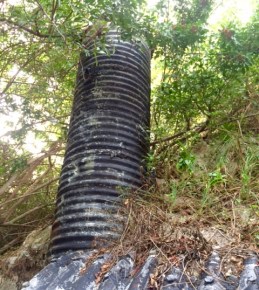
The bunker entryway was built into the hillside and covered with twelve feet of bags of concrete mix and dirt. It was meant to be a radiation proof safe haven for the President from which JFK and his entourage could lead the country.

img_3307

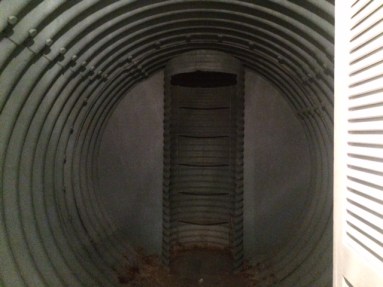
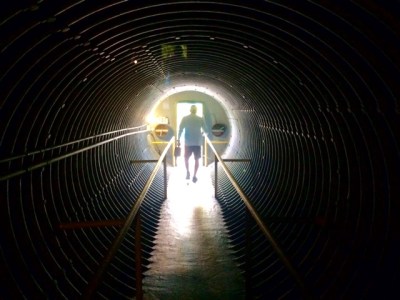
As I walked into the dimly lit 40-foot long corrugated steel tunnel, I was immediately struck by a twilight zoney sense of the reality of a tense time in our geopolitical history.
img_3361

I had a flashback to 1962 when as a kindergartner in Baltimore, only forty miles from Washington D.C., we practiced Duck and Cover drills in the classroom.

As children, we knew, sort of, what this sign on public buildings meant.

fsbigaa

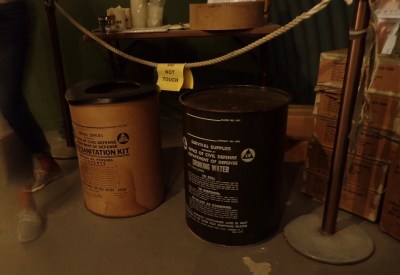
I’ve since learned the six black and gold triangles depicted in the sign stood for shielding from radiation, food and water, trained leadership, medical supplies, communication, radiological monitoring, all focused jobs of the Office of Civil Defense.

Some of the mechanicals in this Peanut Island shelter:  a generator and an air handler.

img_3359  img_3311

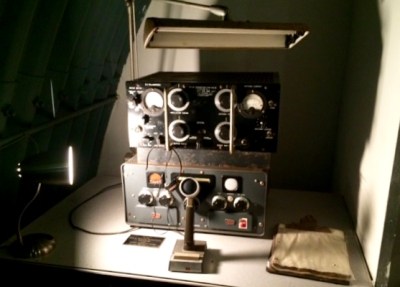
A  ham radio, also known as amateur radio.
img_3357

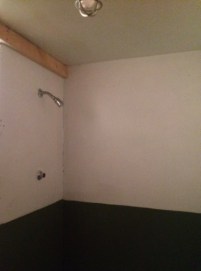
Before taking two 90-degree turns to get to the living quarters, one would do a radiation check. If you tested positive, you rinsed off in the decontamination shower before proceeding. I had a vague memory that radiation couldn’t turn corners, so entranceways to bomb shelters always include a maze of concrete walls through which to navigate. If you had a bomb shelter in your home while growing up, please tell us about it in the comments section.

img_3313 img_3317

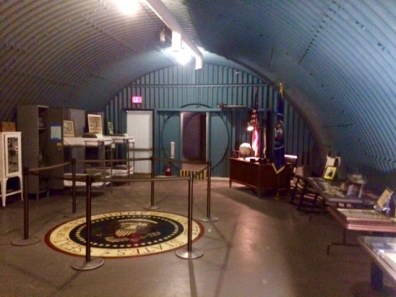
The living quarters. Walking into this room blew my mind. The artifacts, some original, some not quite accurate for the time period, instantly put the gravity of the Cold War into perspective.

Note to viewers: as striking as it is, I’ve read the presidential seal on the floor was not original to this bunker.
img_3318

Another view of this room from a fellow traveler, photographer Kay Ohto who kindly allowed me to use his photos for this post. Assume that all the good photos were taken by him. He understood how to shoot photos in minimal lighting.

OLYMPUS DIGITAL CAMERA

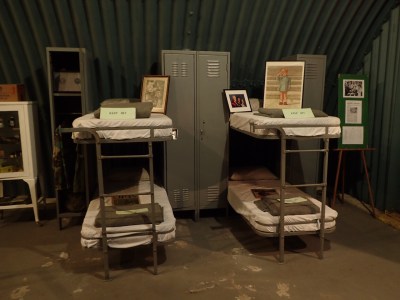
Bunk beds and lockers for the family and entourage. Originally, there were 15 sets of bunk beds.
OLYMPUS DIGITAL CAMERA

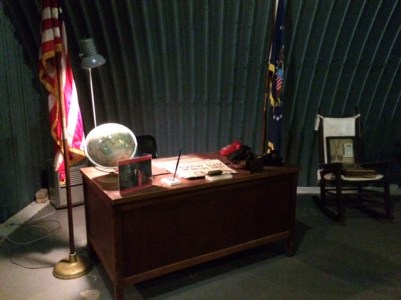
An army-issued desk and chair. Most of the items on the desk are not original.

OLYMPUS DIGITAL CAMERA

Here is another view. BTW, the red phone, aka “the hotline,” is just a prop. There was a direct line between Washington and the Kremlin, but it was through a teletype. The red phone only happened in the movies.

Thinking about movies, if you want a refresher course on The Cuban Missile Crisis, watch Thirteen Days. My husband and I just watched it and literally sat on the edge of our seats throughout most of the second half. It was JFK’s finest hour.
img_3324

The kitchenette with lead-lined containers of water and boxes of MRE’s, Meal Ready to Eat.
img_1646

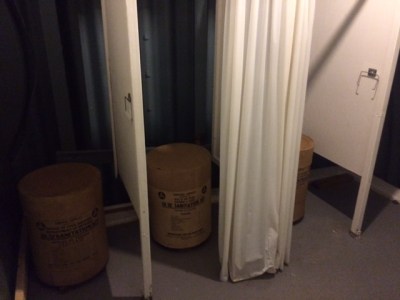
Bathroom stalls with portable plastic-lined commodes — barrels with toilet seats placed on top.
img_3329

There was an escape hatch, too.

img_3343 img_3341

The escape tube pictured above was originally surrounded by bags of concrete similar to this cross-section of ground-fill that covered the bunker.

img_3342

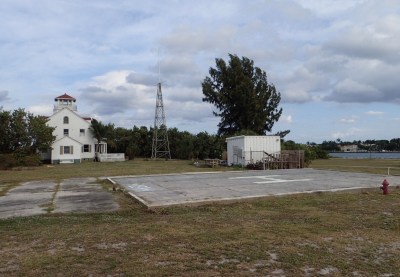
The President would have been flown by helicopter from his winter residence on Palm Beach Island to the helipad on this island. To get onto the island today, you need to take a water taxi, private boat, or kayak.
OLYMPUS DIGITAL CAMERA

A map showing the location of the fallout shelter located on Nantucket Island for use when the President was vacationing in Hyannisport, MA. This bunker is not open to the public.

img_3333

The Peanut Island Bunker is located in a public park. We got to the island with a very safe kayaking outfit with excellent guides, arranged for us by our hotel concierge, through The Palm Beach Maritime Museum.

img_1641

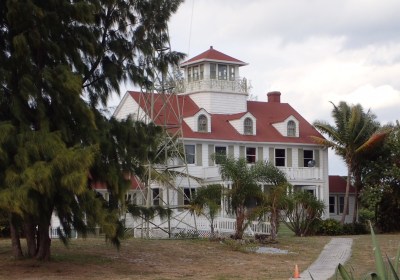
There is also a decommissioned U.S. Coast Guard Station on the Island. During the Cold War, if locals asked about the bunker, they were told it was an ammunition depot for this Coast Guard station.
img_1650

I’d also like to recommend a fabulous historical and cultural bike tour of Palm Beach Island with Leslie Diver of Island Living, Palm Beach. I’ve done her tour twice and have learned something new each time.

LET’S STAY CONNECTED!

Follow my photos of vegetables growing, backyard chickens hanging out, and dinner preparations on Instagram at JudysChickens.

Never miss a post: sign up to become a follower of the Blog.

© 2014-2017 Judy Wright. All rights reserved. Photos and text may only be used with written consent.

Crunchy Roasted Tamari Almonds

I love these salty, crunchy protein-rich almonds and the best news is they are a cinch to make. I start with a large bag of whole, unsalted almonds, toss them with tamari soy sauce, add a few shakes of cayenne pepper, and then slowly roast them in the oven.

dsc_0918

Tamari is a refined version of soy sauce known for its smooth and earthy taste. The primary ingredient in soy sauce is soybeans. I realize you probably know this, but have you ever wondered how soy sauce is made?

How Chinese soy sauce is made:
1. Dried soybeans are soaked and cooked in a vat of water.
2. Oven-roasted cracked wheat kernels are then mixed into the vat of cooked soybeans. Yeast is added to start a fermentation process.
3. Salt water is added, the ingredients are mixed together, and the mash is poured into a wooden barrel to ferment for a  year.
5. When sufficiently brewed, the mash is placed in a cloth sack and pressed to yield soy sauce.

Tamari, the Japanese version of soy sauce, is also made from fermented soybeans, but little or no wheat is used. Thus, tamari is typically a gluten-free product. The brown fermented mash in this version is known as miso. The high protein miso, also known as a fermented soybean paste, is pressed, as well, to yield tamari.

How are soybeans grown?
I’ve been waiting for an opportunity to write about how soybeans are grown for a long time, as they are a common sight to see along Kentucky backroads.

In mid-June, I saw a planter truck drill a hole into the ground and drop a seed between the rows of stubble left behind from the just harvested winter wheat. By this I mean, the planter truck followed directly in the tire tracks of the harvester truck; crop harvesting and new-crop planting in the same afternoon. Check out this post if you want to learn the difference between a planter, a combine, a harvester, and a grain truck.

dsc_0925 dsc_0923

A soybean field in early September.

dsc_0114

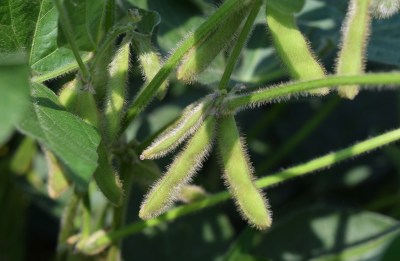
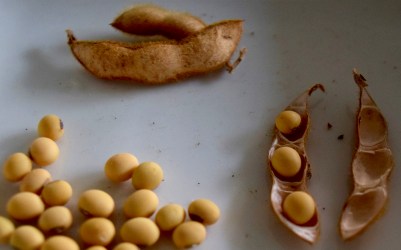
Soybean pods up close and personal.

dsc_0123

Soybeans, with their golden color, are usually the last crop standing in the fall.

dsc_0316

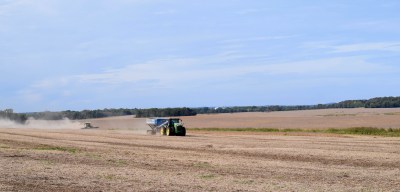
As the number of daylight hours wanes, the combine and grain cart get ready for one last call of duty before the close of the year’s farming season. I’m always a little sad when the growing season is over.

dsc_0305

Dried soybean pods after an October harvest.

dsc_0301

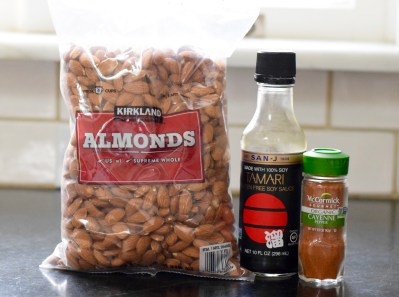
Ingredients for  Tamari Almonds:
dsc_0148

3-pound bag of unsalted whole almonds
⅓ cup Tamari Soy Sauce (look in Asian section of grocery store)
2-4 shakes of cayenne pepper, depending on how much heat you like (optional)

Instructions:
Preheat oven to 200º.
Line two rimmed baking pans with parchment paper.

In a medium-sized bowl, mix together almonds and tamari. Be sure to shake the bottle of tamari first. Add a few shakes of cayenne pepper and mix well.

dsc_0176

Divide coated almonds evenly between the two large and lined baking pans.

dsc_0820

Every 30 minutes, remove pans from oven, toss the nuts and return to oven. I rotate the pans in the oven each time I take them out. Nuts should be ready in two hours.

dsc_0803

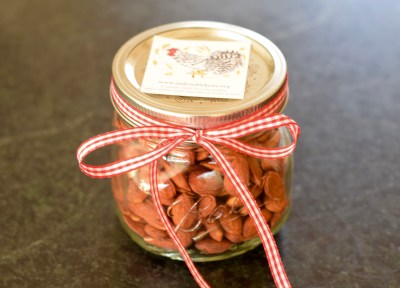
They will be soft when they first come out but will crisp up as they cool down.

dsc_0967

Other appetizers.
“Croatian Cheese” a Flavorful and Exotic Appetizer Made with Feta and Goat Cheese
Auntie Martha’s Spicy Spinach (aka Spinach Madeleine)
Grandma’s Italian Fried Cauliflower
The Classic Pimiento Cheese Sandwich

LET’S STAY CONNECTED!

Follow my photos of vegetables growing, backyard chickens hanging out, and dinner preparations on Instagram at JudysChickens.

Never miss a post: sign up to become a follower of the Blog.

© 2014-2017 Judy Wright. All rights reserved. Photos and text may only be used with written consent.

Growing Cranberries in Cape Cod

What is not to love about the cranberry?

dsc_0645

The berry’s gorgeous, soothing, deep red color screams, “Hello, holiday cooking, I’m back!”. The raw fruit is acidic and bitter but is easily tamed by simmering in sugar, water, and a few other goodies to make cranberry sauce,

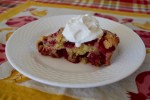
or by baking them in a delicious nutty pie,

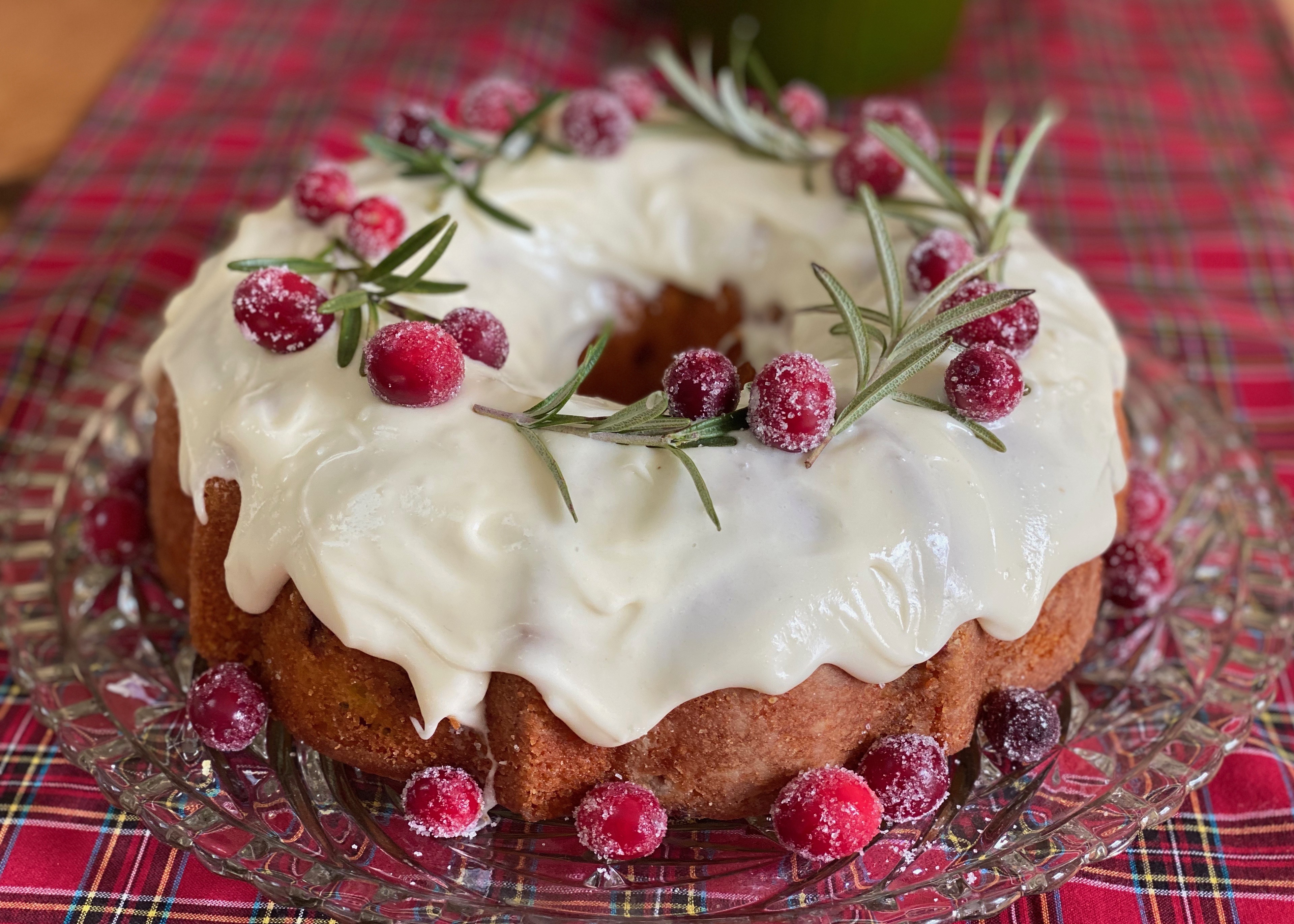
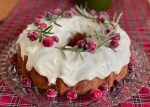
or by sugaring the fruit to make a cheery holiday cake.

Cranberries always add a distinct zing that makes them an excellent addition to sweet and savory culinary dishes and, many, a pretty cocktail.

My fascination with cranberries began as a child growing up in Southeastern Massachusetts, thirty miles from the Ocean Spray Cranberry House restaurant. My mother and stepdad could not pass that restaurant without stopping for the cranberry and cheese Danish pastries. It must have been the sourness of the cranberries that made my mother crave those pastries while pregnant. She would sweetly ask one of us to drive to Wareham to pick up a few. As teens, we were happy to get in her car and go wherever she asked.

139047dd4f34c79e1

Flowers, Berries, and Bogs

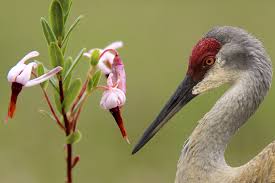
Early New England settlers called the cranberry a crane berry because the fruit’s pink blossom resembled the head and bill of a Sandhill Crane. Thanks to Johnston’s Cranberry Marsh  for letting me use this striking image:

images

Cranberry fields look like other farmlands along the roadside

img_1629

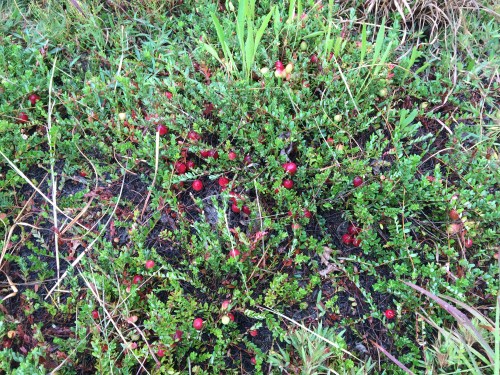
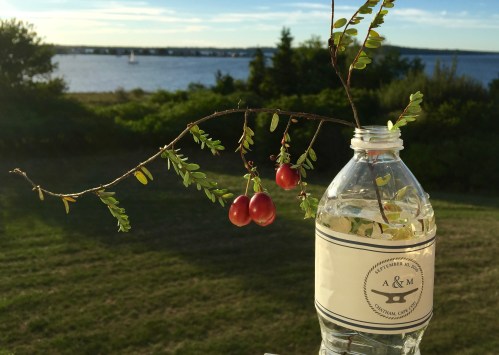
until late summer when, if you look closely, you will see red berries among the green vines that carpet the ground.

img_1664

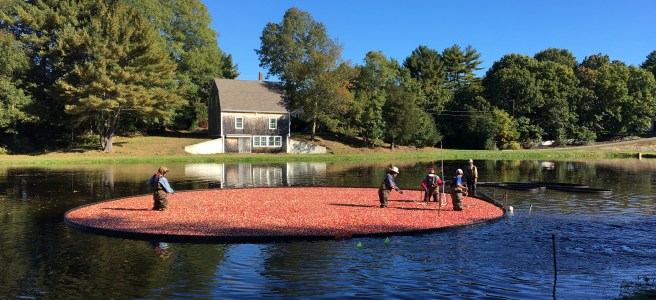
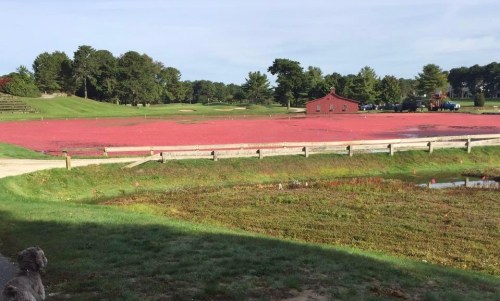
In October, the bogs are flooded, the fields are raked to dislodge the fruit, and the berries float to the surface.

If you dissect a cranberry, you will see four interior chambers filled with seeds and air. These air pockets allow berries to float.

dsc_0071

The same air pockets cause berries to bounce when dropped and to pop when cooked as the air expands. As a middle-schooler taking Home Ec, we were taught to rinse berries in a bowl of water and to discard those that didn’t float.

Horticulturally, cranberry vines are perennials, some of which have been growing for over a hundred years. Cranberry bogs consist of different layers of soil. The first layer is a naturally occurring clay base. It keeps the ground watertight. Next is a layer of gravel for drainage, followed by a layer of spongy, acidic soil called peat, and topped off with sand.

The Harvest

Originally, cranberries were picked by hand. In the 1890s, wooden scoops with built-in screens were invented and replaced hand-picking. My friend Kendra has a marvelous collection of these harvest implements.

img_3714

In the 1920s, a “walk behind” mechanical harvester was invented, which is still used today for the ten percent of cranberries that are “dry-harvested.” These carefully handled cranberries are packaged in bags and sold for baking. By the way, if you are making a recipe written before 1980 that calls for “one bag of cranberries,” they mean a 16-ounce bag. In 1980, Ocean Spray switched to 12-ounce bags after a cranberry shortage. Regarding weights and measurements, a 12-ounce bag has 3½ cups of berries.

In 1960, a “wet harvesting” machine was invented. It required a foot of water to be piped into a bog to flood it.

img_1654

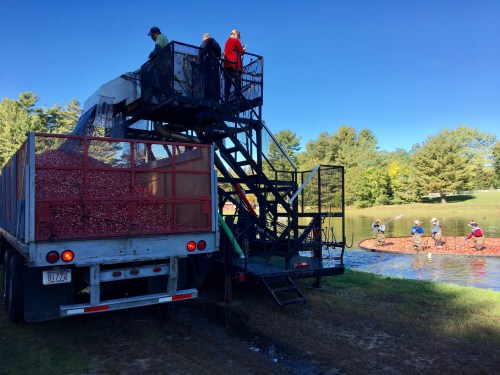
Once flooded, a wet harvesting machine crawls over the field and dislodges berries from their vines, allowing them to float to the surface

img_5120

where they can be corralled.

img_6101

Next, they are “vacuumed” by growers.

img_1533

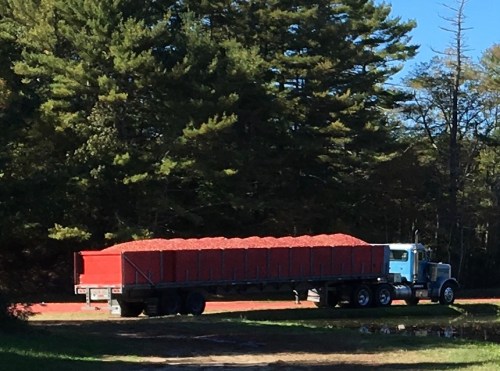
Ninety percent of cranberries used for juices, dried cranberries, and canned sauces are harvested in this manner.

img_4213

I am indebted to Minda Bradley for photos of her family harvesting cranberries in Kingston, MA.

Sometimes, water is piped in before a winter freeze to protect vines from the cold. As the warm weather arrives, growers drain the fields to allow vines to come out of dormancy and begin their next growing season.

Cranberry plants were traded by early colonists in exchange for goods from Europe. Sailors ate the high in vitamin C berries while crossing the sea to prevent scurvy. The plants were eventually transplanted to Europe, but soil conditions were not the same, resulting in a different acid level and flavor. Lingonberry or English moss berries are examples of the European version of cranberries.

Ocean Spray Cranberries

Grower-owned Ocean Spray is a cooperative of over 700 farming families across North America who grow over 60% of the world’s cranberries. The cooperative was started in the 1930s in Wareham, MA. It is a treat to stumble on one of these old weathered Ocean Spray signs nestled on the side of the road in Cape Cod.

img_1657

I tried to root a cranberry vine. but I wasn’t successful. Still, I was able to admire it on my windowsill for a few weeks.

img_1710

 Cranberry Recipes from Judy’s Chickens Blog!

A Cake for All Seasons


DSC_0224Mrs. Walker’s Cranberry Nut Pie

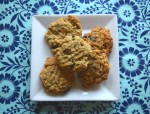
textSorghum Oatmeal Cookies with Ginger and Cranberries


DSC_0421

Sorghum, Oats, and Cranberry Granola


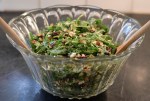
Meera’s Arugula, Feta, Dried Cherry (or Cranberry) Salad with Toasted Almonds


Roasted Butternut Squash, Brussels Sprouts, and Cranberries


Special thanks to my New England friends, Donna and Charlie Gibson, and Beth Hayes, for help with this story.

LET’S STAY CONNECTED!

Follow my photos of vegetables growing, backyard chickens hanging out, and dinner preparations on Instagram at JudysChickens.

Never miss a post: sign up to become a blog follower.

© 2014-2022 Judy Wright. All rights reserved. Photos and text may only be used with written consent.
Auntie Martha’s Spicy Spinach

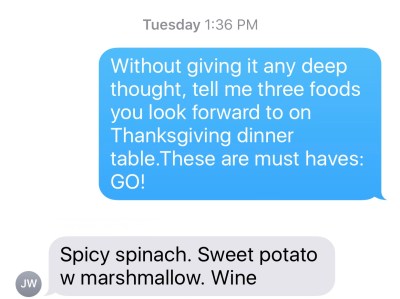
Recently, I sent each of my sons a text asking them to name three foods they HAD to have on Thanksgiving Day. All three responded with Auntie Martha’s Spicy Spinach. I don’t think a recipe can get a better recommendation than that. Meanwhile, my children, adults that they now are, have spoken; it’s time for me to get this time-honored family recipe up on the blog.
img_3072

My sister-in-law, Martha, and her siblings have been enjoying this side dish since they were children. My mother-in-law gave me the recipe when my husband and I married in 1983. I recently learned from Martha and her twin sister, Terry, that the original version was known as Spinach Madeleine, and first appeared in the popular Junior League of Baton Rouge cookbook, River Road Recipes: The Textbook of Louisiana Cooking in 1959. The recipe was created by a woman named Madeline Wright from South Louisiana when she got the idea to squeeze a tube of Kraft’s Jalapeno Cheese into a creamed spinach dish for a luncheon with her bridge friends. It was a hit. She submitted the recipe for the newly conceived River Road Recipes cookbook, and it was an even bigger hit. It has been showing up as an elegant side dish on Southern dining tables ever since.

The main ingredients are spinach and Velveeta cheese. What exactly is Velveeta?  Velveeta is a processed cheese product that when melted is velvety smooth. It was invented in 1923 while a cheese processing plant employees experimented with ways to use up pieces of cheese that broke off of cheese wheels while being trimmed. They mixed the cheese trimmings with whey, a byproduct from cheese-making, and Velveeta was born.

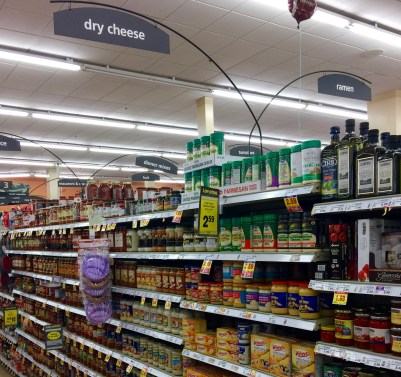
You will not find Velveeta in the refrigerated section of the grocery store. It took me many searches to figure this out. It is in the Dry Cheese section of the grocery store next to the tall, skinny green boxes of grated parmesan cheese.

img_3031

Yield: 3½ cups (very easily doubled or tripled)

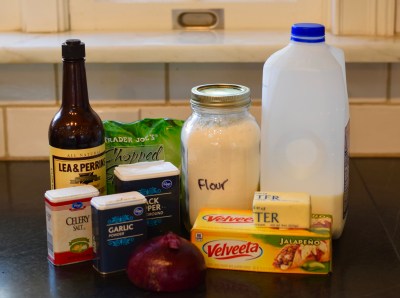
Ingredients:
dsc_0934

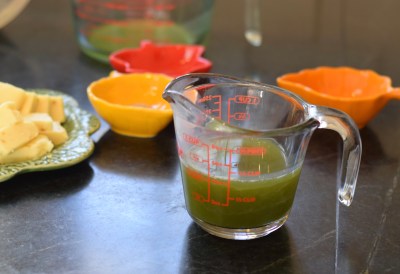
20 ounces frozen chopped spinach, thawed and drained, save liquor
4 tablespoons butter
1 cup (4 ounces) onion, chopped
2 tablespoons all-purpose flour
½ cup milk
½ cup spinach liquor saved from drained spinach
1 teaspoon celery salt
¼ teaspoon ground black pepper
½ teaspoon garlic powder
1 teaspoon Worcestershire sauce
6 ounces Kraft Velveeta Jalapeno Cheese

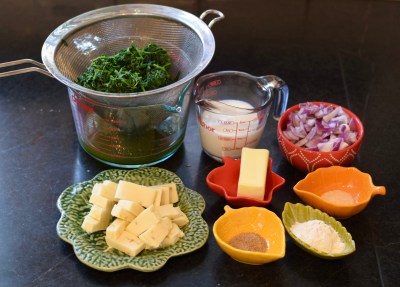
Mise en Place:
dsc_0863

Instructions:

Preheat oven to 350º

Defrost spinach in a sieve over a bowl so you can save the liquid that drains out. It should amount to a half a cup. You could use three pounds of fresh spinach, sautéed in butter for the frozen spinach and substitute chicken broth for the spinach liquor.

dsc_0875

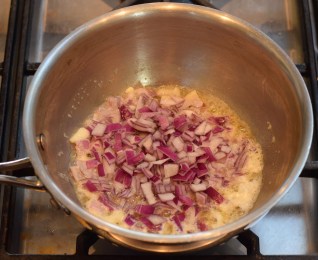
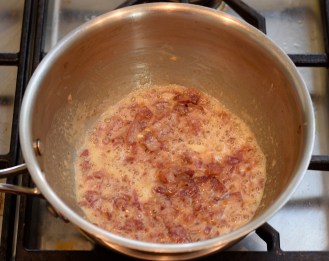
Melt butter in a saucepan. Add onions and sauté for 10 minutes over low heat. Stir in flour and cook for 2 more minutes.
dsc_0864 dsc_0872

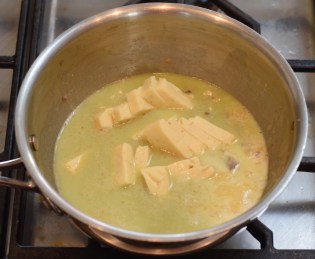
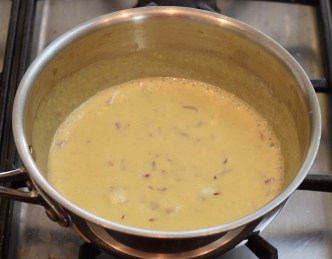
Add milk, the spinach liquor, celery salt, pepper, garlic powder, and Worcestershire Sauce. Stir until blended. Add Velveeta chunks, and mix until melted.
dsc_0878 dsc_0884

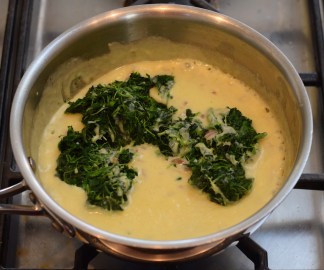
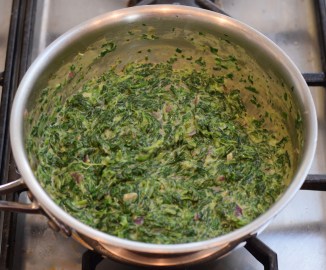
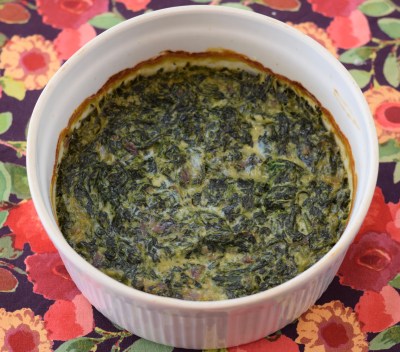
Add spinach to pot and mix thoroughly. At this point, you could finish cooking by simmering on the stove for 15 minutes, or put it in a casserole and bake it later at 350º for about 30 minutes.
dsc_0885 dsc_0888

This recipe is easily made ahead of time and can be doubled or tripled. My mother-in-law always baked it with buttered bread crumbs or crumbled Cheez-Its on top.

dsc_0900

Today, I served the spicy spinach as a hot dip for a meeting and everyone loved it. Most of my guests were surprised to hear it was made with Velveeta!
dsc_0910

P.S. Tomorrow is my two-year blogiversary!!  Please sign up to follow my posts! So grateful to Ann Shayne and Kay Gardiner for inspiring me to blog, through their shining example over at Mason Dixon Knitting!

Other Thanksgiving Day Side Dishes We Love
Melissa’s Sweet Potato Casserole
Grandma’s Italian Fried Cauliflower
Roasted Butternut Squash, Brussels Sprouts and Cranberries
Amazingly Delicious Sautéed Carrots
Grandma’s Cranberry Chutney
Cauliflower Three Ways: Roasted, Blanched and Mashed

Favorite Thanksgiving Desserts
Mom’s Pumpkin Pie
Mom’s Apple Pie with a Cheddar Streusel Topping
Mrs. Walker’s Cranberry Nut Pie
Pumpkin Cheesecake Pie
Pumpkin Bread Pudding with Caramel Sauce and Whipped Cream
Marion’s Crazy Good Pumpkin Bread with Chocolate Chips

LET’S STAY CONNECTED!

Follow my photos of vegetables growing, backyard chickens hanging out, and dinner preparations on Instagram at JudysChickens.

Never miss a post: sign up to become a follower of the Blog.

© 2014-2018 Judy Wright. All rights reserved. Photos and text may only be used with written consent.