Eulogy for a Chicken

Treating our baby chicks like pets and naming them seemed like a good idea. At first. They were cute and cuddly like pets, and they kept us entertained with their constant chirping and the adorable way in which they climbed over one another to get to their food. We had fun choosing names for that first flock, too: the two brunette Plymouth Barred Rocks were named for my Sicilian grandmothers, Marion and Concetta, the blonde Buff Orpingtons for Hubby’s grandmothers, Alice and Mildred, and the Rhode Island Reds for my zany red-headed great aunts, Bridget and Josephine. Neighborhood children and adults visited every day. Life was good.
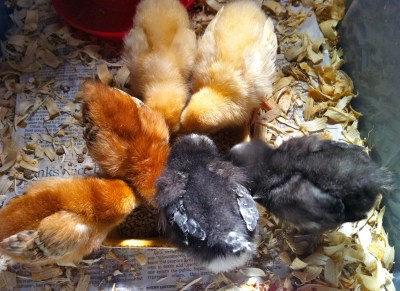
The chicks grew up to be a beautiful and sociable flock. They loved to climb the stairs to our back porch and hang outside the screen door while we humans visited inside. This was back in the Spring of 2012 when the Metropolitan Government of Nashville first passed the Domesticated Hen Ordinance allowing urban residents to keep up to six chickens in their fenced-in backyards.
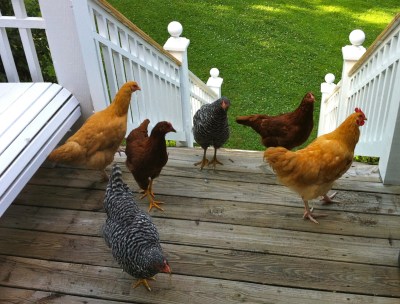
Chickens at the Backdoor

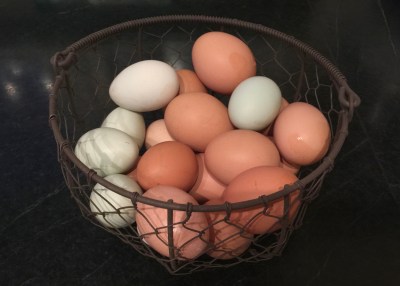
In the beginning of our poultry husbandry, it was all cartoonish chickens running across the grass in their funky lopsided way, and chicken idioms come to life. After about five months, eggs started appearing in the nest box, and it seemed like a happy bonus rather than the original intent. A few years later, with the addition of blue-egger Ameracaunas to the flock, the variety of eggs became downright gorgeous.

img_3711

Eventually, the Circle of Life, Survival of the Fittest, Mother Nature, whatever, showed its hungry head and there was some attrition in the happy flock.

dsc_0311

I didn’t grow up on a circle of life farm, so when the hawk picked off the first few chickens, it took me a while to adjust. The chickens adapted to this menace better than I; they learned to run for cover whenever they heard the hawk’s whistling call or saw his shadow overhead. They also learned to make a beeline for the bushes when I let them out in the morning to avoid being out in the open where a hawk could easily spy them. They were smart chickens.

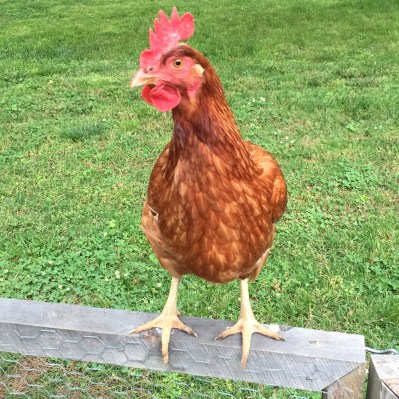
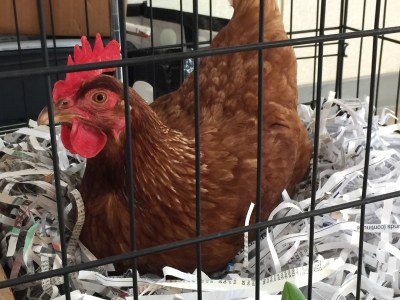
As there was more attrition to come, at some point, I had to stop naming the replacement chickens. Instead, I referred to them by their breed. That is, until last Spring, when I brought my newly acquired Golden Comet chicken to visit Glendale Elementary School in Nashville. There, a young girl in Ms. Meadors’ kindergarten class raised her hand and asked me the chicken’s name.  I hemmed and I hawed. How could I tell this darling child I didn’t name my chickens anymore because Mother Nature could be ruthless? “Comet,” I replied with a motherly smile. The name stuck.
img_7563

Last week, Comet, the only chicken in the flock who liked to be held, died. This is a tribute to her.

One Chicken’s Life

Comet was born on a rural farm in Kentucky that raised Golden Comets, a breed known for being good layers. Once the baby chicks were hatched, they were placed in an open field in movable cages known as “chicken tractors.” The chickens fed on the grass beneath their feet until it was all consumed and then the cages, with their big supporting wheels, were rolled to another area of the field.

dsc_0326

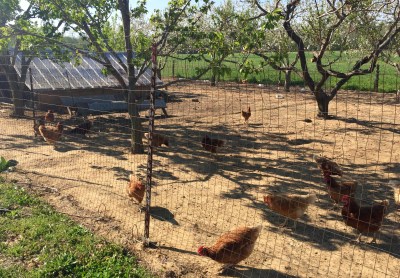
Once the chickens outgrew the tractors, they were moved to a fenced-in apple orchard for grazing. The canopy of apple tree branches helped protect the flock from hawks.
img_6937

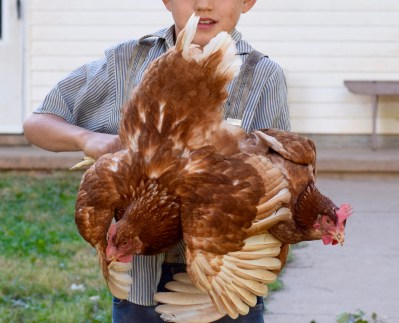
I asked the farmer, whom I knew from previous visits to the farm to buy eggs, if he would sell me two of his young layers. He did so with some reluctance — I don’t think anyone had ever asked him that question before. He sent his son to fetch two chickens. The young boy, obviously adept at this task, snuck up on the chickens and grabbed them by the ankles.
dsc_0341

We brought the chickens home and waited until nightfall to introduce them to the established flock. This is a time-honored technique used to decrease the likelihood of new birds being hen-pecked by older girls in their society. The idea is that the birds all wake up together and are not as startled by the presence of the newbies among them. We’ve learned from experience this method doesn’t always work, so for added insurance, we bought a “flock block” and placed it in the enclosed run with them. We hoped it would give the birds something enjoyable to peck on rather than each other.

product_poultry_purina_flock-block

It worked; the older ladies left the new girls alone. We have since discovered that as long as we keep a second food source in the run, the chickens have less reason to be territorial. There is now peace in our small chicken kingdom.

dsc_0874

Comet’s life gets interesting.

As I mentioned earlier, last spring, I started bringing Comet to visit children in elementary school classrooms.

img_5639 img_6842 img_7573

img_6501 img_7164 img_7840

Comet got to visit many schools. There is no telling how many children stroked her golden-red feathers or touched her rubbery red comb.
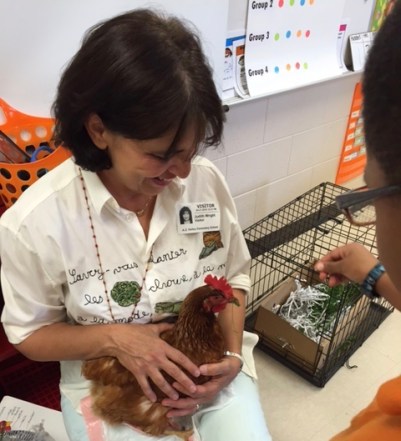
img_7181

Here is Comet in Ms. Benson’s kindergarten classroom where children got to feed Comet leafy greens and pea shoots with their soft leaves and curly-cue tendrils.
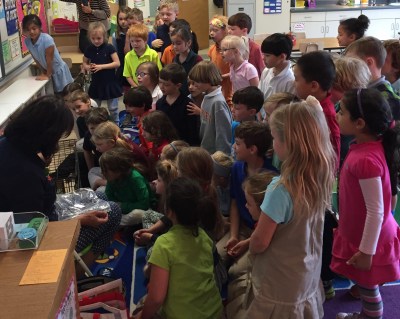
image2

The Boy Scouts came to visit her.

img_7905

And, the Girl Scouts.

13217252_1804130223149390_7814533329477965568_o

The scouts all learned How to Tell If an Egg Is Fresh or Hard-Boiled. You can learn how, too, in the video located in that post.  
img_5869

Comet and I were featured in a photo shoot for a nationally known online knitting magazine called Mason Dixon Knitting. I adore this photo of Comet taken by my dear friend and neighbor, Ann Shayne. Ann later gifted me with the beautiful purple and raspberry colored handknit cowl.

img_2964

A few more remembrances of Comet.

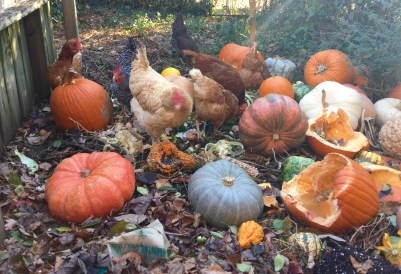
Here she is eating her leafy greens and peas.

Tilling and munching in the compost pile.
img_3543

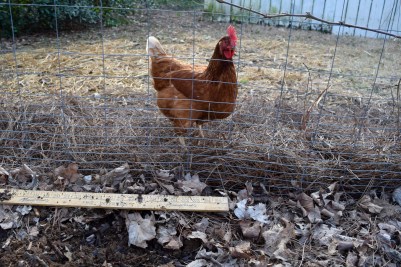
Visiting while I planted an asparagus bed.
dsc_0445

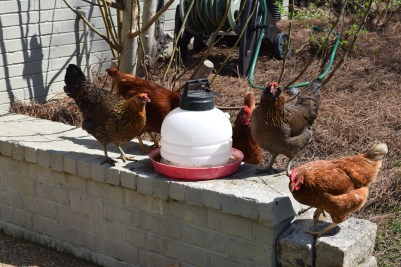
Taking in the scuttlebutt at the watercooler.
dsc_0453

Leading the charge as the flock followed me around the yard.

dsc_0477

Comet was one fantastic chicken.

img_7778

In Memory of Comet:
50 Ways to Make a Frittata
Quiche Lorraine with Bacon and Kale
Freshly Cooked Tortillas

Related Stories:
Family Dirt
Spring Planting Guide for Your Kitchen Garden
Fall Planting Guide for Your Kitchen Garden
How Canola Oil is Made (from plants grown locally)

LET’S STAY CONNECTED!

Follow my photos of vegetables growing, backyard chickens hanging out, and dinner preparations on Instagram at JudysChickens.

Never miss a post: sign up to become a follower of the Blog.

© 2014-2017 Judy Wright. All rights reserved. Photos and text may only be used with written consent.

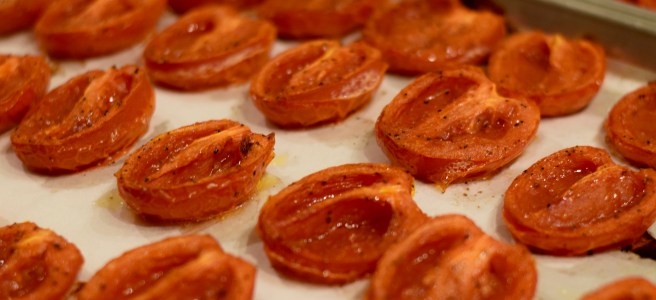
Roasted Roma Tomatoes

Sometimes, you need a little color on the plate when planning a menu for a dinner party. Such was the case when my sewing group got together recently for our annual dinner party.

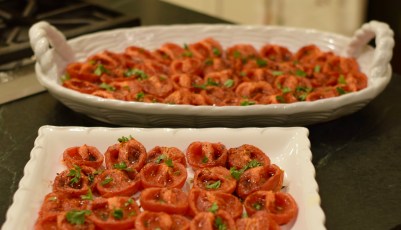
Fortunately, one of our friends excels at menu planning and volunteered to organize the meal and divvy up the jobs. I was tasked with making roasted tomatoes for twenty. While I have sautéed tomatoes for marinara sauce, puréed them for gazpachoand sliced them for salads, I have never cooked them as a side dish. The challenge was on.

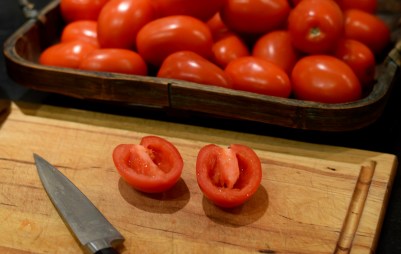
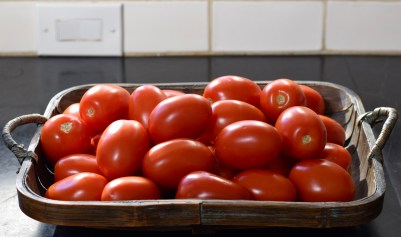
I was a little worried about finding flavorful tomatoes in the middle of winter. I went to Whole Foods and asked an employee in the produce department which tomato she thought was the most flavorful. I loved her response: she pulled out her paring knife and said, “Let’s see.” We tried three different tomatoes, and the Romas won out.dsc_0209

After considering various ways to prepare them, I did what came naturally to me: I tossed them in olive oil, sea salt, and garlic pepper and roasted them. Clean and simple.

dsc_0286

Ingredients:

dsc_0222

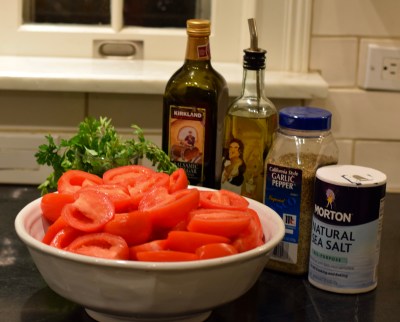
30 Roma tomatoes
½ cup extra virgin olive oil
1 tablespoon McCormick’s Garlic Pepper
1½ teaspoons sea salt
7 or 8 stems Italian flat-leafed parsley or basil, stems removed
balsamic vinegar to drizzle

Instructions:

Preheat oven to 425º
Line two roasting pans with parchment paper

Prep tomatoes: cut each tomato in half, lengthwise. Cut out the stem and use your index finger to remove the seeds.

dsc_0218

Place tomato halves inside a bowl, add the olive oil, salt, and garlic pepper. Toss well to coat evenly.

dsc_0248

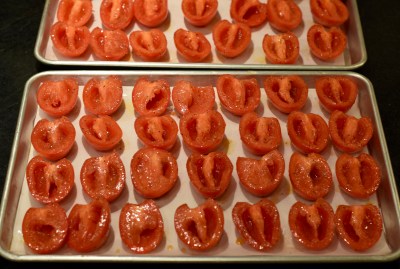
Place each tomato half on baking sheet.

dsc_0256

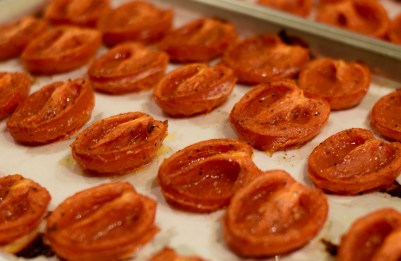
Roast tomatoes for 1 to 1¼ hours. After 30 minutes, rotate pans in the oven. Cooking them this long will draw out their natural sweetness and flavor.

Version 2

Place tomatoes on a serving platter, sprinkle with balsamic vinegar and snipped parsley or basil leaves, for garnish. Serve at room temperature.

dsc_0299

For a few other colorful sides, try these:
Amazingly Delicious Sautéed Carrots
Sautéed Collards (or Swiss Chard) with Cranberries and Toasted Pine Nuts
Roasted Acorn Squash with Applesauce and Cinnamon
Roasted Butternut Squash, Brussels Sprouts, and Cranberries

LET’S STAY CONNECTED!

Follow my photos of vegetables growing, backyard chickens hanging out, and dinner preparations on Instagram at JudysChickens.

Never miss a post: sign up to become a follower of the Blog.

© 2014-2017 Judy Wright. All rights reserved. Photos and text may only be used with written consent.
Roasted Acorn Squash, with Applesauce and Cinnamon

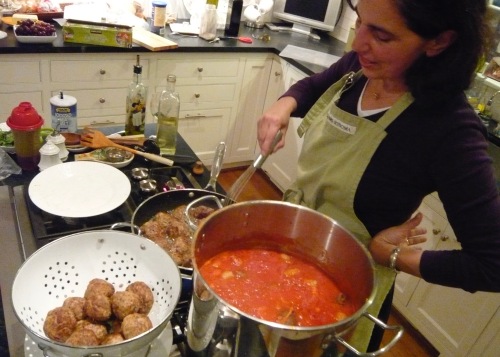
When we were growing up, my mother cooked dinner every night. There was always a  protein, a vegetable, and a starch, although on Sundays, when one of my grandmothers cooked dinner, the lines between the food groups were blurred by a magnificent batch of spaghetti and meatballs. Now, I am the grandmother!

Milk was the only beverage served at meals, and it was poured from an “Orange Poppy” ceramic milk pitcher. Milk bottles on the table were a big No-No. All of her serving pieces were in this pattern.

One of us kids set the table and another cleared it. There was a rhythm to the dinner hour. We ate what Mom served us. At the time, I so envied our next-door neighbors who on Monday nights got to eat TV Dinners when The Monkees came on.
swnsntvdinnerart

Mom was a single parent who worked full-time and was a fabulous cook. I was her sous chef and worked by her side to get dinner on the table nightly. Helping with dinner was a point of pride; we were a team. While structured family meals have undergone some changes in the last fifty years, the way I prepare acorn squash remains the same. Mom knew how to prepare adult foods so children would eat them.
dsc_0689

Serves 8

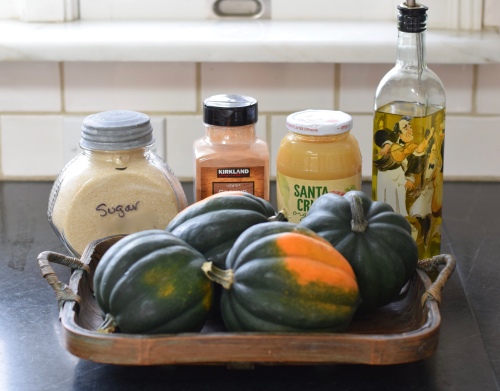
Ingredients:
dsc_0660

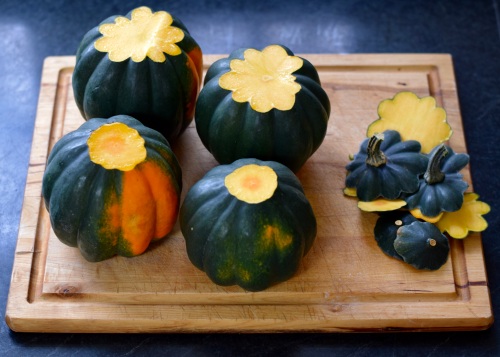
4 acorn squashes
¼ cup extra virgin olive oil
2 cups unsweetened applesauce
Cinnamon sugar (1 T sugar and 1 t ground cinnamon)
cracked pepper or garlic pepper

Instructions:
Preheat oven to 400º
Line two baking sheets with parchment paper.

Prepare Squash:
Cut off each end of the squash. Cut off as little as is necessary to stabilize the squash, so it stays upright.

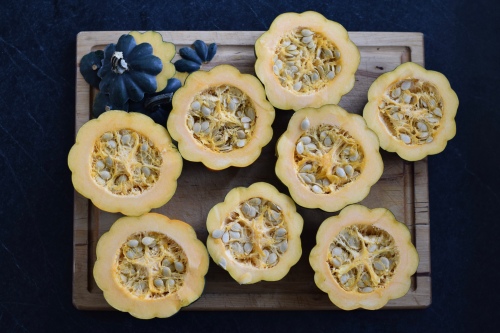
Cut squash in half. Take a moment to admire nature’s beautiful details, and then … scoop out the seeds!
dsc_0677

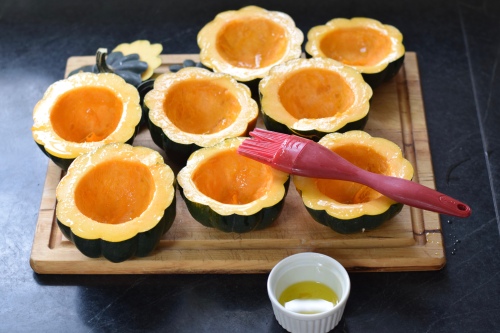
Coat the interior and top edges with EVOO.
dsc_0688

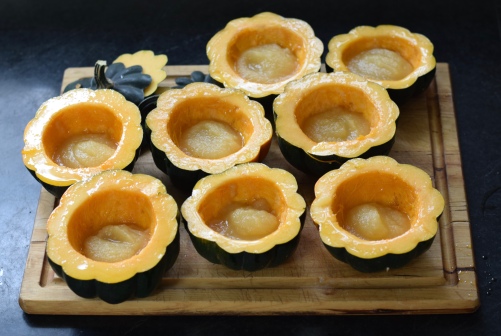
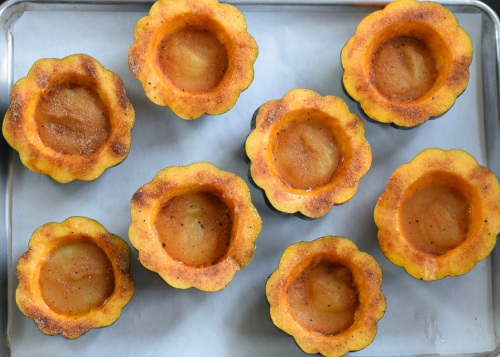
Add one-third cup of applesauce to each squash half. Sprinkle with cinnamon sugar, followed by a little cracked pepper or garlic pepper. Place squash halves on a parchment paper-lined baking sheet.

Roast for 45- 60 minutes, until fork-tender. Serve in a pretty serving dish.

I love to eat them cold from the fridge the next day so I always make extras.

Mom and I in the kitchen. She was tiny but mighty.

Serve with:
Cooking Dinner in an Unfocused Way, or Ode to the Rice Cooker
Brooks’s Pork Tenderloin with the Most Amazing Marinade
Judy’s Mom’s Meatloaf
Mom’s Marinated and Grilled Lamb
Mom’s Apple Pie (with a cheddar streusel topping)
Mom’s Pumpkin Pie

LET’S STAY CONNECTED!

Follow my photos of vegetables growing, backyard chickens hanging out, and dinner preparations on Instagram at JudysChickens.

Never miss a post: sign up to become a follower of the Blog.

© 2014-2020 Judy Wright. All rights reserved. Photos and text may only be used with written consent.
Perfect Rice Every Time!

I’m a multitasker in the kitchen life. If there are more than five minutes of lag time involved in a cooking task, I’m using it to switch out the laundry or run to the mailbox. That usually is fine until I find another thing that needs doing along the way, like putting away the laundry or pulling a few weeds. Before I know it, I return to the kitchen, and the rice, farro, or other grain is stuck to the bottom of the pot. A rice cooker solves that problem. It turns off automatically when the grains are cooked. It is the multitasker’s friend, read, dream.

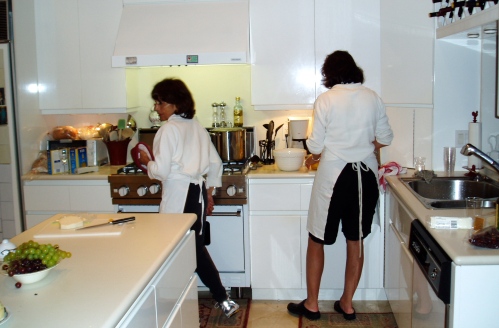
Enter my daughter-in-law and her mother.  A few years ago, they taught an Indian cooking class for friends in my kitchen. Every square inch of counter and stovetop space was used for prepping and sautéeing the veggies and meats. Off on the kitchen table, far from the over occupied countertops, sat these two large-capacity rice cookers, quietly and efficiently doing their thing — cooking rice. Unsupervised.

IndianDinner making Indian dinner med students reddy

Here’s what I learned about rice cookers that day:
Rice cookers are foolproof.
Rice cookers do not need a timer: they shut off when the rice is done.
Rice cookers can be plugged in anywhere.
Rice cookers make perfect rice.
Rice cookers come in many sizes.

I still didn’t run out and buy one. If truth be told, I was hanging on to a guilty memory from the time I helped my mother declutter her kitchen. I was ruthless. There was a rice cooker in its original box in the pantry. Mom said she never used it. I stuck it in the Goodwill pile.

After the Indian cooking class, my DIL sweetly gave me a rice cooker for a present. I slowly started using it. One day, I was espousing its benefits to my family, and my mother said something about how she used to have one, but she couldn’t remember what happened to it. She said she was going to look for hers when she got back home. I had an opportunity to fess up, but I didn’t. The things that haunt us …
Meanwhile, I love my rice cooker.

dsc_0711

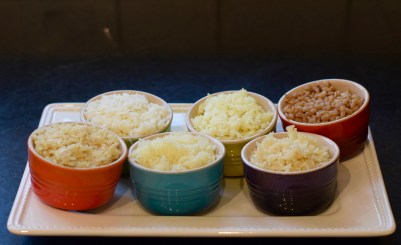
I’ve learned I can cook all these different types of grains with it. I can even use it to cook steel cut oats in the morning. When cooking grains, I simply follow the instructions on the package and add olive oil and chicken broth or bouillion for flavoring. Sometimes, I add chopped onion and herbs. If the water runs out and the grains are too chewy, I add a little more water and continue cooking.

dsc_0008

How to make perfect white rice in a rice cooker
It took quite a few attempts to come up with a good recipe for perfectly chewy rice. I tested many ratios of water to rice and salt. By accident, I discovered that when I added olive oil to the pot at the onset of cooking, the rice water did not sputter out of the air vent hole and make a mess on the counter. I’m not sure why this is, but I I feel certain it’s related to the reason why, when you add a little butter to the pot when cooking jam, it keeps the boiling preserves from foaming on the surface. If there are any scientists reading this who can explain this phenomenon, please share in the comments.

Ingredients:
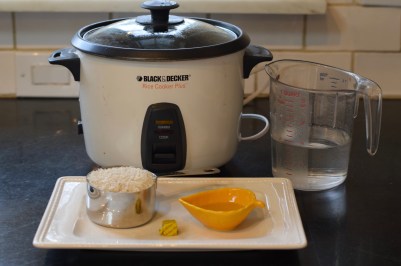
dsc_0752
1¾ water
1 chicken bouillon cube, crumbled
1 tablespoon olive oil, canola oil, coconut oil, or butter
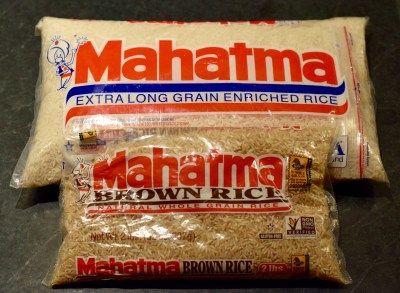
1 cup long grain white rice (I like Mahatma Rice)

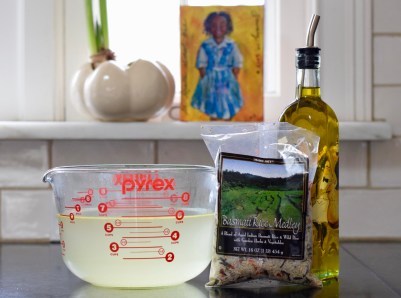
Pour water into a liquid measuring cup. Crumble in a bouillon cube and stir until dissolved. Pour oil into the base of the pot. Add rice. Add water and bouillon mixture. Make sure all the rice is submerged.

Plug-in the rice cooker. The “warm” button will immediately light up.  Flip to “cook” mode and let it do its thing. It takes about twenty minutes. The cooker will automatically flip from “cook” to “warm” when the rice is done.

dsc_0767

How a rice cooker works:
Rice cookers don’t cook by time, but by temperature. Water boils at 212º (technically, 214º if the water is salted). As long as there is water in the pot, the temperature of the rice cannot rise above the boiling point of water. Thus, the rice will simmer at a steady temperature until all the water is absorbed. Once absorbed, the cooker continues to heat the pot, the temperature in the pot rises, the heat sensor detects a bump up in temperature and cuts off the heating element. The cooker switch automatically flips from “cook” to “warm.”

There is still heat in the pot, and that heat has to go somewhere (see Heat Transfer 101), so the rice continues to cook and soften for about five more minutes. I usually unplug it when it is done.

What I learned about the ingredients while testing recipes:

dsc_0882

Water: If you want crunchier rice, use less water. If you want softer rice, use more. If you add too much water, the grains of rice will split, release starch into the water, and the rice will become sticky and clumpy.

Bouillion Cubes: I generally like to add one cube of bouillon per 1½-two cups of water. I’ve found that amount of bouillon flavors the rice with just the right amount of salt. You could simply add 1 teaspoon of salt instead. Or, none.

Rice: Rice and other grains like flour, oats, corn, and barley are the mature, dormant seeds of grassesBrown rice is the whole kernel of the rice seed minus its inedible fibrous husk. Most of the nutrients in rice are found in this outer brown (also known as bran) layer.

grainparts_wgc_4x4-5_wgc

Alternatively, white rice, or the endosperm portion of the grain, is pure carbohydrate meant to provide the seed with energy for sprouting purposes. When white rice is milled, the brown bran layer is polished off, but with the bran go the nutrients. To be nutritionally complete again, white rice is often “enriched” with nutrients that are sprayed on. If you wash enriched white rice, you’re going to lose those nutrients. Don’t wash “enriched” white rice.

dsc_0893

As an FYI, I have come to love this trio of rice medleys from Trader Joe’s. Of the three, the Brown Rice Medley is probably my favorite simply because I like the pop of the Daikon Radish Seeds when you chew on them. My goddaughter, Leigh, and I were recently talking about easy, elegant meals to prepare for entertaining and this rice, served as a side dish, would definitely fit the bill. I love that in addition to being delicious, theses rice medleys all add interesting color and texture to the dinner plate.

dsc_0115

To prepare them in the rice cooker, I add 6 cups of water (a little less if you want the rice to be chewier), 3 chicken bouillion cubes, about 3 tablespoons of EVO, and the entire bag of rice. When the rice is finished cooking and flips to “warm” I uncover the pot and unplug the rice cooker to keep the rice from fluffing up anymore.

dsc_0139

Serve with:
Brooks’s Pork Tenderloin with the Most Amazing Marinade
Lemony Grilled Chicken Breasts
Mom’s Marinated and Grilled Lamb
Easy Roasted Salmon with Olive Oil and Garlic Pepper

LET’S STAY CONNECTED!

Follow my photos of vegetables growing, backyard chickens hanging out, and dinner preparations on Instagram at JudysChickens.

Never miss a post: sign up to become a follower of the Blog.

© 2014-2017 Judy Wright. All rights reserved. Photos and text may only be used with written consent.