Pecan Picking in Mississippi (and recipes to go with them)

Years ago, when my family and I were traveling in Sicily, we came across a grove of nude trees surrounded by layers of stacked bark. We pulled off the road to examine the naked trees and figured out we were driving through a cork oak forest. Cork trees can be stripped of their bark every nine years to make products like wine corks. In fact, the next time you have an all-natural cork, count the number of lines across the top — that will tell you how many years the grower waited between bark harvests. I wrote a story about it here. Before seeing this grove, I had never considered where cork came from.

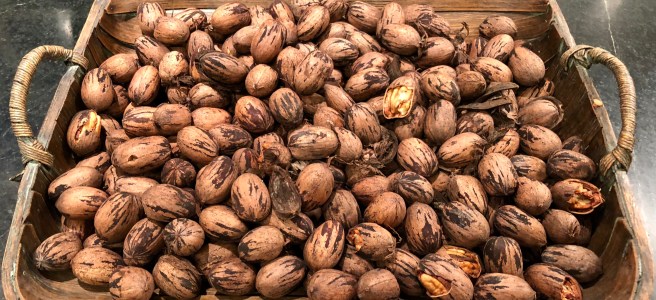
The same is true for pecans. Until recently, I never considered how pecans grew and were later harvested.

My curiosity was sparked a few weeks ago when I saw a video on Instagram of my friend, yoga teacher Mary Thorstad, picking pecans off the lawn of her parents’ home in Georgia using a quaint collecting device.

Mary described how much she delighted in the idea of picking edible food off the ground. She said the pecans were like treasures waiting to be found, like manna from heaven. It is a task she has enjoyed doing since childhood. I remember wondering if all pecans were harvested from the ground, or if this device was a child’s way of picking up a few fallen pecans.

This past weekend, my husband and I visited friends in Como, Mississippi. Como borders the Mississippi Delta to the west, Oxford to the southeast, and Memphis to the north.

We arrived late in the evening. As we drove up the driveway, my husband commented on the stately old oak and pecan trees that lined the moonlit driveway. Later, he asked our friends, Denise and Sledge Taylor, about the trees and whether they picked the pecans. They proceeded to tell us a few delightful stories about townspeople coming by to pick pecans over the years. Sledge said it was not uncommon to come home to find a sack of pecans on their front porch. It meant someone had come by and picked pecans for themselves and, as a token of appreciation, picked a sack for the tree-owners. Denise told us that once they came home to find homemade pecan pies on their front porch instead of the customary gunny sack. They were thrilled. I thought I’d be pleased with the sack of pecans, but that was when I had the misperception that people harvested pecans by climbing trees and using specialty pole-pickers to harvest them, a job I was not prepared to do.

Then I learned pecans were harvested off the ground even when grown commercially. Pecans grow inside a husk in clusters at the ends of branches. As the husk matures, it splits open and the nut drops out. In commercial orchards, farmers use a mechanical tree-shaker to nudge the tree into dropping their nuts. After they fall, large-scale sweepers are brought in to collect them.

Sensing how taken I was with seeing pecan trees for the first time, Sledge drove us to a commercial pecan orchard with acres of mature trees. The trees were planted on a grid. The oldest were planted in the 1890s on a 60′ x 60′ grid. The younger trees were planted in the 1940s on a 45′ x 45′ grid. Sledge said they plant them even closer now. We loved that whichever direction we viewed them from the trees lined up both in rows and on the diagonal. Truly, a marvel to behold.

Meanwhile, we harvested 8.5 pounds of nuts from Sledge and Denise’s driveway using this sweeper device.
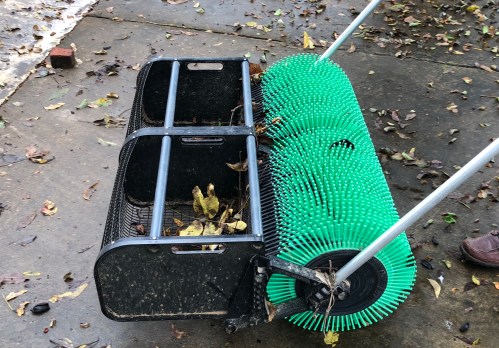
It looks and works a lot like a tennis ball sweeper.

Sledge said not to pick pecans that still had their husks on as the husk would keep the shell moist and the nut inside would likely be rotten.

After we arrived back in Nashville,  I immediately set about picking the pecan meat out of the shells. It took every bit of two hours to pick through our stash of nuts. I ended up with almost two pounds of tender, tasty pecan meats. Manna from heaven, indeed.

It was tedious work. Granted, the tools I used were not for industrial use. They were more like cocktail party fare from the Fifties.

As I write this a few days later, except for my stained and scratched up fingers, I’ve forgotten about how tedious it was cleaning out each shell. But, man oh man, as I was in the midst of shelling, I remember thinking, I get why Denise was happy to get the homemade pies.

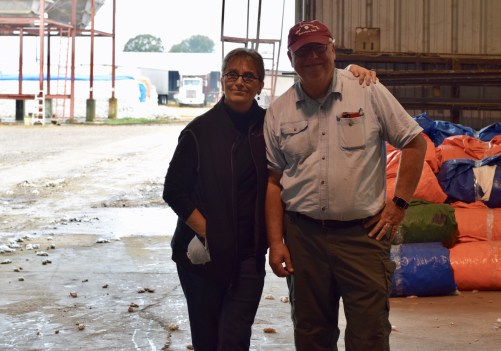
Thanks to our hosts, Denise and Sledge Taylor who live on a beautiful farm in the “hill country” a place with never-ending vistas of pastures and planted fields. This photo was taken at their cotton gin. That’s a whole nother story!
Tried and True Recipes Calling for Pecans

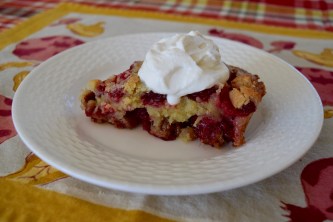
Mrs. Walker’s Cranberry Nut Pie (served two ways)
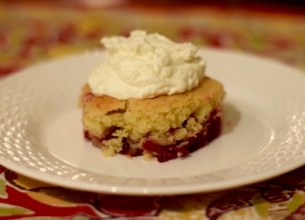
 

Pumpkin Bread Pudding (served two ways)
 

Cranberry and Hot Pepper Jelly Brie Bites
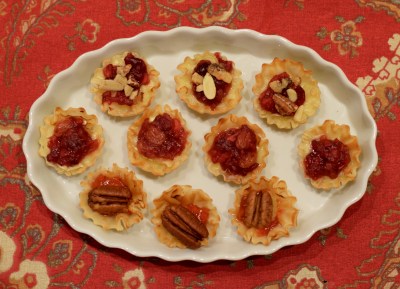
Grandma’s Cranberry Chutney

Fruit and Nut Bread

Mary’s Award Winning Chocolate Chip Cookies

Sorghum, Oats, and Cranberry Granola

Oat, Sorghum, Ginger, and Cranberry Cookies

I thought about The Pecan Man, a novel by Casey Dandridge Selleck while writing this post. The story takes place in a small Southern town in Florida. The main character is a spunky, well-respected, and charming woman who tries to do right by a homeless man who picks pecans from lawns in the 1970s. The audiotape has an excellent reader.

Always check the website for the most current version of a recipe.

© 2014-2018 Judy Wright. All rights reserved. Photos and text may only be used with written consent.

What to Knit for a Baby: a Hat, a Sweater and a Blanket

My mother taught me to knit when I was ten. She worked full-time and I remember pacing the house waiting for her to get home to pick up my dropped stitches. The first thing I knit was a gray skirt for a Barbie doll. I remember it turning out like an hourglass-shaped pencil skirt. It was fraught with common beginners’ mistakes: added on and dropped stitches. Eventually, I got the hang of it and loved nothing more than to sit by Mom and knit.

By the time I found out I was going to be a grandmother, I’d been a lapsed knitter for many years. Not so any longer. I’m right back in it and probably for good this time. I love knitting for the baby.

Here are three things I love that I have knitted for my grandson.

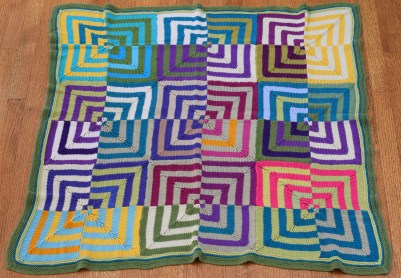
The first item is my favorite blanket pattern, the “Mitered Square Blanket” from Mason Dixon KnittingI started the pattern when my daughter-in-law first told us she was pregnant. Because we didn’t initially know the sex of the baby, I made the first squares in shades of pink and blue.

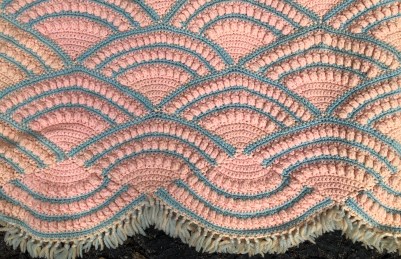
Almost like my grandmother did in 1957 when she crocheted this baby blanket for me. I’m just now noticing that Grandma and I both liked two-toned geometric designs!

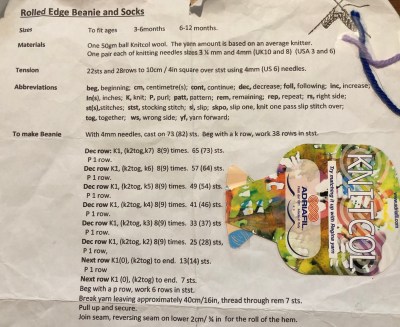
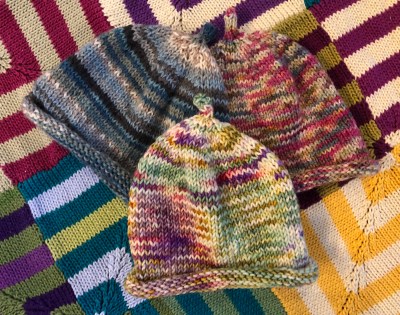
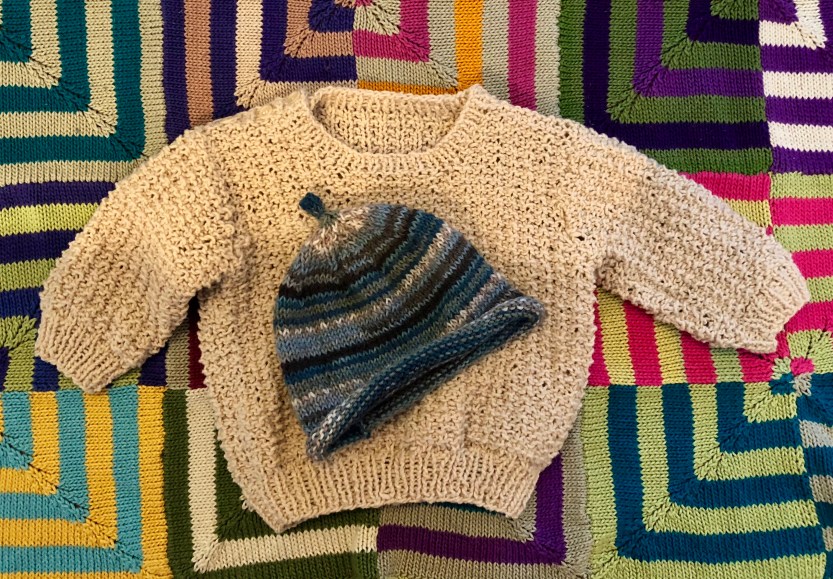
Next, I made quite a few of these quick and easy rolled edge hats.

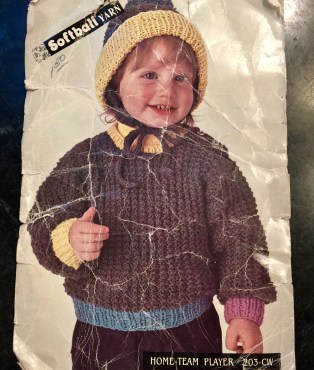
After that, I made my favorite baby sweater pattern called Home-Team Player. It has three buttons on the shoulder which is helpful when slipping a sweater on and off a baby’s big head. I enjoy knitting to the rhythm of this pattern very much. It is also quite forgiving size-wise, meaning there is room for the baby to grow into the sweater, but still look okay while it is a little too big. I made at least a half-dozen of these for my children and friends.

This is a picture of my darling grandson wearing the sweater I knit for him. He has his favorite blankie, too.

A few weeks after finishing his sweater, I stumbled upon this picture.

It’s of my mother holding my son, Jesse, circa 1987. Jesse is wearing the sweater made from the same pattern I used for his son! Same color, even!

So which pattern should you try first? If you are a beginner, I’d suggest starting with the baby hat, then moving to the sweater, and then the mitered square blanket for an exciting and fun challenge.

The Baby Hat

We took a trip to New Zealand a few months before the baby was born and while traveling to Queenstown came across a fantastic handicraft store called The Stitching Post in the charming town of Arrowtown. They had so many adorable samples of baby items to knit and quilt that I had to tell my husband to go off and explore the village without me. I needed to soak all the gorgeousness in. For this hat, the Stitching Post recommended a soft superwash merino wool called Knitcol by Adriafil. I love it and left the store with quite a few skeins … and a set of size 6 needles … and their free pattern. No time like the present to get started.

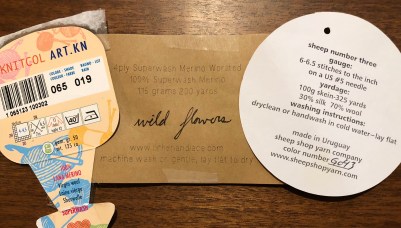
The yarns I used for these hats.

The blue/gray yarn is Knitcol. On the Stitching Post’s website, they show how the Knitcol colorways look when knit up. Take a look.

The variegated pink yarn on the hat on the right is by the Sheep Shop Yarn Company. It is an old yarn made with a blend of silk and wool. It is no longer available.

The green/pink yarn is called Lichen and Lace and is a superwash merino wool sold through Mason Dixon Knitting. Because the yarn was a little thicker than the Knitcol, I cast on 64 stitches instead of 73 and bumped up the needle size from a US 6 to size a US 8.

A word about yarn choices for baby hats.

I like to use a non-itchy yarn for baby hats because their heads get hot and sweaty and sometimes itchy while wearing a woolen hat. Look for soft yarn with the words “superwash merino” on the label. Cotton doesn’t always work for this pattern because it doesn’t have “give” or enough stitch recovery to make the edges roll. Cotton hats need a pattern with a few rows of ribbing to grip a baby’s head.

For a good explanation of what “superwash” means check out this article from Lion Brands Yarns’s website.

The Baby Sweater

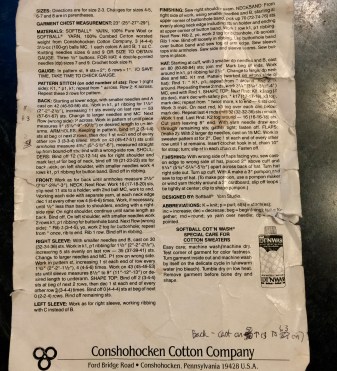
The Home Team Player sweater pattern came from the now-defunct Conshohocken Cotton Company and has been my favorite baby sweater pattern since the 1980s. The pattern is nowhere to be found for purchase on the Internet or in stores, so I’ve included it in this post. My pattern looks like an old family recipe. It is as well-loved as Mom’s Apple Pie! 


This sweater is knit on 6 and 9 needles with worsted weight yarn. I find that many baby patterns make the arm length too long so for this pattern, I shortened the arms by at least two inches. One tip I use when determining arm length is to measure the length of the arm from a baby sweater I already like. **I’ve added a bigger photo of the pattern at the end of this post.

The Mitered Square Blanket

Stardate April 17, 2006. This was the moment I fell in love with the Mitered Square Blanket made famous by my good friend, and neighbor, Ann Shayne and New Yorker, Kay Gardiner in their first knitting book, Mason-Dixon Knitting: The Curious Knitter’s Guide. This photo was taken at their Nashville book signing. I’ve been smitten by this blanket ever since. I’ve made five of them! The one pictured above is for a queen-size bed. It’s huge! The pattern is now available online. Here’s a link.

The morning after the book-signing, I beelined it over to Ann’s house so Kay could give me a private tutorial on how to knit the squares. Mitered squares start out as a straight row of stitches, and then through a series of decreases up the middle, the sides are drawn inward to create a square. You will feel so excited the first time you see the square emerge from the horizontal row of stitches. It’s magical.

The next thing that will excite you is the thrill of choosing colors and seeing how beautifully the squares come together when seamed. After a while, I started to think of the hanks of Tahki Cotton Classic yarn as tubes of paint. I honestly felt like an artist after making just three squares! Knitting the squares becomes addictive, I promise!

You might even find yourself carrying a little baggie with a mitered square in progress for when you have downtime. I used a short round needle for portability.

Finally, a sweet ending to a long yarn: a picture of my great-grandmother, MamaNika, knitting on the patio of my grandparents’ home. You can read all about her and the other beautiful, female role models in my life, all domestic goddesses, here.

Blog Favorites: Recipes from My Family
Grandma’s Italian Fried Cauliflower
Baked Ziti with Eggplant
Italian Ricotta and Lemon Cookies
Mom’s Apple Pie (with a cheddar streusel topping)
Judy’s Mom’s Meatloaf
Mom’s Pumpkin Pie
@judyschickens Everyday Salad Dressing
Mom’s Monkey Bread, circa 1970
Aunt Bridget’s Chicken Soup with Little Meatballs
Rachelle’s Italian Sausage, Onions, and Peppers

© 2014-2017 Judy Wright. All rights reserved. Photos and text may only be used with written consent.
fullsizeoutput_1c0a

Applesauce or Apple Pie?

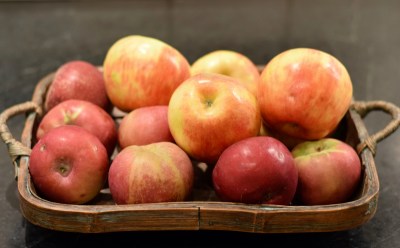
It’s apple season! There are so many beauties out there right now that every time I go near a farm stand, I pick a few more to add to my stash.

Have I mentioned how much I adore color and texture? It doesn’t matter if it’s in food, as in a bowl of apples

or tomatoes.

Or yarn, as in this painting of my yarn stash created by my friend Kim Barrick. It makes no difference to me. I love it all. They each bring me joy.

Unlike yarn, which can last beyond a lifetime as in the case of my adorable mother’s yarn stash,

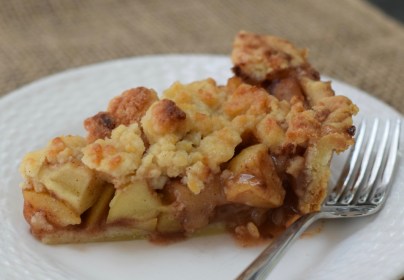
when I get too many apples I’ve got to act. Pie or applesauce? If the skins have started to wrinkle and the bruises have started to show, I make applesauce. Otherwise, it’s Mom’s Apple Pie with Cheddar Streusel Topping. No contest.

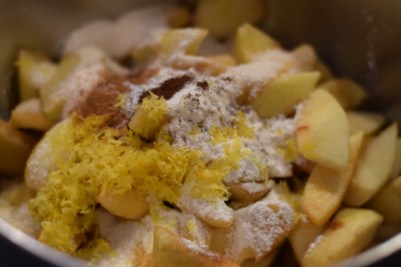
Even the ingredients are photogenic!

Apple Sex

The core of an apple is actually the apple’s ovary. It is usually divided into five chambers containing two ovules (where the female DNA is stored) each. If the ovules are pollinated with male DNA in the form of pollen grains, the apple will mature into a well-developed fruit. A fully pollinated apple will contain ten seeds. The number of seeds is directly related to how many grains of pollen have traveled from the stigma, down the style to the ovum in the ovary on the apple’s blossom. The apple needs a minimum of 6-7 seeds to set fruit, or it will not grow to maturity. The pollen is carried by pollinators from other nearby varieties of apples in the orchard.

Mother Nature ensures the survival of the apple tree species by making the flesh sweet and tasty so squirrels and deer will want to eat the fruit and disperse the seeds widely.

While in Hasting’s New Zealand, we had the pleasure of visiting our friends Annette and Rufus Carey’s Longland’s Fruit and Vegetable and Christmas Tree Farm.

I loved seeing their neat system for growing rows of apple trees.

Having an apple orchard is on my bucket list.

How to make Apple Sauce

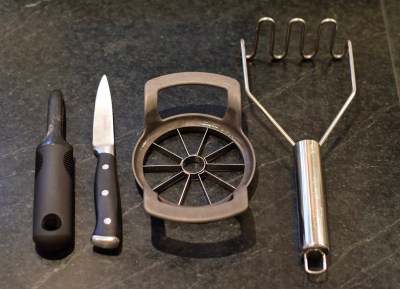
The following kitchen tools might be helpful:

To make applesauce, peel three pounds of apples and remove brown spots. Three pounds of apples equal about 9 medium apples or 7-8 cups sliced.

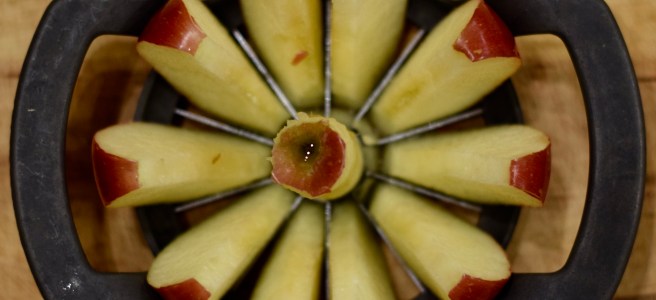
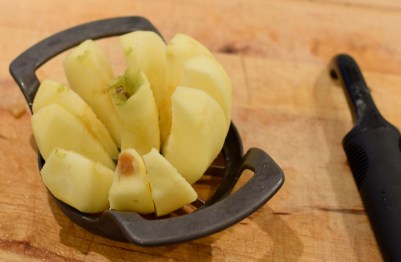
Use an apple corer (ovary remover – ewww) to prep the slices.

Or, if you have a spiralizer, use it.

Add the apple slices to a saucepan with about 1 cup of water. Bring to a boil, cover, and simmer for 20 minutes. Remove lid and simmer 10 more minutes. Use a potato masher to pulverize the chunks, if desired.


You could leave the peel on, but know that it will separate from the apple as it cooks and has a tendency to stick to the roof of your mouth. That’s one of the reasons I always peel apples for my grandson, the skin can be a choking hazard for babies.

You can add cinnamon and sugar if you’d like, but applesauce is plenty sweet and flavorful unadorned.

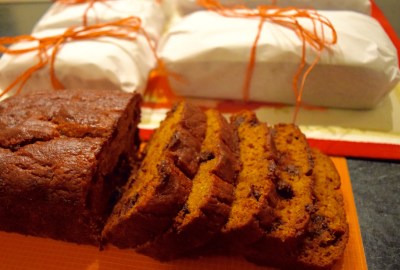
Consider putting aside ½ cup of applesauce to use in Marion’s Crazy Good Pumpkin and Chocolate Chip Bread.

One More Seque!

How about a great book to read this Fall about an American pioneering family in the 1800s who struggle to plant an apple orchard in Ohio? At The Edge Of The Orchard, by Tracy Chevalier, is such a book.  I love how John Chapman (aka Johnny Appleseed) plays into the story as well as the science of bark-grafting apple limbs. I’m grateful to my dear friend, Gayl Squire, a teacher in Napier, NZ, for buying me a copy of this book to read while we were visiting them.

Always check the website for the most current version of a recipe.

© 2014-2017 Judy Wright. All rights reserved. Photos and text may only be used with written consent.
Baked Ziti with Roasted Eggplant, Mozzarella, and Marinara Sauce

Last night, my son and grandson joined my husband and me for dinner. I made baked ziti with eggplant.

The nicest compliment came when my son said this newest rendition of baked ziti was among the top five meals I had ever made. He said he wished it was served in a restaurant so he could get more whenever he wanted. (No need for that, honey; just say when.) It was all music to my ears. I had been working on a recipe for baked ziti and eggplant for years.

I love roasted eggplant. I was taught by my mother to sweat (salt and drain) eggplant before cooking to rid it of its bitterness. Indeed, for most of my adult life, I equated the brown liquid that dripped from the colander during sweating as the color of bitterness. The more brown liquid in the sink, the more successful I thought I would be in making a delicious eggplant dish. But recently I learned the true reason for sweating had nothing to do with bitterness and everything to do with the anatomy of eggplant. Eggplant is porous; it is full of small air pockets that absorb oil like a sponge. Sweating draws out water from the eggplant’s cells which fill the air pockets so cooking oil can’t’ occupy the air space.

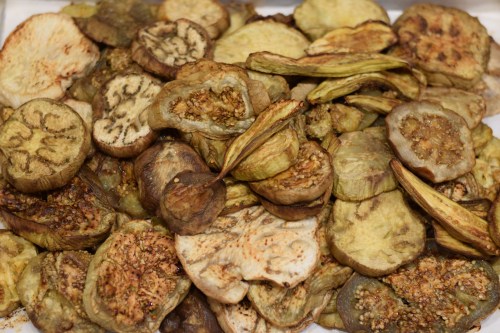
Since I no longer fry eggplant, this summer I eliminated this time-consuming step of sweating and instead lightly brushed each raw slice of eggplant with olive oil before roasting.

The results have been delightful. At a recent dinner party, guests started gobbling down unadorned roasted eggplant slices before I got a chance to smother them with marinara sauce and mozzarella.

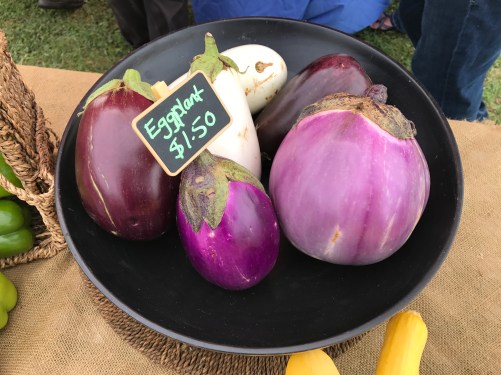
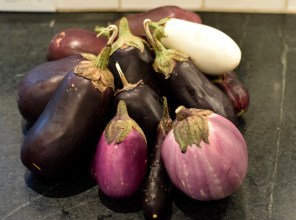
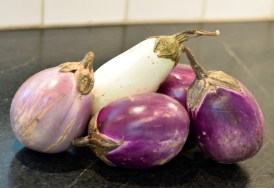
Recently, I went to the Richland Farmers Market in Nashville and bought these gorgeous, svelte, Italian eggplant (melanzana, in Italian) from Corner Spring Farm. They had delightful names like Violeta di Toscano, Rosa Blanca, Clara, and Beatrice.

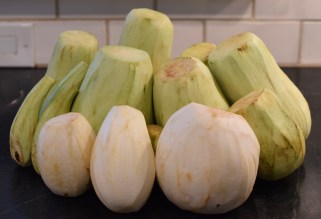
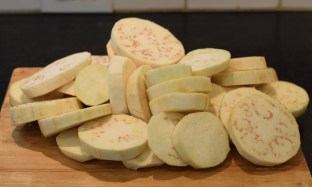
When I got home, I added them to the hefty stash of Black Beauty and Japanese eggplants I had harvested from my garden. I decided to make a day of it and cook all the eggplants at once. When I trimmed and peeled the skin, I was surprised to see the contrast in color of my stash of eggplants and the Italian varieties. Their flesh was so much whiter. Once roasted, I noticed the Italian eggplants were denser and maintained their shape better. Plus, they had the mouth-feel of artichoke hearts. Yum. Now I know why my mother would always choose Italian eggplants when we visited farmers markets; there is a difference. Next summer, I’m planning on growing more of the Italian varieties.

Yield: serves 8-10 as a main course

Ingredients 

The ingredients list is divided into each of the cooking steps:  roasted eggplant, marinara sauce, pasta, and basil and cheese layers.

3 medium to large eggplants, about 3 pounds
3 tablespoons of extra virgin olive oil

Marinara Sauce (about 1⅓ quarts)
¼ cup extra virgin olive oil
6 cloves garlic, crushed and chopped
2 28-ounce cans whole Italian plum tomatoes
2 teaspoons fine sea salt
¼ teaspoon cayenne pepper or dash of cayenne pepper
¼ cup fresh basil leaves, roughly chopped
2 teaspoons granulated sugar (optional)

6 quarts water
1 tablespoon fine salt
1 pound ziti or penne pasta, cooked to al dente

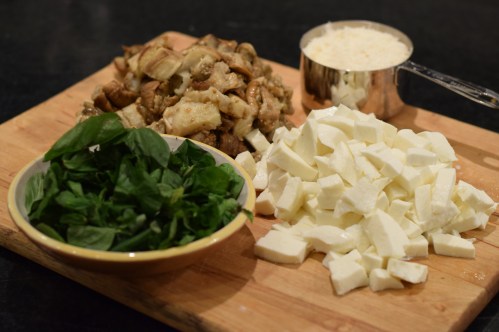
1 pound sliced and then chopped, mozzarella
1 cup finely grated parmesan ( about 3 ounces)
1 cup basil leaves, about ¾ ounce

Mise en Place

Instructions

Preheat oven to 425º

Remove the stem, and peel and slice the eggplant. Slice them about one-half inch thick; better to err on the side of thicker than thinner slices.
 

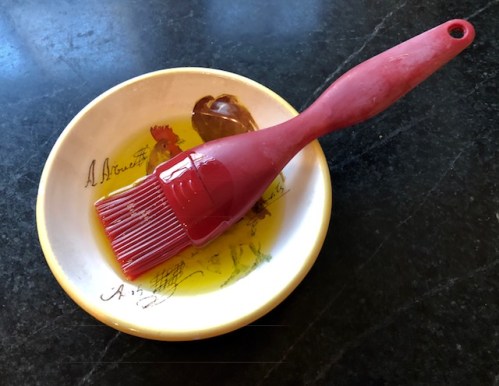
Pour olive oil in a bowl and brush each side of each slice very lightly with oil. I only used 3 tablespoons of oil for all the eggplants pictured above.
IMG_2499

Arrange the eggplant slices on parchment paper-lined baking sheets. Roast for 30-40 minutes. If you want them browned on each side, turn them over after about 20 minutes. I do not bother with this extra step. They should only be lightly browned when done. If you can’t decide if they are cooked enough, try tasting one. That’s what I do. You want them to be firm enough to hold their shape.

At this point, you could store the slices for one or two days in the refrigerator, or freeze. To prep for this recipe, measure out one pound (about 3 cups) and chop into 1.5 to 2 inch segments. Set aside.

DSC_5175.jpg

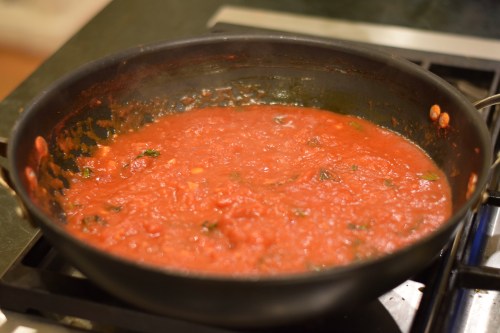
While eggplant is roasting, start the marinara sauce. Heat olive oil in a 6-quart frying pan over low heat. Add garlic and sauté for about 2 minutes. Do not allow garlic to brown. Pour the tomatoes into the pan breaking them up with your fingertips as you do. Add salt, cayenne, and sugar. Bring to a boil over high heat stirring frequently. Turn heat down to medium-low and simmer for 15 minutes. Stir in the fresh basil and turn the heat off. Set aside.

While the sauce simmers and the eggplant roasts, start a large pot of salted water over high heat for the ziti. When water comes to a full boil, add the ziti, bring it back to a full boil, stirring frequently, and cook until al dente. Drain the pasta. The pasta will cook more as it bakes.

Now you are ready to layer all the ingredients into a 9 by 13-inch casserole.

Preheat oven to 400º.

Pour one heaping cupful of sauce into the bottom of casserole pan.
Add half of pasta, half of eggplant, half of basil, half of mozzarella and one-third of parmesan,

Repeat layering starting with half of the remaining sauce, the rest of the pasta, basil, and mozzarella, and a third of the parmesan. End with the remaining sauce followed by the last of the grated parmesan.

Bake for 20 minutes on the middle rack of the oven.

Related Italian Dishes:
Tomato Pie for a Crowd
Grandma’s Italian Fried Cauliflower
@judyschickens Marinara Sauce
Peperonata!
Spiralized Zucchini (aka Zoodles) with Marinara Sauce
Roasted Tomatoes, Burrata, and Basil
Roasted Ratatouille
Pasta, Mozzarella and Marinara Sauce
Tomatoes: The Crown Jewels of the Summer Kitchen Garden
My Favorite Gazpacho

Always check the website for the most current version of a recipe.

© 2014-2017 Judy Wright. All rights reserved. Photos and text may only be used with written consent.