A Birthday Tribute for My Mother: Knitting Neck Warmers with Mom’s Stash

Knitting and cooking were two activities Mom and I enjoyed doing together. It had been that way since I was a child.

A birthday card for Mom in heaven:
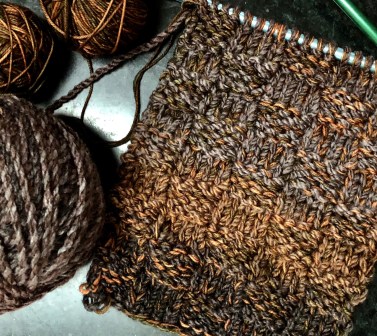
In December, I discovered, by looking at the photos in my Instagram feed, that sometimes the colors in a knitted swatch looked very similar to the shots of food I had cooked or grown. I went through my photos, pulled out pictures of knitted fabric that matched up colorwise with pictures of food, and sent them to my son, Andrew. He created a slideshow. Since today is my mother’s birthday, this is my birthday card for her to let her know I’m carrying on her legacy.


Mom loved color and texture, and there was always plenty of both to be found in yarn and food. She could not resist a gorgeous hank of smooth, hand-dyed wool any more than she could resist a shiny, plump eggplant. Accordingly, her refrigerator was a palette of colorful vegetables, and her art studio shelves were overflowing with skein after skein of yarn.

When she died, as the only daughter of her seven children, I inherited her yarn stash. It was an extraordinary stash, filled with gorgeous single balls of unlabeled wool as well as multiple skeins of labeled yarn. The possibilities were endless — a knitter’s dream — and a gift to her daughter. In her collection were ten knitted squares, part of a quilt I had started her on when she was in rehab after her brain tumor recurred. To say the squares were not uniform is being gracious. Had she not died within the year of knitting them, I would most certainly have unraveled them. Instead, they became a final memorial to her. Morose, I know, but it was the last thing she had knit before she died, and I am sentimental, and there’s a thing called a grief journey, and I’ve been on it. Having said all that, my mother was a beautiful woman who never left the house without looking her best; she would never have wanted to be remembered by those tangled-up, messy squares.

Homebound, while recuperating from the flu in October, I went through Mom’s stash to look for yarn to knit a sweater for my grandson. I came across The Squares. I looked at them for a while, trying to decide what to do with them. Thanksgiving, Christmas, her birthday in January — all food and family days she loved to celebrate — were around the corner. The last two holiday seasons without her had left me feeling blue by the time her birthday rolled around. Mom would have told me to move on. She was always my friend and coach.

I unraveled the squares. I ended up with a colorful ball of heavy worsted-weight cotton and wool blend called “Nobori” by Noro Yarns. I found the matching skeins in Mom’s stash.
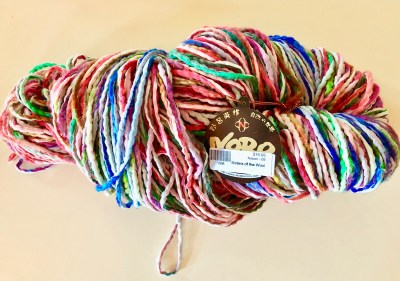
I used them to knit a bright and chunky double cowl. I cast on 32 stitches on size 9 needles and used about 300 yards. The finished cowl is 8″ wide and 58″ long. I decided to knit it in the basketweave pattern so the edges of the finished fabric would remain flat instead of curled inward as they would have had I used the stockinette stitch. I love how the changes in stitch direction, with the basketweave pattern, reflect light in contrasting ways.


That’s my bestie cousin, Marion, on the left. Her Pumpkin Bread with Chocolate Chip is one of the most popular recipes on Judy’s Chickens.

Once I finished my cowl, I knit one for my dear friend, Wendy Martin. Can I just say here that it is a thrill to see people wearing stuff you make for them? Wendy’s cowl was knit with a light worsted weight superwash yarn called “Wild Flowers” by Lichen and Lace. I bought it from Mason-Dixon Knitting’s online shop. I cast on 40 stitches on size 7 needles. The finished fabric was 8″ wide and 52″ long. I used a knit 5, purl 5 basketweave pattern. This cowl was light enough to be worn as an indoor scarf instead of my bulky, outdoor cowl.


When Thanksgiving vacation rolled around, and my sons were home, I knit a “neck warmer” for each of them using yarn from Mom’s stash. I changed the name from cowl to neck warmer because cowl sounded like a feminine garment. I wasn’t sure the boys would like them, but they all wanted one, to my surprise. You can imagine my delight when this photo of my son was posted on his Instagram the day after returning to school —  he wore his neck warmer to work! He liked it. He really liked it.


That gave me an idea. I decided I would make neck warmers for all my brothers, their wives, girlfriends, and their children using yarn from our mother’s stash for this year’s holiday presents. The side benefit was that I would be able to reduce the size of Mom’s stash and find a use for all the singlet balls of yarns that are often hard to use up. It was similar to cleaning out the refrigerator. In a way.

I Got Into It & It Got Into Me

To make knitting so many neck warmers creatively challenging, I made a rule: I had to use at least two strands of different yarns twisted together for each neck warmer. This was because Mom had so much sock and DK weight yarn that needed to be used up. But, oh, did it ever make the entire process so much more fun. Mom would have loved seeing the results. I definitely felt her presence knitting by the Christmas tree in December’s early morning and evening hours.
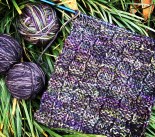


Because the yarn weights varied, I did a swatch of each intended combination to see how they looked together and to calculate their stitch per inch count (gauge) to know how many stitches to cast on. The count had to be a multiple of four for the basketweave pattern to work. All of the scarves were knit on size 10½ needles with a cast on of anywhere from 20-36 stitches, depending on the thickness of the strands. My goal was a finished product somewhere between 6½ and 7½ inches wide with a somewhat stiff texture. I didn’t want the neck warmers to be floppy. The length was 21 to 23 inches, depending on when the ball of yarn ran out. For the children’s sizes, I made them 6″ wide by 18″ long.

The Basketweave Knitting Pattern
-If the number of stitches is divisible by 8, such as 24 or 32, do the following:
Rows 1-4: knit 4, purl 4, repeat across row
Rows 5-8: purl 4, knit 4, repeat across row
Repeat rows 1-8 until the desired length is reached.

-If the number of stitches is 20 or 28 (an uneven number of blocks), do the following:
Rows 1 and 3: knit 4, purl 4, knit 4, repeat across row
Rows 2 and 4: purl 4, knit 4, purl 4, repeat across row
Rows 5 and 7: purl 4, knit 4, purl 4, repeat across row
Rows 6 and 8: knit 4, purl 4, knit 4, repeat across row
Repeat rows 1-8 until the desired length is reached.

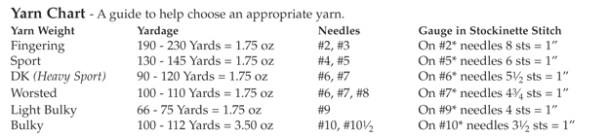
This chart of yarn weights might help you choose yarns from your stash:
By the time Christmas and Hanukkah came around, I was finished.

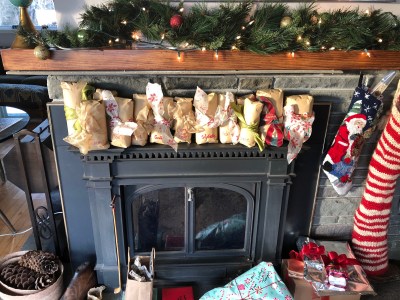
I mailed the neck warmers to each of my brothers’ homes. My brother Charles sent me this photo when they arrived.
Using my gifts of knitting, cooking, and otherwise caring for my family, I had a beautiful holiday season filled with the love of family and friends. I learned that grief has its own timetable and ain’t nobody gonna rush it.

To end, here’s a picture of Mom knitting and smiling at her sons, Carl and Sam, who even as adults couldn’t keep their hands off each other. Mom laughed easily, and my brothers loved to make her laugh.

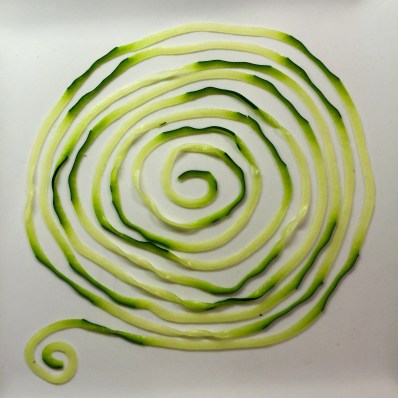
Next year, I’m going to spiralize vegetables like this strand of zucchini and knit them into edible sweaters. Happy New Year, Readers!
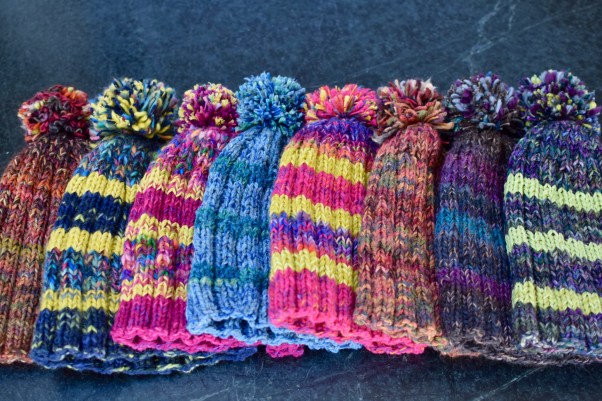
And if you want to knit hats… How to Knit a Hat and Make a Pom Pom
Always check the website for the most current version of a recipe or pattern.

If you enjoyed this post, become a subscriber! Be sure to confirm the subscription on the follow-up letter sent to your email address.

Follow Judy’s Chickens on Instagram and Pinterest @JudysChickens.

© 2014-2020 Judy Wright. All rights reserved. Photos, videos, and text may only be reproduced with the written consent of Judy Wright.

Sheet Pan Supper: Butternut Squash Soup

A week after Thanksgiving, I became weary of the winter squashes staring at me from the windowsill. I put them there to inspire me to make a clever Thanksgiving dinner table centerpiece over.a month ago. That never happened. Instead, they became a constant reminder that I had never gotten around to doing that. Or cooking them; I was basically over squash.

The question was, do I cook and freeze them or put them in the compost pile where I knew my chickens would happily devour them. That’s one of the nice things about having chickens: they are the ultimate assuagers of food-waste guilt, and they give you eggs for their trouble. Ultimately, I roasted them, scooped out their flesh, and froze it.

Soon after, I attended a birthday luncheon at a restaurant. Each of my friends ordered the butternut squash soup. It was delicious. I decided then and there I would use the roasted squash to make soup. I had a rich Chicken Stock from Rotisserie Chicken Bones in the freezer to use for the broth.

Yield: 12 cups of a hearty soup.

Ingredients
3 tablespoons extra virgin olive oil
1 large onion, roughly diced (3 cups or 1 pound)
4 cloves of garlic, peeled, smashed, and chopped
4 pounds (7 cups) roasted winter squash (see directions below)
2 quarts (8 cups), no salt added chicken broth.
Salt and pepper to taste
1 teaspoon ground cumin

Mise en Place

To Roast Squash:
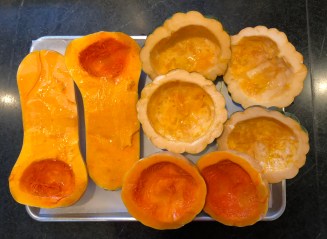
Cut the squash in half and scoop out the seeds and fibrous pulp. I used acorn, butternut, and Seminole pumpkin squashes.
 

Use a basting brush to swab the squash halves with olive oil and sprinkle with sea salt and garlic pepper. Place on a parchment-lined baking sheet in a 425º oven. Cook for one hour. Let cool for another hour. Remove the skin and any remaining stringy pulp. I packed and froze the cooked squash.
.
To Make Soup:
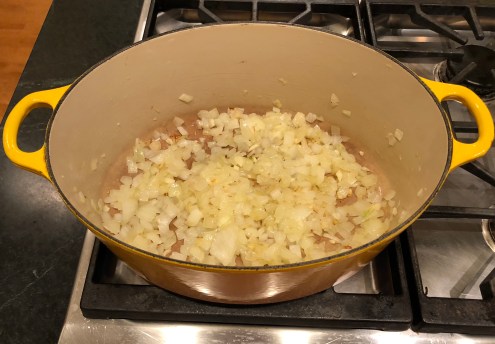
Sautée onion and garlic in olive oil over medium-low heat until they become soft and translucent — about 15 minutes.
Add the thawed roasted veggies. Stir in the broth and bring the soup to a simmer. Add cumin. Simmer for 15 minutes. Season to taste. I only needed to add one teaspoon of salt and no pepper because the roasted vegetables had already been well-seasoned.

Serve with a sprinkle of chopped parsley for garnish, if desired.

My NEWly decorated windowsill.

Related Posts
Chicken Stock from Rotisserie Chicken Bones
Rotisserie Chicken Soup, Revisited
Sick Soup, Sometimes Known as Snow Day Soup
Aunt Bridget’s Chicken Soup with Little Meatballs
Lisa’s Award Winning Buffalo Chicken Chili
Kelly’s Duck Stew
Bruce’s Turkey and Sausage Gumbo
Mrs. Lombard’s Portuguese Kale Soup (aka Caldo Verde)
Pasta e Fagioli, aka Pasta and Bean Soup

Always check the website for the most current version of a recipe.

Follow me on Instagram and Pinterest at JudysChickens.

If you enjoyed this post, please sign up to be a subscriber! Once you sign up, be sure to confirm the subscription on the confirmation letter sent to your email address.

© 2014-2023 Judy Wright. All rights reserved. Photos and text may only be used with written consent.

Stocking Stuffers: Tools for the Cooking Life

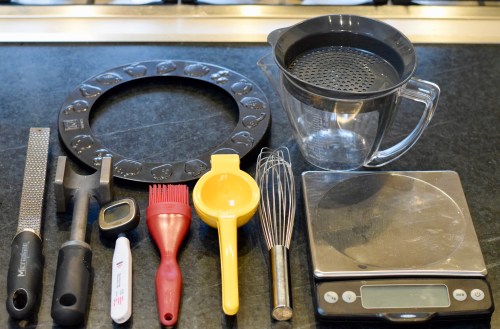
As my kids grew up and moved into their own apartments, I started giving them kitchen tools as stocking stuffers. These tools are all specialized tools above and beyond measuring cups and spoons.

My list of specialized cooking tools includes:

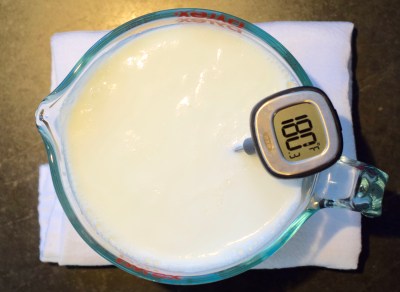
Instant Read Digital Thermometer:  This thermometer works quickly and accurately. Last spring, when I was big into making yogurt, I gave each of my sons one for Easter. The instant-read thermometer should only be used to periodically check the temperature of roasting meat. It is not meant to be left in the meat during the entire cooking process.

From: DIY Yogurt and Yogurt Cheese (aka Labneh, Greek Yogurt)

The Microplane Fine Grater: I use this tool to zest citrus or finely grate cheese, ginger, and nutmeg.

From: Italian Ricotta and Lemon Cookies (best cookies on the blog)

From: Grandma’s Italian Fried Cauliflower

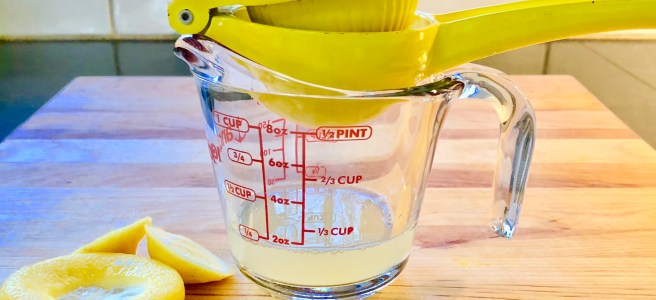
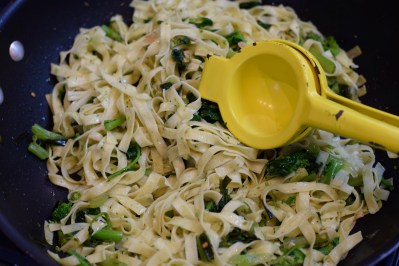
Citrus Squeezer: I use this tool to extract juice from lemons and limes without getting seeds into the juice. I also use it to squeeze juice directly over fish, vegetables, and pasta dishes just before serving.

From: Brooks’s Pork Tenderloin with the Most Amazing Marinade

From: Fettuccini with Rapini (aka Broccoli Rabe) and Garlic

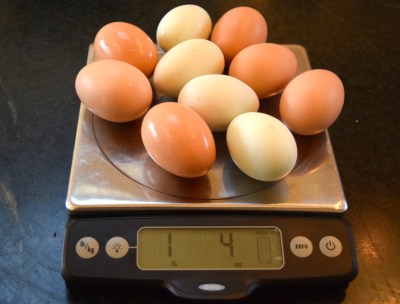
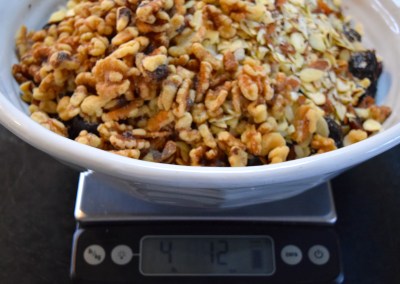
Kitchen Scale with a “Zero-Out” Feature: This scale weighs food up to eleven pounds. Since I use eggs from my backyard chickens, I often weigh them rather than go by the number of eggs called for in a recipe. A large commercial egg weighs about two ounces. My chickens lay eggs that are less uniform ranging from one and a half to three ounces. Once I had a four-ounce egg (OUCH!). I use the scale to weigh vegetables, nuts, fruit, flour, and meat as I develop recipes. The scale costs about $50, so it may fall into the category of “an under the tree” gift instead of a stocking stuffer. I’ve had my scale for five years, and it is still using the original batteries.

From: 50 Ways to Make a Frittata

From: Fruit and Nut Bread

From: Lisa’s Award-Winning Buffalo Chicken Chili

A French Wire Whisk (with a barreled handle)
I like this 10-inch whisk with the narrow head because it gets into the saucepan’s crevices when making gravy and along the sloping sides of a bowl when mixing dry ingredients. The barrel handle stays cool to the touch when stirring hot foods.
 
From: Foolproof Make-Ahead Thanksgiving Gravy

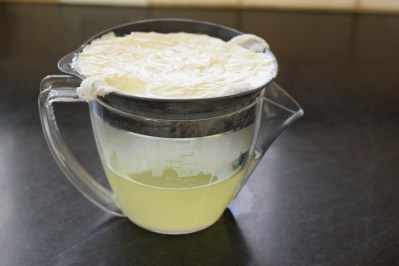
Fat Separator (with a food particle filter): Great for separating fat from meat juice when making gravy or chili. I also use my 4-cup separator as a strainer when making Greek yogurt.

From: My Favorite Silver Palate Chili

From: DIY Yogurt and Yogurt Cheese (aka Labneh or Greek Yogurt)

Basting and Pastry Silicone Brush: This gets a ton of use when I coat summer veggies or fish with olive oil before roasting. I also use it to lightly frost cookies before adding sprinkles. It goes in the dishwasher for easy cleanup.
 
From: Baked Ziti with Eggplant

From: Easy Roasted Salmon with Olive Oil and Garlic Pepper

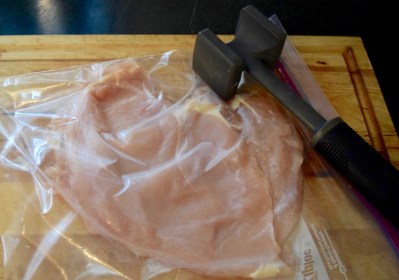
Meat Tenderizer Mallet: I’m big on flattening chicken breasts to help them cook more evenly. I also smash garlic or nuts with the mallet rather than dirty the food processor.

From: Lemony Grilled Chicken Breasts

From: Grandma’s Italian Fried Cauliflower

From: Mom’s Monkey Bread, circa 1970

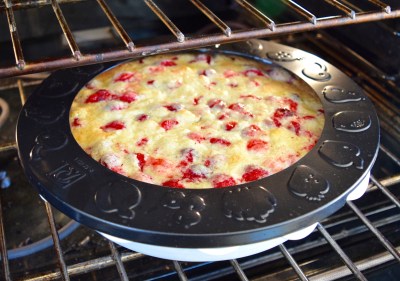
Pie Crust Shield: I bake lots of pies. Covering the crust’s edge while the rest of the pie bakes keeps it from browning. I also bake the pie on a pre-heated pizza stone to encourage a thoroughly cooked bottom crust.

From: Mrs. Walker’s Cranberry Nut Pie

Thaw Detector for the Freezer: My husband adopted this simple device because when we were out of town, we were never sure if a power outage lasted long enough to melt the freezer’s contents. Now we know if the penny is on the bottom of the container, the food is spoiled.

From: How to Make a Thaw Detector for the Freezer

Check out this link for lots of holiday recipes!

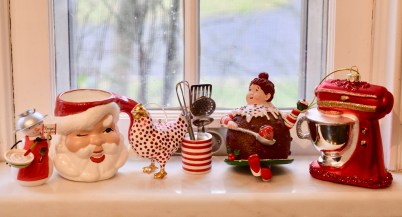
And then there are these happy “tools” that sit on my windowsill every December.

fullsizeoutput_1f73

Always check the website for the most current version of a recipe.

Follow me on Instagram and Pinterest at JudysChickens.

If you enjoyed this post, please sign up to be a subscriber! Once you sign up, confirm the subscription in the confirmation letter sent to your email address.

© 2014-2020 Judy Wright. All rights reserved. Photos and text may only be used with written consent.

Karen’s Foolproof Make-Ahead Gravy

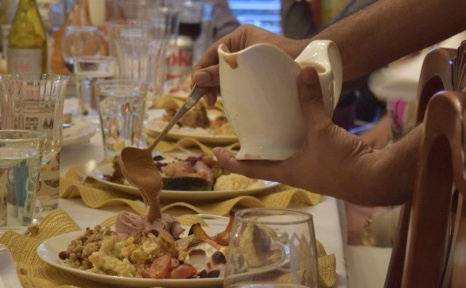
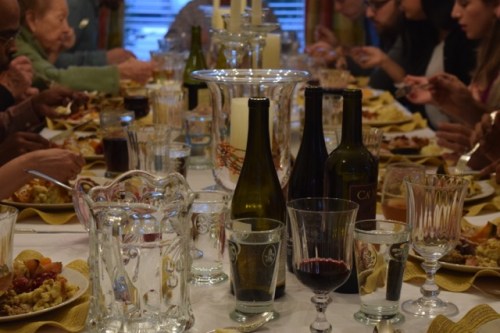
I love nothing more in life than to sit around the table with friends and family of all generations and enjoy a meal filled with storytelling, good food, and laughs.

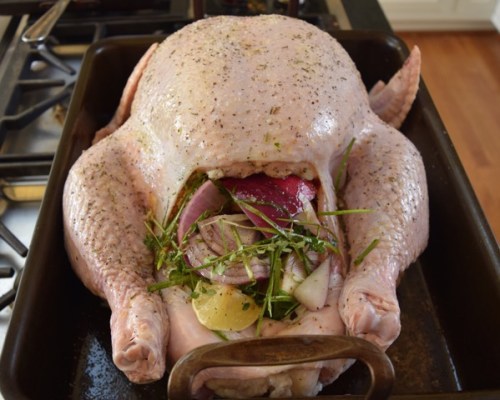
To get to the Thanksgiving dinner’s actual serving, I have to pass through a few cooking hurdles. For instance, I suffer from indecision every time I cut into the turkey thigh to test for doneness. Are the juices truly running clear, or are they still ever so slightly pink?

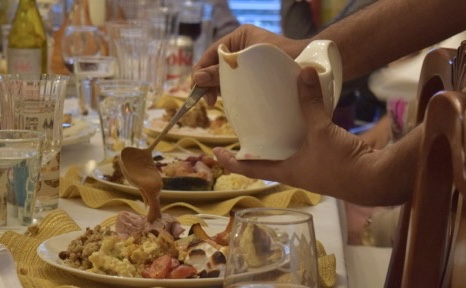
And then there is the gravy. So much mystery there.

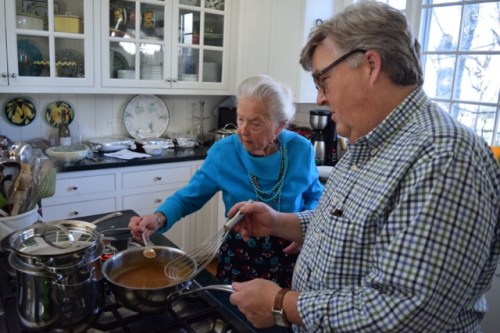
If it’s not lumps, it’s blandness. Making a velvety smooth, full-bodied gravy has eluded me for years. It is the reason why, in the midst of the crazy hour before dinner, I nonchalantly ask, “Who wants to make gravy?” as if it were an afterthought instead of a worry. Thankfully, there is always someone who volunteers, often, my husband and his mother.

This week, I was talking food with my friend Karen Rolen, a joyful, spunky woman originally from Montgomery, Alabama. I asked her if she knew how to make gravy. She confidently and enthusiastically said, “Yes, I’ve been making it my whole life; where I come from, gravy is considered a BEVERAGE!”  Her written instructions arrived the next morning.

“Make a light brown roux* with equal parts butter and all-purpose flour. I probably use ¼ to ½ stick of butter.  Add hot turkey drippings and fonds** if you have them. Have two cups or so of heated chicken broth ready, and even if it’s good and homemade, have “Knorrs” or “Better Than Bullion” chicken base available for salt and seasoning later on. Slowly stir broth into the roux and drippings and boil them on medium-high until you get the consistency you want. Season to taste with lots of ground black pepper and chicken bullion. It’s usually good enough to drink!”

*To learn what a roux is, check out Bruce’s Turkey and Sausage Gumbo and learn why you should save the turkey carcass and trimmings this year.

**Fond is French for “base” and means the bits and pieces of browned meat or vegetables left in a pan after roasting or frying.

My goal was to tweak Karen’s instructions to create a flavorful and dependable gravy you could make a few days or hours before the holiday dinner.

Yield: Makes three cups (this recipe is easily doubled or cut in half)

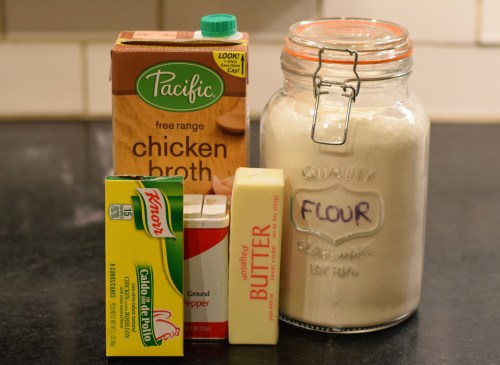
Ingredients: 

½ cup butter (1 stick)
½ cup all-purpose flour
4 cups (1 quart) heated boxed or homemade chicken broth
½ teaspoon ground pepper
¾ to 1½ squares of Knorr Chicken Bullion (for “seasoning to taste”)

Instructions:
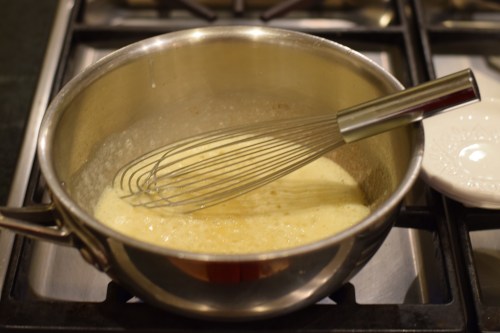
Melt butter in a heavy-bottomed saucepan over medium-high heat. Using a whisk, stir in the flour.

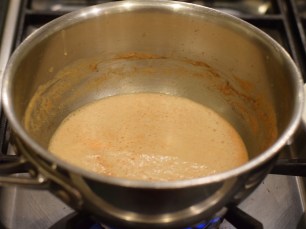
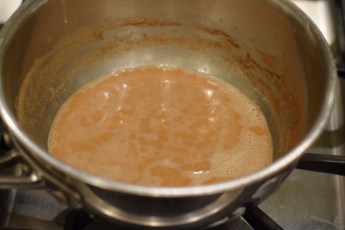
Stir continuously over medium heat until the roux starts to change color, usually about three minutes, give or take a few seconds. The picture on the left was taken at 2½ minutes. The one on the right was taken at three.
 

Think of the roux’s darkening color as “toasting” the flour. The roux should be medium brown when done. This cooking of the flour gives gravy its depth of flavor and that desired taste of nuttiness. I promise, if this is your first time making a roux, you are going to feel very accomplished as a cook once you make this gravy.

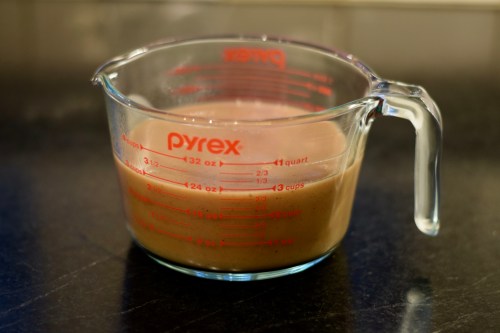
As soon as the roux changes color, whisk in the broth to stop the roux from cooking any longer. Whisk and simmer for about five minutes until the gravy thickens.

Stick with it, don’t let the flour stick to the bottom of the pan. Also, do not adjust the seasonings until after the gravy has finished cooking because as the liquid evaporates, the flavors will concentrate.

“Salt and Pepper to Taste”
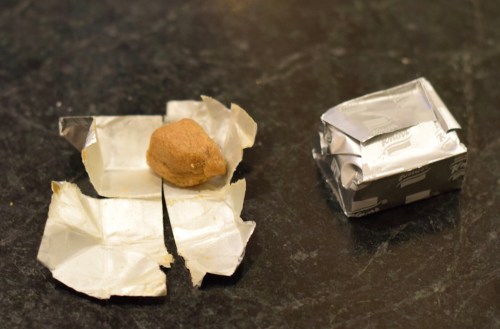
Add the pepper first because it is easier to adjust. Next, instead of adding salt, Karen and I use Knorr’s bullion cubes for flavoring. The amount you need will depend on whether you use unsalted or salted butter and regular or low-sodium chicken broth.

To successfully “season to taste,” cut the Knorr bouillon cube into four quarters. Add one quarter at a time until you hit that magical point where the gravy suddenly tastes beautifully rich.

Notice how velvety smooth the gravy is.

Reheat the gravy in a saucepan just before serving. Feel free to add strained juices from the roasting pan, if desired.

If you wish to make your own chicken stock, consider these two posts to learn how: Chicken Stock from Rotisserie Chicken Bones and Rotisserie Chicken Soup, Revisited

My friend, Renée, whose family likes to fry their turkey every year, reminds me there are no drippings for gravy-making when deep-frying a turkey, so plan accordingly.

Epilogue
Thanks to Karen Rolen for teaching me how to make gravy. I’ll think of her every Thanksgiving when I make it. Once I got Karen’s recipe adapted for this post, I took a sample of the gravy to my friends. They each tasted it and agreed it was indeed sippable! Thanks, Mary, Susie, Corabel, Jane, and Mary, for being taste-testers.

Don’t miss a recipe! Become a subscriber and have every post delivered to your Inbox.

Follow Judy’s Chickens on Instagram and Pinterest @JudysChickens.

Remember to always check this website for updated versions of a recipe.  

© 2014-2020 Judy Wright. All rights reserved. Photos, videos, and text may only be reproduced with the written consent of Judy Wright.