Roasted Ratatouille

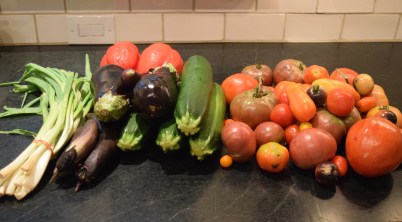
Last week, I was getting ready to leave town which meant I had to harvest all the ripe vegetables from my garden. Once I had washed and laid them all out to dry there was no question what dish I was going to make; these vegetables pretty much told me I was making ratatouille. What else would I do with onions, eggplant, zucchini, sweet peppers, and tomatoes? These are classic ratatouille fare.

DSC_0655

Many villages in the Mediterranean have some version of this “vegetable stew,” but it was Julia Child, who, in her 1961 cookbook, Mastering the Art of French Cooking, made ratatouille a household name. If you are a purist, you may want to stop reading here as I no longer make ratatouille using the methods that Julia made famous.  I don’t peel and remove the seeds from the tomatoes, sweat the eggplants and zucchini and then sauté them each separately, and then, layer them all together in a casserole to stew for a while. Her process took too much time. The way I chop, mix, and roast it all together, is much quicker and more reflective of today’s farm to table mentality. I think Julia would approve.

Since I had a lot to do before leaving town, I was in get’ er done mode and was happy to work by myself in the kitchen. My family was watching a Nicole Kidman movie in the next room and I smiled as I listened to them tease my husband about his long-standing crush on Nicole, an infatuation that makes no sense to me; she is like a porcelain doll and I am not. My family knows my husband would secretly love to run into Nicole in Nashville. Once, my youngest son even texted him, “Quick, come to Whole Foods. I’m sitting next to Nicole and Keith.” To my husband’s credit, and since he was sitting with me, he didn’t budge.

Here is my no fuss way to make ratatouille. The ingredient amounts are vague because it truly doesn’t matter. I suggest looking at the picture above and approximating the quantities from that.

Yield: About 4 quarts

Ingredients:

DSC_0603
Onions – I used one bunch of green onions and a medium-sized red onion
Eggplants – I used a mix of Black Beauty and Ichiban varieties.
Zucchini – I used 4 thick ones.
2 large Sweet Bell Peppers
Tomatoes – I used an assortment of regular and cherry-sized.
Basil – I used 4 ten-inch bushy stalks.
Garlic – I used 2 heaping tablespoons of minced garlic from the jar.
Extra Virgin Olive Oil, about 1/2 cup, maybe even a little more
Salt and Pepper, to taste

Instructions:

I prepped all the vegetables as I went along. Refer to the pictures that follow to see how. I placed them in a 13 x 16 inch Calphalon roasting pan that’s about 4 inches deep. The order of layering doesn’t matter as they will all be stirred together before going into the oven.

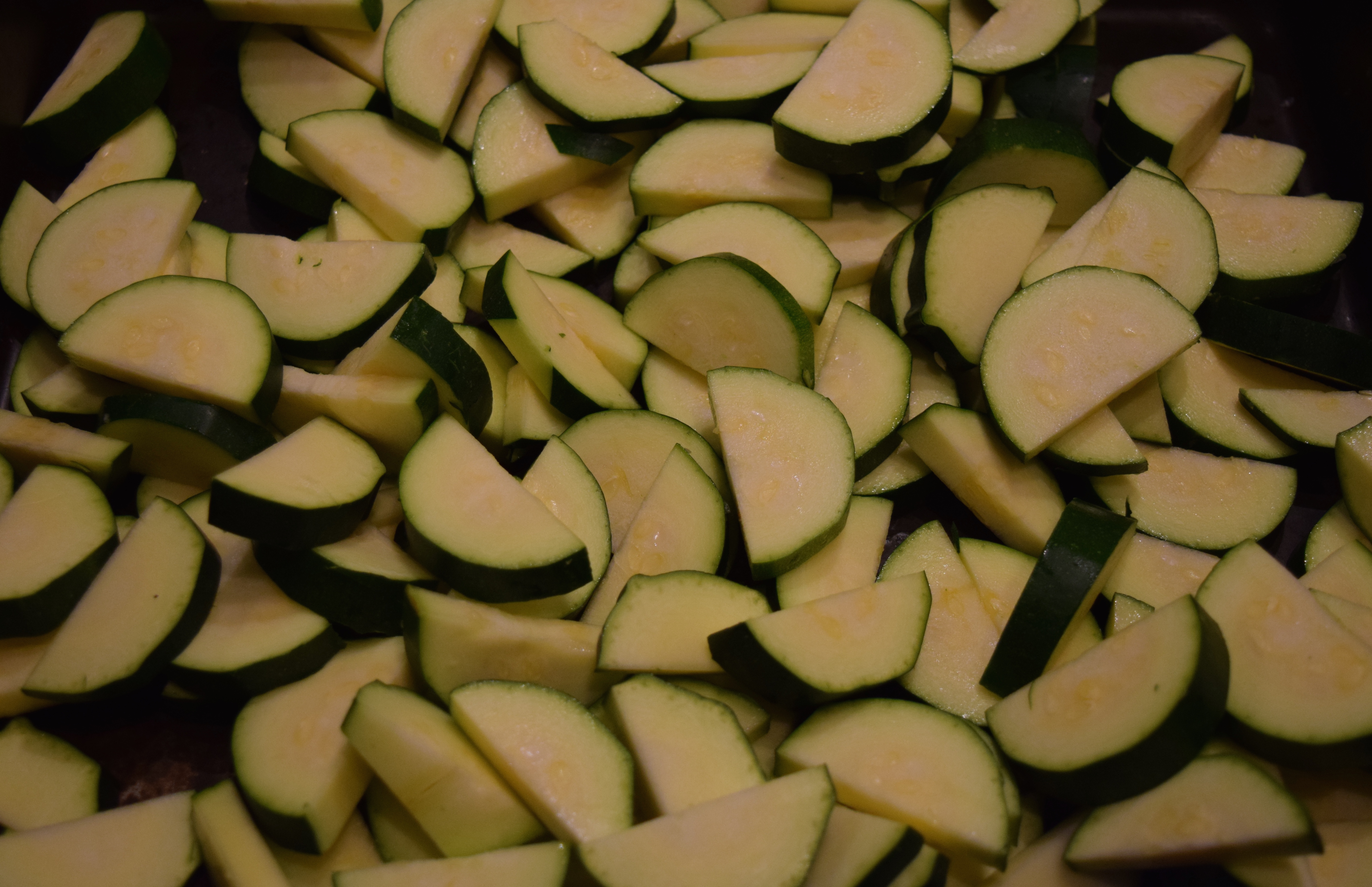
Zucchini: leave the skin on and slice.

DSC_0604

Sweet Bell Peppers: remove core and seeds, chop into 1.5-inch dice.DSC_0605

Green Onions: slice the white part into 1/2 slices, and the green stalks into 1-inch pieces.

DSC_0606

Eggplant: remove ends, peel, and slice.

DSC_0607  DSC_0614

Tomatoes: remove the stem and white core, and chop as shown. No need to peel or remove seeds.

DSC_0615

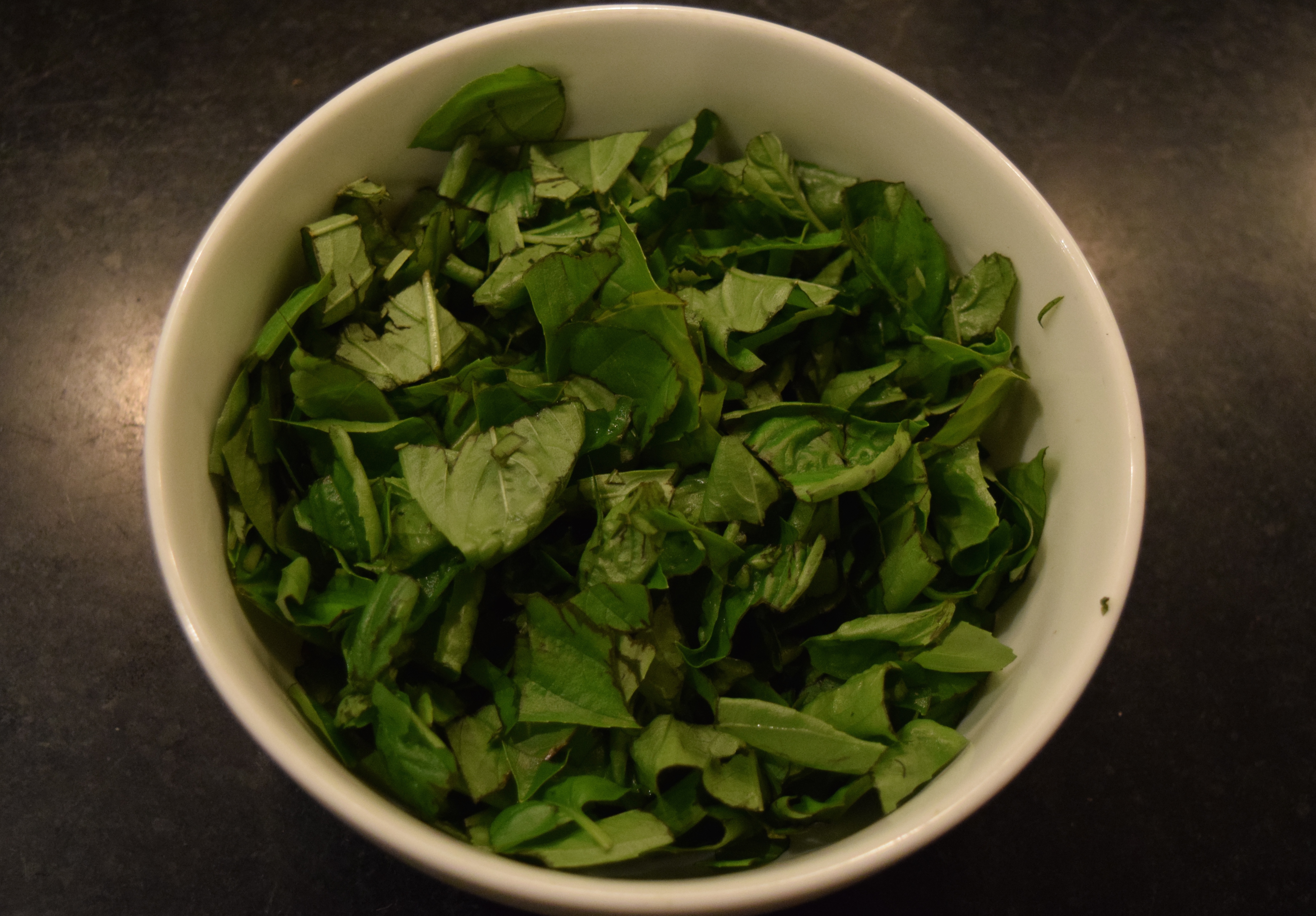
Prep basil: remove leaves from stems and chop. Add to roasting pan.DSC_0293  DSC_0633

Mix it all up. Add olive oil, garlic, salt and pepper. I am usually generous with the olive oil. I learned that from my mother.

Roast at 400º for 40 minutes to an hour depending on the volume of vegetables used.

DSC_0166

To Serve:
I’ll put just about any roasted vegetable over pasta and the ratatouille was no exception. It was delicious. Be sure to sprinkle with Reggiano Parmesan.

I had about 2½ quarts of leftovers that went into the fridge. My husband served it over orzo as a side dish the next night, and on Saturday morning, he put what was left in his omelette.

DSC_0193.jpg

Epilogue: 
My family loved this meal. As we ate dinner, one of my sons said, “Nicole Kidman couldn’t have made this dinner, Mom.”  Thanks, son.

Make it Whole30
Skip the pasta and cheese and serve it as a side dish.

LET’S STAY CONNECTED!

Follow my photos of vegetables growing, backyard chickens hanging out, and dinner preparations on Instagram at JudysChickens.

Never miss a post: sign up to become a follower of the Blog.

© 2014-2017 Judy Wright. All rights reserved. Photos and text may only be used with written consent.

Yummy Shepherd’s Pie

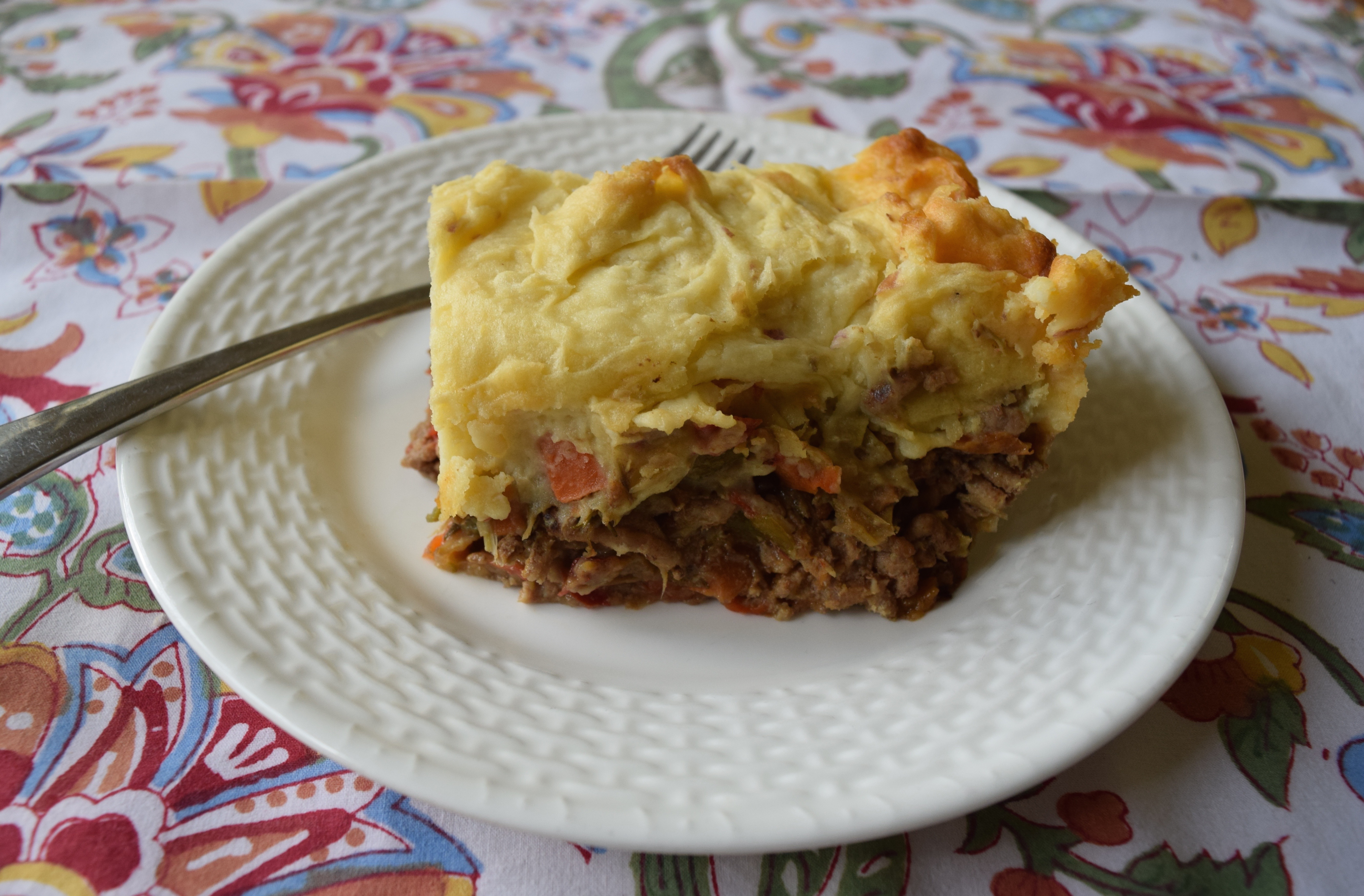
Shepherd’s Pie (made with lamb) and Cottage Pie (made with beef) are meat and vegetable casseroles topped with mashed potato crusts. Cookbooks from the early 1800s show these pies were common fare in the U.K. and Irish countryside long ago.

DSC_0102

It was also a staple of my diet while growing up in the 70s. What could be easier for a young working mother than sautéing onions and ground beef, adding a few packages of perfectly-shaped frozen vegetables, and topping the whole thing off with a layer of instant mashed potatoes? Mom cooked her pie in a round, white, Corningware dish. The interior of the pie looked very similar to this one from Betty Crocker.

b92ffb7b-7998-47a3-a26b-97c3e161a60e

A few months ago, our team of volunteer chefs at The Nashville Food Project was tasked with making shepherd’s pie for 150. It was not Betty Crocker’s version. Noooo. This version included just-picked onions, carrots, chard ribs (instead of celery), garlic, and herbs — all vegetables found in the summer kitchen garden. The pies turned out so well I started making them for my family using whatever vegetables were growing in the garden.

A word about ingredients: as long as you use onions and garlic as your base, you can add any vegetables from the garden, CSA box, or fridge. I added okra this time, and it was delicious. I have also been known to throw in a lone zucchini, eggplant, beet, or radishes from the fridge. They all work. Sometimes, I add turnips to the mashed potatoes; that works, too.

Ingredients:
Yield: serves 4-5

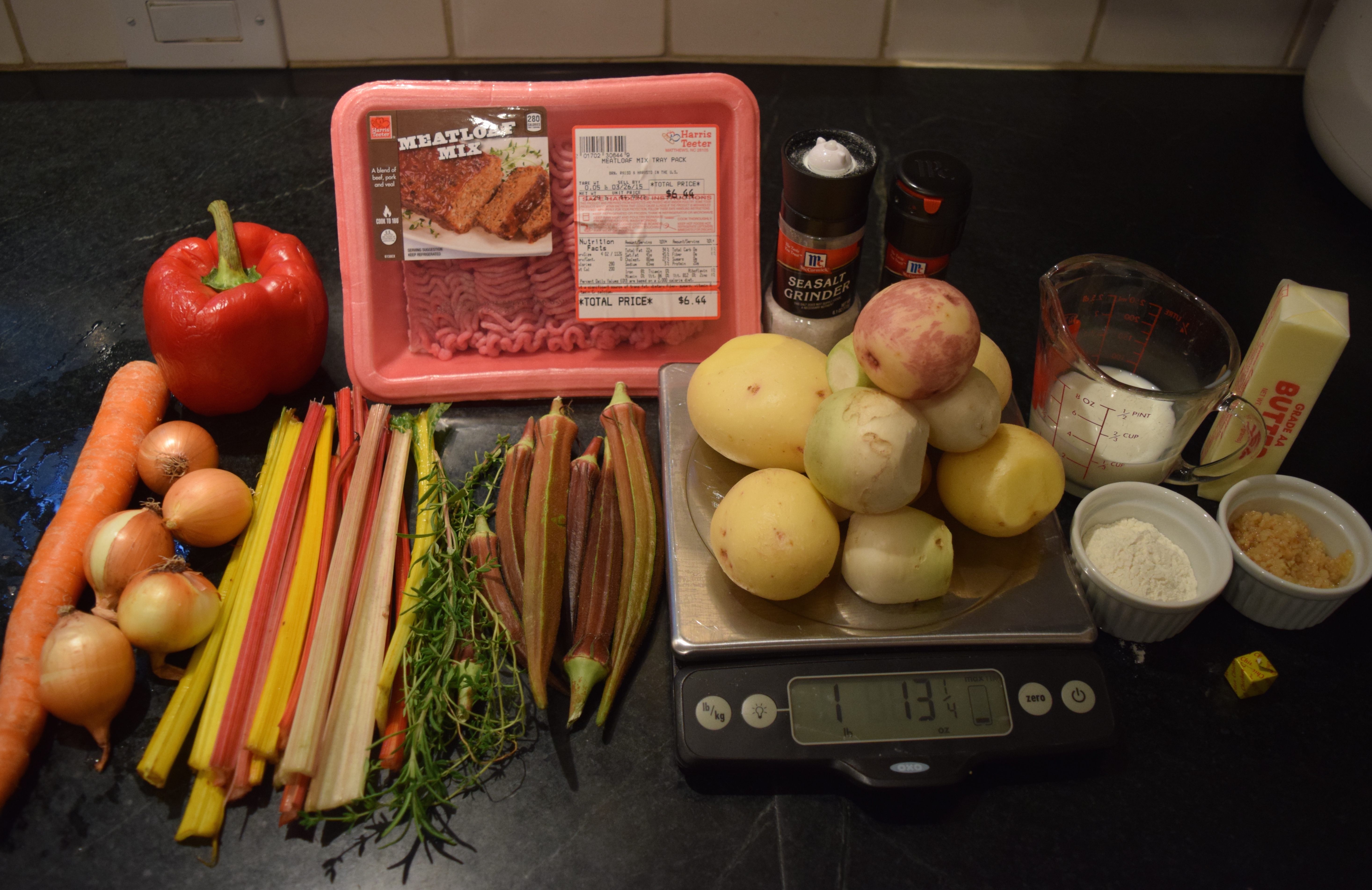
DSC_0458

Mashed  Potato Topping:
1¾ pounds potatoes, scrubbed and unpeeled (I used some turnips, too)
2 tablespoons butter
¼ cup milk
1 teaspoon salt

Vegetable Filling:
¼ cup olive oil
1 medium onion
1 large carrot, scrubbed
2 large stalks of celery, or 6-8 thin ribs of chard
6 okra pods (optional)
1 sweet red pepper, cored and seeded
2 tablespoons minced garlic
salt and pepper, to taste

Meat Filling:
1⅓ pounds of ground meat: beef, pork, veal, lamb, or venison
salt and pepper, to taste
1 tablespoon minced garlic
1 long sprig rosemary, leaves snipped and chopped
4 sprigs thyme, leaves snipped
5 sprigs parsley, leaves snipped and chopped

Instructions:
Preheat oven to 350º.
One 9-inch square or round pan or ceramic casserole dish.

Cook potatoes for the mashed potato topping:
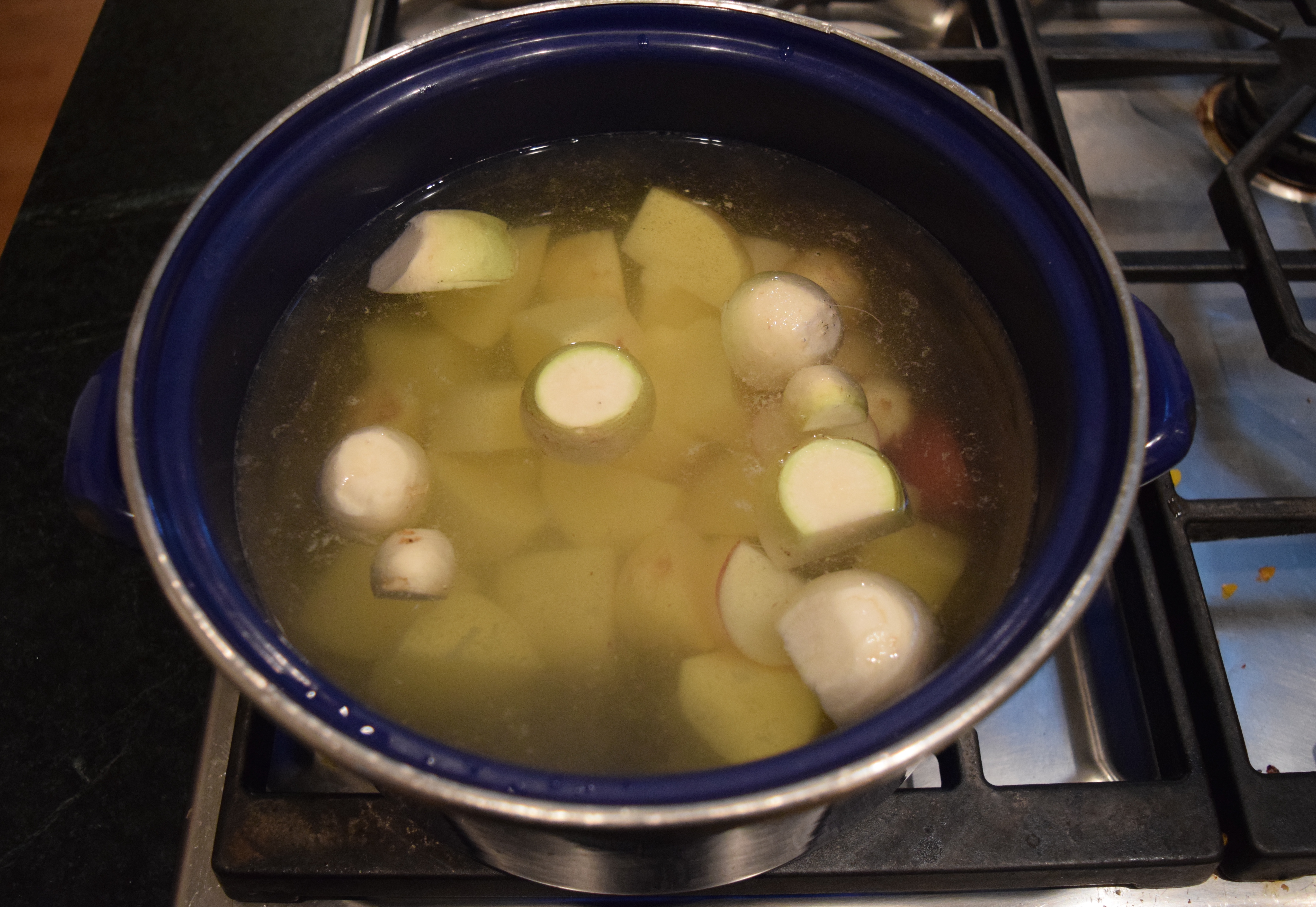
Scrub potatoes, chop into 2-inch chunks.  Add to a pot of cold water. Bring to a boil and simmer for 10-15 minutes. Insert a fork into a potato to test for doneness. If the potato is too firm, cook 5 more minutes. Do not overcook; you do not want the potatoes to become waterlogged and break apart when you test them. If that happens, drain well and use and next time cook the potatoes for less time.

DSC_0459

Prep vegetables for the food processor:
-Onions: peel the outer skin and quarter.
-Carrots: scrub the skin and chop into 3-inch chunks.
-Sweet Red Pepper: remove the stem, core, and seeds, and chop into 3-inch chunks.
-Celery or chard ribs: I didn’t have celery, so I picked rainbow chard from my vegetable garden. To prep the ribs, chop off leaves and cut stalks into 4-inch segments. (Save the leaves for something else.)
DSC_0460

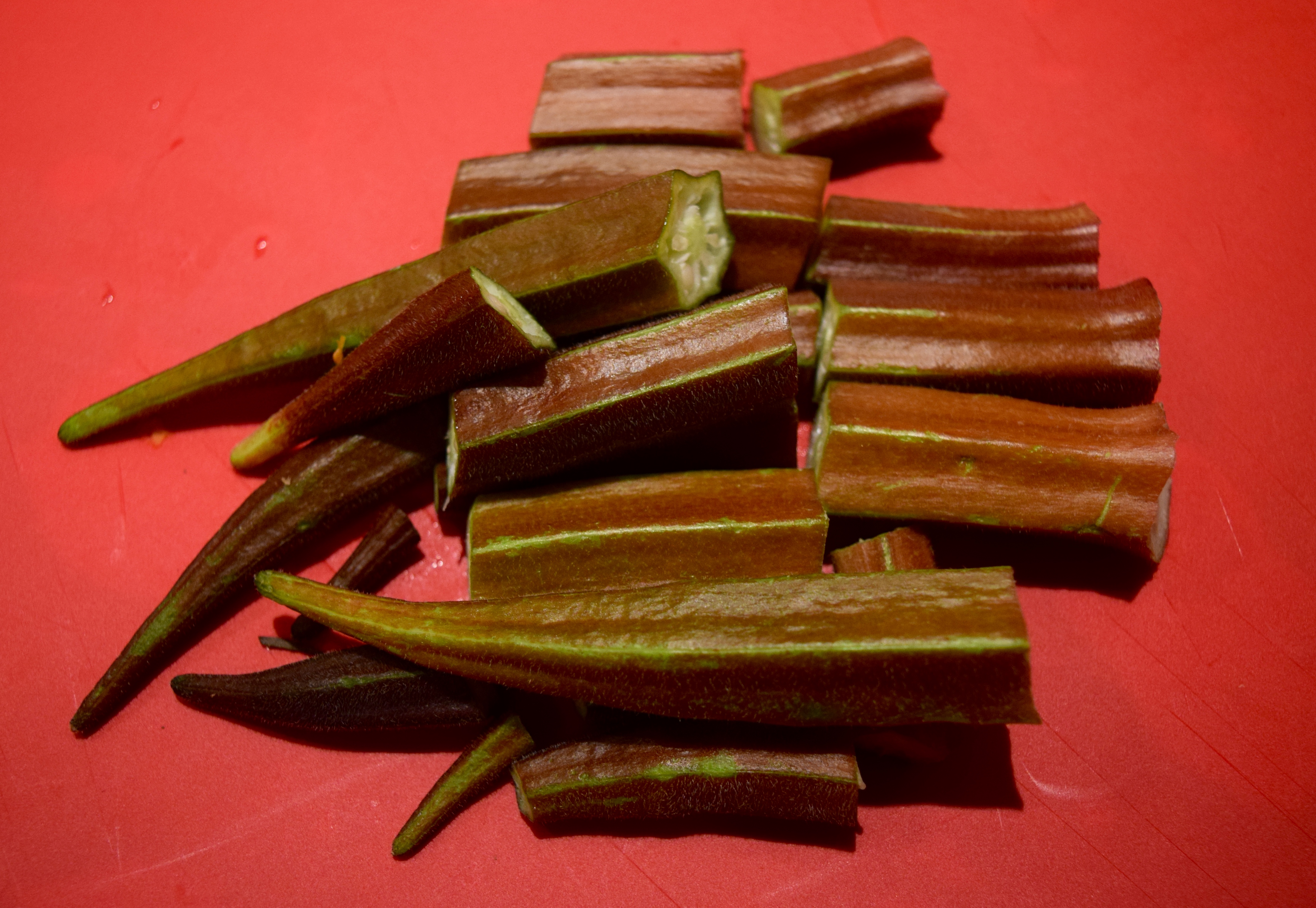
Okra: I’m growing a gorgeous red variety of okra. Red okra’s long pods are generally tender enough to eat, unlike green okra where a long pod is too fibrous to cook. To prep okra: cut off the stem and chop into 3-inch segments.
DSC_0001

Process the vegetables:
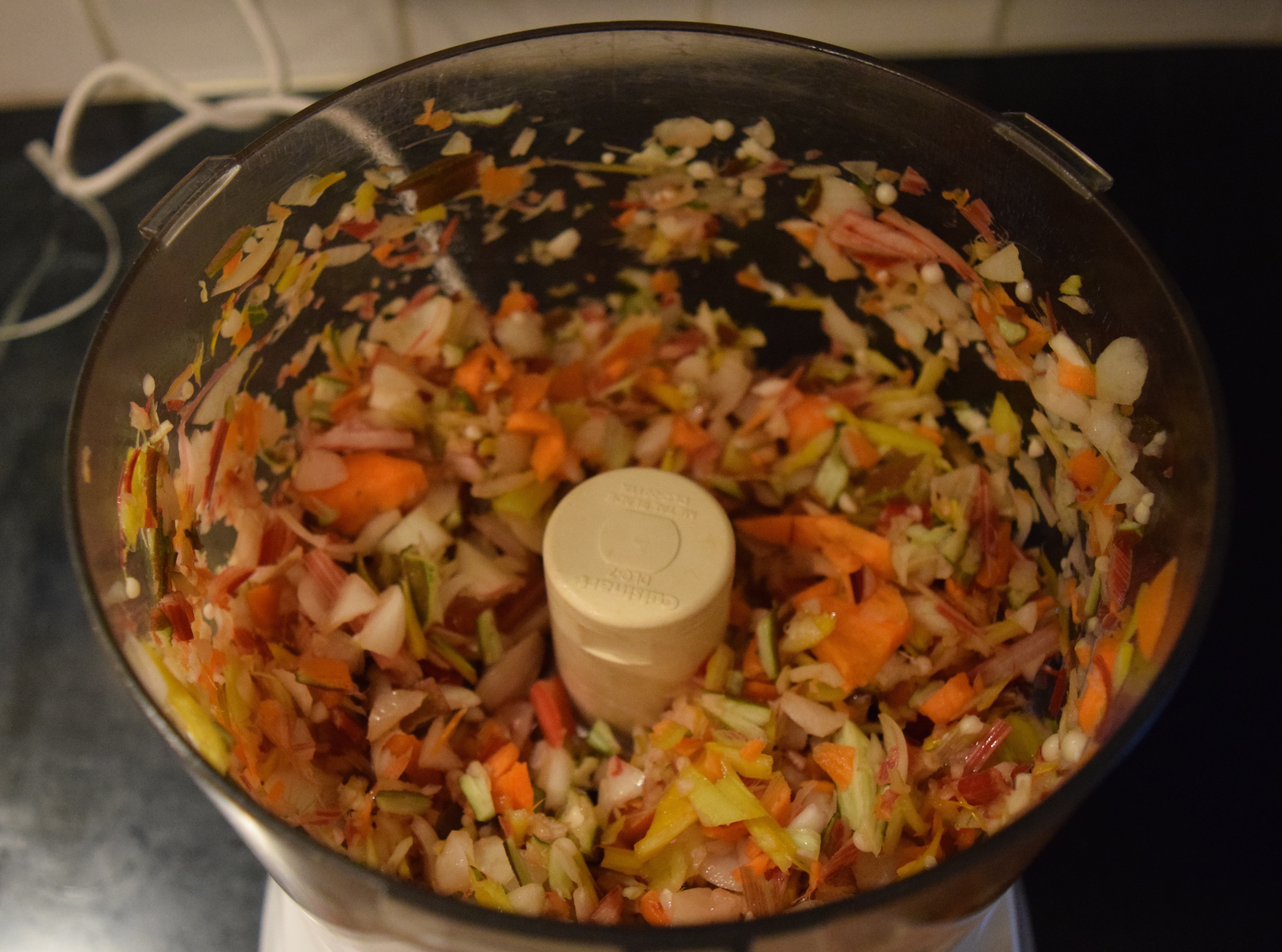
Take all the vegetables, except the herbs, and pulse in a food processor.

DSC_0002  DSC_0003

Sauté vegetables and meat:
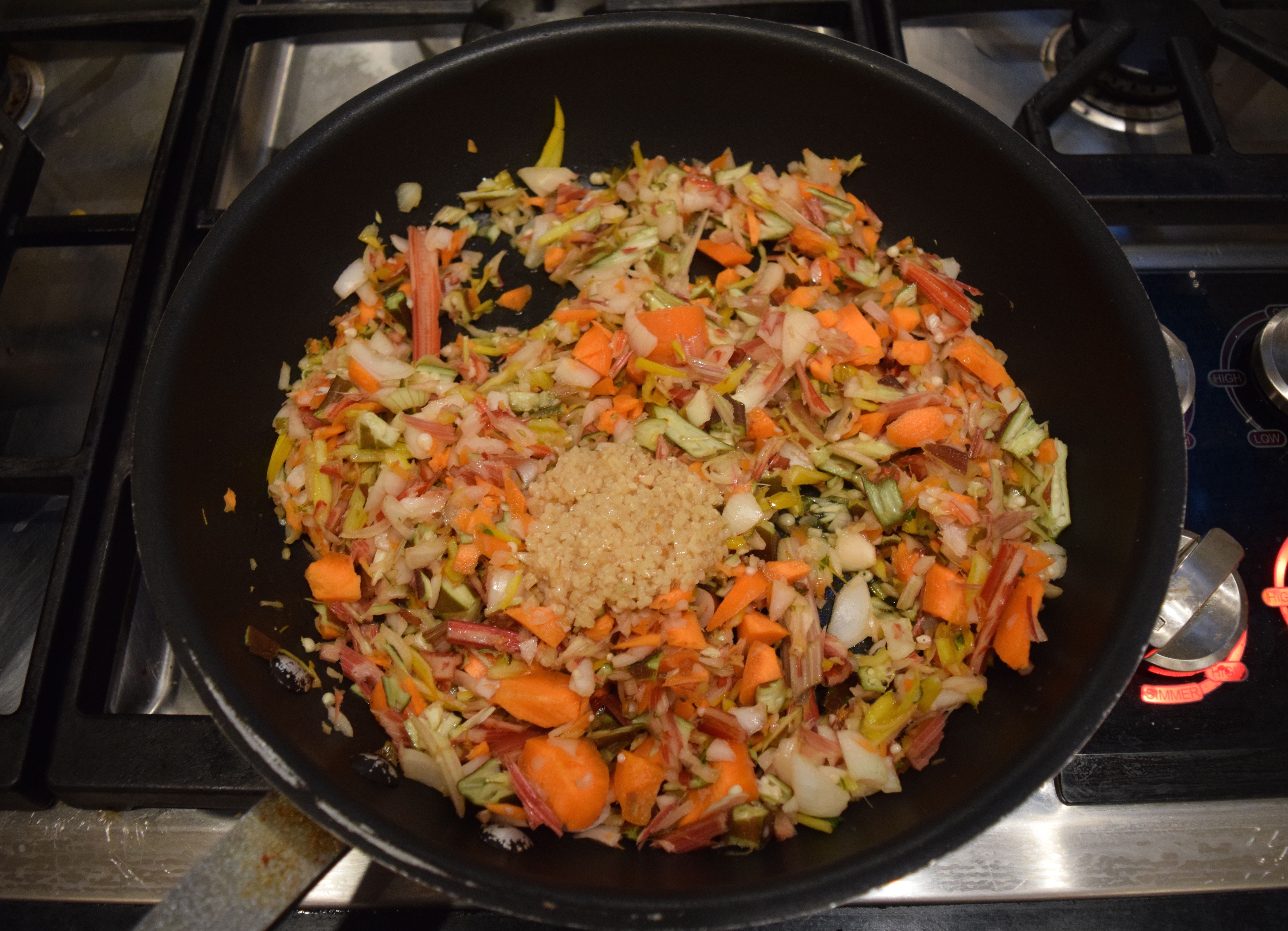
Add olive oil to a 12-inch sauté pan. Add chopped vegetables, garlic, salt, and pepper. Sauté on medium heat for 10 minutes until vegetables become translucent. Do not brown. Set aside.

DSC_0005

In another pan, add ground meat, garlic, salt, pepper, and herbs. Sauté for 5-10 minutes until meat is cooked but not browned. Drain fat.

To make the mashed potato topping:
While the meat filling is cooking, test the potatoes. If tender, remove from heat and drain in a colander reserving about ½ cup of the potato water. Since the food processor is already dirty, I purée my mashed potatoes in it.  Add hot potatoes, milk, butter, and salt to the food processor bowl. Process just until blended. If the mashed potatoes are too pasty, add the reserved potato water and pulse a little longer.

DSC_0011 DSC_0013

To assemble:
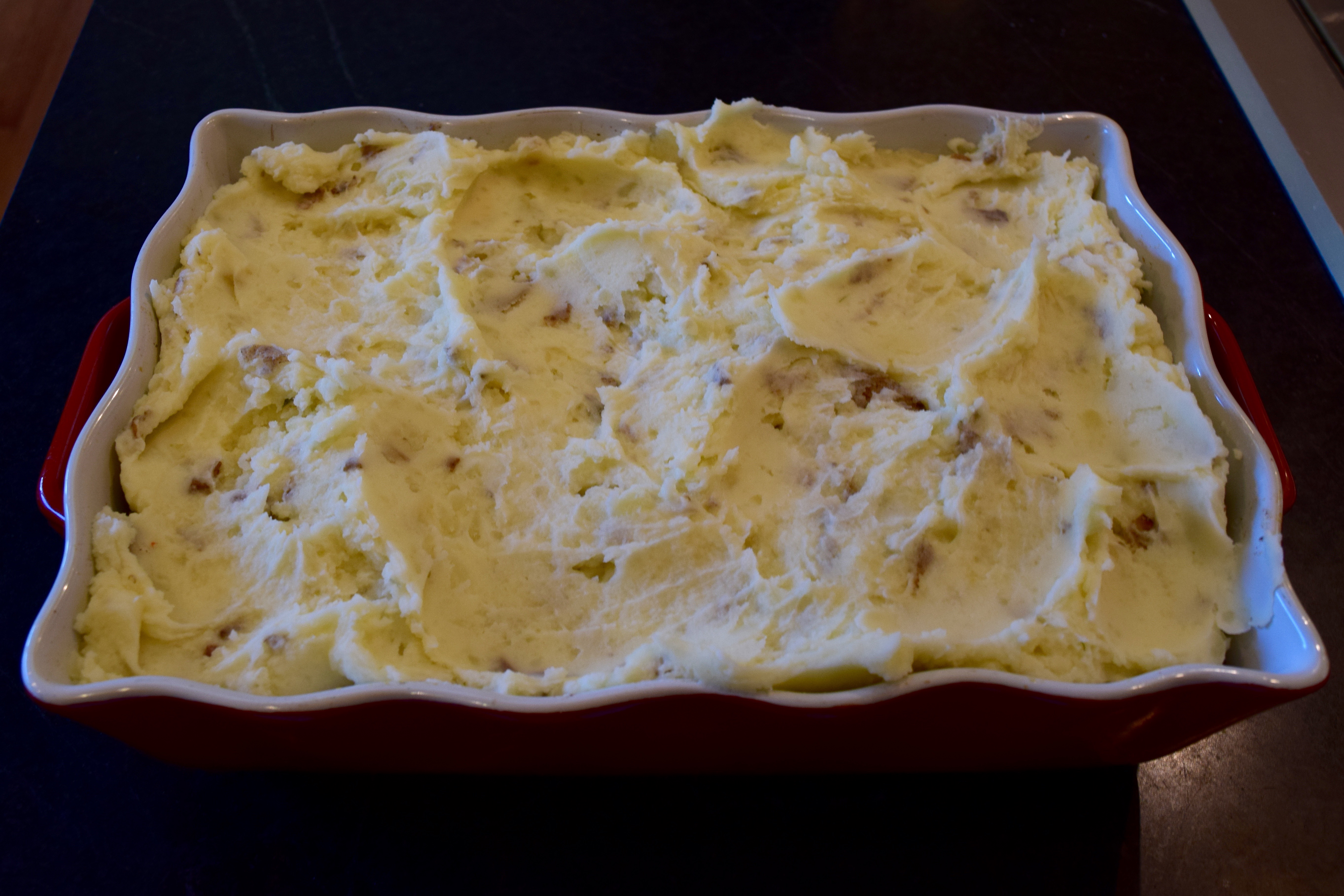
Pour vegetables and meat into a baking dish. Spread the mashed potatoes over the filling with a spatula.

DSC_0025  DSC_0029

Bake for 20-30 minutes. The pie is done when the peaks on the potatoes are lightly browned. In the two pictures below, you can see the difference between when I drained the fat and when I didn’t.  The browned edges around the pie on the right are from fat that bubbled up during baking. Ugh. To avoid that, drain the meat before adding the potatoes.

DSC_0887  DSC_0032

Make it Whole30
Eliminate butter and milk in the mashed potatoes. Substitute 2 tablespoons of olive oil for the butter. My friend Libba suggested substituting ¼ cup of chicken broth for the milk. The extra liquid helped fluff up the potatoes.

Make it for company: double the recipe (Serves 8-12)
We’ve been making this recipe a lot for big family dinners. Here is my husband managing all three pans on the stovetop: vegetables, meat, and potatoes. He was pretty proud of himself.

DSC_0079

Layer all the ingredients in a deep 9 x 13 lasagna pan.DSC_0081

New vegetables we’ve tried:
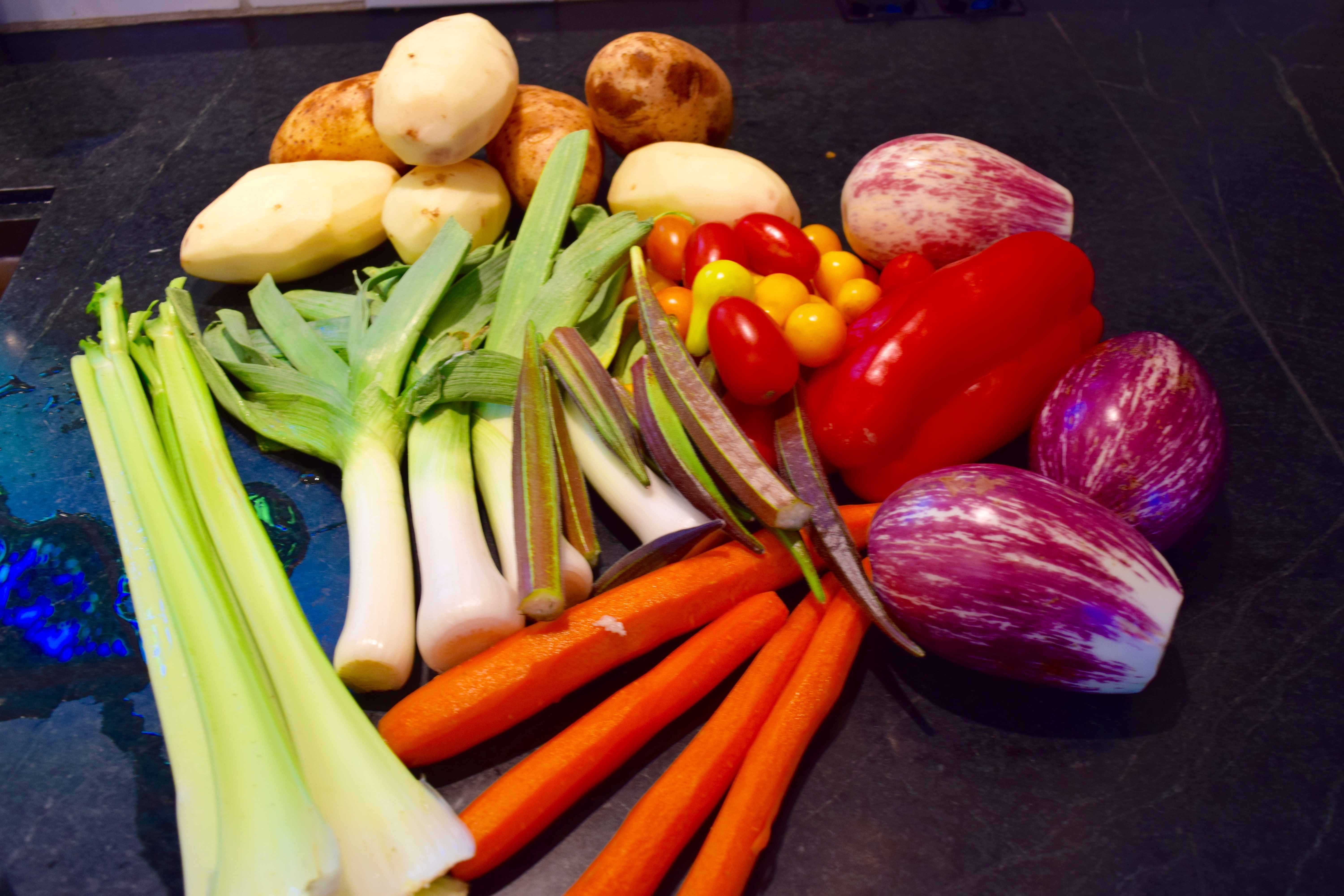
I’ve learned I can pretty much add any vegetable to the mix. This time, we used leeks, a small onion, unpeeled eggplants, an assortment of cherry tomatoes, a sweet red bell pepper, okra, celery, and carrots. In other words, everything in the vegetable drawer of the fridge.

DSC_0076 DSC_0078

Bonus: everyone was in the kitchen helping to prep the veggies. When that happens, I get verklempt.

More comfort food:
Judy’s Mom’s Meatloaf
Chicken Cacciatore, Pollo alla Cacciatora, or Hunter’s Chicken
50 Ways to Make a Frittata
Fresh Marinara Sauce with Pasta and Mozzarella

LET’S STAY CONNECTED!

Follow my photos of vegetables growing, backyard chickens hanging out, and dinner preparations on Instagram at JudysChickens.

Never miss a post: sign up to become a follower of the Blog.

© 2014-2020 Judy Wright. All rights reserved. Photos and text may only be used with written consent.

Aunt Bridget’s Chicken Soup with Little Meatballs

My high-spirited Great Aunt Bridget was the original #nofilter. Always, words were coming out of her mouth that caused us to look at one another as if to say, Did she really just say that? She had a memorable look, too: her hair was always done up, her dresses were colorful, and she rocked the cat-eye glasses look. She was comfortable in her own skin. AND, she made a great pot of chicken soup. Between the things she said, the clothes she wore, the bouffant hairdos, and the food she cooked, Aunt Bridget was memorable. And, loved. What more could we each want?

Jerome Bridget - Version 2

She and her husband, Uncle Jerome, both immigrants from Sicily, owned successful side by side businesses on Eastern Avenue in Baltimore — Bridget’s Beauty Shoppe and Jerome’s Barber Shop. They created an interior doorway between their adjoining buildings so they and their customers could visit one another all day. It was a happening place. As a little girl, I loved to sit under the hairdryer hood and basque in the attention of my aunt as she paraded her loyal customers by my chair so they could meet her grandniece.

In this photo from 1963, Aunt Bridget is standing at the forefront of her salon wearing a white uniform, and Uncle Jerome is in the back in his barber’s shirt. Aunt Bridget employed a dozen full-time “operators.” They were her girls, and they were busy. This was when women went to the beauty parlor weekly to get their hair washed and set. Upstairs from the shop, Aunt Bridget had a kitchen where she and her niece, Theresa, fed everyone — either chicken soup or spaghetti and meatballs.

DSC_0588

One year, in the mid-1970s, I visited my grandparents in Florida during Easter break; so did my Aunt Bridget. In the whirlwind that signaled her arrival from the airport, my aunt walked into the kitchen, opened her purse, and pulled out an “old hen,” complete with its collagen-laden feet. She announced she was going to make a pot of soup. Her nephew had brought her by the Fell’s Point Farmers Market in Baltimore to get the hen on the way to dropping her off at the airport. I regret now that I spent more time rolling my 19-year-old eyes than looking for a pen and paper to write down her soup recipe; it was the best. I have spent years trying to recreate it.

What was so memorable about Aunt Bridget’s soup was the broth’s full-bodied flavor and the light, bite-sized meatballs that floated on the surface.

In my early attempts at recreating her broth, I was left with either perfectly cooked chicken in a thin stock that had to be boosted with a bouillon cube or a great tasting stock with tasteless, limp meat. Eventually, I figured out a way to have both rich stock and tasty meat. I simmered the soup for sixty minutes, removed the chicken thighs, pulled the meat off the bones, set the meat aside, and returned the bones to the stockpot to simmer for a few more hours.

About the Ingredients

My mother taught me to use chicken thighs when making soup. As the mother of seven children, she worried about us choking on small bones, so using whole chicken breasts with ribs attached was out. That was fine with me because I love the taste of thigh meat.

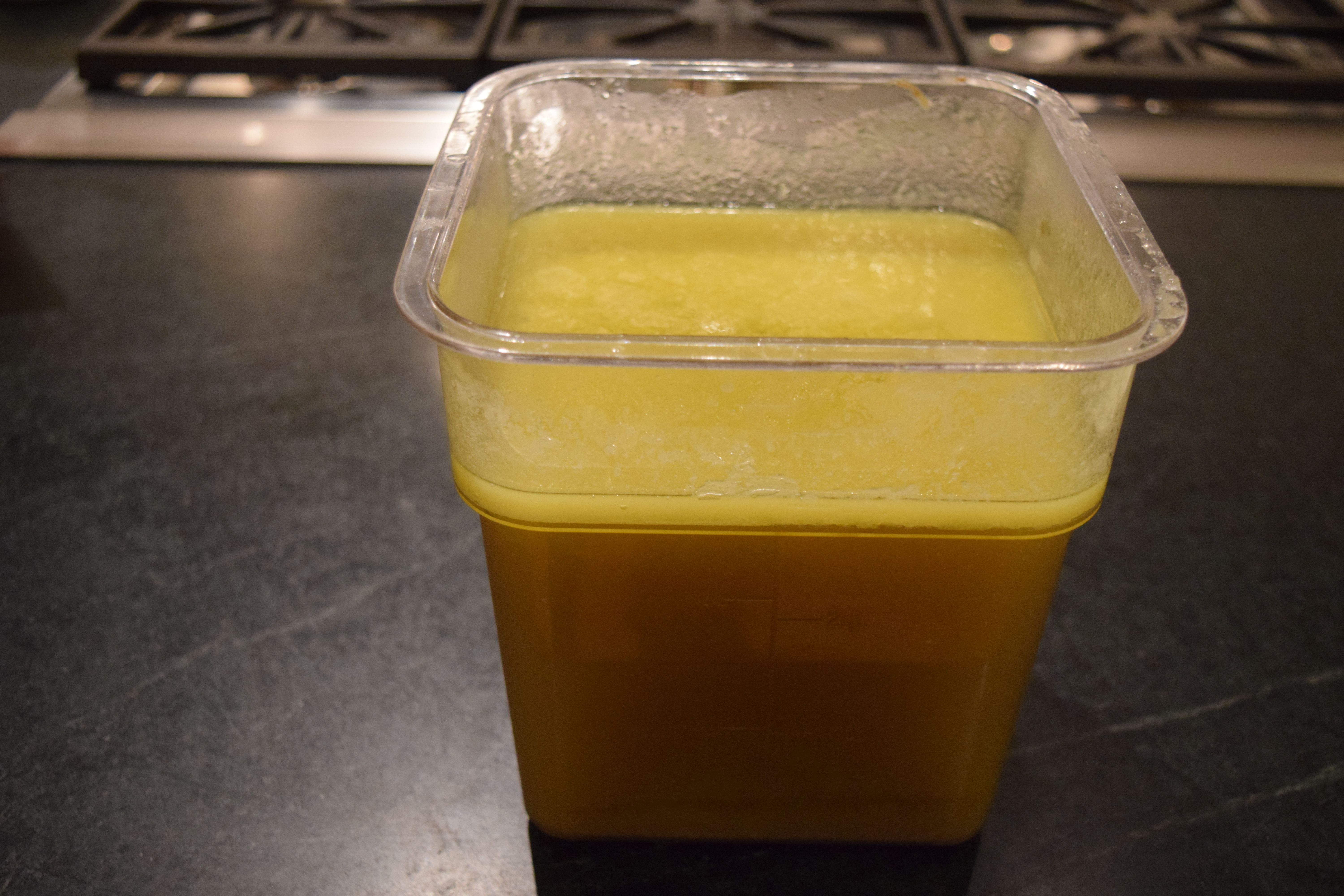
Bones, cartilage, and connective tissue contain a protein called collagen. As the bones simmer in water, the collagen breaks down, and once chilled, congeals into gelatin. This gelatin is your goal in broth-making. If the broth is not cooked long enough or is too dilute, it will not gel up like this.

chicken broth

The aromatic vegetables used to flavor a stock are known as mirepoix (pronounced “MEER-pwah”). The standard French mirepoix consists of 50% onions, 25% carrots, and 25% celery. Other aromatics I use are garlic and parsley.

bridget's chicken soup

Now to get started! First, we’ll make the broth, then the meatballs, and then add the greens.

To Make the Broth

Chicken stock ingredients:
8 pounds chicken thighs, with skin and bones
5 quarts cold water
1 large unpeeled onion (1 pound), quartered
⅓ head celery, with leaves (½  pound)
4 unpeeled carrots (½ pound)
6 cloves unpeeled garlic (½ ounce)
10 whole stems Italian flat-leafed parsley
3 fragrant bay leaves
1 teaspoon black pepper, or about 20 twists of the pepper grinder
2 tablespoons cider vinegar

Yield: 4 quarts of chicken stock

Instructions:
Rinse and drain chicken. Put in a large stockpot.

bridget's chicken soup

Cover with cold water. If you start with hot water, the stock could become cloudy. Bring ingredients to a simmer. Remove foam as it forms.

aunt bridget's chickens soup

Prep the mirepoix: wash unpeeled vegetables and cut into large chunks. Add to stockpot. Add seasonings: bay leaves, garlic, parsley, and pepper. I do not add salt until I decide how I’m going to use the broth.

bridget's chicken soup

Add the vinegar. Acids such as vinegar or lemon juice help break down cartilage and pull nutritious minerals like calcium out of the bones.

Bring stock to a gentle simmer and cook for 60 minutes. A hard boil will make the stock cloudy.

Using a slotted spoon, remove the thighs. Once cool enough to touch, pick off the meat and refrigerate until later.

bridget's chicken soup

Return bones, cartilage, and skin back to the stockpot. Simmer for a minimum of 5 hours. Strain through a colander positioned over a large container.
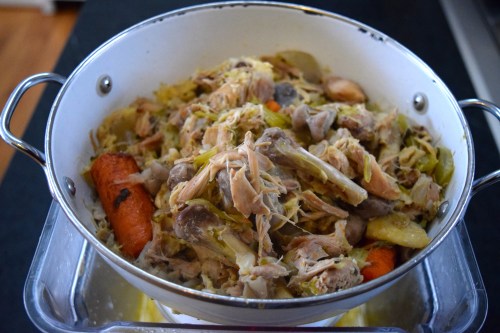
To get a couple more cups of flavorful stock, put the solids from inside the colander back into the stockpot. Add about 3 cups of hot water and stir. Run the solids and stock through the colander again, collect the stock, and add to the saved container of stock. Discard solids.

Strain the stock through a fine sieve to clarify it further.
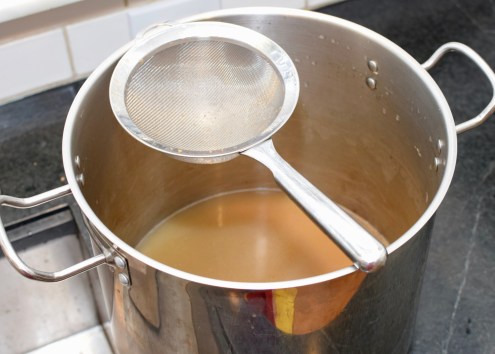
Refrigerate stock until fat rises to the top and hardens. Use a spoon to scrape it off.

DSC_0209

To Make the Meatballs

bridget soup

Ingredients:
bridget soup

Yield: 70 small meatballs

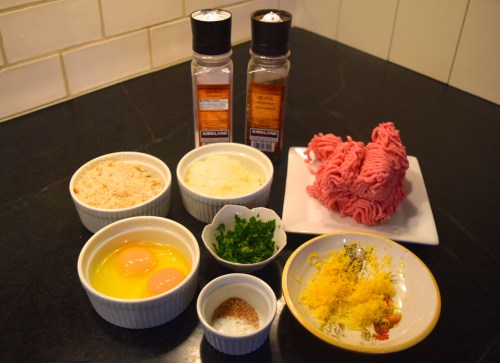
1 pound of ground meat. (I use a package of combined beef, pork, and veal when I can find it.)
2 eggs, slightly beaten
¼ cup fresh parsley, chopped
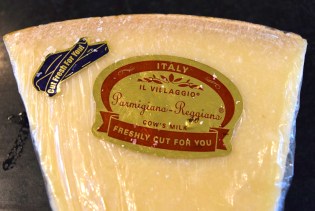
½ cup grated Reggiano Parmesan cheese
¾ cup unseasoned bread crumbs
zest from 1 lemon
¼ teaspoon ground nutmeg
¼ teaspoon sea salt
1/8 teaspoon freshly cracked pepper
2 tablespoons water

Mise en Place for Meatballs:
Grate the Parmesan cheese.
bridget soup bridget soup

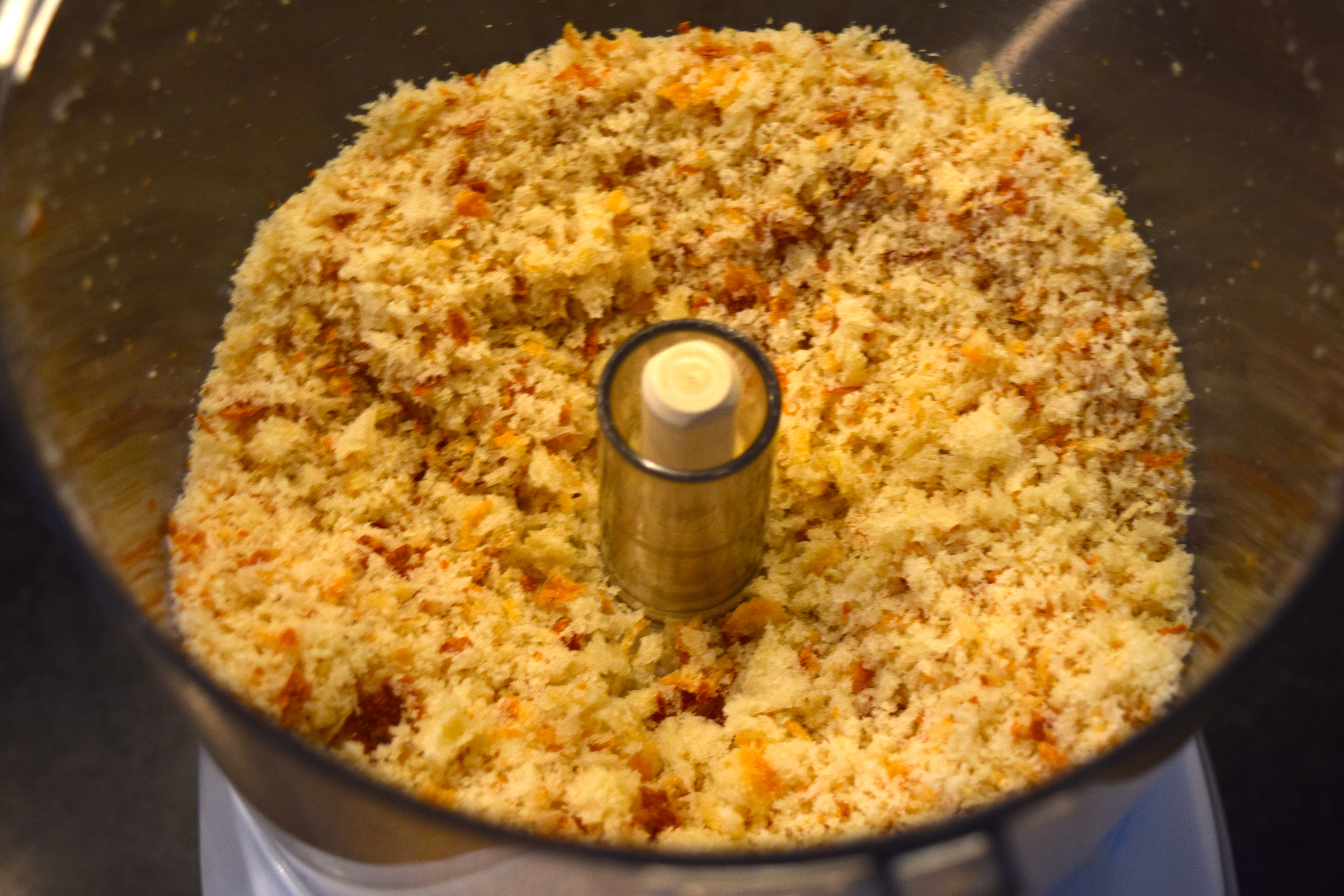
To learn how to make your own bread crumbs, go here, or buy plain, fine bread crumbs.

DSC_0866

Zest a lemon.

bridget soup bridget soup

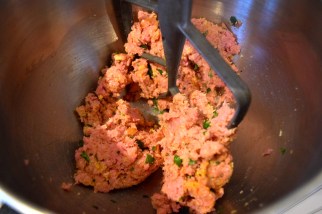
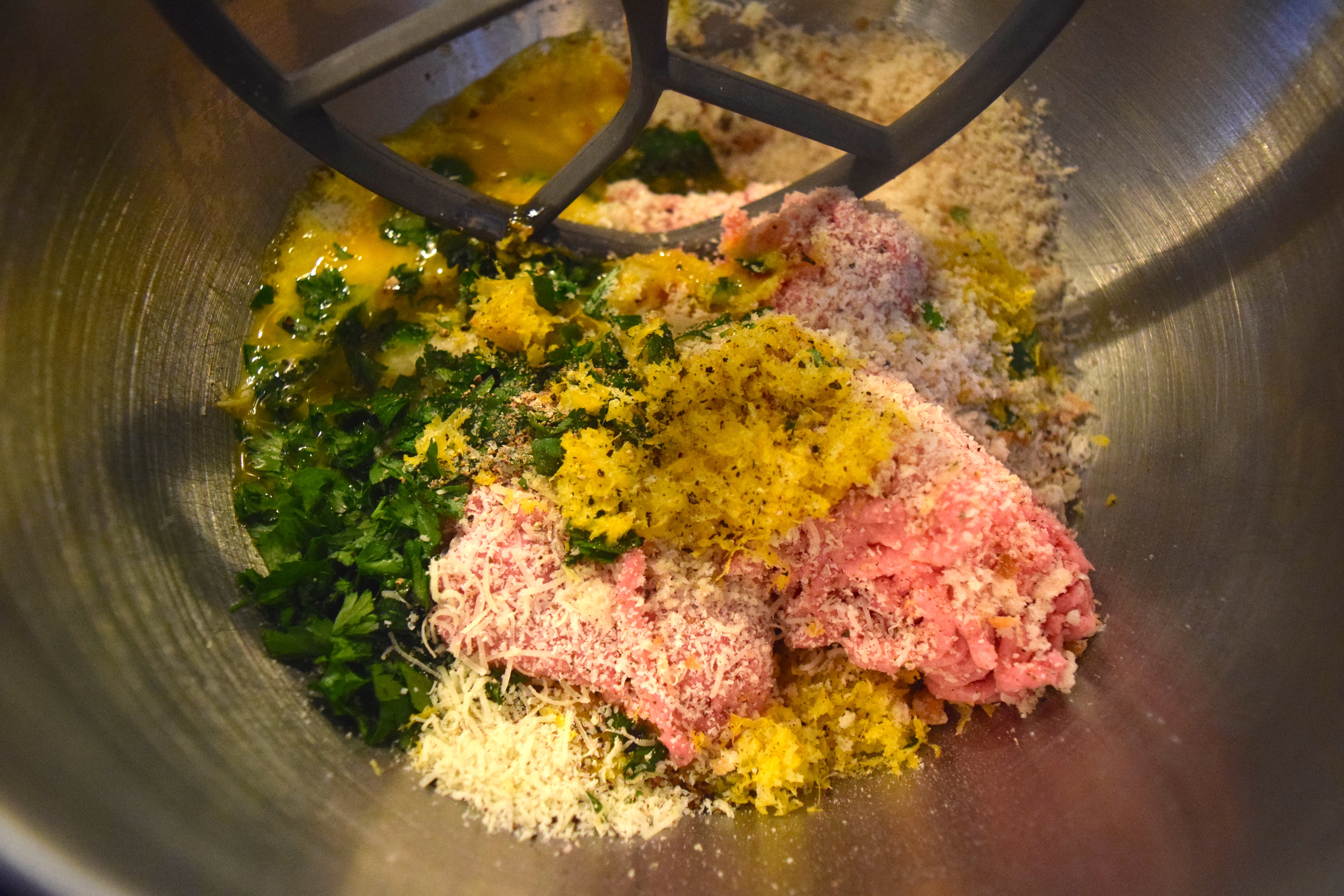
Place all ingredients in a mixing bowl and mix gently until just blended– less than 30 seconds.

meatballs meatballs

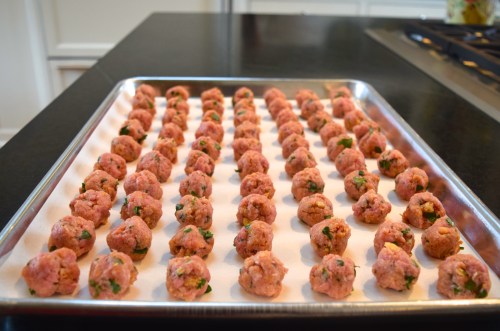
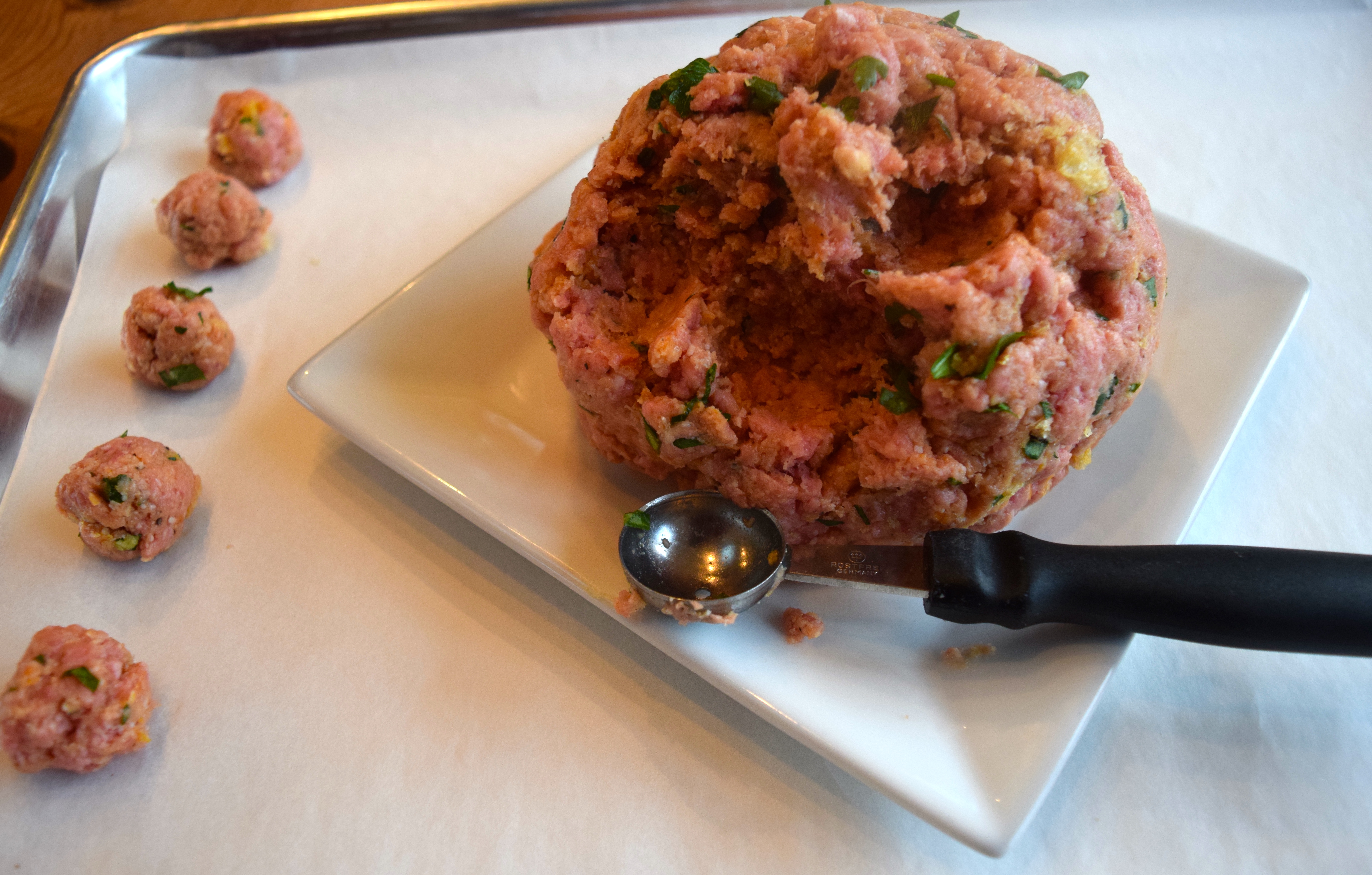
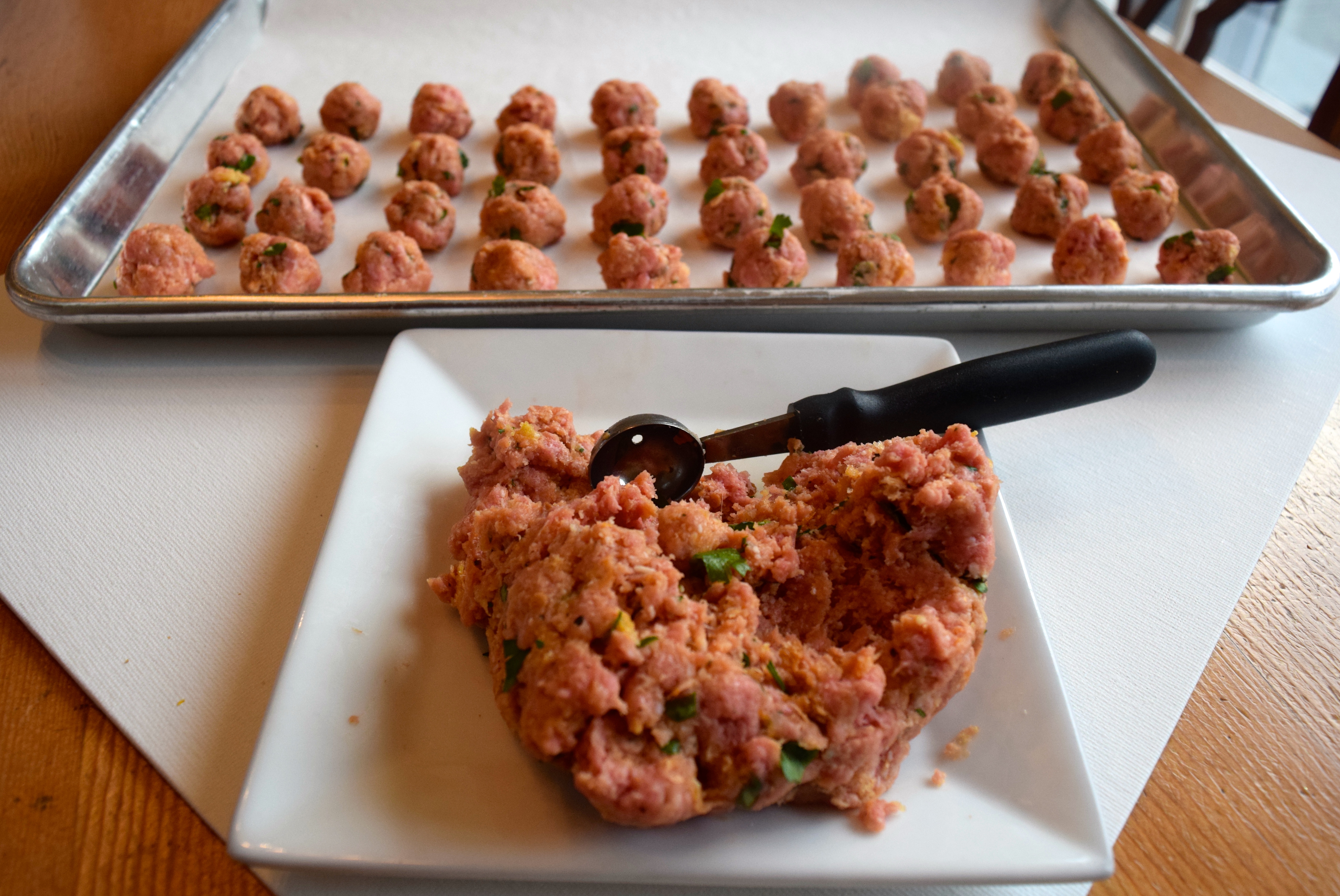
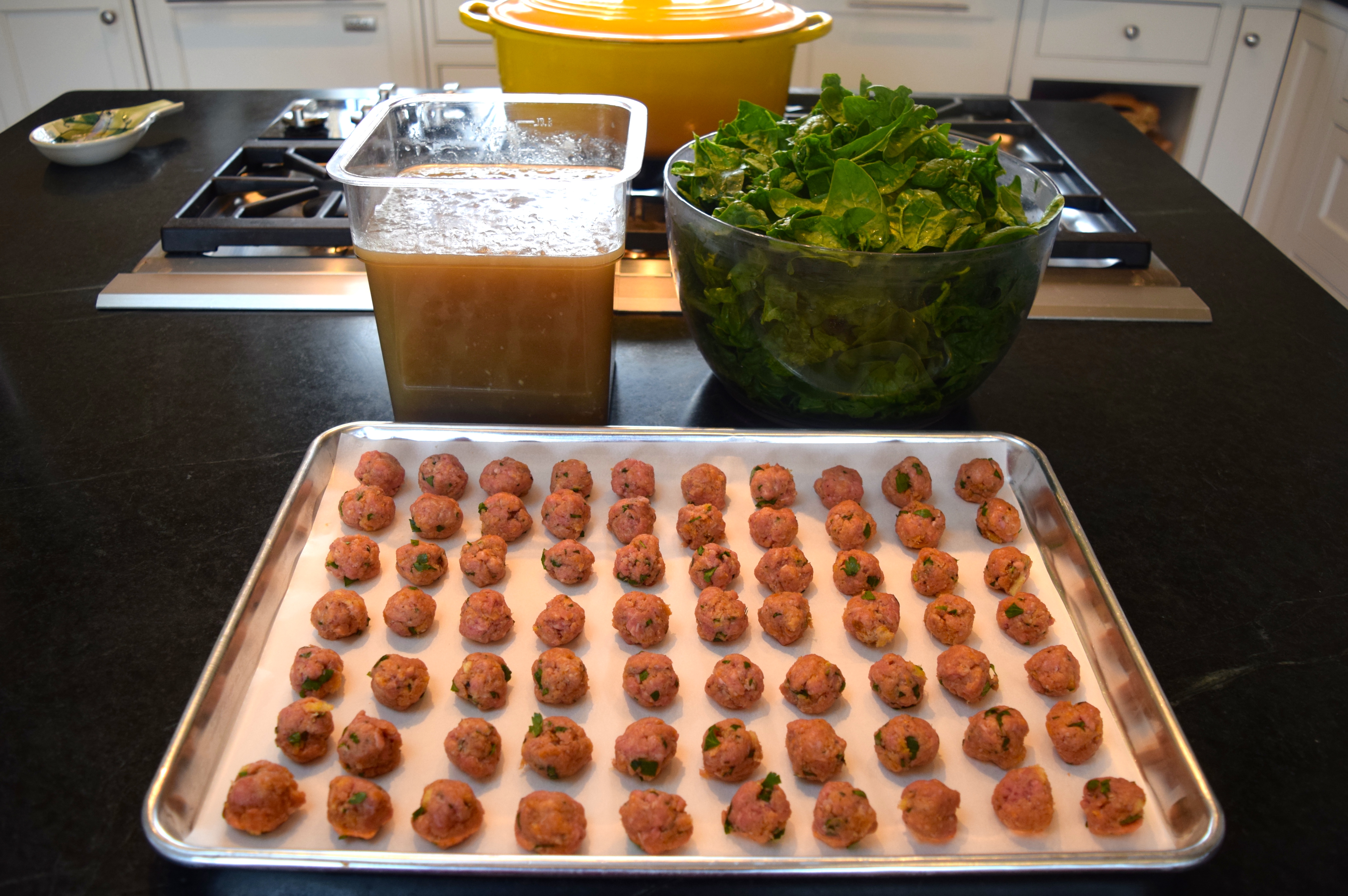
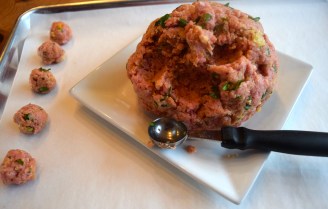
Use a melon scoop to make bite-sized meatballs. Place on a 13″ x 18″ rimmed sheet pan. The meat mixture weighed 1½ pounds. From that, I made 70 meatballs. Set aside.
meatballs meatballs

Prep the Greens

I used spinach because I have so much of it in my garden. Otherwise, escarole or endive would be my first choice. Wash the greens. If leaves are large, chop them.

DSC_0268.

Putting It All Together

bridget soup

Ingredients:
4 quarts chicken stock, homemade or boxed
1 pound fresh spinach
About 70 uncooked bite-sized meatballs
1 pound cooked small pasta, such as ditalini, cooked separately

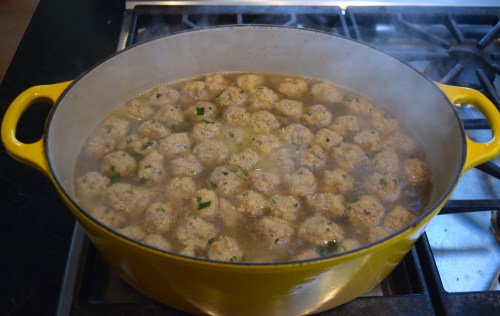
Bring the pot of chicken broth to a boil in a soup pot. Add the meatballs. Simmer for about 15 minutes.
bridget soup

Remove the pan from the heat and stir in the greens.

bridget soup

Serve immediately while greens are still brightly colored. bridget soup

Sprinkle with freshly grated Reggiano Parmesan. If desired, serve over pasta cooked separately. Do not cook the pasta in the broth — it will soak up most of the liquid.

bridget soup

Postscript
Only the most memorable great-aunts get chickens named after them! Our two Rhode Island Reds were named Bridget and Josephine (my grandfather’s sisters who had reddish-brown hair). The two blonde Buff Orpingtons were named after my husband’s blonde grandmothers, Mildred and Alice. The two black and white Plymouth Barred Rocks were named after my silver and black-haired grandmothers, Marion and Concetta.
IMG_3208

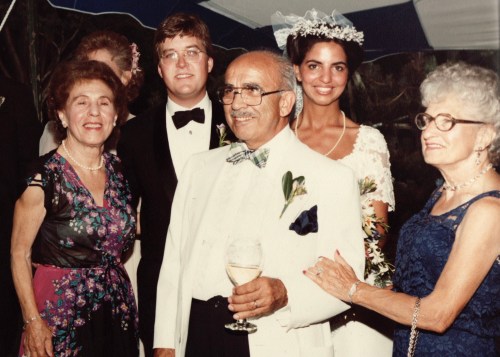
Aunt Josephine and Aunt Bridget flank their older brother, my grandfather, at my wedding. They were the last of the thirteen Giordano siblings.
Other Soups
Chicken Stock from Rotisserie Chicken Bones
Mrs. Lombard’s Portuguese Kale Soup
Pasta e Fagioli, aka Pasta and Bean Soup
Award-Winning Buffalo Chicken Chili
Kelly’s Duck Stew

Other Family Favorites
Baked Ziti with Roasted Eggplant, Mozzarella, and Marinara Sauce
Grandma’s Italian Fried Cauliflower
Rapini and Fettuccini
Spiralized Zucchini with Fresh Marinara Sauce
Rachelle’s Italian Sausage, Onions, and Peppers
Italian Sesame Seed Cookies
Italian Ricotta and Lemon Cookies

LET’S STAY CONNECTED!

Follow my photos of vegetables growing, backyard chickens hanging out, and dinner preparations on Instagram @JudysChickens.

Never miss a post: sign up to become a follower of the Blog.

© 2014-2020 Judy Wright. All rights reserved. Photos and text may only be used with written consent.

My Favorite Silver Palate Chili

Thirty years ago, when I was a newlywed living and working in Boston, Julee Rosso and Sheila Lukins’s The Silver Palate Cookbook was the “it” cookbook. Just as in 1961, when Julia Child made learning French cooking techniques attainable for home cooks with Mastering the Art of French Cooking, Rosso and Lukins, in 1982, introduced the next generation of home cooks to a style of gourmet cooking using simple instructions and fresh ingredients.

Their recipes were so accessible, flavorful, and sophisticated that an expanded language of food emerged. Suddenly, phyllo triangles, tarragon chicken, hummus, arugula, red leaf lettuce, colorful pinwheel fruit tarts, and blueberry and walnut oil vinaigrette, became de riguer at luncheons and dinner parties across the country. As an indicator of how unconventional their ingredients were there was an asterisk next to “balsamic vinegar” in one recipe, indicating it could be found in “specialty food shops.”

The Silver Palate Cookbook authors gave my peers and me the confidence to experiment with unfamiliar ingredients. It is hard to describe how accomplished I felt, as a cook, the first time I made Silver Palate classics like Chicken Marbella and Raspberry Chicken, both notable for their beautiful presentations and multiple layers of flavor. The authors made time spent in the kitchen an adventure; an adventure that continues to this day.

This chili recipe, with a few adaptations, continues to be my favorite chili. It is loaded with wonderful flavors like dill, cumin, citrus, Dijon, and wine. It is A-mazing. Be warned: it makes a lot of chili — feel free to cut the ingredient amounts in half.

DSC_0247

Yield: 8 quarts or 32 cupfuls

Ingredients:

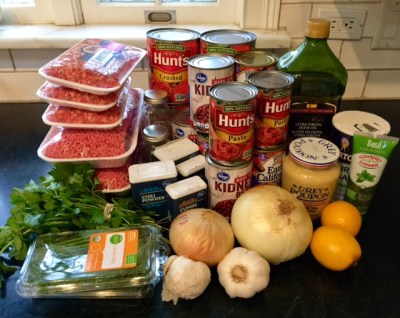
fullsizerender

½ cup extra-virgin olive oil
2 pounds sweet onion, chopped
¼ cup minced garlic
3 pounds sweet Italian sausage, removed from casings
6 pounds lean ground beef
3 15-ounce cans (about 5 cups) dark red kidney beans, drained, unrinsed
4  28-ounce cans crushed Italian plum tomatoes (plus ¼ cup water/per can, to rinse can)
2  12-ounce cans tomato paste (plus ¼ cup water/per can, to rinse can)
½ cup Dijon mustard
½ cup red wine
¼ cup (1 large lemon) freshly squeezed lemon juice
¼ cup sea salt
1½ tablespoons ground black pepper
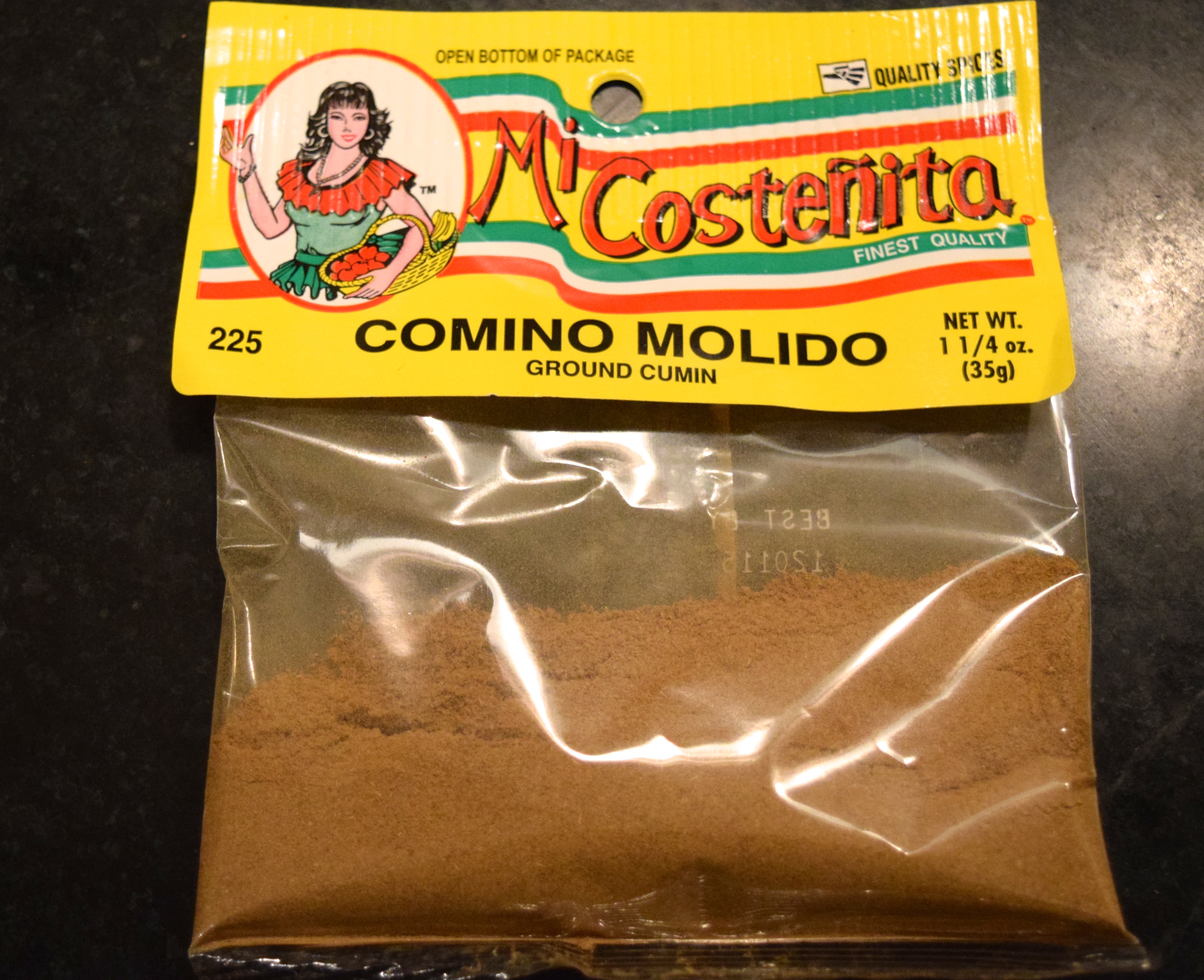
3-ounce can ground cumin seed
4-ounce can plain chili powder
¼ cup dried basil
¼ cup dried oregano
½ ounce (1 cup) fresh chopped dill, stems removed
1 ounce (1 cup) fresh chopped Italian flat-leafed parsley, stems removed
4  6.5-ounce cans pitted black olives, coarsely chopped

A few words about the ingredients …

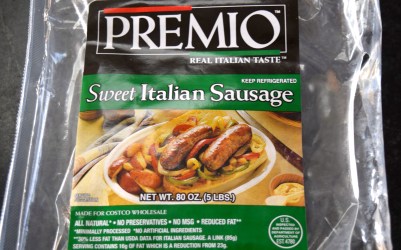
Sausage: I use Premio’s Sweet Italian Sausage in this recipe. I buy it at Costco. The sausages are fabulous grilled or cooked in a Sunday tomato sauce.

DSC_0441

Spices: You can go to the international aisle of most grocery stores and find spices at one-third the cost of those sold in the regular spice aisle?

DSC_0339

Technique Tip: How to use a fat separator:
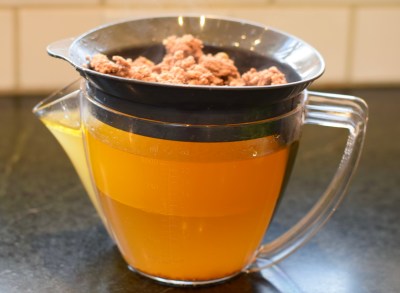
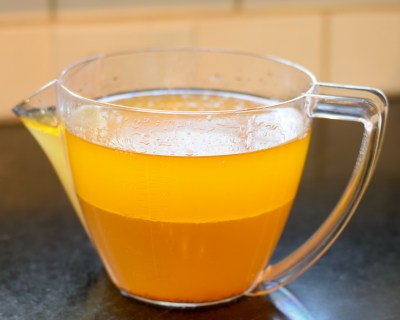
Fat separators are pitchers with pouring spouts set into the base. Since water is denser (has more mass per unit of volume) than fat, the water-based juices sink to the bottom, and the fat floats to the top. With the spout on the bottom, it is easy to save and pour out the juice while retaining the fat in the container. Remember to stop pouring the liquid just before the fat enters the spout hole in the base. The straining basket on top keeps solid particles from falling into the container and clogging the spout hole.

dsc_0576

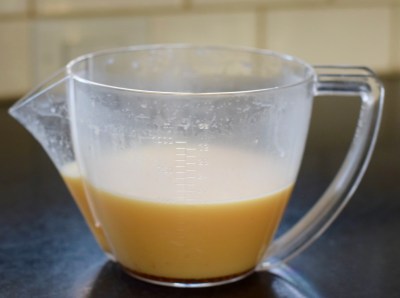
If you don’t have a fat separator, pour the liquid into a one-quart measuring container, chill it in the refrigerator, and scoop off the yellow congealed fat that floats to the top. Pour the meat juice back into the pot. If you want to feel really virtuous, take a look at how much fat you have eliminated from the pot of chili. Nice.

dsc_0661

Instructions:

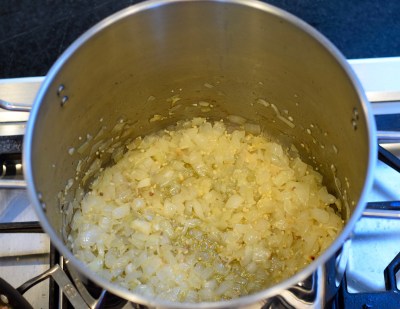
Add olive oil to a large, heavy-bottomed stockpot.  Add onions and garlic and sauté until tender and translucent, about 10 minutes.

dsc_0549

While onions are cooking, squeeze sausage out of its casings and crumble. Sauté meat in a 6-quart, or larger sauté pan until evenly browned.

dsc_0551

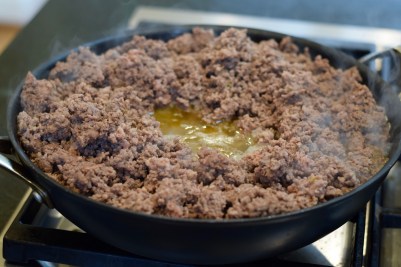
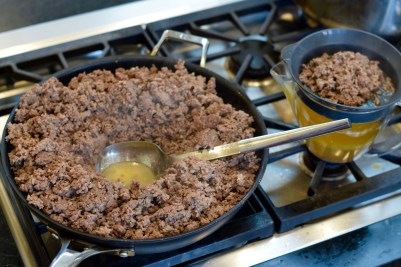
Next, we want to get rid of the fat from the cooked meat but keep the meat’s juices. Here’s a way to do it: Make a well in the center of the meat mixture. A golden liquid will quickly fill the well. Use a ladle to remove the fat to a large fat separator. Keep scooping until all the liquid is gone.

dsc_0561

After juices settle to the bottom of the fat separator, pour them (about 2 cups) back into the stockpot. Discard fat that remains. This is extra step is a time-consuming process but worth it to retain the two cups of meat juice that would have been lost had you simply drained the meat into a colander.

dsc_0572

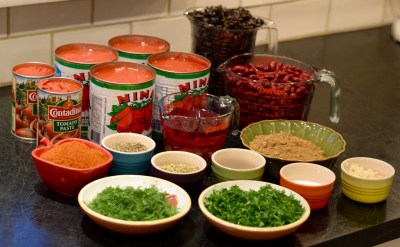
Prepare a mise en place for the remaining ingredients. This is very helpful when there are so many add-ins that need to be measured. Otherwise, it’s easy to lose track of which ingredients have already been added to the pot.

dsc_0314

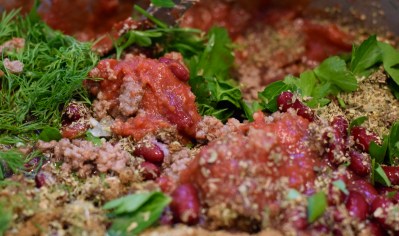
Add all ingredients except the olives to the meat and onion mixture. Rinse each can of tomatoes with ¼ cup of hot water and add that to the pot.

So many lovely ingredients in this chili!

dsc_0620

Simmer chili for 20 minutes on low heat stirring frequently.

Add coarsely chopped olives, stir, and cook for another 5 minutes.

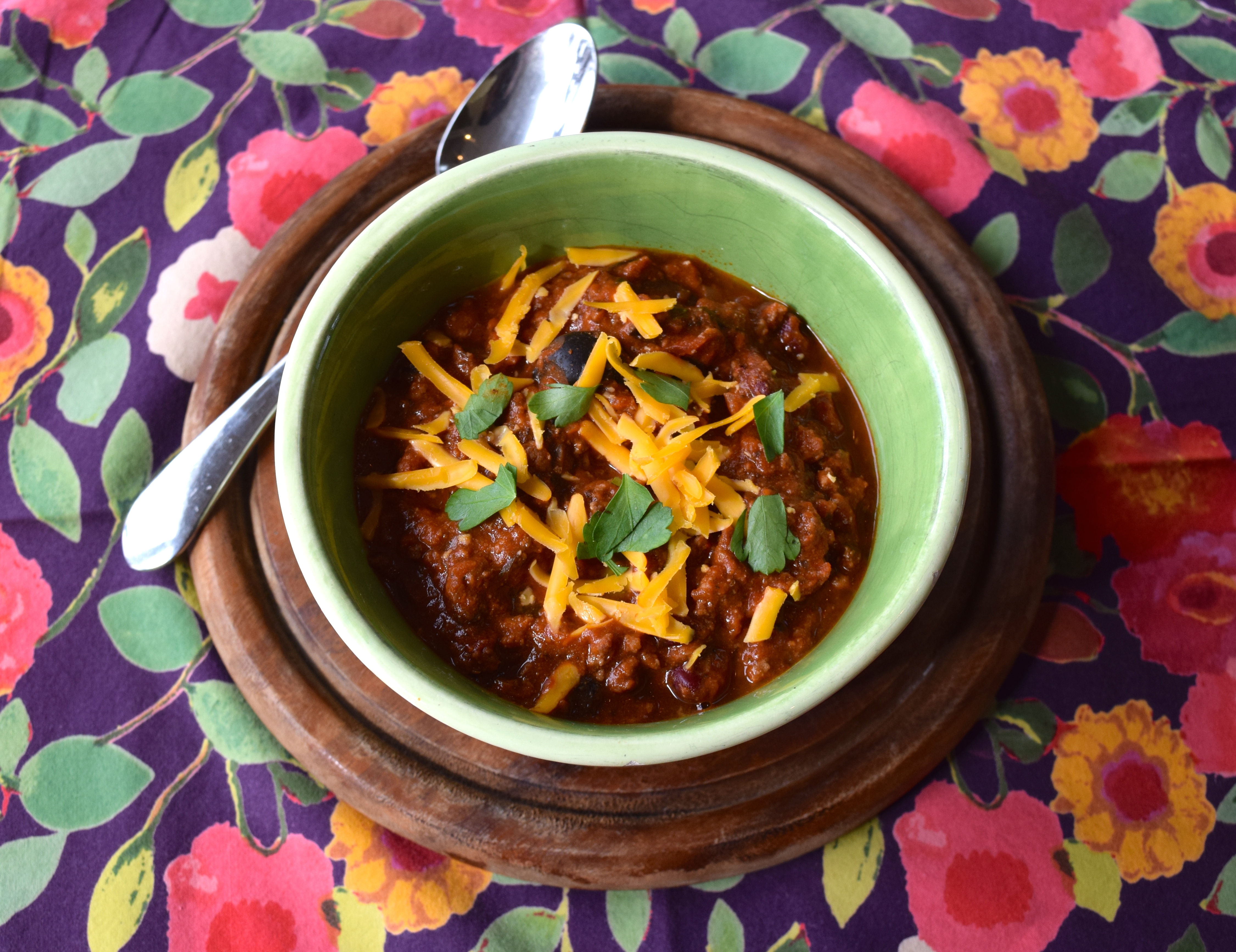
Serve with bowls of garnish such as shredded cheddar cheese, sliced green onions, chopped parsley, and sour cream. Serve over rice, if desired.

chili

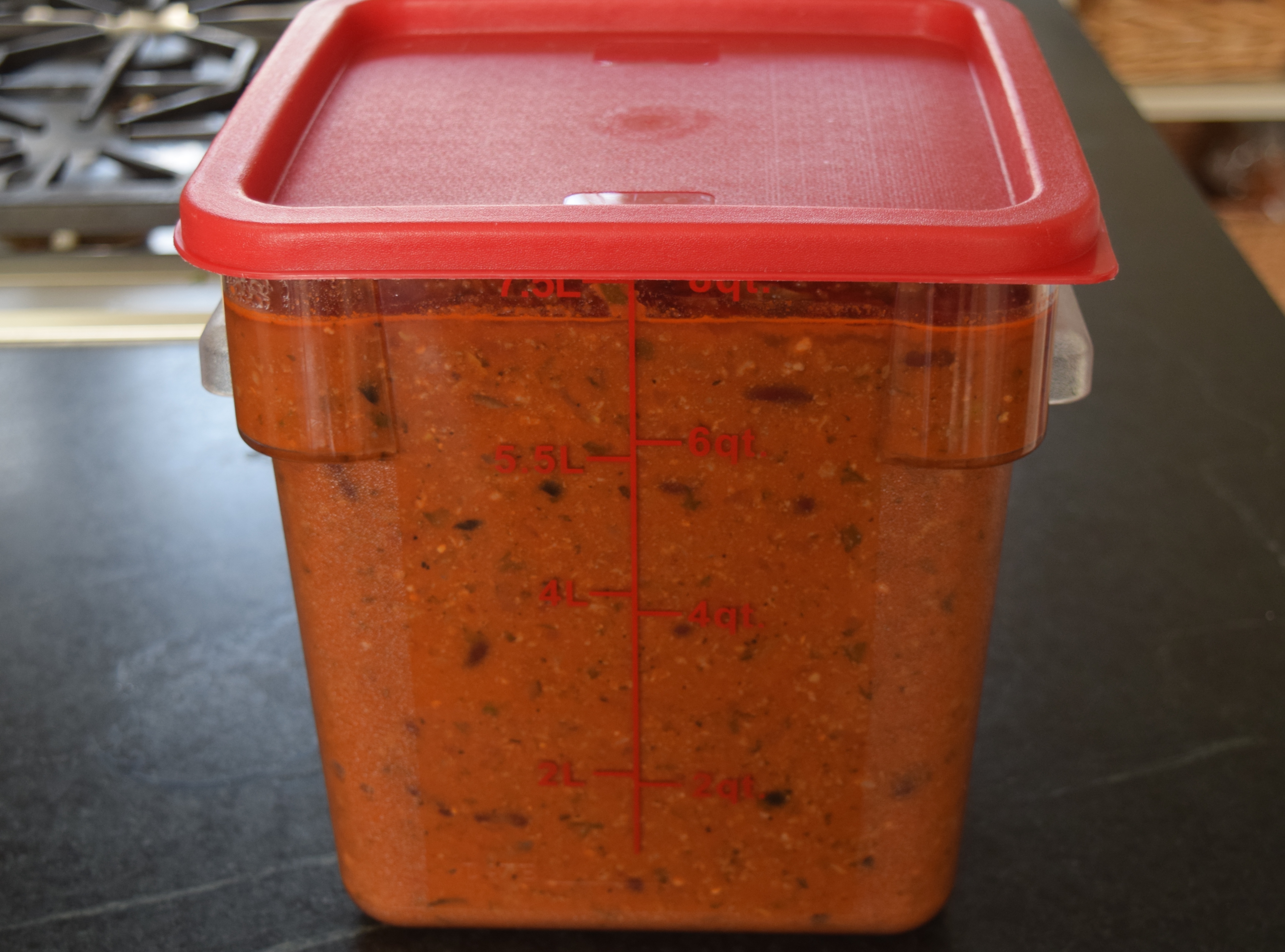
This chili can be made ahead of time and stored in the refrigerator.

DSC_0444

You might also like these other soups, chilis, and stews:
Lisa’s Award Winning Buffalo Chicken Chili
Kelly’s Duck Stew
Bruce’s Turkey and Sausage Gumbo
Aunt Bridget’s Chicken Soup with Little Meatballs
Chicken Stock from Rotisserie Chicken Bones
Roasted Butternut Squash Soup

Always check the website for the most current version of a recipe or pattern.

If you enjoyed this post, become a subscriber! Be sure to confirm the subscription on the follow-up letter sent to your email address.

Follow Judy’s Chickens on Instagram and Pinterest @JudysChickens.

© 2014-2018 Judy Wright. All rights reserved. Photos, videos, and text may only be reproduced with the written consent of Judy Wright.