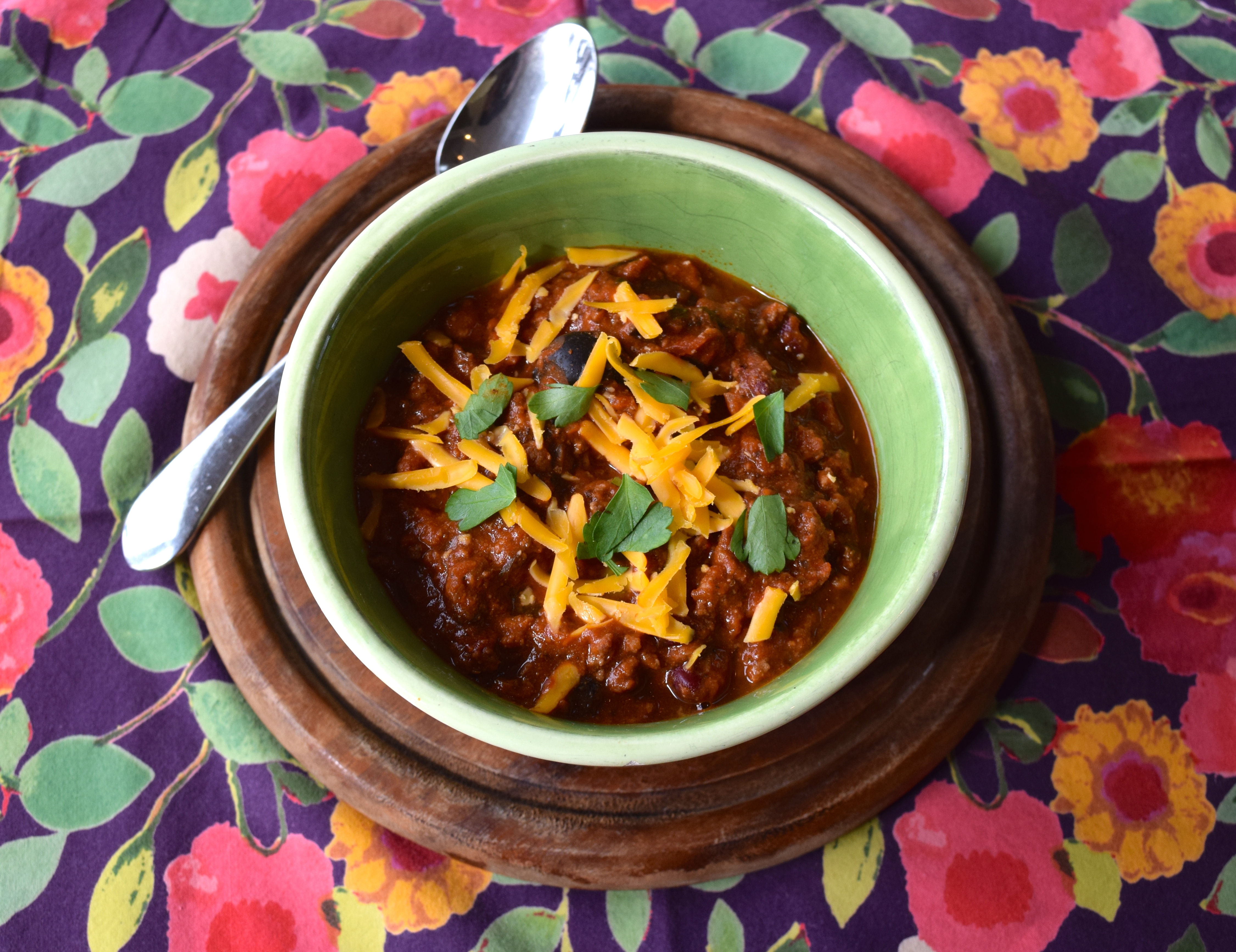
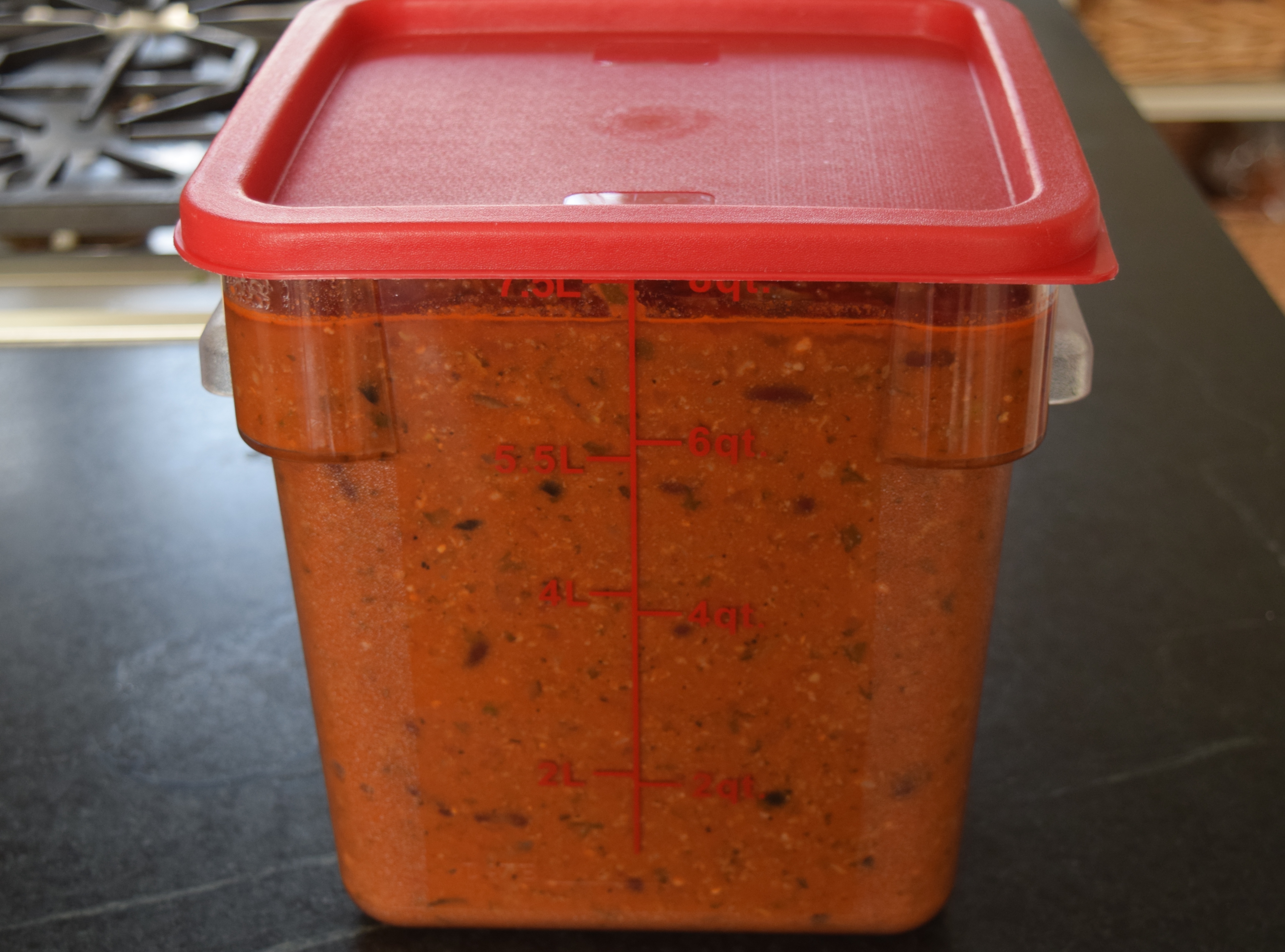
My Favorite Gazpacho

I returned from a week-long trip to find my vegetable garden laden with tomatoes, cucumbers, string beans, green bell peppers, and okra. I brought all the produce inside, dumped it on the kitchen counter and tried to get inspired to clean and prep all of it; I knew once I got started, I’d be in the kitchen for the rest of the day … A journey of a thousand miles begins with a single step.

IMG_1560

Abundant summer harvests call for big recipes, and I have three go-to’s: ratatouille, gazpacho, and marinara sauce. Since there were no eggplants or zucchini, ratatouille was out. Gazpacho and marinara sauce were in. I made both!

DSC_0034

My tried and true gazpacho recipe comes from Open-House Cookbook, by Sarah Leah Chase, published in 1987 to instant acclaim. Over the years, I have found my own way to streamline the vegetable prep work, and, thanks to my mother, who also made this recipe and used Bloody Mary mix to spice it up, I use spicy vegetable juice instead of plain.

Ingredients:
Makes 6 quarts
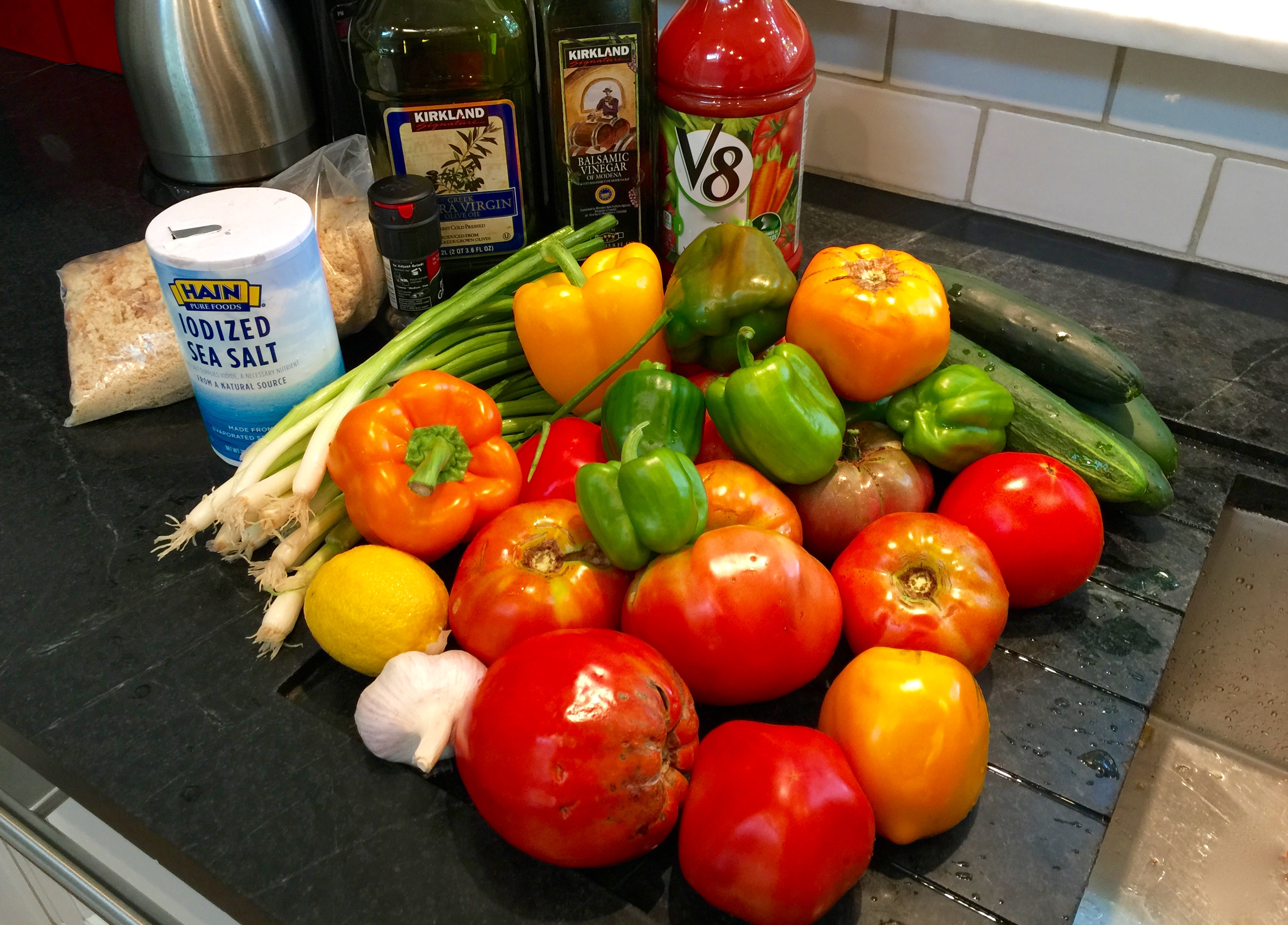
IMG_1561

2 cups of freshly made breadcrumbs made from crusty bread
1-ounce garlic cloves, about 3-5 cloves depending on size
Juice of one lemon, about 3 tablespoons
2 bunches green onions
3  8 inch cucumbers
5 sweet bell peppers in different colors (I like to use green, yellow and orange)
8 pounds of tomatoes, about 10 large
46 ounces spicy vegetable juice
4 tablespoons balsamic vinegar
5 tablespoons extra virgin, first cold-pressed, olive oil
4 teaspoons sea salt
1½ teaspoons freshly ground pepper, add more as desired

Instructions:
In the instructions that follow, I’m going to show you how to prep each vegetable. Find a large bowl that will hold 8 quarts of chopped vegetables.

1) Prep Bread, Garlic, and Lemon Juice Mixture: 
-Make 2 cups of homemade breadcrumbs using the method described in Mom’s Meatloaf. Five or six slices of crusty bread should suffice.
-Juice the lemon as shown in the Ricotta and Lemon Cookie recipe.
-Peel the garlic cloves. I used three large cloves. If you are using medium to small cloves, you’ll need all five.  Always remember that uncooked garlic can quickly overpower a recipe, so be careful — you can always add more garlic to your recipe later as you adjust your spices.

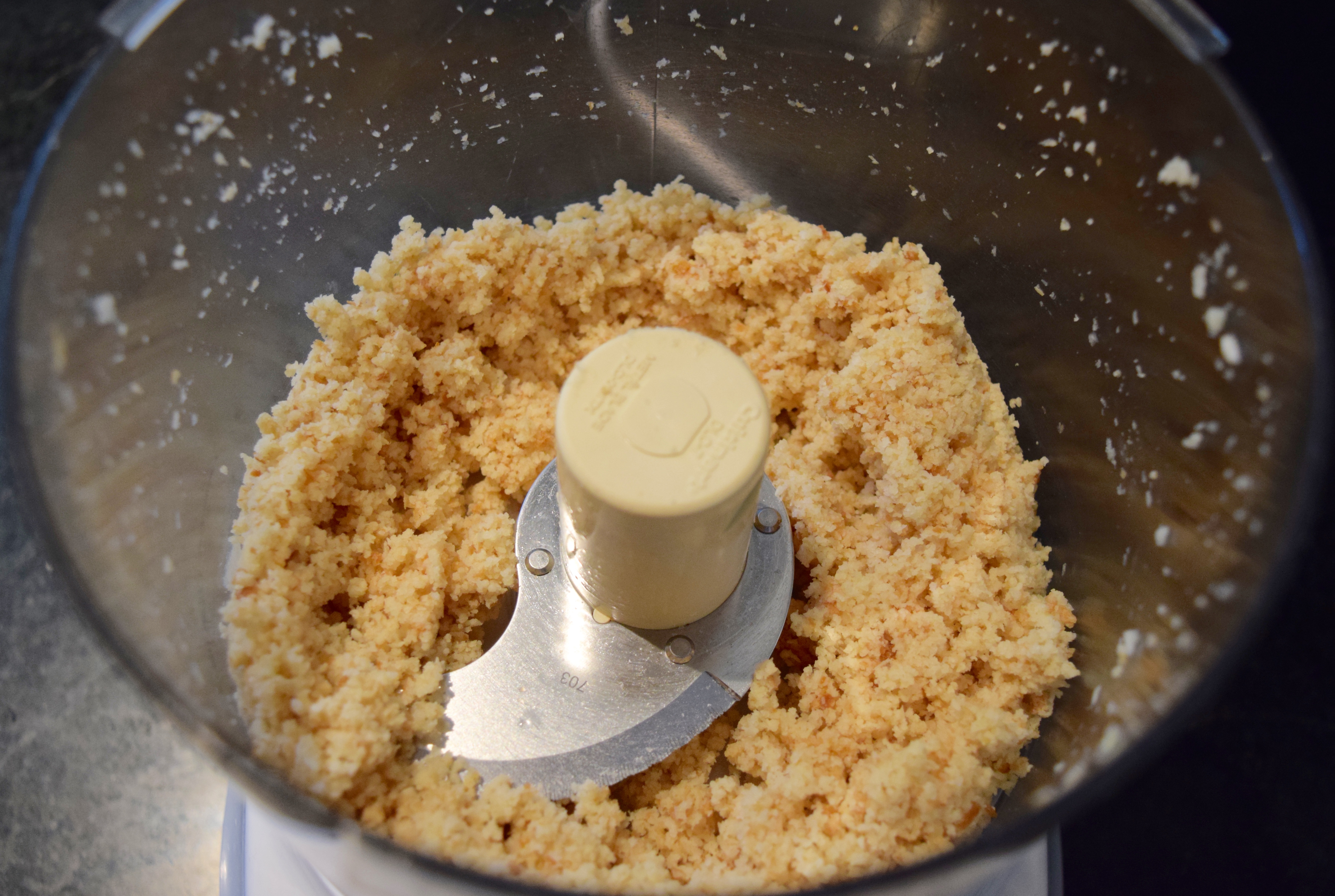
Pulse garlic cloves in food processor until minced, add the breadcrumbs and lemon juice. You want the mixture to become pasty, so process it for about 10 seconds.

DSC_0769  DSC_0771  DSC_0774

2) Prep green onions:
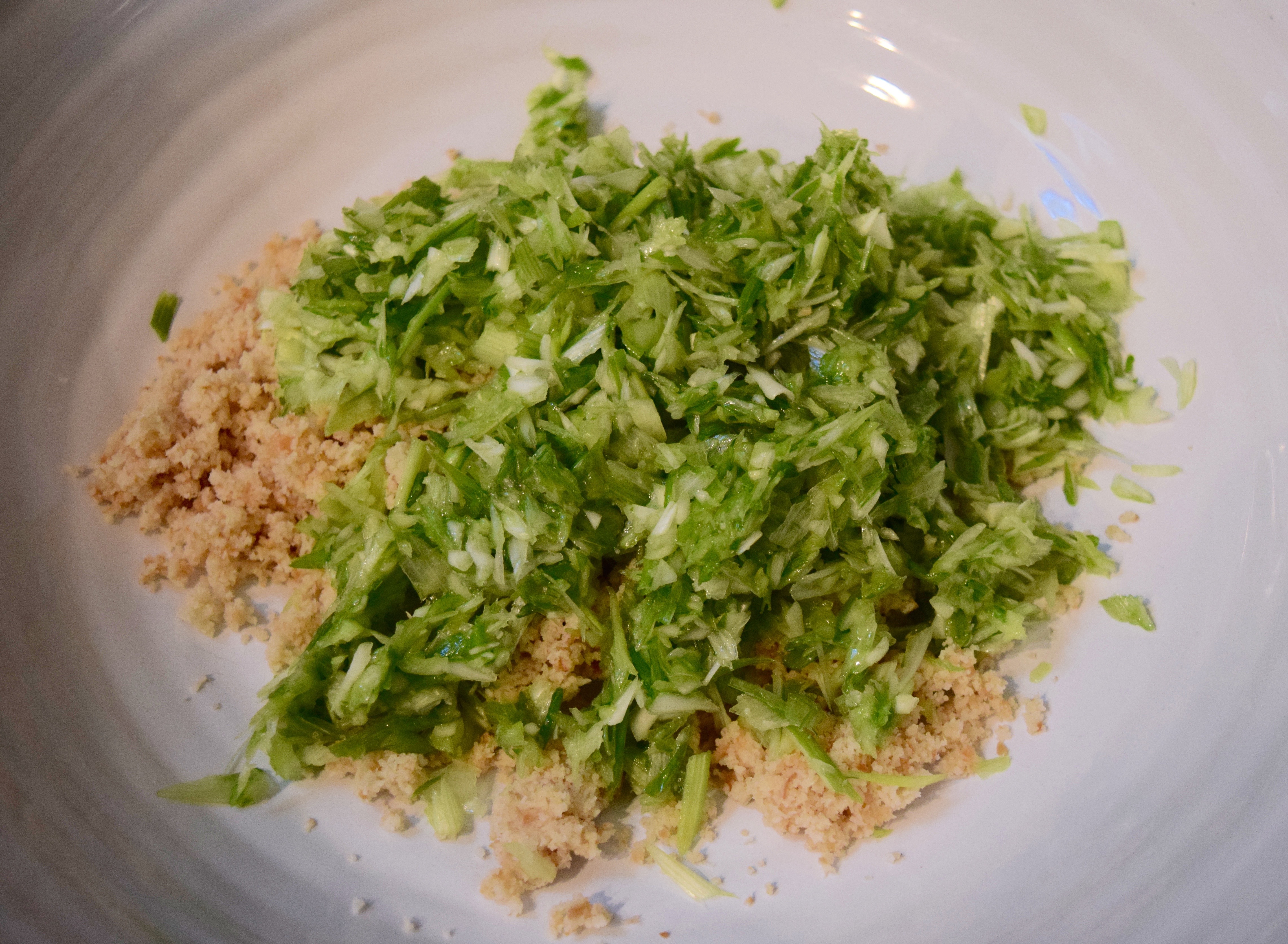
Wash, cut roots off and trim off the top third of stems. Chop stems into 2-inch segments so they will fit nicely into the food processor bowl. If you put produce in the processing bowl uncut, they won’t chop evenly, and you’ll find yourself practically puréeing food to get everything chopped to a consistent size. Pulse green onions until they look like the photo below and then add to your large container.

DSC_0776  DSC_0779

3) Prep Cucumbers:
Cut off ends and peel. Cut into long quarters. I always taste a homegrown cucumber before adding it to a recipe because sometimes, if the cucumber went through a dry spell while growing, it can taste bitter. If the cucumber tastes at all bitter, throw it in the compost. Remove seeds by quartering and using a paring knife to remove the “triangle” tip of seeds from each strip. Chop into 2-inch chunks before processing. Once processed, add to large container.

DSC_0787  DSC_0789  DSC_0790

4) Prep Sweet Bell Peppers:
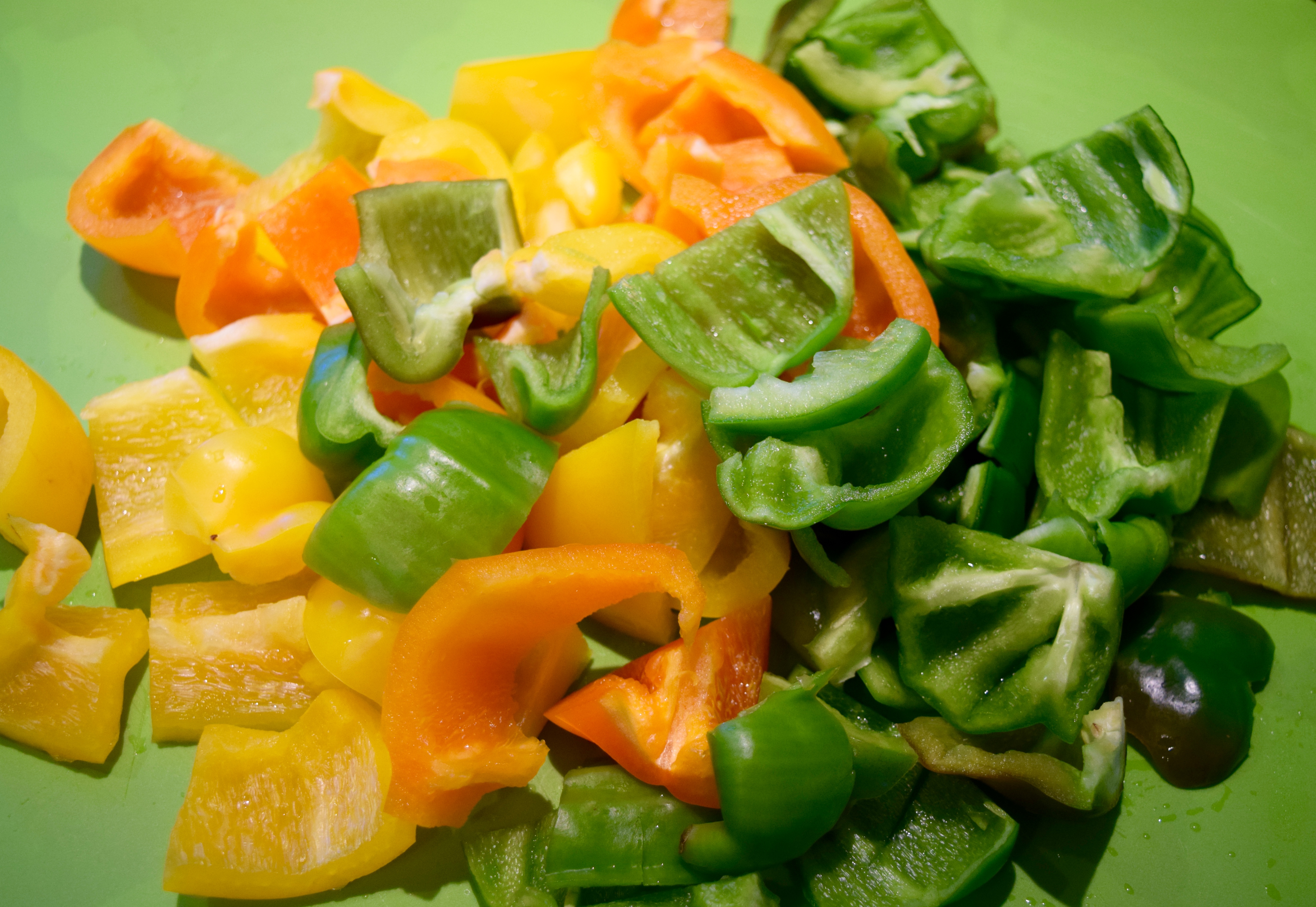
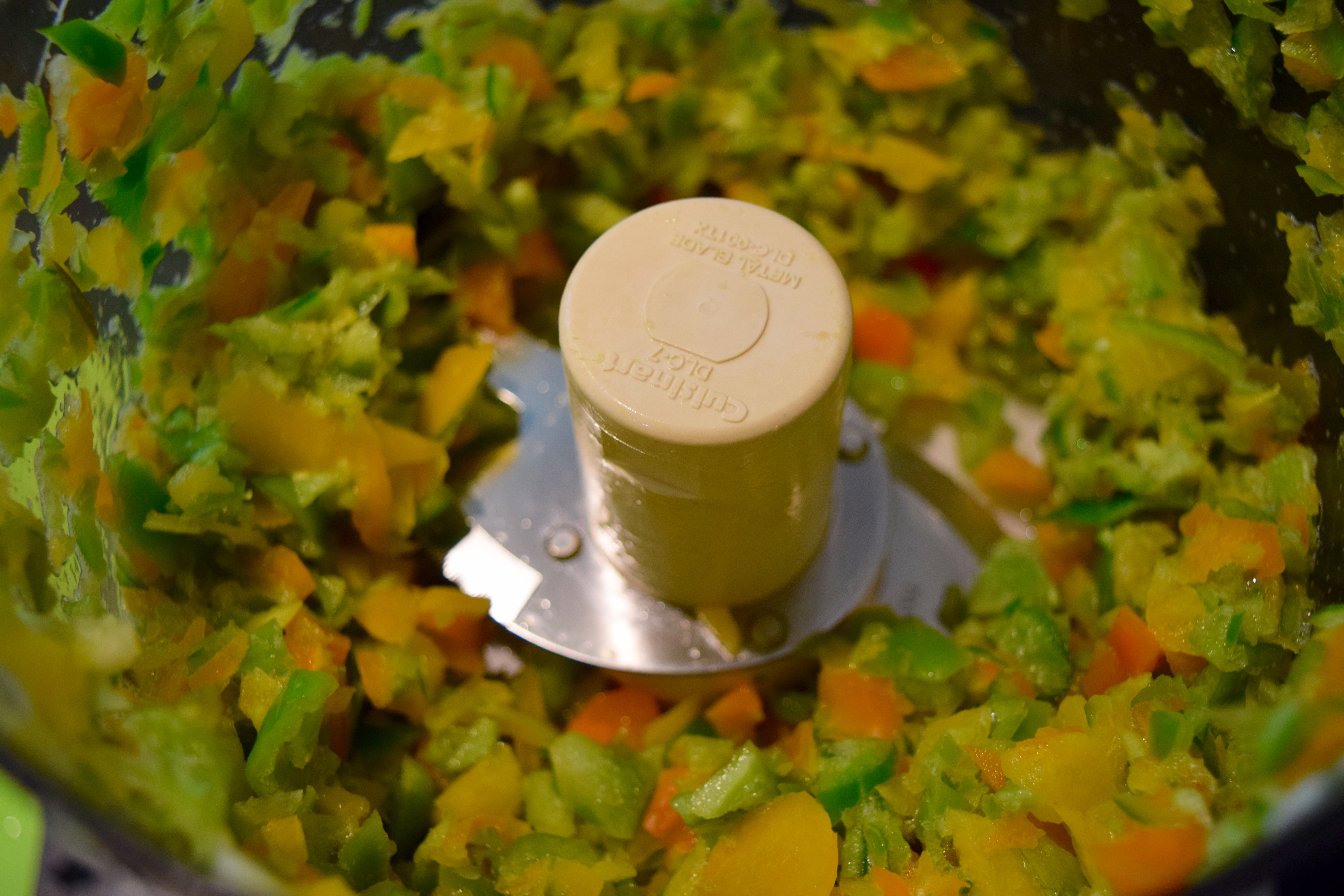
I had a lot of small green peppers in my garden and used them, plus two colorful peppers I bought at the grocery store. To prep peppers: cut in half vertically, and remove core, seeds, and extra white pith. Chop into 2-inch chunks for even processing in the food processor. Add to the large container.

DSC_0796  DSC_0799  DSC_0800

5) How to Seed and Prep Tomatoes:
Over the years, I have learned there is no reason to peel the skin off tomatoes. I do, however, remove the seeds. This is easily accomplished by cutting the tomato in half horizontally and using your finger to scoop the seeds out.

DSC_0818  DSC_0819

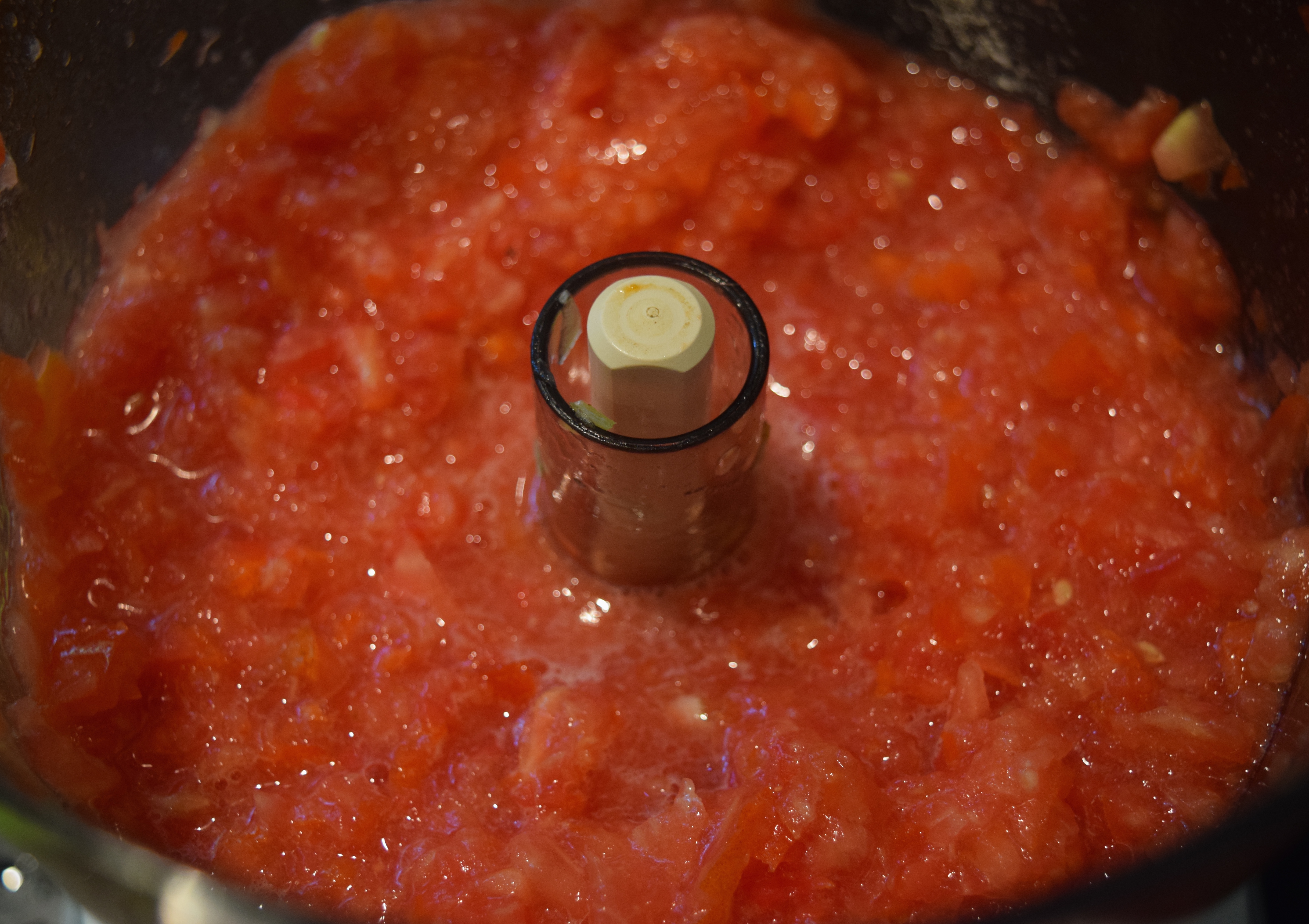
Use a paring knife to remove the stem and white core. Cut into 2″ chunks to process evenly. Pulse in batches. Add to the large container. If you are using homegrown tomatoes, don’t use any that have been pecked by birds or otherwise have skin that is not intact. Save imperfect tomatoes for cooking.  Tomatoes with white mold, ooze, or that have been partially eaten by squirrels go in the compost! (That last sentence is for my husband.)
DSC_0814  DSC_0820

Photos of the bowl as it filled up …

DSC_0775  DSC_0782  DSC_0803  DSC_0817

Food, Glorious Food!

DSC_0823

6) Add Vegetable Juice and Seasonings
Add the spicy vegetable juice, the vinegar, olive oil, salt, and pepper. Adjust seasoning.
Me, to my husband: “Try this and tell me what it needs.”
Husband: “It needs a spoon and a bowl!”DSC_0011

Much later that day, after making marinara sauce and blanched string beans in vinaigrette, the kitchen was clean. All that remained was a pile of cucumbers that were going to be made into cold cucumber soup, but I ran out of steam, and my family had lost interest in cleaning up after me. Oh, and the okra, it went into the latest version of my “everything, but the kitchen sink” Shepherd’s Pie.

LET’S STAY CONNECTED!

Follow my photos of vegetables growing, backyard chickens hanging out, and dinner preparations on Instagram at JudysChickens.

Never miss a post: sign up to become a follower of the Blog.

© 2014-2017 Judy Wright. All rights reserved. Photos and text may only be used with written consent.

Roasted Ratatouille

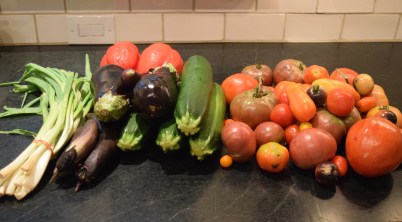
Last week, I was getting ready to leave town which meant I had to harvest all the ripe vegetables from my garden. Once I had washed and laid them all out to dry there was no question what dish I was going to make; these vegetables pretty much told me I was making ratatouille. What else would I do with onions, eggplant, zucchini, sweet peppers, and tomatoes? These are classic ratatouille fare.

DSC_0655

Many villages in the Mediterranean have some version of this “vegetable stew,” but it was Julia Child, who, in her 1961 cookbook, Mastering the Art of French Cooking, made ratatouille a household name. If you are a purist, you may want to stop reading here as I no longer make ratatouille using the methods that Julia made famous.  I don’t peel and remove the seeds from the tomatoes, sweat the eggplants and zucchini and then sauté them each separately, and then, layer them all together in a casserole to stew for a while. Her process took too much time. The way I chop, mix, and roast it all together, is much quicker and more reflective of today’s farm to table mentality. I think Julia would approve.

Since I had a lot to do before leaving town, I was in get’ er done mode and was happy to work by myself in the kitchen. My family was watching a Nicole Kidman movie in the next room and I smiled as I listened to them tease my husband about his long-standing crush on Nicole, an infatuation that makes no sense to me; she is like a porcelain doll and I am not. My family knows my husband would secretly love to run into Nicole in Nashville. Once, my youngest son even texted him, “Quick, come to Whole Foods. I’m sitting next to Nicole and Keith.” To my husband’s credit, and since he was sitting with me, he didn’t budge.

Here is my no fuss way to make ratatouille. The ingredient amounts are vague because it truly doesn’t matter. I suggest looking at the picture above and approximating the quantities from that.

Yield: About 4 quarts

Ingredients:

DSC_0603
Onions – I used one bunch of green onions and a medium-sized red onion
Eggplants – I used a mix of Black Beauty and Ichiban varieties.
Zucchini – I used 4 thick ones.
2 large Sweet Bell Peppers
Tomatoes – I used an assortment of regular and cherry-sized.
Basil – I used 4 ten-inch bushy stalks.
Garlic – I used 2 heaping tablespoons of minced garlic from the jar.
Extra Virgin Olive Oil, about 1/2 cup, maybe even a little more
Salt and Pepper, to taste

Instructions:

I prepped all the vegetables as I went along. Refer to the pictures that follow to see how. I placed them in a 13 x 16 inch Calphalon roasting pan that’s about 4 inches deep. The order of layering doesn’t matter as they will all be stirred together before going into the oven.

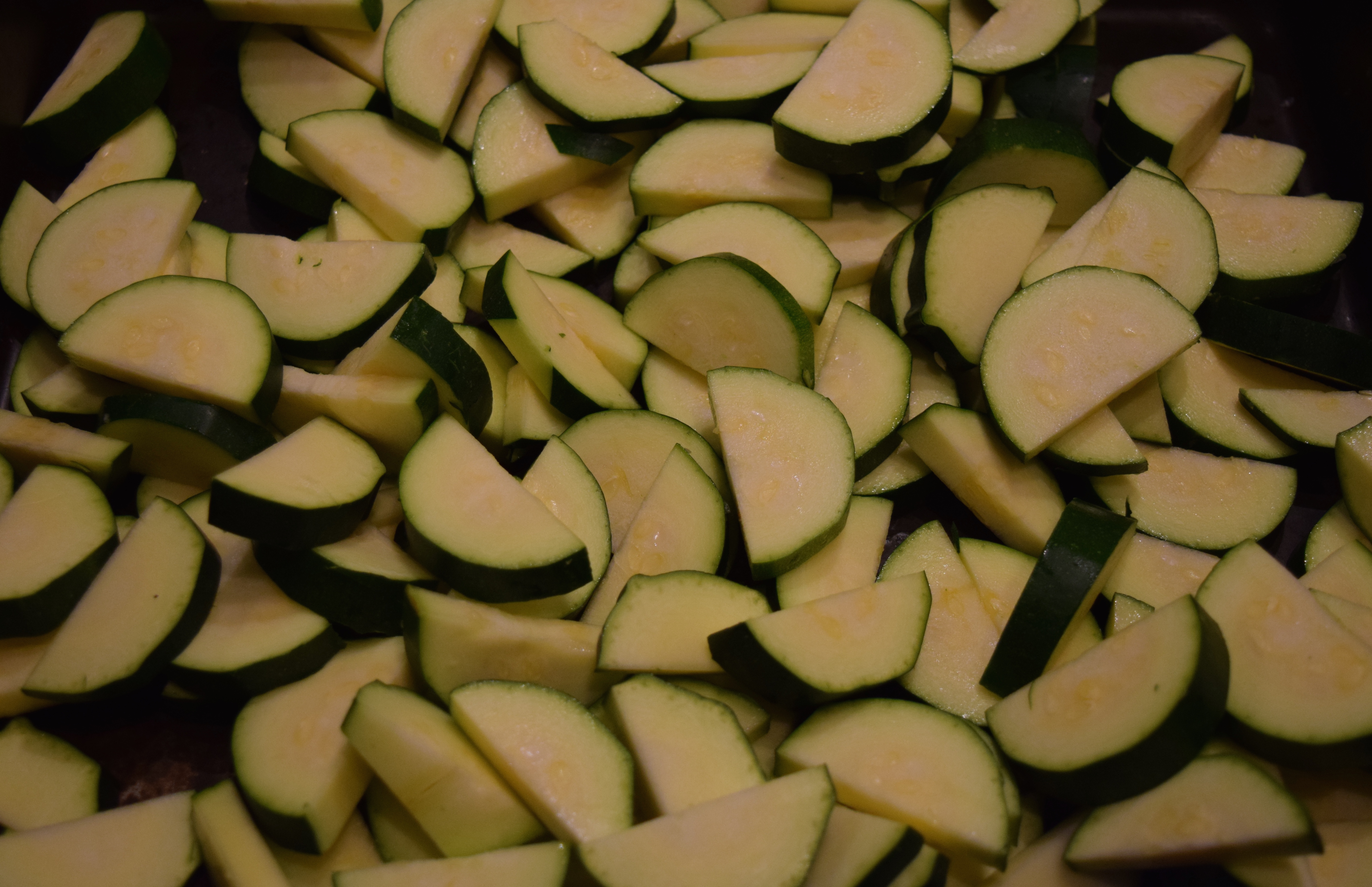
Zucchini: leave the skin on and slice.

DSC_0604

Sweet Bell Peppers: remove core and seeds, chop into 1.5-inch dice.DSC_0605

Green Onions: slice the white part into 1/2 slices, and the green stalks into 1-inch pieces.

DSC_0606

Eggplant: remove ends, peel, and slice.

DSC_0607  DSC_0614

Tomatoes: remove the stem and white core, and chop as shown. No need to peel or remove seeds.

DSC_0615

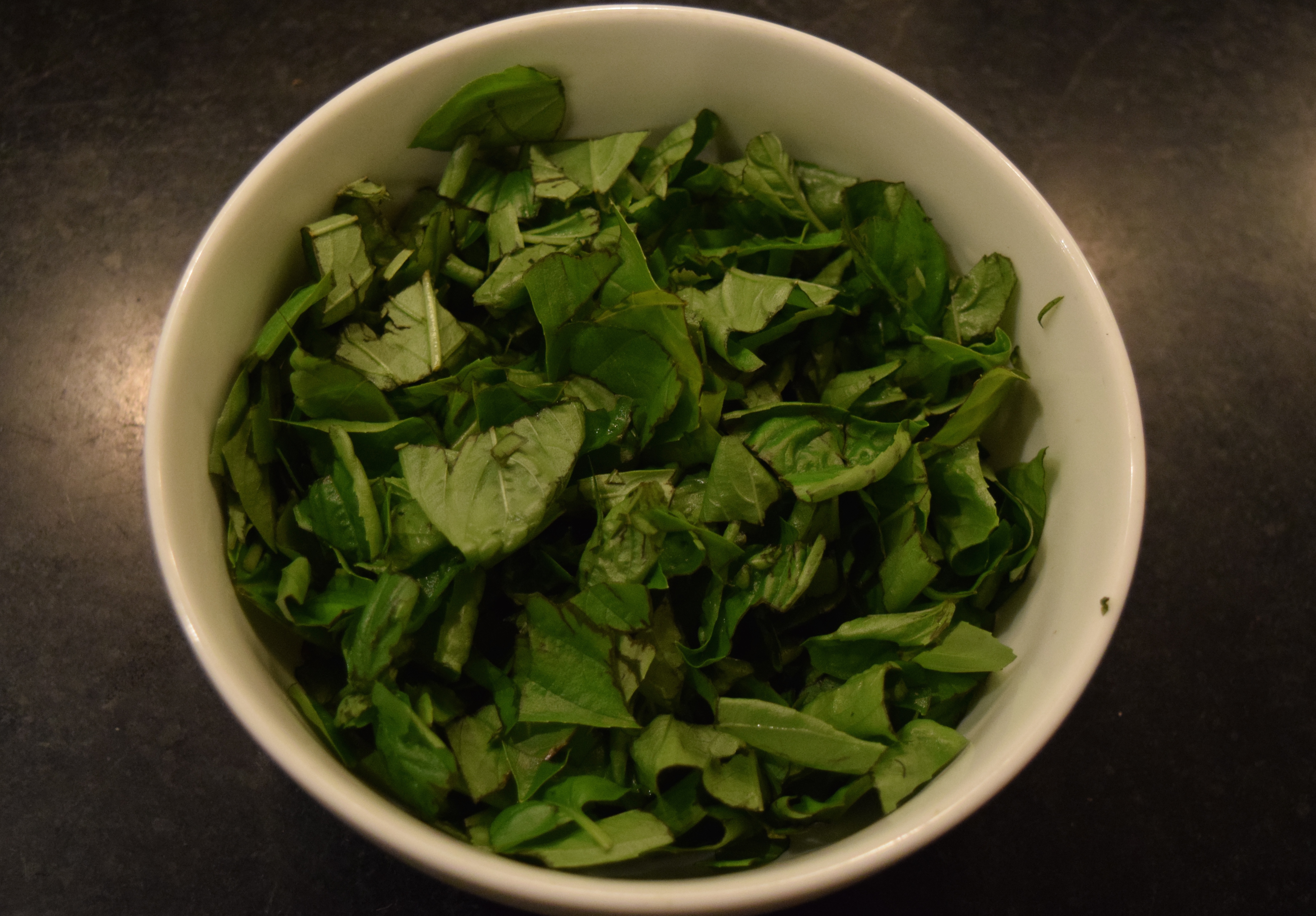
Prep basil: remove leaves from stems and chop. Add to roasting pan.DSC_0293  DSC_0633

Mix it all up. Add olive oil, garlic, salt and pepper. I am usually generous with the olive oil. I learned that from my mother.

Roast at 400º for 40 minutes to an hour depending on the volume of vegetables used.

DSC_0166

To Serve:
I’ll put just about any roasted vegetable over pasta and the ratatouille was no exception. It was delicious. Be sure to sprinkle with Reggiano Parmesan.

I had about 2½ quarts of leftovers that went into the fridge. My husband served it over orzo as a side dish the next night, and on Saturday morning, he put what was left in his omelette.

DSC_0193.jpg

Epilogue: 
My family loved this meal. As we ate dinner, one of my sons said, “Nicole Kidman couldn’t have made this dinner, Mom.”  Thanks, son.

Make it Whole30
Skip the pasta and cheese and serve it as a side dish.

LET’S STAY CONNECTED!

Follow my photos of vegetables growing, backyard chickens hanging out, and dinner preparations on Instagram at JudysChickens.

Never miss a post: sign up to become a follower of the Blog.

© 2014-2017 Judy Wright. All rights reserved. Photos and text may only be used with written consent.

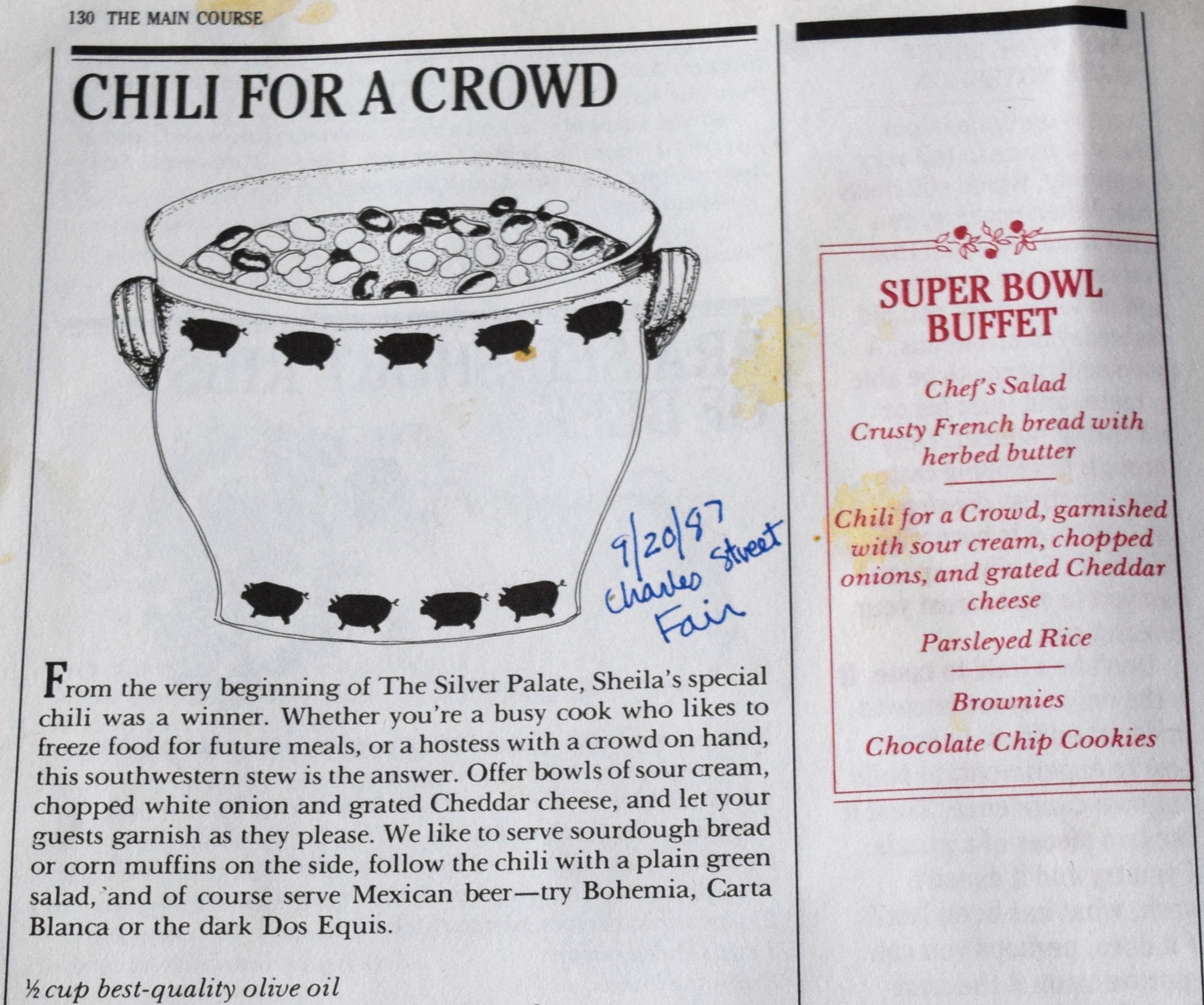
My Favorite Silver Palate Chili

Thirty years ago, when I was a newlywed living and working in Boston, Julee Rosso and Sheila Lukins’s The Silver Palate Cookbook was the “it” cookbook. Just as in 1961, when Julia Child made learning French cooking techniques attainable for home cooks with Mastering the Art of French Cooking, Rosso and Lukins, in 1982, introduced the next generation of home cooks to a style of gourmet cooking using simple instructions and fresh ingredients.

Their recipes were so accessible, flavorful, and sophisticated that an expanded language of food emerged. Suddenly, phyllo triangles, tarragon chicken, hummus, arugula, red leaf lettuce, colorful pinwheel fruit tarts, and blueberry and walnut oil vinaigrette, became de riguer at luncheons and dinner parties across the country. As an indicator of how unconventional their ingredients were there was an asterisk next to “balsamic vinegar” in one recipe, indicating it could be found in “specialty food shops.”

The Silver Palate Cookbook authors gave my peers and me the confidence to experiment with unfamiliar ingredients. It is hard to describe how accomplished I felt, as a cook, the first time I made Silver Palate classics like Chicken Marbella and Raspberry Chicken, both notable for their beautiful presentations and multiple layers of flavor. The authors made time spent in the kitchen an adventure; an adventure that continues to this day.

This chili recipe, with a few adaptations, continues to be my favorite chili. It is loaded with wonderful flavors like dill, cumin, citrus, Dijon, and wine. It is A-mazing. Be warned: it makes a lot of chili — feel free to cut the ingredient amounts in half.

DSC_0247

Yield: 8 quarts or 32 cupfuls

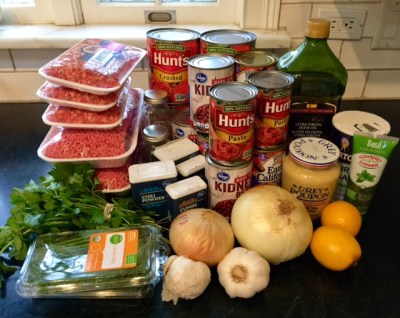
Ingredients:

fullsizerender

½ cup extra-virgin olive oil
2 pounds sweet onion, chopped
¼ cup minced garlic
3 pounds sweet Italian sausage, removed from casings
6 pounds lean ground beef
3 15-ounce cans (about 5 cups) dark red kidney beans, drained, unrinsed
4  28-ounce cans crushed Italian plum tomatoes (plus ¼ cup water/per can, to rinse can)
2  12-ounce cans tomato paste (plus ¼ cup water/per can, to rinse can)
½ cup Dijon mustard
½ cup red wine
¼ cup (1 large lemon) freshly squeezed lemon juice
¼ cup sea salt
1½ tablespoons ground black pepper
3-ounce can ground cumin seed
4-ounce can plain chili powder
¼ cup dried basil
¼ cup dried oregano
½ ounce (1 cup) fresh chopped dill, stems removed
1 ounce (1 cup) fresh chopped Italian flat-leafed parsley, stems removed
4  6.5-ounce cans pitted black olives, coarsely chopped

A few words about the ingredients …

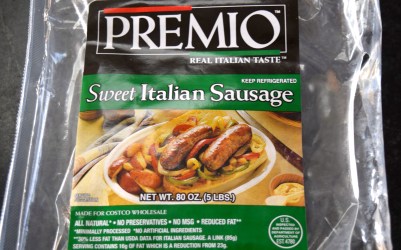
Sausage: I use Premio’s Sweet Italian Sausage in this recipe. I buy it at Costco. The sausages are fabulous grilled or cooked in a Sunday tomato sauce.

DSC_0441

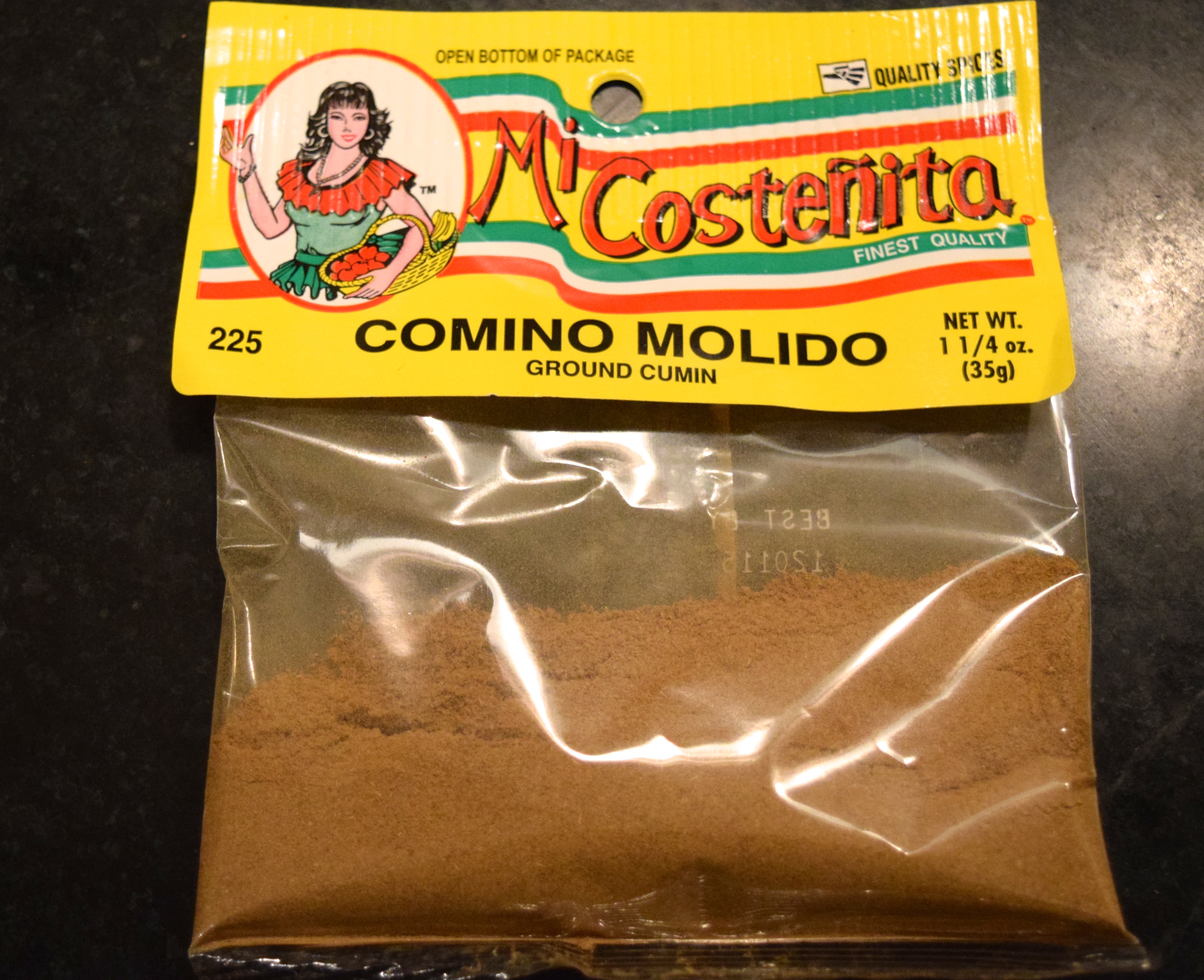
Spices: You can go to the international aisle of most grocery stores and find spices at one-third the cost of those sold in the regular spice aisle?

DSC_0339

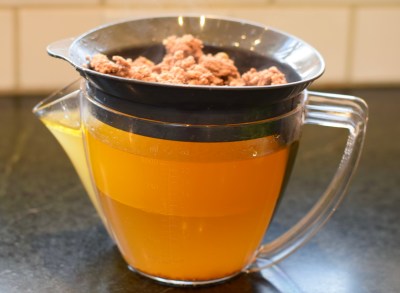
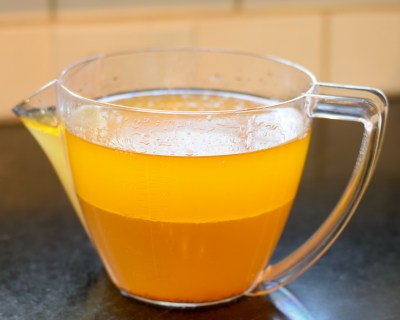
Technique Tip: How to use a fat separator:
Fat separators are pitchers with pouring spouts set into the base. Since water is denser (has more mass per unit of volume) than fat, the water-based juices sink to the bottom, and the fat floats to the top. With the spout on the bottom, it is easy to save and pour out the juice while retaining the fat in the container. Remember to stop pouring the liquid just before the fat enters the spout hole in the base. The straining basket on top keeps solid particles from falling into the container and clogging the spout hole.

dsc_0576

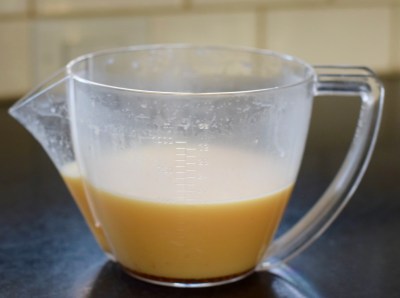
If you don’t have a fat separator, pour the liquid into a one-quart measuring container, chill it in the refrigerator, and scoop off the yellow congealed fat that floats to the top. Pour the meat juice back into the pot. If you want to feel really virtuous, take a look at how much fat you have eliminated from the pot of chili. Nice.

dsc_0661

Instructions:

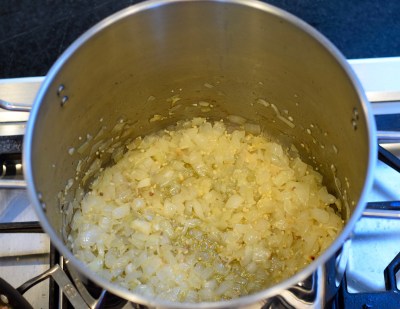
Add olive oil to a large, heavy-bottomed stockpot.  Add onions and garlic and sauté until tender and translucent, about 10 minutes.

dsc_0549

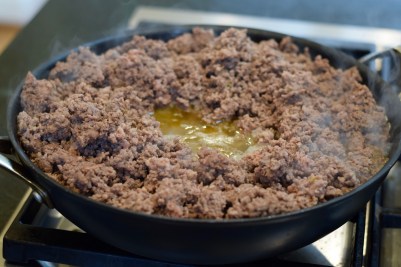
While onions are cooking, squeeze sausage out of its casings and crumble. Sauté meat in a 6-quart, or larger sauté pan until evenly browned.

dsc_0551

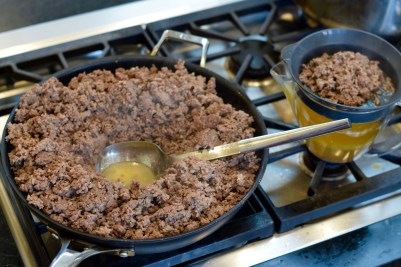
Next, we want to get rid of the fat from the cooked meat but keep the meat’s juices. Here’s a way to do it: Make a well in the center of the meat mixture. A golden liquid will quickly fill the well. Use a ladle to remove the fat to a large fat separator. Keep scooping until all the liquid is gone.

dsc_0561

After juices settle to the bottom of the fat separator, pour them (about 2 cups) back into the stockpot. Discard fat that remains. This is extra step is a time-consuming process but worth it to retain the two cups of meat juice that would have been lost had you simply drained the meat into a colander.

dsc_0572

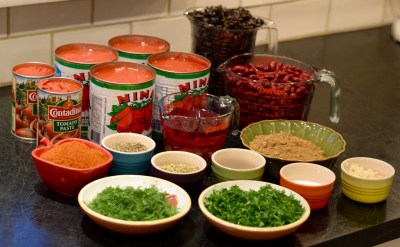
Prepare a mise en place for the remaining ingredients. This is very helpful when there are so many add-ins that need to be measured. Otherwise, it’s easy to lose track of which ingredients have already been added to the pot.

dsc_0314

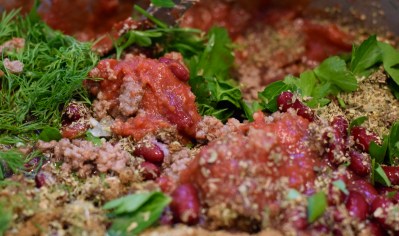
Add all ingredients except the olives to the meat and onion mixture. Rinse each can of tomatoes with ¼ cup of hot water and add that to the pot.

So many lovely ingredients in this chili!

dsc_0620

Simmer chili for 20 minutes on low heat stirring frequently.

Add coarsely chopped olives, stir, and cook for another 5 minutes.

Serve with bowls of garnish such as shredded cheddar cheese, sliced green onions, chopped parsley, and sour cream. Serve over rice, if desired.

chili

This chili can be made ahead of time and stored in the refrigerator.

DSC_0444

You might also like these other soups, chilis, and stews:
Lisa’s Award Winning Buffalo Chicken Chili
Kelly’s Duck Stew
Bruce’s Turkey and Sausage Gumbo
Aunt Bridget’s Chicken Soup with Little Meatballs
Chicken Stock from Rotisserie Chicken Bones
Roasted Butternut Squash Soup

Always check the website for the most current version of a recipe or pattern.

If you enjoyed this post, become a subscriber! Be sure to confirm the subscription on the follow-up letter sent to your email address.

Follow Judy’s Chickens on Instagram and Pinterest @JudysChickens.

© 2014-2018 Judy Wright. All rights reserved. Photos, videos, and text may only be reproduced with the written consent of Judy Wright.