Hensplaining Chicken Idioms

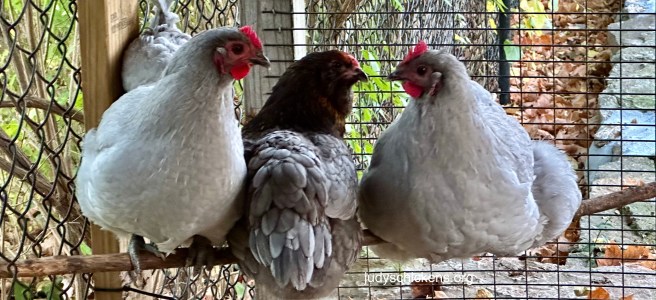
This Mother Hen whose children have flown the coop has been madder than a wet hen latelyWhile I might wish to wring a few necks down at the State House, I’ve opted instead to shake some tail feathers and head on downtown with my birds of a feather mom-friends to ruffle a few feathers  (non-violent protests) and hopefully assuage my feelings of intense grief, anger, and disbelief over the events of the last few weeks here in Nashville.

Chicken Idioms

How have chicken idioms become such a widespread reflection of everyday moments of craziness, hardship, joy, and humor? Although backyard chicken husbandry has been around for centuries, it took a giant leap forward during WWI and WW2 when the Department of Agriculture asked Americans to keep two hens per household member per family as a civic duty.

Citizens responded, and suddenly, grandmothers around the country were telling their grandchildren to stop all that cackling and get to sleep or to not count their chickens before they hatch. Chickens are fun to watch and have about ten behaviors they repeat daily. Using chicken idioms became a colorful way to describe human behavior and teach life lessons.

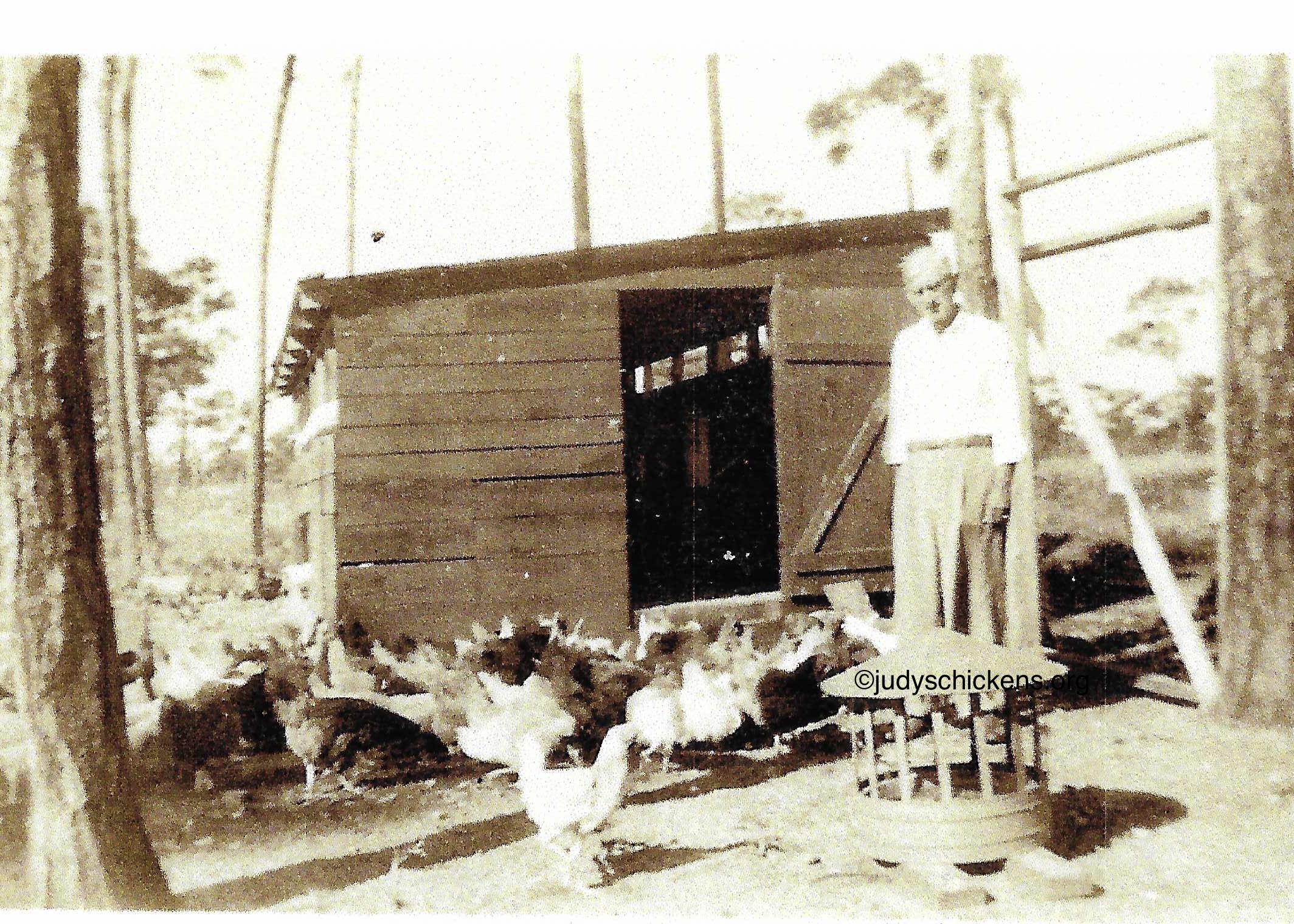
My friend Joanne Knight sent me these photos of her grandparents’ backyard chicken coop and flock during WW2.
About ten years ago, songwriter and mindfulness educator, Ginger Sands, sent me a list of chicken idioms. My husband and I have been adding to it for years. Here is our list. Add to it as you wish!

Chicken Behavior:


Birds of a feather flock together
Pecking order (social hierarchy based on who has access to good things first)
Wring your neck
Ruffle someone’s feathers.
Run around like a chicken with its head cut off
The feathers were flying
Get up with the chickens (get up early)
Madder than a wet hen
Winner winner chicken dinner
Scratching out a living
Shake some tail feathers (get moving)
Chickening out
The early chicken gets the worm
Stop cackling (the raucous noise a hen makes after laying an egg)

Eggs
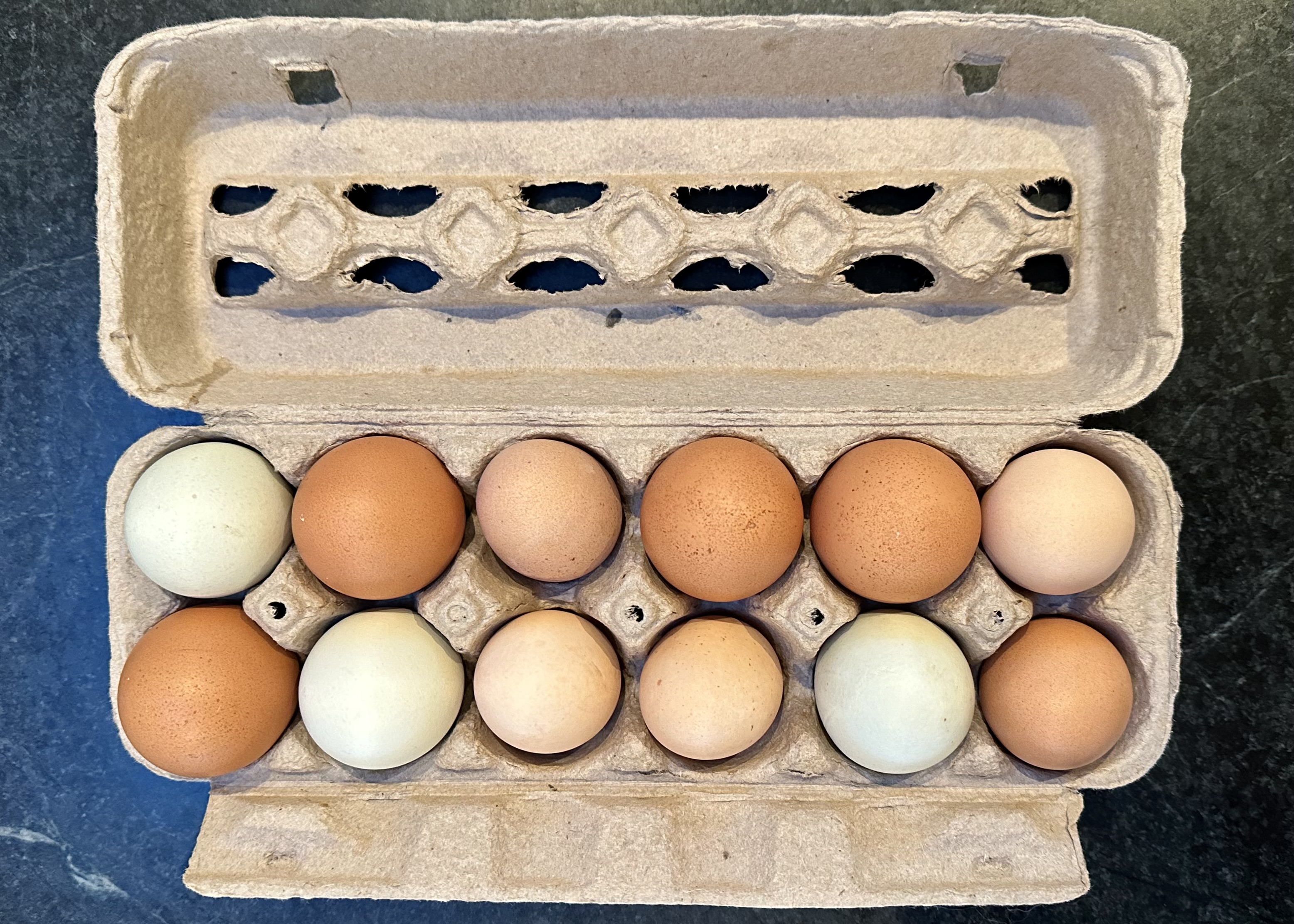

Good egg
Bad or rotten egg (one rotten egg can spoil the batter)
Golden egg
Nest egg
Walking on eggshells
Egg on your face
The yolks on you
Laid an egg (failed miserably)
Egg someone on

Hens


Mother hen
Henpecked
Scarce as hen’s teeth (hens don’t have teeth)
Hen party at the hen house
Chicken chat
Chick flick
Playing chicken (often dangerous, it’s a challenge of who will give in first)
Chicken fight (a wrestling game)
Doing the “Funky Chicken” (a dance)
Nobody here but us chickens
Hen Chicks (Hat tip to writer, Carrington Fox, for our group’s name and the word “Hensplaining!)

Roosters


Cocky
Cock and bull story (improbable)
Cock of the walk (a bossy person)
Cockfight
Something to crow about (to brag)

Nests/Coops/Roosts


Feeling cooped up
Empty nest syndrome
Nesting (making a home)
Leave the nest
Flew the coop
Coming home to roost (come home to deal with the consequences)
Rules the roost (Who’s in charge?)
Broody (when a hen sits on a clutch of eggs and does nothing else for days)
Fox guarding a henhouse (an action that invites disaster)
Feather one’s nest (broody hens pluck their own feathers to soften their nest)
Henhouse syndrome (when predators kill more than they need)

Insults


Being chicken (cowardly)
Chicken-hearted
chicken-livered
Chicken s**t
She’s no spring chicken (baby chicks hatch in spring)
That’s chicken feed (insignificant or cheap)
Can’t boil an egg (can’t cook at all)
Dumb cluck
Fussing like an old hen
Chicken Little (an alarmist)
Rubber chicken circuit (a monotonous round of dinners)

Questionable Behavior


Playing chicken (often dangerous, it’s a challenge of who will give in first)
Chicken fight (a wrestling game)
Doing the “Funky Chicken” (a dance)
Nobody here but us chickens

Philosophy and Proverbs
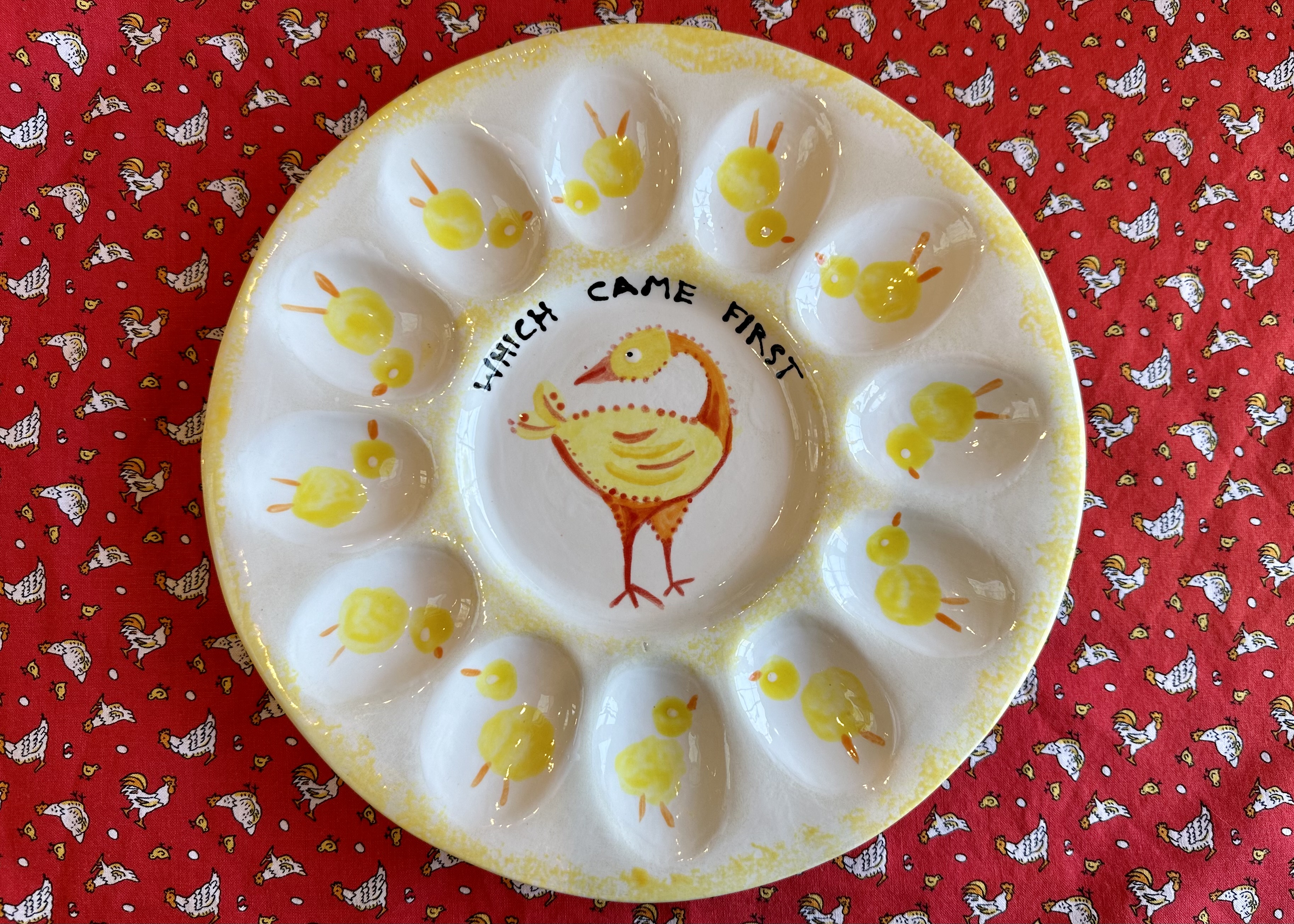

Which came first, the chicken or the egg? (Corabel Shofner created the plate!)
“It’s a chicken and egg problem.”
Don’t put all your eggs in one basket
Don’t count your chickens before they hatch
A chicken in every pot (suggestive of prosperity)
The rooster may crow, but the hen delivers the eggs
You cannot make an omelet without breaking eggs.
He that would have eggs must endure the cackling of hens

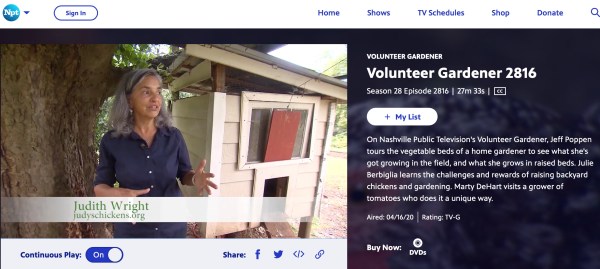
Thinking about keeping chickens in your backyard?
Watch this episode of Nashville Public Television’s Volunteer Gardener:
For Related Chicken Posts:
Eulogy for a Chicken
Chicken Chat on Facebook LIVE!
How to Tell If an Egg Is Fresh or Hard-Boiled
Quiche Lorraine with Bacon and Kale
50 Ways to Make a Frittata

Follow Judy’s Chickens on Instagram and Pinterest @JudysChickens.

If you enjoyed this post, sign up to become a follower. If you do sign-up, press “confirm” on the follow-up letter sent to your email address. And feel free to share!!

© 2014-2023 Judy Wright. All rights reserved. Photos, videos, and text may not be reproduced without the written consent of Judy Wright.

The Soil Your Undies Challenge- A Simple Home DIY Test for Soil Health

A few weeks ago, I sent my grandchildren a package with two pairs of new XL men’s cotton briefs and a batch of their favorite Italian cookies. After the box arrived, their mom Facetimed so the kids could say, “Thank You.” My grandchildren, who have been gardening with me for years, asked why I had sent them such huge undies. In my most enthusiastic voice, I explained that we were going to plant them in their new garden, and it was going to be a science experiment! My six-year-old grandson brought the phone close to his face, looked me in the eye, and in a serious yet tender voice said, “YaYa, you can’t grow underwear.”

The Soil Your Undies Challenge


Last fall, I participated in a whimsical citizen science experiment called the Soil Your Undies Challenge. I “planted” new cotton briefs in one of my raised garden beds on Labor Day and “harvested” them sixty days later. The Challenge is simple: if your soil is healthy, soil-dwelling organisms will dine on the cotton until it is gone. The degree of cotton deterioration is directly related to how much microbial activity is going on. The more activity, the more “alive” and healthy your soil and the healthier your plants will be. Healthy plants resist the stress caused by drought, pests, and disease.

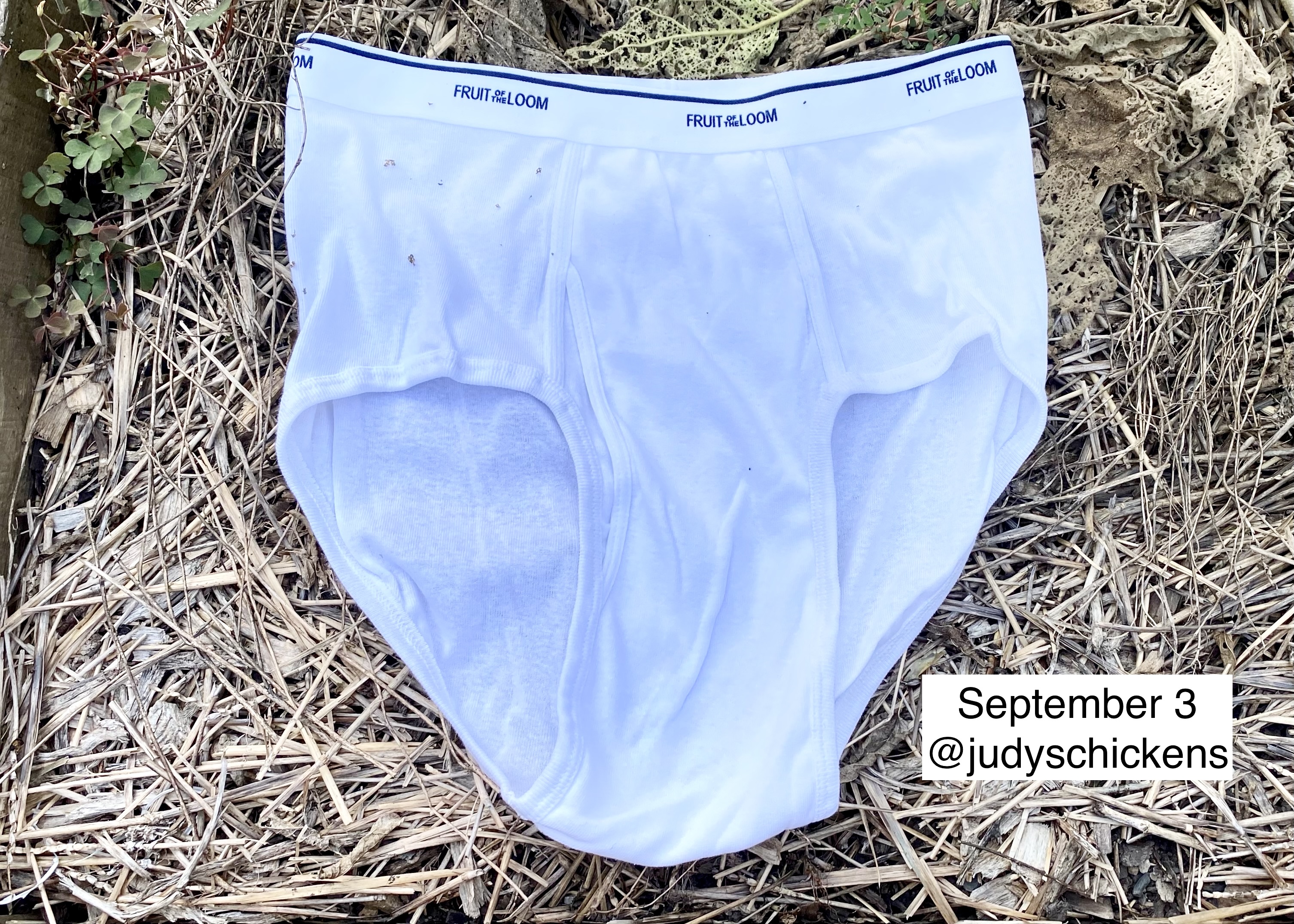
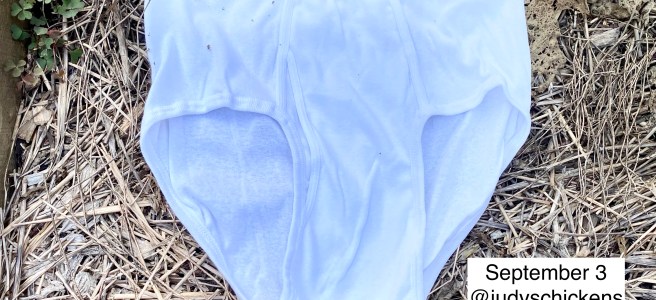
Here is the BEFORE photo:

Here is the AFTER photo:

You can imagine my astonishment when I found the cotton had fully disappeared! Only the polycotton seams and waistband remained.

What is Soil Health?

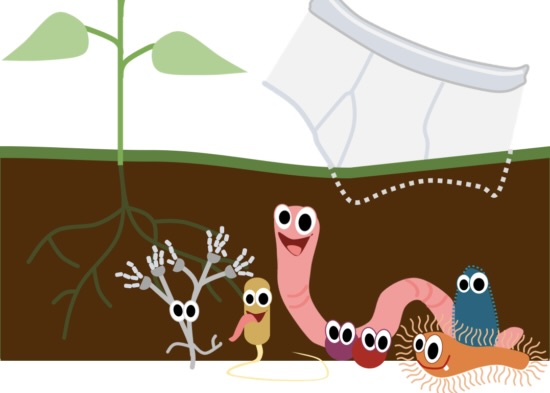
Healthy soil is dark and crumbly, is full of nutrients, and has macroorganisms you can see like earthworms and insects, and billions of microorganisms (aka microbes) like bacteria and fungi that can only be seen under a microscope. These organisms feast on organic material like mulched leaves, grass clippings, dead plants, food scraps from the compost bucket, and sometimes buried cotton undies. Microbes rule the soil. They constantly break down organic matter creating a biological environment that allows for the absorption of nutrients by a plant’s roots. Microbial activity helps make soil porous and better able to retain water, air, and nutrients. 

The Soil Your Undies Challenge was created by a group of Oregon farmers as a way to build public awareness of how farming practices such as tillage affect soil health. Tillage disturbs soil microbes. The no-till strategy allows organisms to do their work to create more nutrient-dense soil and keeps sequestered carbon in the ground, which is healthier for the environment. Carbon that is released into the atmosphere contributes to climate change.

Nashville’s version of the Challenge was coordinated by Jeff Barrie, CEO of the Tennessee Environmental Council, and Dr. Chris Vanags, a soil scientist in the ASCEND Initiative at Vanderbilt University. They aim to help people make informed decisions when purchasing lawn and garden products like insecticides and herbicides or when performing common land management practices like mowing a lawn perhaps too frequently or tilling a garden bed.

Methodology

For standardized data comparisons, the coordinators mailed participants the same-size briefs and a video link on how to plant them. We planted undies vertically with the waistband exposed so we could locate them two months later. We mailed before and after photos to the researchers.

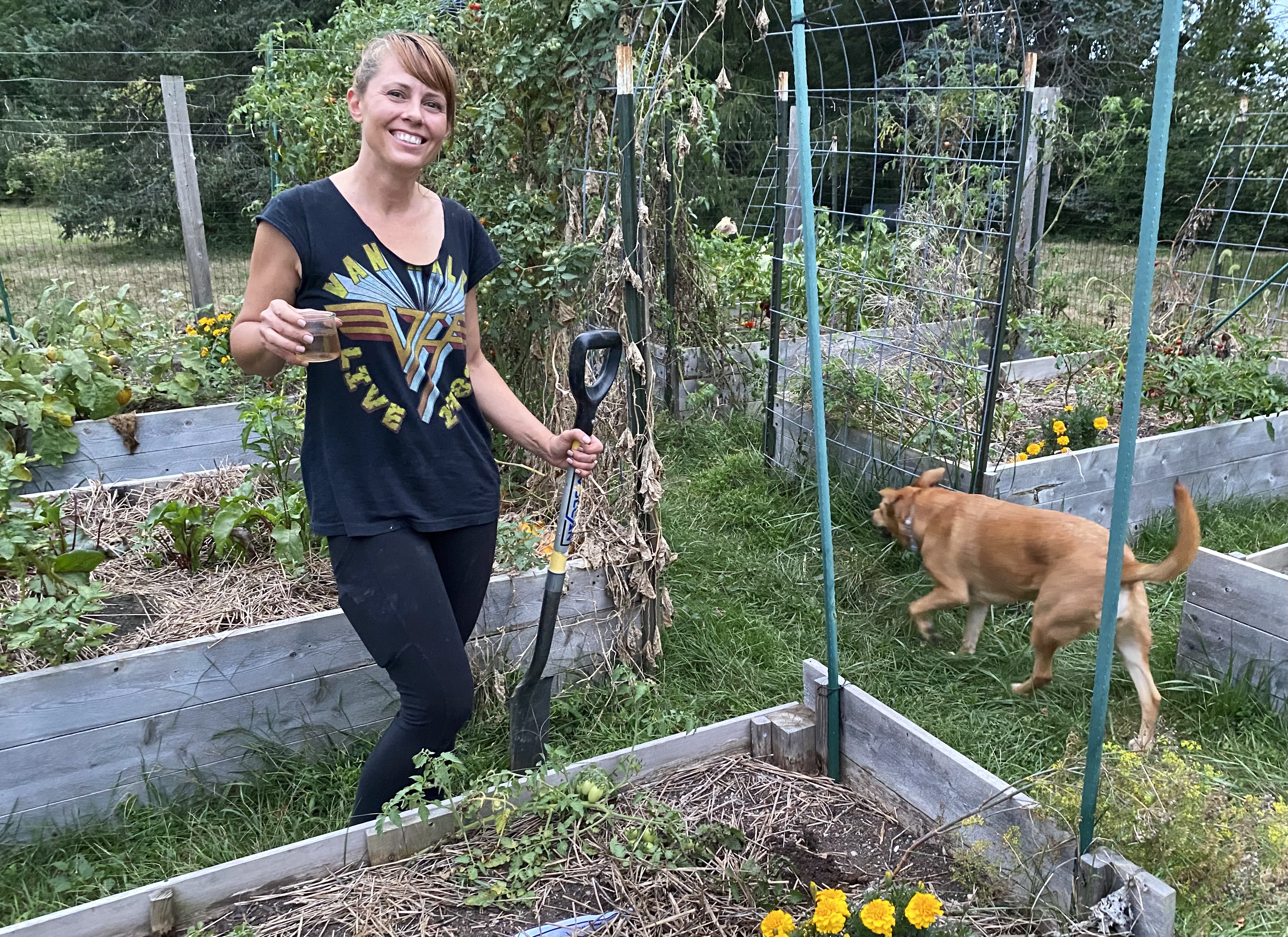
Below are photos of my adorable sister-in-law, Lesley, modeling for me how to plant undies. She and my brother started their raised beds with logs, sticks, and plant debris, a type of gardening known as hugelkultur. Their soil is gorgeous.

Why Use Cotton Fabric?

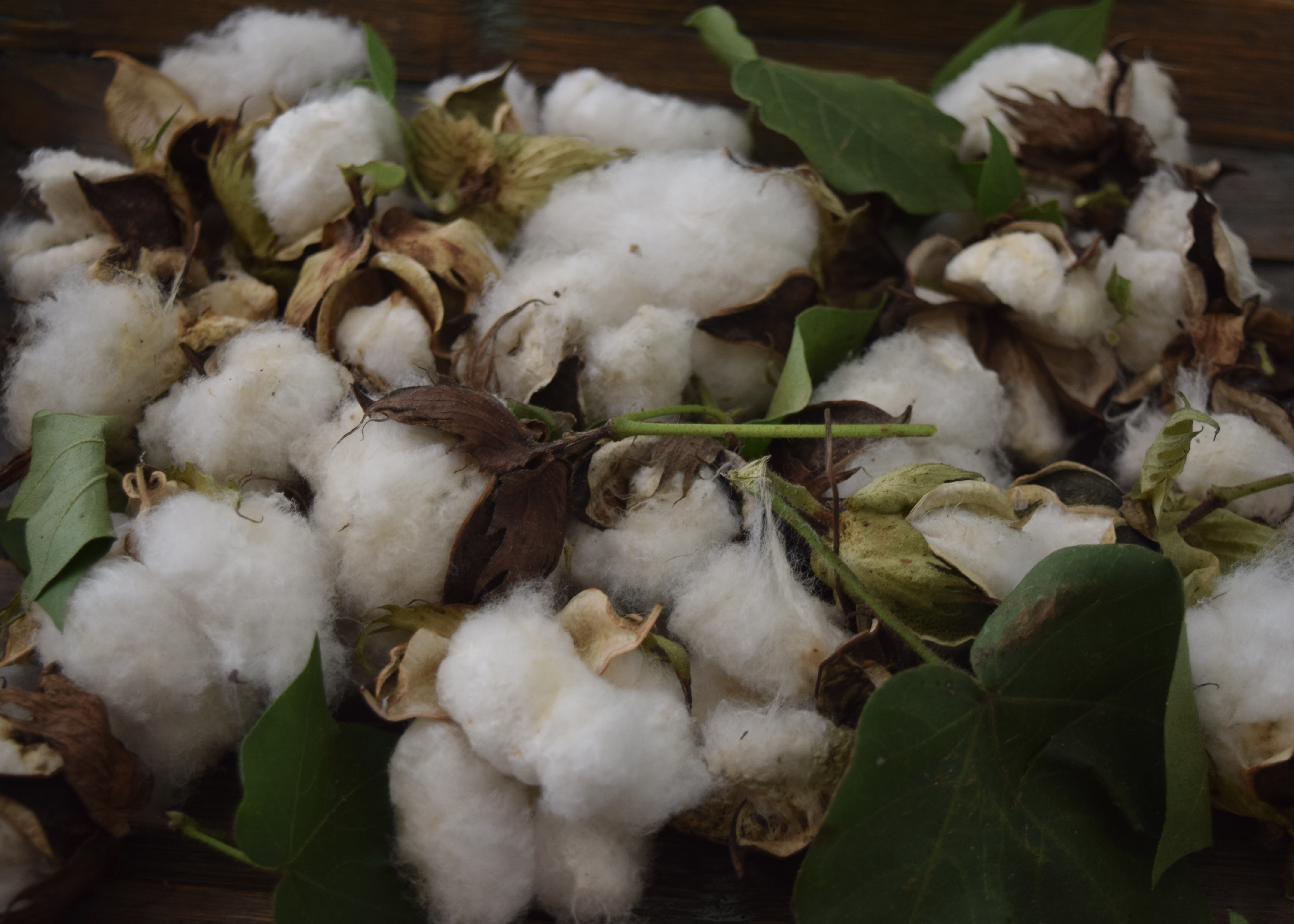
Cotton fibers are comprised of tens of thousands of seed hairs made of tasty carbohydrates (cellulose) that grow off of the seed coat. These hairs are present to facilitate wind dispersal of the seed for the purpose of reproduction.
 

Results

One week after we unearthed the undies and sent in our photos, we met the study coordinators, Jeff and Chris, in a Facebook Live presentation. They divided the 120 “after” pictures of undies into ten categories based on the degree of degradation.

I took this screenshot of the results. It turns out my undies fell in the number ten category. I’ll admit to a momentary feeling of pride in my hard work to keep my garden beds healthy.

Land management practices that contribute to soil health:

Grow cover crops:  Keep something growing in the garden year-round by planting cover crops between seasons. Cover crops nourish microbes and prevent soil erosion in the off-season. I plant a combination of buckwheat which suppresses weeds and whose blooms attract beneficial insects, a brassica like daikon radish or turnips whose roots drill down into the soil naturally breaking it up, and crimson clover, a legume that adds nitrogen to the ground through nitrogen fixation and whose red blossoms attract bees.

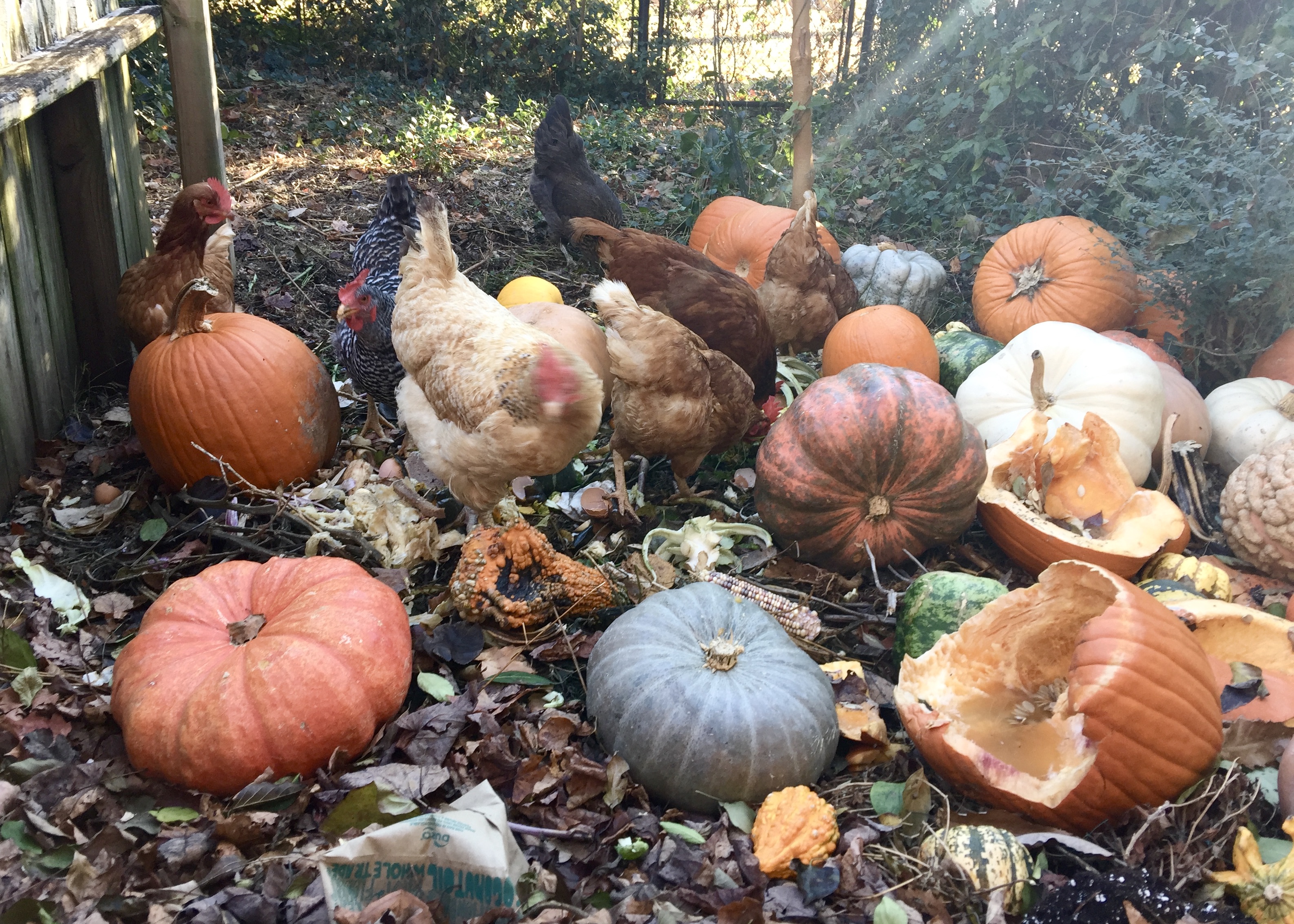
Start a compost pile. We throw food scraps, old bread and pasta, leaf litter, chicken poop, dead plants, and coffee grounds into our compost pile. We don’t add cooked food that might attract rodents. We spread composted mulch in our garden during the summer to keep moisture in and weeds out and to add nutrients to the soil,

Stop tilling in established beds. Tilling disrupts a garden’s microbial population. It exposes microorganisms to the elements where they dry out and die; it releases nutrients to rain run-off; and it releases sequestered carbon (in the form of carbon dioxide) into the atmosphere. Instead, jiggle a pitchfork or broadfork in the ground to aerate soil. I only use a tiller when creating a new bed and even then, only when the ground is too hard to break up on my own. When removing dead plants, I cut the stems at the ground level allowing the roots to decompose in situ. Check out this post to read more.

Create garden paths in your garden to discourage compaction by foot traffic. This will help keep the nooks and crannies in soil open to air and water in the garden beds. Check out How to Build a Raised Garden Bed

I don’t use herbicides or insecticides. I know it’s pathetic, but I only stopped using them in 2010 when I became a hen keeper — I didn’t want my free-ranging chickens to eat anything that had chemicals on it! Back then, I would joke that the chickens kept me honest.

I do not spray for mosquitos. Instead, I make mosquito bucket traps that contain a bacterium found in soil that acts as a larvacide for mosquitos.

Conclusion

This study has had a profound impact on the way I think about soil. I now imagine all the microbial activity going on underground, and I am more conscious of how my chosen garden practices affect my soil. Additionally, when I give a garden tour or teach people how to start a garden, I begin with a discussion about soil health, and then I pull out my scrappy undies…

For the past year, I have volunteered at a non-profit, teaching women how to grow food. I enrolled the ladies in this year’s Soil Your Undies Challenge. They planted undies in two garden beds. As they planted the undies vertically, they quickly learned that while the topsoil was loose, the deeper soil was hard and compacted. It took a lot of work to make a slit in the ground. We’ll need to use a broadfork or pitchfork to break that soil up once the fall crops are harvested.

I am grateful to my friend Maureen May, founder of the Second Sunday Gardeners, who created a place for curious gardeners to come together to learn sustainable land management practices. She and another member, Heidi, encouraged twenty people in our group to participate in this study.

Related Stories:

Watch this excellent Nashville Public Television Volunteer Gardener clip: Soil Your Undies: How Healthy is Your Soilhosted by Julie Birbiglia, the education specialist for Metro Water Services. She and Dr. Chris Vanags dig up undies on the Vanderbilt campus and discuss the results.

Julie also did two stories for NPT’s Volunteer Gardener about gardening and raising chickens in my backyard. We talked about chicken coops, what chickens eat, keeping chickens safe, composting and cover crops. One video was a Volunteer Gardener episode called Chicken Chat and the other was a FaceTime live production.

Follow Judy’s Chickens on Instagram and Pinterest @JudysChickens.
If you enjoyed this post, sign up to become a follower. If you do sign-up, press “confirm” on the follow-up letter sent to your email address. And feel free to share!!

© 2014-2022 Judy Wright. All rights reserved. Photos, videos, and text may not be reproduced without the written consent of Judy Wright.

The Mosquito Bucket Hack That Works

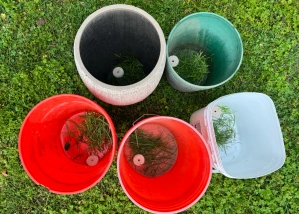
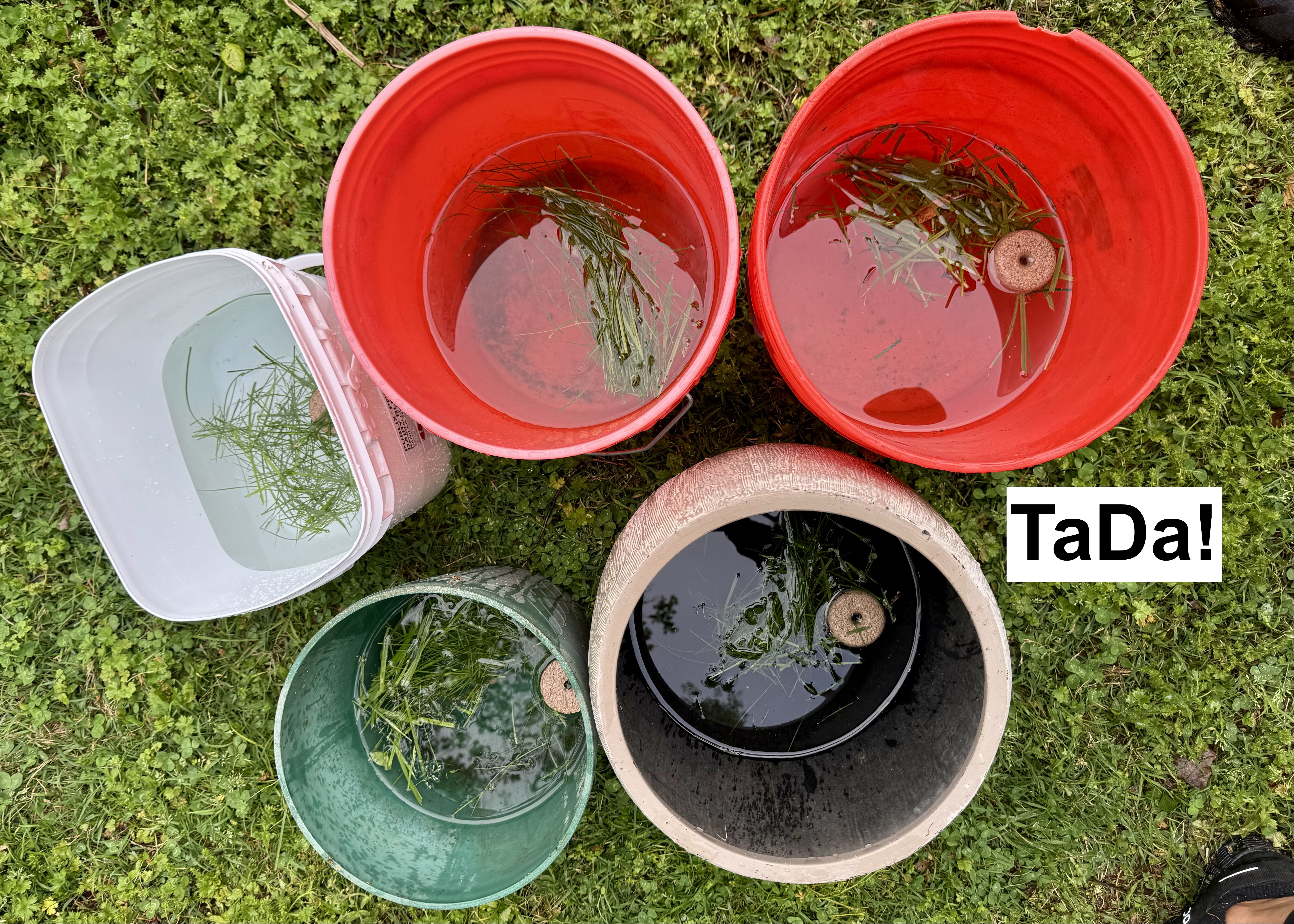
These are mosquito buckets. The white, donut-shaped discs floating in them are called MosquitoDunks®.

MosquitoDunks® contain a mosquito-specific toxin, B.t.i. (Bacillus thuringiensis subspecies israelensis), a naturally occurring bacterium found in soil and known to kill mosquito larvae. B.t.i. will not kill adult mosquitos or their eggs; it stops mosquito reproduction only in the larval stage. The mosquito bucket system is a bee-friendly, vegetable garden-friendly, and pet-friendly way to eliminate mosquitos.

This post is for you IF:

  • You hate using Mosquito Joe-type fogger sprays to manage these pests because you suspect there is collateral damage to beneficial insects, but you hate mosquitoes more.
  • You hate to wear bug spray and socks, a long-sleeve shirt, and pants in the middle of a hot summer day when you weed your garden.
  • You worry about diseases spread by mosquitoes.
  • Mosquitoes love you.

I am very thankful for the day my naturalist friend, Joanna Brichetto, posted a story called The Mosquito Bucket of Doom on her blog, Sidewalk Nature. Joanna learned about the bucket system from famed etymologist Dr. Doug Tallamy.

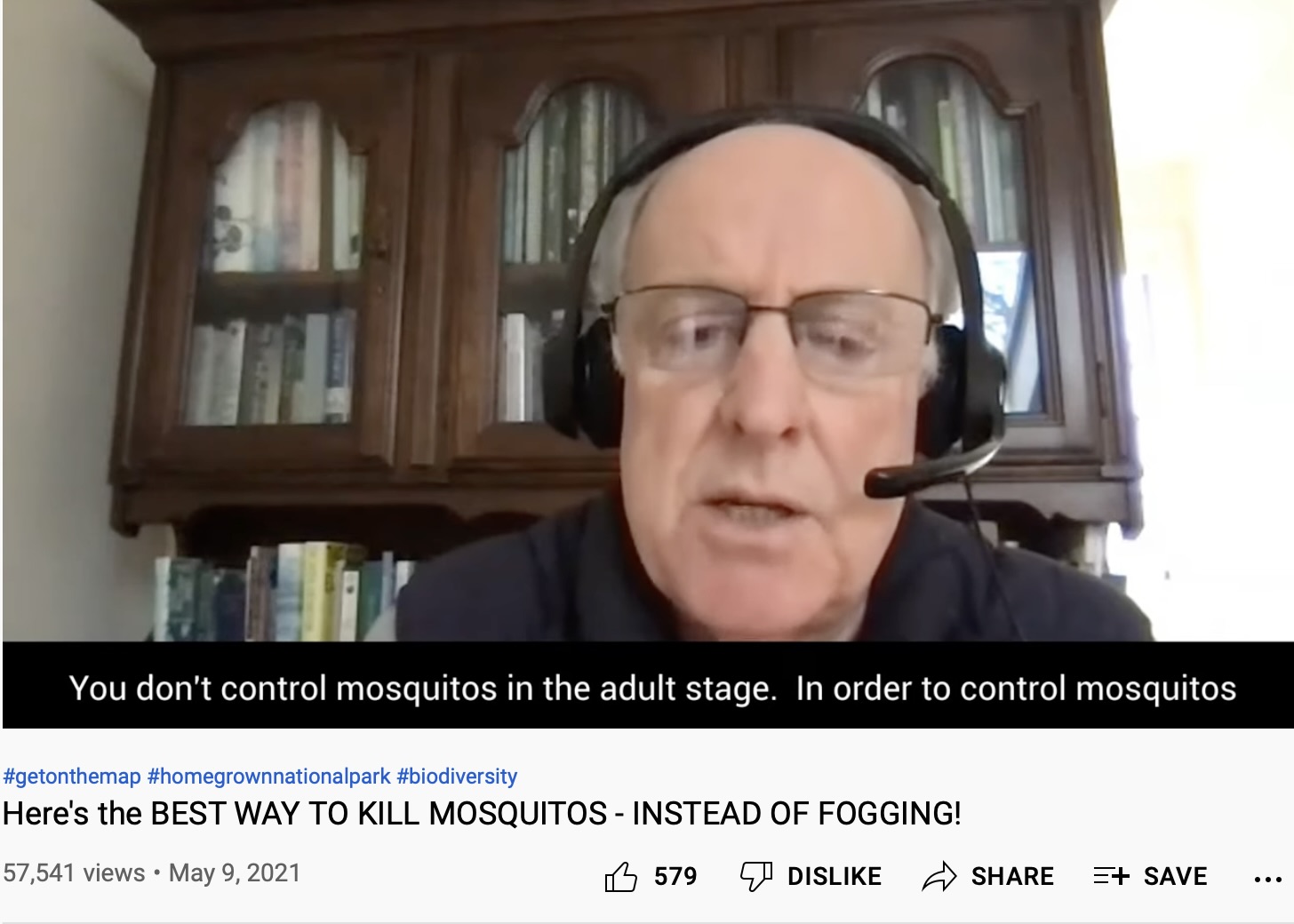
Here is a link to Dr Tallamy’s explanation. He says companies that spray for mosquito removal kill 10% of adult mosquitoes and many beneficial insects.

I have four mosquito buckets spread around my half-acre backyard: one industrial-looking bucket in each vegetable garden and one attractive fiberglass bucket on our patio.

I’ve just added a fifth bucket to cover the area around our herb garden in the side yard.

HOW TO MAKE MOSQUITO BUCKETS

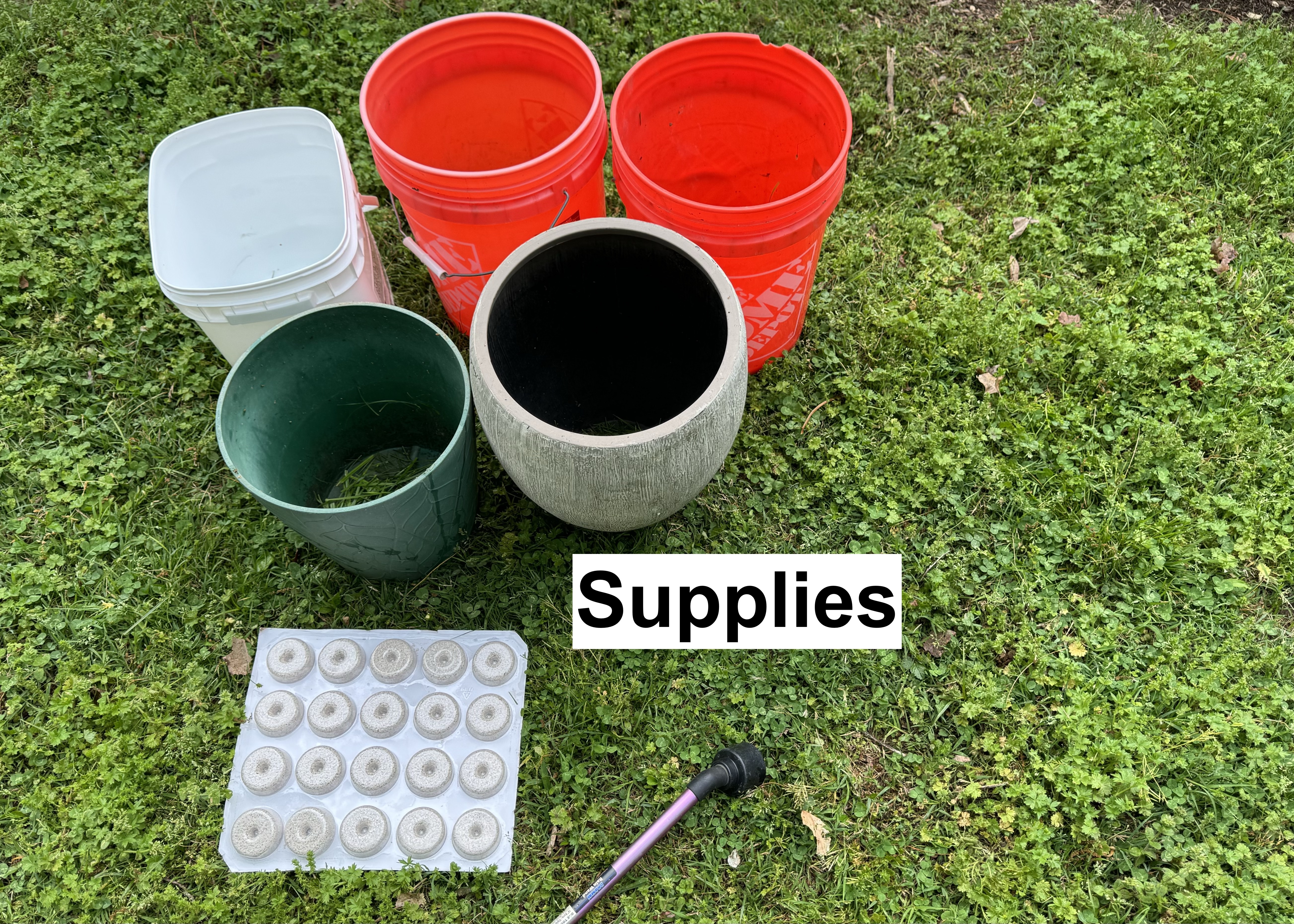
Supplies:

-Use a  3-5-gallon bucket, planter, or any container with a wide top
-ONE handful of grass clippings
-Water
-ONE Mosquito Dunks® (a larvicide)
-If you are concerned about wildlife falling in the bucket, Dr. Tallamy suggests placing a chicken wire screen over the top

Instructions:
Add a handful of greens and a Dunk® into each tall, wide-topped container.
.

Half-fill the container with water. As the organic matter decomposes, it produces carbon dioxide, an attractant for female mosquitoes.

Place buckets near your seating and work areas. Thirty days later, add a new Dunk® to each bucket. Pro Tip: take a photo of the bucket when you add a new Dunk to help remember the date! For convenience, I purchase packages of 20 Dunks from an online source.

You do not need to change the water each month. You want swampy water, but it shouldn’t be smelly. Add more water to keep the buckets half full and pour off water after a heavy rain.

Testimonials:
We hosted my son’s rehearsal dinner in our backyard in the middle of July with just four buckets for mosquito control. We never saw a mosquito.

I volunteer at a community garden near a floodplain inhabited by many mosquitoes. I  showed the local residents how to set up mosquito buckets, and within two weeks, the mosquitoes were gone.

My friend, who lives in Sewanee, TN, known for having so many mosquitos people can’t sit and visit on their porches, now uses four buckets around the perimeter of her house and five more around an ephemeral pond on her property. She reports they now sit comfortably outside. I believe they will work for most residences if she says they work.

How Do Mosquito Buckets Work?

MosquitoDunks® work by killing mosquito larvae, not adult mosquitos; it is a larvicide.

It takes a few days for mosquito eggs to hatch into the little swimmers (larvae) seen in Joanna’s container, shown below.

Mosquitoes need ¼-inch of standing water to lay eggs. With that in mind, inspecting your property for hidden bodies of standing water and turning unused containers upside-down is essential for successfully using this system.

I want readers to succeed when using the buckets, so please comment if you have a question or feel the buckets are not working.

Related Stories:
How to Start Seeds in a Recycled Milk Jug
The Soil Your Undies Challenge- A Simple DIY Test for Soil Health
How to Build a Raised Garden Bed
The Asteraceae Family of Primo Pollinator Plants

Unrelated Stories:
Pistachio, Lemon, and Basil Butter Cookies
Award-Winning Chocolate Chip Cookies
Homemade Grape Jelly
A Birthday Tribute for My Mother: Knitting with Mom’s Stash
How to Knit Fingerless Mittens on Straight Needles

Follow Judy’s Chickens on Instagram and Pinterest @JudysChickens.
If you enjoyed this post, share it and sign up to become a follower. If you sign up, press “confirm” on the follow-up letter sent to your email address. 

© 2014-2024 Judy Wright. All rights reserved. Photos, videos, and text may not be reproduced without the written consent of Judy Wright.

How to Start Seeds in a Recycled Milk Jug

Last spring, while visiting my friend Mary’s vegetable garden, I spied this group of milk jugs planted with vegetable seedlings.

Mary said she started using recycled milk jugs to start seeds when she saw another gardener doing so. We, gardeners, enjoy learning from each other!

The beauty of milk jug sprouting is once you plant seeds, moisten the soil, and tape up the sides, you can pretty much ignore the emerging seedlings until they are ready to be transplanted; no need for babysitting. The almost closed system keeps moisture in and uses the warmth of sunlight to nudge seeds from dormancy to germination. It is an efficient, green, portable, fun, easy-peasy way to start seeds.

I left Mary’s garden and headed home; I had an idea. A murder of crows had been invading my little backyard corn patch, digging up most of the seedlings as they sprouted.

By the way, the birds were after the kernel, not the green blades which they left behind. Arghhh. This bummed me out because I was nearing the end of my prized stash of Kentucky Rainbow Heirloom Dent Corn from Susana Lein’s Salamander Springs Farm in Berea, Kentucky.

Planting seeds in jugs seemed like the perfect way to grow a quick and controlled crop to replace what I had lost. I cut two jugs in half, filled them with dirt, seeds, and water, and taped them up.

Eleven days later, I opened the jugs and planted the bushy seedlings.

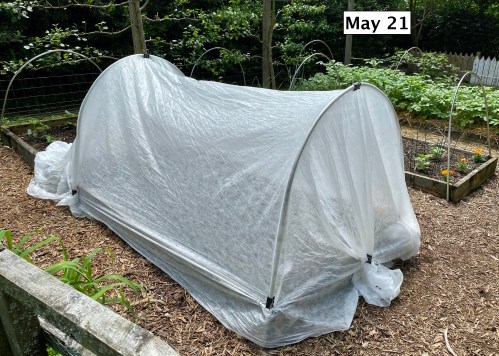
I covered the bed with shade cloth to keep all marauders out.

It took about one minute for a crow to pull out the first seedling when I uncovered the bed. I set up a perimeter of string and dangling, flashy CD’s.

And an owl.

The plants did well. They grew as high as an elephant’s eye.

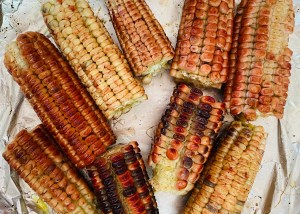
Eventually, I harvested and cooked the delicious, earthy-tasting ears.

Why do I love this corn? It is unusually savory instead of sweet. I love to roast the ears with a little olive oil and salt and cut the kernels off the cob. YUM!
 

The story doesn’t end there. (Does it ever?)

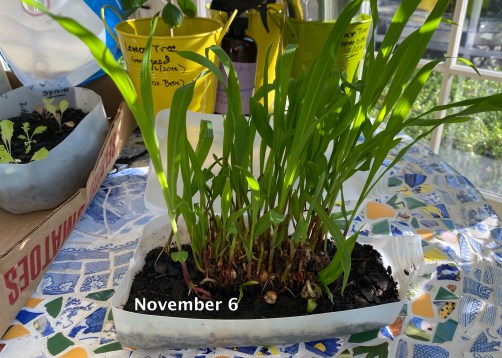
When I was cleaning out my garden tote in mid-October, I found these moldy, sprouting ears of Kentucky dent corn. I couldn’t throw them out.

I took one and stuck it in a recycled half-gallon jug.

I expected it to rot. Instead, it took off! I was thrilled by the unexpected growth from the individual kernels of corn on the cob. Many months later, the little jug garden is still thriving.

The scientist in me had to see if the sprouted cob was a fluke or if the results could be reproducible. I planted a two-year-old cob I had saved to show students an example of incomplete pollination. It, too, took off.

Plant a Seed with a Child and Share the Thrill of Growing Food Together

Milk jug gardening can be a fun, inexpensive, educational activity to do with children. Imagine how impactful it could be for a child to bring homegrown food to the dinner table, even if it’s only a few leaves of parsley or radish sprouts.

Free seeds for growing food can be obtained from seed exchanges at public libraries across the country.

During COVID, the Nashville Public Library Seed Exchange has let residents check out seeds online and pick them up curbside at one of their branches. This is what the seed bank looks like at one of the branches.

The seeds are donated by local gardeners. Members of one local non-profit, The Herb Society of Nashville, save seeds from their home gardens and get together seasonally to package them.

How to Make  a Milk Jug Greenhouse:

Supplies:

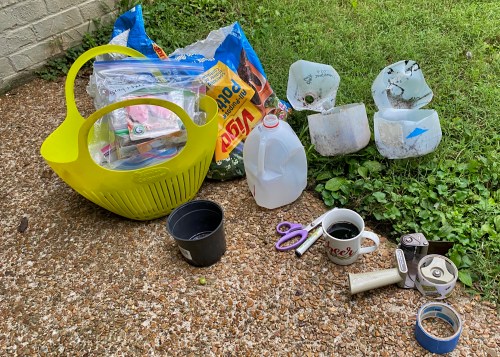
clean, plastic milk jugs (gallon and half-gallon sizes)
scissors
store-bought seed-starter dirt or the richest dirt you can find outside
a shovel or cup to spoon dirt into jugs
blue or masking tape
a marker
seeds
water

Instructions:

1. Using scissors, cut around the base of a clean jug about 4 inches from the bottom, leaving the plastic under the handle uncut to serve as a hinge for the greenhouse’s upper half.

2. Fill the jug with 3-4 inches of dirt. I have had good results using dirt from my garden. You could also buy bags of clean seed-starting potting soil.

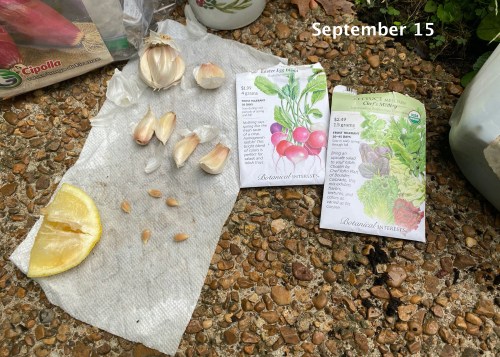
3. Plant the seeds of your choice. It is fun to try seeds you may have in the house. I cut open a lemon, pulled out five seeds, and planted them, as well as a few cloves of garlic.

They all sprouted and continue to grow. I transplanted the garlic outdoors.

Months later, the lemon seedlings are still going strong!

4. Dribble water into each container until the soil is damp but not sopping wet. I do not put drainage holes in the bottom so I can bring the containers indoors.

5. Close the hinged top and tape around the cut edges of the plastic. Leave the jug spout uncovered for a little air circulation.

6. Label the container.

7. Place greenhouses outside if warm or inside in a sunny window if cold. After I planted the corn seeds, I went out of town for a week and left them untended. The seedlings flourished in my absence.

Radishes are good to grow if you want to see quick results but know that they do not transplant well. Keep the seedlings growing in the jug and encourage children to snip the greens to put in a salad or use in a sandwich.

Sowing seeds, tending plants, and harvesting food and flowers produce feelings of great satisfaction, joy, and wonderment while nourishing the body, mind, and spirit. Milk jug gardening is a fun and portable way to get started.

Happy Gardening!

Related Stories
How to Build a 4 x 4 Raised Garden Bed
Spring Planting Guide for Your Kitchen Garden
Growing and Cooking Sweet Potatoes!
Lemon Tree Very Pretty
Family Dirt
Asteraceae: My Favorite Family of Pollinator Plants
How To Curbside Recycle

Follow Judy’s Chickens on Instagram and Pinterest @JudysChickens.

If you enjoyed this post, consider becoming a follower. Be sure to press “confirm” on the follow-up letter sent to your email address.

© 2014-2021 Judy Wright. All rights reserved. Photos, videos, and text may not be reproduced without the written consent of Judy Wright.