How to Clean the Splash Guard of Your Garbage Disposer

A conversation with friends while cooking in a kitchen went like this:

Me: Do you all clean the rubber splash guard of the garbage disposer in your kitchen sink?
Friend 1: I put ours in the dishwasher once a week.
Friend 2: I do it once a month.
Friend 3: Clean what?
Me: How come I never knew about this? Yesterday, I put my hand in the disposer to pull out a hunk of chicken fat that was mucking up the system and out popped the disposer’s rubber splash guard. It was all slime and gunk.

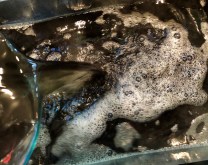
The photo below is about two week’s worth of disposer slime. I know it is gross.

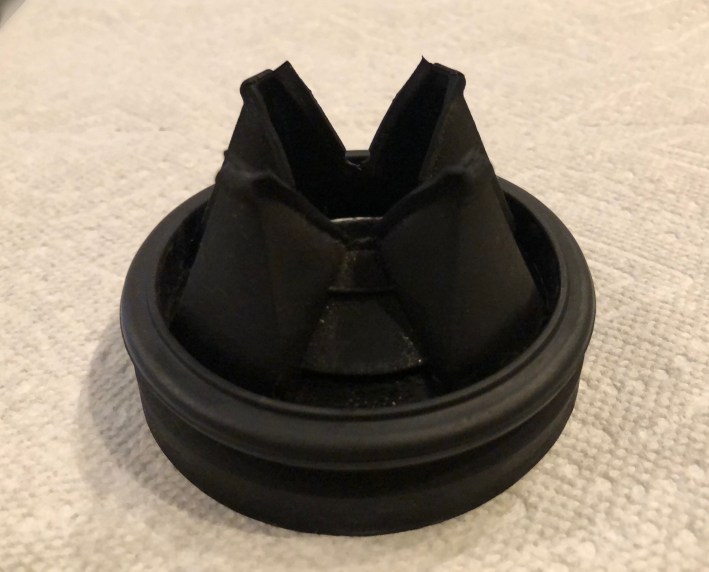
Since I hardly ever used the disposer, I never thought about cleaning it. Now, I clean the splash guard with a scrub brush and hot soapy water and run it through the dishwasher about once a week.

Ahh, like new.

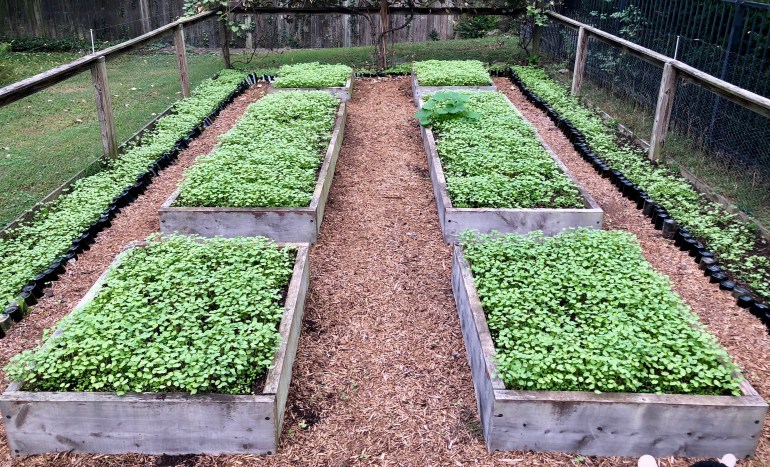
To end on a happier note, this is how I keep the soil clean in my vegetable garden: I plant crimson clover, buckwheat, and turnips as cover crops. These crops are only 10-days old and already look like the lawn of the Emerald City.

Don’t miss a recipe! Become a subscriber and have every post delivered to your Inbox.

Follow Judy’s Chickens on Instagram and Pinterest @JudysChickens.

Remember to always check this website for updated versions of a recipe.  

© 2014-2018 Judy Wright. All rights reserved. Photos, videos, and text may only be reproduced with the written consent of Judy Wright.

How to Make Indigo Blue Dye

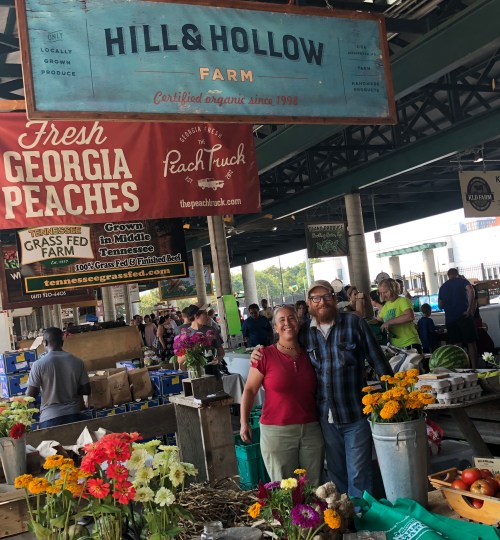
Three summers ago, I was cruising the Nashville Farmers Market when I spied Hill and Hollow Farm’s vegetable, flower, and hand-dyed yarn stand. What drew me in was the color blue. Indigo blue. 

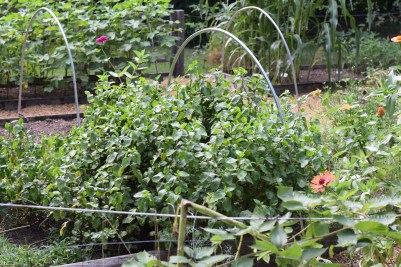
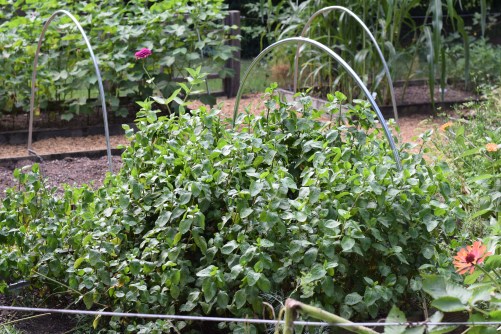
On that June morning, owner, Robin Verson, was selling Japanese Indigo plants; the plants she uses to make indigo dye for her gorgeous yarns. The yarn is milled from wool shorn from her own flock of Jacob sheep. I wanted in on this exciting blue action. I bought four of her seedlings and planted them that day. By September, the plants looked like this.

As the plants matured to the flowering stage, I was surprised to see there was no blue in sight. The leaves were green, the flowers were pink, and the stems were a bronzy-red. With winter approaching, I left my small crop of indigo to die, in situ. Little did I know how easily they would self-seed here in Tennessee. Three years later, I had a bumper crop of volunteer Japanese Indigo plants.
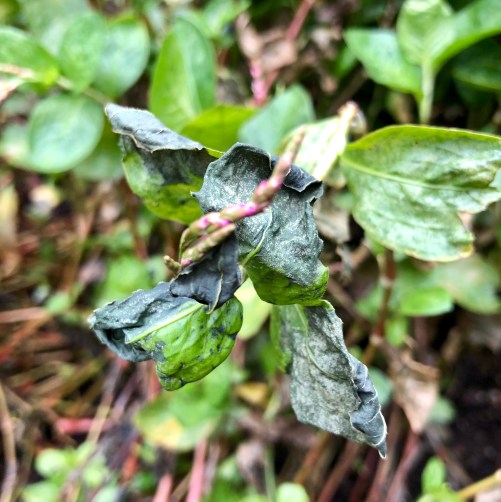
During the summer, I noticed there were hints of blue on some of the bruised leaves. Hmmm. The color was in the leaves. I read up on how to extract indigo pigment from leaves, and I saw words like alkalization, oxidation, and reduction in the directions. Principles of Chemistry– the only course in college that made me call home crying.
Back I went to the Farmers Market, now three years later, to find Robin to look for the help I needed.
It turns out every summer when Japanese indigo plants are ready for harvest, Robin hosts all-day long indigo workshops at her farm in Breeding, Kentucky. I signed up for a Sunday in late August.

Upon arrival, I immediately fell in love with her farm and her sheep. I wanted both!

Robin explained the steps we were going to go through. Two weeks later, when I went to try it myself, I texted her to ask for a quick cheat-sheet version of the directions. Here is what she wrote: strip leaves, steep in water to 160º (measure water first), alkalinize, oxidize and reduce water, wait for reduction to be complete, dye and send me pictures! Robin had walked us through all these steps with humor and grace … and hospitality; she and her husband, Paul, fed us every step of the way.

Step-by-Step Instructions

1. Harvest and Strip Leaves
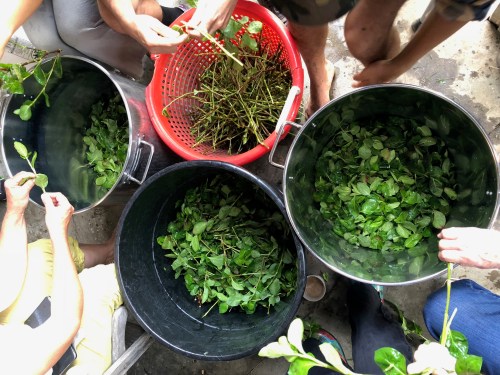
Our first job was to strip the basil-like leaves from the 24 pounds of indigo stems harvested that morning. To create the brightest color, the plants are picked just before they start to flower. Once cut, they need to be processed immediately before naturally occurring enzymes in the leaves start to decay the indigo pigment (aka indican).

The black buckets were full of fresh stems, the red baskets held the stripped stems, and the two 80-quart stainless steel pots held the fresh leaves.
2. Make the “Indigo Tea,” aka Dyebath
Robin placed the pots of leaves over propane burners. She poured 12 gallons of tap water into each pot (enough to cover the leaves with water) and lit the burners. The water was heated to 160º over a two-hour period. We used a long compost thermometer to keep track of the temperature.

At 145º you could smell the wilted copper-tinged leaves and see why the dyebath is referred to as “indigo tea.” When the tea was 160º, we cut the heat. We put on heat-resistant gloves and used a short rake to scoop out the leaves and squeeze out as much liquid as possible. The leaves went into the orange compost bucket. The tea stayed in the kettle.

We poured the tea through a sieve to remove dirt and debris.
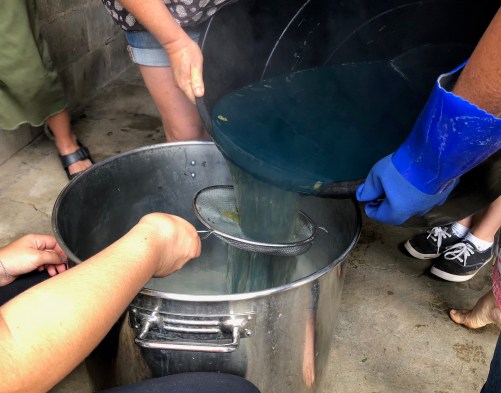
Robin scooped up a jar of the tea to show us the desired color. The indican molecules had broken down into blueish-indoxyl and sugar.

The indoxyl will not stick to cloth in its current state. It needs to be chemically modified by alkalinizing it with ammonia, oxidizing it with oxygen until it becomes blue-green in color, and reducing it by adding sodium hydrosulfite and allowing it to rest until it becomes neon yellow. Here’s the play by play of that:

3. Alkalinization of the Dyebath
We raised the alkaline level from 7 (the pH of water) to 9 by adding household ammonia at the rate of 2 tablespoons/gallon of liquid used. Some people use baking soda, wood ash, or lye to accomplish this.
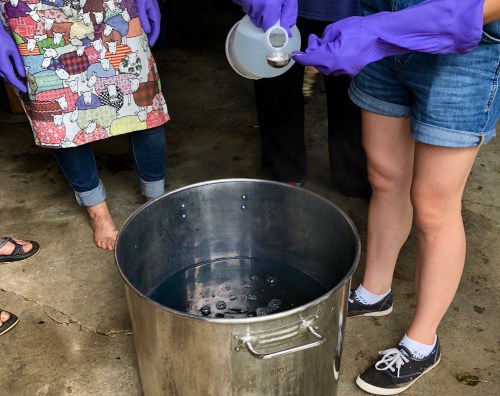
4. Oxidation of the Dyebath
Next, we oxidized the dyebath by introducing oxygen in the form of air. We scooped up and poured bucketfuls of dyebath over and over again for 20 minutes to add lots of air bubbles. The liquid turned a deep green-blue. During this process, the indoxyl is transformed into very fine insoluble blue particles. They still won’t stick to fiber in this state, but we’re getting there.

I found this image of workers in Asia adding oxygen to an indoxyl-laden dyebath at http://www.industryofallnations.com/Jeans-At-Industry-Of-All-Nations-ccid_80.aspx.

5. Reduction of the Dyebath
The next step is to reduce the dye molecules in the dyebath. To do this, a reducing agent like sodium hydrosulfite, Spectralite, or Rit Color Remover is added at a rate of 1 tablespoon/gallon of water. Robin had us gently stir in the first two tablespoons of the reducing agent and sprinkle in the rest to not introduce more air. Reducing agents absorb electrons and transform the blue insoluble particles into a neon-yellow color that is now considered in solution. Cover the pot for the two hours it takes the reduction process to happen. The dyebath will look like this when it is ready to dye fibers.
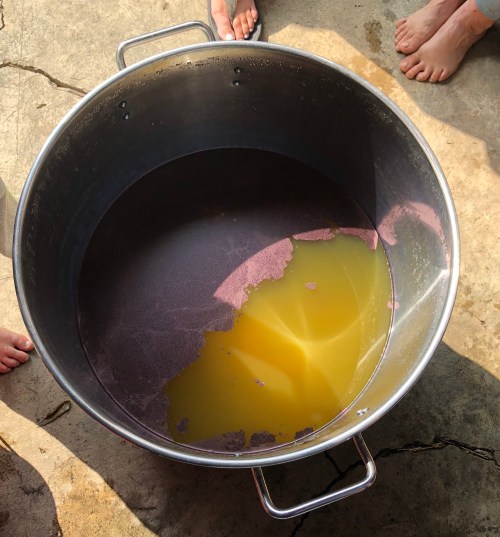
While the mixture reduced, we had lunch. Lunch and dessert were prepared by Robin and her family. The amazing farm-to-table meal was scrumptious. Everyone was gushing. The meal included slow-roasted tomatoes that I loved. Here’s the recipe for them.

Time to Dye!
Before coming to the farm, Robin had asked us to wash the textiles we wanted to dye to remove all dirt and grease. She soaked them in warm water before we dyed them.
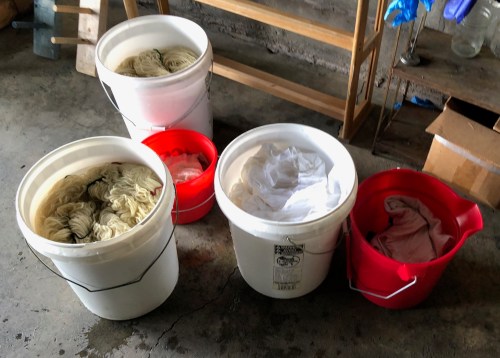
The pre-soaked textiles are now added slowly to the warmed dyebath (100-120º). Absolutely no stirring is allowed (to prevent another oxidation). The garments or yarn stay submerged for 15 minutes. It is during this soaking period that the textiles lose their color and become “indigo white” which is in fact, more like “neon-yellow.” The items are removed slowly along the side of the pot to diminish the chance of drips introducing air bubbles.
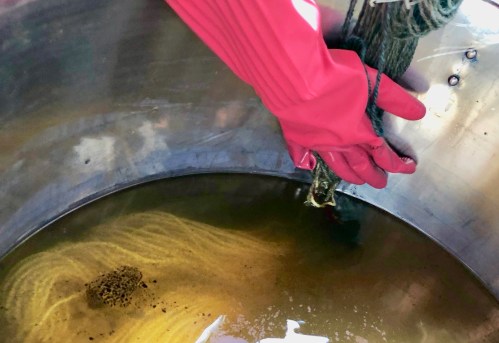
6. Re-Oxidation
As the textiles are removed, the yellowish indigo particles adhere and penetrate into the fabric’s crevices and transform into insoluble indigo blue as the air mingles with the dye and re-oxidizes it. To intensify the color, let the textiles rest and then redip for another 15 minutes to add more layers of color. Never leave items in the dyebath for more than 15 minutes per dip.

As the re-oxidizing is happening, you’ll see the fibers turn yellow, then green, then green-blue, and ultimately indigo blue. It’s kind of magical.
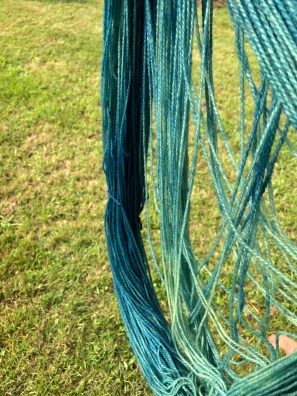
 

Give the yarn a bath in clean water and vinegar to set the color and then allow to dry. As an aside, notice the four ties spaced intermittently around each skein of yarn. That’s what keeps yarn from getting tangled while dyeing. In all of my years of knitting, I never considered why those ties were there.

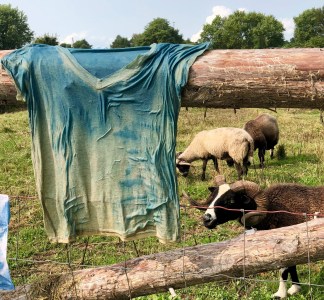
I dyed yarn and this shirt.
I can’t thank Robin enough for her instruction and hospitality while we were with her. I urge anyone interested in learning more about this artform to sign up for one of Robin’s classes next year. You can find her here.

And so what did I do with my crop of indigo? Did I try this at home? You Betcha.

I harvested, weighed, and stripped the leaves, and stewed them in water to 160º.
  

I removed and strained the leaves, alkalinized the dyebath, oxidated it for 20 minutes, and finally, reduced it for 2 hours in the kitchen sink.
  

I unwound a ball of yarn, rewound it around a chair, and loosely tied it (so it wouldn’t leave marks), soaked it in the reduced dyebath for 15″, and later, rinsed it in a vinegar and water bath to fix the color.
 

The results were terrific. I dyed both skeins of blue yarn in the photo, one with indigo dye made at Robin’s workshop using her super fresh indigo leaves and the other, a lighter blue, in my sink using my not so fresh leaves (they had already flowered). I also over-dyed a gray linen shirt I had made for me in India. I love it!
 

Once you get started and have a sink full of dye, you start searching the house for things that would look good blue. These muslin dish towels painted for me by my beautiful friend, Mary Carter, were dingy and stained. Now they are a pretty indigo blue.

If it wasn’t time for dinner, I would have re-dipped everything to add another layer of color, instead, with a roomful of hungry family looking at me (it was now 6 pm – this took all day!), I opened the drain and let the dye go.

My favorite, most satisfying days are the ones where I get lost in a project and lose all sense of time. Trying my hand at making dye extracted from plants I grew in my yard provided for one of those exciting and memorable days. Please write a comment if you have anything to add to this epic post. I still have so much to learn about growing plants and making natural dyes.

A Good Book
For a good read about the history of indigo farming and dyeing in Colonial America, I suggest, The Indigo Girl, by Natasha Boyd. The book tells the story of Eliza Pinckney, who, as a young, industrious farmer learned to successfully grow indigo in South Carolina. It’s a page-turner.

One last indigo image: the inspiration for this indigo journey started during our trip to India in February. Little did I know, when I took this photo of an IndiGo Airlines bus from our airplane window in New Dehli, how far my curiosity about this rich color would take me.

Related Posts
Making Homemade Plant-Based Dyes
Group Project: A Shibori Dyed Quilt
Morning Rounds in the Garden, July
To Dye For: Making Naturally Dyed Easter Eggs
Learning How to Block Print in Jaipur (India, Part 2)
Shopping for a Saree in South India

Don’t miss a recipe! Become a subscriber and have every post delivered to your Inbox.

Follow Judy’s Chickens on Instagram and Pinterest @JudysChickens.

Remember to always check this website for updated versions of a recipe.  

© 2014-2018 Judy Wright. All rights reserved. Photos, videos, and text may only be reproduced with the written consent of Judy Wright.

How to Make Plant-Based Dyes

This is a story about how one thing led to another.

In April 2015, I wrote a post about using vegetables to make homemade dyes for Easter eggs. It seemed like everyone on Instagram was doing it and I wanted in on the action. You can read about it here. It was exciting to produce gorgeous colorful dyes from “scratch.”

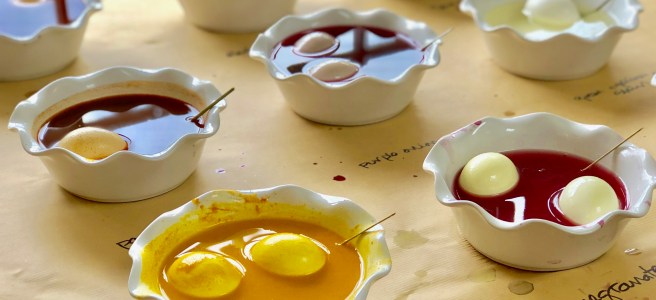
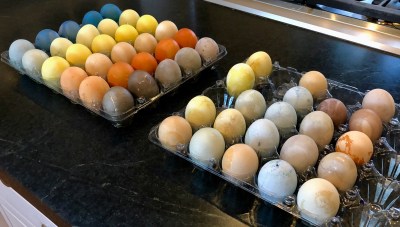
These are the colors I made by boiling vegetables in water.
Red/Purple cabbage produced the blue color. That was a nice surprise!
Yellow onion skins made the orange.
Red onion skins made the brownish-red color.
Red beets made the deep fuschia.

One analogous cooking tip I was able to learn from this egg-dyeing project was that yellow-skinned onions impart a nicer golden color to a pot of chicken stock than red onions.

Over the years, I invited my nieces over to dye eggs and we added ground turmeric to the mix. It produced yellow eggs.

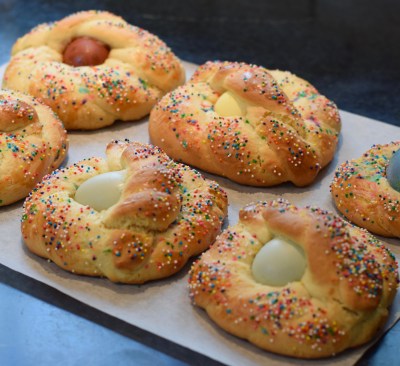
I used some of the eggs in these Italian Easter bread baskets, a recipe I need to post!

One year, I didn’t make vegetable dyes and instead used powdered indigo I had purchased for another project to over-dye already colored eggs. I loved the different shades of blue that resulted. The commercial dye was lightfast, too, meaning the colors didn’t fade the way many of the eggs did.

This past February, while touring a block-printing factory in Jaipur, India, I learned from a young man named Ali, that their factory printed with natural dyes made from plants like tomatoes, pomegranates, turmeric, sugar cane, and indigo.

My takeaway was that you could pretty much make fabric dyes from anything that ever stained your clothes, aprons, or dish towels while you cooked.

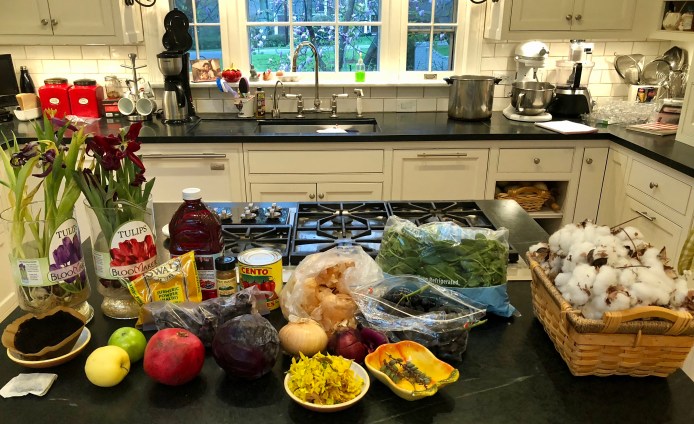
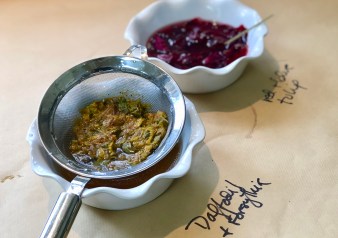
Two months later, Easter 2018, was the year I went a little cuckoo with the egg dyes. I poked through my kitchen spices, vegetable bins, backyard garden (found daffodils and forsythia), and the grocery store, looking for foods and flowers I could potentially use to make dyes. In the end, I chose pomegranates, dark grapes, blueberries, tomatoes, cranberry juice, red cabbage, spinach, turmeric, yellow and red onion skins, paprika, apple skins, used coffee grounds, daffodils, forsythia, and tulips.

I was all in.

Crazy as this all seems, I got into the zone on this project. I laid down a long sheet of brown paper and filled fifteen bowls with food and flower samples, some of which I had pre-cooked. I couldn’t cook them all because I didn’t have enough pots or time.

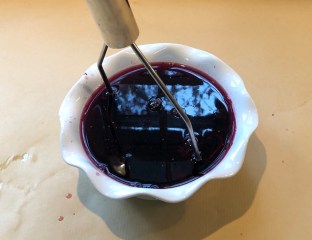
I filled each bowl with boiling water and let the materials meld for a few hours. Afterward, I mashed the plant materials in each bowl, heated them in the microwave, and strained out the pulp.
 

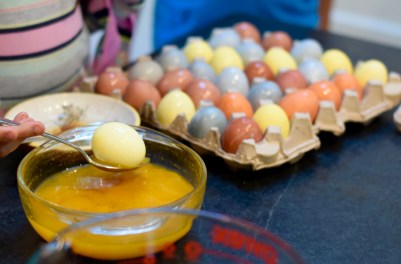
I added hot, medium-sized, hard-boiled, white eggs into the strained warm liquid and let them sit for a while longer.

The results were mixed. Some of the dyes produced rich dark colors, some were pale, some were lightfast, some were not. My favorite new colors were a lovely chartreuse from the pomegranate, a golden yellow-brown from the daffodils and forsythia, a pretty mocha-brown from the coffee grounds, and a light orange from the paprika.

While I used the dyes for eggs, in my head I was thinking about how they might dye fabric. I could see how some of the colors in the swatch below could be created from the colorful dyes I had made over the years.


Making Dye from Indigo Plants

In my garden, I am growing a patch of indigo and hoping that this will be the year I finally try my hand at making dye. There are many complicated steps involved, including the addition of chemicals in calculated amounts and resting periods, all of which have kept me from taking the time to focus and learn how to do it.

Today, I signed up for a class at Hill & Hollow Farm in Breeding, KY, to learn how; how to harvest indigo leaves and create dye. When I went to sign up for the class, I realized I had bought my first indigo plants from Hill and Hollow at their booth at the Nashville Farmers Market. I started with four plants and those plants have self-seeded to create the plot I have now. It was an omen. Stay tuned for that post.

Coincidently, in May, my artist friend, Tallu Quinn, showed me how to make patterned blue and white fabric squares using an ancient dyeing technique known as Shibori. That process will be described in another story, too. As a teaser, here is a photo of the still wet squares we dyed.

Working on this Shibori project with Tallu sealed the learning-how-to-make-indigo-dye deal for me. Once the fabric squares are sewn together for a quilt, a group wedding gift, I will write a post.

Like I wrote in the beginning, one thing led to another.

Related Posts
Learning How to Block Print in Jaipur (India, Part 2)
To Dye For: Making Naturally Dyed Easter Eggs
Morning Rounds in the Garden, July
How to Tell If an Egg Is Fresh or Hard-Boiled

Don’t miss a recipe! Become a subscriber and have every post delivered to your Inbox.

Follow Judy’s Chickens on Instagram and Pinterest @JudysChickens.

Remember to always check this website for updated versions of a recipe.  

© 2014-2018 Judy Wright. All rights reserved. Photos, videos, and text may only be reproduced with the written consent of Judy Wright.

How to Make Artisan Bread the Easy Way

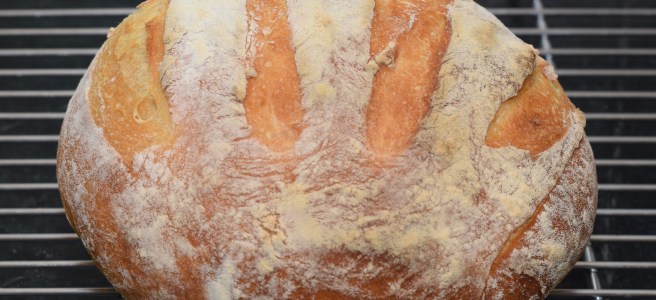
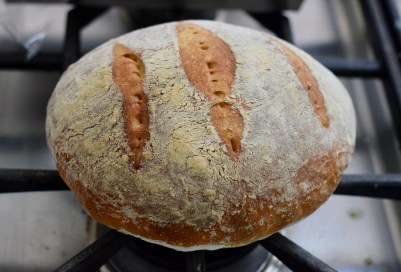
In this post, I am going to show you how to make a boule of bread as beautiful as this one

using just flour, yeast, salt, and water.

There will be no kneading, no proofing of yeast in a bowl to make sure it is active, and no punching down dough that has doubled in size. In fact, you will pretty much need to forget everything you ever learned about making bread from scratch and use the new and “revolutionary” methods developed by bakers Jeff Hertzberg and Zoe Francis in their bestselling cookbook, The New Artisan Bread in Five Minutes a Day. The authors even have a book on gluten-free bread.

Since reading their book and using their method for the last two months, I feel very comfortable making bread and have not needed to buy any.

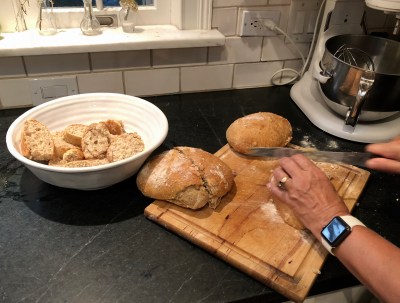
This bread is wonderful toasted for breakfast,

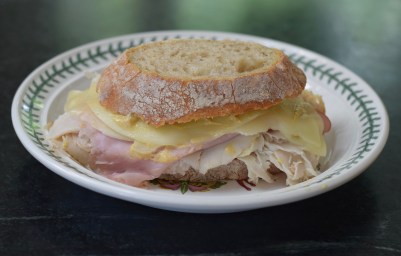
lovely for sandwiches at lunch,

and chewy and tasty when served warm at dinner along with a stick of butter.

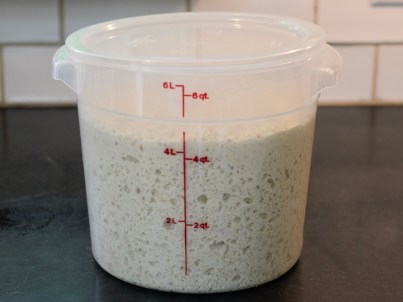
But, I haven’t told you the best part: you pre-make and store the dough in the refrigerator until you are ready to shape and bake it. Yup, open our refrigerator door on any given day, and you will see a Cambro (a large, lidded, commercial grade food storage container) of dough, ready to be pulled out whenever we desire warm, crusty bread. The dough is good for up to two weeks and develops a mild sourdough flavor as it ages.

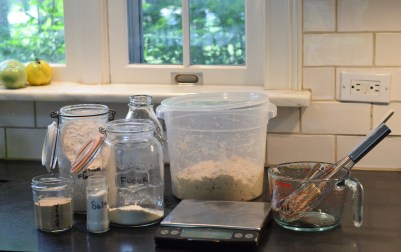
Let’s get started. Read over the entire post before you begin. It might sound complicated, but once you do it a few times, it will become second nature. Some tools that are helpful, but not required, are a digital scale, a round, 6-quart Cambro, a pizza stone, a pizza peel, and parchment paper. Know that the first few times I made this recipe I was in a beach house without any of the tools mentioned above, and I was able to make delicious bread.

Yield:  3 one-pound boules of bread
Preheat Oven: 450º, but not until you are ready to bake the bread.

About Flours:  This recipe calls for all-purpose (AP) unbleached flour.  The authors use Publix’s brand. I bake with King Arthur flours which have more protein than other AP flours and thus require an extra ¼ cup of water, per the authors. The authors suggest bumping up the water to 3⅓ cups if using bread flour. The authors suggest not using cake or pastry flours.

Measuring Flour — Weighing vs. Scooping:  For accurate and consistent results, use a digital kitchen scale. If you use a scale, zero out the weight of the empty container before adding flour. If using a measuring cup, do not pack the flour and be sure to level the cup with a knife.

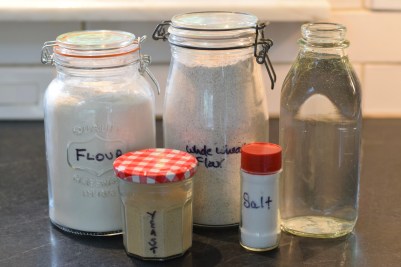
Ingredients: this is the basic recipe
2 pounds (6½ cups) all-purpose, unbleached flour
1 tablespoon (fine) salt or 1½ tablespoons (course) kosher salt
1 tablespoon granulated, active, dry yeast
3 cups lukewarm water (at 100º)

Ingredients: Below is my modification of the recipe. It still has 2 pounds of flour, but I’ve incorporated about 15% whole wheat flour without affecting the chemistry.

5 ounces King Arthur Whole Wheat Flour (a heaping cup)
1 pound, 11 ounces King Arthur Unbleached All-Purpose Flour
1 tablespoon (fine) sea salt
1 tablespoon granulated, active, dry yeast
3¼ cups lukewarm water (at 100º)

Instructions

Mix the Dough:
Weigh a 6-quart mixing container on a digital scale. Zero it out. Add in the flour(s), salt and yeast. Mix dry ingredients together with a wire whisk.

Add the warmed water. Mix the ingredients with a spatula, incorporating all of the flour from the bottom of the container. Put the lid on, but do not seal it so the gasses can escape. Allow dough to rest for two hours on the countertop. It won’t be resting though; the yeast will become activated by the water and the subsequent fermentation process that ensues will make the dough bubble and rise — and become delicious.

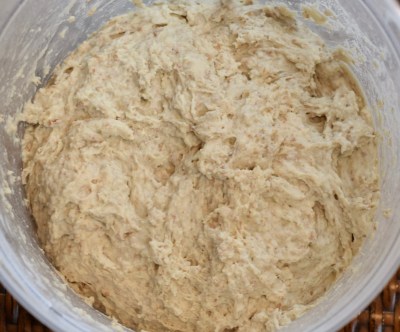
The dough will be wetter than what you may be used to.

After two hours, you could make your first loaf of bread, but I prefer to put the dough in the refrigerator for a few hours or overnight. Chilling it makes the dough easier to shape into a boule, and it gives time for the flavors to become more complex. Do not punch the dough down. Ever.

Shape the Dough
Before you get started, prep the workspace where the dough will rise. I shape the dough and let it rise over a parchment paper-lined pizza peel, but you could put the dough on a cornmeal-covered baking sheet if you don’t have a peel. Sprinkle flour on your hands and over the top of the dough in the Cambro before diving in to scoop out dough. This will help keep the tacky and moist dough from sticking to your hands. Pull out one pound of dough, about one-third of it.

Shape the dough into a ball. This next step is important: stretch the top surface of the ball around and tuck it into the bottom, rotating the ball a quarter-turn at a time. Repeat this motion for about 30 seconds.  Here’s a video by one of the authors. Add just enough additional flour to keep your hands from sticking to the dough. The goal is to flour the “skin” or “cloak” of the boule and not to incorporate flour into the interior. Place the dough on a sheet of parchment paper, uncovered, to rest and rise for 40 minutes.

The dough will spread out as it rises. It doesn’t get tall. That’s okay; the heat and steam in the oven will cause the dough to rise and round out as it bakes. The process is referred to as “oven-rise.” As proof, I once dropped a loaf of risen dough on the flour as I was putting it in the oven. I picked it up, quickly reshaped it, put it back on the peel, and slid it into the oven. The bread still rose — higher than ever. It’s a mystery. (PS: I swear the floor was spotless.)

Prepare the Oven:
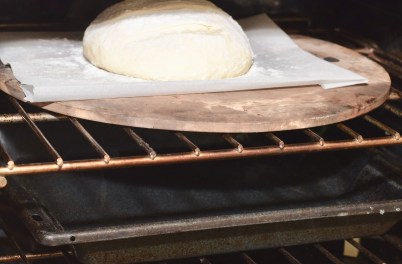
While the dough is rising, prep the oven space. Place the oven rack in the lower third of the oven. If you have a pizza stone, put it on the rack. On the rack beneath it, place an empty pan (that will be filled with water later) to create steam. The steam created by the addition of hot water once the bread is placed in the oven is the most crucial step in getting the bread to rise higher. Turn oven on to 450º. Here’s a photo of the set-up.

Back to the Rising Dough:
After the bread has risen for 40 minutes,

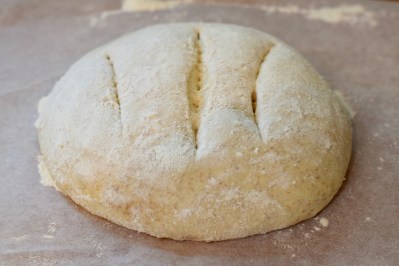
dust the top of the dough lightly with flour and using a sharp knife, make 3 or 4 slashes on top. Allow dough to rest for five more minutes after that.

Slide the dough onto the pizza stone if using one, or if not using a stone, place the baking sheet in the oven and bake the dough for about 35 minutes. The bread will be browned and sound hollow when tapped when done.

Remove bread from oven and place on an open wire rack to cool so the bottom of the loaf can crisp up. Allow to cool completely before slicing, or the interior could become doughy.

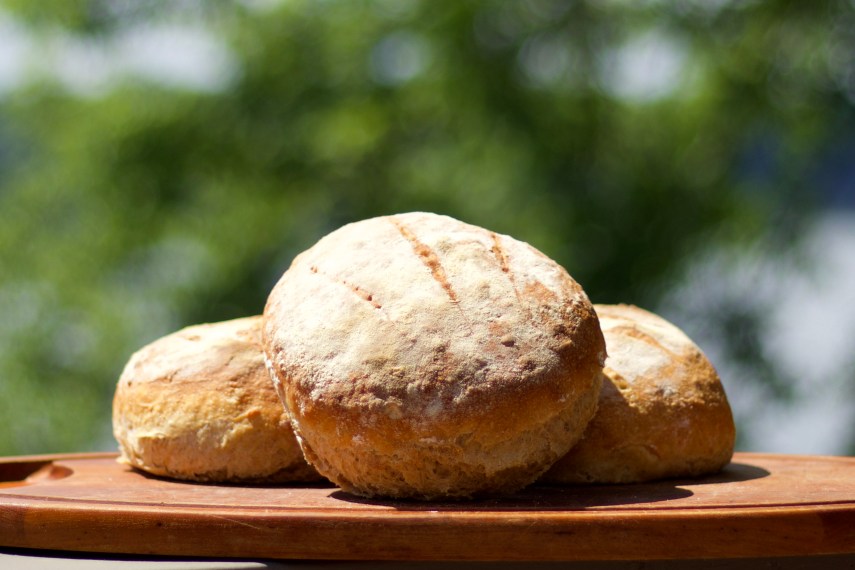
The only times I skip the step of cooling bread completely is when I’m serving it hot for dinner. These three boules were still hot when I quickly sliced them for a tableful of waiting family members sitting around the dinner table.

(photo credit: Kristen Ivory)

The bread disappeared with lots of gushing going on by those who were slathering each slice with butter as they ate them. That’s always a sight to behold for a cook.

To have a continuous supply of dough in the fridge, make a new Cambro of dough whenever the last container is emptied.

Failures:
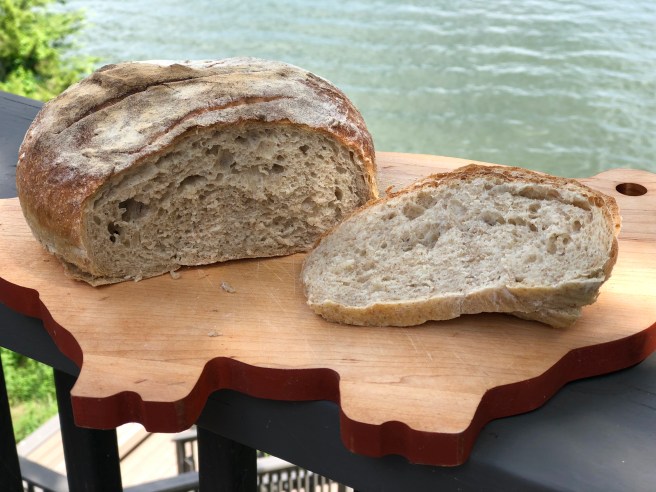
There haven’t been any failures in the taste department. Something magical happens while that moist dough ferments. Every loaf I’ve made has tasted extraordinary, even if it wasn’t always a pretty loaf.

My early failures were related to getting the dough to rise sufficiently so the bread wouldn’t be too dense. That problem went away when I started weighing the flour and added steam to the oven to encourage oven-rise.

I hope I’ve inspired you to give bread-making a try. It a very fulfilling experience. Please feel free to ask questions in the Comments section.

(photo credit: Andrew Wright)

Don’t miss a recipe! Become a subscriber and have every post delivered to your Inbox.

Follow Judy’s Chickens on Instagram and Pinterest @JudysChickens.

Remember to always check this website for updated versions of a recipe.  

© 2014-2018 Judy Wright. All rights reserved. Photos, videos, and text may only be reproduced with the written consent of Judy Wright.