Roasted Acorn Squash, with Applesauce and Cinnamon

When we were growing up, my mother cooked dinner every night. There was always a  protein, a vegetable, and a starch, although on Sundays, when one of my grandmothers cooked dinner, the lines between the food groups were blurred by a magnificent batch of spaghetti and meatballs. Now, I am the grandmother!

Milk was the only beverage served at meals, and it was poured from an “Orange Poppy” ceramic milk pitcher. Milk bottles on the table were a big No-No. All of her serving pieces were in this pattern.

One of us kids set the table and another cleared it. There was a rhythm to the dinner hour. We ate what Mom served us. At the time, I so envied our next-door neighbors who on Monday nights got to eat TV Dinners when The Monkees came on.
swnsntvdinnerart

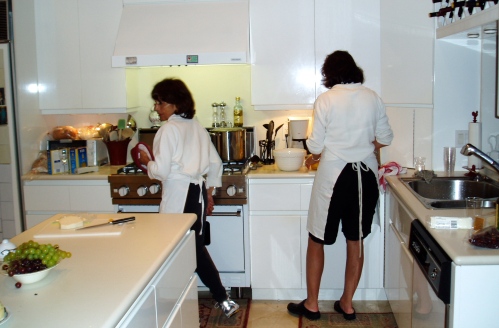
Mom was a single parent who worked full-time and was a fabulous cook. I was her sous chef and worked by her side to get dinner on the table nightly. Helping with dinner was a point of pride; we were a team. While structured family meals have undergone some changes in the last fifty years, the way I prepare acorn squash remains the same. Mom knew how to prepare adult foods so children would eat them.
dsc_0689

Serves 8

Ingredients:
dsc_0660

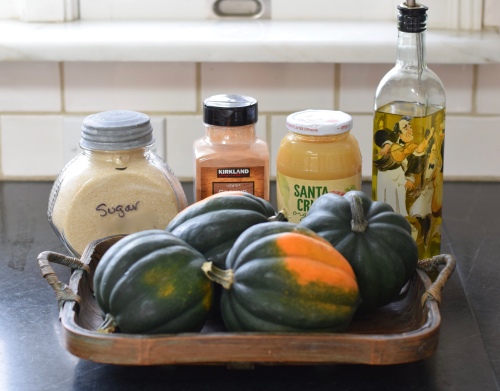
4 acorn squashes
¼ cup extra virgin olive oil
2 cups unsweetened applesauce
Cinnamon sugar (1 T sugar and 1 t ground cinnamon)
cracked pepper or garlic pepper

Instructions:
Preheat oven to 400º
Line two baking sheets with parchment paper.

Prepare Squash:
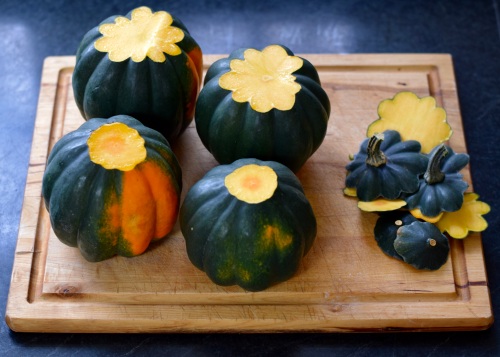
Cut off each end of the squash. Cut off as little as is necessary to stabilize the squash, so it stays upright.

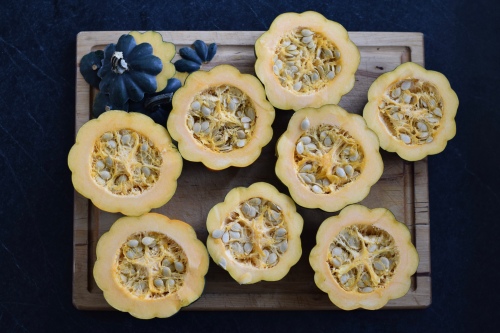
Cut squash in half. Take a moment to admire nature’s beautiful details, and then … scoop out the seeds!
dsc_0677

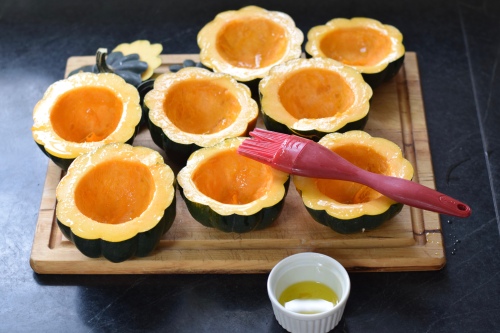
Coat the interior and top edges with EVOO.
dsc_0688

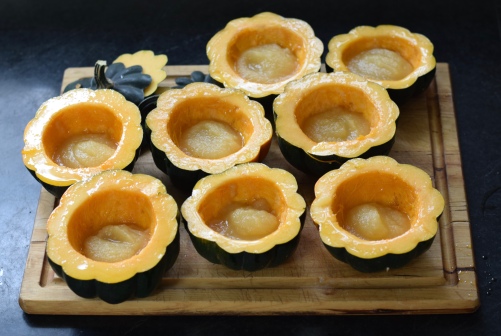
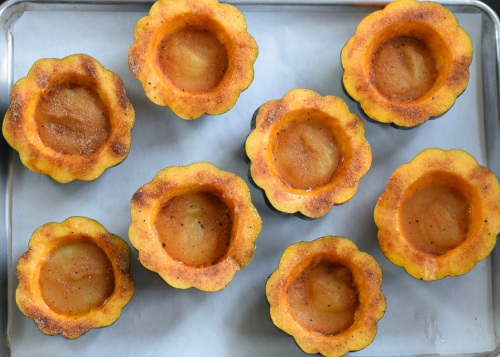
Add one-third cup of applesauce to each squash half. Sprinkle with cinnamon sugar, followed by a little cracked pepper or garlic pepper. Place squash halves on a parchment paper-lined baking sheet.

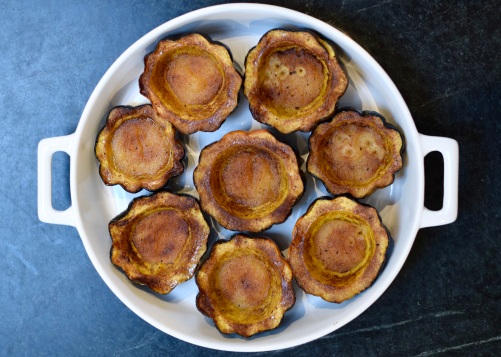
Roast for 45- 60 minutes, until fork-tender. Serve in a pretty serving dish.

I love to eat them cold from the fridge the next day so I always make extras.

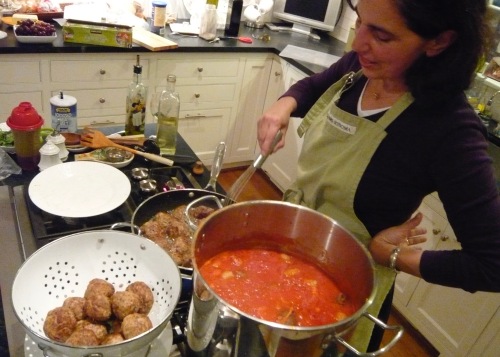
Mom and I in the kitchen. She was tiny but mighty.

Serve with:
Cooking Dinner in an Unfocused Way, or Ode to the Rice Cooker
Brooks’s Pork Tenderloin with the Most Amazing Marinade
Judy’s Mom’s Meatloaf
Mom’s Marinated and Grilled Lamb
Mom’s Apple Pie (with a cheddar streusel topping)
Mom’s Pumpkin Pie

LET’S STAY CONNECTED!

Follow my photos of vegetables growing, backyard chickens hanging out, and dinner preparations on Instagram at JudysChickens.

Never miss a post: sign up to become a follower of the Blog.

© 2014-2020 Judy Wright. All rights reserved. Photos and text may only be used with written consent.

New Year’s Day Fare: Collards, Pine Nuts and Cranberries

New Year’s Day is all about starting over. A clean slate. A fresh start. I’m game for all of it. Since moving South, I’ve learned you can improve your chances of having a healthy and prosperous year by eating three foods on this auspicious day: collard greens, black-eyed peas, and pork. The greens represent the color of money and thus, economic fortune, the peas (lentils, in the Italian tradition) represent coins, and plump pigs represent prosperity. Pigs also root forward with their noses representing progress. Compare that to chickens who walk backwards while scratching the dirt for food. No looking back. No chicken for New Year’s Day. I can get into all of it. I consider these foods to be charms for the easy life. But if I’m the one doing the cooking, I’m going to Italianize them; there will be olive oil and garlic used in the preparation of each of them.

To prepare black-eyed peas, check out this blog-favorite recipe, Marlin’s Black-Eyed Pea Salad.

blackeyedpeas11

To prepare the pork, try Brooks’s Pork Tenderloin.

dsc_0065

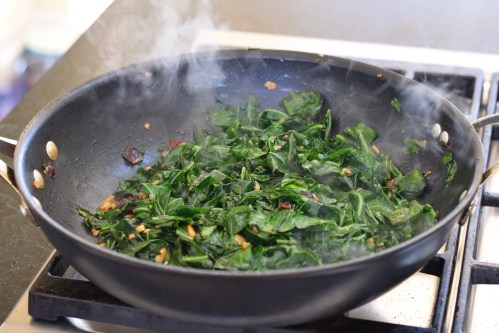
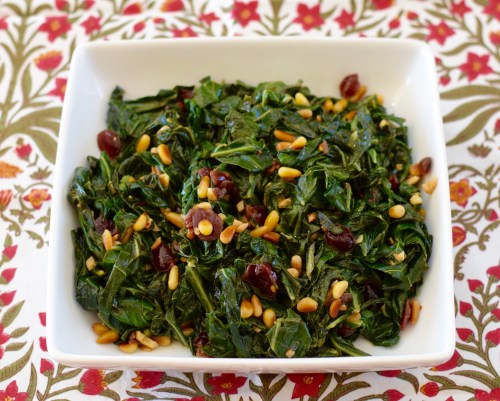
To prepare the leafy greens, try this recipe for collard greens sweetened with dried cranberries or golden raisins, and toasted pine nuts, all of it sautéed in olive oil and garlic.

About the Leafy Greens: Growing and Cooking Collards

Cooking with collards has been a new adventure for me. After seeing how beautifully they grow in the production gardens of The Nashville Food Project (where I frequently volunteer) and after cooking and serving them for years as a side dish for TNFP’s Meal Distribution Partners, I figured it was time to jump in and grow them myself. I’m so glad I did! They are like the Giving Tree of vegetables. Even as I write, on this cold winter morning, my crop of collards, unprotected from the winter elements, continues to happily produce greens. I’ve been picking from this same raised bed of collards since early October.

img_4078

Collards are a great crop for the first time gardener to grow, too; they are very forgiving. For eight months of the year, you will be rewarded with a continuous production of hearty greens that are great added to soups, or when used in a sautéed medley with other leafy greens.

Technique Tips

Chiffonading Leafy Greens:
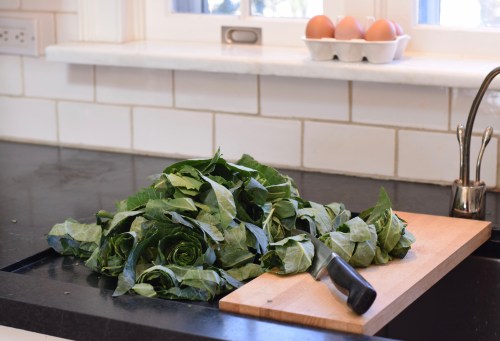
Chiffonade is a cooking technique used to describe a way of cutting leafy greens into thin, pretty ribbons. The technique is mostly used to cut herbs like basil. I’ve adopted it for cutting all leafy greens for sautéing. To chiffonade, stack about five leaves, roll them together, and then cut through the stack. I use scissors for small, tender leaves, like basil and Swiss chard, and a knife for bulky leaves like kale and collards.

dsc_0995-1 dsc_0578

Toasted Pine Nuts
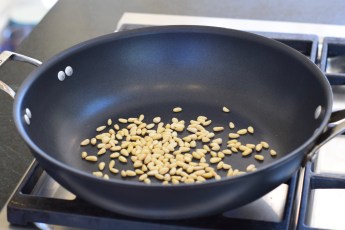
Add a single layer of pine nuts to a pan. Set heat to medium. Stir nuts about every 15 seconds. Cook for about two to three minutes, or until the nuts become fragrant and are lightly browned. When done, immediately remove nuts from pan to stop the cooking process. You can toast sesame seeds in the same way.

dsc_0604 dsc_0607

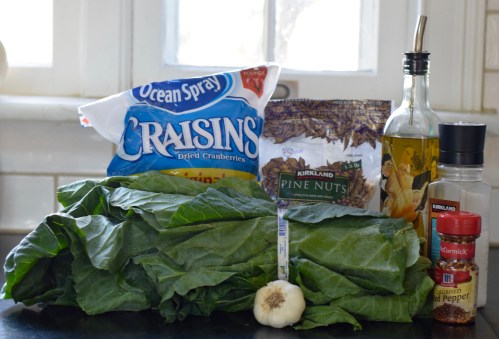
Ingredients:

dsc_0326

1½ pounds collard greens or Swiss chard (once trimmed will equal about 1 pound)
¼ cup pine nuts, toasted
⅓ cup olive oil
⅓ cup dried sweetened cranberries or golden raisins
6 cloves garlic (equals about 2 tablespoons, chopped)
½ teaspoon red pepper flakes
½ cup hot water
salt to taste

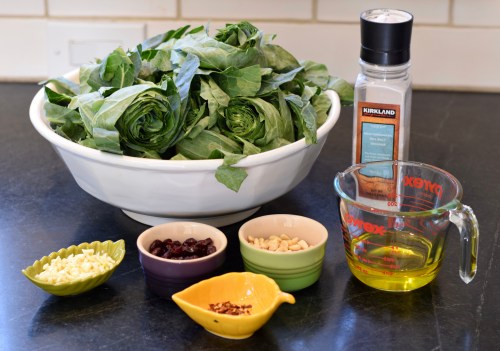
Mise en Place:

dsc_0588

Wash and dry collard greens. I let them air dry on dishtowels, patting the puddles of water that collect on top with another dish towel.

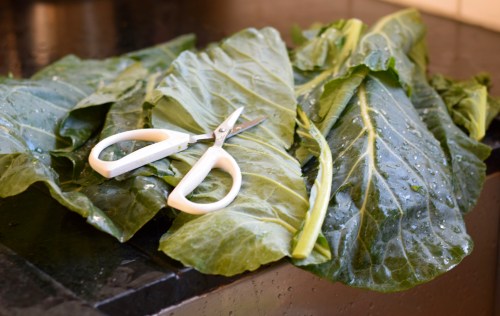
Remove the tough central rib from the leaves. To do this, fold the leaves in half and remove the rib with a scissor. Some people just tear the rib out.

dsc_0343

Chiffonade the greens.

dsc_0550

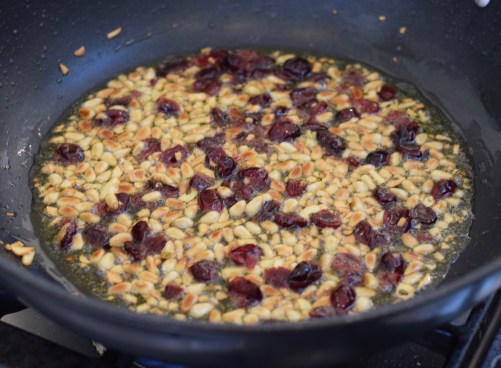
To cook the greens: Heat oil and garlic in a large six-quart sauté pan. Sauté for about one minute. Be careful not to brown the garlic as that could make it taste bitter. Add pine nuts, cranberries, and red pepper flakes. Stir.

dsc_0619

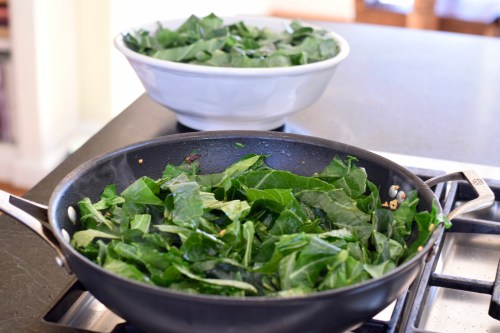
Add half the collards. Once they start to soften and shrink, add the rest. Add water and sauté for about 5-8 minutes until the collards are tender and the cranberries become plump.

dsc_0621

Add salt to taste: if the collards taste bland add more salt until the flavors pop.

dsc_0629

This is a side dish that is slightly bitter. We had it last night with lamb and parsley potatoes, and it was a delicious combination.

dsc_0643

When you go to set the table, consider looking in your yard for greenery for a centerpiece. My friend, Mary, said she was so inspired by Lou Ann working her design magic using greenery from my yard (check out Winter Floral Arrangements Using Greenery from the Yard ) that she went out in her yard and used greenery to create this quickie, yet elegant centerpiece.

img_4091

LET’S STAY CONNECTED!

Follow my photos of vegetables growing, backyard chickens hanging out, and dinner preparations on Instagram at JudysChickens.

Never miss a post: sign up to become a follower of the Blog.

© 2014-2019 Judy Wright. All rights reserved. Photos and text may only be used with written consent.


Crunchy Roasted Tamari Almonds

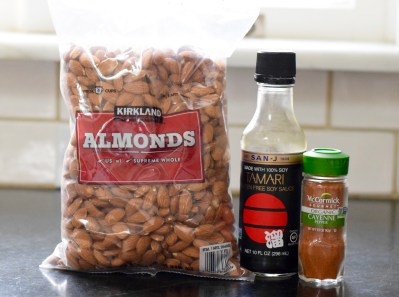
I love these salty, crunchy protein-rich almonds and the best news is they are a cinch to make. I start with a large bag of whole, unsalted almonds, toss them with tamari soy sauce, add a few shakes of cayenne pepper, and then slowly roast them in the oven.

dsc_0918

Tamari is a refined version of soy sauce known for its smooth and earthy taste. The primary ingredient in soy sauce is soybeans. I realize you probably know this, but have you ever wondered how soy sauce is made?

How Chinese soy sauce is made:
1. Dried soybeans are soaked and cooked in a vat of water.
2. Oven-roasted cracked wheat kernels are then mixed into the vat of cooked soybeans. Yeast is added to start a fermentation process.
3. Salt water is added, the ingredients are mixed together, and the mash is poured into a wooden barrel to ferment for a  year.
5. When sufficiently brewed, the mash is placed in a cloth sack and pressed to yield soy sauce.

Tamari, the Japanese version of soy sauce, is also made from fermented soybeans, but little or no wheat is used. Thus, tamari is typically a gluten-free product. The brown fermented mash in this version is known as miso. The high protein miso, also known as a fermented soybean paste, is pressed, as well, to yield tamari.

How are soybeans grown?
I’ve been waiting for an opportunity to write about how soybeans are grown for a long time, as they are a common sight to see along Kentucky backroads.

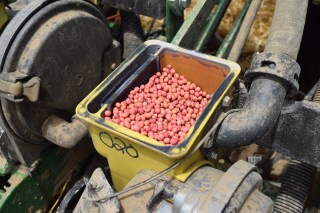
In mid-June, I saw a planter truck drill a hole into the ground and drop a seed between the rows of stubble left behind from the just harvested winter wheat. By this I mean, the planter truck followed directly in the tire tracks of the harvester truck; crop harvesting and new-crop planting in the same afternoon. Check out this post if you want to learn the difference between a planter, a combine, a harvester, and a grain truck.

dsc_0925 dsc_0923

A soybean field in early September.

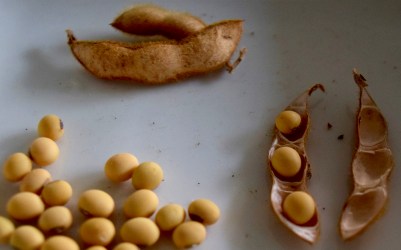
dsc_0114

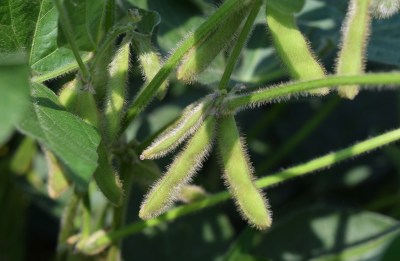
Soybean pods up close and personal.

dsc_0123

Soybeans, with their golden color, are usually the last crop standing in the fall.

dsc_0316

As the number of daylight hours wanes, the combine and grain cart get ready for one last call of duty before the close of the year’s farming season. I’m always a little sad when the growing season is over.

dsc_0305

Dried soybean pods after an October harvest.

dsc_0301

Ingredients for  Tamari Almonds:
dsc_0148

3-pound bag of unsalted whole almonds
⅓ cup Tamari Soy Sauce (look in Asian section of grocery store)
2-4 shakes of cayenne pepper, depending on how much heat you like (optional)

Instructions:
Preheat oven to 200º.
Line two rimmed baking pans with parchment paper.

In a medium-sized bowl, mix together almonds and tamari. Be sure to shake the bottle of tamari first. Add a few shakes of cayenne pepper and mix well.

dsc_0176

Divide coated almonds evenly between the two large and lined baking pans.

dsc_0820

Every 30 minutes, remove pans from oven, toss the nuts and return to oven. I rotate the pans in the oven each time I take them out. Nuts should be ready in two hours.

dsc_0803

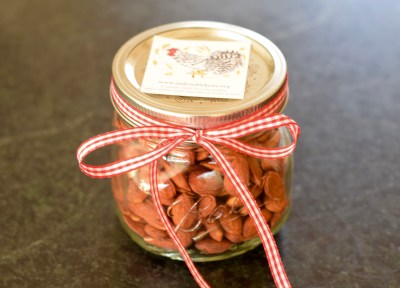
They will be soft when they first come out but will crisp up as they cool down.

dsc_0967

Other appetizers.
“Croatian Cheese” a Flavorful and Exotic Appetizer Made with Feta and Goat Cheese
Auntie Martha’s Spicy Spinach (aka Spinach Madeleine)
Grandma’s Italian Fried Cauliflower
The Classic Pimiento Cheese Sandwich

LET’S STAY CONNECTED!

Follow my photos of vegetables growing, backyard chickens hanging out, and dinner preparations on Instagram at JudysChickens.

Never miss a post: sign up to become a follower of the Blog.

© 2014-2017 Judy Wright. All rights reserved. Photos and text may only be used with written consent.

Brooks’ Pork Tenderloin with her Amazing Marinade

The first time I tasted my friend Brooks’s kickass grilled pork tenderloin was at a funeral reception. Good friend that Brooks is to so many, she showed up at the reception with a platterful of sliced, perfectly cooked, and beautifully seasoned grilled pork tenderloins. A few days later, I called her for the recipe. I wrote the list of ingredients down on a piece of paper and then promptly misplaced it. That was ten years ago, 1/18/06. I know this because I wrote the date on the recipe. You would think someone meticulous enough to date scrap paper would have a decent method for saving it.

I thought of Brooks’s juicy and flavorful recipe every time I cooked pork using my pathetic but quick get-some-food-on-the-table-after-driving-boys-around- town- all-afternoon method of throwing two pork tenderloins into a bag with a salty steak marinade and roasting them at 400º until they were very well-done. In fact, the pork was so salty and dry; I quit making pork tenderloins all together. That was until Brooks’s recipe resurfaced a few weeks ago, and I learned how to cook pork to the right temperature.

dsc_0058

Let’s talk about how pork came to be the dry, well-done, other white meat and not the juicy, tender pink meat we enjoy now.

Trichinosis; It’s no longer a health epidemic 

I grew up in the 60s and 70s. My mother and her mother before her cooked pork until it was well-done. They did so because of the prevailing fear of an illness known as Trichinellosis, aka Trichinosis, which came from the ingestion of parasitic roundworms known as Trichinella spiralis. Trichinae were found most commonly in the muscle tissue of pigs and wild game. The U.S. Public Health Service started counting Trichinellosis incidents in the mid-1940s, around the time my mother was coming of age. At the time, 400-500 cases were reported each year. Because of my mother and grandmother’s respect for and fear of this malady, I knew the word Trichinosis as a ten-year-old. It translated into a disease that could surely kill you dead if you did not cook pork until it was well-done.

This all begs the question, Where were pigs picking up this parasite?  The answer was garbage. In the old days, many pigs were fed raw garbage on pig farms. In the 50s and 60s, food laws changed, and the government said the garbage needed to be cooked, and BTW, no more feeding raw animal carcasses to pigs, either. New farm hygiene protocols were established, and rodents, like rats and raccoons, were no longer allowed to access the pigpen.

Along with tighter control over farm hygiene, the government embarked on a massive publicity campaign instructing Americans to cook pork until it was well-done. The message stuck. In 1987, another ad campaign came along this time from the National Pork Board. It pitched pork as a white meat alternative to chicken and turkey. “Pork, the other white meat,” became the slogan. That slogan served to reinforce the concept of cooking pork until it was white and well-done.

Technique Time: Heat Transfer

So, if you don’t need to overcook pork anymore, to what internal temperature should you cook it to get a moist, light-pink center? The U.S.D.A says a minimum of 145º for all pork roasts and 160º for ground pork and patties. When using a meat thermometer, it should be inserted into the loin’s thickest part without touching any bones. Finally, let the meat rest for 5-10 minutes before serving. During this time, the meat’s internal temperature will rise by about five degrees and finish cooking the meat to 150º. Theoretically, you could cook the meat to 140º and let it finish off to 145º, but I tried that, and it was too pink and chewy for me.

This five-degree temperature increase that happens when cooked meat rests is due to the rules of heat transfer. The temperature on the surface of the meat when you pull it out of the oven is the same as the inside of the oven, in this case, 400º. If the room temperature is 70º, the heat on the pork’s surface has to go somewhere for the meat’s temperature to equilibrate with room temperature. Some of that heat is released into the room, and some goes back into the center of the meat, raising its internal temperature to 150º.

Back to the recipe

When I finally got the chance to make Brooks’s marinade, a full ten years later, it wasn’t as kick-assy as I remembered. I think I had mismeasured on the side of timidity when it came to gauging how much was a glug or dollop of this and that (Brooks’s measurement terms!). I called Brooks for clarification and to ask if I could blog the recipe. The conversation started like this, “Brooks, do you remember making pork tenderloins for Buck’s mother’s funeral TEN years ago? [Yes.] Are you still making them the same way?” [Yes.] To my surprise and amusement, she told me her newlywed son Alex had just called for the same recipe, so the ingredients were fresh on her mind. That, Dear Reader, is what keeper-recipes and motherful moments in cooking are all about.

Yield: 1¼ cups marinade (for 2-3 pounds of meat or two logs)

Ingredients:

dsc_0019

¼ cup extra virgin olive oil
¼ cup bourbon or rye
1 tablespoon “Tamari” Soy Sauce (a refined, more delicate, gluten-free soy)
1 tablespoon Worcestershire Sauce
2 slightly heaping tablespoons Dijon Mustard
1 teaspoon Beau Monde Seasoning (a salt and spice blend made by Spice Islands)
2 teaspoons cracked black pepper
10 peppercorns
Pinch of crushed red pepper
2 tablespoons brown sugar
5-8 large garlic cloves, sliced (or a heaping tablespoon of jarred, minced)
5-6 stems fresh thyme, coarsely chopped (I use lemon thyme)
Zest and juice of one lemon
A dollop of cognac (optional)
2-3 pounds (2 logs from one package) pork tenderloin, rinsed and patted dry

Instructions:

Remove pork tenderloins from the package. Rinse under cold water and pat dry.

Into a two-cup liquid measure, add olive oil to the ¼ cup mark, then add bourbon to the ½ cup mark, and then all the other ingredients: Tamari, Worcestershire, Dijon, Beau Monde, red and black peppers, peppercorns, brown sugar, garlic, the zest and juice of one lemon, and the thyme. Do not add salt. There is plenty of salt in the Tamari, Worcestershire, Dijon, and Beau Monde. Stir marinade with a fork, being sure to mix in the brown sugar that settles to the bottom.
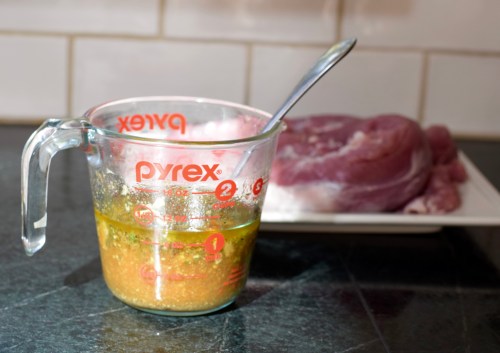
dsc_0027

Mix pork and marinade together and allow to marinate in the refrigerator for eight hours or overnight. Turn it over and massage it every few hours.
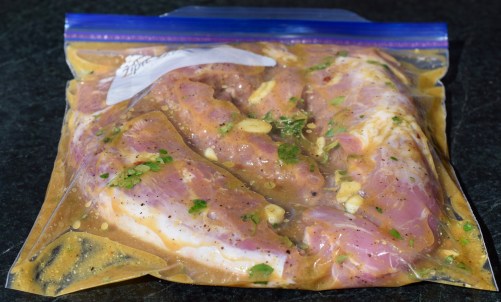
dsc_0037

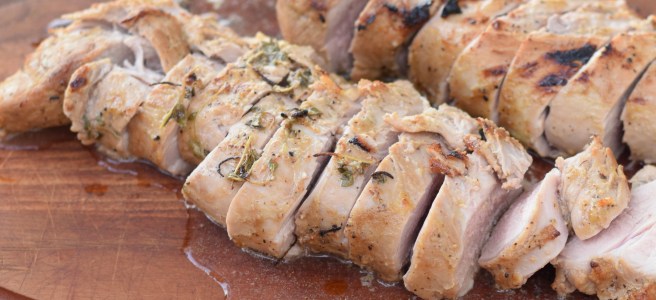
Cook in a preheated 400º oven or on the grill at the same temperature. Cook ten minutes on one side and turn over. Cook for another ten minutes, or until a meat thermometer inserted into the thickest part of the meat registers at least 145º. Let rest 5-10 minutes before serving. Our favorite degree of doneness was 148º, with a rise to 154º on the meat thermometer.

dsc_0254 dsc_0348

Even at 154º, the meat is still pink.
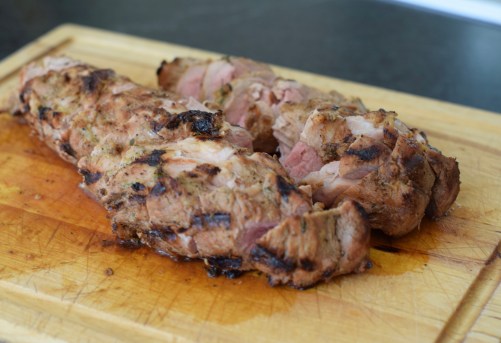
dsc_0363

If the meat is too salty, decrease the Tamari and Worcestershire Sauce to two teaspoons of each.

dsc_0072

Related Posts
Lemony Grilled Chicken Breasts
Mom’s Marinated and Grilled Lamb
Mom’s Roasted Lamb with Herb and Goat Cheese Topping
Lemony Grilled Chicken Breasts
Judy’s Mom’s Meatloaf
Brooks’s Pork Tenderloin Marinade

LET’S STAY CONNECTED!

Follow Judy’s Chickens on Instagram and Pinterest @JudysChickens.

Always check my blog for the latest version of a recipe.

If you enjoyed this post to become a follower, please be sure to press “confirm” on the follow-up letter that will be sent to your email address.

© 2014-2020 Judy Wright. All rights reserved. Photos, videos, and text may only be reproduced with the written consent of Judy Wright.