How to Spatchcock a Turkey and Slice It Up

Different times call for different measures.

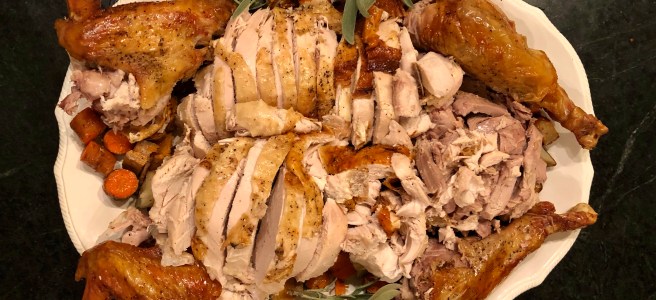
This year we do not need this 18-pound centerpiece for the table.
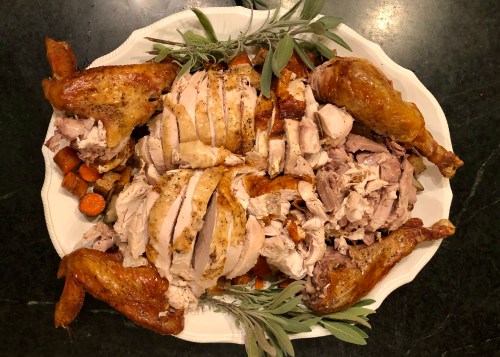
In fact, being #saferathome means my husband and I will be on our own for the Thanksgiving meal. And I am okay with that. If the pandemic has taught me one thing, it is how to manage my expectations.

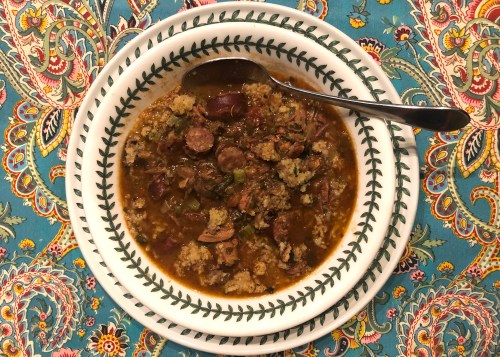
Meanwhile, we still need 8-quarts of poultry stock and 7 pounds of turkey meat to make our twenty-quart pot of Bruce’s Turkey and Sausage GumboMy adult children and their families look forward to getting their Thanksgiving gumbo in to-go containers every year and it is my pleasure and honor to do this for them. It is my family I am most thankful for in my life.
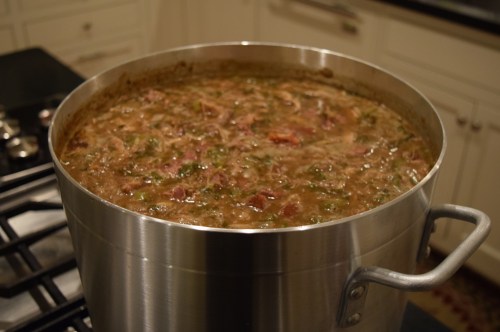
Since it is 2020 and we have been trying all sorts of new things in every aspect of our lives, I decided it was as good a time as ever for my husband and me to try our hand at spatchcocking a turkey. He was game!

What does spatchcock mean and why do we do it? Spatchcock is a butchering technique where you remove the backbone of poultry. This allows you to open and flatten the chest cavity for faster and more even roasting.
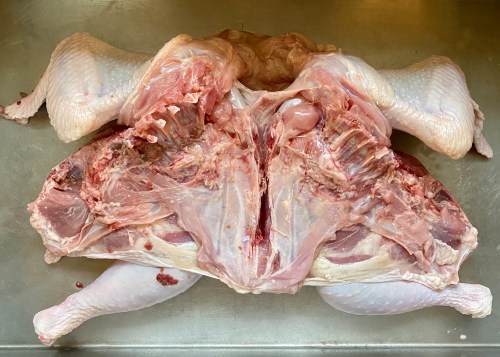
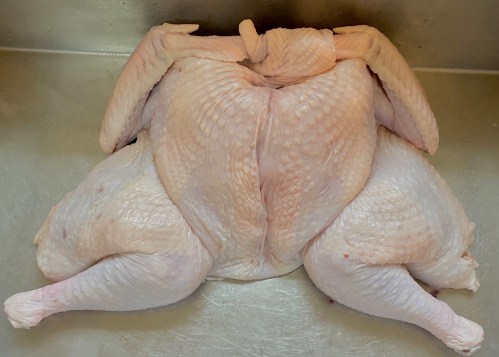
When the bird is turned over, it looks like this.
I cooked this turkey in a 400º oven for 1 hour and 45 minutes. The meat was super moist and the skin was crisp.
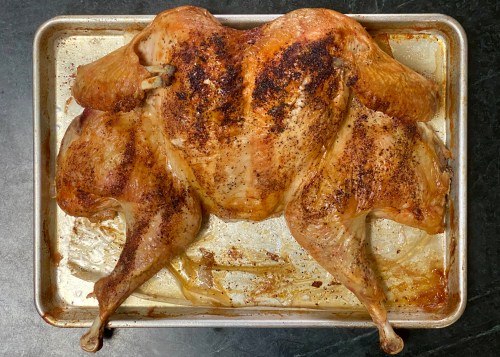
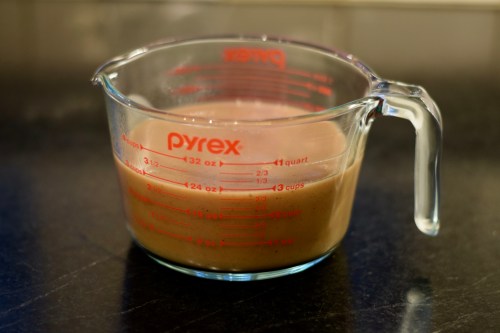
The bird weighed 16.5 pounds to start. Once I removed the innards, the wingtips, and the backbone, it weighed 13.5 pounds. After it was roasted and my sweet husband took all the meat off the bones, we had 7 pounds of meat. Each breast provided us with two pounds. The bones all went into the poultry stock that had been simmering all day. I started the stock with frozen rotisserie chicken carcasses from the freezer. Read about that here.
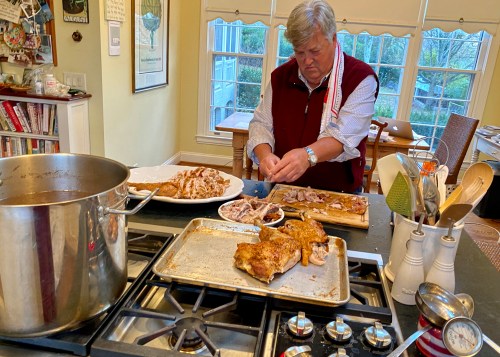
How to spatchcock a turkey.

A Mennonite farmer once told us any job is possible if you have the proper tool. The proper tool for this job is a pair of poultry shears. This is crazy, but we had a pair of these shears in our house and I never knew what they were for. In fact, I almost got rid of them because they were not good at cutting paper when I couldn’t find the scissors I wanted!
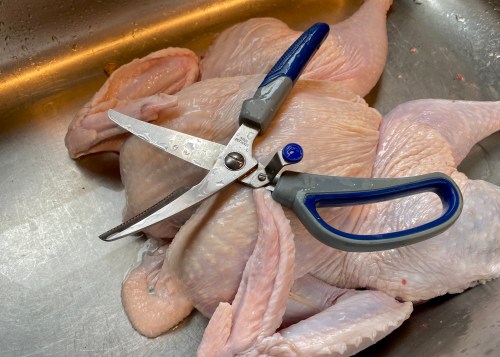
Poultry shears have sharp, curved blades helpful for getting into hard to reach places when deboning meat. They remind me of pruning shears – the handles help you get a good grip so you can squeeze down hard as you cut. Plain scissors will work, but there will be a little more huffing and puffing involved.

How to Spatchcock a Turkey

Defrost the bird. Remove the neck and gizzards from inside the two cavities, one on each end of the turkey. Wash the bird inside and out. Pat dry.
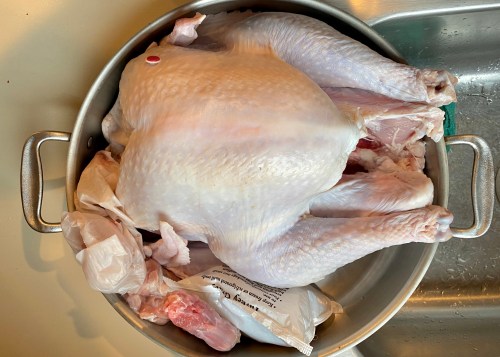
Lay the bird breast-side down. The wings should be on top.
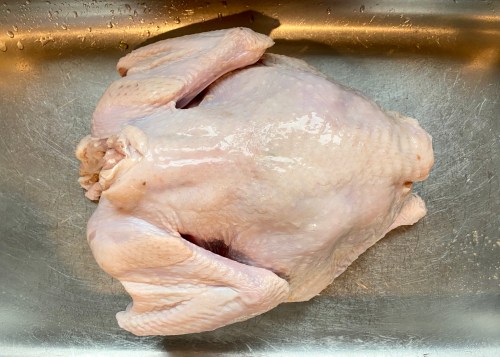
Remove the backbone with poultry shears. First, one side of the spine
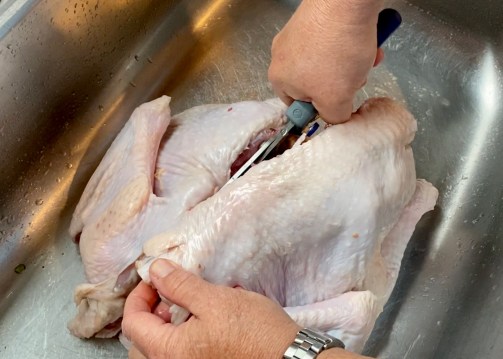
and then the other. CRUNCH! CRUNCH! CRUNCH!
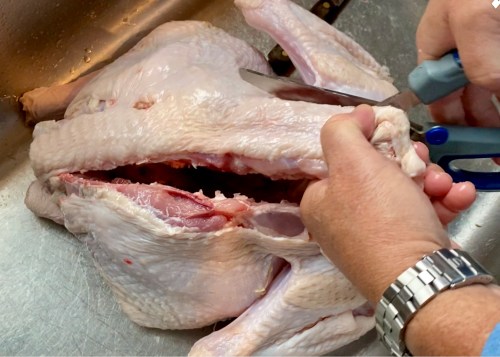
Save the backbone for the turkey stock.
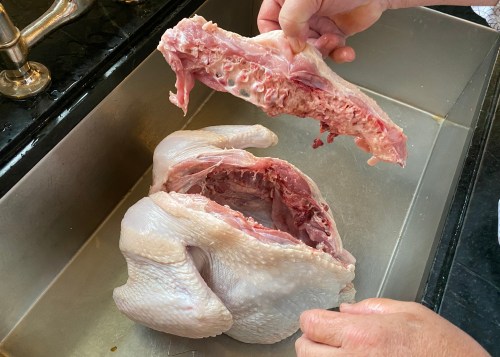
Flip the bird over and press down on the sternum, aka the breastbone, located between the breasts, as if to do CPR. Repeat, moving your hands down along the sternum, until you no longer hear crunching as you press.
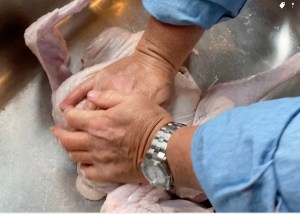
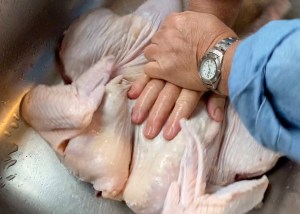
We practiced spatchcocking two different sized turkeys during the week. The smaller one splayed out flatly with just the chest compressions. The larger one needed a little more help to flatten it. My husband turned the breast over and used a meat cleaver to cut into the sternum to split the chest open a little more.


.

How to Cook the Bird 

We cooked one in the oven and the other on the grill. I’ll show you the oven method first.

Preheat oven to 400º.

Arrange the bird on a roasting pan. Rub olive oil all over it, top and bottom, and season with a generous amount of salt and garlic pepper. I use McCormick’s Garlic Pepper.
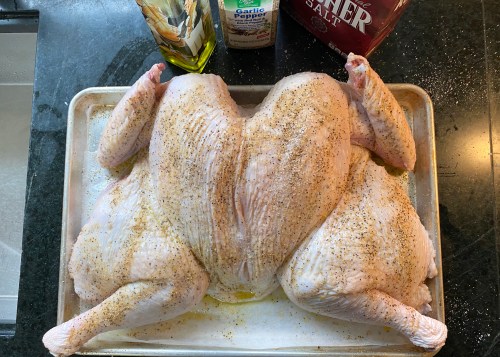
The hottest part of an oven is the two back corners. Place the roasting pan in the oven, so the thick breasts are in the back.
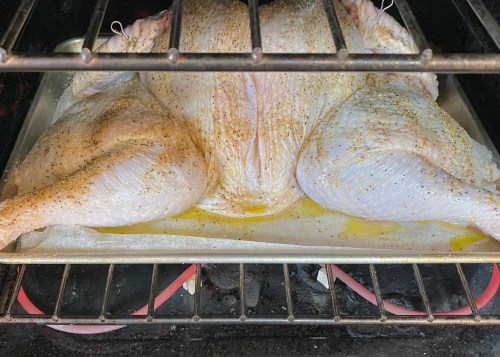
I cooked the bird for an hour and fifteen minutes and then started checking the meat’s temperature every ten minutes. I checked the temperature in many spots — the thickest part of the breast, the thickest part of the thigh, etc. As long as every section registers at least 165º the turkey is safely cooked. I shoot for 160º because, after many years of cooking, I understand the concept of “carryover” heat and know that as the turkey rests, the internal temperature will climb to 165º. The concept is well described in this post.

I let the turkey rest on the counter for about 30 minutes and then poured off and saved the drippings for my poultry stock.
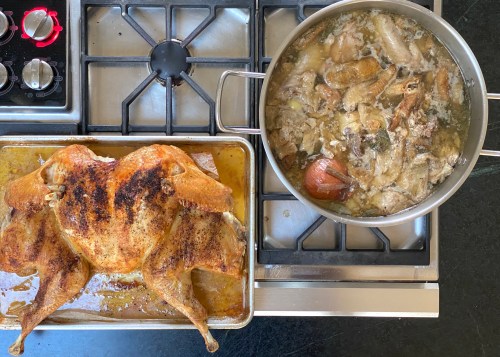
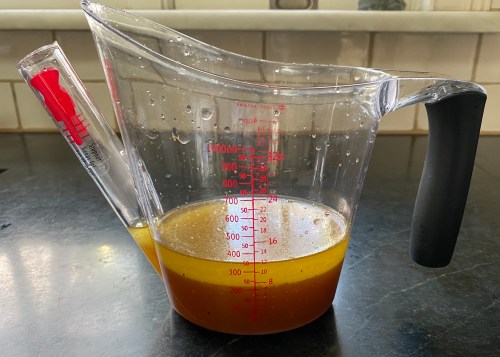
Before I added the drippings to the stock, I poured them into a fat separator to remove the fat.
When my husband and I spatchcocked the other turkey earlier in the week, we cooked it on a grill using indirect heat.
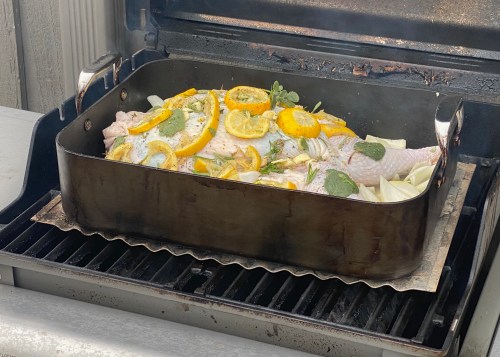
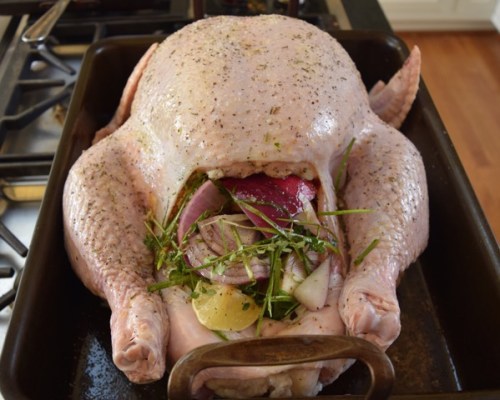
Don’t ask me what got into me; all that frilly seasoning was unnecessary! The flavor profile was a FAIL; too sagey and lemony.
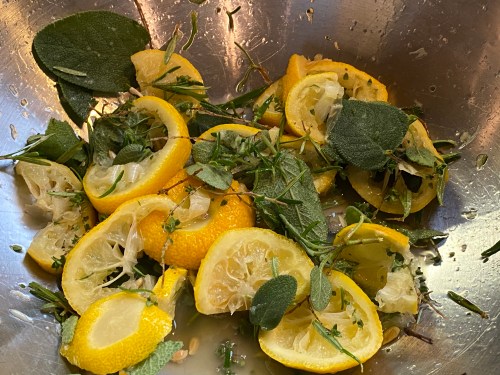
Having said that, it sure was fun to decorate!
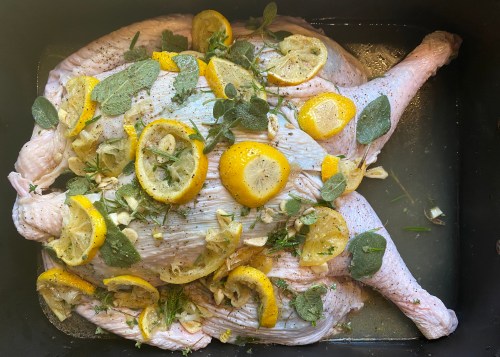
And it sounded lovely in all of its crackly glory as it roasted in the grill.


That turkey was 13.5 pounds before I opened the sack. It was done in 75 minutes. It was as moist as the oven-roasted turkey.

So, that is the end of my spatchcocking saga. I’ve got my eight quarts of gelatinous poultry stock and seven pounds of turkey meat.
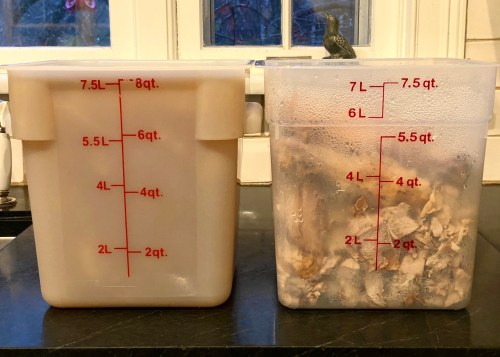
Later this week, I will gather all the ingredients for Bruce’s gumbo and get busy chopping. For now, I’ll rest on my laurels
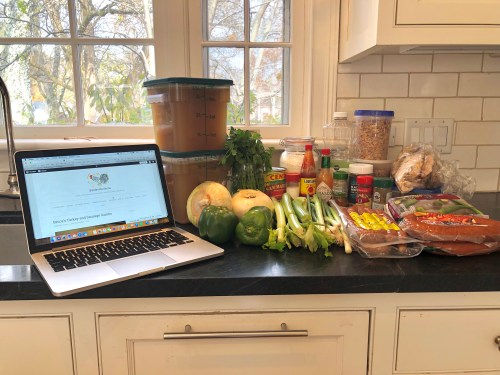
knowing this is in my future.
The recipe that is trending on my blog this morning is Karen’s Foolproof Make-Ahead GravyIt is delicious!

Happy Thanksgiving, friends! I am grateful to all the folks who read my blog, make the recipes, and write to share their experiences. Thank you. You give me joy!

If you need last-minute instructions on how to cook a few traditional sides and desserts for Thanksgiving, check out Thanksgiving Week on the Menu.

Follow Judy’s Chickens on Instagram and Pinterest @JudysChickens.

If you enjoyed this post, consider becoming a follower. Be sure to press “confirm” on the follow-up letter sent to your email address.

© 2014-2020 Judy Wright. All rights reserved. Photos, videos, and text may not be reproduced without the written consent of Judy Wright.

Lauren May’s Cranberry Cake

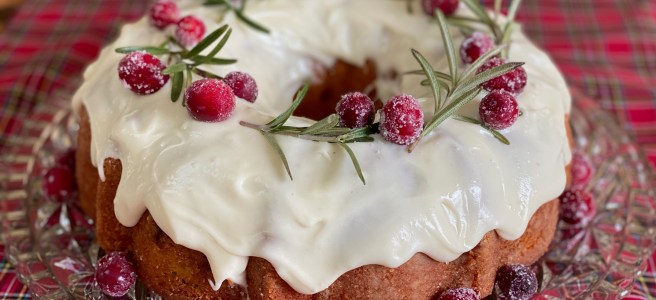
This cake. I love making it. I love decorating it. I love serving it. And I especially love, eating it. It is delicious.

The batter is beautifully flavored with rosemary, the zest of three oranges and one lemon, and cranberries. Once the winter holidays are over and the season for fresh cranberries has passed, reinvent it as a Blueberry, Orange, and Thyme Cake. In May, when the strawberries come in, make it a Strawberry, Orange, and Mint cake. This is a cake for all seasons.

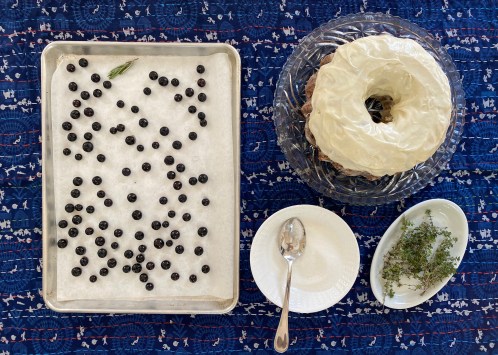
You could also glam up the blueberry version.

I never thought there would come a day when I would put the zest of four citrus fruits AND savory herbs in one cake recipe. Nor did I think I would take time to make sugared fruit. That all changed when I saw the food photos on Lauren’s @mustloveherbs Instagram feed. Lauren is an Appalachian Food and Living blogger in Kentucky. Her outrageously good Cranberry, Orange, and Rosemary Cake with Orange Cream Cheese Frosting single-handedly inspired me to expand my culinary horizons. The cake is as pretty as it is delicious. I am grateful to her for giving me permission to feature her recipe for this post.

Here’s the recipe, but first a few cake-baking tips.

Make sure all ingredients are at room temperature before starting. I have been known, in a pinch, to heat butter and milk in the microwave for 10 seconds to get the chill out, but do not melt the butter.

The primary method I use to measure flour is to weigh it. Otherwise, I lightly spoon the flour into a measuring cup and then level it with a knife.

The time to get air into a cake batter is in the beginning. That’s why we start most cake recipes by beating sugar and fat together for a good three minutes. Then we add the eggs, one at a time, beating in more air after each addition. Once the eggs are all in, be sure to turn the mixer off and clean the sides and bottom of the bowl with a rubber spatula, and mix for one more minute.

Look how fluffy this batter looks even before the wet and dry ingredients have been added.

When cake directions say to alternately add dry and wet ingredients, try it this way, dry-wet-dry-wet-dry. Mix minimally with each addition. As soon as the batter is smooth, stop mixing. See how the batter has cloud-like puffs? That’s the goal for this cake.

When adding fruit, turn the mixer off and gently fold the fruit in with a spatula. Try to disperse the fruit evenly so there will be fruit in every slice.

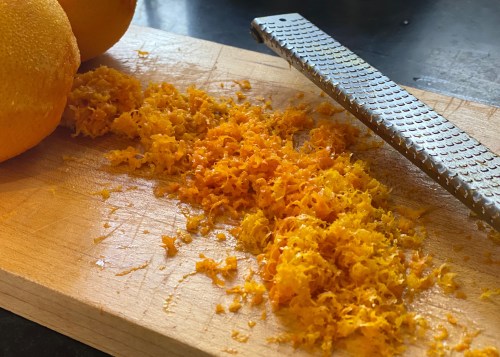
On average, 1 large lemon gives two tablespoons of juice and one tablespoon of zest. 1 medium orange gives 4 tablespoons of juice and 2 tablespoons of zest. I use a Microplane to zest the peel.

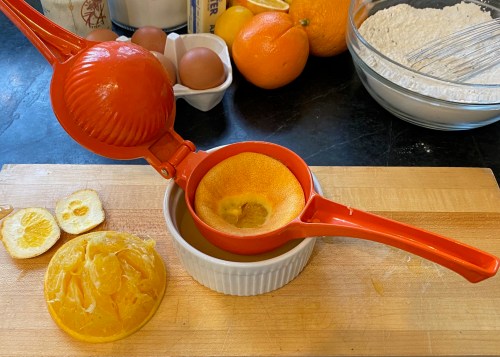
I use a handheld orange squeezer to extract juice from citrus. Cut the fruit in half. Put cut side facing down. Bring the handles together and squeeze.  Flip the fruit over a couple of times to extract more juice. I slice the tip off the domed edge.

Use fresh herbs in beautiful condition. I mince the lower leaves of the stem and save the tips for decorating the cake.

Cake Ingredients

3 cups (13.0 ounces) all-purpose flour
½ teaspoon baking soda
½ teaspoon baking powder
½ teaspoon fine salt
2 tablespoons (½-ounce package) freshly minced rosemary
zest of 3 medium oranges
juice of 1 medium orange
zest and juice of 1 lemon
¾ cup whole fat buttermilk
2 cups (1 pint) fresh whole cranberries
1 tablespoon all-purpose flour for dusting fruit
5 large eggs
2 teaspoons vanilla extract
2 sticks (1 cup) butter, at room temperature
2 cups granulated sugar

Prep for the Mise en Place

Measure flour, baking soda, baking powder, and salt and add to a medium bowl. Add minced rosemary. Use a whisk to mix ingredients and get rid of lumps. Set bowl aside.

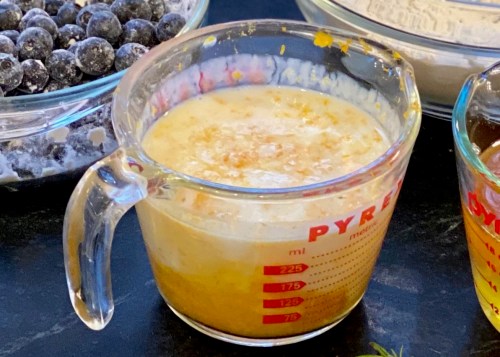
Zest 3 oranges and 1 lemon. Juice 1 orange and 1 lemon. Measure buttermilk in a liquid measuring cup and add zest and juice. Stir. Set aside.

In another small bowl, mix whole cranberries and a tablespoon of flour. Stir until the berries are completely dusted with flour. Set aside.

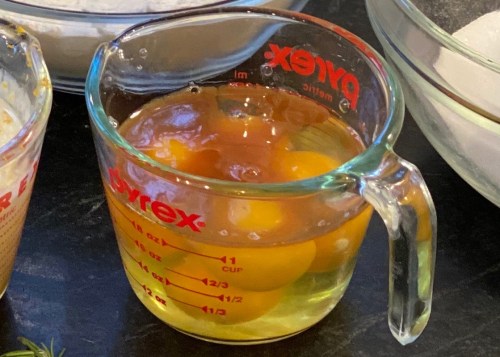
Crack each egg into a container. Don’t mix. Add vanilla. Set aside.

Add butter and sugar directly into a large mixing bowl.

The easy part — putting it all together.

Preheat oven to 350º. Grease and flour a Bundt pan. Make sure all crevices of the pan are greased.

In a large mixing bowl, cream butter and sugar on medium speed for three minutes. Scrape bottom and sides of bowl with a rubber spatula halfway through mixing.

Pour in eggs, one at a time, beating well after each addition. Periodically, turn mixer off and scrape bottom and sides of bowl. Beat another minute on medium speed.

With the mixer on “stir” or slow, add ⅓ dry ingredients, ½ wet, ⅓ dry, ½ wet, end with ⅓ dry. Mix briefly after each addition.

Remove bowl from stand and using a rubber spatula, add berries. Be sure to sweep bottom and sides of bowl to disperse berries evenly in batter.

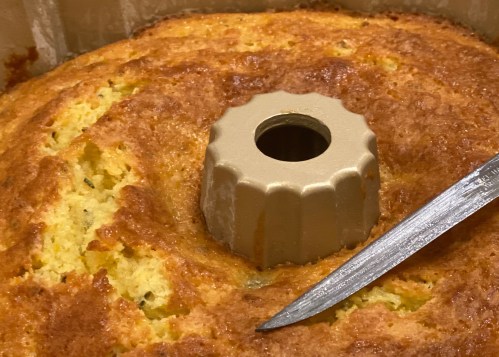
Pour batter into a prepared Bundt pan. I can’t get over how gorgeous this batter looks! Just sayin’.

Bake on center shelf of a preheated oven for 45-55 minutes until a knife inserted in the middle of the ring comes out clean.

Allow cake to cool in pan for 30 minutes. This is a necessary step to ensure the cake slides out easily from the pan. Flip cake carefully onto a wire rack and allow to cool for at least an hour before frosting.

Frosting Ingredients

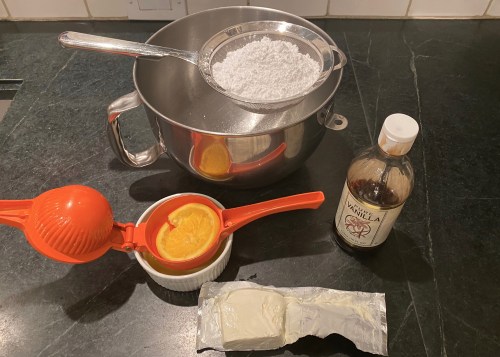
2 cups confectioners (powdered) sugar, sifted through a sieve
4 ounces cream cheese, at room temperature
½ teaspoon vanilla extract
3 teaspoons freshly squeezed orange juice
½-ounce package of rosemary for decorating
fresh fruit for decorating

In a mixing bowl, combine confectioner’s sugar, cream cheese, vanilla, and orange juice. Mix on medium speed until icing is smooth and creamy. The consistency should be somewhere between a frosting and a glaze.

Dust off crumbs from cooled cake. Spoon icing over cake to achieve a drapey look.

Decorate with rosemary and sugared fruit.

Sugared Fruit

Sugaring fruit is much easier than I imagined. It starts with making a simple syrup and then adding fruit until it is covered in syrup. For cranberries, which have a hard shell, bring the syrup almost to a boil, add the cranberries, and let soften so they are edible. For thin-skinned fruits like blueberries, coat briefly and remove from hot pan so they don’t soften further.

Sugared Fruit Ingredients

½ cup water
½ cup sugar
2 cups whole, firm, fresh cranberries, at room temperature
½ cup granulated sugar for dusting

Instructions

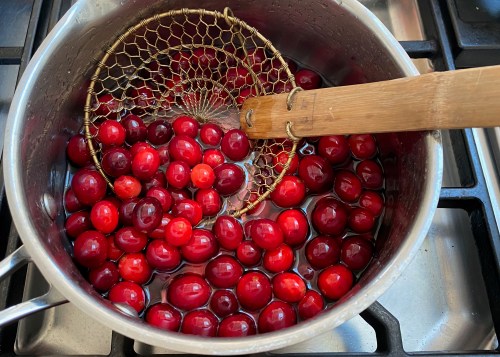
Heat water and sugar in a medium saucepan on medium heat. Stir until sugar dissolves and syrup just starts to boil. Remove pan from heat.

Add whole cranberries that are at room temperature. Allow to stay in hot water for 10 minutes. Do not boil cranberries or they will pop. Remove cranberries with a slotted spoon.

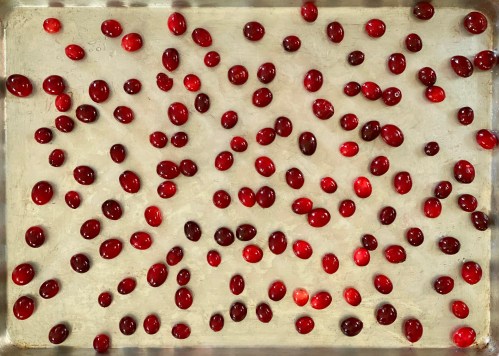
Place fruit on a parchment-lined rimmed sheet pan. Cranberries will be tacky and want to clump together. Separate them with the tip of a knife and not your fingertips. Doing so will keep the cranberries tacky and better able to hold the sugar crystals.  Allow to dry for one hour.

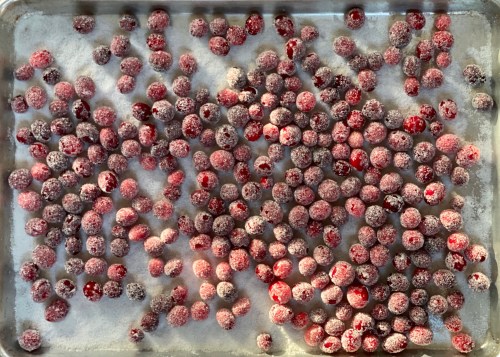
Spoon tacky berries into a bowl of sugar. Place on a clean sheet of parchment paper and dry for 30 minutes. Note the places on the cranberries that did not take up the sugar. I’m guessing they are the places where my fingers touched the tacky berries. The next time, I used a knife to separate the berries.

Christmas Eve or Valentine’s Day Cake

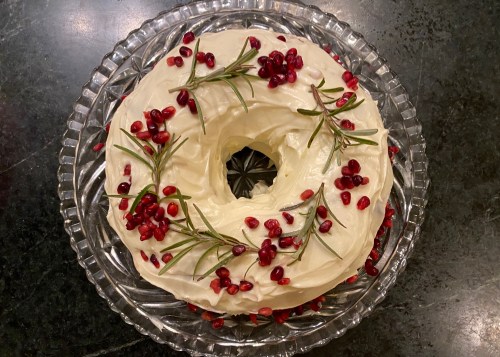
By Christmas Eve, we had already had this cake twice so we opted for Lily’s Red Velvet Cake, a family favorite made by my DIL. Red Velvet Cake is basically chocolate cake with red food coloring. In my recipe, I boost the cocoa with expresso coffee. It is delicious. Inspired by Lauren’s food styling and yet not wanting to take the time to sugar more cranberries, we used what we had to decorate the cake — pomegranate seeds and rosemary.

Readers, I would love your help. I am teaching a cooking class for The Herb Society of Nashville. I’m wondering if you could share some herb and fruit combinations you have found that are complementary. If so, please leave a comment.

Some Other Favorite Cakes
Chocolate Birthday or Valentine’s Day Cake
Mom’s Monkey Bread, circa 1970
Fruit and Nut Cake

If you enjoyed this post, please share and become a subscriber! Be sure to confirm the subscription on the follow-up letter sent to your email address.

Follow Judy’s Chickens on Instagram and Pinterest @JudysChickens.

Always check my blog for the latest version of a recipe.

© 2014-2020 Judy Wright. All rights reserved. Photos, videos, and text may only be reproduced with the written consent of Judy Wright.

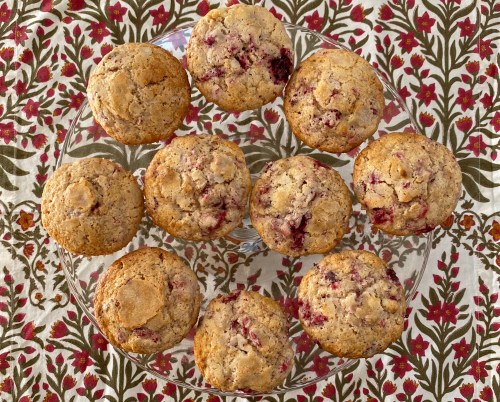
Cranberry Muffins with Orange Zest and Pecans

Yesterday, my sister-in-law, Terry, asked me to post my recipe for cranberry nut muffins. I had completely forgotten about these flavor-packed muffins!

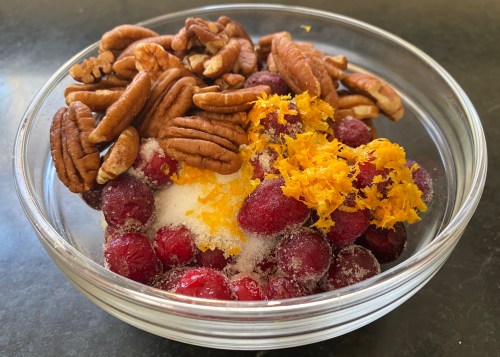
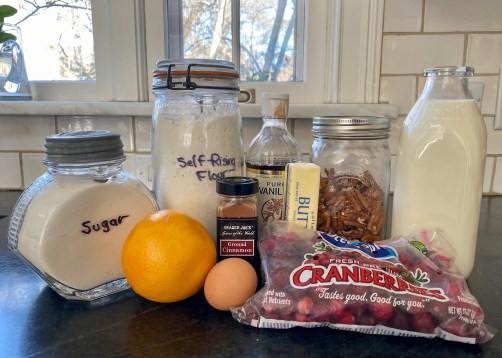
The ingredients include a lovely mix of cranberries, pecans, orange zest, and cinnamon.

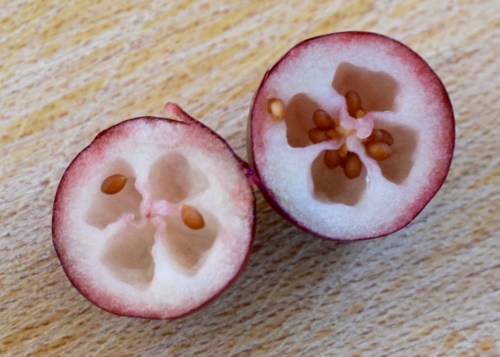
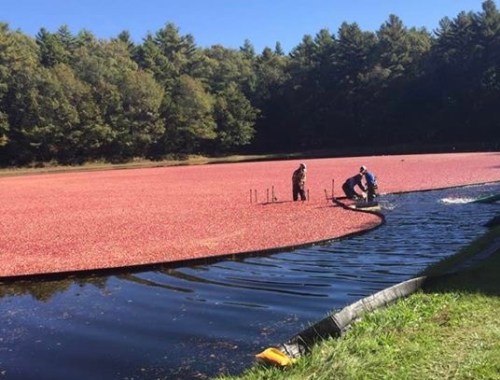
An interesting tidbit about cranberries — each cranberry has four interior chambers that hold pockets of air.

The air pockets allow the berries to float, a characteristic farmers use to their advantage when it comes time to harvest.

During the spring and summer, the berries grow in fields called bogs. In the fall, farmers flood the bogs and use a harvesting machine to dislodge the berries that then float to the surface. There is more to the story that can be found here.

In most recipes calling for cranberries, you can use fresh or frozen. I would not use dried cranberries which are sweetened and have lost much of their nutritional value in the process. For this batch of muffins, I used last year’s frozen berries because that is what I had on hand. When using frozen berries, do not defrost them before measuring or chopping. If you see a berry that is shriveled up, discard it.

I used self-rising flour. If you do not have any, substitute with 2 cups of regular flour, 3 teaspoons of baking powder, and ½ teaspoon of fine salt.

Yield: 12 small or 8 large muffins.

Ingredients:


1¼ cup whole cranberries
⅓ cup granulated sugar
½ cup pecan halves
zest from ½ half a medium orange

1 large egg
¾ cup whole milk
1 teaspoon vanilla

2 cups (8½ oz.) self-rising flour, (measured using the spoon and level method)
¼ teaspoon cinnamon
⅓ cup sugar
⅓ cup butter, softened and sliced

Instructions:
Preheat oven to 375º. Line muffin tin with paper liners or grease each muffin cup.

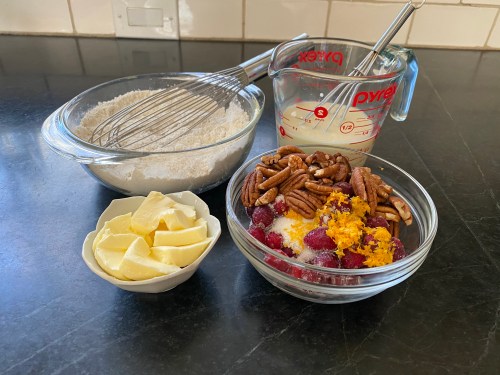
Place cranberries, ⅓ cup of sugar, pecans, and orange zest in a food processor. Pulse until all ingredients are rough-chopped. Be careful not to over-process.

Measure milk in a liquid measuring cup. Add egg and vanilla to the cup. Whisk ingredients together.

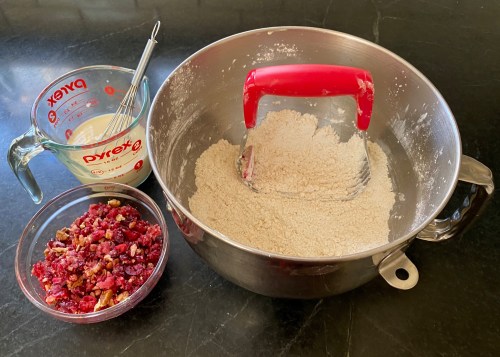
Place flour, cinnamon, and ⅓ cup sugar in a large mixing bowl. Whisk these dry ingredients together. Add butter slices. Using a wire pastry blender, combine ingredients until there are no more large clumps of butter. See photo below for guidance on what the texture should look like.

Gently stir in milk mixture until just blended. Fold in cranberry mixture. For a light and airy muffin, stir as little as possible.

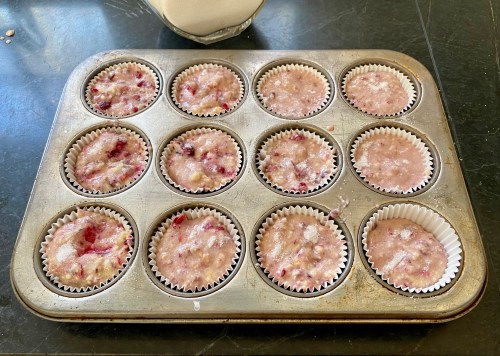
Use a tablespoon or cookie scoop to fill the muffin cups. Sprinkle ½ teaspoon of sugar over each muffin to crisp up the top when baked. If making large muffins, use a whole teaspoon of sugar.

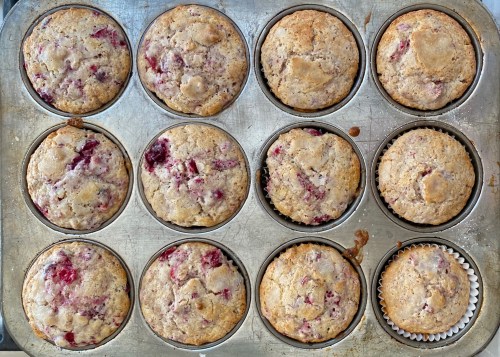
Bake for 20-25 minutes on the middle oven rack. Muffins are done when a knife inserted in the center comes out clean. If you would like to brown the tops a little more, move tin to the upper oven rack and bake for 3 more minutes.

Thank you, Terry, for reminding me about these muffins! I’m glad to have the recipe at my fingertips, again.

Check out the Thanksgiving Menu for Tday dinner ideas.

Other Cranberry Recipes:
Mrs. Walker’s Cranberry Nut Pie
Hot Pepper Jelly or Cranberry Brie Bites
Grandma’s Cranberry Chutney
Sautéed Collards (or Swiss Chard), Toasted Pine Nuts and Cranberries
Roasted Butternut Squash, Brussels Sprouts, and Cranberries
Sorghum, Oats, and Cranberry Granola
Oats, Sorghum, Ginger and Cranberry Cookies

Always check my blog for the latest version of a recipe.

If you enjoyed this post, please share and become a subscriber! Be sure to confirm the subscription on the follow-up letter sent to your email address.

Follow Judy’s Chickens on Instagram and Pinterest @JudysChickens.

© 2014-2019 Judy Wright. All rights reserved. Photos, videos, and text may only be reproduced with the written consent of Judy Wright.

Karen’s Foolproof Make-Ahead Gravy

I love nothing more in life than to sit around the table with friends and family of all generations and enjoy a meal filled with storytelling, good food, and laughs.

To get to the Thanksgiving dinner’s actual serving, I have to pass through a few cooking hurdles. For instance, I suffer from indecision every time I cut into the turkey thigh to test for doneness. Are the juices truly running clear, or are they still ever so slightly pink?

And then there is the gravy. So much mystery there.

If it’s not lumps, it’s blandness. Making a velvety smooth, full-bodied gravy has eluded me for years. It is the reason why, in the midst of the crazy hour before dinner, I nonchalantly ask, “Who wants to make gravy?” as if it were an afterthought instead of a worry. Thankfully, there is always someone who volunteers, often, my husband and his mother.

This week, I was talking food with my friend Karen Rolen, a joyful, spunky woman originally from Montgomery, Alabama. I asked her if she knew how to make gravy. She confidently and enthusiastically said, “Yes, I’ve been making it my whole life; where I come from, gravy is considered a BEVERAGE!”  Her written instructions arrived the next morning.

“Make a light brown roux* with equal parts butter and all-purpose flour. I probably use ¼ to ½ stick of butter.  Add hot turkey drippings and fonds** if you have them. Have two cups or so of heated chicken broth ready, and even if it’s good and homemade, have “Knorrs” or “Better Than Bullion” chicken base available for salt and seasoning later on. Slowly stir broth into the roux and drippings and boil them on medium-high until you get the consistency you want. Season to taste with lots of ground black pepper and chicken bullion. It’s usually good enough to drink!”

*To learn what a roux is, check out Bruce’s Turkey and Sausage Gumbo and learn why you should save the turkey carcass and trimmings this year.

**Fond is French for “base” and means the bits and pieces of browned meat or vegetables left in a pan after roasting or frying.

My goal was to tweak Karen’s instructions to create a flavorful and dependable gravy you could make a few days or hours before the holiday dinner.

Yield: Makes three cups (this recipe is easily doubled or cut in half)

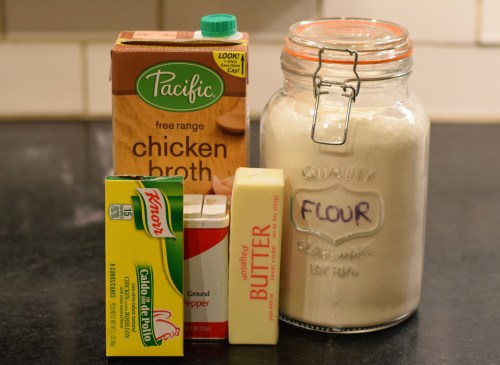
Ingredients: 

½ cup butter (1 stick)
½ cup all-purpose flour
4 cups (1 quart) heated boxed or homemade chicken broth
½ teaspoon ground pepper
¾ to 1½ squares of Knorr Chicken Bullion (for “seasoning to taste”)

Instructions:
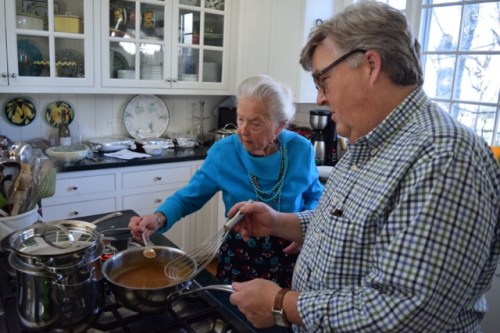
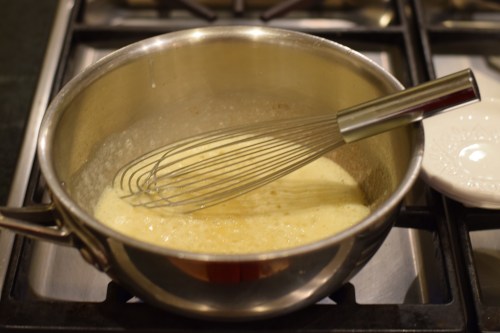
Melt butter in a heavy-bottomed saucepan over medium-high heat. Using a whisk, stir in the flour.

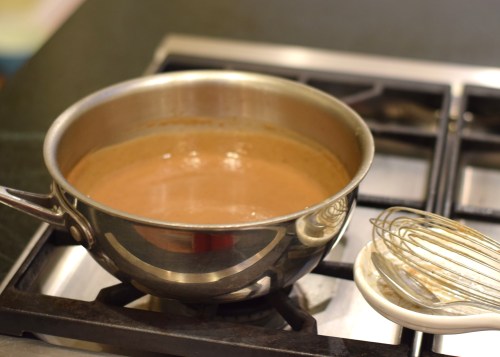
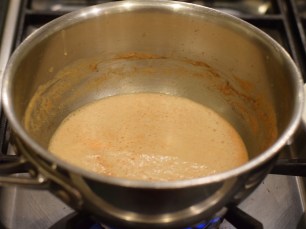
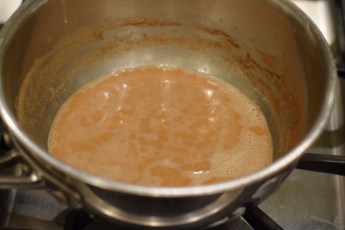
Stir continuously over medium heat until the roux starts to change color, usually about three minutes, give or take a few seconds. The picture on the left was taken at 2½ minutes. The one on the right was taken at three.
 

Think of the roux’s darkening color as “toasting” the flour. The roux should be medium brown when done. This cooking of the flour gives gravy its depth of flavor and that desired taste of nuttiness. I promise, if this is your first time making a roux, you are going to feel very accomplished as a cook once you make this gravy.

As soon as the roux changes color, whisk in the broth to stop the roux from cooking any longer. Whisk and simmer for about five minutes until the gravy thickens.

Stick with it, don’t let the flour stick to the bottom of the pan. Also, do not adjust the seasonings until after the gravy has finished cooking because as the liquid evaporates, the flavors will concentrate.

“Salt and Pepper to Taste”
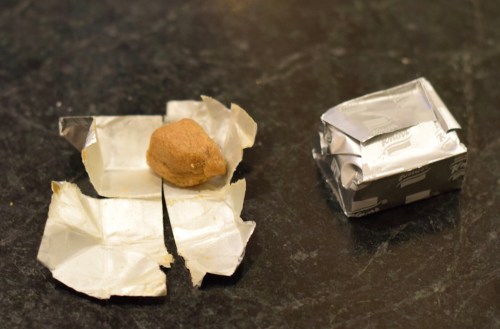
Add the pepper first because it is easier to adjust. Next, instead of adding salt, Karen and I use Knorr’s bullion cubes for flavoring. The amount you need will depend on whether you use unsalted or salted butter and regular or low-sodium chicken broth.

To successfully “season to taste,” cut the Knorr bouillon cube into four quarters. Add one quarter at a time until you hit that magical point where the gravy suddenly tastes beautifully rich.

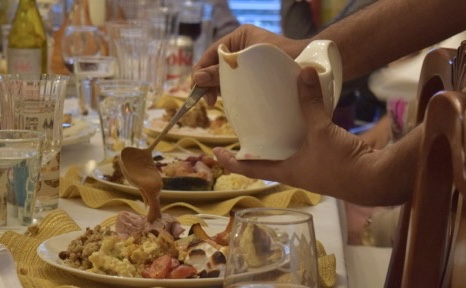
Notice how velvety smooth the gravy is.

Reheat the gravy in a saucepan just before serving. Feel free to add strained juices from the roasting pan, if desired.

If you wish to make your own chicken stock, consider these two posts to learn how: Chicken Stock from Rotisserie Chicken Bones and Rotisserie Chicken Soup, Revisited

My friend, Renée, whose family likes to fry their turkey every year, reminds me there are no drippings for gravy-making when deep-frying a turkey, so plan accordingly.

Epilogue
Thanks to Karen Rolen for teaching me how to make gravy. I’ll think of her every Thanksgiving when I make it. Once I got Karen’s recipe adapted for this post, I took a sample of the gravy to my friends. They each tasted it and agreed it was indeed sippable! Thanks, Mary, Susie, Corabel, Jane, and Mary, for being taste-testers.

Don’t miss a recipe! Become a subscriber and have every post delivered to your Inbox.

Follow Judy’s Chickens on Instagram and Pinterest @JudysChickens.

Remember to always check this website for updated versions of a recipe.  

© 2014-2020 Judy Wright. All rights reserved. Photos, videos, and text may only be reproduced with the written consent of Judy Wright.