My Favorite Peach Custard Pie

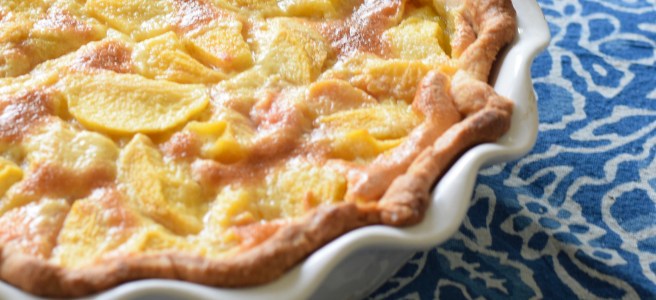
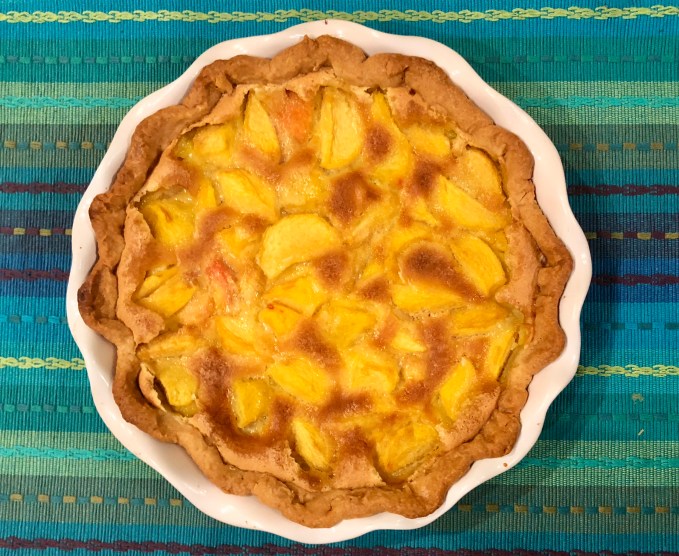
This is how it goes every summer: the first juicy peach I see, I eat, the second one goes into a pie; this peach pie–

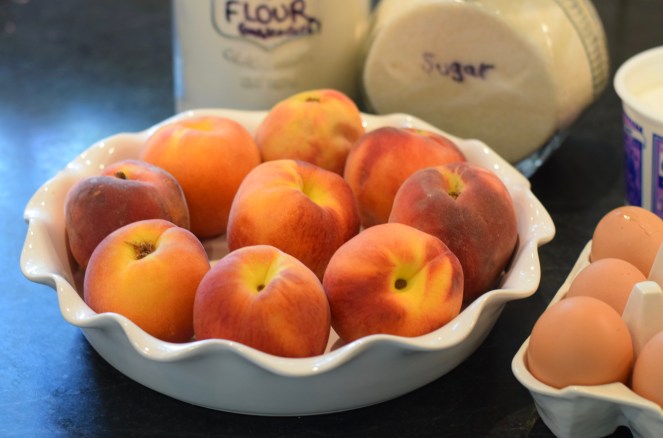
a custardy pie with very few ingredients and no spices; just peaches, eggs, flour, sugar, and sour cream.
The first peach pie I made was in 1983 after reading Nora Ephron’s debut novel, Heartburn. In the book, Ephron described perfecting a peach pie recipe with a friend while on vacation. I got that. I spent our last family vacation at the beach perfecting no-knead artisan bread. Half the joy was having ten people at the ready to test samples with smiles on their faces and spoonfuls of homemade Roasted Rosemary and Strawberry Jam dripping off their buttered toast. Ephron’s recipe was good, but her directions were sparse. They were more like the directions of a seasoned cook, as she was — quickly scrawled notes on bits of scrap paper.

To get consistently good results, I needed to better determine when the custard would be set and learn an effective technique for preparing partially baked crusts. For pie crust help, I turned to First Prize Pies, by Allison Kave. I love her book. Thanks to her instructions, I went from making crusts with shrunken, collapsed sides to beautiful partially baked pie shells that still crested the rim of the pie plate.


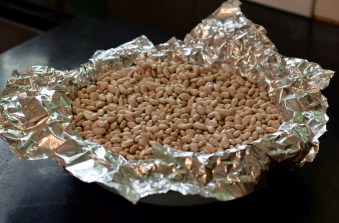
My old way of filling a crust with a few ceramic beads, as seen in the photo on the left, didn’t cut it. I switched to Allison Kave’s way of lining the dough with foil that is gently pushed into the corners of the bottom layer of dough, filling the foil with two pounds of dried beans right up to the crimped edges, and covering the edges with foil to keep them from browning.


Her technique provided the side-structure needed for a good-looking crust. Baking a single-crust pie shell no longer intimidates me.

Neither does knowing when a custard filling is set. With fruit pie, you add flour, tapioca or cornstarch to the filling to thicken it. Once cooked, it takes about three hours, for the filling to cool and firm up. When baking a custard filling with fruit, it can be even iffier because the center of the pie, although crusted over, will still be ever so slightly wobbly when it is time to be pulled from the oven. That goes against one’s cooking instincts for determining when a dessert is sufficiently baked. You can’t depend on a knife test with this recipe. I did some research and learned you could use a digital thermometer to help determine doneness. As long as the center temperature is at least 190, the pie should finish cooking with its residual heat and set within a few hours as it cools. It took 50” to cook this pie in my oven.

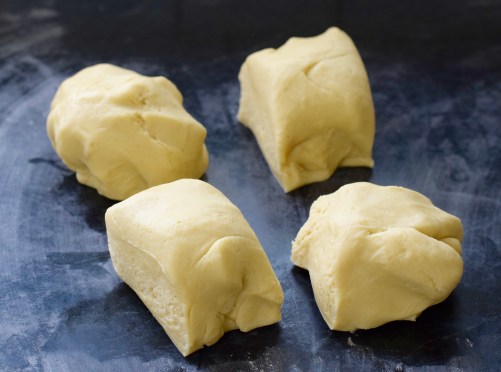
Another thing about pie crusts, although I know how to make them, I still buy Trader Joe’s uncooked, rolled crust from their freezer section for convenience. The trick to unfurling their prepared crust without it falling apart is to let the dough defrost completely on the counter for ninety minutes. If you want to learn how to make a beautiful pie crust from scratch, go to  King Arthur Flour’s website. They have excellent instructional videos.

Ingredients:

A single 9-inch pie crust that is partially baked
3 cups (6-9 peaches) ripe, peeled peaches, at room temp
5 large egg yolks
1 to 1¼ cups granulated sugar (less if peaches are super-ripe, more if not so sweet)
3 tablespoons all-purpose, unbleached flour (more if your peaches are very juicy)
½ cup sour cream

Mise en Place:

Partially bake the pie crust:
Preheat oven to 425º.
Grease the bottom of a 9-inch pie plate.

Lay the single crust inside the pie plate. Crimp the edges. Poke fork holes in the bottom to help decrease shrinkage.

Place a layer of aluminum foil over the crust, gently pushing it into the bottom edges and around the upper crimped edges. Fill with two pounds of dried beans as shown in the photos above. The beans need to fill the shell completely to keep the sides from collapsing.

Place the pie plate on the middle rack of a preheated oven. Bake for 10 minutes and then turn crust 180º and bake for another five minutes. I recommend setting a timer. Remove crust and place on a wire rack to cool for 1-2 minutes before gently removing foil and beans.

Prep the filling while the crust cooks:
Peel the peaches and slice. You do not want to use hard peaches — they lack flavor. If they don’t taste good enough to eat, they won’t taste good in a pie. If you use drippy-ripe peaches, let them drain a little in a colander while you make the custard. If you use frozen or canned peaches, drain them.

In a medium-sized bowl, beat the egg yolks with a whisk. Add sugar and flour and stir. Add sour cream and whisk until batter appears smooth.

Put it all together:
Decrease oven temperature to 350º.

Lay the peaches in the bottom of the crust.

Pour filling over it. Cover the crimped edges with an edge protector, or foil, to keep them from browning any further.
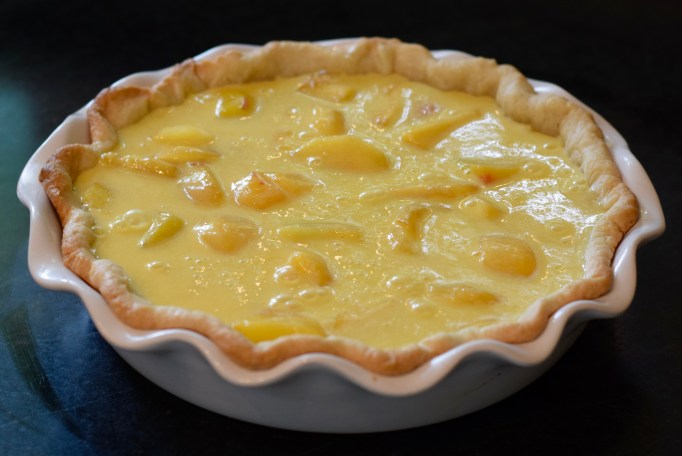
Bake the pie for 50-60” on the middle rack of 350º oven. When done, the filling should be golden on top, the outer 4 inches of the pie should be firmly set, and the center should be almost firm. Read notes above on testing for doneness.

Now, let’s just say you have a tableful of hungry guests who have finished dinner, have been smelling the pie cooking, and are waiting for dessert. In that case, I would cook the pie 15″ longer to firm it up more quickly and serve it warm.
Other Pie Recipes on the Blog:
Strawberry Rhubarb Pie
Mom’s Apple Pie (with a cheddar streusel topping)
Mrs. Walker’s Cranberry Nut Pie
Mom’s Pumpkin Pie
Very Berry Clafoutis
Quiche Lorraine with Bacon and Kale
Stocking Stuffers: Tools for the Cooking Life

Don’t miss a recipe! Become a follower and have every post delivered to your Inbox.

Follow Judy’s Chickens on Instagram and Pinterest @JudysChickens.

© 2014-2018 Judy Wright. All rights reserved. Photos, videos, and text may only be reproduced with the written consent of Judy Wright

Old-Timey Vanilla Bunny Cake

My mother made this bunny-shaped cake for us in the Sixties. I made it for my kids in the Nineties. Now, twenty-five years later, I am happily making it for my grandson. I love the architecture involved in creating the bunny shape out of two round cake pans as much as I love the simplicity in the flavor of a vanilla cake.

Cake Ingredients

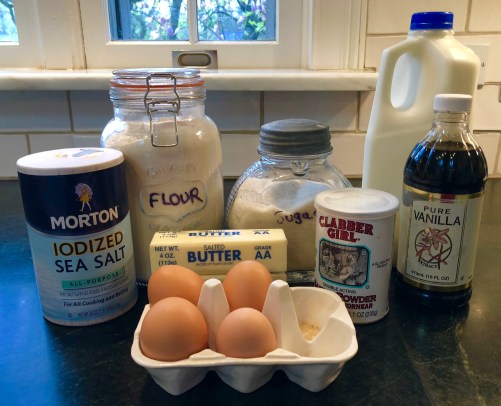
2¼ cups all-purpose unbleached flour
1½ cups sugar
½ teaspoon salt
2 teaspoons baking powder
1 cup (2 sticks) butter, cut into half-inch slices, at room temperature
4 large eggs
½ cup milk (whole or 2%)
1 tablespoon vanilla extract

Instructions
Preheat oven to 350º.
Grease and flour two 8-inch round cake pans.

Place the flour, sugar, salt, and baking powder in a large bowl and mix on slow speed until well blended.

Add the slices of butter and blend on medium speed until the mixture resembles pea-sized crumbles.

In another bowl, mix together the eggs, milk, and vanilla with a fork until well blended.

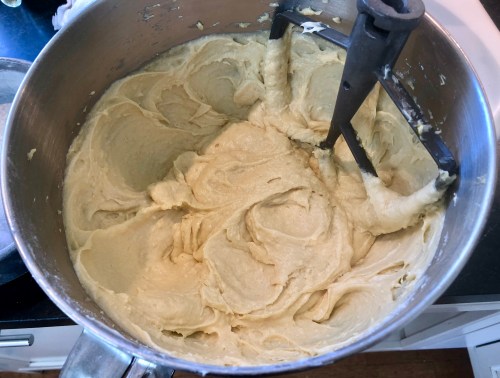
Pour the wet ingredients into the butter and flour mixture and beat on slow speed for one minute. Scrape down the sides of the bowl with a spatula. Beat the batter on medium speed for one minute until smooth and fluffy.

Pour batter into prepared cake pans. Bake for about 25 minutes on the middle oven rack. When done, the cakes should be golden in color and a knife poked into the center should come out clean.

Remove cake pans from the oven. Let cool on a wire rack for ten minutes. To easily release the cakes from their pans, use a knife to loosen the edges and then flip the pans onto a rack. The cakes must be completely cooled before frosting.

Cream Cheese Frosting Ingredients
DSC_0124

1  8-ounce bar cream cheese, softened
½ cup  (1 stick) butter, softened
1  teaspoon pure vanilla extract
3¾ cups (1 pound box) confectioners’ sugar
2-3 tablespoons whole milk

Instructions
Beat butter and cream cheese together in a large bowl on medium-high speed until smooth and creamy. Add powdered sugar and start beating on slow speed until the sugar is incorporated into the mixture to keep powdered sugar from spraying all over the room. Beat frosting until smooth and creamy.

frosting Red velvet cake

Add vanilla and beat for 15 seconds more. Add milk as needed to help fluff up the frosting.

frosting Red velvet cake
To Assemble Bunny Cake
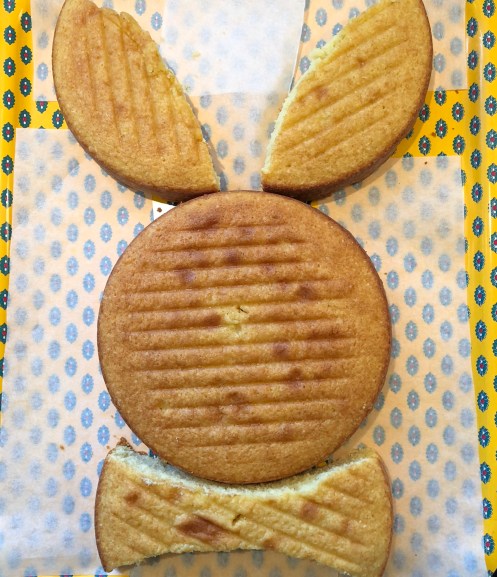
Cut one of the cake layers as shown.
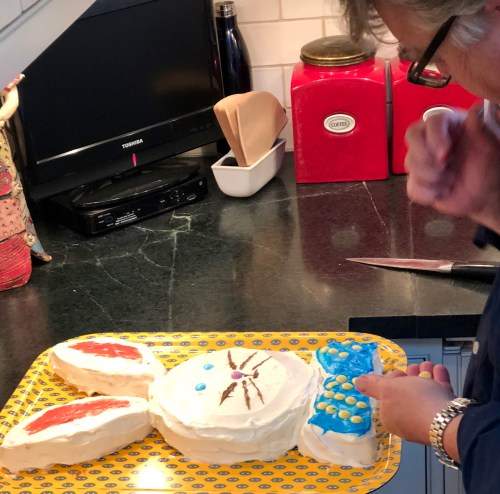
Arrange cakes as shown below. Place parchment paper strips under the cake’s edges. Ice the cake and then remove the strips. Decorate with M&M’s.
My husband got into decorating the cake. I had to pull him off the job when he talked about applying eyebrows.

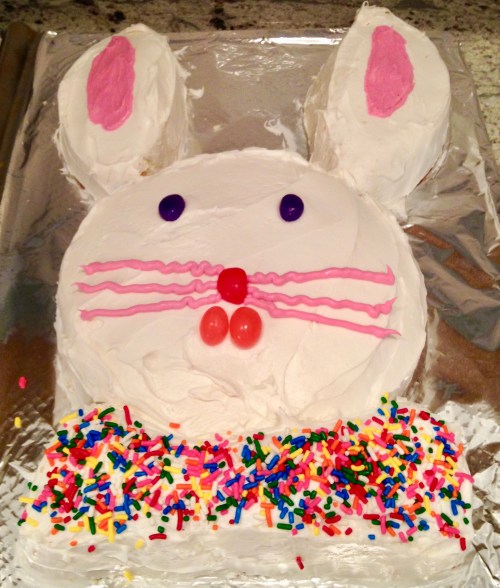
Meanwhile, a few miles away at my Goddaughter Leigh’s house, my dear friend Becky was busy making an Easter Bunny Cake for her three-week-old granddaughter. She sent me a photo.

The Barton/Meadors family made this beautiful bunny.

My friend Janet Davies sent a photo of her coconut-covered bunny cake. Here is her method of icing the cake: Cut each cake layer in half horizontally. Poke holes in the layers with a toothpick. Pour a mixture of 12 ounces frozen coconut, 1 pound powdered sugar, and 1 cup sour cream over the layers and allow to soak in.  Add flakey coconut to the top. The sour cream gives it a tangy touch.  Sometimes she takes off the crusty of the cake to make sure the runny icing gets inside the cake.

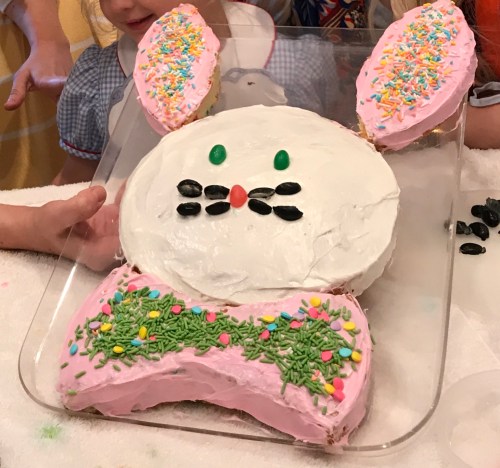
Here’s another cute one sent to me by mom’s cousin, Jean Maroney. Her daughter-in-law, Alena, made it.

My niece made this one.

Please share your creation on Instagram with the hashtag #judyschickensbunnycake

If you are celebrating Easter, Happy Easter!

Related Posts for Easter Day

Fun to do with Children:
To Dye For: Making Naturally Dyed Easter Eggs
How to Tell If an Egg Is Fresh or Hard-Boiled
Test Your Sense of Smell with Jellybeans

Brunch:
50 Ways to Make a Frittata
Quiche Lorraine with Bacon and Kale
Mom’s Monkey Bread, circa 1970
The Biscuit King

Desserts:
Italian Ricotta and Lemon Cookies
Italian Sesame Seed Cookies

If you enjoyed this post, please become a subscriber! Be sure to confirm the subscription on the follow-up letter sent to your email address.

Follow Judy’s Chickens on Instagram and Pinterest @JudysChickens.

© 2014-2019 Judy Wright. All rights reserved. Photos, videos, and text may only be reproduced with the written consent of Judy Wright.

Applesauce or Apple Pie?

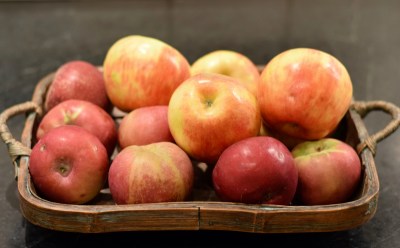
It’s apple season! There are so many beauties out there right now that every time I go near a farm stand, I pick a few more to add to my stash.

Have I mentioned how much I adore color and texture? It doesn’t matter if it’s in food, as in a bowl of apples

or tomatoes.

Or yarn, as in this painting of my yarn stash created by my friend Kim Barrick. It makes no difference to me. I love it all. They each bring me joy.

Unlike yarn, which can last beyond a lifetime as in the case of my adorable mother’s yarn stash,

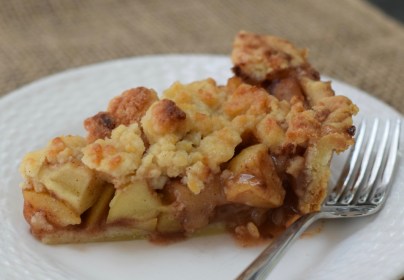
when I get too many apples I’ve got to act. Pie or applesauce? If the skins have started to wrinkle and the bruises have started to show, I make applesauce. Otherwise, it’s Mom’s Apple Pie with Cheddar Streusel Topping. No contest.

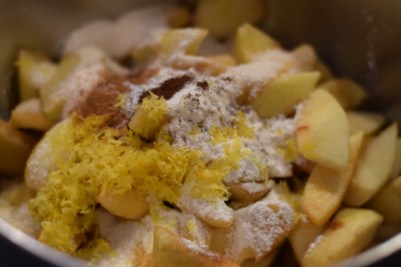
Even the ingredients are photogenic!

Apple Sex

The core of an apple is actually the apple’s ovary. It is usually divided into five chambers containing two ovules (where the female DNA is stored) each. If the ovules are pollinated with male DNA in the form of pollen grains, the apple will mature into a well-developed fruit. A fully pollinated apple will contain ten seeds. The number of seeds is directly related to how many grains of pollen have traveled from the stigma, down the style to the ovum in the ovary on the apple’s blossom. The apple needs a minimum of 6-7 seeds to set fruit, or it will not grow to maturity. The pollen is carried by pollinators from other nearby varieties of apples in the orchard.

Mother Nature ensures the survival of the apple tree species by making the flesh sweet and tasty so squirrels and deer will want to eat the fruit and disperse the seeds widely.

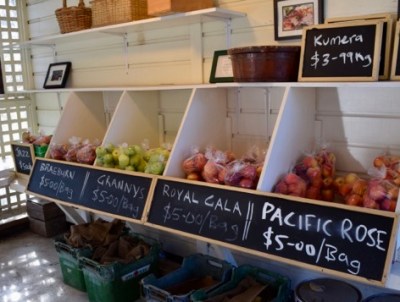
While in Hasting’s New Zealand, we had the pleasure of visiting our friends Annette and Rufus Carey’s Longland’s Fruit and Vegetable and Christmas Tree Farm.

I loved seeing their neat system for growing rows of apple trees.

Having an apple orchard is on my bucket list.

How to make Apple Sauce

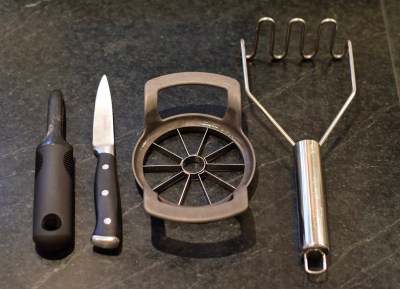
The following kitchen tools might be helpful:

To make applesauce, peel three pounds of apples and remove brown spots. Three pounds of apples equal about 9 medium apples or 7-8 cups sliced.

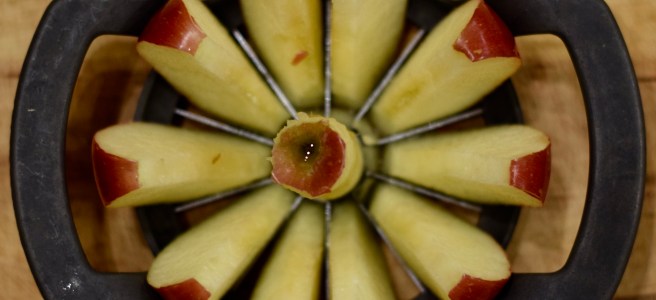
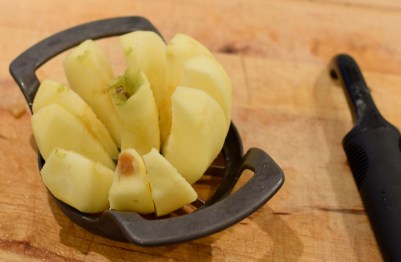
Use an apple corer (ovary remover – ewww) to prep the slices.

Or, if you have a spiralizer, use it.

Add the apple slices to a saucepan with about 1 cup of water. Bring to a boil, cover, and simmer for 20 minutes. Remove lid and simmer 10 more minutes. Use a potato masher to pulverize the chunks, if desired.


You could leave the peel on, but know that it will separate from the apple as it cooks and has a tendency to stick to the roof of your mouth. That’s one of the reasons I always peel apples for my grandson, the skin can be a choking hazard for babies.

You can add cinnamon and sugar if you’d like, but applesauce is plenty sweet and flavorful unadorned.

Consider putting aside ½ cup of applesauce to use in Marion’s Crazy Good Pumpkin and Chocolate Chip Bread.

One More Seque!

How about a great book to read this Fall about an American pioneering family in the 1800s who struggle to plant an apple orchard in Ohio? At The Edge Of The Orchard, by Tracy Chevalier, is such a book.  I love how John Chapman (aka Johnny Appleseed) plays into the story as well as the science of bark-grafting apple limbs. I’m grateful to my dear friend, Gayl Squire, a teacher in Napier, NZ, for buying me a copy of this book to read while we were visiting them.

Always check the website for the most current version of a recipe.

© 2014-2017 Judy Wright. All rights reserved. Photos and text may only be used with written consent.

Italian Sesame Seed Cookies

When a cookie can transport me back to a summer afternoon in the jalousie-windowed sunporch of my grandmother’s house, complete with a tableful of visiting Italian relatives sipping coffee, that’s a pretty powerful cookie.

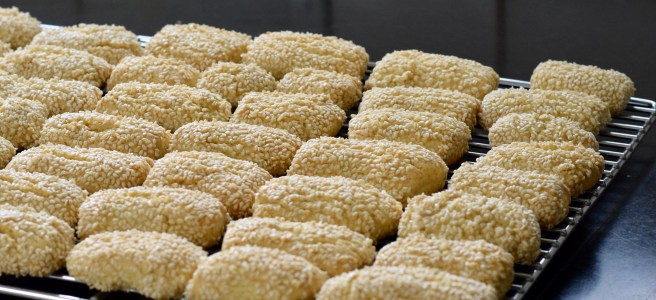
Such was the case when, after many attempts, I came up with a recipe for these Italian Sesame Seed Cookies. When I finally got it right, I fixed a cup of coffee and dunked the cookie in; the ultimate taste test. The taste was just as I remembered: light, buttery, nutty, and slightly crunchy, all of it made even more flavorful by the milky coffee. I didn’t normally drink coffee as a young girl, but when the sesame seed cookies were out, my grandmother gave me a cup so I could dunk with everyone else. Heaven on Earth.

Sesame Seeds

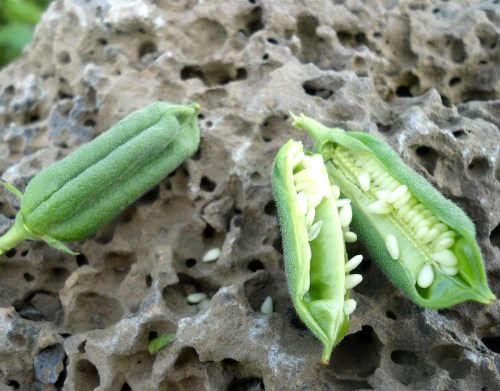
Sesame seeds come from the fruit pod of the sesame plant.

Once the pods dry, they open up and the seeds fall out. Open Sesame! I was so enamored by the process, I grew my own small crop.

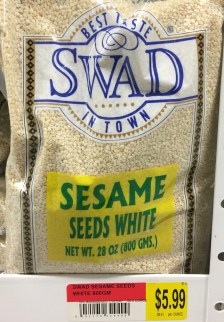
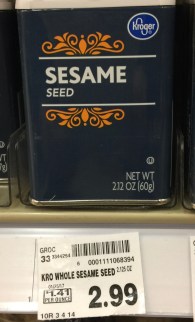
When baking with sesame seeds, use hulled, untoasted seeds. I purchase them at the Indian grocery store Patel Brothers in Nashville or from the bulk dispenser at Whole Foods. You need about two cups.


Life for many seeds and nuts laden with oils, sesame seeds become rancid when sitting in a cupboard for a long period of time. Thus, if you are not going to finish the package soon after opening it, store it in the refrigerator or freezer. A rancid nut or seed can quickly ruin any savory or sweet dish. Often, you can tell if the seeds or nuts are rancid simply by the smell. Even without a rancid smell, I do a taste test to be sure.

Ingredients:

1 cup butter, at room temperature
1 cup granulated sugar
3 large eggs
1 teaspoon pure vanilla extract
4 teaspoons baking powder
½ teaspoon salt
4 cups unbleached all-purpose flour

1½-2 cups untoasted sesame seeds
⅔ cup milk

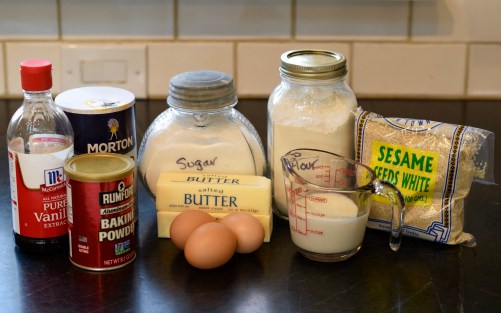
Mise en Place:

Instructions:
Preheat oven to 350º. Line two baking sheets with parchment paper.

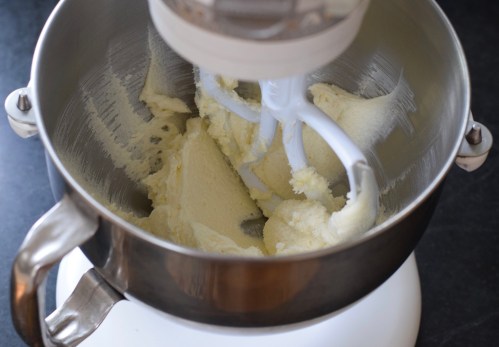
Cream butter in a mixing bowl on medium speed for one minute. Add the sugar and beat for another minute until the batter is light and fluffy.

Add eggs and vanilla and mix one more minute, still on medium speed.

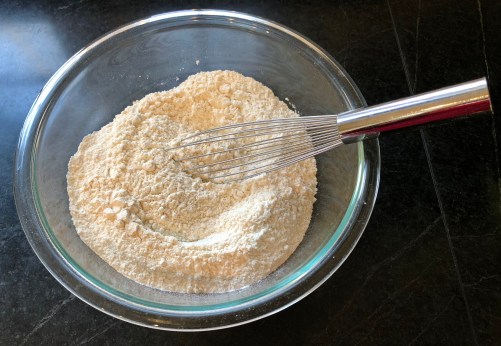
Combine baking powder, salt, and flour with a wire whisk.

fullsizeoutput_1ee4

Add dry ingredients to batter. Mix on slow for 30 seconds. Do not overwork the dough.
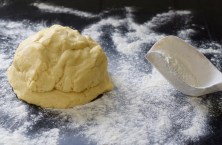
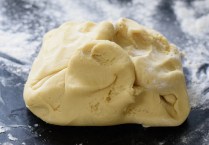
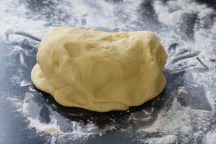
Spread flour on countertop and fold dough over on itself about ten times.

Divide dough into four equal sections.

Roll each portion into ¾-inch thick ropes and slice those into two-inch pieces. My relatives would pull off a clump of dough and roll each cookie into a small oval log, but I like to do it this way because there is less handling of the dough.

Set-up two wide-mouthed bowls, one with milk and one with sesame seeds. Put about a cup of milk in one and 1½ cups of sesame seeds in the other. Pick up about 5 pieces of dough and put them in the milk. Then lift each piece of dough and roll it in the bowl of sesame seeds.


Arrange dough on parchment-lined sheet pans.

Bake for about 25-30 minutes, or until cookies become lightly browned. Let cool for five minutes and then move cookies to a cooling rack.

Other Italian Faves:
Italian Ricotta and Lemon Cookies
Rachelle’s Italian Sausage, Onions, and Peppers
Grandma’s Italian Fried Cauliflower
@judyschickens Everyday Salad Dressing
50 Ways to Make a Frittata
Aunt Bridget’s Chicken Soup with Little Meatballs

Follow Judy’s Chickens on Instagram and Pinterest @JudysChickens.

If you enjoyed this post, consider becoming a follower. Be sure to press “confirm” on the follow-up letter sent to your email address.

© 2014-2020 Judy Wright. All rights reserved. Photos, videos, and text may not be reproduced without the written consent of Judy Wright.