Ellen’s Most Moist Zucchini Bread

I love this recipe for zucchini bread. When my children were young, we lived in one of those neighborhoods where there were lots of children, fenceless backyards, car pools, and lots of sharing of recipes. This was one of those recipes. Lucy, our perky neighborhood teen babysitter, used to ride her bike down Sneed Road to our house; believe me, my children were as happy to see her as I was. One day, she brought a loaf of her mother, Ellen’s, zucchini bread. It was unusually moist and dotted with colorful green flecks from the zucchini peel.

The flecks give the bread texture and color that make it visually appealing.
DSC_0313

The only change I made to Ellen’s recipe was to add more zucchini, nuts, and chocolate chips. One of my sons will not eat zucchini but loved this bread.
DSC_0352

What to do with a baseball bat-sized zucchini?

Like for many of us, I often make zucchini bread when I find one of those baseball bat-sized zucchinis in the garden. If you do that, too, be sure to remove the large seeds before grating the flesh by quartering the zucchini into long strips and cutting out the triangular-shaped seed section. For large amounts of grating, I use the shredder blade in the food processor. Put the grated zucchini in a colander until ready to use. They will start to sweat, and you want that liquid to drain away.

Have no idea how I missed this!  7 pounds 6 ounces
IMG_0047

DSC_0038 DSC_0047

DSC_0066 DSC_0089

Yield: 2 loaves or 1 loaf and 2 mini-loaves

Ingredients:

DSC_0220

3 eggs
1 cup canola oil
2 teaspoons vanilla extract
2 cups granulated sugar
3 cups all-purpose flour
1½ teaspoons salt
1 teaspoon baking soda
¼ teaspoon baking powder
1 tablespoon cinnamon
1 pound unpeeled zucchini (a tad over 3 cups when grated)
1 cup walnuts or pecans, coarsely chopped
(Optional: add ½ cup chocolate chips)

Mise en Place:
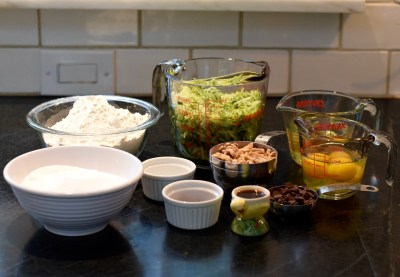
DSC_0240

Instructions:

Preheat oven to 325º if glass pans, 350º for metal pans. Grease loaf pans.

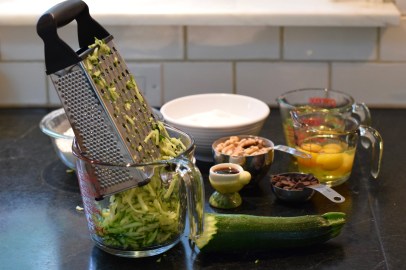
Coarsely grate the unpeeled zucchini and set aside. If liquid forms at the bottom of the container while it rests, discard it.
DSC_0226

Beat eggs in a mixing bowl for 30 seconds on medium speed.

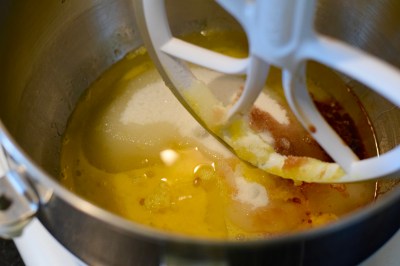
Add the oil, sugar, and vanilla and mix for two more minutes on medium-low speed. Beating these ingredients together at this point in the recipe is one of the things that gives fruit bread “lift” by incorporating air into the batter.
DSC_0244

Add the dry ingredients: the flour, salt, baking soda, baking powder, and cinnamon. Remember, when measuring flour, spoon it into a measuring cup and level with a knife as opposed to packing the flour into the measuring cup by dipping it into a package of flour. You can read more about measuring ingredients in my home ec post.

Mix on slow speed for 30 seconds. Mix gently, you don’t want to stimulate the gluten in the flour to become tough and elasticky.
DSC_0246

Add the nuts and zucchini and mix on slow speed until just mixed, about 30 seconds max.
DSC_0248

If you plan to add chocolate chips, stir them in now.

Pour batter into prepared pans.
DSC_0255

Cook for about an hour, or until a knife inserted in the center of the loaf comes out clean. Cool in pan for about 15 minutes and then remove from pan and allow to continue cooling on a wire rack. I usually need to use a knife to loosen the bread from the edges of the pan before turning it over to release it.
DSC_0137

My friend, Patty, describes how she made the recipe gluten free in the Comments section. Patty also substituted 3/4 cup of honey for each cup of sugar. This makes for a darker bread that is delicious, but needs to be called Honey Zucchini Bread because the final flavor left in your mouth is honey instead of zucchini.

I never thought of adding chocolate chips to this recipe until I started making my cousin’s recipe for pumpkin bread: Marion’s Crazy Good Pumpkin Bread with Chocolate ChipsI thought her recipe was great with chocolate chips, and since zucchini and pumpkin are in the same family, I thought, “Why not?” It was delicious! Surprisingly, not too sweet.
DSC_0026 (1)

Related Posts
Marion’s Crazy Good Pumpkin Bread with Chocolate Chips
Fruit and Nut Bread
Pumpkin Bread Pudding with Caramel Sauce and Whipped Cream
The Biscuit King

LET’S STAY CONNECTED!

Follow my photos of vegetables growing, backyard chickens hanging out, and dinner preparations on Instagram at JudysChickens.

Never miss a post: sign up to become a follower of the Blog.

© 2014-2017 Judy Wright. All rights reserved. Photos and text may only be used with written consent.

Blanched String Beans with Vinaigrette

We all have our go-to ways of preparing vegetables for dinner. While I may have a million ways of cooking veggies like zucchini, sweet potatoes, and cauliflower, when it comes to string beans and carrots I’m pretty set in my ways.  For carrots, I love this recipe: Amazingly Delicious Sautéed Carrots.

DSC_0908

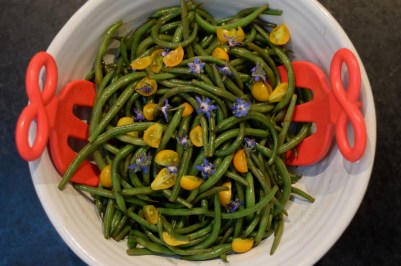
For string beans, it’s the way I’m about to show you: blanched and tossed with a vinaigrette dressing. Floral decorations optional!

DSC_0291

Ingredients

fresh string beans
@judyschickens Everyday Salad Dressing
1 tablespoon balsamic vinegar (optional)
edible flowers and sliced tomatoes (optional)

Mise en Place
DSC_0264

Prepping String Beans:

If the string beans are fresh, you only need to pinch or clip off the stem end. If they are oldish, I clip both ends. I find it’s quick and easy to do this clipping with scissors.
DSC_0243

How to Blanch a Pot of Beans (or most any vegetable, for that matter)

Bring a pot of salted water to a rolling boil over high heat. Add the prepped veggies.

Keep the heat on high and bring the water back to a full boil. This takes about four or five minutes.

Once the water comes back to a rolling boil, cook for just one additional minute and then remove the pot from the heat and promptly strain the veggies through a colander.

DSC_0275

Cover the colander with a plate and let steam for ten minutes, five minutes if you want crunchier veggies.

DSC_0277 DSC_0278

Add vinaigrette and toss. Allow to set for about an hour. Toss again before serving. Serve chilled or at room temperature. I prefer chilled.

DSC_0280

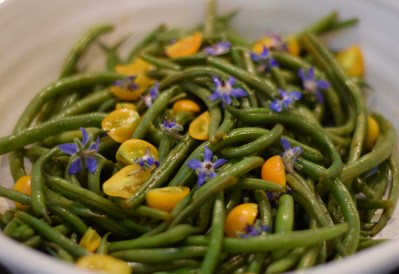
Don’t stop there. Try decorating with edible flowers and cherry tomatoes for color. Here I used borage flowers and Sun Gold tomatoes from my garden. Add just before serving.

DSC_0284

These beans are great to eat chilled the next day as leftovers.

This is a nice dish to use for feeding a crowd because you can make it ahead of time.

To make this a hot side dish:

You could skip the vinaigrette and add butter while the beans are still hot and serve as a hot side dish.

Related Posts
Sliced Beet Salad
Amazingly Delicious Sautéed Carrots
Cauliflower Three Ways: Roasted, Blanched and Mashed
Roasted Ratatouille

LET’S STAY CONNECTED!

Follow my photos of vegetables growing, backyard chickens hanging out, and dinner preparations on Instagram at JudysChickens.

Never miss a post: sign up to become a follower of the Blog.

© 2014-2017 Judy Wright. All rights reserved. Photos and text may only be used with written consent.

The Classic Pimiento Cheese Sandwich

Pimiento cheese, stack apple cake, mini chocolate chess pies, apple hand pies, fried okra, BBQ (aka pulled pork), hot chicken, and sorghum and butter spread over a hot buttermilk biscuit. These are all foods I never heard of until I moved to the South.  Now I adore them.

DSC_0341

Most of these Southern delicacies, like the stack apple cake, don’t show up on the table often, but when they do, I’m all in. Even though I have been given recipe cards for all these foods,  I have to admit; I’m not comfortable preparing them and tend to step aside and let the Southerners in the room make them. That’s about to change now that I started regularly making food writer, Jennifer Justus’s Pimiento Cheese recipe from her cookbook, Nashville Eats. In factNashville Eats has pretty much all of my favorite Southern foods featured in it and is my new go-to hostess gift when visiting out-of-town friends.

DSC_0099

The very first time I opened Nashville Eats, I was drawn to the recipe for pimiento cheese. Even though almost every Southern family has their own version of this cheese spread, Jennifer’s list of ingredients appealed to me: it used a mixture of real cheddar cheeses, it wasn’t too mayonnaisey or sweet, and it had a bit of heat in it. I was also drawn to the photo of the finished product; alas, it wasn’t puréed or whipped looking either. I remember immediately turning the corner of the page down indicating a pimiento cheese sandwich was in my future.
DSC_0020

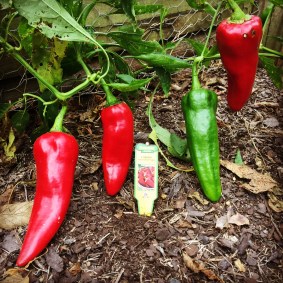
Pimientos, which is Spanish for peppers (the vegetable, not the spice), are small, red, heart-shaped, sweet peppers. I’ve never seen them for sale in anything but that small cute iconic jar with the golden-yellow top. That is about to change, too, because yesterday,  I happened to see two small pimiento plants at the garden nursery which I grabbed and immediately planted in my garden. Soon, I’ll be able to try roasting my own pimientos.
img_7936 img_2645

Jennifer’s recipe makes about 1½ cups, but since I have doubled the ingredients each time I have made it, I went ahead and doubled the recipe for the blog. This recipe makes one full pint. It took four of us one day to polish it off — first in sandwiches for lunch, and then later, served with crackers, as an appetizer.

Do not use pre-shredded cheese as it is laden with a fine powder that keeps the cheddar pieces from sticking together. Also, I like to use Hellman’s or Duke’s “real” mayonnaise.

Ingredients
DSC_0301

8 ounces extra-sharp white cheddar cheese, shredded
8 ounces mild yellow cheddar, shredded
1 8-ounce jar diced pimientos, drained
½ cup mayonnaise (not the sweet, whipped stuff)
1 tablespoon Worcestershire sauce
Louisiana Hot Sauce to taste, about 6-12 drops
¼ teaspoon ground black pepper
2 tablespoon chopped parsley leaves (set aside)

Mise en Place
DSC_0325

Instructions

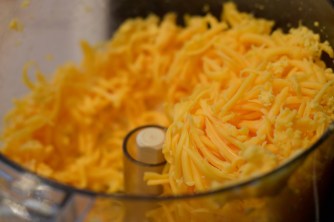
Shred the two varieties of cheese in a food processor, using the shredder apparatus, or shred by hand with a cheese grater.
DSC_0309 DSC_0313

Next, remove the shredder apparatus from the processor and install the regular cutting blade. Add the mayonnaise, pimientos, Worcestershire, hot sauce and ground pepper into the processing bowl.
DSC_0328

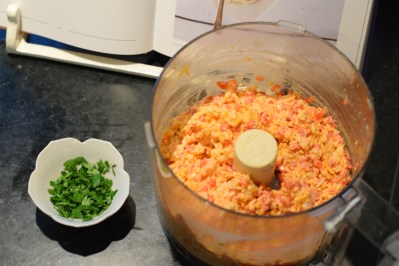
Push the pulse button five quick times until the mixture is just blended and not puréed. This should be the equivalent of simply stirring the mixture together, but without having to dirty another bowl. Refrigerate for 1-2 hours before serving to give the flavors a chance to meld. Use the chopped parsley as a garnish.
DSC_0335

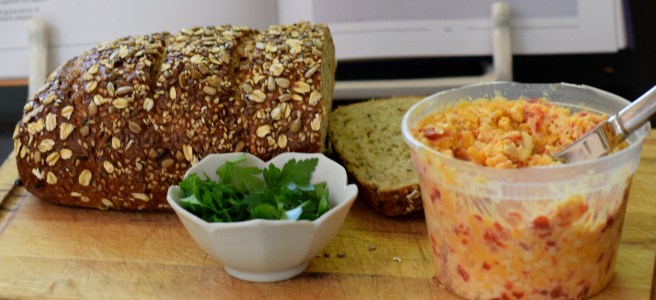
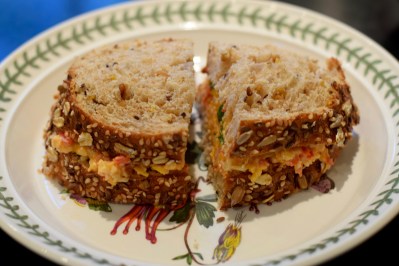
I like pimiento cheese spread on soft multigrain bread.
DSC_0345

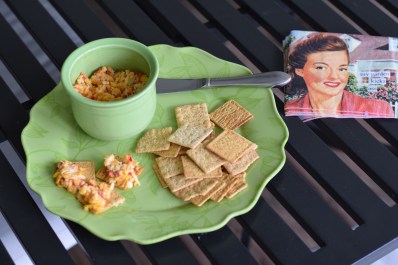
It doubles as a terrific appetizer.
DSC_0087

My family loved this. Jennifer has another version of pimiento cheese in her book made with goat cheese that sounds amazing. I see a lot of possibilities for variations in this recipe by using my beloved garlic pepper instead of the plain black pepper, or adding a few of the many spring onions growing in the garden now, and maybe using arugula leaves in the sandwich, too. I’ve also heard pimiento cheese makes for a killer grilled panini sandwich.Yum!

He Said, She Said

And, now, from my side of the family — I like to make my Croation cheese spread, which uses fresh herbs and ingredients very familiar to me!

DSC_0347

LET’S STAY CONNECTED!

Follow my photos of vegetables growing, backyard chickens hanging out, and dinner preparations on Instagram at JudysChickens.

Never miss a post: sign up to become a follower of the Blog.

© 2014-2017 Judy Wright. All rights reserved. Photos and text may only be used with written consent.
How to Make Catfish Traps: AKA Noodle or Jug Fishing

The first time I went to Lake Barkley, I sat on the edge of the lake in the quiet of the morning and watched an energetic family motorboat from one buoy to another, pulling in fish and laughing as they did so. I had never seen this way of catching fish, but I was hopeful this Rockwellian moment could one day be a part of my future. Indeed, being who I am, I went ahead and imagined my husband driving a boat full of grandchildren …

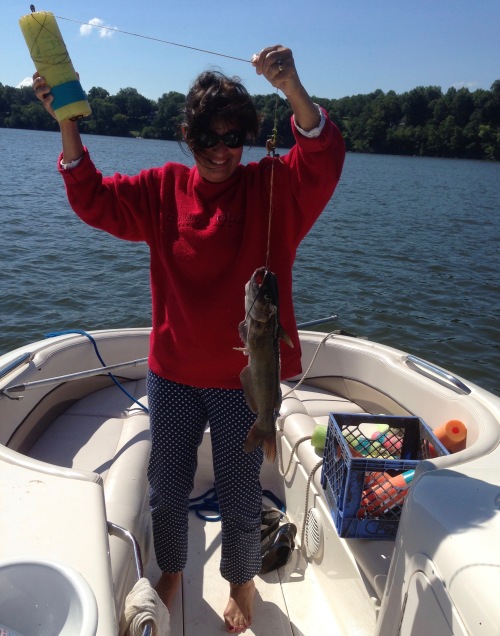
Later in the day, we met the family who had been out in the boat, our new neighbors, Pat and Dave Malone. They explained how to “jug” fish and showed us their morning catch. We were hooked. My recent enthusiasm for catfishing ensured a trip later in the day to Walmart to buy supplies. My husband’s curiosity and DIY nature ensured he would have the noodle lines rigged and set that evening. Luck secured a catch the following day.
lake barkley, ky july 4th week

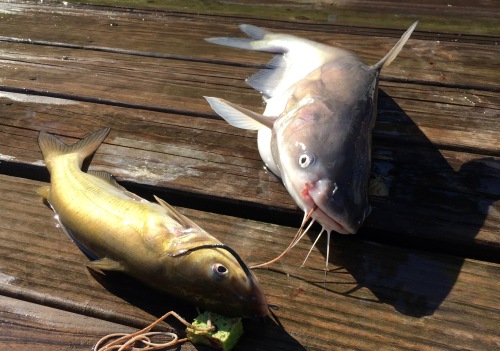
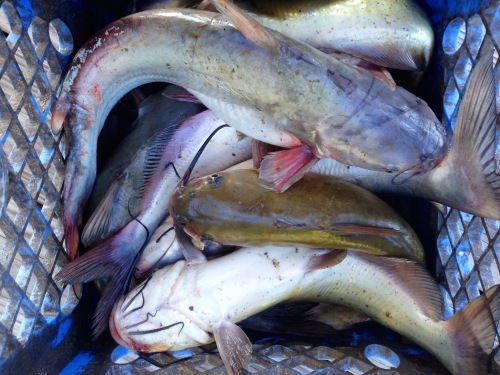
The most common types of catfish in Lake Barkley are the scaleless Channel Catfish and the Blue Catfish. When the Channel catfish are young, their skin is greenish-gray with black spots. The spots go away as they age, and their skin turns gray. The fish on the right with a white belly is called a Blue catfish. The one on the left is a Channel catfish (thanks, Bruce!).
IMG_7720

Here are some facts about catfish that might help should you decide to go noodle fishing:

  • Catfish are nocturnal bottom feeders.
  • Their peak activity and eating time is from dusk to midnight.
  • They have cat-like whiskers called barbels (that do not sting).
  • Their barbels are receptors for taste, smell, touch, and wake-tracking prey.
  • Their razor-sharp dorsal and side fins can prick you.
  • Their flat heads make it easier to skim the lake floor for food.
  • They’ll attempt to eat anything, dead or alive, so this, the most foul-smelling bait on earth, is an excellent choice to lure them in.

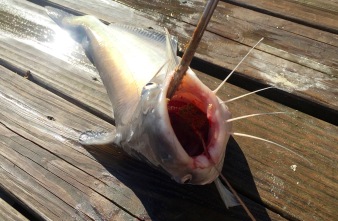
Catfish do not have teeth. Instead, they use suction to pull food into their mouths as they swim.
IMG_7728 (1)

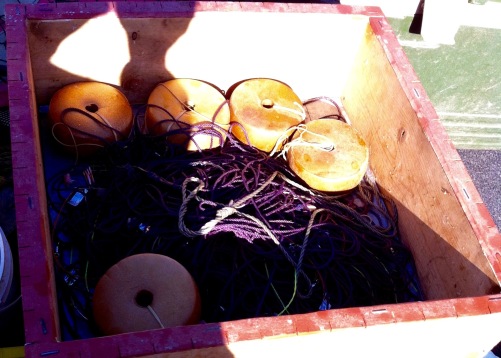
I’ve seen people catch catfish in two ways:.One method is to use a long trotline weighted down with evenly spaced weights and large hooks. This one had about 100 weights and hooks.
catfish

The other method is known as noodle fishing.

Here is how to noodlefish: In the late afternoon, place your premade collection of baited noodles in shallow water. The following day, go out and pull each noodle in. We usually catch two or three fish out of the twelve noodles we set. Sometimes, we have to search for the noodles if the wind, or a strong fish, has dragged one away. The hunt for a noodle that has drifted across the lake is part of the adventure.

How to rig a catfish noodle (makes 4):

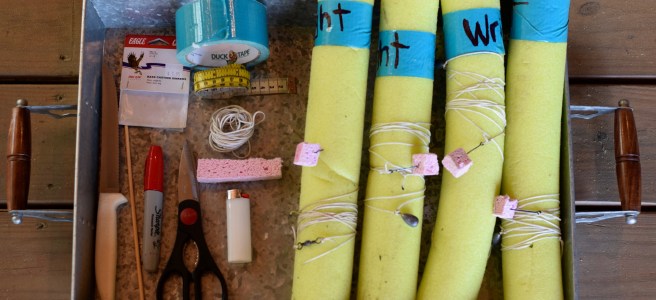
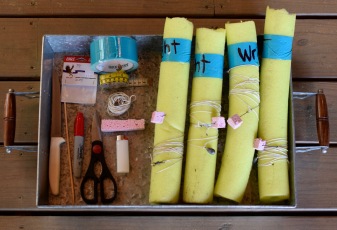
Supplies:
DSC_0085

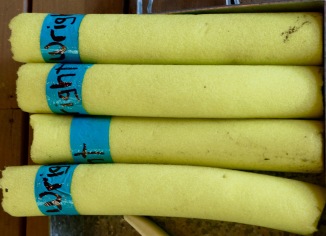
1 four-foot long yellow or orange swim noodle and a knife to cut it into twelve-inch segments.
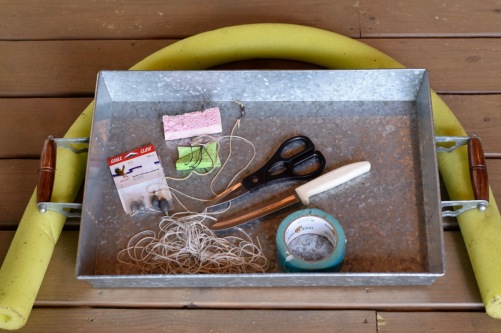
duct tape, scissors, and a Sharpie marker
40 feet of thin, braided, polyester string and a lighter to burn and seal the ends
1 tape measure to measure the lengths of string
4 large fishing hooks
4 half-ounce casting sinkers (weights)
1 dry sponge
1 skewer to make holes in the noodle
1 jar of stinky catfish bait (we use Sonny’s Super Sticky Channel Cat Bait)

Instructions:
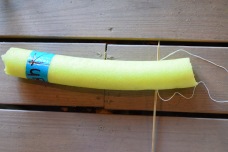
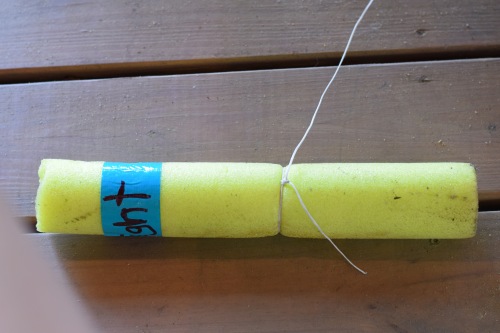
Cut a swimming noodle into four or five equal parts. Use bright yellow or orange noodles to spot them bobbing in the water from afar. Use colorful duct tape to make a stripe on one end to better distinguish your noodle stash from others. Or, just write on the noodle!
DSC_0092

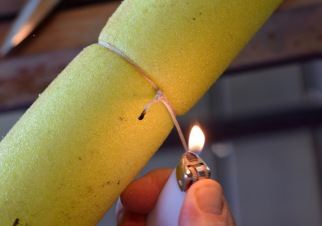
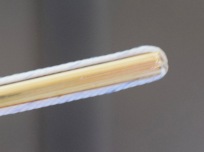
Cut ten-foot-long lengths of string, one for each noodle. Use a lighter to melt and seal each end of string so it won’t unravel.
DSC_0104 DSC_0117

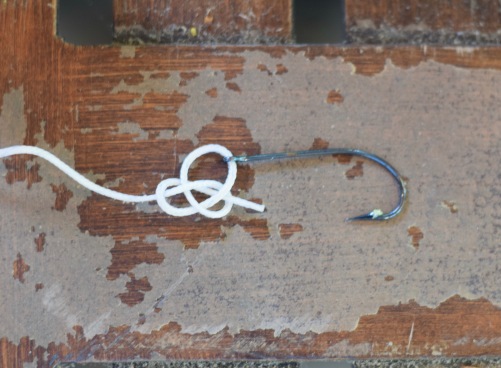
On one end, attach a giant fish hook. Use a bowline knot to secure the attachment.
DSC_0098

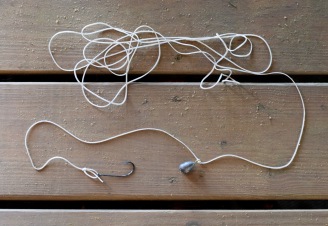
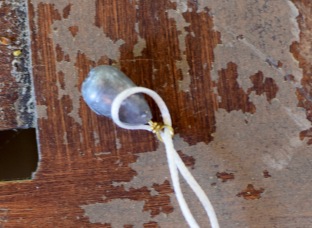
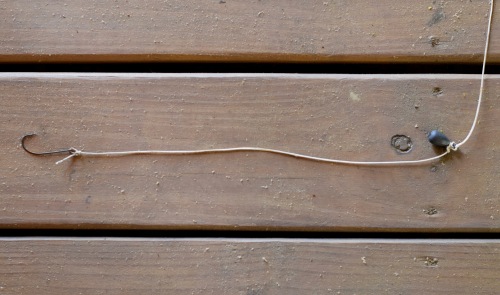
About 12 inches from the hook, attach a weight by making a loop with the string, running the loop through the weight’s clasp hole, and then pulling the weight through the loop of string. Next, tie a knot to secure the weight in place.
DSC_0101 DSC_0103

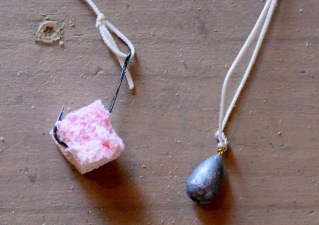
The finished hook and sinker should look like this:
DSC_0094

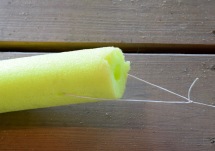
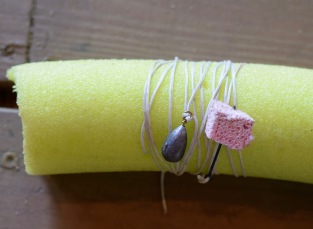
Now, for the other end of the string: Using the pointy end of a skewer, make a hole through the noodle as shown. Make a little slit on the skewer’s flat end with the edge of a scissor. Slide the string through the slit, thus creating a guide so you can run the string through the small hole. Knot the string around the noodle, as shown.
DSC_0126 DSC_0107 DSC_0110

Alternatively, you could just attach the string to the tube this way:
DSC_0116

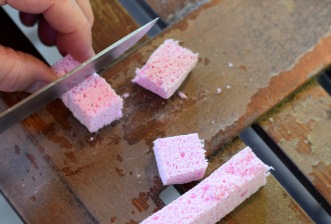
Cut a sponge into little squares. Make extra squares to store in your tackle box. Secure one sponge on each hook.
DSC_0119 DSC_0124

With the hook and sinker attached, wind the string around the noodle, tuck the hook into the styrofoam for safety, and store until ready to fish.
DSC_0125 DSC_0132 (1)

How to noodle fish:

Before setting your noodles in the water, dip the hook with its dry sponge into the gooey catfish bait. Throw the baited noodle line into the water. Repeat until all the noodles are baited and tossed into the water. Invite others (such as guests) to do this stinky baiting job whenever possible. Thanks, Rex!

Throw each baited noodle into shallow water that is about eight feet deep. Since catfish are bottom feeders, you want the weighted hook to sink to their level.

The next day, get up early and check your noodles for fish. We use a mooring hook to grab the noodles. The noodles sometimes drift.,
:IMG_7683 IMG_7685 IMG_7689

Ta Da!
IMG_7735 (1)

How the pros do it

Compare our single hook method to how the pros do it … Early one summer morning, while we were out pulling in our scrappy noodle lines, we saw a husband and wife team hauling in one fish after another from a “trotline.” Mouths agape, we took our boat over to watch and visit.

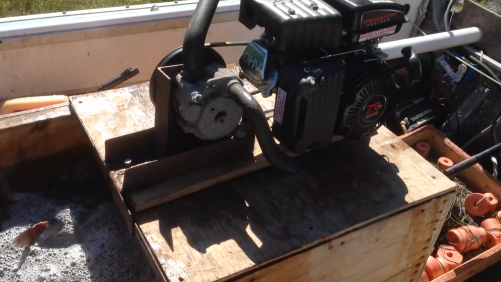
The couple, experienced fishermen, had an interesting way of keeping their fish fresh. They had a long, thin, wooden tub in the center of their boat with a gasoline-powered engine that kept the water churning.
Screen Shot 2016-05-11 at 8.18.11 AM

We noticed the couple throwing the small fish (which looked huge to us) back into the water. They must have seen how impressed we were with what they called small because ten minutes later, they waved us over and gave us a bucketful of their “rejects.” We gushed with thanks.
catfish lake barkley

How We Cook Catfish

One weekend, my husband and visiting friends, Mary and Ed Carter, showed us how they prepare catfish. It’s become our traditional way of cooking it now. This recipe makes enough for four people when used as an appetizer. The fish was light, flaky, and delicious.

4  6-ounce catfish fillets (approximately)
1 cup garlic croutons, crushed
1 tablespoon Tony Chachere’s Creole Original Seasoning or seasoned salt
1 teaspoon lemon garlic pepper
canola oil
lemon slices for garnish

In a ziplock bag, crush the croutons into large crumbs. Add the fish and remaining seasonings. Gently toss until fillets are well coated.

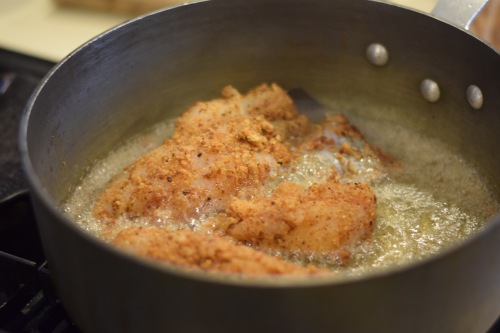
Meanwhile, heat canola oil in a cast iron skillet (about 1 inch deep). When a drop of water sizzles in the oil, it is ready for the fish. Gently lay the fillets in the hot oil. When lightly browned and flakey, flip over and cook the other side. Serve hot.
DSC_0964

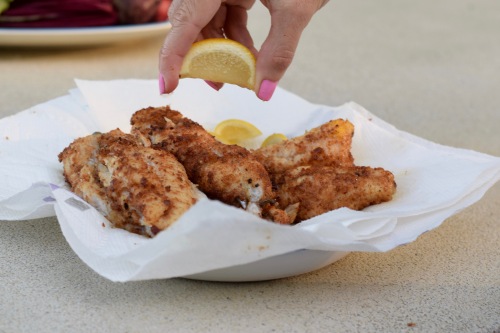
Squeeze with lemon juice before serving.
DSC_0007

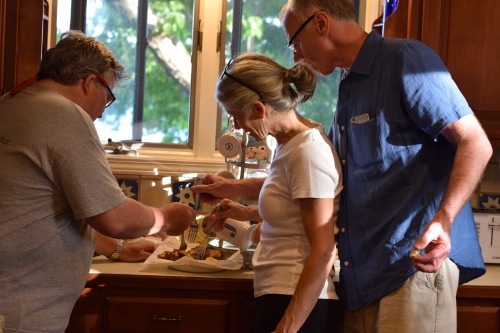
Enjoy! Here is our Southern Living magazine-style photo moment.
DSC_0024

The Lake Barkley State Park and Marina has room and boat rentals and is ninety miles from Nashville.
Unknown

LET’S STAY CONNECTED!

Follow my photos of vegetables growing, backyard chickens hanging out, and dinner preparations on Instagram at JudysChickens.

Never miss a post: sign up to become a follower of the Blog.

© 2014-2023 Judy Wright. All rights reserved. Photos and text may only be used with written consent.