Roasted Fig Preserves with Lemon and Thyme

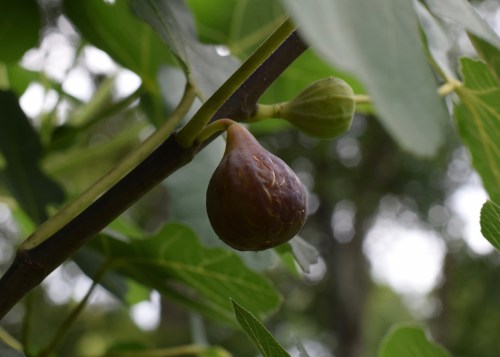
This is what a lush, ripe Brown Turkey fig looks like. Notice the stretch marks. That means it is bursting with flavor.
During fig season, I can see these dark, plump jewels sunning themselves on the tree from every vantage point in my backyard. First, they tempt and then they taunt me until I finally find myself risking life and limb to get to them. Often, I  have to climb a ladder and use a long garden tool like a bow rake to grab and pull down a limb, and then reach even further to pluck one from a branch. This all happens first thing in the morning while the outside temperatures are still tolerable. My friend Linda calls it #pajamagardening.

There are others who desire the same figs. I am in constant competition with small birds, the squirrels in the neighborhood, and my chickens. They know they can eat figs to their heart’s content without fear of being seen by predatory hawks when under the canopy of the broad, palmate-shaped fig leaves.

Here’s a video of one of my chickens reaching for a fig. It is best watched in full screen mode. My friend Carrington calls it #rubberchicken.


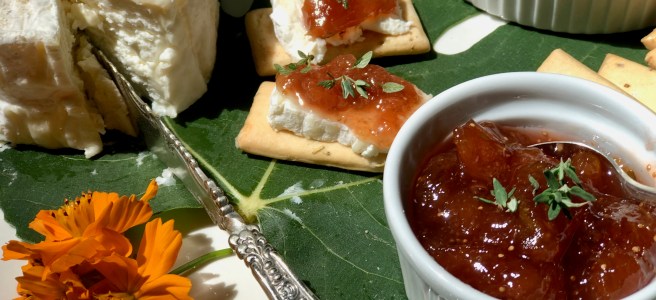
Ina would use the big leaves to line a cheese platter. Just sayin’.

Growing Figs

Fig trees are native to tropical climates, but a few varieties, such as Brown Turkey and Chicago Hardy, have been cultivated to grow in cooler climes (zones 6-11). We planted our tree in front of a southern-facing brick wall so the heat stored in the bricks could warm the tree during winter. Additionally, and this was purely happenstance, our air-conditioner’s condensate pipe drips over the roots all summer long keeping the tree well-hydrated.

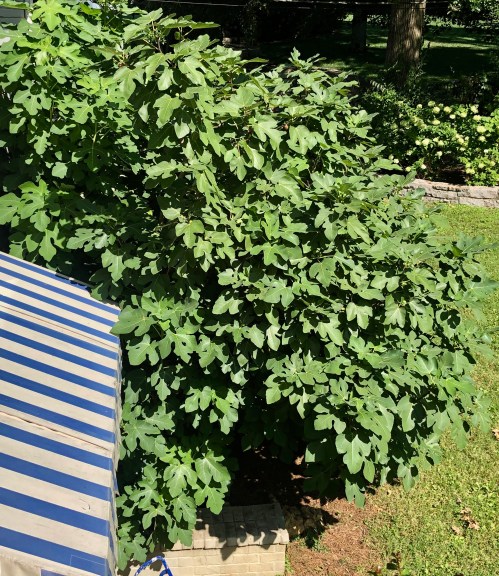
Our fig production and access capabilities quadrupled after I pruned the tallest limbs by almost half last March. Later, in April, my husband fertilized the roots with chicken manure. Now the tree is shaped like a sprawling ball and is loaded with figs.
Everything you wanted to know about fig reproduction, but were afraid to ask.

One of my hobbies is studying plant reproduction. All fruits and vegetables start with a flower that once pollinated starts to grow a pod with either one seed in it, like a peach, or many seeds, such as apples and tomatoes. Botanically, the seed pod is known as an ovary. Aggravating as it may feel when a squirrel or chipmunk runs off with a peach or a tomato you have patiently watched ripen, they are doing what nature intended — they are dispersing seeds. Mother Nature doesn’t care if we like our fruits and vegetables. She cares about plant reproduction and species survival.

With that in mind, the first thing I noticed when my tree started producing fruit was the absence of flowers. This photo was taken on April 7th as fig pods and leaves appeared. The pods emerged from the branches but were never preceded by a flower.

This begged the question, How does the fig reproduce without flowers? It turns out the flowers are inside the fig. Hundreds of them! The color inside a fig comes from its flowers.

Last summer, the producer and host of Nashville Public Television’s The Volunteer Gardener came to my garden to film a segment featuring Jeremy Lekich, an expert on edible landscapes and owner of Nashville Foodscapes.   In the show, Jeremy takes viewers around my yard and introduces them to many unusual edibles and explains fig pollination. You can watch the segment here.

By virtue of where the flowers are located, pollination needs to take place inside the fig. To move pollen from a male fig to a female requires the presence of specialized fig wasps who enjoy a symbiotic relationship with figs. The wasps get a place to reproduce and the figs get access to highly specific pollinators. I found this awesome video that shows how microscopic wasps crawl into figs. This other video from PBS’s Gross Science takes it from there describing what happens next in reproduction.

New varieties of common figs, like my Brown Turkey, have been cultivated to not need a wasp for pollination. The female trees are asexual, and the seeds produced are not viable — they are empty seeds. You will see lots of them when we finally get around to cooking the figs!
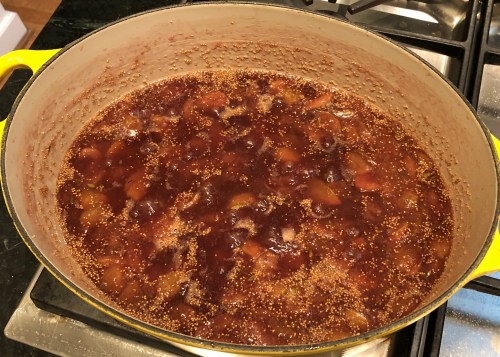
Every Christmas I make my grandmother’s Sicilian fig cookies. The recipe calls for dried Calimyrna figs. Calimyrnas are a Californian cultivar of the Turkish Smyrna fig (Calimyrna = California + Smyrna) that does require a wasp for pollination. They produce “true seeds” — seeds that are viable for reproduction. Fertile seeds are thick and crunchy, and have a nutty flavor preferred by bakers. They are the figs used to make Fig Newtons.

How to Make Fig Preserves

I cooked many not-so-delicious batches of fig preserves  on the stove before it occurred to me to try roasting them with herbs as I do my strawberry jam. The results were amazing. Roasting intensified the depth of flavor exponentially. They were so good, I took all my reject batches, mixed them together, and roasted two trays for about an hour. Suddenly, they were all tastier, too.

Ingredients:

4-5 pounds fresh figs (12 cups, once stemmed and quartered)*
5 cups granulated sugar
⅓ cup freshly squeezed lemon juice
1 tablespoon balsamic vinegar
one bunch of thyme sprigs (⅓ ounce) or 3-4 long stems of fresh rosemary

*Today, I saw four varieties of figs for sale at Trader Joe’s!

Instructions:

Remove stems and quarter figs.
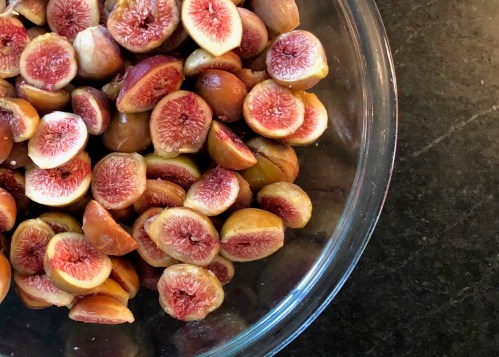
Place in a lightly-greased heavy-bottomed pot.

Add sugar and acids and stir. The amount of sugar sounds like a lot, but you need sugar to preserve fruit. Acids help fruit release its naturally occurring pectin. Once mixed, place in refrigerator and allow to macerate for a minimum of two hours or overnight.
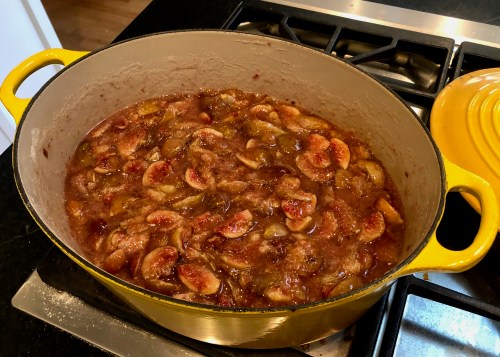
When ready to cook, preheat oven to 175º. Add thyme or rosemary and simmer on low heat for about twenty minutes. If using thyme, strip leaves before stirring in. If using rosemary, do not strip leaves; leave stems intact and remove before bottling.

Pour hot figs into two rimmed sheet pans and roast for about 4-5 hours.
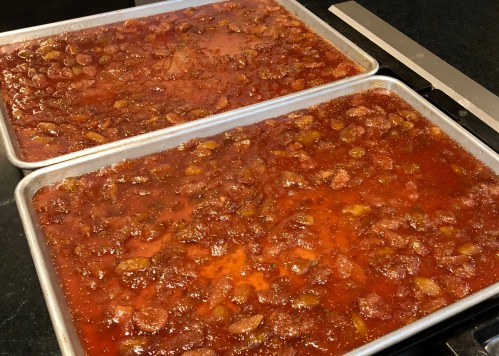
One way to tell if they have cooked long enough to gel once cooled is to draw a path through the figs and see if the two sides stay separated. If they do, they are ready. You should be able to smell them if they are sufficiently roasted. If you overcook them, they will become thick and gummy when cool. Better to undercook than to overcook.

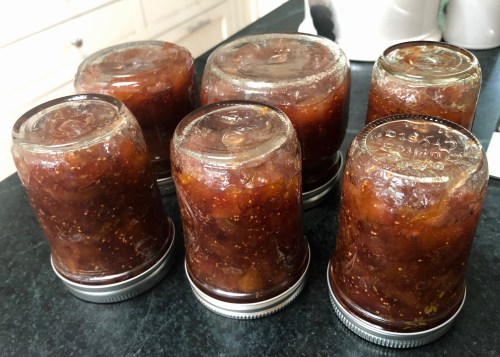
Pour hot preserves into clean jars, wipe the rims, cover with screw top lids, and turn upside down while they cool. I store them in the fridge, where they should be good for two months.,
I’ll end this story with one last video of my chickens eating figs in the early morning hours.


What are my favorite ways to enjoy fig preserves?

By the spoonful — just out of the oven.
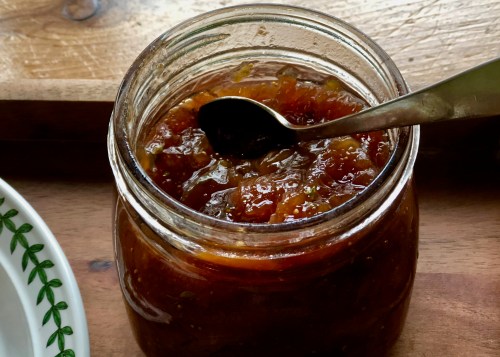
My cousin, Marion, served the fig preserves over a delicious blend of cow, sheep, and goat milk cheeses called Rochetta. It was delish. As soon as I got home, I bought a similar cheese called La Tur at Whole Foods.

I often have fig preserves spread over Homemade Ricotta on toast for breakfast, or I’ll make an almond butter and fig sandwich for lunch.

I love brie and fig paninis. Hard to get a photo of the finished product with these crazy-good sandwiches, though.

Please let me know if you make the preserves!

Related Posts:
How to Make Homemade Whole Milk Ricotta
Oven-Roasted Strawberry and Rosemary Jam
Homemade Grape Jelly
Crab Apple Jelly

LET’S STAY CONNECTED!

Don’t miss a recipe! Become a subscriber and have every post delivered to your Inbox.

Follow my stories about how to grow vegetables in your backyard, raise a small flock of chickens, or come up with healthy ideas for dinner on Instagram and Pinterest at JudysChickens

Always check this website for the most up-to-date version of a recipe.

© 2014-2019 Judy Wright. All rights reserved. Photos, videos, and text may only be reproduced with the written consent of Judy Wright.

Lemon Tree Very Pretty

Inspiration. You never know whence it will come.

Last January, my friend Colleen posted a photo of a bowl of bright Meyer lemons on Instagram with a story about a day spent making lemon shortbread and lemon zest ice cubes. The caption read the lemons were grown by our mutual friend and neighbor, Jennifer.

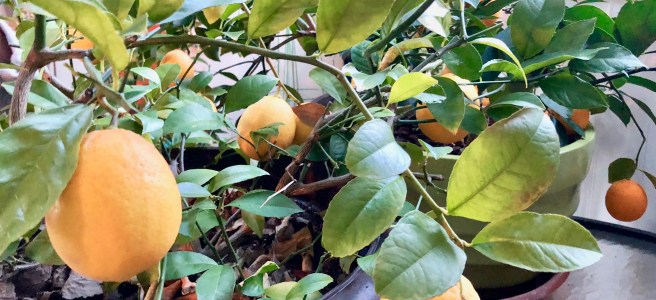
Jennifer has been growing citrus trees in middle Tennessee for five years. The trees summer in her backyard and are brought inside to her garage to winter-over. As soon as I saw the photo of the lemons I texted Jennifer to see if my husband and I could walk over to see her garage grove. All told she had fifteen plants: lots of lemons, a few limes, and one each of orange and tangerine.

The Meyer lemon trees were loaded with fruit. This photo was taken after the big harvest that sparked Colleen and Jennifer to spend the day making cookies for their neighbors.

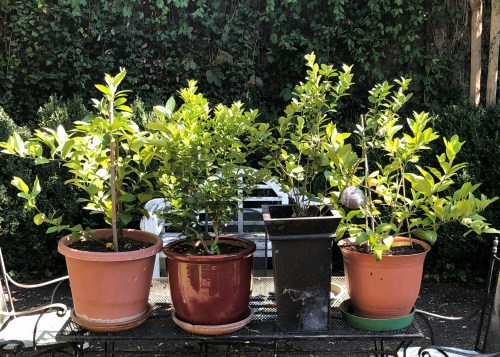
Thus inspired, in late April, when local nurseries started stocking lemon trees, my husband bought two Meyer Lemons and two Mexican Key Limes.

The plants were only about ten inches tall.

Here they are on October 21 after he re-potted them for the second time. He said he fertilized them once in the fall with Miracle Grow plant food for acid-loving plants. Since we had a mild fall, he kept them outside until mid-November.

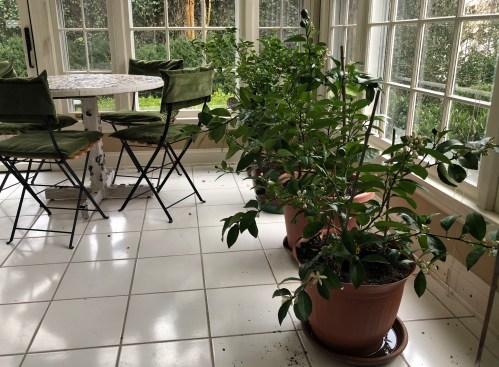
Here they are today in our unheated sun porch.

The bright, lemony, and, yes, happy fragrance of the flowers hits you when you first open the door. The smell is intoxicating.

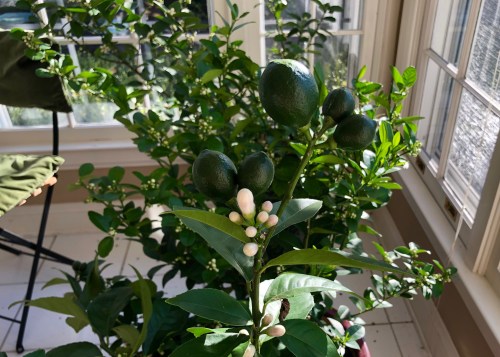
The two lemon trees have about twenty dark green, unripe lemons and hundreds of buds; most are still closed. The lime trees are behind the lemon trees. They only have five small limes growing but have hundreds of tiny buds.

The question is, In the absence of bees or wind, how are these flowers going to get pollinated? I asked my husband, the keeper of the citrus trees, how this was getting accomplished. He said he periodically goes out to the porch and uses a Q-tip to hand pollinate the open flowers.

As a brief refresher, with flowers, the male reproductive part is called the stamen. It consists of a long, thin filament topped by a yellow pollen sack called an anther. The female reproductive part, the center tube, is called a pistil. On the tip of it is a sticky yellow stigma. In the photo, you can see the stigma is wet (it’s shiny). I wouldn’t be surprised if some flowers are being pollinated by gravity alone as the pollen grains drop from their anthers.

One Thing Led to Another

Henry David Thoreau wrote in The Succession of Forest Trees. “Convince me that you have a seed there, and I am prepared to expect wonders.”

On Christmas Eve I stopped by our friend’s house for a quick visit and was excited when 7th grader Simon and 8th grader Julius showed me a collection of sprouted seeds they had nurtured over the month. Why? Because it’s science and who doesn’t enjoy a front row seat to the wondrous moment in nature when a seedling pokes its head out of the dirt and its leaves begin to unfurl?!

Their labeled collection of sprouting seeds contained packages of seeds wrapped in wet paper towels and stored in clear plastic bags. To help the germination process along for the lemon seeds, the boys had split the hard seed shells open before placing them in the damp bags to sprout. They gave me a bag with four lemon seeds in it.

I kept the bag on the kitchen windowsill until January 6th when I planted the seeds in dirt. Here they are seven weeks after they were first placed in the bag to germinate.

Flying Dragon Bitter Orange Tree

It is worth mentioning there is a deciduous citrus plant that grows well in Nashville called a trifoliate orange tree, AKA a Flying Dragon Bitter Orange Tree. My Flying Dragon is three years old and has yet to set fruit. I’m hoping for fruit this summer. Per Wikipedia: “The fruits are very bitter, due in part to their poncirin content. Most people consider them inedible when fresh, but they can be made into marmalade. When dried and powdered, they can be used as a condiment.”

Germinating lemon seeds and pollinating lemon flowers have been fun winter pursuits while waiting for February 14th, the big day. Yup, that’s the time-honored date in our area to plant peas and thus begin the 2019 growing season! To learn more about starting a kitchen garden check out this page.

What to do with all those lemons?

Our favorite way to use a glut of lemons is to make Italian Ricotta and Lemon Cookies.

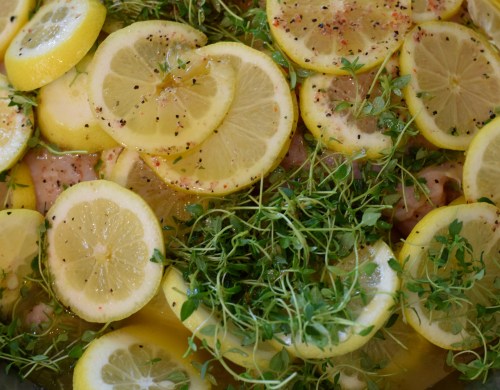
Another favorite is Lemony Grilled Chicken Breasts.

DSC_1143.jpg

Here is a lemony recipe I wrote for Mason Dixon KnittingSHEET PAN SUPPER: LEMON CHICKEN

This post shows you how to quickly peel citrus: How to Peel an Orange or Grapefruit Quickly.

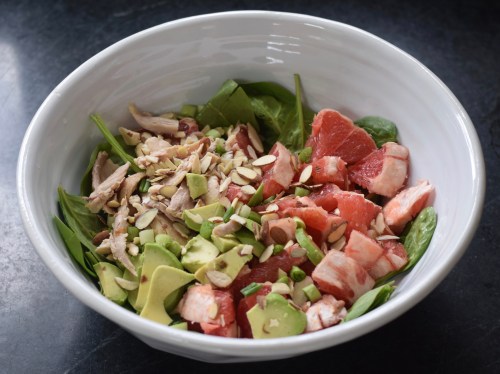
And how about a nice citrus salad to tide us over while we wait for homegrown tomatoes? Grapefruit and Greens: A Refreshing Winter Salad 

Don’t miss a recipe! Become a subscriber and have every post delivered to your Inbox.

Follow Judy’s Chickens on Instagram and Pinterest @JudysChickens.

Always check this website for the most up to date version of a recipe.  

© 2014-2019 Judy Wright. All rights reserved. Photos, videos, and text may only be reproduced with the written consent of Judy Wright.
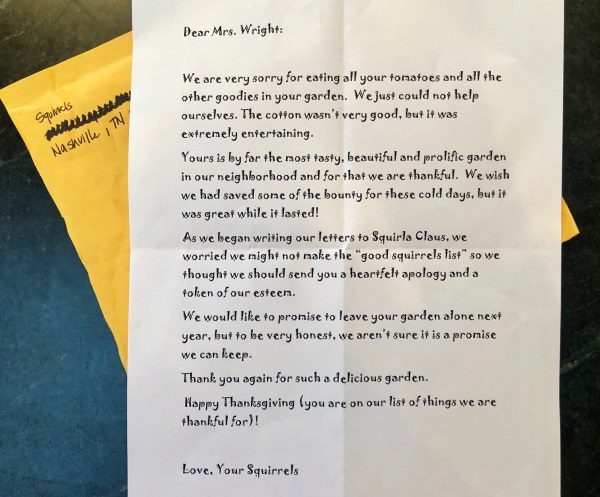
A Thanksgiving Letter from the Neighborhood Squirrels

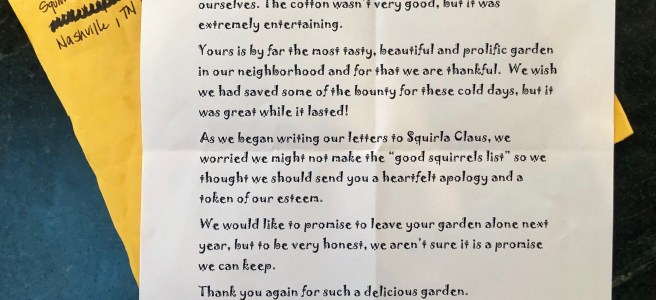
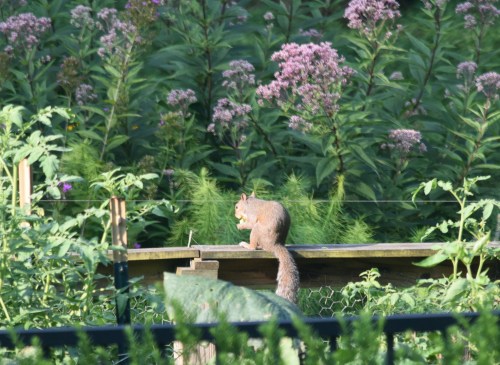
I am grateful for my friend, Carol Fike, who sent me an anonymous (at the time) Thanksgiving letter from the neighborhood squirrels who reside in my backyard. The squirrels ate every tomato (24 plants worth) in my garden while they were all still green. My frustration was well-documented on Instagram. When they finished with the tomatoes, they got started on and ate the starchy, green, cotton bolls.

Trying to figure out who sent this lovely, funny, thoughtful, letter, with a gift attached (from the squirrels), was the highlight of my week. Everyone needs a Carol in their life. Thanks and love you, Carol.

The squirrels were well-mannered; they carried their food to various tabletops around the yard before eating them.

Wishing all my readers a Happy Thanksgiving Day!

Thanksgiving Day Grace
Bless the food between us,
The home around us,
The family beside us,
and the love between us.

Don’t miss a recipe! Become a subscriber and have every post delivered to your Inbox.

Follow Judy’s Chickens on Instagram and Pinterest @JudysChickens.

Remember to always check this website for updated versions of a recipe.  

© 2014-2018 Judy Wright. All rights reserved. Photos, videos, and text may only be reproduced with the written consent of Judy Wright.

Putting Your Garden to Bed with a Blanket of Cover Crops

The number one gardening question I’ve been asked lately by Instagram followers is, What cover crops are you growing? The short answer is buckwheat, crimson clover, and a brassica such as daikon radishes or turnips. The buckwheat will die off with the first frost, the brassica will wither away in the winter, and the crimson clover can be cut down in the spring.

The next question is, Why plant cover crops? Cover crops take up elements from the dirt, air, and rain and use them to nourish microorganisms in the soil. In the process, they prevent topsoil erosion, suppress weeds, and improve the availability of water in the soil. Vegetable garden soil should never be naked.

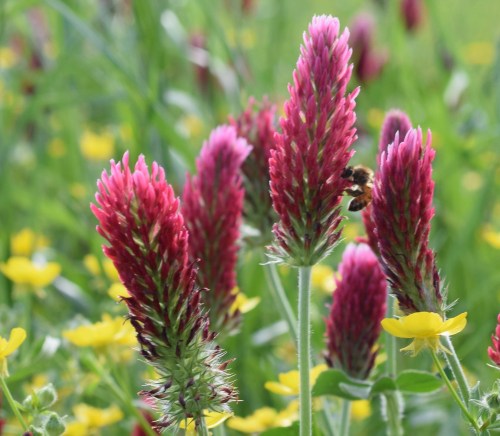
Look how pretty this cover crop, crimson clover, looks in the spring. The red flowers have the added bonus of attracting pollinators to the garden when there is not much else around to draw them in. This is especially important if you plan to plant peas on Valentine’s Day (Patriot’s Day if you live in the North). You will want pollinators around when the pea plants start to flower. Same goes for strawberries which flower around the same time.

A few weeks ago my husband and I attended the Southeast Biodynamic Regional Conference at Jeff Poppen’s farm in Red Boiling Springs, Tennessee. (Jeff is the host of Nashville Public Television’s The Barefoot Farmer.) It was a memorable weekend of education, community, and delicious field-to-table-meals. It was the kind of conference where twelve people officially register to attend and 150 show up … and it’s not a problem. The food, prepared by Chef Paulino Solorzano, never quit coming. The pulled pork, made from a pig that was raised on a farm that practiced biodynamic farming was divine. I am almost positive I can get my husband to attend again next year. [My husband just edited this post and mumbled, “Definitely going back.”]

This is a photo of Jeff Poppen, our leader and host, doing Jeff things like inoculating a compost heap with one of the biodynamic preparations he created on his farm. Farmers who practice biodynamic farming do so to bring health to the land and vitality to the food system or as Jeff puts it: to grow food of the highest quality.

Jeff has one of the oldest and largest organic farms in Tennessee. I read that on his website. If you asked Jeff, he would humbly say he “works with Nature instead of being at war with it.”

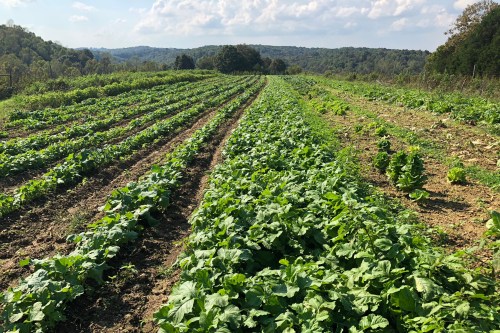
This is a photo of one of Jeff’s vegetable fields where he grows food for his CSA customers. He does not irrigate, add fertilizers, or use herbicides (“herbicides kill enzymes so biological processes can’t happen”). He also says things like, “insects are nature’s house cleaners and are our teachers — they tell us what issues we need to address in the soil.” The types of weeds that grow in our gardens also tell us about soil deficiencies.

Jeff grows produce that looks like this without irrigation or chemicals.

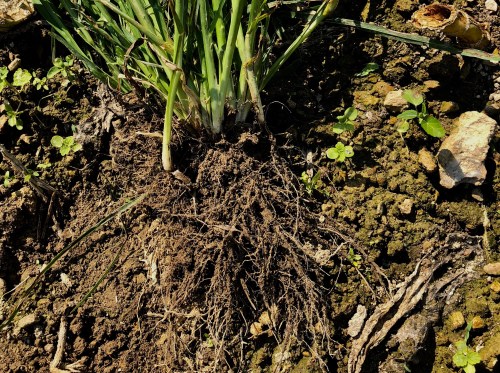
His soil is so rich and airy, it crumbles in your fingers like pie dough when you first mix the flour and fat together. It is so loose, even his weeds have long, flowing roots.

This is one of Jeff’s fields that have been put to bed for the winter. Guess what is growing? Buckwheat, crimson clover, and daikon radish. Jeff is the one who inspired me to start planting cover crops this fall when he repeatedly said, “your spring and summer crops are made before you ever plant them.” 

My biggest take away from Jeff, the one thing I could start doing in my small backyard farm right away, was to plant cover crops and never leave vegetable beds naked between harvestable crops again. With that in mind, I got busy.

My husband helped me clean up this summer vegetable bed the afternoon we returned home.

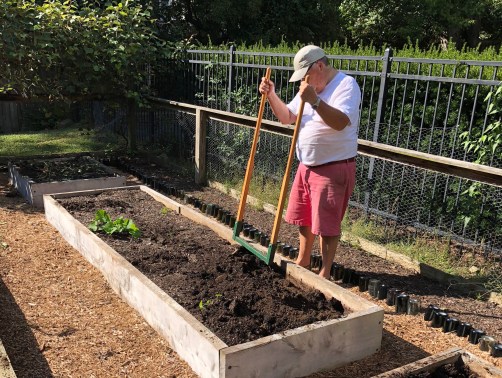
We cut the plants down and put them in the compost pile. We left their roots in the ground. We used a broad fork to jiggle the soil so air could get into the ground. Note to readers: my husband is wearing shoes:-)

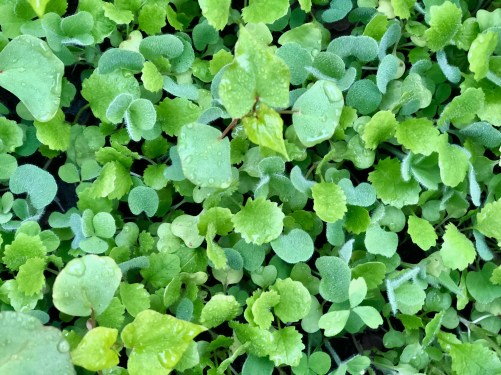
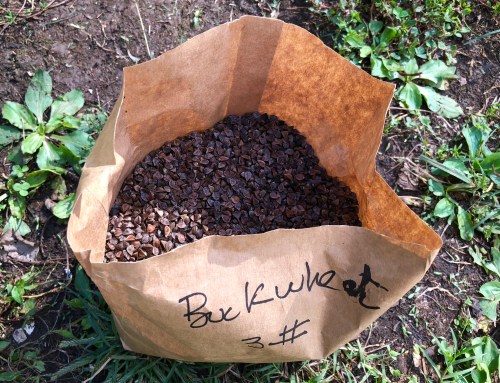
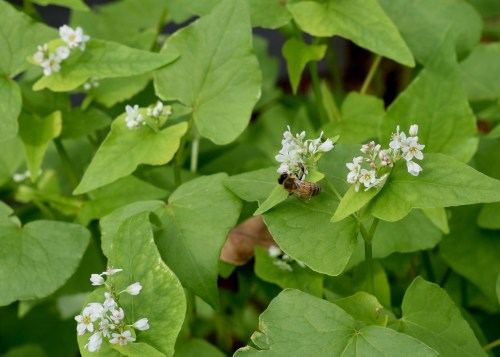
I mixed clover, buckwheat, and daikon radish seeds and broadcast them in the beds. This is buckwheat. When you use buckwheat as a cover crop during the summer, be sure to cut it back before it goes to seed, unless you want lots of seedlings. I heard a great tip at an Herb Society of Nashville meeting: plant buckwheat between tomato plants. It attracts beneficial insects that eat aphids off of tomato leaves.

Here is an “after” picture of the garden.

This is the garden one week later. The buckwheat seeds sprouted in three days.

Here is a photo from yesterday. So much prettier than naked raised beds. The chickens love it, too.

November 8th: Buckwheat, turnips, clover

November 11th: after first frost

Related Posts
Family Dirt
Morning Rounds in the Garden, April
Eulogy for a Chicken
Winter Floral Arrangements Using Greenery from the Yard
The Volunteer Gardener An episode of Nashville Public Television filmed in my yard

Don’t miss a recipe! Become a subscriber and have every post delivered to your Inbox.

Follow Judy’s Chickens on Instagram and Pinterest @JudysChickens.

Remember to always check this website for updated versions of a recipe.  

© 2014-2018 Judy Wright. All rights reserved. Photos, videos, and text may only be reproduced with the written consent of Judy Wright.