How to Block Print Fabrics (India, Part 2)

We traveled to Jaipur and toured for two days after leaving Dehli. To picture the city of Jaipur you need only to watch The Best Exotic Marigold Hotel. Much of it was filmed in this magical city where time seems to stand still. Food from the surrounding countryside is delivered by harnessed camels or horses, or wheeled-in on carts pushed by locals. Brooms made from rough-hewn straw are used to sweep the streets. Women are dressed in colorful sarees or in burkas and legs are always covered. Scaffolding and ladders are made of eucalyptus or bamboo lashed together with twine. Street cows, goats, pigs, monkeys, and dogs roam untethered. All of this amid a background of beeping horns and voices of many dialects. There is a vibrancy in this city that is extraordinary.

It is a six-hour drive from Delhi to Jaipur. While on our journey we pulled off the highway in Shahpura where we encountered scores of monkeys scampering about accepting food gifts from drivers — offerings given to the gods for assurance of safe travels. Monkeys are sacred animals in India along with cows, elephants and (can you believe it?) pigeons.

One personal hope for this day was to find a block-printing factory. My son and daughter-in-law had given us a block-printed tablecloth from Jaipur five years earlier. I have wanted to see how it was made ever since. I told this to our driver Ravi, and he was on it. He brought us to Arawali Textiles a store frequented by many tourists. It is located on the road from Jaipur to the Amber Fort. There, we received a brief demonstration of the basics of block printing by a salesman named Surendra whom afterward brought us into a store full of beautiful tablecloths, napkins, and reams of decorative fabrics. As we departed, Surendra gave us the now dry sample of the elephant print.

In this video, Surendra shows us how he makes the print.

This introduction to block printing was a good start, but I wanted to see more. I wanted to see fabric being printed in a factory. Once again, Ravi delivered. He found The Gandhi Cottage Textile Factory.

This is where we met a very charming young man named, Ali, a salesman for this family-owned business. Ali gave us a lesson in block-printing and a tour of the factory. It was closing time, but the good-natured Ali invited us to come back early the next morning to see the factory in full production. Then, he sold my husband fabric, called in a tailor, and had a shirt made for him that was ready when we arrived in the morning.


 

What follows are two videos that show the factory in production mode with Ali as the narrator.

Ali’s uncle showed us the post-production stages of newly printed cloth.

He dipped it in a bucket of salt water and lemon juice to set the color. That’s where the magic happened, and the colors exploded. This step is followed by a plain water rinse.
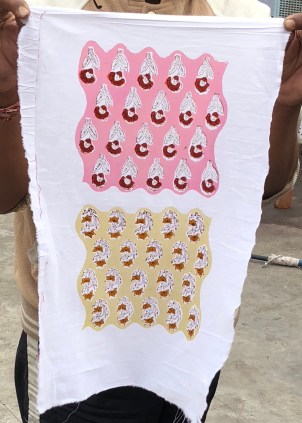
 

In this last video, the adorable Ali talks about dyes, carved blocks, and setting the color.

Here are three block-printed tablecloths and coverlets we purchased from the Gandhi and Arawali stores.


Places We Visited in Jaipur

Jal Mahal Jaipur, aka The Water Palace on Man Sagar Lake

These statues of a royal procession are in a park along Man Sagar Lake directly across from the Water Palace.

One of the gates that make up the walled old Pink City in Jaipur.

Inside the Pink City: Hawa Mahal, aka Palace of the Winds

The Amber Fort

Elephant rides are available at the Amber Fort.

I spied these quilts while on the elephant ride and later purchased the elephant quilt.
 

City Palace of Jaipur

The Peacock Gate in the City Palace

Jantar Mantar Observatory has the world’s largest sundial as well other ways of charting celestial movements. It was built between 1727 and 1734.

Street Life in Jaipur

Delivering Milk to the Marketplace.

  

Chicken and Yogurt Deliveries

 

Grain Deliveries
 

Sugar Cane and Vegetable Deliveries
 

Eucalyptus Scaffolding and Bamboo Ladders
 

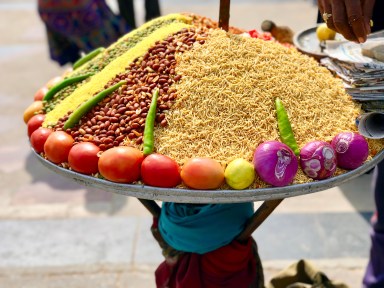
My favorite colors, in both food and fabric, abound in India.
 

Those were the highlights!


Related Posts:
Cooking 35,000 Meals a Day in a Sikh Kitchen in Delhi (India, Part 1)
A Stepwell, Parcheesi, Brick-Making, and Chapati-Making (India, Part 3)
Room with a View: the Taj Mahal in Agra (India, Part 4)
A Cook’s Tour of a Farm in Southern India (India, Part 5)
Shopping for a Saree in South India (India, Part 6)

If you enjoyed this post, please become a subscriber! Be sure to confirm the subscription on the follow-up letter sent to your email address.

Follow Judy’s Chickens on Instagram and Pinterest @JudysChickens.

© 2014-2018 Judy Wright. All rights reserved. Photos, videos, and text may only be reproduced with the written consent of Judy Wright.

Stocking Stuffers: Tools for the Cooking Life

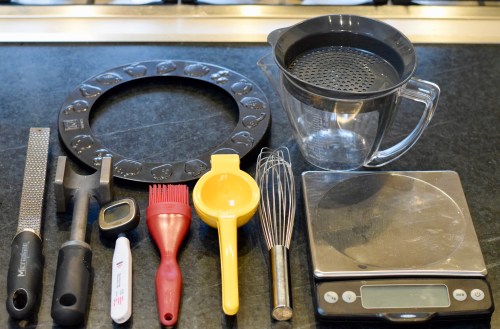
As my kids grew up and moved into their own apartments, I started giving them kitchen tools as stocking stuffers. These tools are all specialized tools above and beyond measuring cups and spoons.

My list of specialized cooking tools includes:

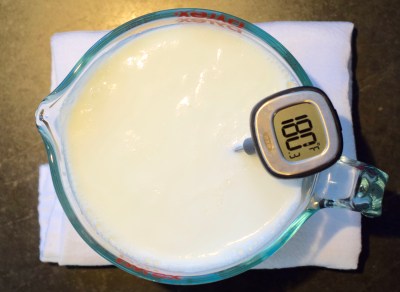
Instant Read Digital Thermometer:  This thermometer works quickly and accurately. Last spring, when I was big into making yogurt, I gave each of my sons one for Easter. The instant-read thermometer should only be used to periodically check the temperature of roasting meat. It is not meant to be left in the meat during the entire cooking process.

From: DIY Yogurt and Yogurt Cheese (aka Labneh, Greek Yogurt)

The Microplane Fine Grater: I use this tool to zest citrus or finely grate cheese, ginger, and nutmeg.

From: Italian Ricotta and Lemon Cookies (best cookies on the blog)

From: Grandma’s Italian Fried Cauliflower

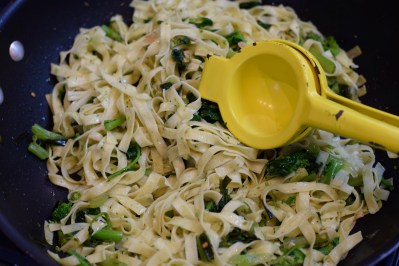
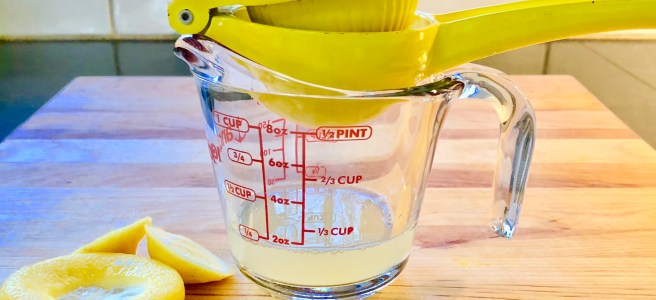
Citrus Squeezer: I use this tool to extract juice from lemons and limes without getting seeds into the juice. I also use it to squeeze juice directly over fish, vegetables, and pasta dishes just before serving.

From: Brooks’s Pork Tenderloin with the Most Amazing Marinade

From: Fettuccini with Rapini (aka Broccoli Rabe) and Garlic

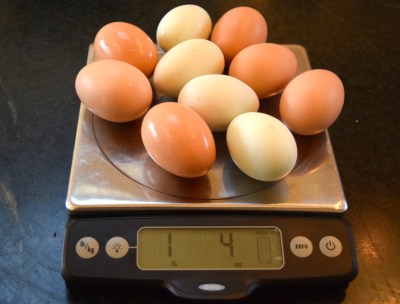
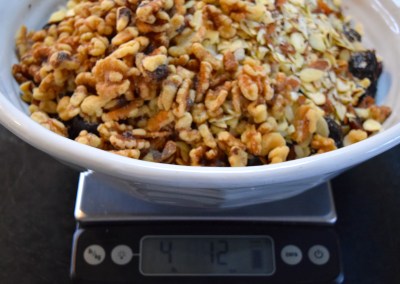
Kitchen Scale with a “Zero-Out” Feature: This scale weighs food up to eleven pounds. Since I use eggs from my backyard chickens, I often weigh them rather than go by the number of eggs called for in a recipe. A large commercial egg weighs about two ounces. My chickens lay eggs that are less uniform ranging from one and a half to three ounces. Once I had a four-ounce egg (OUCH!). I use the scale to weigh vegetables, nuts, fruit, flour, and meat as I develop recipes. The scale costs about $50, so it may fall into the category of “an under the tree” gift instead of a stocking stuffer. I’ve had my scale for five years, and it is still using the original batteries.

From: 50 Ways to Make a Frittata

From: Fruit and Nut Bread

From: Lisa’s Award-Winning Buffalo Chicken Chili

A French Wire Whisk (with a barreled handle)
I like this 10-inch whisk with the narrow head because it gets into the saucepan’s crevices when making gravy and along the sloping sides of a bowl when mixing dry ingredients. The barrel handle stays cool to the touch when stirring hot foods.
 
From: Foolproof Make-Ahead Thanksgiving Gravy

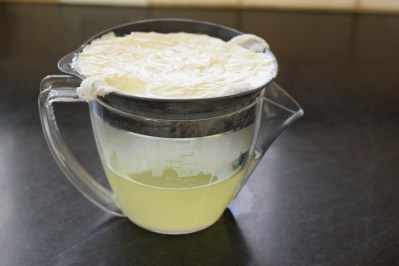
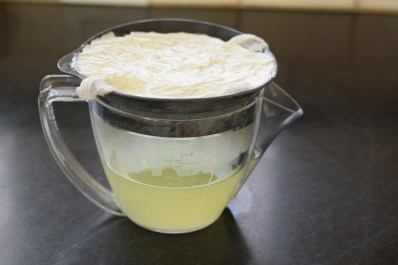
Fat Separator (with a food particle filter): Great for separating fat from meat juice when making gravy or chili. I also use my 4-cup separator as a strainer when making Greek yogurt.

From: My Favorite Silver Palate Chili

From: DIY Yogurt and Yogurt Cheese (aka Labneh or Greek Yogurt)

Basting and Pastry Silicone Brush: This gets a ton of use when I coat summer veggies or fish with olive oil before roasting. I also use it to lightly frost cookies before adding sprinkles. It goes in the dishwasher for easy cleanup.
 
From: Baked Ziti with Eggplant

From: Easy Roasted Salmon with Olive Oil and Garlic Pepper

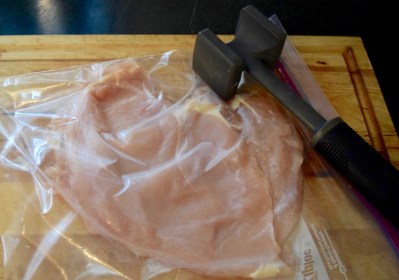
Meat Tenderizer Mallet: I’m big on flattening chicken breasts to help them cook more evenly. I also smash garlic or nuts with the mallet rather than dirty the food processor.

From: Lemony Grilled Chicken Breasts

From: Grandma’s Italian Fried Cauliflower

From: Mom’s Monkey Bread, circa 1970

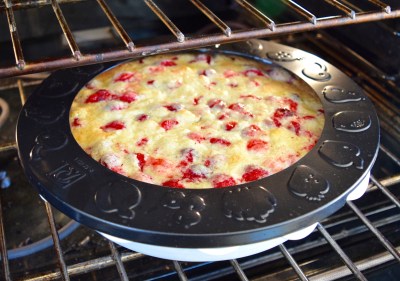
Pie Crust Shield: I bake lots of pies. Covering the crust’s edge while the rest of the pie bakes keeps it from browning. I also bake the pie on a pre-heated pizza stone to encourage a thoroughly cooked bottom crust.

From: Mrs. Walker’s Cranberry Nut Pie

Thaw Detector for the Freezer: My husband adopted this simple device because when we were out of town, we were never sure if a power outage lasted long enough to melt the freezer’s contents. Now we know if the penny is on the bottom of the container, the food is spoiled.

From: How to Make a Thaw Detector for the Freezer

Check out this link for lots of holiday recipes!

And then there are these happy “tools” that sit on my windowsill every December.

fullsizeoutput_1f73

Always check the website for the most current version of a recipe.

Follow me on Instagram and Pinterest at JudysChickens.

If you enjoyed this post, please sign up to be a subscriber! Once you sign up, confirm the subscription in the confirmation letter sent to your email address.

© 2014-2020 Judy Wright. All rights reserved. Photos and text may only be used with written consent.

Karen’s Foolproof Make-Ahead Gravy

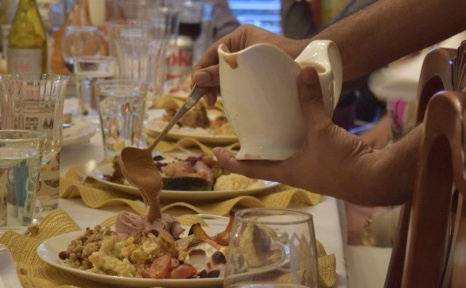
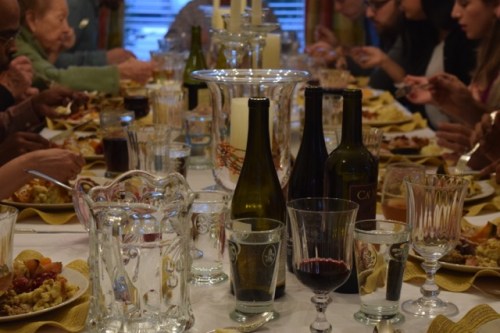
I love nothing more in life than to sit around the table with friends and family of all generations and enjoy a meal filled with storytelling, good food, and laughs.

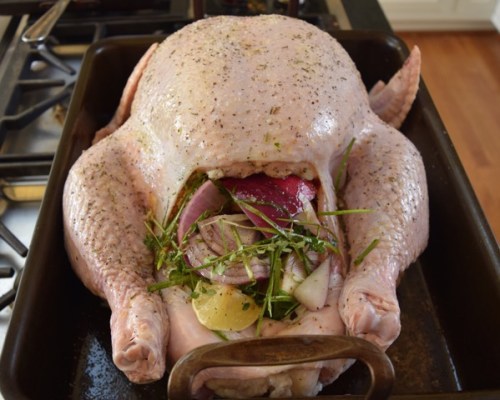
To get to the Thanksgiving dinner’s actual serving, I have to pass through a few cooking hurdles. For instance, I suffer from indecision every time I cut into the turkey thigh to test for doneness. Are the juices truly running clear, or are they still ever so slightly pink?

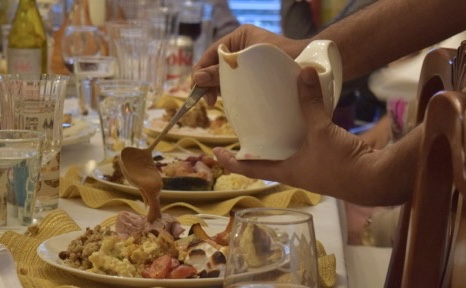
And then there is the gravy. So much mystery there.

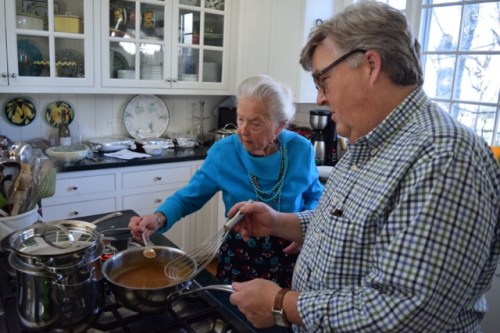
If it’s not lumps, it’s blandness. Making a velvety smooth, full-bodied gravy has eluded me for years. It is the reason why, in the midst of the crazy hour before dinner, I nonchalantly ask, “Who wants to make gravy?” as if it were an afterthought instead of a worry. Thankfully, there is always someone who volunteers, often, my husband and his mother.

This week, I was talking food with my friend Karen Rolen, a joyful, spunky woman originally from Montgomery, Alabama. I asked her if she knew how to make gravy. She confidently and enthusiastically said, “Yes, I’ve been making it my whole life; where I come from, gravy is considered a BEVERAGE!”  Her written instructions arrived the next morning.

“Make a light brown roux* with equal parts butter and all-purpose flour. I probably use ¼ to ½ stick of butter.  Add hot turkey drippings and fonds** if you have them. Have two cups or so of heated chicken broth ready, and even if it’s good and homemade, have “Knorrs” or “Better Than Bullion” chicken base available for salt and seasoning later on. Slowly stir broth into the roux and drippings and boil them on medium-high until you get the consistency you want. Season to taste with lots of ground black pepper and chicken bullion. It’s usually good enough to drink!”

*To learn what a roux is, check out Bruce’s Turkey and Sausage Gumbo and learn why you should save the turkey carcass and trimmings this year.

**Fond is French for “base” and means the bits and pieces of browned meat or vegetables left in a pan after roasting or frying.

My goal was to tweak Karen’s instructions to create a flavorful and dependable gravy you could make a few days or hours before the holiday dinner.

Yield: Makes three cups (this recipe is easily doubled or cut in half)

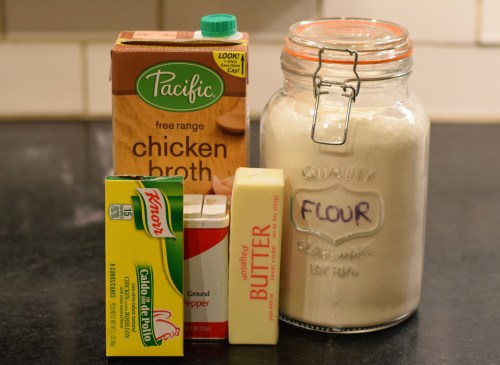
Ingredients: 

½ cup butter (1 stick)
½ cup all-purpose flour
4 cups (1 quart) heated boxed or homemade chicken broth
½ teaspoon ground pepper
¾ to 1½ squares of Knorr Chicken Bullion (for “seasoning to taste”)

Instructions:
Melt butter in a heavy-bottomed saucepan over medium-high heat. Using a whisk, stir in the flour.

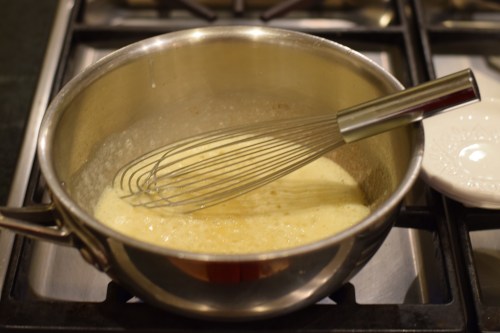
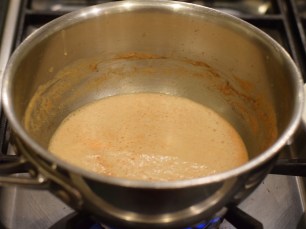
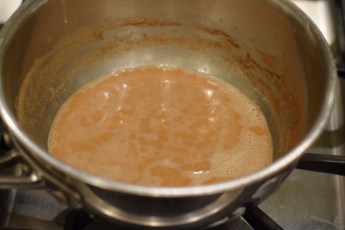
Stir continuously over medium heat until the roux starts to change color, usually about three minutes, give or take a few seconds. The picture on the left was taken at 2½ minutes. The one on the right was taken at three.
 

Think of the roux’s darkening color as “toasting” the flour. The roux should be medium brown when done. This cooking of the flour gives gravy its depth of flavor and that desired taste of nuttiness. I promise, if this is your first time making a roux, you are going to feel very accomplished as a cook once you make this gravy.

As soon as the roux changes color, whisk in the broth to stop the roux from cooking any longer. Whisk and simmer for about five minutes until the gravy thickens.

Stick with it, don’t let the flour stick to the bottom of the pan. Also, do not adjust the seasonings until after the gravy has finished cooking because as the liquid evaporates, the flavors will concentrate.

“Salt and Pepper to Taste”
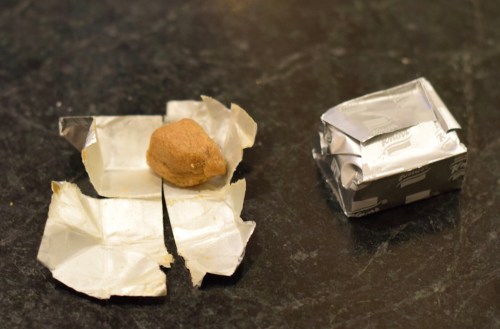
Add the pepper first because it is easier to adjust. Next, instead of adding salt, Karen and I use Knorr’s bullion cubes for flavoring. The amount you need will depend on whether you use unsalted or salted butter and regular or low-sodium chicken broth.

To successfully “season to taste,” cut the Knorr bouillon cube into four quarters. Add one quarter at a time until you hit that magical point where the gravy suddenly tastes beautifully rich.

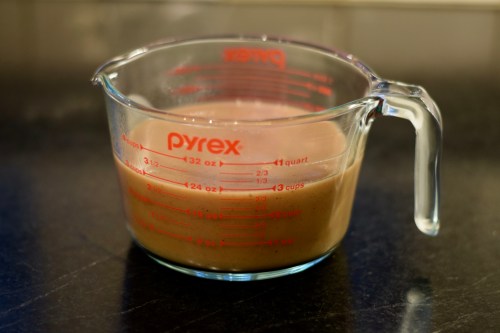
Notice how velvety smooth the gravy is.

Reheat the gravy in a saucepan just before serving. Feel free to add strained juices from the roasting pan, if desired.

If you wish to make your own chicken stock, consider these two posts to learn how: Chicken Stock from Rotisserie Chicken Bones and Rotisserie Chicken Soup, Revisited

My friend, Renée, whose family likes to fry their turkey every year, reminds me there are no drippings for gravy-making when deep-frying a turkey, so plan accordingly.

Epilogue
Thanks to Karen Rolen for teaching me how to make gravy. I’ll think of her every Thanksgiving when I make it. Once I got Karen’s recipe adapted for this post, I took a sample of the gravy to my friends. They each tasted it and agreed it was indeed sippable! Thanks, Mary, Susie, Corabel, Jane, and Mary, for being taste-testers.

Don’t miss a recipe! Become a subscriber and have every post delivered to your Inbox.

Follow Judy’s Chickens on Instagram and Pinterest @JudysChickens.

Remember to always check this website for updated versions of a recipe.  

© 2014-2020 Judy Wright. All rights reserved. Photos, videos, and text may only be reproduced with the written consent of Judy Wright.
How to Make Greek Yogurt at Home

I recently stopped by my daughter-in-law’s house to visit her mother, Viji, and her grandmother, Hema. Knowing how much I love her cooking, Viji, whose kindness and generosity know no bounds, asked if I was hungry and offered to prepare a bowl of biryani and rice for me. I gratefully accepted.

Usually, when Viji makes biryani, she serves it with a bowl of raita, a refreshing yogurt-based condiment that tempers the spices in biryani. This time, Viji offered a bowl of plain yogurt (known as perugu in Telugu) which she often serves over rice and curries. I scooped up a few spoonfuls and poured them over the biryani. As I licked the spoon, I was struck by how sweet, tangy, and light her batch of yogurt tasted. It was unlike any yogurt I had had before. I asked Viji what brand it was and she told me she made it herself. As soon as she said the yogurt was homemade, my hand was already searching the depths of my purse for a pen and a piece of paper. I had to learn how to do this.

Viji explained how making yogurt was something she and her family have been doing almost daily their entire lives, both in India and in the United States. In describing how she made it, she didn’t use off-putting words like “live cultures,” “starter,” or “fermentation.” Instead, she told me simply to heat milk in a microwave until just before it starts to boil, allow it to cool until you could comfortably stick your finger in it (not scalding and not lukewarm — somewhere in between). When it got to that temperature, I was to add a spoonful of yogurt from the last yogurt batch, stir it, cover it with plastic wrap, and put it in the warmed microwave to set undisturbed overnight; it would be yogurt in the morning.

She sent me home me with a small jar of yogurt for “starter” and an encouraging smile. Here is a photo of Viji and our daughter, Meera, from a cooking class they taught to Meera’s friends a few years ago.

I made my first batch that same evening. When I checked the microwave the following morning, the preparation had thickened. I had made yogurt! I felt so accomplished. Surprisingly, it tasted exactly like Viji’s batch: sweet, light and tangy. Delicious in its plainness. Out of sheer delight in creating something as universally known as yogurt,  I proceeded to share a few spoonfuls with everyone who walked in the door for the next few weeks.

How does milk become yogurt?

Milk is made of water, fat, proteins, minerals, and a milk sugar known as lactose. When the milk is heated, its native bacteria are killed. As the milk cools and the new, live bacteria in the starter culture are introduced, the new bacteria feed on the milk’s lactose (sugar) and turn it into lactic acid. As it does this, the milk is transformed, or ferments, into a soft curd — yogurt.

It is a very simple and time-honored process. People have been making yogurt, kefir, and cheese from milk, using bacteria, yeast, or fungi, for thousands of years to preserve milk’s shelf life. It is only in the last one hundred plus years, with the advent of refrigeration, that people have been able to store milk in liquid form in their homes.

The Starter Culture
You can make your own yogurt using a starter culture that has been given to you, as I did, or you can buy commercially prepared yogurt with “live” or “active” cultures from the grocery store. To make this recipe replicable for readers,  I purchased four different commercial brands of plain, unsweetened yogurt to test the process and each brand worked. As long as the container of yogurt has these two live bacterial strains listed, you will be able to make yogurt: Lactobacillus bulgaricus ( L. bulgaricus) and Streptococcus thermophilus (S. thermophilus). Other strands of bacteria are often added by manufacturers to create the unique taste and texture of each brand.

This label is from a container of Trader Joe’s plain yogurt.

This label is from a container of Desi, a nice plain yogurt I bought at Patel Brothers, a fabulous Indian grocery store on Nolensville Road in Nashville.

All four brands of yogurt produced a semi-solid yogurt that tasted identical to the batch from which the starter came. Words to the wise: be sure you like the taste of the plain yogurt you choose because that is how your homemade batch will taste.

The Milk
Any whole or reduced-fat milk will do. You could also use soy or coconut milk, although I have not tried these.

Ingredients:

4 cups milk
1 tablespoon plain yogurt with live cultures

Instructions:
Pour milk into a tempered glass bowl suitable for heating.

Heat milk uncovered in the microwave, or on the stovetop, until it reaches 180º. In my microwave, this takes nine minutes. If you do not have a digital thermometer, heat milk until it just begins to boil. Do not let it boil over.

Remove hot milk from the microwave to a padded surface and allow it to cool to 115º.

Add a spoonful of yogurt starter and stir. I add one tablespoonful of starter when using four cups of milk and a heaping teaspoon when using two cups. Cover mixture with plastic wrap and let rest, undisturbed, for 8-10 hours in a warm, dark place like a microwave, an oven, or on a shelf in a kitchen cabinet.

If it doesn’t set, let it sit a little while longer. For some reason, it took twelve hours for one of the brands to form a curd. I am not sure why, but it did eventually set. Once set, refrigerate the yogurt. Be sure to set aside a small amount to use as starter for the next batch!

Yogurt Cheese (aka Labneh and Greek-Style Yogurt)

Since making that first batch, I’ve started draining yogurt to make “cheese yogurt.” This process of draining yogurt to separate out the whey is also how Greek yogurt and labneh, a Lebanese cream cheese, are made.

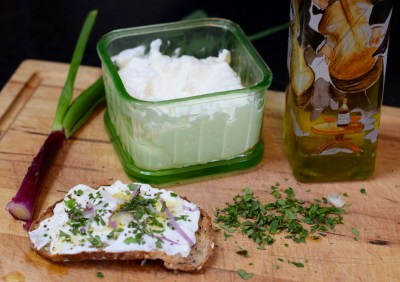
The resulting soft cheese is delicious spread on bread and topped with honey or preserves.

Or, it can be served as a savory dish and spread on pita or toast and topped with olive oil, freshly chopped herbs, slivers of green onion, sea salt, and freshly cracked pepper. The flavor is amazing!

To make yogurt cheese, I place a cheesecloth over a fat-separator which has a built-in colander. You could also line a regular colander with cheesecloth.

Allow yogurt to drain for a few hours or overnight in the refrigerator.

This method produced two cups of whey and two cups of yogurt cheese from a four-cup batch of yogurt.

I’ve been making two batches of this yogurt cheese, which is rich in protein and calcium, every week for the last month. Our family cannot get enough of it. The good news is if you don’t feel like making your own yogurt, you could buy commercially prepared yogurt and drain it.

Toast and yogurt cheese are delicious served with one of these preserves, too:
Roasted Strawberry with Rosemary Preserves
Crabapple Jelly
Grape Jelly


LET’S STAY CONNECTED!

Follow my photos of vegetables growing, backyard chickens hanging out, and dinner preparations on Instagram at JudysChickens.

Never miss a post: sign up to become a follower of the Blog.

© 2014-2017 Judy Wright. All rights reserved. Photos and text may only be used with written consent.