New Year’s Day Fare: Collards, Pine Nuts and Cranberries

New Year’s Day is all about starting over. A clean slate. A fresh start. I’m game for all of it. Since moving South, I’ve learned you can improve your chances of having a healthy and prosperous year by eating three foods on this auspicious day: collard greens, black-eyed peas, and pork. The greens represent the color of money and thus, economic fortune, the peas (lentils, in the Italian tradition) represent coins, and plump pigs represent prosperity. Pigs also root forward with their noses representing progress. Compare that to chickens who walk backwards while scratching the dirt for food. No looking back. No chicken for New Year’s Day. I can get into all of it. I consider these foods to be charms for the easy life. But if I’m the one doing the cooking, I’m going to Italianize them; there will be olive oil and garlic used in the preparation of each of them.

To prepare black-eyed peas, check out this blog-favorite recipe, Marlin’s Black-Eyed Pea Salad.

blackeyedpeas11

To prepare the pork, try Brooks’s Pork Tenderloin.

dsc_0065

To prepare the leafy greens, try this recipe for collard greens sweetened with dried cranberries or golden raisins, and toasted pine nuts, all of it sautéed in olive oil and garlic.

About the Leafy Greens: Growing and Cooking Collards

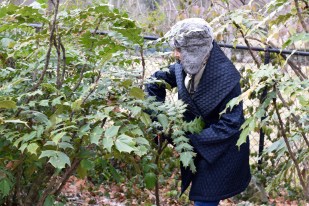
Cooking with collards has been a new adventure for me. After seeing how beautifully they grow in the production gardens of The Nashville Food Project (where I frequently volunteer) and after cooking and serving them for years as a side dish for TNFP’s Meal Distribution Partners, I figured it was time to jump in and grow them myself. I’m so glad I did! They are like the Giving Tree of vegetables. Even as I write, on this cold winter morning, my crop of collards, unprotected from the winter elements, continues to happily produce greens. I’ve been picking from this same raised bed of collards since early October.

img_4078

Collards are a great crop for the first time gardener to grow, too; they are very forgiving. For eight months of the year, you will be rewarded with a continuous production of hearty greens that are great added to soups, or when used in a sautéed medley with other leafy greens.

Technique Tips

Chiffonading Leafy Greens:
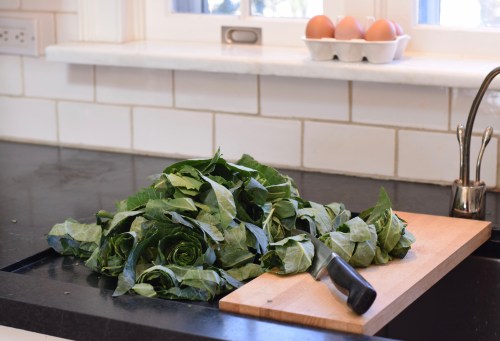
Chiffonade is a cooking technique used to describe a way of cutting leafy greens into thin, pretty ribbons. The technique is mostly used to cut herbs like basil. I’ve adopted it for cutting all leafy greens for sautéing. To chiffonade, stack about five leaves, roll them together, and then cut through the stack. I use scissors for small, tender leaves, like basil and Swiss chard, and a knife for bulky leaves like kale and collards.

dsc_0995-1 dsc_0578

Toasted Pine Nuts
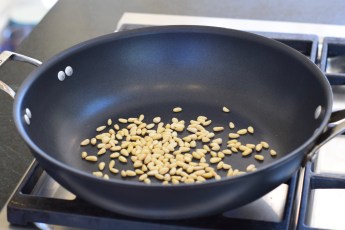
Add a single layer of pine nuts to a pan. Set heat to medium. Stir nuts about every 15 seconds. Cook for about two to three minutes, or until the nuts become fragrant and are lightly browned. When done, immediately remove nuts from pan to stop the cooking process. You can toast sesame seeds in the same way.
dsc_0604 dsc_0607

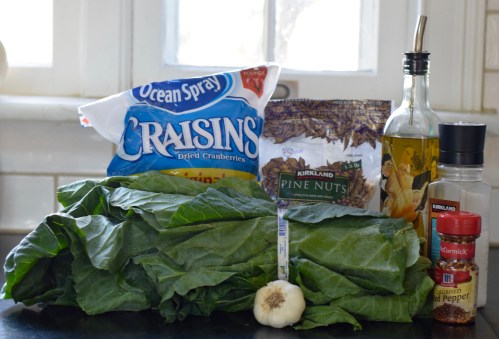
Ingredients:

dsc_0326

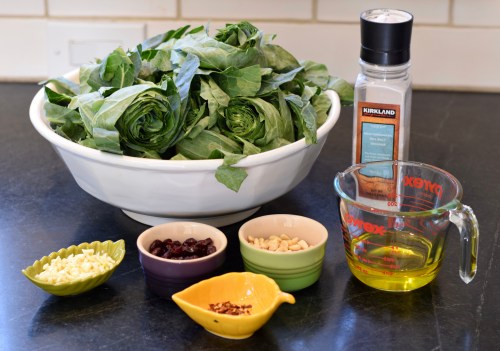
1½ pounds collard greens or Swiss chard (once trimmed will equal about 1 pound)
¼ cup pine nuts, toasted
⅓ cup olive oil
⅓ cup dried sweetened cranberries or golden raisins
6 cloves garlic (equals about 2 tablespoons, chopped)
½ teaspoon red pepper flakes
½ cup hot water
salt to taste

Mise en Place:
dsc_0588

Wash and dry collard greens. I let them air dry on dishtowels, patting the puddles of water that collect on top with another dish towel.

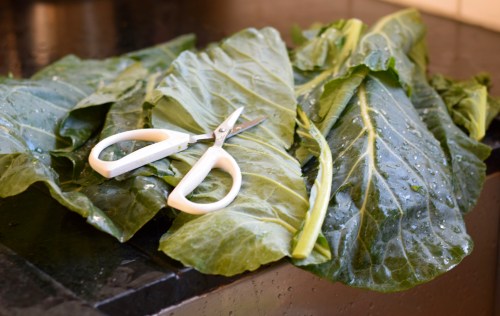
Remove the tough central rib from the leaves. To do this, fold the leaves in half and remove the rib with a scissor. Some people just tear the rib out.
dsc_0343

Chiffonade the greens.

dsc_0550

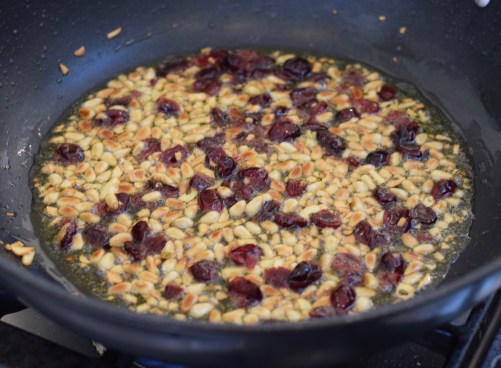
To cook the greens: Heat oil and garlic in a large six-quart sauté pan. Sauté for about one minute. Be careful not to brown the garlic as that could make it taste bitter. Add pine nuts, cranberries, and red pepper flakes. Stir.
dsc_0619

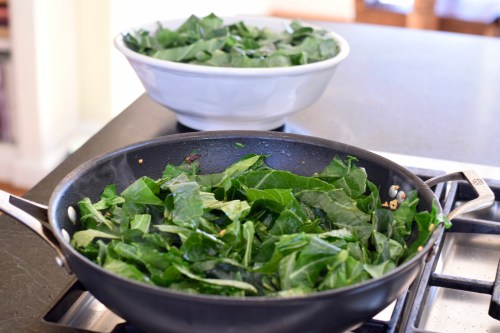
Add half the collards. Once they start to soften and shrink, add the rest. Add water and sauté for about 5-8 minutes until the collards are tender and the cranberries become plump.
dsc_0621

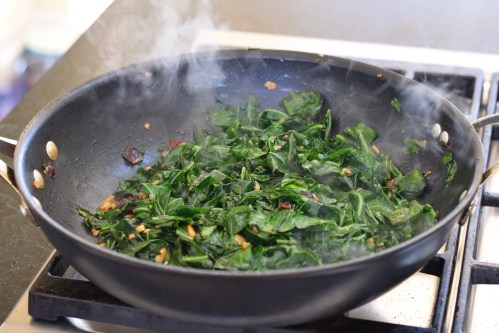
Add salt to taste: if the collards taste bland add more salt until the flavors pop.
dsc_0629

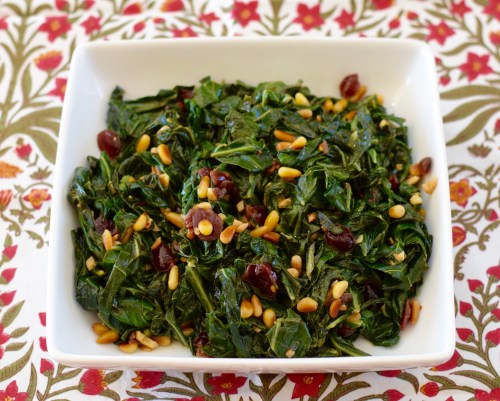
This is a side dish that is slightly bitter. We had it last night with lamb and parsley potatoes, and it was a delicious combination.
dsc_0643

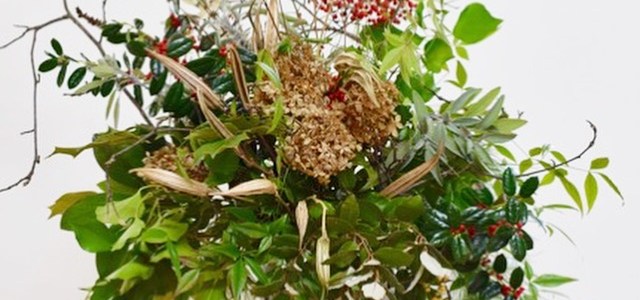
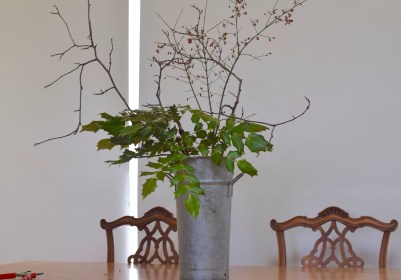
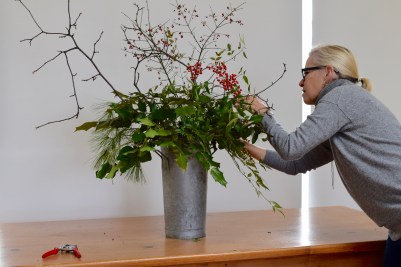
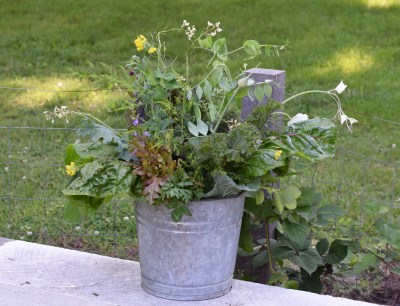
When you go to set the table, consider looking in your yard for greenery for a centerpiece. My friend, Mary, said she was so inspired by Lou Ann working her design magic using greenery from my yard (check out Winter Floral Arrangements Using Greenery from the Yard ) that she went out in her yard and used greenery to create this quickie, yet elegant centerpiece.

img_4091

LET’S STAY CONNECTED!

Follow my photos of vegetables growing, backyard chickens hanging out, and dinner preparations on Instagram at JudysChickens.

Never miss a post: sign up to become a follower of the Blog.

© 2014-2019 Judy Wright. All rights reserved. Photos and text may only be used with written consent.


Mom’s Monkey Bread, circa 1970

I wasn’t planning on writing another blog post before Christmas, but I have a hard time saying No to a recipe request from one of my brothers, especially when they bring up food memories that involve our mother. My brother Sam wrote, “Judy, Mom always made sticky buns in a cake pan that had the centerpiece cut out. They were very popular. Do you remember how to make them?”

He was talking about Monkey Bread. I really had to think hard to remember how Mom made it back in the Seventies. Remembering brought me to a happy place in our childhood kitchen with the big bay window over the sink that overlooked the entrance to Bay View. I was happy for the challenge.

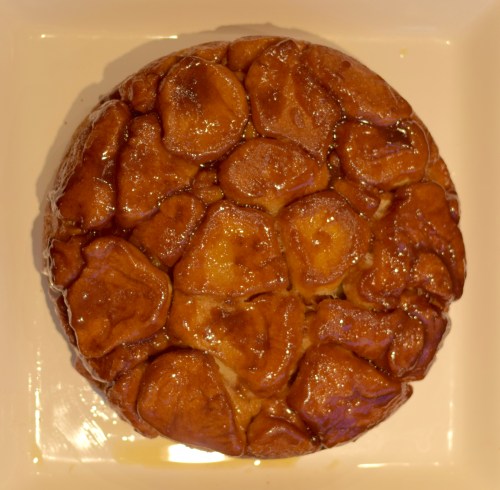
Sam, here is my first attempt in forty years at making Monkey Bread. The big white blob is cream cheese frosting. Although I knew what kind of pan you were referring to when you wrote “a cake pan that had the centerpiece cut out,” I didn’t have an angel food cake pan, so I used a Les Creuset Dutch oven. It did the job. Do not use a tube pan with a removable bottom as the butter will leak out and make a mess.
dsc_0973

When I went to the grocery store to find loaves of frozen bread dough, it was nice to see they still stocked the five-pound packages I used as a kid. You will need two loaves for this recipe. Be sure to defrost them about thirty minutes before you plan to bake. There is no need to let them rise first.
img_4001

Ingredients:
dsc_0873

2 loaves (2 pounds) frozen bread dough, thawed
1 stick (½ cup) butter
½ teaspoon vanilla extract
½ cup granulated sugar
¼ cup packed brown sugar
1 tablespoon ground cinnamon
½ cup chopped walnuts or raisins (optional)

Instructions:
Preheat oven to 350º
Grease a deep 9 or 10-inch cooking container.

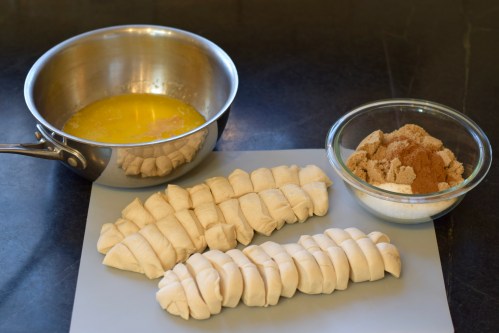
Mix together sugars and cinnamon.
Melt butter in a pan until just melted. Stir in vanilla. Remove from heat.
Cut loaves into pieces, as shown in the photo below.
dsc_0837

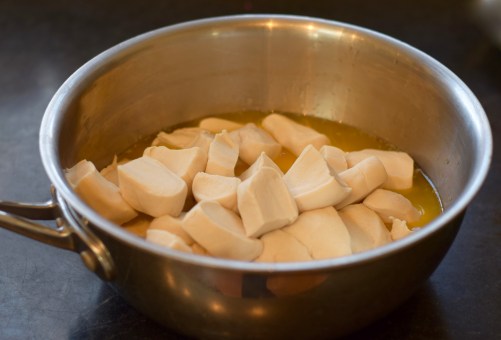
Drop individual pieces of dough into the butter and stir until each piece is evenly coated
dsc_0838

Take each piece out and roll it in the cinnamon sugar—place in a greased baking pan. Let rest for about 15 minutes. It does need to rise in the pan before cooking.
dsc_0852

Bake for about 45 minutes. The dough will rise as it cooks. The top layer will turn golden brown and be firm to touch when it is ready. If you don’t cook the bread the full amount of time, the lower dough balls will be doughy even though the bread looks done on top.
dsc_0916

Let cool for five minutes and then flip onto a serving plate.
dsc_0929

Frosting:

dsc_0028
½ package cream cheese, softened (½ pound)
2 tablespoons butter, softened
1 tablespoon milk
1 cup confectioner’s sugar, sifted
¼ teaspoon vanilla
dash of salt

Mix ingredients together until well-blended. Thin with more milk if desired.
dsc_0912

Serve bread with cream cheese frosting on the side or drizzled on top, as shown in this gorgeous photo sent to me Christmas morning by my Aunt Rachelle.

Merry Christmas to Rachelle and my brothers!

Appetizers:
Cranberry and Hot Pepper Jelly Brie Bites
“Croatian Cheese” a Flavorful Appetizer Made with Feta and Goat Cheese
Roasted Tamari Almonds

Brunch:
50 Ways to Make a Frittata
The Biscuit King
Sorghum, Oats, and Cranberry Granola
The Navel Mary Way: How to Peel an Orange
Fruit and Nut Bread

Desserts:
Mrs. Walker’s Cranberry Nut Pie
Italian Ricotta and Lemon Cookies
A Cake for All Seasons
Lily’s Red Velvet Cake

LET’S STAY CONNECTED!

Don’t miss a recipe! Become a subscriber and have every post delivered to your Inbox.

Follow Judy’s Chickens on Instagram and Pinterest @JudysChickens.

Remember to always check this website for updated versions of a recipe.  

© 2014-2020 Judy Wright. All rights reserved. Photos, videos, and text may only be reproduced with the written consent of Judy Wright.

Winter Floral Arrangements Using Greenery from the Yard

My friend Lou Ann and I like to make pretty things. We’ll be out walking, notice an abundance of pine cones on the ground, and the next thing you know we are making bright red pinecone wreaths together in her backyard. All of our joint projects using plant materials are under Lou Ann’s tutelage. She’s the design and DIY girl.

img_3967

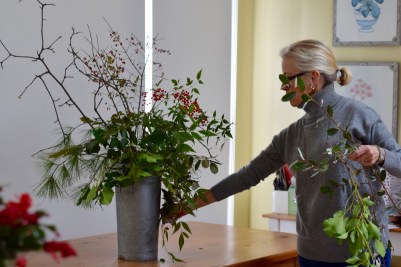
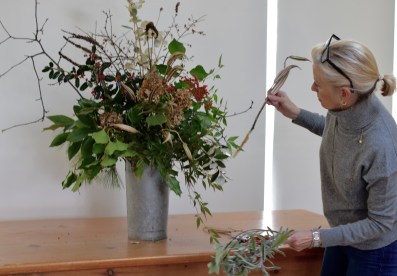
This year, Lou Ann came over, and we made a holiday arrangement for my foyer. I photographed how she did it step-by-step, plant choice-by-plant choice.

I’ve included each step from cutting the plant stems in my yard to designing the arrangement on my kitchen table. All the greenery came from common foundation plants; nothing is extra-special or hard to find.

dsc_0628

Our first stopover in the yard was my rain garden which is full of perennials meant to attract pollinators for the vegetable garden. The rain garden was created by my talented friend, Jeremy Lekich, owner of Nashville Foodscapes. If you are interested in growing food and doing it in an attractive way using best permaculture practices, Jeremy is your man.

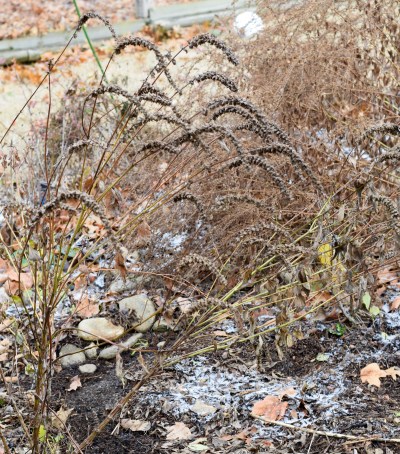
Lou Ann was instantly drawn to these dried stems of anise hyssop. Anise Hyssop is a “top three” plant for producing nectar and attracting bees, and as Jeremy informed me, it makes a wonderful tea used to cure low spirits or a broken heart according to Native American herbalism. Noted.

dsc_0564

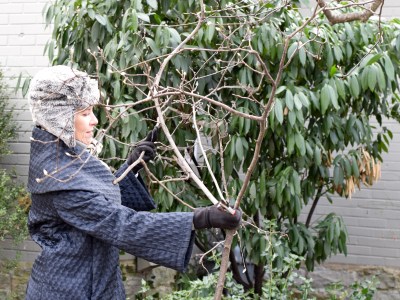
The evergreen, Mahonia, with its striking, statuesque stalks topped by a whorl of prickly, hollylike leaves, was next. Mahonia is one of many drought-resistant [read, plants that can be ignored and still survive] evergreens in my yard. Lou Ann cut down one tall stalk.

dsc_0568 dsc_0572

Nandina is located nearby. It provides year-round interest in the garden because of its lacy sprays of shiny green leaves with a six-inch center stem full of red or gold berries. It, too, is drought-resistant. Lou Ann took a stem of each color.

dsc_0573 dsc_0574

Limelight Hydrangea: fresh or dried, it’s one of my favorite shrubs. Its pale limey-green flowers change from shades of pink to burgundy as they age during the summer and fall.

dsc_0579

Eleagnus:  I planted this evergreen two years ago after I saw it in a flower arrangement. I was drawn to the shimmering taupey-gray underbelly of the olive green leaves. The coloring of the underside of the leaves works magic light wise in an arrangement. Sadly, the nurseryman from whom I bought the plant referred to it as Ugly Agnes (perhaps because of the unruly way in which it grows) and that name has stuck.

dsc_0581

We picked stems of Sage from the herb bed for their silvery contrasting color.

dsc_0587

Next up was the wall of English Ivy, another evergreen. When Lou Ann had her floral design business, known as Sprig, she would often come by to pick a few of these extra-large leaves to line the vases of floral arrangements.

dsc_0592

Lenten Rose (aka Hellebore), Holly, and Pine: more evergreens. We used a few stems of each.

dsc_0595

dsc_0598

dsc_0600

Burning Bush: this deciduous flowering shrub has pretty red berries on pale grayish-brown stems. More contrast and color. Lou Ann cut a few stems of these, too.

dsc_0795

Deciduous Japanese Magnolia: this type of magnolia loses its leaves in the winter and begins the spring season with large pink flowers. The silvery, velvet-like buds for these flowers set in December. The buds add a pretty, soft color to the arrangement.

dsc_0607

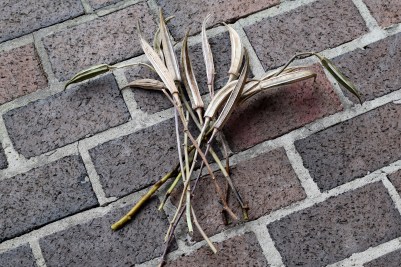
Okra Pods: I am a huge fan of both burgundy and green okra, so I always grow both varieties in the veggie garden. Okra is a draught-resistant plant that gives you tasty food in the summer and strikingly pretty seed pods in the winter. More interest for the arrangement.

dsc_0614

Here is our collection of plant materials.

dsc_0611

We laid it all out on the kitchen floor.

dsc_0625

And then Lou Ann got busy.

dsc_0640

dsc_0652

dsc_0657

dsc_0659

dsc_0669

Ta Da!

dsc_0702

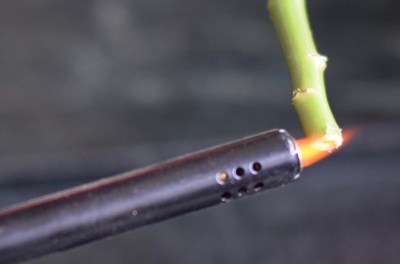
Next, we had to move the arrangement into the foyer. We decided it would be fun to add a few stems of Poinsettia flowers. When the stem of the poinsettia plant is cut, it leaks a milky white substance that can be irritating to skin. Lou Ann uses a lighter to cauterize the tip of the stem and stop the drips.

dsc_0721

Happy Holidays from Judy’s Chickens!

dsc_0732

You can follow Lou Ann and her fabulous photos of flowers, complete with their botanical names, on Instagram @labbrown

Other posts about floral arrangements made with plant materials picked fresh from the yard:

WWMD? A Bucket of Spring Veggies as a Centerpiece
DSC_0855

How to Make Crab Apple Jelly (and grow the crab apples)
Elephant Painting

LET’S STAY CONNECTED!

Follow my photos of vegetables growing, backyard chickens hanging out, and dinner preparations on Instagram at JudysChickens.

Never miss a post: sign up to become a follower of the Blog.

© 2014-2017 Judy Wright. All rights reserved. Photos and text may only be used with written consent.

Brie Bites with Preserves and Toasted Spicy Pecans

Last night I went to a holiday party for my tennis group. Everyone was asked to bring an appetizer. I knew my day would be packed with errands, but I didn’t fret because as long as I have phyllo shells in the freezer and brie in the fridge, I can whip up a tray of warm Brie Bites in just fifteen minutes!

Having two or three boxes of pre-cooked Athens Phyllo Mini-Shells in the freezer and a round of brie in the fridge during the holidays is the key to being able to make this appetizer, with the topping of your choice, at a moment’s notice.

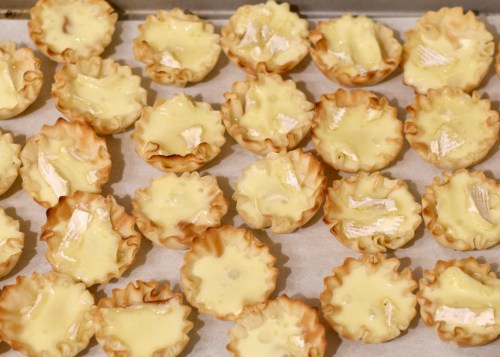
Here the cups are filled with a pat of brie.

My Favorite Toppings:

I LOVE the combination of brie and fig preserves. If I still have a jar of Roasted Fig Preserves in the fridge, I’ll top the brie with that. A reasonable facsimile, available in most grocery stores or on Amazon, is a jar of this burst of deliciousness:

During the holidays, I typically have some of Grandma’s Cranberry Chutney in the fridge, and I often top the brie with that. If not, I keep a jar of my tennis friend Leigh Oakley’s Oakley’s Spreadalicious Sweet and Hot Pepper Jelly in the cupboard for last-minute appetizers. It is also good poured over a log of warm goat cheese, sprinkled with toasted, sliced almonds, and topped with a sprinkle of fresh thyme leaves for color.
My friend and fabulous cook, Mindy, makes her brie bites with Oakley’s Spreadalicious topped with yummy, lightly salted, toasted pecans. The mix of spicy-sweet pepper jelly, toasted spicy pecans, earthy brie, and crunchy phyllo shell is crazy good!

Here is how to make Mindy’s Spicy, Lightly Salted Toasted Pecans:

Preheat oven to 300º

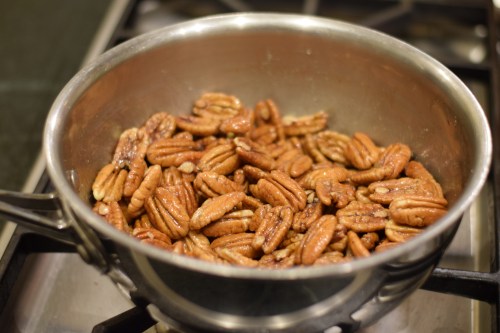
Melt 2 tablespoons of butter in a saucepan. Turn heat off. Add one pound of pecans. Toss until evenly coated. Add one shake of Lawry’s Seasoned Salt and a sprinkle of sea salt. Toss again. Taste and adjust seasoning.
dsc_0750

Line a baking sheet with parchment paper. Spread nuts in a single layer. Roast for 25-30 minutes or until you can just start to smell them in the oven. They are addictive!

Instructions for Preparing the Brie Cups:

Preheat oven to 350º. Line a sheet pan with parchment paper.

Remove the snowy white rind that covers the wheel of brie. Or not. The rind is completely edible, and whether to leave it on or to remove it is a personal choice. I think it adds a mushroomy flavor that I’m not crazy about for this appetizer but tastes fine when I eat it unadorned on a cracker. Slice the brie into small square slices to fit in the phyllo shells. Bake for 5-7 minutes or until cheese melts. Remove pan from oven.

Add a spoonful of chutney or preserves, or just a toasted pecan, or both, to the melted brie. Place sheet pan back in the oven for a minute to warm the topping. Serve warm.

Other crowd-pleasing appetizers:
“Croatian Cheese” a Flavorful Appetizer Made with Feta and Goat Cheese
Grandma’s Italian Fried Cauliflower
A Quick and Easy Baked Hummus and Feta Appetizer
Roasted Tamari Almonds
Outrageous Roasted Rosemary Cashews

LET’S STAY CONNECTED!

Follow my photos of vegetables growing, backyard chickens hanging out, and dinner preparations on Instagram @JudysChickens.

Never miss a post: sign up to become a follower of the Blog.

© 2014-2020 Judy Wright. All rights reserved. Photos and text may only be used with written consent.