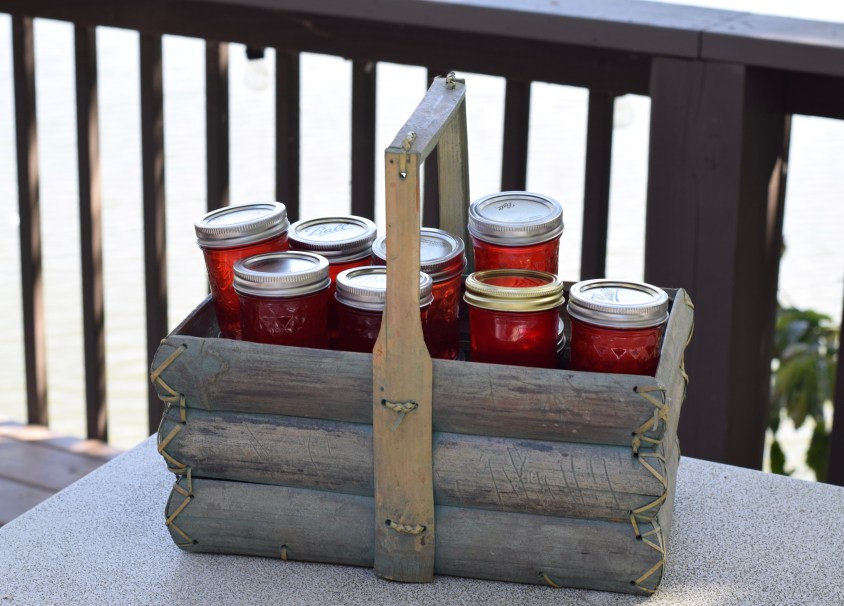
Crab Apple Jelly

dsc_0303

The first year that I noticed my two crab apple trees were loaded with fruit, it was because my mother was outside cutting branches from them to use in floral arrangements for a party.

Elephant Painting

My mother would make beautiful arrangements from random plants when she visited; crab apple decorations shouldn’t have surprised me. What did surprise me was the trees were loaded with gorgeous, red fruit and the fruit was edible. The next year, I picked every last crab apple off those trees and canned my first jars of crab apple jelly.

Growing Crab Apples

We have two crab apple trees in our backyard, both planted by the Nashville Electric Service through their Tree Replacement Program. It took about five years for them to start producing fruit. They are hardy and do not require extra care.

The trees bloom in mid-April.

dsc_0947

If pollinated, they set their fruit in early May.
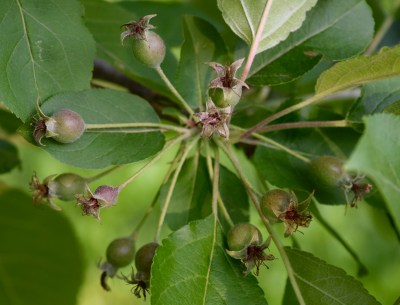
crab apple

The fruit starts ripening in September and is ready for harvest by mid-October.
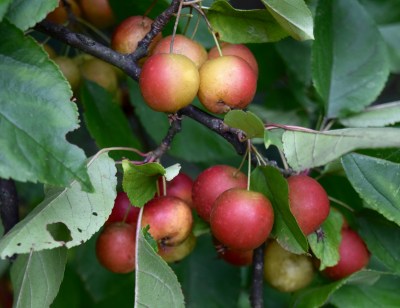
crab apple fall garden

Harvest day

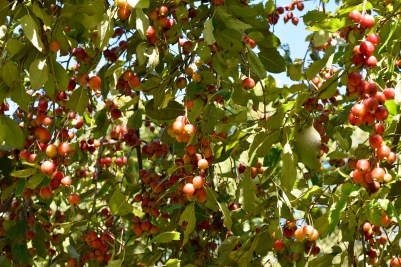
This fall, when I went to check on my trees for fruit, they were bare. I have no idea what happened; the trees were loaded in early August. Fortuitously, my good friend Deb Hudson’s, crab apple tree was full of fruit and my husband and I were able to pick fourteen pounds in no time.

crab apple – Version 2

It’s raining crab apples, hallelujah!
dsc_0882

Making Jelly

Jelly is made from the strained juice of cooked whole fruit, whereas jam is made with thin-skinned berries or tree fruits (the ones with easily extracted nuts, i.e. peach) that are crushed and the pulp retained. Both jellies and jams use a high concentration of sugar as the preserving agent and rely on pectin for the congealing or thickening agent.

Making jelly requires two cooking steps. First, fruit is cooked and strained to release the pectin from the fruit’s cell walls. Second, the pectin-laden juice is boiled vigorously with sugar until the sugar and water concentration hit the sweet spot — the point at which the mixture will congeal when it is at room temperature.

That sweet spot is known as the “set point” in the world of jelly-making. If you cook the jelly mixture past the set point, you end up with hard candy. If you don’t cook it long enough, you end up with a fruity syrup. Get it right, and you have a home-made delicacy at the ready in your refrigerator. This very small risk of utter failure, that, let’s face it, is of no consequence to the world, is one of the things that make successful jelly-making such a thrilling and deeply satisfying experience for cooks.

Establishing the set point can be tricky. There’s a reason you never see the direction “cook jelly until it sets” in a cookbook. If you cooked the fruit mixture until it thickened to a gel, by the time it cooled, it would indeed be hard candy. Instead, you need to learn how to test for the set point while you are cooking so you can remove the mixture from the heat at the correct time. Fortunately, cooks have developed a few time-honored methods for making this determination that we’ll get to.

dsc_0296

To improve your chances of achieving a good set, it helps to understand the key players in the process: pectin, sugar, and acid.

Pectin Demystified

The word pectin comes from the Greek “pekitikos” and means curdled or congealed. As fruit is cooked, its cells expand and rupture, releasing pectin into the pulp. Pectin strands are complex chains of carbohydrates found in the leaves, stems, flowers, and fruits of plants. Pectin gives structure to plants.  Accordingly, as fruit becomes overripe, its pectin content diminishes, and the fruit looses its shape. Jelly is made from a balanced mixture of strained fruit juice and sugar, held together by a webby network of these long pectin strands.

Before you begin making jelly, it helps to have an idea about the natural pectin content of the fruit you are preserving. Check out this chart to learn the pectin and acid content of most fruits. One thing you will notice right away is that pectin and acid levels often correspond to one another.

Acid? What’s acid got to do with it?

Acid helps release pectin from fruit. Later, it helps with the gelling process by creating the right environment for pectin strands to bond. It also improves the color and flavor of jelly. Some fruits are acidic by nature, especially the tart ones like crab apples and cranberries. Others, like pears and strawberries, are sweet and subsequently lower in acid. They often need an outside source of ascorbic acid. Lemon juice is the most common acidifier used when making jams and jelly.

Sugar 

Sugar is a mighty natural preservative. It is right up there with salt as an ingredient that will draw out moisture from fruit and stop micro-organisms from growing and spoiling food. Don’t add sugar to fruit until after it has softened as sugar inhibits the release of pectin. Once the fruit is softened and ready to be boiled down, the addition of sugar helps the pectin to gel.

Fruit juice needs sugar, and lots of it to preserve fruit for long-term storage. As a rule of thumb, add sugar to juice using a 1:1 ratio (one cup juice gets one cup sugar) for high-pectin, high-acid fruits. You can play around with this amount as you gain experience with the various amounts of pectin and acid in fruit.

Testing for Set Point

To test for set point, first take the pot off the heat. I use the “flake” or “sheeting” test. Scoop up about a teaspoonful of hot liquid with a wooden spoon. Let the liquid sit there for five seconds to cool slightly and then tilt the spoon and watch the liquid drip. In the beginning, the drops will drip in a steady stream indicating the liquid needs to boil more. Soon, the drops will form into tiny triangles indicating the pectin network is forming. When the mixture is ready, the last drops pouring off will run together. This is known as sheeting.

By removing the test liquid from the heat and air-cooling it, you’ve given yourself a quick glimpse of what the liquid will do when it cools down to room temperature. You’ve made an educated guess.

Photo Timeline of Sheeting Test

11:36 (stream), 11:54 (small triangle drop), 12:02 (sheeting). Know that the timing is different for every batch of jelly as it all has to do with how much water needs to be evaporated from the juice and how long that will take.

dsc_0172 dsc_0206 dsc_0216

Take a look at my post on making grape jelly to learn about making jelly that requires the addition of commercial pectin.

Recipe for a Small Batch of Crab Apple Jelly

My husband and I made two batches of jelly; one was a small batch that used 3.5 pounds of apples and the other was a large batch that used the remaining 10.5 pounds. It took 12 minutes for the small batch to reach set point and 45 minutes for the large batch. The difference in time was due to the large amount of water that had to be evaporated from the large batch.

Before you start cooking wash jelly jars in the dishwasher. You want the jars to be warm when you fill them. Boil the lids in water for five minutes before using. Use tongs to handle jars and lids.

dsc_0201

Small Batch Jelly Yield: 6 cups

Ingredients:
3½ pounds firm, crab apples (8-9 cups) which yield 3½-4 cups of juice
Enough water to be level with apples in the pot (3-4 cups)
3  5-inch sprigs fresh rosemary
zest of half a lemon
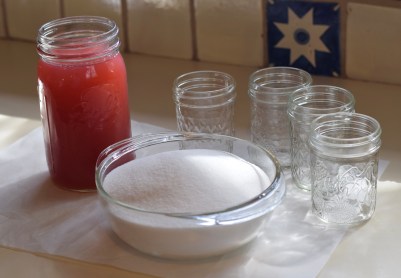
about 4 cups granulated sugar (1 cup sugar: 1 cup juice)

Mise en place for cooking the fruit

dsc_0083

Mise en place for cooking juice and sugar mixture to make jelly
dsc_0229

Instructions

First: Cook the Fruit

Wash crab apples and remove leaves and most of the stems. Inspect fruit for rot and black spots. Discard less than perfect fruit.

Place apples, zest, and rosemary in a 6-8 quart stainless steel saucepan. Pour water into the pot until it is level with the crab apples, about 3-4 cups. Do not add sugar, yet.

dsc_0092

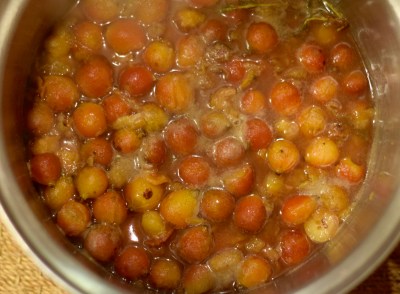
Bring fruit and water to a boil over medium heat. Turn heat to low and simmer for 15 minutes, stirring occasionally.
dsc_0113

Remove pot from heat and use a potato masher to break up the apples. Return to heat and continue to simmer until fruit is soft — another 5 or 10 minutes. Do not cook longer because you will run the risk of destroying the pectin.

dsc_0116

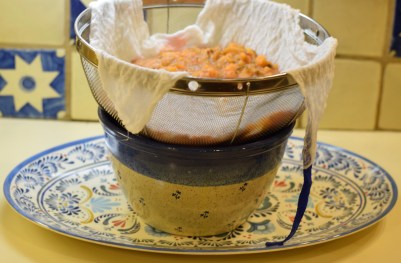
Place a muslin-lined sieve over a large, clean bowl. Pour cooked fruit in and allow mixture to drain overnight. If you push it through the sieve with force, your juice will likely become cloudy.
dsc_0136

Measure juice. You should have about four cups. If you don’t, place a heavy object on top of the pulp to slowly release more juice. Sometimes I drizzle a little hot water over the pulp and use what drips out to make up the difference and get me to four cups.

Next: Make the Jelly

Pour juice into a clean, deep, wide, heavy-bottomed saucepan that allows room for boiling a liquid that is going to froth and rise about four inches.

Bring fruit juice to a simmer over medium heat. Add sugar and stir over low heat until sugar has dissolved.

Turn up the heat to medium and bring mixture to a low rolling boil. A rolling boil is when the entire surface of the liquid is boiling, not just the edges.  After five minutes start checking the juice for set point. Remove the pot from the heat each time you check.

At first, the rolling boil will be frothy and rise up the sides of the pot. Watch carefully and control the frothiness by adjusting the heat. Otherwise, the mixture will boil over and make a mess.

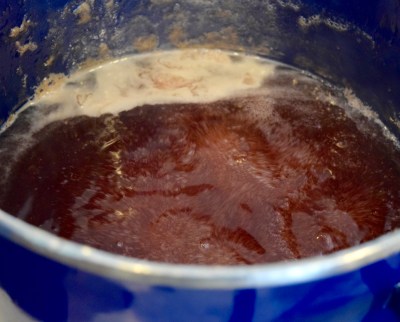
As the mixture cooks, it changes from a frothy boil

dsc_0244

to a ploppy boil.

dsc_0202

Continue to test for sheeting until you reach set point. Immediately remove pot from heat it is reached. Skim any surface residue with a slotted spoon.

Here’s a photo of sheeting from my recipe for my oven-roasted strawberry jam. This set point test method works for both jellies and jams.

dsc_0591

Finally: Store the Jelly

Ladle hot jelly into clean, warm jars, leaving ¼ inch of headspace. Wipe the rims with a clean damp cloth. Cap them and turn them upside down and allow to cool. This helps give the jars a good seal without processing, but unless they are processed in a boiling water bath, they will need to be stored in the refrigerator until ready to use. Alternatively, you could heat process them.

DSC_0004

Crab apple jelly tastes equally great on toast or served alongside roasted pork or chicken.

Another floral arrangement with crab apples!

Flowers by Mary

Beautiful floral arrangements, delicious jelly, and gorgeous colorful fruit — crab apple trees give a lot of bang for the buck. Plus, they are good pollinators.

Other Posts About Making Jelly, Jam, and Chutney
How to Make Grape Jelly (and grow the grapes)
Grandma’s Cranberry Chutney
Oven-Roasted Strawberry and Rosemary Jam
Raising Sorghum Cane

LET’S STAY CONNECTED!

Follow my photos of vegetables growing, backyard chickens hanging out, and dinner preparations on Instagram at JudysChickens.

Never miss a post: sign up to become a follower of the Blog.

© 2014-2017 Judy Wright. All rights reserved. Photos and text may only be used with written consent.

Mom’s Apple Pie with Cheddar Crumble Topping

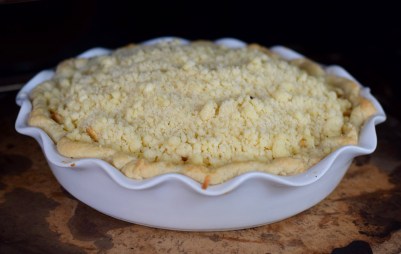
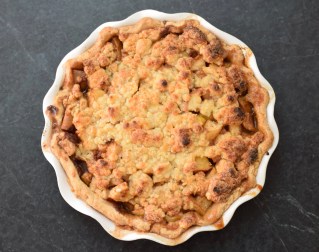
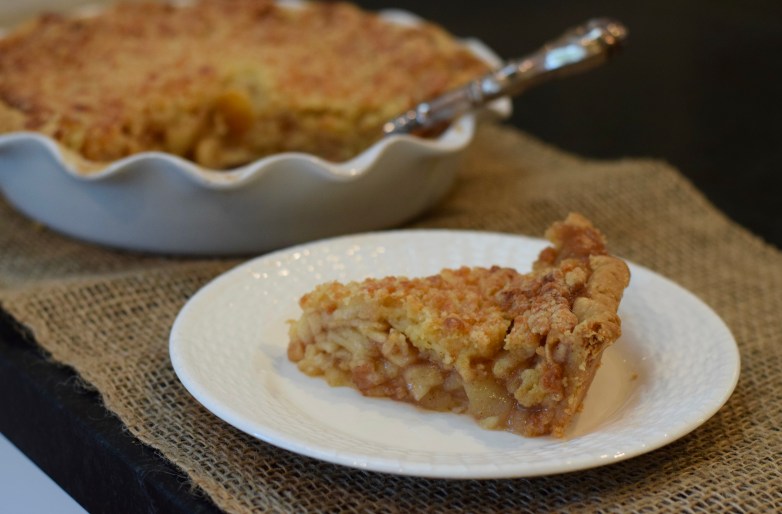
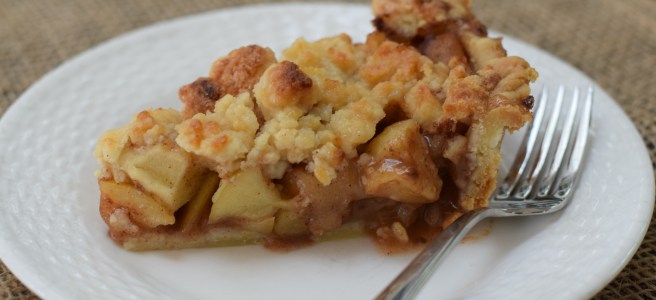
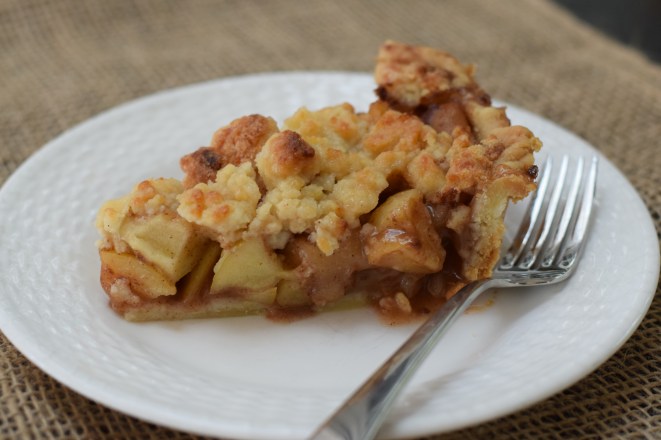
The nooks! The crannies! I love this pie with its unique cheddar crumble topping. I make it when the weather first turns and apple trees in the area are weighed down with fruit. When I took this pie out of the oven, it looked so gorgeous and smelled so good I found myself humming, “You’re just too good to be true” in sheer anticipation of taking my first bite. Mom’s Apple Pie never disappoints.

dsc_0354This recipe calls for a single crust on the bottom and a streusel-style crumble made of cheddar cheese, butter, flour, sugar, and salt, on top. Every time I make it, I add a just little more cheddar as I try to figure out just how much cheddar is too much for I love getting a taste of cheddar in every bite! Right now, I’m up to 1⅓ cups or four ounces. Mom’s original recipe called for 1/2 cup of cheese.

Yield: One 9-inch deep-dish pie

Filling Ingredients:

dsc_0445

1 pie crust (I love Trader Jo’s Pie Crust)
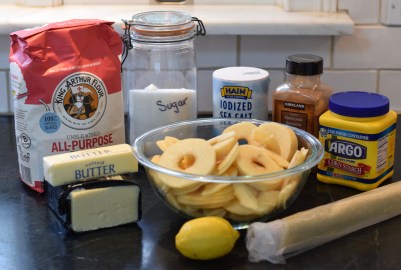
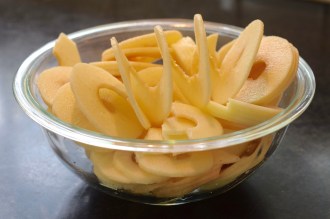
3 pounds apples, peeled, cored, and sliced (8 cups, or 2 pounds when cleaned)
¾ cup granulated sugar
1 tablespoon all-purpose flour
2 tablespoons cornstarch
1 teaspoon lemon zest
¼ teaspoon salt
1 teaspoon cinnamon
1/4 teaspoon ground nutmeg or ground cloves (optional)

Topping Ingredients:

1⅓ cups cheddar cheese (4 ounces), shredded
4 tablespoons (2 ounces) butter, chipped into pieces
½ cup all-purpose flour
¼ cup granulated sugar
¼ teaspoon salt

Instructions

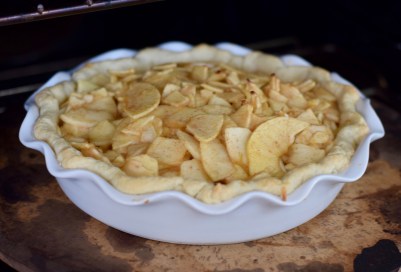
Preheat oven to 425º. If you have a pizza stone, put it in the oven on the middle rack and let it preheat along with the oven. Starting the baking process in a very hot oven with a pizza stone helps to ensure a cooked bottom crust. Place a baking sheet on the oven rack beneath the pizza stone to capture any juices that bubble over.

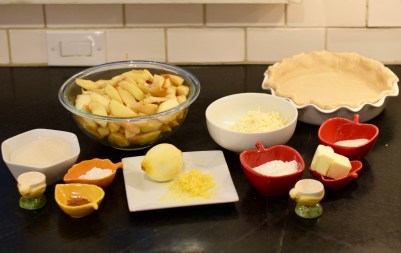
Mise en place

dsc_0107

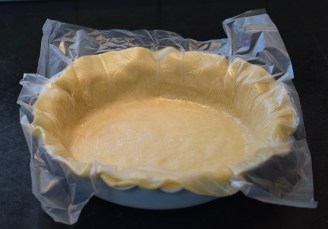
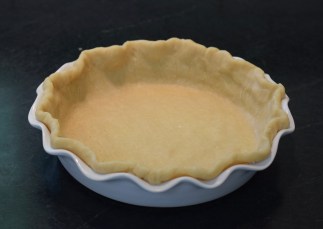
Roll out pie crust and place in the bottom of the pie plate. Fold edges in and crimp to make it pretty. Set aside.

dsc_0455 dsc_0458

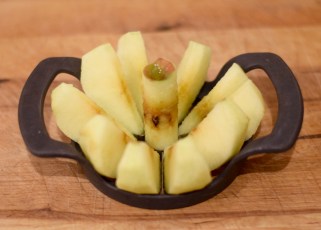
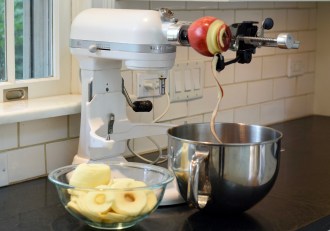
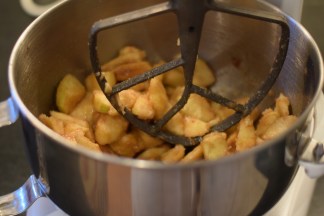
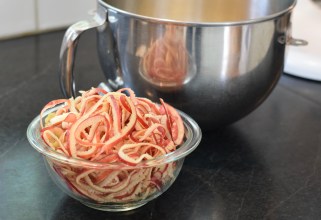
Peel and slice the apples with a paring knife, or try one of the modern conveniences out there for peeling and slicing. Set sliced apples aside.

dsc_0072 dsc_0428

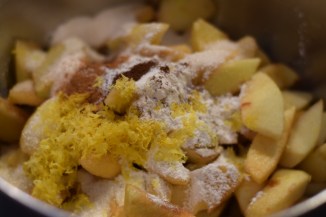
Mix filling ingredients in a bowl. The apples should be at room temperature to ensure even cooking. Set aside.

dsc_0111 dsc_0125

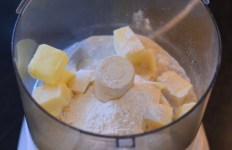
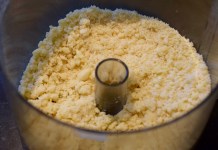
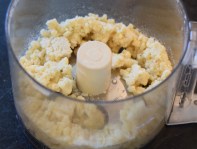
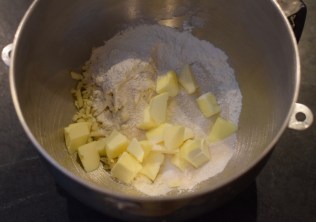
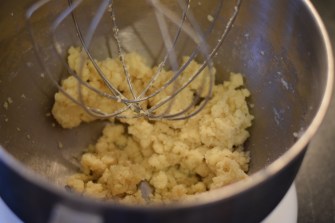
Mix topping ingredients until the streusel forms small chunks. I mix the topping ingredients either in a food processor

dsc_0165 dsc_0462 dsc_0171

Or in a bowl with a pastry blender or mixer. Set aside.

dsc_0133 dsc_0137

Put It All Together

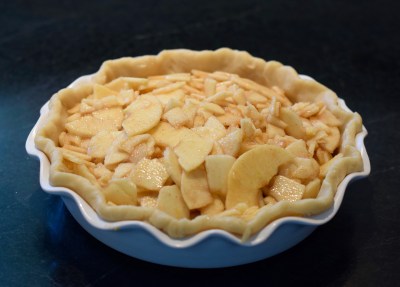
Pour filling into the prepared, uncooked pie crust. Pack the apples down

.dsc_0459

Place pie on the pizza stone and set the timer for 15 minutes.

dsc_0470

When the timer rings, spread the topping mixture evenly over the pie filling and decrease the oven temperature to 350º. Set timer for 30 more minutes.

dsc_0478

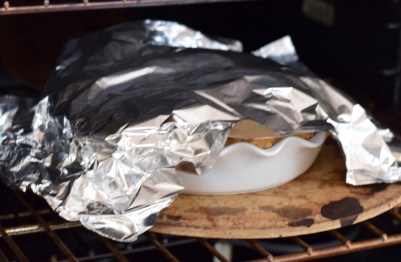
When the timer goes off, the topping should be lightly browned. Place a piece of foil loosely tented over the top to slow down further browning of the streusel.

dsc_0485

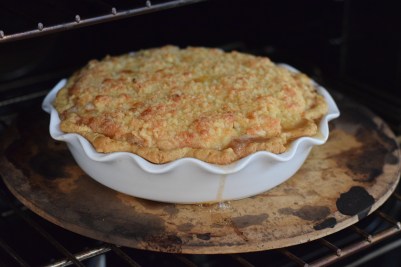
Cook for another 20-30 minutes. The interior of the pie isn’t done until you see the juices start to bubble over.

dsc_0489

The pie on the left has a fine crumb. The one on the right was processed a little longer until it clumped. I like the taste and texture of the clumpier topping.

dsc_0495 dsc_0239

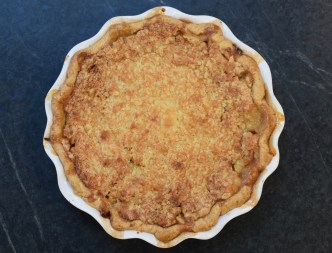
Voilà!

dsc_0571

Finally, Waste Not, Want Not

My family and I get the apple slices; the chickens get the scraps.

dsc_0436 dsc_0441


Related Posts
Mrs. Walker’s Cranberry Nut Pie
Mom’s Pumpkin Pie
Pumpkin Cheesecake Pie
Strawberry Rhubarb Pie
Very Berry Clafoutis

LET’S STAY CONNECTED!

Follow my photos of vegetables growing, backyard chickens hanging out, and dinner preparations on Instagram at JudysChickens.

Never miss a post: sign up to become a follower of the Blog.

© 2014-2021 Judy Wright. All rights reserved. Photos and text may only be used with written consent.

Tortillas with Vegetable and Egg Filling

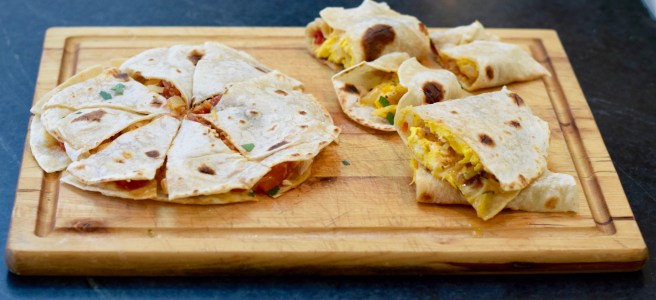
The star of today’s post is the tortilla. The uncooked tortilla. When freshly cooked on the stovetop, tortillas are light, moist, tender, and infinitely tastier than the premade, dry and inflexible ones that come stacked in a bag at the grocery store. Doesn’t this look appetizing?!

DSC_0197

Had these been around when my children were young, they would have been in my weekly dinner rotation for those days when my afternoons were swamped with afterschool activities. And, for picky-eaters, let the children pick the fillings!

DSC_0550

There are no preservatives in these tortillas, only wheat flour or cornmeal, depending on which variety you purchase, water, canola oil, and salt. They cook in under a minute, and you can buy them in the refrigerated section of most grocery stores, or in bulk at Costco.

How To Cook a Tortilla

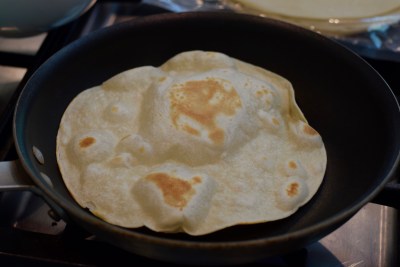
Preheat a non-stick, ungreased sauté pan on medium-high heat. When the pan is good and hot, add the tortilla.

dsc_0104

The tortilla should start to puff up and bubble within a few seconds, but only if your pan is preheated. If it puffs too high, pop the bubble with the edge of a spatula.

dsc_0108

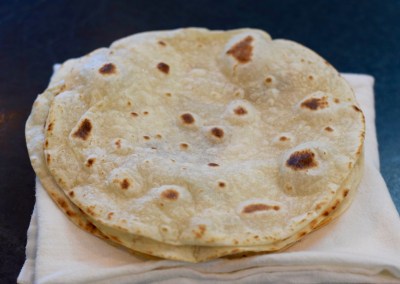
After about 30 seconds, use tongs to flip it over. Either fill the tortilla immediately with toppings of choice or, if you plan to make a few tortillas, go ahead and cook five or six and keep them warm in a towel.

dsc_0206

The Fillings:

There are so many ways to fill a hot tortilla, or not. You could just brush them with olive oil or butter. They can also be eaten for breakfast, lunch, snack or dinner.

Zucchini and Onion Filling (my fave!)

My favorite way to make tortillas is with this zucchini and onion filling. This recipe makes a lot (4 cups) but can easily be halved. It stores well in the fridge to keep available to make tortillas or bruschetta with melted cheese on top.

Ingredients

¼ cup olive oil
4 cups unpeeled, shredded zucchini (1¼ pounds)
4 cups chopped tomatoes (2 pounds)
1 cup diced onion (6 ounces)
2 crushed garlic cloves
1 teaspoon sea salt
1/2 teaspoon garlic pepper
Shredded cheese such as a Mexican style blend

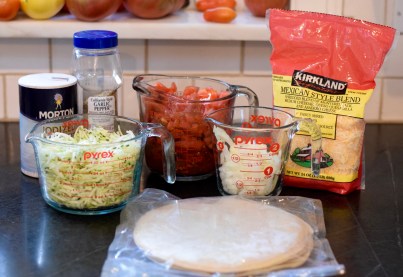
Mise en Place

DSC_0094

Instructions:

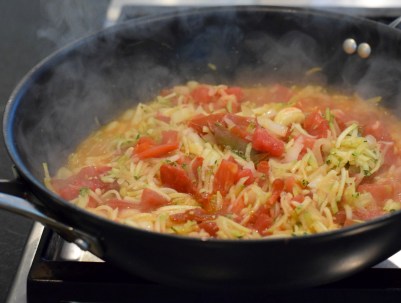
Saute olive oil, garlic, and onion together for two minutes on medium heat. Do not brown the garlic (ever!). Add veggies and sauté for ten minutes on medium-high heat.

dsc_0294

The high heat helps cook down the liquid in the pan.

dsc_0106

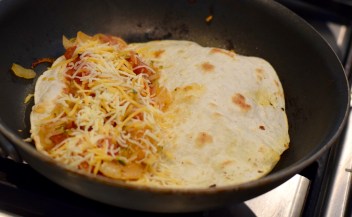
Next, spread the filling on half of a cooked tortilla, sprinkle with cheese, fold the other half over and enjoy!

dsc_0117 dsc_0121

Scrambled Egg Filling

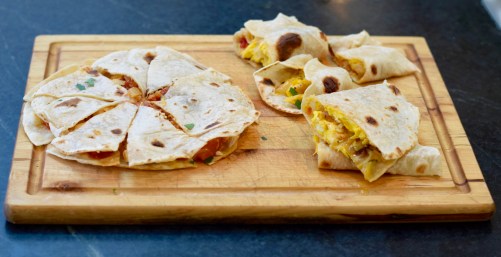
Here are the tortillas filled with eggs — soft taco or quesadilla style.

dsc_0267

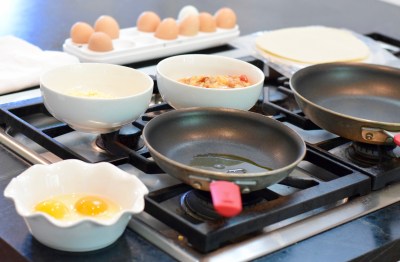
The mise en place of making scrambled egg-filled tortillas.

dsc_0177

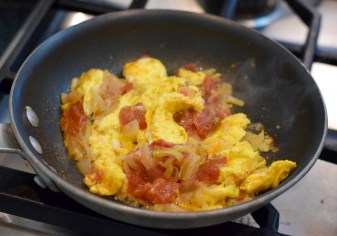
I scrambled the eggs in olive oil first. Next, I added the zucchini and onion mixture, but you could just as easily use jarred salsa, or skip both and add bacon or sausage.

dsc_0208 dsc_0211

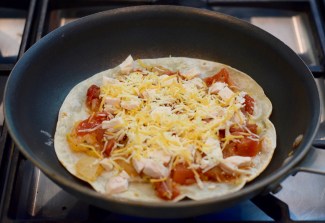
Next, I added chopped rotisserie chicken and shredded cheese and topped it with another tortilla to make a quesadilla.

dsc_0227  dsc_0231

You could just as easily fold a single tortilla in half or roll it up as a wrap.  With children, it’s always nice when you can give them this kind of unimpactful choice that doesn’t create extra work for Mom.

Other Tried and True Recipes Children Love
Judy’s Mom’s Meatloaf
Lisa’s Award Winning Buffalo Chicken Chili
Lemony Grilled Chicken Breasts
Amazingly Delicious Sautéed Carrots
Yummy Shepherd’s Pie
Marion’s Crazy Good Pumpkin Bread with Chocolate Chips
The Biscuit King

LET’S STAY CONNECTED!

Follow my photos of vegetables growing, backyard chickens hanging out, and dinner preparations on Instagram at JudysChickens.

Never miss a post: sign up to become a follower of the Blog.

© 2014-2017 Judy Wright. All rights reserved. Photos and text may only be used with written consent.
.

The Tobacco Barns of Trigg County, Kentucky

It was the smoking barns that first drew me down the rabbit hole of learning about the tobacco plant, Nicotiana. I had no idea the billows of smoke that hovered around these barns came from a curing process that has been used to preserve tobacco leaves for hundreds of years.

tobacco

In retrospect, I’m so glad I didn’t call the fire department!  My friends who grew up on farms with smoking tobacco barns said strangers were always coming to their door to inform them their barns were on fire.
These alluring barns with their hovering fog-like smoke are everywhere in the agriculturally rich fields of Kentucky.
img_2961

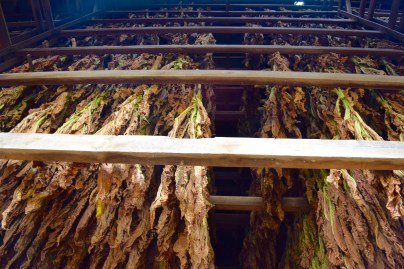
It wasn’t until I opened the door of this historical barn that I became enamored with the mottled leaves hanging on racks that rested on a series of ever-rising rafters and the low-burning fire beneath.

curing tobacco smoking

The architecture of the barns, the tantalizing smell of the drying leaves, and the agricultural history associated with the growth and harvest of tobacco have captivated my attention ever since.

The Tobacco Barns

There are two types of barns built for curing tobacco in Kentucky: those specifically constructed for air-curing and those built for wood-firing. Which barn one uses depends on how the tobacco will ultimately be finished. Flavored tobaccos like those used in pipe blends, snuff and tobacco chew, are smoke or fire-cured in barns that are tightly sealed and have smokestacks. Cigarette and cigar blends, which use a higher grade tobacco known locally as Burley, are simply air-cured in barns that allow for a cross breeze.

Air-Curing Barns

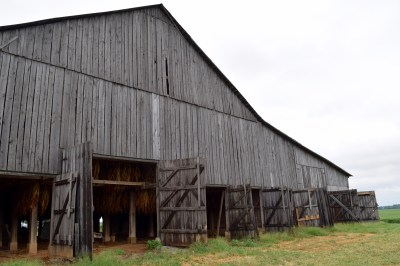
Tobacco that is to be air-cured goes into barns built for air-circulation with small open spaces between the wall slats that allow air to blow through.

dsc_0248

They do not have smokestacks.

img_3608

Here is another one. This air-curing style barn is my favorite.

dsc_0436

Notice the light coming in through the open spaces in the walls. And the rafters. Notice the rafters. So beautiful! When I am standing in this barn, I feel like I am standing in a church.

dsc_0229

Here is a photo of the same barn filled to the ceiling with tobacco. There are seven levels of rafters to hang the tobacco.

dsc_0440

When the wind is blowing, the sound of the leaves rustling is lovely. Add to that the smell of the tobacco and the whole thing is intoxicating. Take a look at this video.


Error
This video doesn’t exist

Wood-firing Barns

There are a few telltale signs that a roadside barn is built for wood-firing. Besides the smokestacks, there is always a stack of wood,

dsc_0273

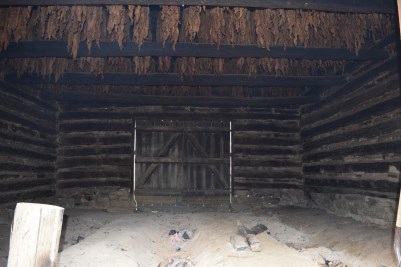
and a hill of sawdust near the barn, which are used to build and keep a low-burning fire smoldering on the floor of the barn for weeks.

img_2955

Here is the interior of a historic wood-burning barn at The Land Between the Lakes HomeplaceThe smoldering fire is built in ditches on the ground.

curing tobacco smoking

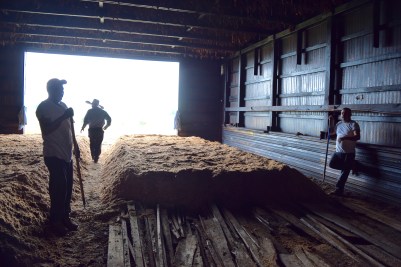
Compare that to the interior of a commercial wood-burning barn. Same concept, but in this barn, there is about six inches of firewood covered by a full 18 inches of sawdust.

dsc_0474

To create the low-burning fire, the farmer makes a series of evenly spaced holes in each row of sawdust for the entire length of the barn. He then stuffs straw in each hole and pours a little diesel fuel into the holes. Once he ignites the straw, it burns and connects with the wood stack underneath. The fire gently smolders for about a week. At this particular barn, the entire process is repeated later for another week to finish off the dehydration and smoke-curing process. I’ve read that the goal of curing tobacco is to get the moisture count of the leaves down to twenty percent so they can be transported for finishing without crumbling.

dsc_0479 dsc_0493

Growing Tobacco

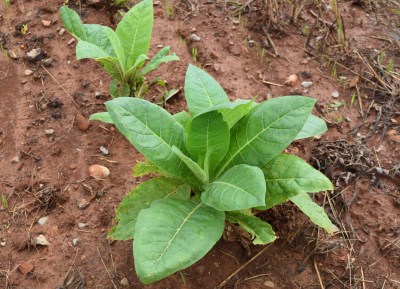
I haven’t witnessed how the seeds are started, but a farmer told me they are started in seed trays and planted in the ground in May.

tobacco

In July, the farmers “top” the plants, removing the flowering seed heads to encourage more robust leaf production. Any new leaves that try to grow are individually suckered off by farmers, or they are sprayed to halt new growth.

tobacco

That brings us to late August. The plants turn yellow indicating they have ripened and are ready for harvest.

dsc_0235

You can read up on the different varieties of light and dark tobacco leaves, and the sugar content of the leaves here.

The Harvest

The farmers begin the harvest process in late August or early September depending on the weather and ripeness of the tobacco leaves.

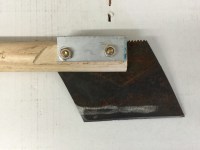
Here are the tools of the trade for harvest: a tobacco knife, a tobacco spear and a rack of tobacco sticks.

img_3733 img_3736 dsc_0217

First, the stalks are chopped down at ground level with a tobacco knife. Meanwhile, someone goes up and down the rows of tobacco plants and places a tobacco harvesting stick on the ground about every six feet.

dsc_0072

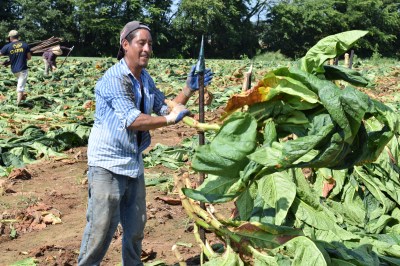
Next, a farmer comes through, picks up a stalk and pierces it with a black tobacco spear placed over a tobacco stick. The farmer threads up to six stalks onto each stick and then moves onto another stick. This process is called “sticking.”

dsc_0076

This farmer kindly allowed me to take a video of him sticking. It follows.


Error
This video doesn’t exist

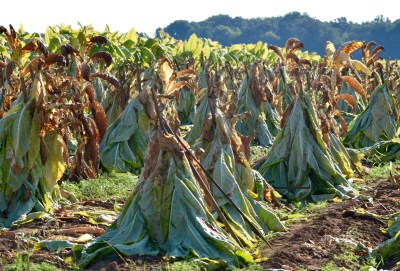
The many speared piles look like a row of small haystacks when seen in a field.

dsc_0236

Curing

Next, the stalk-laden sticks are gathered and laid across the top bars of a metal tobacco transporter.

dsc_0097

The transporters are pulled by a tractor to the curing barn where the racks of stalks (on the sticks) are hauled up into the rafters of a barn for drying.

dsc_0216

I thought for sure the farmers had some sort of lifting machine to do the job of raising the sticks up to the ceiling, however, they do not. It is all done by hand.

Another farmer named Ernesto graciously showed me how he and his team of men passed the sticks, loaded with stalks, up to the top row of rafters, bucket-brigade style. I love this video. It shows the hard work that goes into climbing up the rafters, passing the sticks up, and ultimately hanging the tobacco stalks to dry.


Error
This video doesn’t exist

I am so grateful to the migrant farmers who allowed me to film them at what is a very hard job done in very hot weather.

dsc_0562

Related Posts on Commercial Farming in the Area
Raising Sorghum Cane
How Canola Oil is Made (from plants grown locally)
How Local Canola Crops are Grown
Farming Equipment 101: Harvesting Winter Wheat
Cranberry Love

Dear Reader,

I have enjoyed learning about the harvest and curing of tobacco. I would love to hear your stories, so please feel free to include a comment if you ever worked or lived on a tobacco farm and can shed more light on the practice of raising and harvesting tobacco.

LET’S STAY CONNECTED!

Follow my photos of vegetables growing, backyard chickens hanging out, and dinner preparations on Instagram and Pinterest at JudysChickens.

Never miss a post: sign up to become a follower of the Blog.

© 2014-2017 Judy Wright. All rights reserved. Photos and text may only be used with written consent.