Lemon Tree Very Pretty

Inspiration. You never know whence it will come.

Last January, my friend Colleen posted a photo of a bowl of bright Meyer lemons on Instagram with a story about a day spent making lemon shortbread and lemon zest ice cubes. The caption read the lemons were grown by our mutual friend and neighbor, Jennifer.

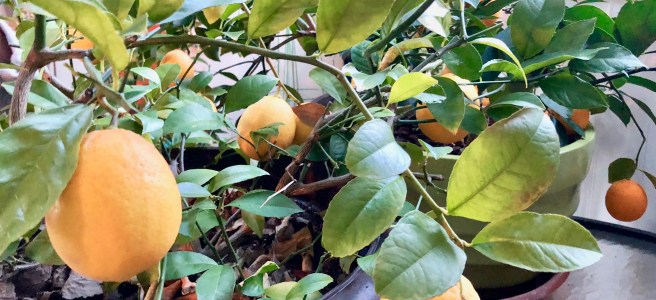
Jennifer has been growing citrus trees in middle Tennessee for five years. The trees summer in her backyard and are brought inside to her garage to winter-over. As soon as I saw the photo of the lemons I texted Jennifer to see if my husband and I could walk over to see her garage grove. All told she had fifteen plants: lots of lemons, a few limes, and one each of orange and tangerine.

The Meyer lemon trees were loaded with fruit. This photo was taken after the big harvest that sparked Colleen and Jennifer to spend the day making cookies for their neighbors.

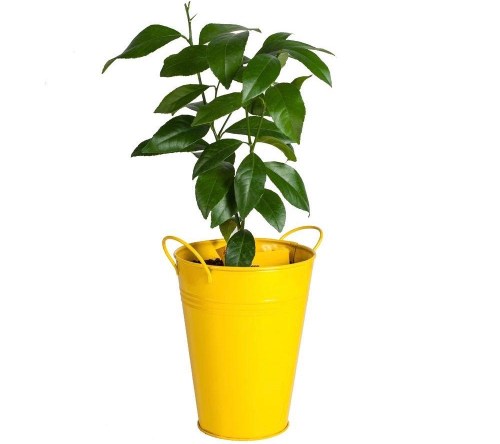
Thus inspired, in late April, when local nurseries started stocking lemon trees, my husband bought two Meyer Lemons and two Mexican Key Limes.

The plants were only about ten inches tall.
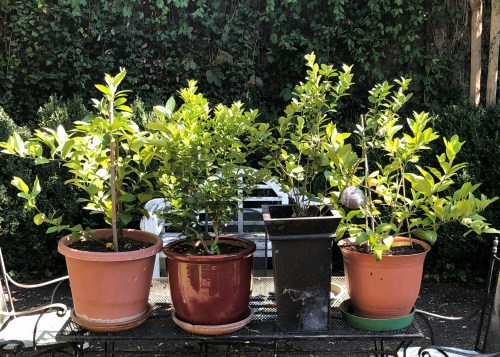
Here they are on October 21 after he re-potted them for the second time. He said he fertilized them once in the fall with Miracle Grow plant food for acid-loving plants. Since we had a mild fall, he kept them outside until mid-November.
Here they are today in our unheated sun porch.
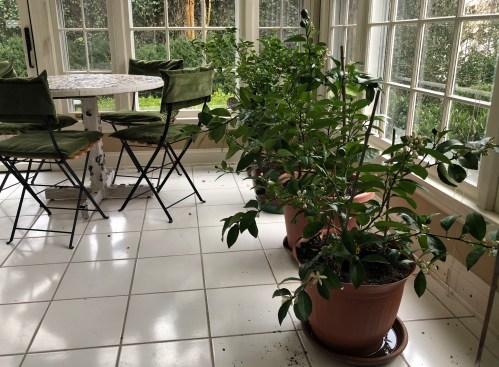
The bright, lemony, and, yes, happy fragrance of the flowers hits you when you first open the door. The smell is intoxicating.

The two lemon trees have about twenty dark green, unripe lemons and hundreds of buds; most are still closed. The lime trees are behind the lemon trees. They only have five small limes growing but have hundreds of tiny buds.
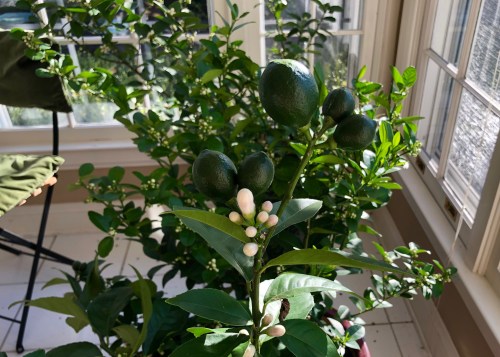
The question is, In the absence of bees or wind, how are these flowers going to get pollinated? I asked my husband, the keeper of the citrus trees, how this was getting accomplished. He said he periodically goes out to the porch and uses a Q-tip to hand pollinate the open flowers.

As a brief refresher, with flowers, the male reproductive part is called the stamen. It consists of a long, thin filament topped by a yellow pollen sack called an anther. The female reproductive part, the center tube, is called a pistil. On the tip of it is a sticky yellow stigma. In the photo, you can see the stigma is wet (it’s shiny). I wouldn’t be surprised if some flowers are being pollinated by gravity alone as the pollen grains drop from their anthers.

One Thing Led to Another

Henry David Thoreau wrote in The Succession of Forest Trees. “Convince me that you have a seed there, and I am prepared to expect wonders.”

On Christmas Eve I stopped by our friend’s house for a quick visit and was excited when 7th grader Simon and 8th grader Julius showed me a collection of sprouted seeds they had nurtured over the month. Why? Because it’s science and who doesn’t enjoy a front row seat to the wondrous moment in nature when a seedling pokes its head out of the dirt and its leaves begin to unfurl?!

Their labeled collection of sprouting seeds contained packages of seeds wrapped in wet paper towels and stored in clear plastic bags. To help the germination process along for the lemon seeds, the boys had split the hard seed shells open before placing them in the damp bags to sprout. They gave me a bag with four lemon seeds in it.

I kept the bag on the kitchen windowsill until January 6th when I planted the seeds in dirt. Here they are seven weeks after they were first placed in the bag to germinate.

Flying Dragon Bitter Orange Tree

It is worth mentioning there is a deciduous citrus plant that grows well in Nashville called a trifoliate orange tree, AKA a Flying Dragon Bitter Orange Tree. My Flying Dragon is three years old and has yet to set fruit. I’m hoping for fruit this summer. Per Wikipedia: “The fruits are very bitter, due in part to their poncirin content. Most people consider them inedible when fresh, but they can be made into marmalade. When dried and powdered, they can be used as a condiment.”

Germinating lemon seeds and pollinating lemon flowers have been fun winter pursuits while waiting for February 14th, the big day. Yup, that’s the time-honored date in our area to plant peas and thus begin the 2019 growing season! To learn more about starting a kitchen garden check out this page.

What to do with all those lemons?

Our favorite way to use a glut of lemons is to make Italian Ricotta and Lemon Cookies.

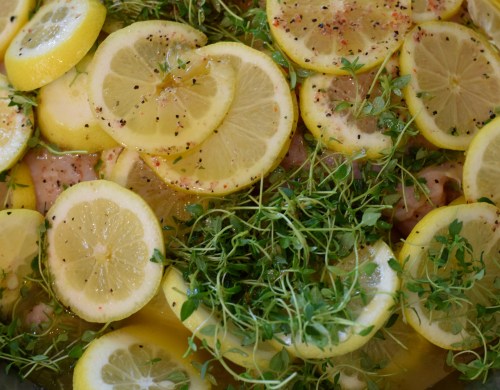
Another favorite is Lemony Grilled Chicken Breasts.
DSC_1143.jpg

Here is a lemony recipe I wrote for Mason Dixon KnittingSHEET PAN SUPPER: LEMON CHICKEN

This post shows you how to quickly peel citrus: How to Peel an Orange or Grapefruit Quickly.

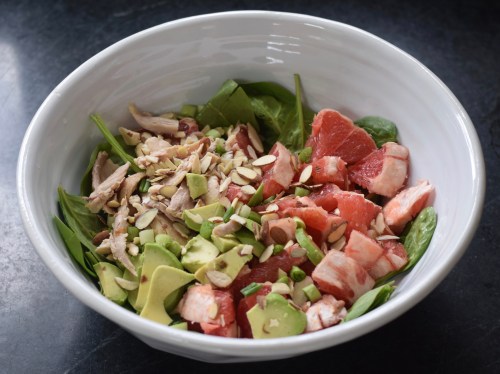
And how about a nice citrus salad to tide us over while we wait for homegrown tomatoes? Grapefruit and Greens: A Refreshing Winter Salad 
Don’t miss a recipe! Become a subscriber and have every post delivered to your Inbox.

Follow Judy’s Chickens on Instagram and Pinterest @JudysChickens.

Always check this website for the most up to date version of a recipe.  

© 2014-2019 Judy Wright. All rights reserved. Photos, videos, and text may only be reproduced with the written consent of Judy Wright.

Cookie Scoops as a Unit of Measure

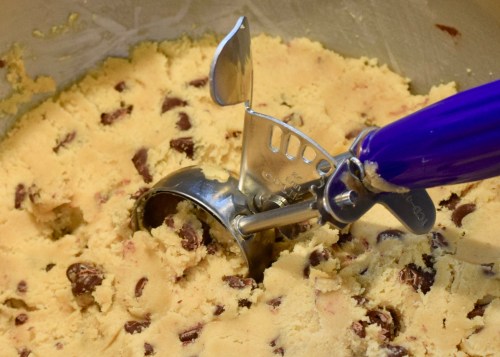
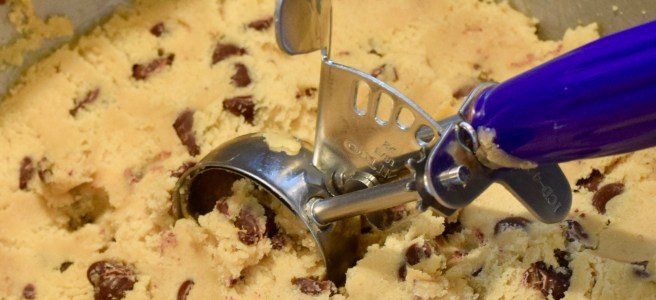
During December, I made a lot of cookies. In the course of all that cookie-making, I learned something new. A recipe I was following said to use a #40 scooper to portion out cookies. I had no idea scoopers were numbered.

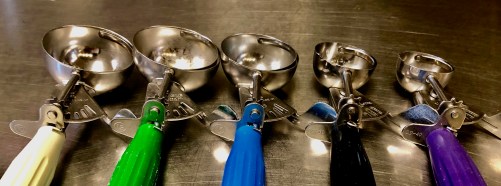
I did a little research and learned the numbers are engraved on the underside of the metal tabs that protrude from the handle.

The numbers refer to how many level scoops of food product are needed to fill a one-quart container. A #20 scoop would give you 20 scoops of ice cream from a quart container. With the #40, it takes 40 scoops to fill a quart container. Posed another way, a cook in a commercial kitchen would know that a gallon container of cookie dough would yield 160 cookies if a #40 scoop were used.

In my kitchen, I have three cookie scoops. Here’s what I learned about them:

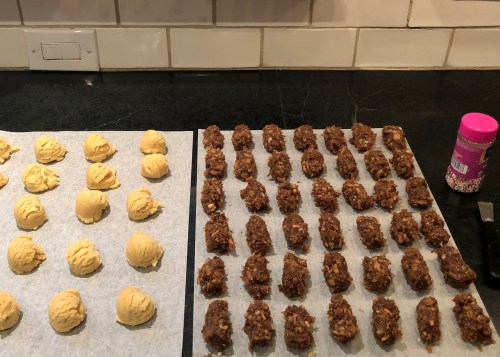
I found that when making my Aunt Rose’s Christmas cookies, I could make 78 cookies with the #30 or 105 with the #40. Bonus discovery: because they were uniform in size, they cooked evenly in the oven. Also, if I measured the portions out all at once, it took no time to grab a mound of dough from the tray and shape it into the pretty cookies our family likes to bake during the holidays.

I found I could use the #40 to portion out the sticky, crunchy filling for my grandmothers’ Sicilian fig cookies without having to stop and wash my fingers of the gooey mixture every few minutes. Once the fig mixture was portioned out, I shaped it into logs and then shaped the already portioned out cookie dough around the fig filling.

And why stop there? I used a heaping #30 scoop to make uniformly-sized Italian meatballs. I think a #20 would have been better for the job (it holds a little over three tablespoons of food), but I didn’t have one.

This photo of scoopers comes from the commercial kitchen of The Nashville Food Project where I am a volunteer cook.

There, we use the scoopers to portion out consistent amounts of food like breakfast egg muffins

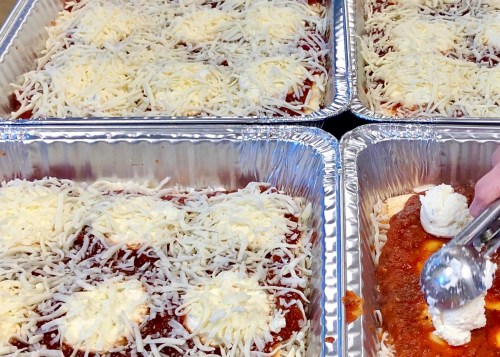
and the ricotta filling used to make lasagna — when making trays of it to feed 600 people!

I was telling my husband about my cookie scoop discovery, and he explained that the gauge of a shotgun is measured similarly. The gauge represents the number of lead balls, of the diameter of the barrel, it takes to make a pound of lead. A 12-gauge shotgun takes 12 lead balls, and a 20-gauge gun takes 20. The smaller the diameter of the barrel, the higher the gauge of the shotgun. It’s an antiquated way of describing the size of a gun.

Once I started portioning out cookie dough onto sheet pans, it took no time to figure out I could freeze the dough while it was on the tray, place the dough balls in a freezer bag, and store them in the freezer …

until the next time we wanted a few warm cookies fresh out of the oven.

This method yields evenly-sized cookies, a bonus when making cookies for a bake sale or neighborhood gathering.

Related Posts
Italian Sesame Seed Cookies
Italian Ricotta and Lemon Cookies
Oats, Sorghum, Ginger and Cranberry Cookies
Home Ec: How to Measure Ingredients Properly

Don’t miss a recipe! Become a subscriber and have every post delivered to your Inbox.

Follow Judy’s Chickens on Instagram and Pinterest @JudysChickens.

Always check this website for the most up to date version of a recipe.  

© 2014-2019 Judy Wright. All rights reserved. Photos, videos, and text may only be reproduced with the written consent of Judy Wright.
How to Fold A Tree-Shaped Napkin

Dear Readers,

Stop the presses! Here’s a last-minute idea for setting the table: tree-shaped napkins!

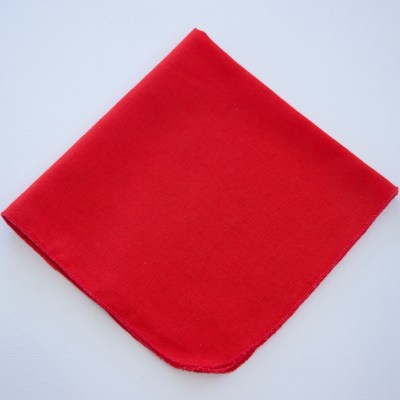
Start with the four open corners of a napkin facing downward.

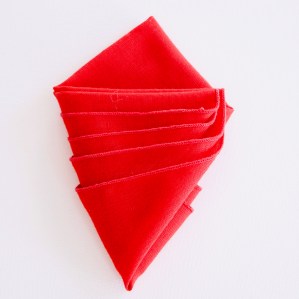
Fold each corner upward leaving a space between each fold.

Turn the napkin over. Pull the right tip over to the left side and then pull the left tip over to the right side. Tuck the top point under the folds.


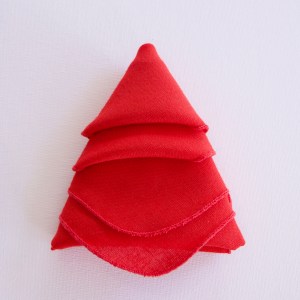
Turn the napkin over, again. Tuck each of the fold corners under as shown in the photos.


And there you go — a tree is formed.

And in a nutshell:

Need ideas for appetizers, meals, and desserts over the next week? Check out Holiday Inn: Feeding a Houseful

Wishing you a Merry Christmas!

Thanks to my son, Andrew, for helping his mother by taking last-minute photos.

Don’t miss a recipe! Become a subscriber and have every post delivered to your Inbox.

Follow Judy’s Chickens on Instagram and Pinterest @JudysChickens.

Always check this website for the most up to date version of a recipe.  

© 2014-2018 Judy Wright. All rights reserved. Photos, videos, and text may only be reproduced with the written consent of Judy Wright.

Holiday Inn: Feeding a Houseful

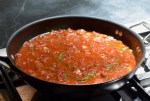
Say you have a house full of people over the next week or two and you need to keep the meals rolling out. Or, maybe you have been tasked with bringing part of a meal to someone’s house for a vacation gathering. I’ve made a list of some of my favorites. The Baked Ziti with Roasted Eggplant is the most labor intensive, but many readers noted they substituted cooked Italian sausage for the eggplant and an easy meal was ready in no time. I’ve included my fifteen-minute recipe for marinara sauce for a quick bowl of pasta, too.

Rachelle’s Italian Sausage, Onions, and Peppers


Baked Ziti with Roasted Eggplant, Mozzarella, and Marinara Sauce 


Yummy Shepherd’s Pie


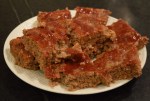
Judy’s Mom’s Meatloaf


@judyschickens Marinara Sauce


I like to make one of these delicious, crowd-pleasing chilis when I have a lot of people to feed. The Buffalo Chicken Chili is super quick, especially if you use rotisserie chicken for the meat.

Award Winning Buffalo Chicken Chili


My Favorite Silver Palate Chili


If you are a duck hunter or know someone who is, chances are their freezers are full of ducks. Ask for a few; I’m sure your hunter friends will share. This stew, served over a wedge of hot cornbread, is divine.

Kelly’s Duck Stew


If you are a making a turkey dinner for Christmas, check out the recipes for sides under Thanksgiving Week. Note the no-fail make-ahead gravy recipe. You’ll see why reader Susie Ries traveled to her daughter’s house in Wisconsin with a Knorr’s chicken bouillon cube packed in her suitcase.

Foolproof Make-Ahead Gravy


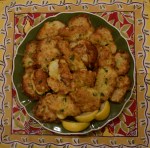
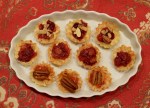
It wouldn’t be a holiday meal in a big Italian family without batter-fried cauliflower. This is one of the most popular recipes on the blog. I love the festive Brie Bites, too. They take about fifteen minutes to assemble and bake.

Auntie’s Italian Fried Cauliflower


Hot Pepper Jelly and Pecan Brie Bites


Special morning breakfasts call for special crowd-pleasing foods. Here are a few of our favorites:

Mom’s Monkey Bread, circa 1970


The Biscuit King


50 Ways to Make a Breakfast Frittata


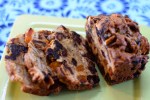
Fruit and Nut Bread


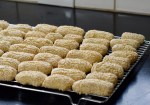
Desserts are my favorite food to cook. These Italian Sesame Seed cookies are not too sweet, easy to make, great dunked in coffee, and last for a long time in a sealed container. After a warm chocolate chip cookie, they are my favorite cookie on the planet. The Ricotta and Lemon Cookies are heavenly, as well.

Italian Sesame Seed Cookies


Italian Ricotta and Lemon Cookies


If you are looking for ideas for foods to bring in the New Year, don’t forget to include collard greens, black-eyed peas, and pork. The greens represent the color of money and thus, economic fortune, the peas (lentils, in the Italian tradition) represent coins, and plump pigs represent prosperity. Here are the tried and true recipes I make every New Year’s Day.

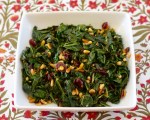
Sautéed Collards (or Swiss Chard), Toasted Pine Nuts and Cranberries


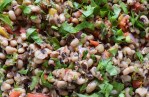
Marlin’s Black-Eyed Pea Salad


Brooks’ Pork Tenderloin with an Amazing Marinade


It’s easy to spruce up your dining room table with greens from the yard. I took a walk with my dear friend, Lou Ann Brown and we came up with this post.

Winter Floral Arrangements Using Greenery from the Yard


Happy cooking and happy holidays to you and yours!

Don’t miss a recipe! Become a subscriber and have every post delivered to your Inbox.

Follow Judy’s Chickens on Instagram and Pinterest @JudysChickens.

Always check this website for the most up to date version of a recipe.  

© 2014-2018 Judy Wright. All rights reserved. Photos, videos, and text may only be reproduced with the written consent of Judy Wright.