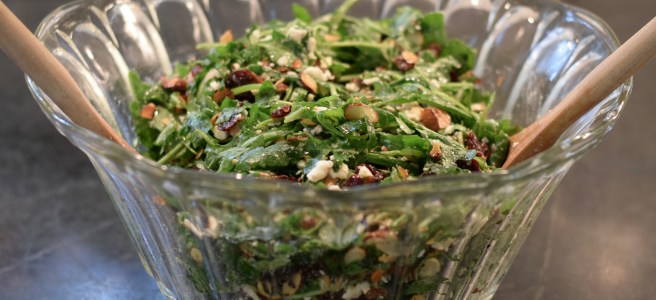
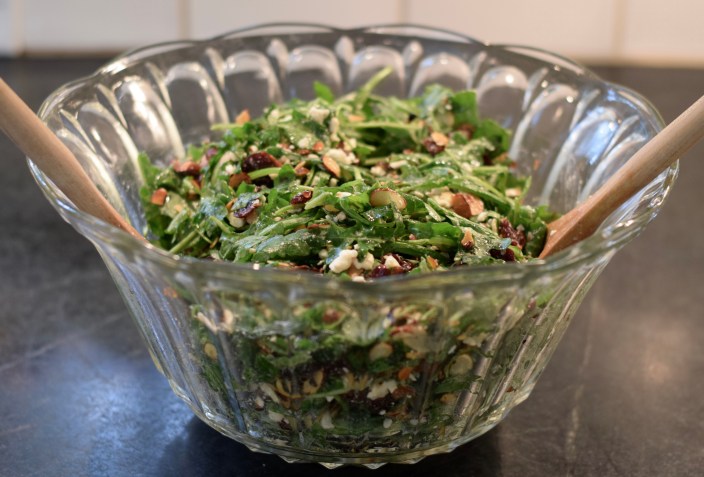
Meera’s Arugula, Feta, Dried Cherry (or Cranberry) Salad with Toasted Almonds

If you need to bring a side or a salad to a Labor Day Weekend fête, I’ve got just the one.

This salad is quick, colorful, and delicious, with the added bonus that it could easily become dinner with the addition of sliced grilled chicken. The first time I had it, on the weekend of the eclipse, my good friend, and relative, Meera Ballal, brought all the ingredients over in a Trader Joe’s grocery sack. By the time the chicken was grilled, the salad was assembled and on the table. Everyone loved it!

Yield: Serves 10-12 as a side dish

Ingredients
2  7-ounce bags arugula, (have a third on standby to perk up the salad)
1  8-ounce package dried, tart Montmorency cherries
1  6-ounce package crumbled feta cheese (sometimes Meera uses 2 containers)
1  8-ounce package raw, sliced almonds
3 tablespoons extra virgin olive oil
Judy’s Chickens Every Day Salad Dressing or TJ’s Balsamic Vinaigrette
Lemony Grilled Chicken Breasts  (optional)

Mise en Place

Instructions

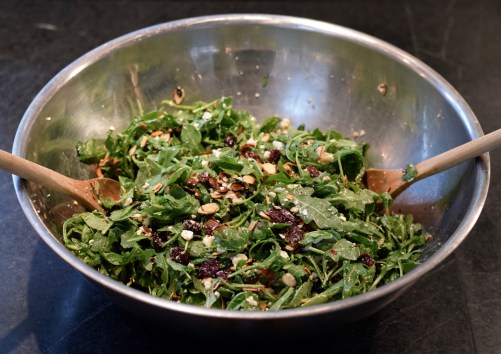
Put the arugula, feta, and dried cherries in an extra-large mixing bowl that leaves plenty of room for tossing the ingredients together.

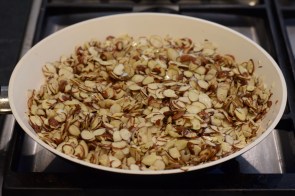
Next, toast the almonds in olive oil to enhance their nutty flavor. To do so, pour olive oil into a warmed medium-sized sauté pan. Add almonds and mix to coat. Sauté over medium-low heat for about two minutes. Meera told me to stir the nuts almost constantly because they go from toasted to burned, quickly. She said, with her infectious laugh, “This is not the time to multitask in the kitchen.” She was right about that. The nuts went from creamy white to brown, to dark brown around the edges of the pan in the blink of an eye. When they start to brown, dump them immediately into a small bowl to stop the cooking process. Keep the nuts warm in a separate bowl until dinner time.


Just before serving, add the nuts and salad dressing. I like to use my own homemade salad dressing  @judyschickens Everyday Salad Dressing.  I sprinkle a little white balsamic vinegar over the greens for added “bite” before tossing. The greens collapse quickly, so don’t add dressing until ready to serve.

For the grilled chicken, try my chicken marinade recipe, Lemony Thyme Grilled Chicken Breasts.  The lemon and thyme in the chicken enhance the flavor of the salad.

The cost of this salad? $17.14 if you use your own salad dressing.

For a fun Labor day activity, check out Catfishing with Noodles on Lake Barkley, Kentucky!

Always check the website for the most current version of a recipe. Thanks!

© 2014-2017 Judy Wright. All rights reserved. Photos and text may only be used with written consent.

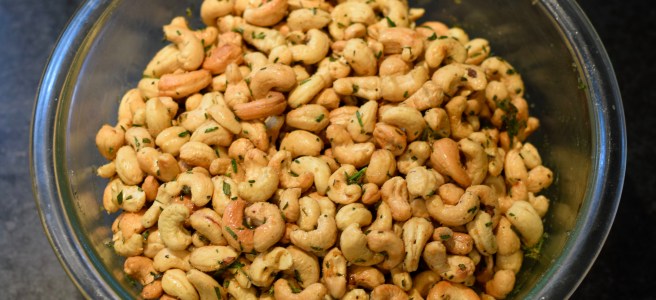
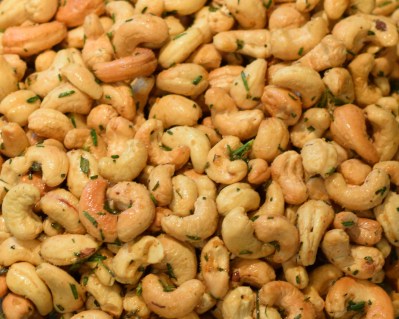
Outrageous Roasted Rosemary Cashews

Warning: these nuts can become are addictive!

Even the reject batches turned into something absolutely wonderful.

I had been served roasted rosemary cashews twice, both times at The Nashville Food Project’s Patron’s Party for Nourish. I was smitten! After this year’s event, I cruised the Internet for a recipe and found that superstar chefs like Ina and Nigella and a slew of others had been writing about these “bar nuts” from the Union Square Cafe in New York City for years. I had to make them.

A few words about the ingredients:

The Nuts. I made this recipe using one-pound bags of raw (unroasted), unsalted, cashews from Trader Joe’s and Whole Foods. The pound bags cost $7.99 at both stores. Be forewarned — raw, unsalted, cashews are hard to find at traditional grocery stores. At the Union Square Cafe, they use a combination of raw nuts.

Kosher Salt versus Table Salt. If you use kosher salt, you will need to add more salt. Kosher salt has larger crystals than table salt. Thus the salt takes up more volume but has less weight in a measuring spoon. Plan on using 1¼ to 1½ tablespoons of kosher salt to 1 tablespoon of regular salt.

Kosher salt has larger crystals because historically it was manufactured for “koshering” meat, a process where large crystals of salt were rubbed onto meat to remove surface blood. If table salt had been used, it might have been absorbed by the meat. Eventually, the name “koshering salt” was reduced to kosher salt.

Olive oil versus Butter. I  tried using olive oil instead of butter, but the seasonings wouldn’t stick to the nuts.

Yield: 6½ cups
Preheat oven to 350º

Ingredients:

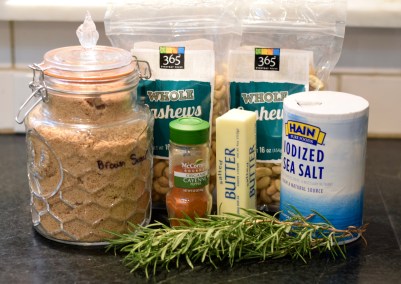
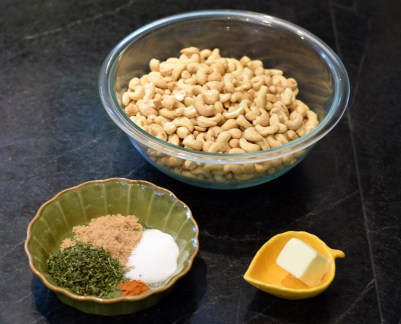
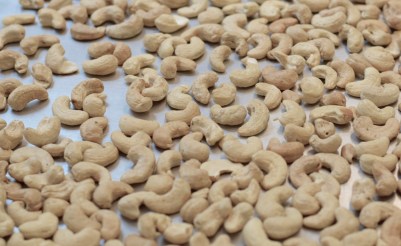
2 pounds whole, raw, unsalted cashews
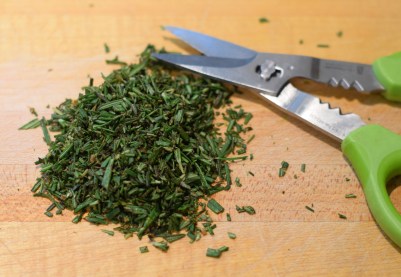
3 tablespoons minced fresh rosemary (from about ⅔ ounce of sprigs)
½ -¾ teaspoon cayenne pepper depending on how much heat you like
1 tablespoon packed brown sugar
1 tablespoon sea salt (if using kosher salt, you will need to use 1¼ to 1½ tablespoons)
2 tablespoons melted butter

Mise en Place:

Instructions:

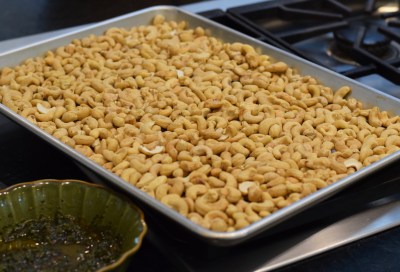
Pour nuts into a large, rimmed, baking pan in a single layer. Roast for 10-12 minutes until very lightly browned.

Meanwhile, measure the seasonings and mince the fresh rosemary.

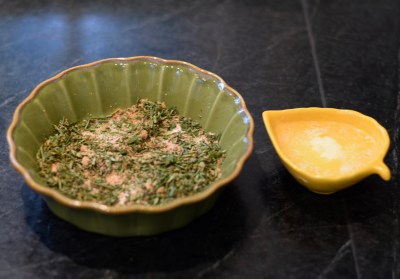
Melt the butter and add to the bowl of seasonings. Stir.

Immediately after removing nuts from oven, pour nuts into a large bowl and add the seasoning mixture. You could add the butter mixture directly to the pan and toss, but the nuts tend to spill out as you stir and much of the seasoning stays on the bottom of the pan. I think it’s better to mix in a bowl.

Let flavors meld for about ten minutes, occasionally stirring to distribute the seasonings evenly. Your house will smell divine. Serve warm or allow nuts to cool by spreading them in a roasting pan.

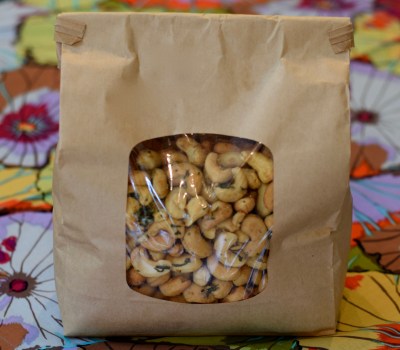
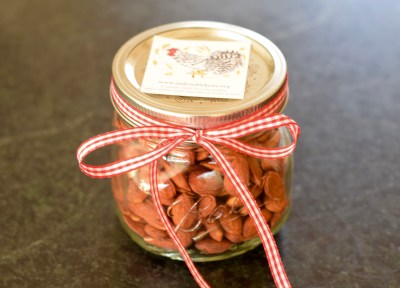
These nuts make great holiday and hostess gifts.

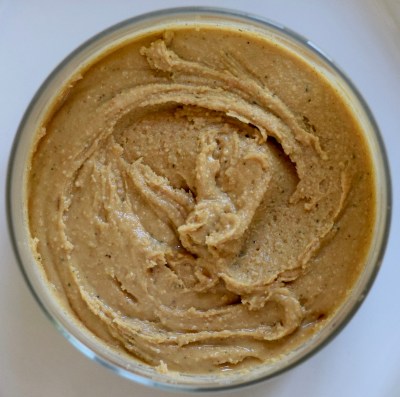
Roasted Rosemary Cashew Nut Butter

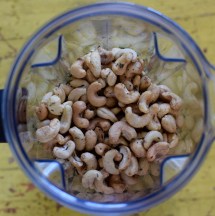
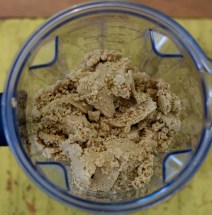
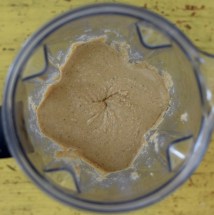
What did I do with my reject batches of roasted cashews? I tried making nut butter for the first time using my Vitamix processor. The results were amazing!! I’m so thrilled to have made something new that is so tasty. I processed the three pounds of nuts for only two minutes.
 

P.S. The seasoning mixture is yummy on popcorn.

Related Snack Recipes:
Roasted Tamari Almonds (and growing soybeans)
“Croatian Cheese” a Flavorful,  Exotic Appetizer Made with Feta and Goat Cheese
Cooking Popcorn in a Brown Paper Bag

Always check the website for the most current version of a recipe. Thanks!

© 2014-2017 Judy Wright. All rights reserved. Photos and text may only be used with written consent.

Crunchy Roasted Tamari Almonds

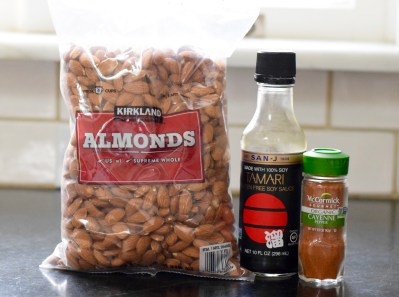
I love these salty, crunchy protein-rich almonds and the best news is they are a cinch to make. I start with a large bag of whole, unsalted almonds, toss them with tamari soy sauce, add a few shakes of cayenne pepper, and then slowly roast them in the oven.

dsc_0918

Tamari is a refined version of soy sauce known for its smooth and earthy taste. The primary ingredient in soy sauce is soybeans. I realize you probably know this, but have you ever wondered how soy sauce is made?

How Chinese soy sauce is made:
1. Dried soybeans are soaked and cooked in a vat of water.
2. Oven-roasted cracked wheat kernels are then mixed into the vat of cooked soybeans. Yeast is added to start a fermentation process.
3. Salt water is added, the ingredients are mixed together, and the mash is poured into a wooden barrel to ferment for a  year.
5. When sufficiently brewed, the mash is placed in a cloth sack and pressed to yield soy sauce.

Tamari, the Japanese version of soy sauce, is also made from fermented soybeans, but little or no wheat is used. Thus, tamari is typically a gluten-free product. The brown fermented mash in this version is known as miso. The high protein miso, also known as a fermented soybean paste, is pressed, as well, to yield tamari.

How are soybeans grown?
I’ve been waiting for an opportunity to write about how soybeans are grown for a long time, as they are a common sight to see along Kentucky backroads.

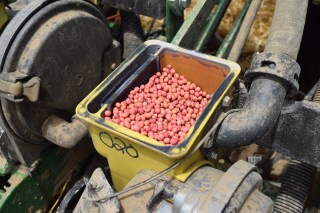
In mid-June, I saw a planter truck drill a hole into the ground and drop a seed between the rows of stubble left behind from the just harvested winter wheat. By this I mean, the planter truck followed directly in the tire tracks of the harvester truck; crop harvesting and new-crop planting in the same afternoon. Check out this post if you want to learn the difference between a planter, a combine, a harvester, and a grain truck.

dsc_0925 dsc_0923

A soybean field in early September.

dsc_0114

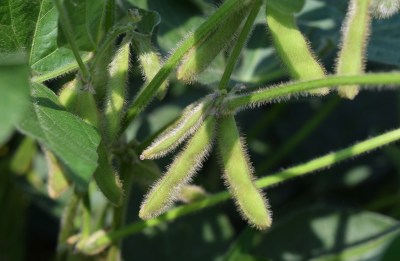
Soybean pods up close and personal.

dsc_0123

Soybeans, with their golden color, are usually the last crop standing in the fall.

dsc_0316

As the number of daylight hours wanes, the combine and grain cart get ready for one last call of duty before the close of the year’s farming season. I’m always a little sad when the growing season is over.

dsc_0305

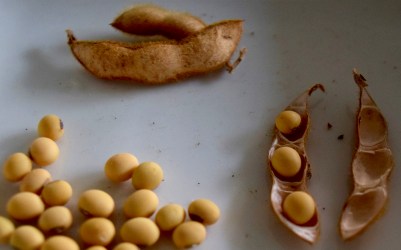
Dried soybean pods after an October harvest.

dsc_0301

Ingredients for  Tamari Almonds:
dsc_0148

3-pound bag of unsalted whole almonds
⅓ cup Tamari Soy Sauce (look in Asian section of grocery store)
2-4 shakes of cayenne pepper, depending on how much heat you like (optional)

Instructions:
Preheat oven to 200º.
Line two rimmed baking pans with parchment paper.

In a medium-sized bowl, mix together almonds and tamari. Be sure to shake the bottle of tamari first. Add a few shakes of cayenne pepper and mix well.

dsc_0176

Divide coated almonds evenly between the two large and lined baking pans.

dsc_0820

Every 30 minutes, remove pans from oven, toss the nuts and return to oven. I rotate the pans in the oven each time I take them out. Nuts should be ready in two hours.

dsc_0803

They will be soft when they first come out but will crisp up as they cool down.

dsc_0967

Other appetizers.
“Croatian Cheese” a Flavorful and Exotic Appetizer Made with Feta and Goat Cheese
Auntie Martha’s Spicy Spinach (aka Spinach Madeleine)
Grandma’s Italian Fried Cauliflower
The Classic Pimiento Cheese Sandwich

LET’S STAY CONNECTED!

Follow my photos of vegetables growing, backyard chickens hanging out, and dinner preparations on Instagram at JudysChickens.

Never miss a post: sign up to become a follower of the Blog.

© 2014-2017 Judy Wright. All rights reserved. Photos and text may only be used with written consent.

Brooks’ Pork Tenderloin with her Amazing Marinade

The first time I tasted my friend Brooks’s kickass grilled pork tenderloin was at a funeral reception. Good friend that Brooks is to so many, she showed up at the reception with a platterful of sliced, perfectly cooked, and beautifully seasoned grilled pork tenderloins. A few days later, I called her for the recipe. I wrote the list of ingredients down on a piece of paper and then promptly misplaced it. That was ten years ago, 1/18/06. I know this because I wrote the date on the recipe. You would think someone meticulous enough to date scrap paper would have a decent method for saving it.

I thought of Brooks’s juicy and flavorful recipe every time I cooked pork using my pathetic but quick get-some-food-on-the-table-after-driving-boys-around- town- all-afternoon method of throwing two pork tenderloins into a bag with a salty steak marinade and roasting them at 400º until they were very well-done. In fact, the pork was so salty and dry; I quit making pork tenderloins all together. That was until Brooks’s recipe resurfaced a few weeks ago, and I learned how to cook pork to the right temperature.

dsc_0058

Let’s talk about how pork came to be the dry, well-done, other white meat and not the juicy, tender pink meat we enjoy now.

Trichinosis; It’s no longer a health epidemic 

I grew up in the 60s and 70s. My mother and her mother before her cooked pork until it was well-done. They did so because of the prevailing fear of an illness known as Trichinellosis, aka Trichinosis, which came from the ingestion of parasitic roundworms known as Trichinella spiralis. Trichinae were found most commonly in the muscle tissue of pigs and wild game. The U.S. Public Health Service started counting Trichinellosis incidents in the mid-1940s, around the time my mother was coming of age. At the time, 400-500 cases were reported each year. Because of my mother and grandmother’s respect for and fear of this malady, I knew the word Trichinosis as a ten-year-old. It translated into a disease that could surely kill you dead if you did not cook pork until it was well-done.

This all begs the question, Where were pigs picking up this parasite?  The answer was garbage. In the old days, many pigs were fed raw garbage on pig farms. In the 50s and 60s, food laws changed, and the government said the garbage needed to be cooked, and BTW, no more feeding raw animal carcasses to pigs, either. New farm hygiene protocols were established, and rodents, like rats and raccoons, were no longer allowed to access the pigpen.

Along with tighter control over farm hygiene, the government embarked on a massive publicity campaign instructing Americans to cook pork until it was well-done. The message stuck. In 1987, another ad campaign came along this time from the National Pork Board. It pitched pork as a white meat alternative to chicken and turkey. “Pork, the other white meat,” became the slogan. That slogan served to reinforce the concept of cooking pork until it was white and well-done.

Technique Time: Heat Transfer

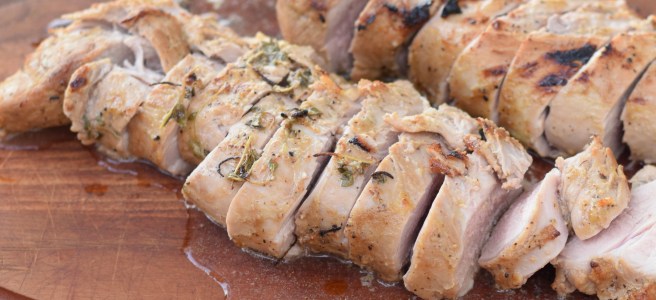
So, if you don’t need to overcook pork anymore, to what internal temperature should you cook it to get a moist, light-pink center? The U.S.D.A says a minimum of 145º for all pork roasts and 160º for ground pork and patties. When using a meat thermometer, it should be inserted into the loin’s thickest part without touching any bones. Finally, let the meat rest for 5-10 minutes before serving. During this time, the meat’s internal temperature will rise by about five degrees and finish cooking the meat to 150º. Theoretically, you could cook the meat to 140º and let it finish off to 145º, but I tried that, and it was too pink and chewy for me.

This five-degree temperature increase that happens when cooked meat rests is due to the rules of heat transfer. The temperature on the surface of the meat when you pull it out of the oven is the same as the inside of the oven, in this case, 400º. If the room temperature is 70º, the heat on the pork’s surface has to go somewhere for the meat’s temperature to equilibrate with room temperature. Some of that heat is released into the room, and some goes back into the center of the meat, raising its internal temperature to 150º.

Back to the recipe

When I finally got the chance to make Brooks’s marinade, a full ten years later, it wasn’t as kick-assy as I remembered. I think I had mismeasured on the side of timidity when it came to gauging how much was a glug or dollop of this and that (Brooks’s measurement terms!). I called Brooks for clarification and to ask if I could blog the recipe. The conversation started like this, “Brooks, do you remember making pork tenderloins for Buck’s mother’s funeral TEN years ago? [Yes.] Are you still making them the same way?” [Yes.] To my surprise and amusement, she told me her newlywed son Alex had just called for the same recipe, so the ingredients were fresh on her mind. That, Dear Reader, is what keeper-recipes and motherful moments in cooking are all about.

Yield: 1¼ cups marinade (for 2-3 pounds of meat or two logs)

Ingredients:

dsc_0019

¼ cup extra virgin olive oil
¼ cup bourbon or rye
1 tablespoon “Tamari” Soy Sauce (a refined, more delicate, gluten-free soy)
1 tablespoon Worcestershire Sauce
2 slightly heaping tablespoons Dijon Mustard
1 teaspoon Beau Monde Seasoning (a salt and spice blend made by Spice Islands)
2 teaspoons cracked black pepper
10 peppercorns
Pinch of crushed red pepper
2 tablespoons brown sugar
5-8 large garlic cloves, sliced (or a heaping tablespoon of jarred, minced)
5-6 stems fresh thyme, coarsely chopped (I use lemon thyme)
Zest and juice of one lemon
A dollop of cognac (optional)
2-3 pounds (2 logs from one package) pork tenderloin, rinsed and patted dry

Instructions:

Remove pork tenderloins from the package. Rinse under cold water and pat dry.

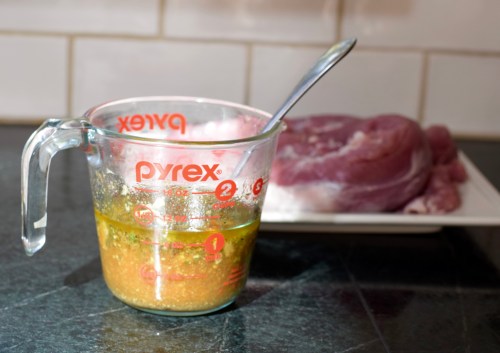
Into a two-cup liquid measure, add olive oil to the ¼ cup mark, then add bourbon to the ½ cup mark, and then all the other ingredients: Tamari, Worcestershire, Dijon, Beau Monde, red and black peppers, peppercorns, brown sugar, garlic, the zest and juice of one lemon, and the thyme. Do not add salt. There is plenty of salt in the Tamari, Worcestershire, Dijon, and Beau Monde. Stir marinade with a fork, being sure to mix in the brown sugar that settles to the bottom.
dsc_0027

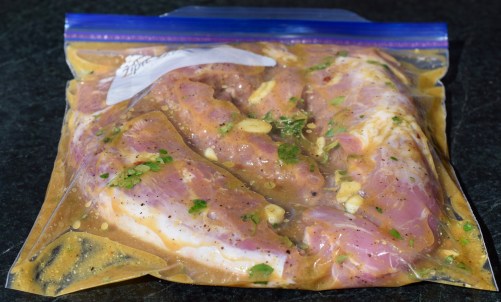
Mix pork and marinade together and allow to marinate in the refrigerator for eight hours or overnight. Turn it over and massage it every few hours.
dsc_0037

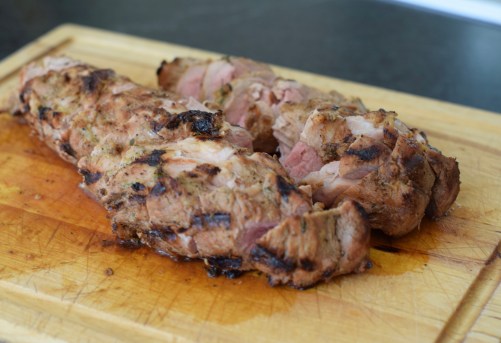
Cook in a preheated 400º oven or on the grill at the same temperature. Cook ten minutes on one side and turn over. Cook for another ten minutes, or until a meat thermometer inserted into the thickest part of the meat registers at least 145º. Let rest 5-10 minutes before serving. Our favorite degree of doneness was 148º, with a rise to 154º on the meat thermometer.

dsc_0254 dsc_0348

Even at 154º, the meat is still pink.
dsc_0363

If the meat is too salty, decrease the Tamari and Worcestershire Sauce to two teaspoons of each.

dsc_0072

Related Posts
Lemony Grilled Chicken Breasts
Mom’s Marinated and Grilled Lamb
Mom’s Roasted Lamb with Herb and Goat Cheese Topping
Lemony Grilled Chicken Breasts
Judy’s Mom’s Meatloaf
Brooks’s Pork Tenderloin Marinade

LET’S STAY CONNECTED!

Follow Judy’s Chickens on Instagram and Pinterest @JudysChickens.

Always check my blog for the latest version of a recipe.

If you enjoyed this post to become a follower, please be sure to press “confirm” on the follow-up letter that will be sent to your email address.

© 2014-2020 Judy Wright. All rights reserved. Photos, videos, and text may only be reproduced with the written consent of Judy Wright.