Crunchy Roasted Tamari Almonds

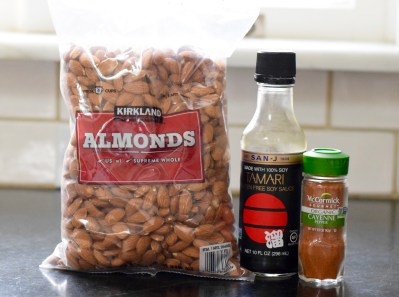
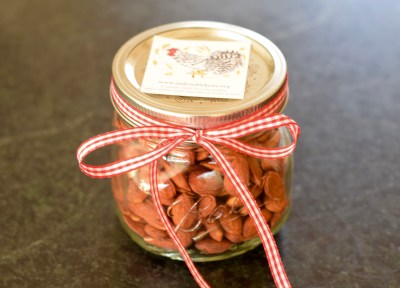
I love these salty, crunchy protein-rich almonds and the best news is they are a cinch to make. I start with a large bag of whole, unsalted almonds, toss them with tamari soy sauce, add a few shakes of cayenne pepper, and then slowly roast them in the oven.

dsc_0918

Tamari is a refined version of soy sauce known for its smooth and earthy taste. The primary ingredient in soy sauce is soybeans. I realize you probably know this, but have you ever wondered how soy sauce is made?

How Chinese soy sauce is made:
1. Dried soybeans are soaked and cooked in a vat of water.
2. Oven-roasted cracked wheat kernels are then mixed into the vat of cooked soybeans. Yeast is added to start a fermentation process.
3. Salt water is added, the ingredients are mixed together, and the mash is poured into a wooden barrel to ferment for a  year.
5. When sufficiently brewed, the mash is placed in a cloth sack and pressed to yield soy sauce.

Tamari, the Japanese version of soy sauce, is also made from fermented soybeans, but little or no wheat is used. Thus, tamari is typically a gluten-free product. The brown fermented mash in this version is known as miso. The high protein miso, also known as a fermented soybean paste, is pressed, as well, to yield tamari.

How are soybeans grown?
I’ve been waiting for an opportunity to write about how soybeans are grown for a long time, as they are a common sight to see along Kentucky backroads.

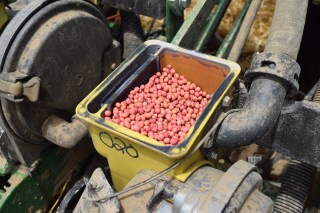
In mid-June, I saw a planter truck drill a hole into the ground and drop a seed between the rows of stubble left behind from the just harvested winter wheat. By this I mean, the planter truck followed directly in the tire tracks of the harvester truck; crop harvesting and new-crop planting in the same afternoon. Check out this post if you want to learn the difference between a planter, a combine, a harvester, and a grain truck.
dsc_0925 dsc_0923

A soybean field in early September.

dsc_0114

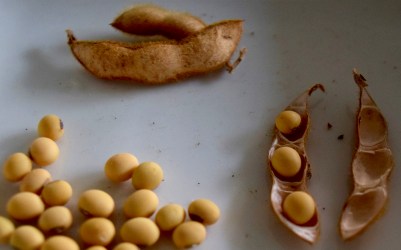
Soybean pods up close and personal.

dsc_0123

Soybeans, with their golden color, are usually the last crop standing in the fall.

dsc_0316

As the number of daylight hours wanes, the combine and grain cart get ready for one last call of duty before the close of the year’s farming season. I’m always a little sad when the growing season is over.

dsc_0305

Dried soybean pods after an October harvest.
dsc_0301

Ingredients for  Tamari Almonds:
dsc_0148

3-pound bag of unsalted whole almonds
⅓ cup Tamari Soy Sauce (look in Asian section of grocery store)
2-4 shakes of cayenne pepper, depending on how much heat you like (optional)

Instructions:
Preheat oven to 200º.
Line two rimmed baking pans with parchment paper.

In a medium-sized bowl, mix together almonds and tamari. Be sure to shake the bottle of tamari first. Add a few shakes of cayenne pepper and mix well.

dsc_0176

Divide coated almonds evenly between the two large and lined baking pans.

dsc_0820

Every 30 minutes, remove pans from oven, toss the nuts and return to oven. I rotate the pans in the oven each time I take them out. Nuts should be ready in two hours.

dsc_0803

They will be soft when they first come out but will crisp up as they cool down.
dsc_0967

Other appetizers.
“Croatian Cheese” a Flavorful and Exotic Appetizer Made with Feta and Goat Cheese
Auntie Martha’s Spicy Spinach (aka Spinach Madeleine)
Grandma’s Italian Fried Cauliflower
The Classic Pimiento Cheese Sandwich

LET’S STAY CONNECTED!

Follow my photos of vegetables growing, backyard chickens hanging out, and dinner preparations on Instagram at JudysChickens.

Never miss a post: sign up to become a follower of the Blog.

© 2014-2017 Judy Wright. All rights reserved. Photos and text may only be used with written consent.

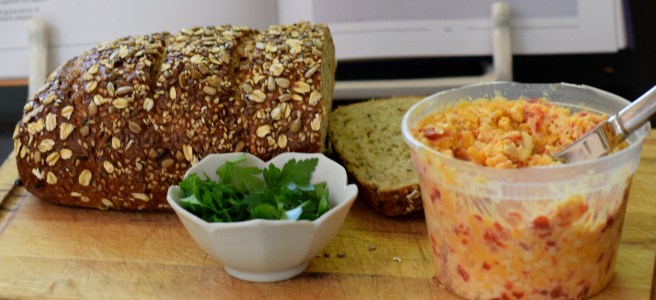
The Classic Pimiento Cheese Sandwich

Pimiento cheese, stack apple cake, mini chocolate chess pies, apple hand pies, fried okra, BBQ (aka pulled pork), hot chicken, and sorghum and butter spread over a hot buttermilk biscuit. These are all foods I never heard of until I moved to the South.  Now I adore them.

DSC_0341

Most of these Southern delicacies, like the stack apple cake, don’t show up on the table often, but when they do, I’m all in. Even though I have been given recipe cards for all these foods,  I have to admit; I’m not comfortable preparing them and tend to step aside and let the Southerners in the room make them. That’s about to change now that I started regularly making food writer, Jennifer Justus’s Pimiento Cheese recipe from her cookbook, Nashville Eats. In factNashville Eats has pretty much all of my favorite Southern foods featured in it and is my new go-to hostess gift when visiting out-of-town friends.

DSC_0099

The very first time I opened Nashville Eats, I was drawn to the recipe for pimiento cheese. Even though almost every Southern family has their own version of this cheese spread, Jennifer’s list of ingredients appealed to me: it used a mixture of real cheddar cheeses, it wasn’t too mayonnaisey or sweet, and it had a bit of heat in it. I was also drawn to the photo of the finished product; alas, it wasn’t puréed or whipped looking either. I remember immediately turning the corner of the page down indicating a pimiento cheese sandwich was in my future.
DSC_0020

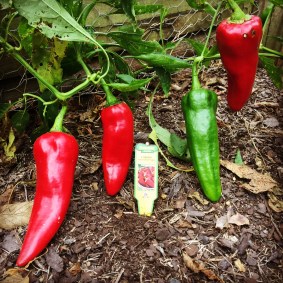
Pimientos, which is Spanish for peppers (the vegetable, not the spice), are small, red, heart-shaped, sweet peppers. I’ve never seen them for sale in anything but that small cute iconic jar with the golden-yellow top. That is about to change, too, because yesterday,  I happened to see two small pimiento plants at the garden nursery which I grabbed and immediately planted in my garden. Soon, I’ll be able to try roasting my own pimientos.
img_7936 img_2645

Jennifer’s recipe makes about 1½ cups, but since I have doubled the ingredients each time I have made it, I went ahead and doubled the recipe for the blog. This recipe makes one full pint. It took four of us one day to polish it off — first in sandwiches for lunch, and then later, served with crackers, as an appetizer.

Do not use pre-shredded cheese as it is laden with a fine powder that keeps the cheddar pieces from sticking together. Also, I like to use Hellman’s or Duke’s “real” mayonnaise.

Ingredients
DSC_0301

8 ounces extra-sharp white cheddar cheese, shredded
8 ounces mild yellow cheddar, shredded
1 8-ounce jar diced pimientos, drained
½ cup mayonnaise (not the sweet, whipped stuff)
1 tablespoon Worcestershire sauce
Louisiana Hot Sauce to taste, about 6-12 drops
¼ teaspoon ground black pepper
2 tablespoon chopped parsley leaves (set aside)

Mise en Place
DSC_0325

Instructions

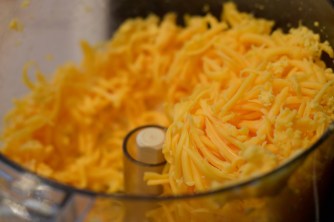
Shred the two varieties of cheese in a food processor, using the shredder apparatus, or shred by hand with a cheese grater.
DSC_0309 DSC_0313

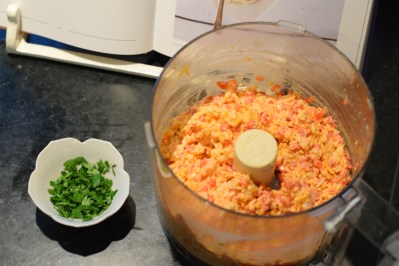
Next, remove the shredder apparatus from the processor and install the regular cutting blade. Add the mayonnaise, pimientos, Worcestershire, hot sauce and ground pepper into the processing bowl.
DSC_0328

Push the pulse button five quick times until the mixture is just blended and not puréed. This should be the equivalent of simply stirring the mixture together, but without having to dirty another bowl. Refrigerate for 1-2 hours before serving to give the flavors a chance to meld. Use the chopped parsley as a garnish.
DSC_0335

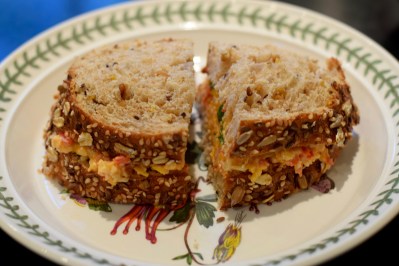
I like pimiento cheese spread on soft multigrain bread.
DSC_0345

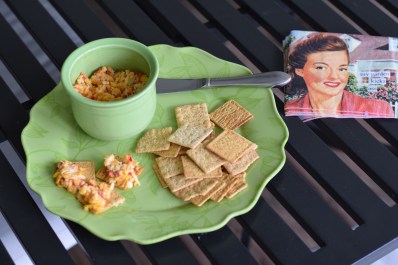
It doubles as a terrific appetizer.
DSC_0087

My family loved this. Jennifer has another version of pimiento cheese in her book made with goat cheese that sounds amazing. I see a lot of possibilities for variations in this recipe by using my beloved garlic pepper instead of the plain black pepper, or adding a few of the many spring onions growing in the garden now, and maybe using arugula leaves in the sandwich, too. I’ve also heard pimiento cheese makes for a killer grilled panini sandwich.Yum!

He Said, She Said

And, now, from my side of the family — I like to make my Croation cheese spread, which uses fresh herbs and ingredients very familiar to me!

DSC_0347

LET’S STAY CONNECTED!

Follow my photos of vegetables growing, backyard chickens hanging out, and dinner preparations on Instagram at JudysChickens.

Never miss a post: sign up to become a follower of the Blog.

© 2014-2017 Judy Wright. All rights reserved. Photos and text may only be used with written consent.

Auntie Terry’s Italian Fried Cauliflower

“Granddaddy ate them by the bucketful,” said his daughter, Rachelle.  I know for a fact that my Mom’s cousins, Mary Lou, Angela, Phil, Jeannie, and Paula, will be making them on Christmas Eve. I have wonderful memories of going to my Auntie Terry’s house on holidays and eating them. I’m talking about fried cauliflower. We are a family that loves fried cauliflower and fried celery, broccoli, and carduna if we are lucky enough to find it.

This is a family favorite. When my children gush over something I’ve made and then ask how to make it, I know it is time to blog it. I want the next generation to learn how to make the family favorites.

Here is my grandmother’s recipe given to me by Mom’s sister, Auntie Terry.

Yield: 18 Fried Cauliflower Patties

Ingredients:
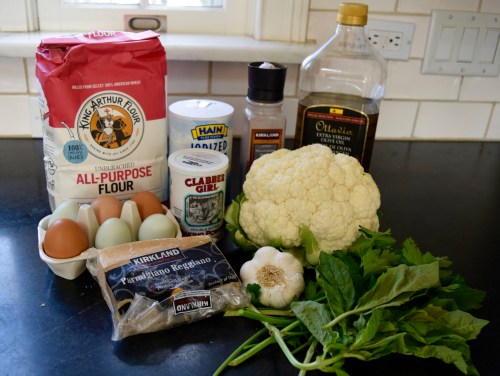
DSC_0385
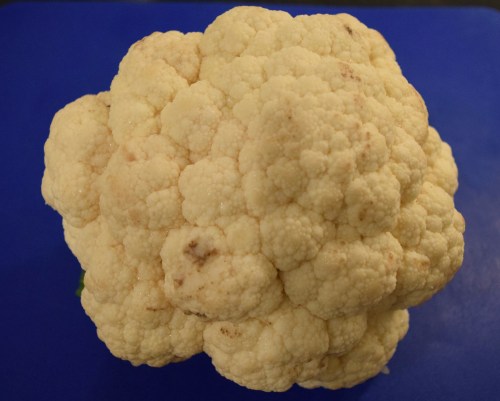
1 head cauliflower
6 large eggs
1 teaspoon sea salt
½ teaspoon ground pepper
1 teaspoon baking powder
2 teaspoons minced garlic
¼ cup chopped parsley (or 2 tablespoons each, parsley and basil)
3/4 cup (3½ ounces) grated Parmigiano-Reggiano or Romano
¾ cup all-purpose flour
½ olive oil mixed with ½ canola oil for frying
Lemon slices (optional)

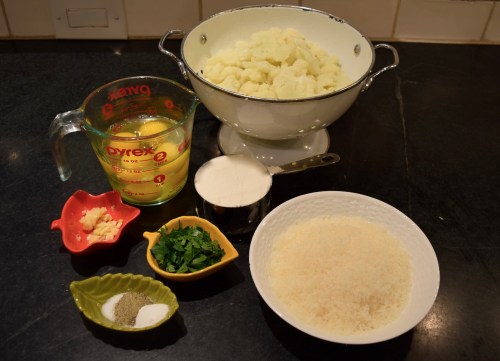
Mise en Place:
DSC_0431

Prep the Cauliflower for Cooking:
DSC_0337

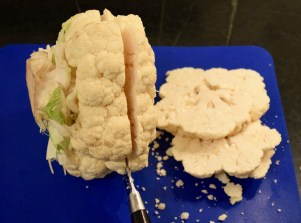
Cut cauliflower into half-inch slices. Cut out the center stem. This will leave you with many small, sliced florets.
DSC_0338 DSC_0339

Blanch Cauliflower:
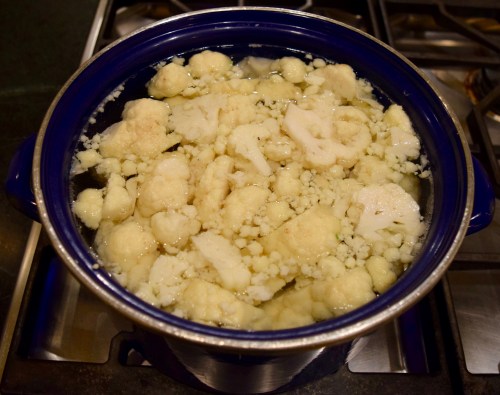
Fill a medium-large pot with 3 quarts of hot water. Add 2 tablespoons of salt. Bring to a boil. Add florets and bring to a rolling boil. Allow to boil vigorously for 1½ minutes.
DSC_0340

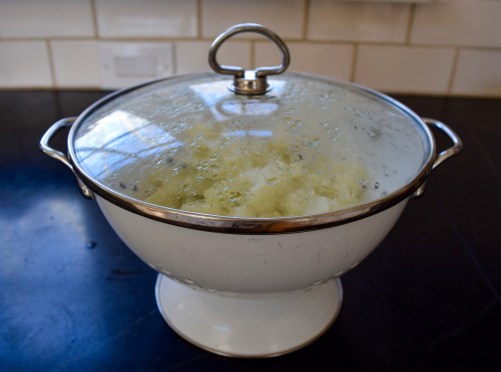
Remove florets from heat and drain through a colander. Leave florets in the colander and cover. Allow to steam, covered, for at least five minutes. The beauty of this method of cooking the florets is they will be uniformly cooked and not mushy or waterlogged.
DSC_0393

Prepare the Egg Batter:
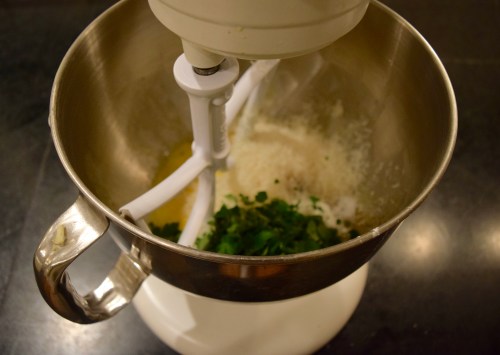
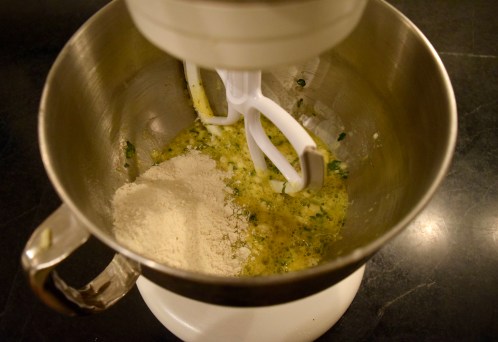
First, add eggs to a mixing bowl and beat. Add everything else but the flour and mix for about 30 seconds.
DSC_0432

Add flour and mix for about 15 seconds more. The reason to add the flour last is you don’t want to “awaken” the flour’s gluten by mixing it too much.
DSC_0435

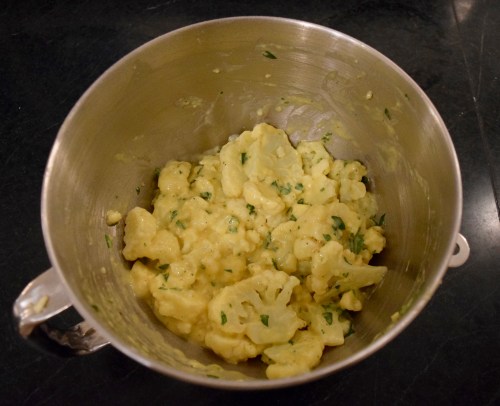
Add cooked and cooled cauliflower to the egg mixture and gently stir with a spatula until the cauliflower is well coated.
DSC_0440

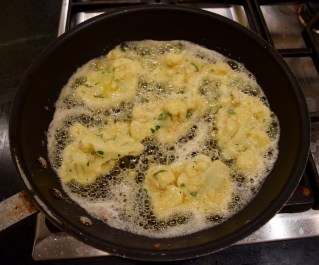
Fill a 12-inch sauté pan with about one cup of olive oil. You will be sautéing the vegetables, not deep-frying them. Set the heating temperature to medium. Let oil heat for a few minutes. Do not let the oil get smoking hot.

How to Test for Correct Oil Temperature
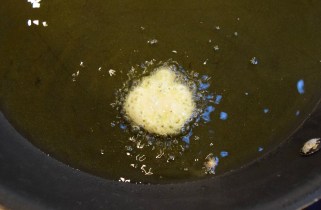
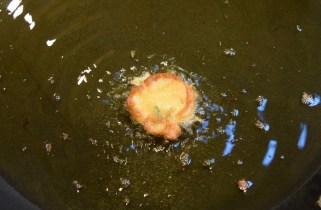
The best way to test if the oil is hot enough is to dribble batter into it. If the batter sizzles, the oil is hot enough. If the batter immediately turns brown, it is too hot. In that case, remove the pan from heat and let the oil cool down some.
DSC_0415 DSC_0416

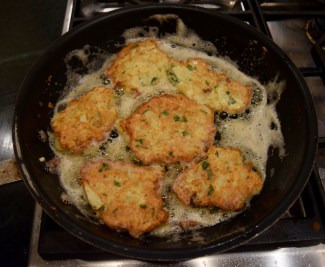
If the oil is too hot, the patties’ interior will remain doughy while the exterior turns crisp. If the temperature isn’t hot enough, the batter will become like a sponge, sop up the oil, and the patties will taste bland. Plan on the patties cooking for a total of four to five minutes.
DSC_0444 DSC_0447

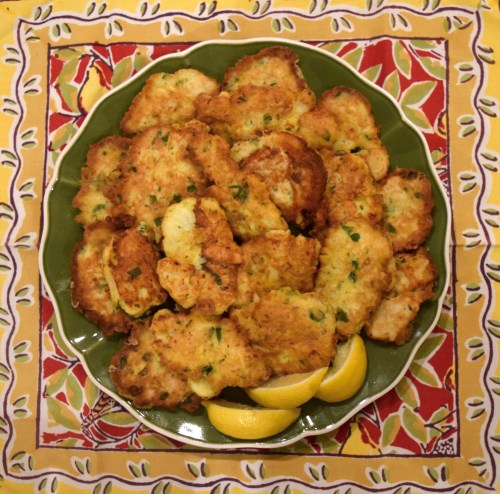
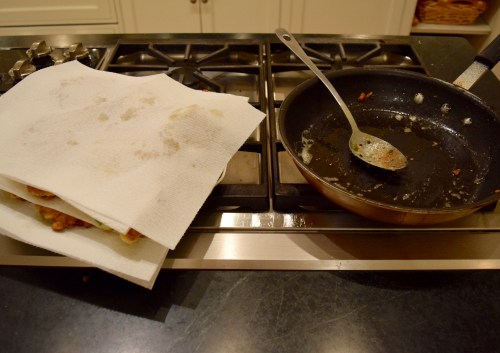
Remove cauliflower from pan with a slotted spoon. I tap the spoon against the inside edge of the pan to release as much oil as possible. Drain cauliflower on paper towels. This recipe makes three batches of six cauliflower patties.
DSC_0367

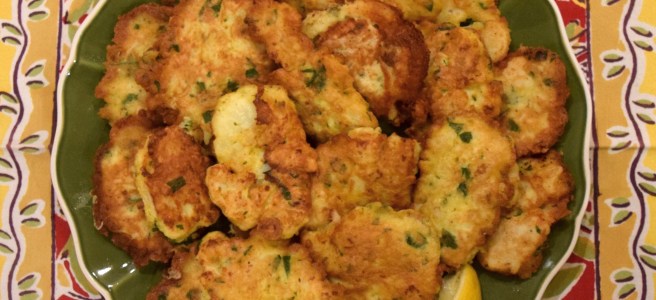
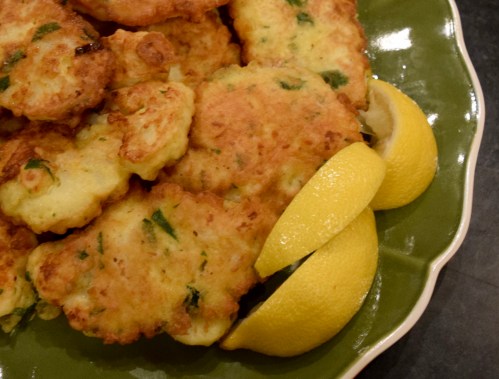
Serve hot, warm, or cold. They are amazing at any temperature. When they are still warm, I like to squeeze lemon juice on each one before I eat it. I think it catapults the flavor to another level of deliciousness!
DSC_0505

My relatives, who have made these for a lifetime, have assured me there will come a time when I will be able to make the batter without measuring it, as they do. Paula gave me the best advice about the consistency of the batter: “the batter should be thick enough to coat the cauliflower and still allow it to run off slowly like pancake batter would.” She also starts off each batch by frying a little of the batter (without cauliflower) to taste test if she’s gotten the batter’s seasonings correct since she makes her batter with Bisquick and without measuring the ingredients.

A photo of my grandparents. Grandma made all of her aprons.

Hollywood fl ? date

Other yummy veggies:
Roasted Ratatouille
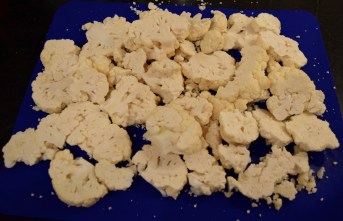
Cauliflower Three Ways: Roasted, Blanched and Mashed
Roasted Butternut Squash, Brussels Sprouts, and Cranberries
Amazingly Delicious Sautéed Carrots
Roasted Spaghetti Squash with Asparagus and Chicken

LET’S STAY CONNECTED!

Follow my photos of vegetables growing, backyard chickens hanging out, and dinner preparations on Instagram at JudysChickens.

Never miss a post: sign up to become a follower of the Blog.

© 2014-2020 Judy Wright. All rights reserved. Photos and text may only be used with written consent.

“Croatian Cheese” a Flavorful and Exotic Appetizer Made with Feta and Goat Cheese

About ten years ago, we hosted a Croatian high school student for a month at our home in Nashville. His name was Bruno. The following summer, his family invited us to their summer home on Brac, one of the Dalmatian Islands on the Adriatic coast. That vacation was one of the best trips of our lives.
DSC_0398

Bruno’s parents, Lilijana and Mario, fixed our meals using local produce and products on the island. The honey came from the beehives of a friend, the red wine from a vat at a cousin’s house, the olive oil was pressed at another cousin’s home, and even the fresh tuna on the Fourth of July came from a friend at the pier. It was all so marvelous.

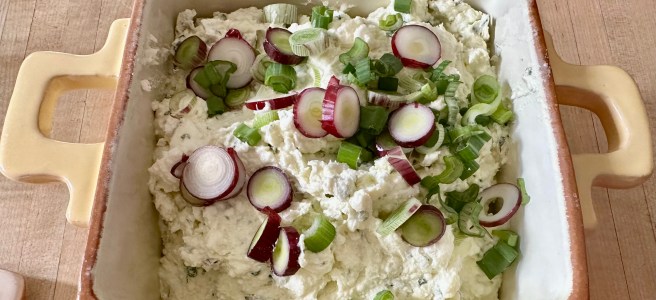
Lily was a fabulous cook. She probably used fifteen types of ingredients to make our meals. Her cooking was simple, fresh, and delicious. Some afternoons, she would mix equal parts of sheep milk feta and goat cheese with olive oil, garlic, and herbs and serve it with crusty bread as an appetizer. We devoured it. We dubbed it “Croatian Cheese.” The first thing I did when I returned home was to recreate it.

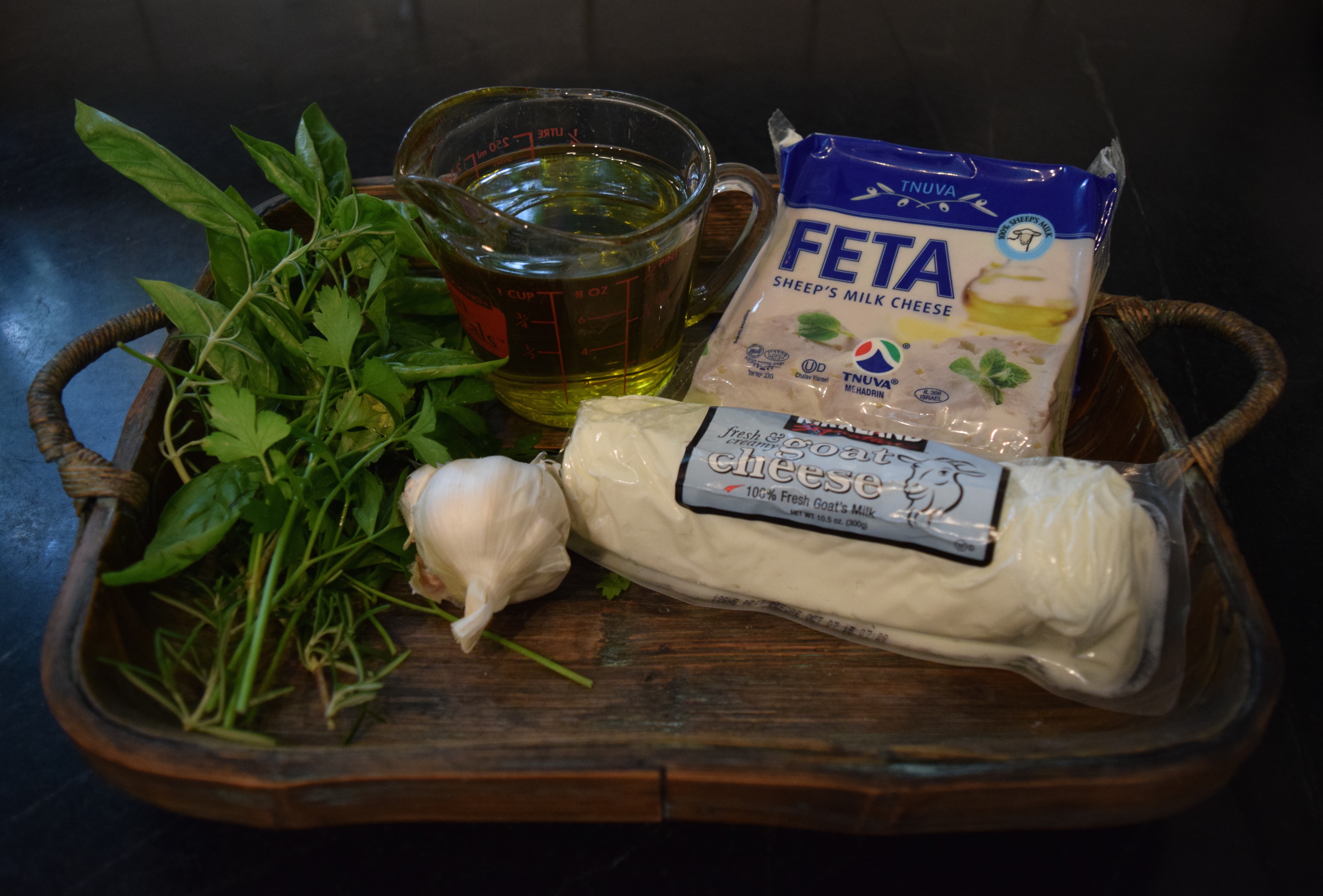
Ingredients:DSC_0347
Approximately equal amounts of sheep (feta) and goat milk cheeses — the packages I used had 1 pound of feta and 10 ounces of goat cheese
A few sprigs each of rosemary, basil, and parsley
*3 small cloves of freshly chopped garlic
1/3 cup extra virgin, first cold pressed olive oil

Prepare the aromatics: snip the leaves and peel the garlic. Uncooked garlic has a much stronger flavor than cooked, so more is not better in this case

I make this in a food processor for convenience. Once you add the cheeses, just pulse the ingredients; do not puree. Refrigerate for a few hours to give flavors time to meld.

Directions:
Pulse garlic cloves first. Add herbs and pulse. Add cheeses and pulse briefly. Finally, drizzle olive oil in and pulse one last time.

DSC_0362  DSC_0365 DSC_0366  DSC_0368

Garnish with herbs or thinly sliced scallions, if desired.

Below is a photo of my favorite memory of Croatia — our two families went on a sailing trip together.

croatia sail dragoandrewjessetylerbruno

Don’t miss a recipe! Become a follower and have posts delivered to your Inbox.

Follow Judy’s Chickens on Instagram and Pinterest @JudysChickens.

© 2014-2023 Judy Wright. All rights reserved. Photos, videos, and text may only be reproduced with the written consent of Judy Wright.