Cheese Ball Pops!

Some recipes get passed down from generation to generation, and others get passed around from friend to friend. The latter was the case with this cheese ball recipe. My friend Rosie brought a delicious blue cheese ball, encrusted in toasted pecans, to a dinner party. I loved it. I called her the next day to ask if she would share the recipe. She promptly emailed a recipe forwarded to her by her friend Trudy, whose friend Paula had forwarded it to her. Trudy’s request to Paula for the recipe went like this, “My husband cannot stop talking about your cheese ball…” It was that good.

At the dinner party, Rosie shared a story about how a cheesemonger at the grocery store scoffed at her when she mentioned she was looking for blue cheese to make a cheese ball. A cheese ball? He went on to recommend other, more high brow cheeses. He cheese-shamed her!

Perhaps you have your doubts, too?

The Original Recipe

Paula’s recipe was perfect and brief: “Combine eight ounces each of blue cheese, mozzarella, and cream cheese. Add a tablespoon of flavorful port or sherry. Shape into a ball, wrap in plastic wrap, chill until firm. Toast and chop about ¾ cup of pecans and roll the cheese in the nuts to cover.”

Playing with Add-Ins

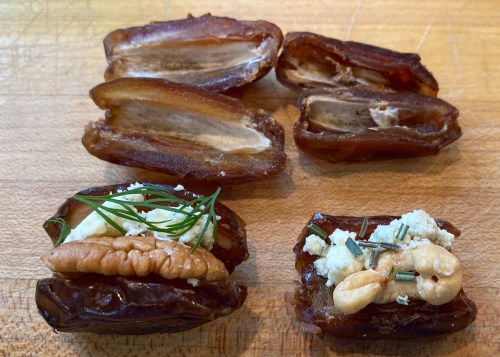
Ever since I wrote last week’s post, A Cake for All Seasons, I’ve been thinking about ways to use flavor-building add-ins like herbs, spices, and fruits to change the way foods taste. I love dates stuffed with blue cheese and nuts, so I tried adding them to this already great cheese ball for fun. I tried various nuts and herbs in the empty cavity of dates to experiment with various flavor combinations. I liked the pecans and dill.
About dates, the food, that is.

Cooks often use dates as a natural way to sweeten foods, especially desserts. Many recipes tend to call for either Medjool or Deglet Noor dates. Medjools are sold fresh and can be found in the produce section. Deglets can be found in the dried fruits aisle. Both varieties are sweet, low in fat, and high in potassium, iron, and fiber. Medjools are larger, softer, and moister than the dried dates. Deglets have a more delicate flavor, are firmer, and are a little less sweet.
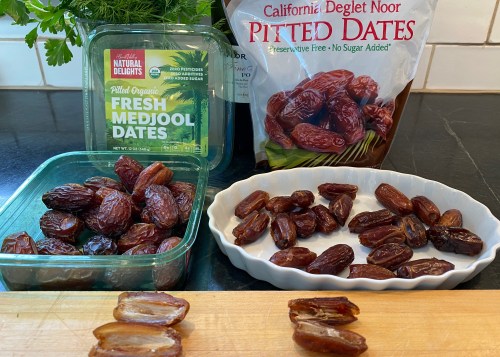
Dates grow on date palm trees in warm climates. They are labor-intensive to grow, and their priciness reflects that.

Reasons to Make a Cheese Ball at Your Next Party:
-The cheeses can be blended 2-3 days ahead. The flavor improves overnight.
-The recipe can be cut in half. Or, you could make two small cheese balls and freeze one (don’t roll in nuts and herbs until ready to serve).
-It can be shaped into a ball, a log, or single-serving cheese pops.
-It may be a good way to use up stray cheeses in the refrigerator. I would make a small bite-sized sample of whatever cheeses you plan to put together to make sure you like the flavor profile.

Ingredients:
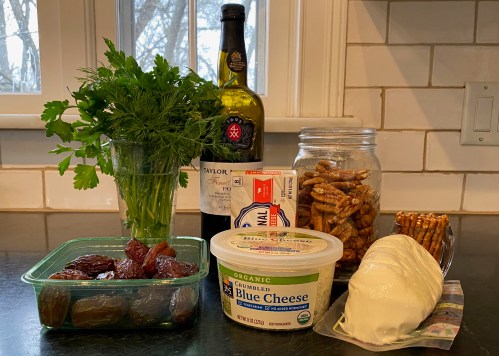
1 cup pecans, chop and then toast
10 pitted dates, chopped (only 7 if using the large, unpitted Medjools)
2 heaping tablespoons, minced dill leaves, from 8 sprigs or 1 package
8 ounces blue cheese (I tried Gorgonzola and would not recommend it)
8 ounces mozzarella
8 ounces cream cheese, cut into 1-inch chunks for easier mixing
1 tablespoon port or flavorful sherry. I used a tawny port
Serve over crackers, pretzel sticks, or ginger snaps (sweet, but delish!)

Mise en Place:

Instructions:

Chop pecans into small crumbles and toast in a 300º oven for about ten minutes. Watch closely, so they don’t burn. Set aside.

Chop dates into small pieces. Set aside.

Mince dill leaves. Set aside.

Place cheeses and port in bowl of a food processor and pulse until well mixed. Add the chopped dates and pulse 2 or 3 times more until cheese, port, and dates are combined. Do not purée!

Use a spatula to scrape the cheese onto a sheet of parchment paper. Wrap the paper around the clump of cheese and shape it into a ball. Refrigerate for an hour.
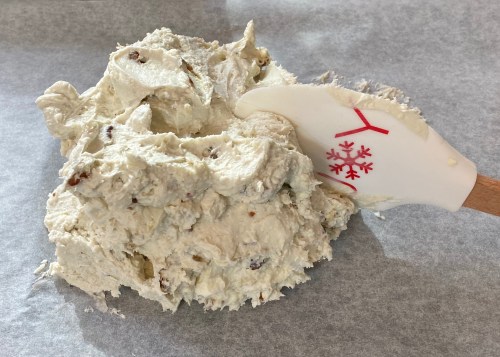
Remove cheese from the fridge and decide how you want to serve: one ball, two balls, a log, or as cheese pops. I served a dozen cheese pops and a traditional cheese ball.

Use a small cookie scoop to shape the balls and roll them in the pecan and dill mixture. Use thin pretzels for the sticks.

If desired, form the remaining cheese into a  ball and roll it in the remaining nuts and dill. I love the colors and texture!

You haven’t lived until you have spread this cheese on a ginger snap. Oh, my goodness — it could be dessert!
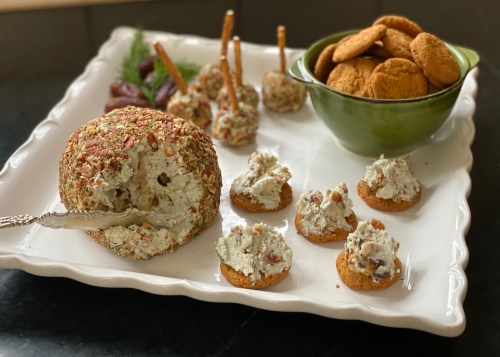
Thank you, Rosie, Trudy, and Paula, for sharing the original recipe! xo

Check out other party snacks and appetizers here.

If you enjoyed this post, please share and become a follower. When signing up, be sure to confirm on the follow-up letter that will be sent to your email.

Follow Judy’s Chickens on Instagram and Pinterest @JudysChickens.

Always check my blog for the latest version of a recipe.

© 2014-2020 Judy Wright. All rights reserved. Photos, videos, and text may only be reproduced with the written consent of Judy Wright.

Lauren May’s Cranberry Cake

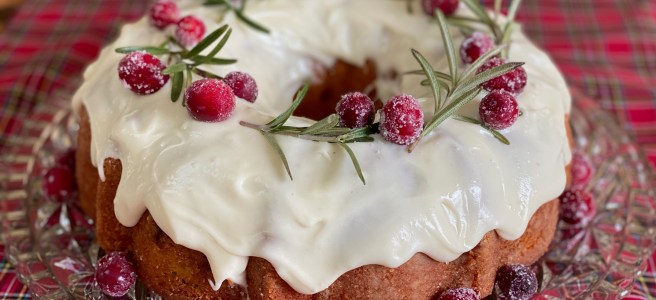
This cake. I love making it. I love decorating it. I love serving it. And I especially love, eating it. It is delicious.

The batter is beautifully flavored with rosemary, the zest of three oranges and one lemon, and cranberries. Once the winter holidays are over and the season for fresh cranberries has passed, reinvent it as a Blueberry, Orange, and Thyme Cake. In May, when the strawberries come in, make it a Strawberry, Orange, and Mint cake. This is a cake for all seasons.

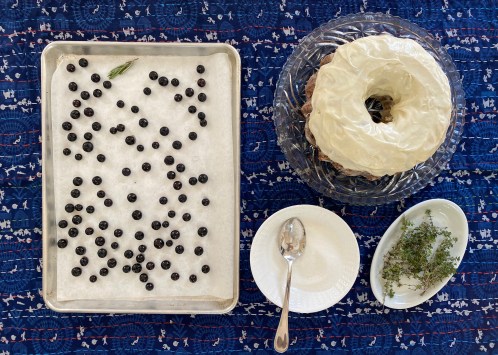
You could also glam up the blueberry version.

I never thought there would come a day when I would put the zest of four citrus fruits AND savory herbs in one cake recipe. Nor did I think I would take time to make sugared fruit. That all changed when I saw the food photos on Lauren’s @mustloveherbs Instagram feed. Lauren is an Appalachian Food and Living blogger in Kentucky. Her outrageously good Cranberry, Orange, and Rosemary Cake with Orange Cream Cheese Frosting single-handedly inspired me to expand my culinary horizons. The cake is as pretty as it is delicious. I am grateful to her for giving me permission to feature her recipe for this post.

Here’s the recipe, but first a few cake-baking tips.

Make sure all ingredients are at room temperature before starting. I have been known, in a pinch, to heat butter and milk in the microwave for 10 seconds to get the chill out, but do not melt the butter.

The primary method I use to measure flour is to weigh it. Otherwise, I lightly spoon the flour into a measuring cup and then level it with a knife.

The time to get air into a cake batter is in the beginning. That’s why we start most cake recipes by beating sugar and fat together for a good three minutes. Then we add the eggs, one at a time, beating in more air after each addition. Once the eggs are all in, be sure to turn the mixer off and clean the sides and bottom of the bowl with a rubber spatula, and mix for one more minute.

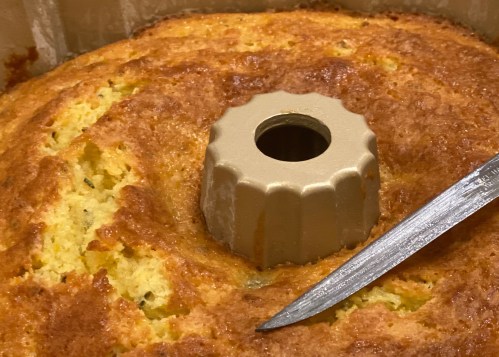
Look how fluffy this batter looks even before the wet and dry ingredients have been added.

When cake directions say to alternately add dry and wet ingredients, try it this way, dry-wet-dry-wet-dry. Mix minimally with each addition. As soon as the batter is smooth, stop mixing. See how the batter has cloud-like puffs? That’s the goal for this cake.

When adding fruit, turn the mixer off and gently fold the fruit in with a spatula. Try to disperse the fruit evenly so there will be fruit in every slice.

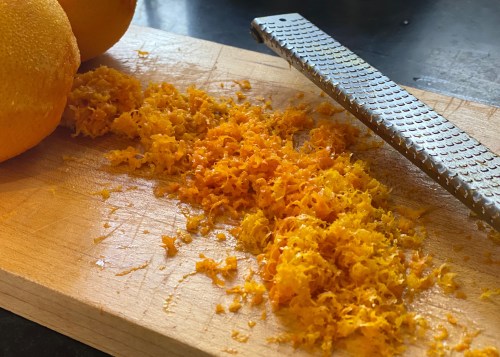
On average, 1 large lemon gives two tablespoons of juice and one tablespoon of zest. 1 medium orange gives 4 tablespoons of juice and 2 tablespoons of zest. I use a Microplane to zest the peel.

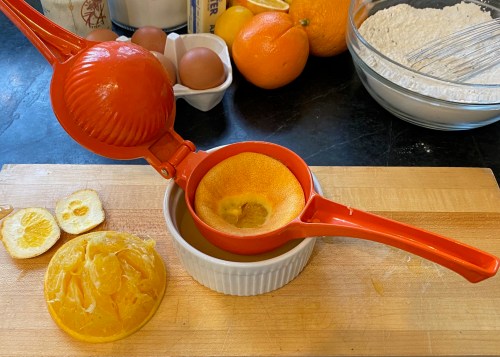
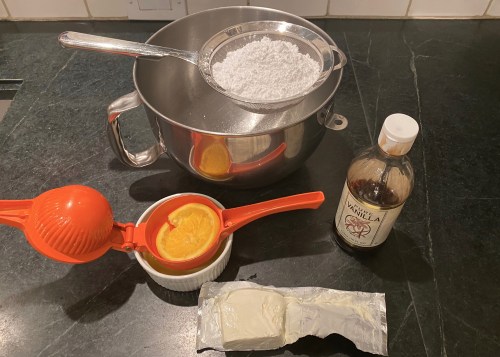
I use a handheld orange squeezer to extract juice from citrus. Cut the fruit in half. Put cut side facing down. Bring the handles together and squeeze.  Flip the fruit over a couple of times to extract more juice. I slice the tip off the domed edge.

Use fresh herbs in beautiful condition. I mince the lower leaves of the stem and save the tips for decorating the cake.

Cake Ingredients

3 cups (13.0 ounces) all-purpose flour
½ teaspoon baking soda
½ teaspoon baking powder
½ teaspoon fine salt
2 tablespoons (½-ounce package) freshly minced rosemary
zest of 3 medium oranges
juice of 1 medium orange
zest and juice of 1 lemon
¾ cup whole fat buttermilk
2 cups (1 pint) fresh whole cranberries
1 tablespoon all-purpose flour for dusting fruit
5 large eggs
2 teaspoons vanilla extract
2 sticks (1 cup) butter, at room temperature
2 cups granulated sugar

Prep for the Mise en Place

Measure flour, baking soda, baking powder, and salt and add to a medium bowl. Add minced rosemary. Use a whisk to mix ingredients and get rid of lumps. Set bowl aside.

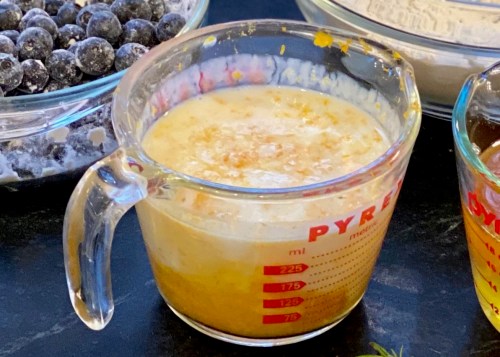
Zest 3 oranges and 1 lemon. Juice 1 orange and 1 lemon. Measure buttermilk in a liquid measuring cup and add zest and juice. Stir. Set aside.

In another small bowl, mix whole cranberries and a tablespoon of flour. Stir until the berries are completely dusted with flour. Set aside.

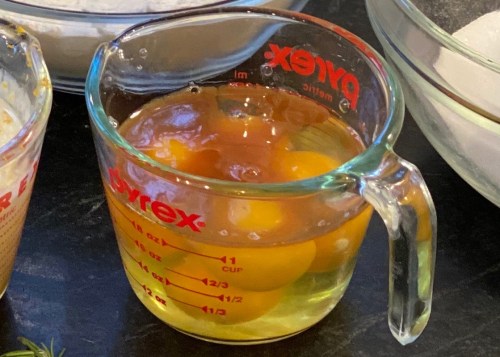
Crack each egg into a container. Don’t mix. Add vanilla. Set aside.

Add butter and sugar directly into a large mixing bowl.

The easy part — putting it all together.

Preheat oven to 350º. Grease and flour a Bundt pan. Make sure all crevices of the pan are greased.

In a large mixing bowl, cream butter and sugar on medium speed for three minutes. Scrape bottom and sides of bowl with a rubber spatula halfway through mixing.

Pour in eggs, one at a time, beating well after each addition. Periodically, turn mixer off and scrape bottom and sides of bowl. Beat another minute on medium speed.

With the mixer on “stir” or slow, add ⅓ dry ingredients, ½ wet, ⅓ dry, ½ wet, end with ⅓ dry. Mix briefly after each addition.

Remove bowl from stand and using a rubber spatula, add berries. Be sure to sweep bottom and sides of bowl to disperse berries evenly in batter.

Pour batter into a prepared Bundt pan. I can’t get over how gorgeous this batter looks! Just sayin’.

Bake on center shelf of a preheated oven for 45-55 minutes until a knife inserted in the middle of the ring comes out clean.

Allow cake to cool in pan for 30 minutes. This is a necessary step to ensure the cake slides out easily from the pan. Flip cake carefully onto a wire rack and allow to cool for at least an hour before frosting.

Frosting Ingredients

2 cups confectioners (powdered) sugar, sifted through a sieve
4 ounces cream cheese, at room temperature
½ teaspoon vanilla extract
3 teaspoons freshly squeezed orange juice
½-ounce package of rosemary for decorating
fresh fruit for decorating

In a mixing bowl, combine confectioner’s sugar, cream cheese, vanilla, and orange juice. Mix on medium speed until icing is smooth and creamy. The consistency should be somewhere between a frosting and a glaze.

Dust off crumbs from cooled cake. Spoon icing over cake to achieve a drapey look.

Decorate with rosemary and sugared fruit.

Sugared Fruit

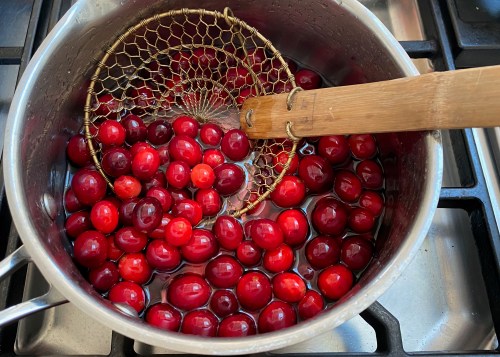
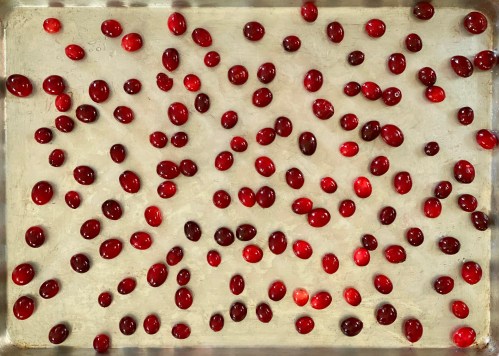
Sugaring fruit is much easier than I imagined. It starts with making a simple syrup and then adding fruit until it is covered in syrup. For cranberries, which have a hard shell, bring the syrup almost to a boil, add the cranberries, and let soften so they are edible. For thin-skinned fruits like blueberries, coat briefly and remove from hot pan so they don’t soften further.

Sugared Fruit Ingredients

½ cup water
½ cup sugar
2 cups whole, firm, fresh cranberries, at room temperature
½ cup granulated sugar for dusting

Instructions

Heat water and sugar in a medium saucepan on medium heat. Stir until sugar dissolves and syrup just starts to boil. Remove pan from heat.

Add whole cranberries that are at room temperature. Allow to stay in hot water for 10 minutes. Do not boil cranberries or they will pop. Remove cranberries with a slotted spoon.

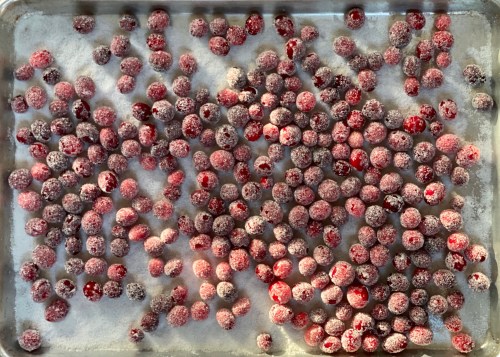
Place fruit on a parchment-lined rimmed sheet pan. Cranberries will be tacky and want to clump together. Separate them with the tip of a knife and not your fingertips. Doing so will keep the cranberries tacky and better able to hold the sugar crystals.  Allow to dry for one hour.

Spoon tacky berries into a bowl of sugar. Place on a clean sheet of parchment paper and dry for 30 minutes. Note the places on the cranberries that did not take up the sugar. I’m guessing they are the places where my fingers touched the tacky berries. The next time, I used a knife to separate the berries.

Christmas Eve or Valentine’s Day Cake

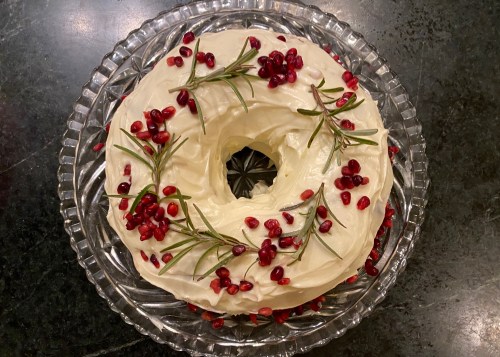
By Christmas Eve, we had already had this cake twice so we opted for Lily’s Red Velvet Cake, a family favorite made by my DIL. Red Velvet Cake is basically chocolate cake with red food coloring. In my recipe, I boost the cocoa with expresso coffee. It is delicious. Inspired by Lauren’s food styling and yet not wanting to take the time to sugar more cranberries, we used what we had to decorate the cake — pomegranate seeds and rosemary.

Readers, I would love your help. I am teaching a cooking class for The Herb Society of Nashville. I’m wondering if you could share some herb and fruit combinations you have found that are complementary. If so, please leave a comment.

Some Other Favorite Cakes
Chocolate Birthday or Valentine’s Day Cake
Mom’s Monkey Bread, circa 1970
Fruit and Nut Cake

If you enjoyed this post, please share and become a subscriber! Be sure to confirm the subscription on the follow-up letter sent to your email address.

Follow Judy’s Chickens on Instagram and Pinterest @JudysChickens.

Always check my blog for the latest version of a recipe.

© 2014-2020 Judy Wright. All rights reserved. Photos, videos, and text may only be reproduced with the written consent of Judy Wright.

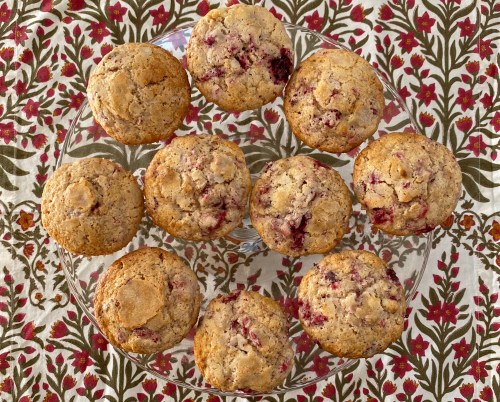
Cranberry Muffins with Orange Zest and Pecans

Yesterday, my sister-in-law, Terry, asked me to post my recipe for cranberry nut muffins. I had completely forgotten about these flavor-packed muffins!

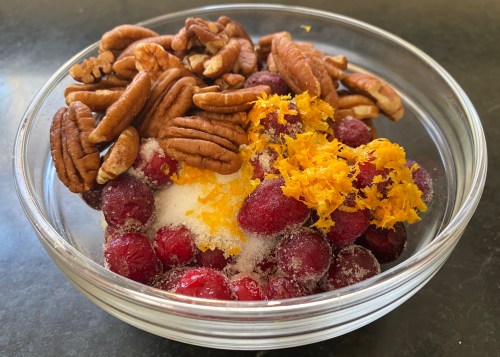
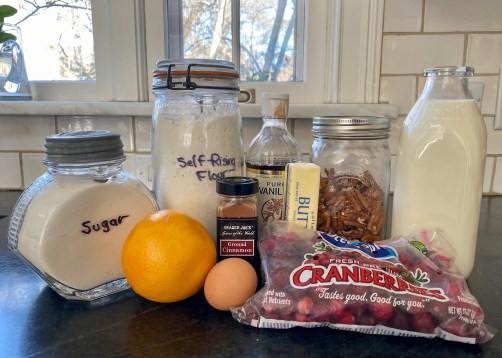
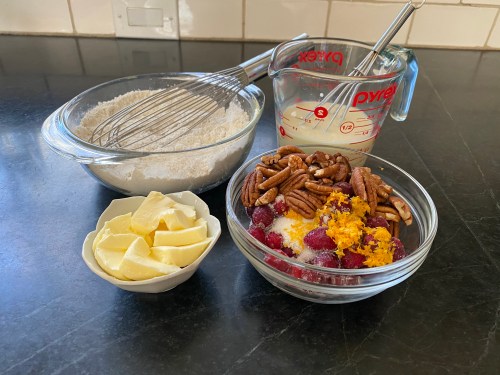
The ingredients include a lovely mix of cranberries, pecans, orange zest, and cinnamon.

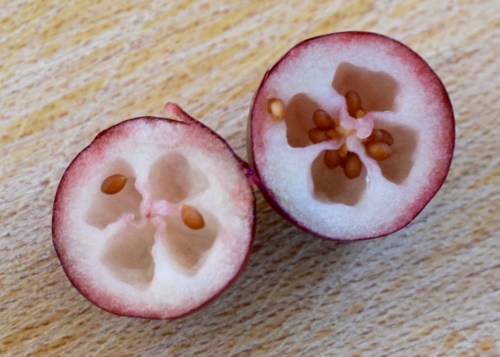
An interesting tidbit about cranberries — each cranberry has four interior chambers that hold pockets of air.

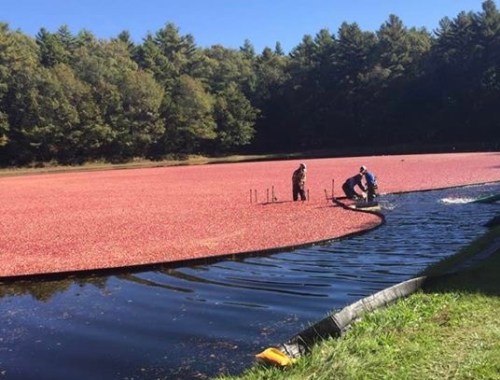
The air pockets allow the berries to float, a characteristic farmers use to their advantage when it comes time to harvest.

During the spring and summer, the berries grow in fields called bogs. In the fall, farmers flood the bogs and use a harvesting machine to dislodge the berries that then float to the surface. There is more to the story that can be found here.

In most recipes calling for cranberries, you can use fresh or frozen. I would not use dried cranberries which are sweetened and have lost much of their nutritional value in the process. For this batch of muffins, I used last year’s frozen berries because that is what I had on hand. When using frozen berries, do not defrost them before measuring or chopping. If you see a berry that is shriveled up, discard it.

I used self-rising flour. If you do not have any, substitute with 2 cups of regular flour, 3 teaspoons of baking powder, and ½ teaspoon of fine salt.

Yield: 12 small or 8 large muffins.

Ingredients:


1¼ cup whole cranberries
⅓ cup granulated sugar
½ cup pecan halves
zest from ½ half a medium orange

1 large egg
¾ cup whole milk
1 teaspoon vanilla

2 cups (8½ oz.) self-rising flour, (measured using the spoon and level method)
¼ teaspoon cinnamon
⅓ cup sugar
⅓ cup butter, softened and sliced

Instructions:
Preheat oven to 375º. Line muffin tin with paper liners or grease each muffin cup.

Place cranberries, ⅓ cup of sugar, pecans, and orange zest in a food processor. Pulse until all ingredients are rough-chopped. Be careful not to over-process.

Measure milk in a liquid measuring cup. Add egg and vanilla to the cup. Whisk ingredients together.

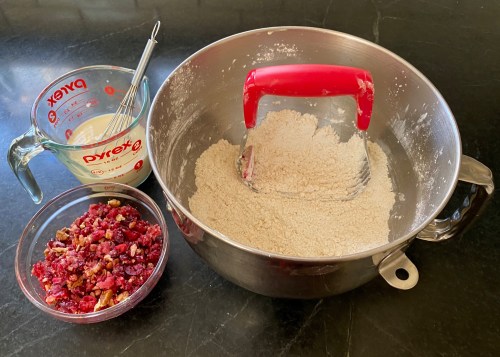
Place flour, cinnamon, and ⅓ cup sugar in a large mixing bowl. Whisk these dry ingredients together. Add butter slices. Using a wire pastry blender, combine ingredients until there are no more large clumps of butter. See photo below for guidance on what the texture should look like.

Gently stir in milk mixture until just blended. Fold in cranberry mixture. For a light and airy muffin, stir as little as possible.

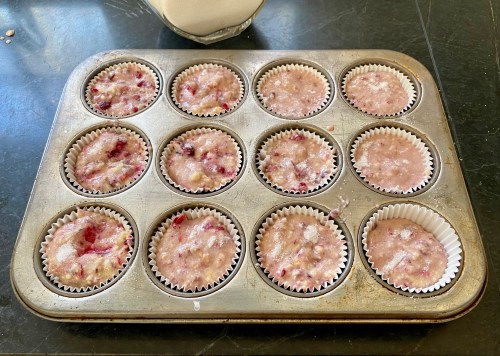
Use a tablespoon or cookie scoop to fill the muffin cups. Sprinkle ½ teaspoon of sugar over each muffin to crisp up the top when baked. If making large muffins, use a whole teaspoon of sugar.

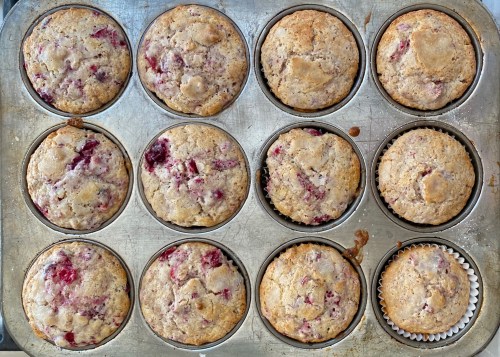
Bake for 20-25 minutes on the middle oven rack. Muffins are done when a knife inserted in the center comes out clean. If you would like to brown the tops a little more, move tin to the upper oven rack and bake for 3 more minutes.

Thank you, Terry, for reminding me about these muffins! I’m glad to have the recipe at my fingertips, again.

Check out the Thanksgiving Menu for Tday dinner ideas.

Other Cranberry Recipes:
Mrs. Walker’s Cranberry Nut Pie
Hot Pepper Jelly or Cranberry Brie Bites
Grandma’s Cranberry Chutney
Sautéed Collards (or Swiss Chard), Toasted Pine Nuts and Cranberries
Roasted Butternut Squash, Brussels Sprouts, and Cranberries
Sorghum, Oats, and Cranberry Granola
Oats, Sorghum, Ginger and Cranberry Cookies

Always check my blog for the latest version of a recipe.

If you enjoyed this post, please share and become a subscriber! Be sure to confirm the subscription on the follow-up letter sent to your email address.

Follow Judy’s Chickens on Instagram and Pinterest @JudysChickens.

© 2014-2019 Judy Wright. All rights reserved. Photos, videos, and text may only be reproduced with the written consent of Judy Wright.

My Favorite Rollout Butter Cookies

I am a baker at heart.

I love making pies for Thanksgiving, Italian cookies for Christmas, cakes for birthdays, and frosted rollout cookies for any event where children are in the house.

I loved the days as a teenager when I baked sweets for my brothers and the neighborhood kids, and then, as a mother, when I rolled out cookies with my sons.

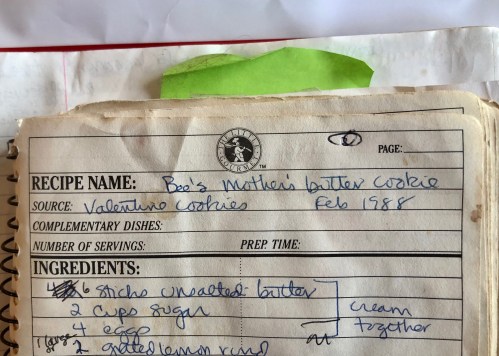
When it comes to making dough suitable for cutting out cookies, there is one recipe I have used for the last thirty years, Bee’s Mother’s Butter Cookies. I laugh when I look at the recipe in my old cooking diary because it reminds me that at one time I thought I could save a few calories by cutting out a third of the butter. As if.

What is the difference between cookie doughs designed for rolling out versus  drop cookies? You won’t see baking powder or baking soda in the list of ingredients. Those ingredients, both leavening agents, are added to make baked goods rise, spread, and become airy. Rollout cookie dough should not spread in the pan. We want sharp, crisp edges and tender centers.

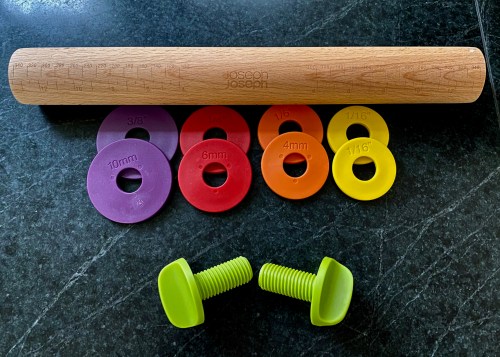
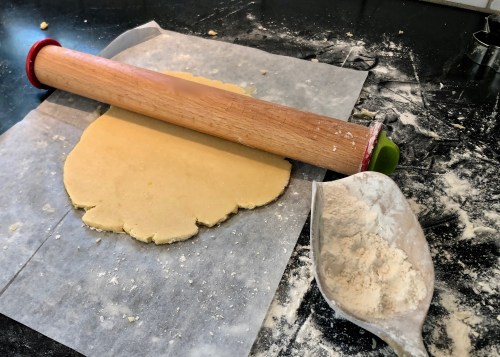
What I especially like about Bee’s recipe is it is not too sweet, it has a lovely buttery flavor, and a hint of lemon. Texture-wise, if I roll the dough out to a quarter-inch thickness, the cookies have just the right amount of chewiness for my liking. My new adjustable rolling pin assures a uniform thickness.

Even as a seasoned baker, I sometimes mess up on how long I bake cookies. I want them light in color, but if they are not cooked enough, the taste can be off from not cooking the flour long enough. If they are too dark, they are not as pretty as they could be. Cook them until the edges just start to brown. Having said all that, for whatever reason, the cookies always taste better the day after you frost them.

A few words on measuring flour:

The proper way to measure flour is to lightly spoon it into a dry measuring cup and then use the flat edge of a knife to level it. If weighed, one cup should equal 4.25 ounces.

Yield:  75 ¼-inch thick cookies

Ingredients:

6 sticks (1½ pounds) butter, at room temperature
2 cups granulated sugar
4 large eggs, at room temperature
2 teaspoons vanilla extract
½ teaspoon sea salt
1 large grated lemon rind
8 cups all-purpose flour, spooned and then leveled in a dry measuring cup

Instructions:

Measure flour into a medium-sized bowl. Set aside.

Zest one lemon. Set aside.

In a large mixing bowl, cream together butter and sugar for two minutes on medium speed. Add eggs, one at a time, vanilla, salt, and lemon zest. Beat on medium speed for 2 minutes. Be sure to scrape down dough on sides and bottom of bowl.

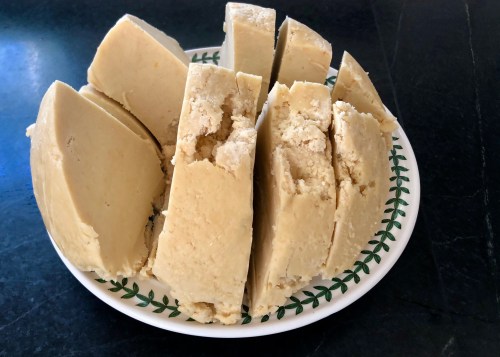
Add flour and mix slowly. Once it is all incorporated into the dough, mix medium-slow speed for one minute, scraping sides and bottom of bowl as you go. Cover dough and place in refrigerator to chill for two hours or up to two days.

Remove dough from refrigerator and cut into portion sizes suitable for rolling. Allow to soften for 20 minutes before rolling. Dough should be softened and still cool.

When ready to roll dough, preheat oven to 350º.

Place a segment of cool dough on a sheet of parchment paper. Lightly flour the rolling pin, the cookie cutters, and the top of the dough. The trick to creating a nicely flavored, tender cookie is to use as little extra flour as possible and to not keep reworking the dough.

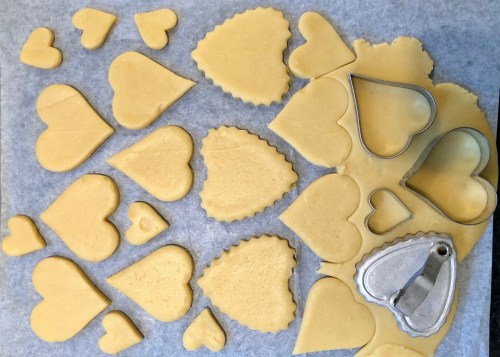
Using cookie cutters, cut the shapes as close to one another as possible.

Remove the scraps and put them in a pile. After you have rolled out all the dough once, take the scraps, knead them together, chill, and roll out again.

Place cookies on a parchment-lined (or ungreased) cookie sheet. They can be arranged close together because they will not spread. I like to get all the cookies rolled out first and then cook them.

Bake for about 20 minutes or until edges just start to brown. Shift pans around in the oven midway through the cooking time for more even browning. Always remember, the back two corners of an oven are the hottest.

Cool cookies on a wire rack. Allow to cool completely before frosting.

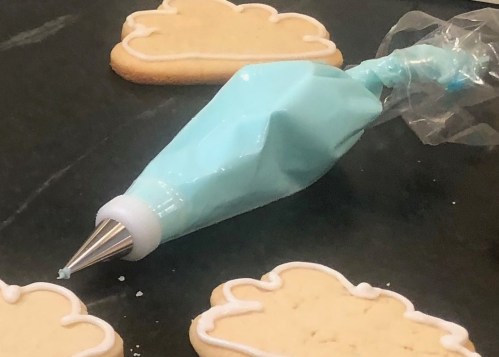
To learn how to make and decorate with Royal Icing, please look at this post.

Sometimes, I thin the icing, brush it on the cookies, and then immediately add the sprinkles so they stick as the glaze cools.

Allow cookies to dry for two hours before stacking and storing.

Related Posts:

How to Make Royal Icing and Decorate Cookies

Italian Sesame Seed Cookies
Italian Ricotta and Lemon Cookies
Three Ingredient Peanut Butter Cookies
Oats, Ginger, and Cranberry Cookies

If you enjoyed this post, please share and become a subscriber! Be sure to confirm the subscription on the follow-up letter sent to your email address.

Follow Judy’s Chickens on Instagram and Pinterest @JudysChickens.

Always check my blog for the latest version of a recipe.

© 2014-2019 Judy Wright. All rights reserved. Photos, videos, and text may only be reproduced with the written consent of Judy Wright.